Y2K Bags Revival: Nostalgia Styles and Their Profitability
Are Y2K bag styles actually profitable, or just visible? They are profitable in three forms and unprofitable in a fourth, and the way to tell which one you are looking at is a decision tree run before any sampling starts. First: reproduce the original faithfully, modernise it, or borrow one detail and put it on a current shape - and that choice is made on whether the value sits in the proportion, the detail or the reference itself. Second: whether the detail carrying the nostalgia can be produced at 500 pcs per style / colourway without failing, because several Y2K signatures - metallic coatings, micro proportions, chunky moulded hardware - have specific and fairly hard production limits. Third: how long the cycle runs, which for a nostalgia revival is typically four to six quarters with the peak in quarters two and three, and which decides whether this is a 500-piece test or a commitment at depth. This page runs that tree and prices every branch of it.
- First Decision: Reproduce, Modernise or Borrow a Detail?
- Branch A: When a Faithful Repro Is Worth It
- Branch B: The Modernised Build, and What Changes
- Branch C: Borrowing One Detail and Nothing Else
- Second Decision: Which Y2K Details Survive Production?
- Third Decision: What the Revival Costs to Get Wrong
- Fourth Decision: How Long Does the Cycle Run?
- Fifth Decision: What to Do When It Turns
- How to Build the Exit Before You Enter
Are Y2K bag styles actually profitable, or just visible? They are profitable in three forms and unprofitable in a fourth, and the way to tell which one you are looking at is a decision tree run before any sampling starts. First: reproduce the original faithfully, modernise it, or borrow one detail and put it on a current shape - and that choice is made on whether the value sits in the proportion, the detail or the reference itself. Second: whether the detail carrying the nostalgia can be produced at 500 pcs per style / colourway without failing, because several Y2K signatures - metallic coatings, micro proportions, chunky moulded hardware - have specific and fairly hard production limits. Third: how long the cycle runs, which for a nostalgia revival is typically four to six quarters with the peak in quarters two and three, and which decides whether this is a 500-piece test or a commitment at depth. This page runs that tree and prices every branch of it.
The numbers the revival decision rests on
First Decision: Reproduce, Modernise or Borrow a Detail?
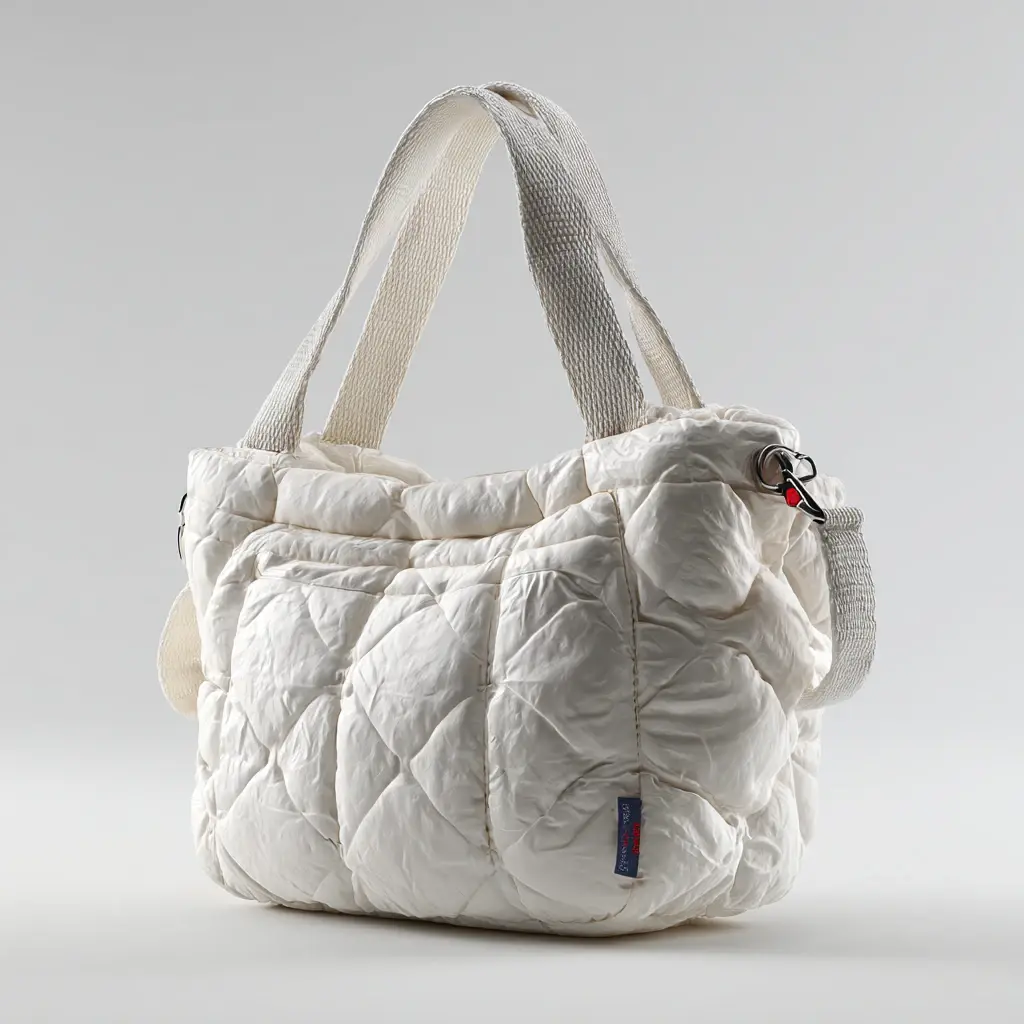
Every revival brief arrives as a photograph of an original, and the first job is to work out what in that photograph is doing the work. Three answers are possible, and they lead to three completely different builds. If the proportion is doing the work - a baguette shoulder shape at 22 x 12 x 6 cm, worn high under the arm - then the shape has to be reproduced closely, because the proportion is the reference. If a detail is doing the work - a chunky zipper, a logo plate, a metallic finish - then only that detail needs reproducing. If the reference is doing the work - the decade, the mood, the association - then almost anything with the right signal will sell and the cheapest build wins.
That classification is the whole first branch, and it is worth being ruthless about, because the third case is by far the most common and the most over-engineered. A great deal of money is spent faithfully reproducing shapes whose buyers are only buying a mood. The test is simple: show the original to somebody who was not there and ask what they notice first. If they say the size, it is proportion. If they say a part, it is detail. If they say a decade, it is reference - and the reference case should be built as cheaply as the current range allows.
Branch A: When a Faithful Repro Is Worth It
A faithful reproduction is worth the cost in exactly one situation: when the shopper buying it already owned the original and is replacing it. That buyer is checking dimensions against memory, and she will notice a 2 cm difference in the body or a strap drop that is 3 cm lower than she remembers. For her, close is not good enough. For everybody else, close is indistinguishable from exact - and the cost of exact is significant.
- Worth it when: the buyer segment is old enough to have owned the original, and the shape is being sold on that memory rather than on discovery.
- Not worth it when: the buyer is discovering the shape for the first time, because she has no reference to check it against.
- Cost of exact: roughly USD 2.40-4.10 per piece more than a modernised equivalent, driven by non-standard pattern work and component minimums.
- Minimum viable run: 500 pcs per style / colourway, because the pattern work does not amortise below that and every unit after is cheap.
- Price it at: USD 79-99, where a 15-25 per cent revival premium over an equivalent plain shape is defensible to the shopper.
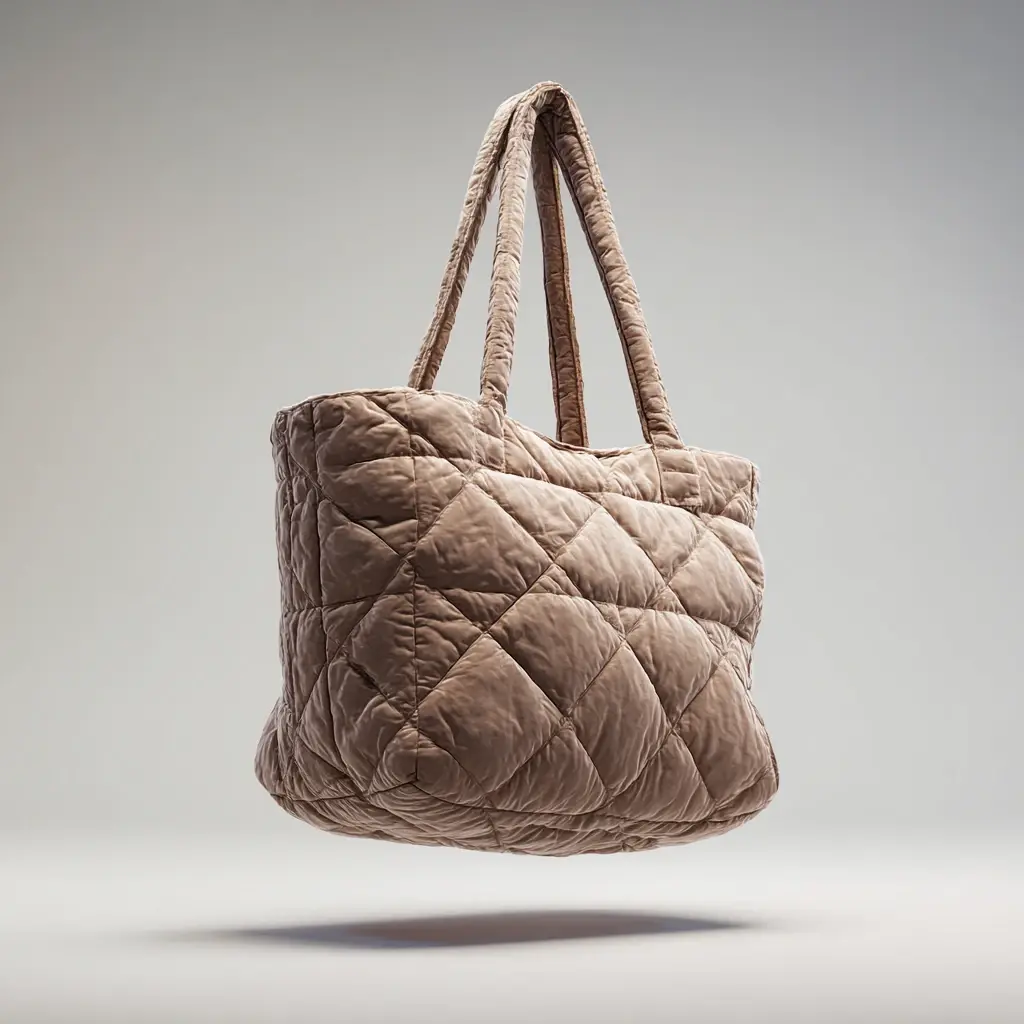
The last row is the one that makes Branch A work commercially. A faithful repro cannot be sold at value-tier prices, because the cost of exactness does not compress. It has to be sold at USD 79-99 with the revival premium stated and visible - better hardware, a heavier lining, a proper edge finish - so that the price reads as a reproduction rather than as a markup. Sold at USD 49, the same bag looks expensive for no visible reason and the premium collapses into discount.
Branch B: The Modernised Build, and What Changes
The modernised build is the default right answer for most brands, because it keeps the signal and drops the compromises. Y2K originals were made to the tolerances and materials of the time: thin metallic coatings, lightweight linings, hardware that was decorative rather than durable, and proportions that assumed a phone was small. A modernised version keeps the proportion and the signature detail, then quietly upgrades everything the shopper will judge in week six rather than on day one.
| Element | Original specification | Modernised build | Why |
|---|---|---|---|
| Metallic finish | Thin transfer coating | Laminated metallic at 0.7 mm | Survives 5,000 rubs rather than failing at 1,000 |
| Lining | Lightweight plain weave | 210D with 8 mm allowance | Original linings tore at the seam in weeks |
| Zipper | Decorative lightweight tape | #8 tape, 500-cycle tested | The signature chunky look without the catches |
| Hardware plating | Untested decorative finish | 24-hour salt spray tested | Plating wear appears around week ten |
| Strap | Fixed, narrow | Adjustable 18-25 mm, 15 kg tested | Modern carry loads are heavier |
| Interior | Single compartment | One slip pocket added | Phones got larger, not smaller |
Taken together those six changes add about USD 2.80-4.60 per piece over a literal reproduction of the original specification, and they remove the four failure modes that nostalgia ranges are most prone to: coating flaking, lining tearing, zipper catching and plating wear. That is a straightforward trade, because the shopper buying a revival is buying the look and will not forgive the failure - she will simply conclude the original was better made, which is the worst possible outcome for a brand.
Branch C: Borrowing One Detail and Nothing Else
Branch C is the highest-return option and the least glamorous. It takes one recognisable detail - a chunky zipper pull, a curved top seam, a metallic trim - and applies it to a shape the brand already makes, already samples and already knows how to sell. There is no new pattern, no new material risk and no new component minimum, and the whole cost of participating in the revival is a trim change.
- Pick one detail, not three: one signal reads as intentional, three reads as a costume, and each extra one adds cost without adding recognition.
- Apply it to a proven base: a shape already in the range, at 500 pcs per style / colourway, so the sampling window stays at 6-10 working days.
- Change nothing structural: if the detail forces a pattern change, this has quietly become Branch B and should be budgeted as one.
- Price at the normal band plus a small premium: about 8-12 per cent, which the shopper will pay for a recognisable trim.
- Cap the commitment: one drop at 500 pcs, judged on the 55 per cent in 45 days gate, with no second drop until the gate is met.
The commercial logic is that Branch C carries almost no downside. If the revival runs for four quarters, the brand participates at a trim cost and exits by simply not reordering the trim. If the revival turns out to be structural rather than cyclical, the base shape stays in the range regardless. Either way nothing is written off, which is not true of the other two branches and is why Branch C should be the first option considered rather than the last. The value tier is where most of this ends up, and what the 2026 value range will absorb sets the practical ceiling.
Second Decision: Which Y2K Details Survive Production?
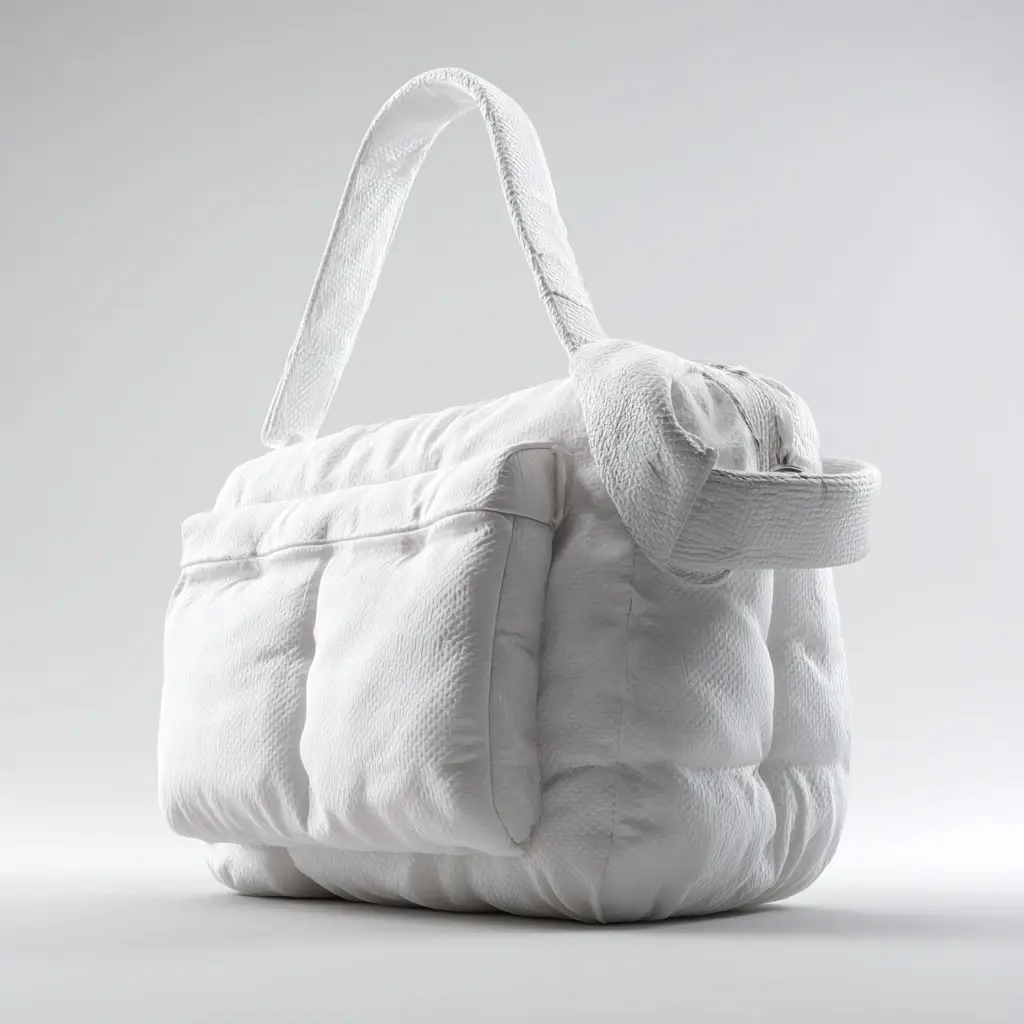
The second branch of the tree is a feasibility filter, and it is where most revival briefs fail quietly. Several signature details of the era have hard production limits, and those limits are invisible in a photograph and obvious in a carton. Three in particular are worth checking before anything is priced.
- Metallic coatings: a thin transfer coating looks right and abrades at roughly 1,000 rubs, against 20,000 for a plain body. A laminated metallic reaches about 5,000 rubs, which is the practical ceiling and still well below a plain material.
- Micro proportions: a body below about 22 x 12 x 6 cm cannot take a standard zipper tape, a normal lining seam allowance or a phone. It can be made, but it returns at a higher rate because the shopper's expectations did not shrink with the bag.
- Chunky moulded hardware: moulded pieces carry tooling minimums that only make sense above roughly 3,000 units per line. Below that, a cast or extruded alternative in a matched finish reads nearly identically for USD 1.20-2.30 less per piece.
- Logo plates: fine raised lettering under about 1.2 mm stroke width fills in during plating and looks wrong at 500 pcs even when the sample was clean.
The rule of thumb is that any detail whose character depends on a surface treatment rather than on a shape is at risk, because surface treatments are the first thing to degrade and the hardest thing to hold consistently. Details that depend on geometry - a curved seam, a proportion, a strap position - survive production much better and cost less to repeat. That is the practical reason Branch C tends to outperform Branch A commercially even when Branch A is the more faithful reading of the reference.
Third Decision: What the Revival Costs to Get Wrong
The downside on a revival is larger than on an ordinary shape, for a reason that has nothing to do with unit cost. A plain shape that fails is a plain loss. A revival shape that fails also takes the reference with it: the shopper concludes that the original was better, and the brand has spent its money demonstrating that. That second cost does not appear on any invoice and is the reason revival drops should be sized conservatively.
| Branch | Landed per piece | Extra cost over plain | What is at risk if it fails |
|---|---|---|---|
| A, faithful repro | USD 18.60-21.60 | USD 6.20-8.40 | Goods, plus non-standard pattern work and component minimums |
| B, modernised | USD 15.80-19.40 | USD 3.40-6.20 | Goods and the upgraded trim specification |
| C, borrowed detail | USD 13.40-16.20 | USD 1.00-2.80 | Trim cost only; the base shape sells regardless |
| Fourth case, costume build | USD 19.80-24.60 | USD 7.40-11.40 | Everything, because there is no exit and no reuse |
That fourth row is the unprofitable form mentioned at the top, and it is worth naming precisely. It is the build that reproduces every visible detail, adds nothing modern, prices at the top of the band, and has no second life once the cycle turns. It looks the most committed in a showroom and it is the only one of the four with no exit. If a brief is drifting toward it, the cheapest intervention is usually to cut two of the three details and let it become Branch C.
Fourth Decision: How Long Does the Cycle Run?
Nostalgia revivals behave differently from ordinary trends, and the difference matters for sizing. An ordinary viral shape runs its whole arc in about 45-70 days. A nostalgia revival typically runs four to six quarters, peaking in quarters two and three and decaying over quarters four to six. That is long enough to justify a real range commitment and short enough that a five-year plan is nonsense, and the practical implication is a quarterly decision rather than a weekly one.
The quarterly rhythm is the useful part. Because the cycle runs in quarters rather than weeks, the sampling window and the bulk window stop being constraints: 6-10 working days and 35-50 days fit comfortably inside a quarter. What that means is that a revival range can be developed properly rather than rushed, which is the opposite of the situation with a viral shape. It also means the decision points are quarterly, so the range should be reviewed at the end of every quarter against sell-through rather than watched weekly.
Fifth Decision: What to Do When It Turns
Revivals turn in a recognisable way, and the signal is not a fall in volume - it is a change in who is buying. While the revival is healthy, the buyer is the one with the memory plus the one discovering it. When it turns, the memory buyer stops and only the discovery buyer is left, and the discovery buyer has no loyalty to the reference, so she compares on price. That is the moment the premium stops being defensible.
- Watch the markdown needed to hit plan: when a shape that sold at full price for two quarters needs 20 per cent to hit plan, the memory buyer has gone.
- Watch the colour mix: late-cycle buying concentrates in black and neutral, because the discovery buyer is not buying the novelty shades.
- Watch repeat purchase: a healthy revival generates a second purchase in a different shape; a turning one generates none at all.
- Act on two of the three, not one: one signal is noise, two is a turn, and the response is to stop reordering rather than to discount.
The response matters. Discounting a turning revival accelerates it, because the discovery buyer is price-comparing anyway and a discount confirms that the reference was never worth the premium. Stopping the reorder and letting the remaining units sell through at full price preserves the margin and, more importantly, preserves the brand's ability to run the next revival without having trained its shoppers to wait for markdowns.
How to Build the Exit Before You Enter
The last branch of the tree is the one nobody draws and everybody should. Before the first drop is ordered, write down what happens to the pattern, the material and the components when the cycle ends. If the answer is that they have no other use, the drop is a one-way bet and should be sized at 500 pcs regardless of how confident the brief looks. If the answer is that the pattern converts and the material is standard, the drop can be sized at depth.
- Choose a base pattern that converts: a shoulder body that can be re-trimmed into a current shape rather than one that only works as a revival.
- Use standard materials where the look allows: a standard body with a metallic trim exits more cheaply than a fully metallic body.
- Cap component minimums: keep moulded and branded components below the 3,000-unit threshold, or the exit is blocked by what is already bought.
- Write the end date: a quarter, not a condition. Revivals end on a calendar, and waiting for a signal usually means waiting too long.
- Decide the leftover route now: clearance channel, bundle, or convert - decided before the drop, not argued after it.
Those five steps are the difference between participating in a revival and betting on one. Every unit described here is produced by our validated partner factory Quanzhou Yingming Bags, running export programmes since 2014 across 7 production lines and about 200,000 pcs per month, with inspection at AQL 2.5 under ISO 2859-1. The sequencing is set out in the private label handbag programme overview, how fast a shape can turn once it goes viral explains the shorter-cycle version of the same problem, and which shapes are clearing the sampling filter is where the base patterns in step one should come from.
Get a Quote → /contact-quote/ — send a reference photograph and the retail band you are targeting, and the team will return a branch recommendation, a landed cost per piece and a sampling date.
Frequently Asked Questions
Are Y2K bag styles actually profitable for brands?
Yes in three forms and no in a fourth. Faithful reproduction, a modernised build and a borrowed detail can all work; a costume build with every visible detail and no second life carries all the cost and no exit. The unprofitable fourth form is the one with no exit and no reuse once the cycle ends.
What is the difference between a repro and a modernised Y2K bag?
A repro keeps the original specification and costs about USD 2.40-4.10 more per piece. A modernised build keeps the proportion and signature detail while upgrading the coating, lining, zipper, plating and strap to survive daily carry. The modernised route keeps the signal and drops the era's material compromises, which is why it is the usual right answer.
Which Y2K details are hardest to produce?
Metallic coatings, which abrade at roughly 5,000 rubs against 20,000 for a plain body; micro proportions under 22 x 12 x 6 cm; and chunky moulded hardware, which carries tooling minimums only sensible above 3,000 units. Each of the three has a hard production limit that is invisible in a photograph and obvious in a carton.
How long does a nostalgia bag revival last?
Typically four to six quarters, peaking in quarters two and three and decaying over quarters four to six. That is much longer than a viral shape, which runs its whole arc in roughly 45-70 days. That is long enough to develop properly, and short enough that any multi-year commitment is nonsense.
How much should a Y2K revival bag cost to make?
USD 13.40-21.60 per piece depending on the branch: about USD 13.40-16.20 for a borrowed detail, USD 15.80-19.40 modernised, and USD 18.60-21.60 for a faithful reproduction of the original specification. The spread between the three branches is mostly non-standard pattern work and component minimums rather than material cost.
What retail price suits a revived Y2K bag?
USD 79-99 for a faithful repro, where a 15-25 per cent revival premium over an equivalent plain shape is defensible. A borrowed detail on a proven base supports only about 8-12 per cent above the normal band. A borrowed detail cannot carry the higher premium, because the shopper can see the base shape has not changed.
How many units should a revival drop be?
500 pcs per style / colourway for a first drop, judged on a 55 per cent in 45 days gate. Size at depth only if the pattern converts and the materials are standard, because that is what creates a cheap exit. Size at depth only where the pattern converts and the materials are standard, since that is what creates the cheap exit.
How do you know when a bag revival is turning?
The memory buyer stops and only the discovery buyer remains. Watch three signals: markdown needed to hit plan, colour mix concentrating into black and neutral, and repeat purchases falling to zero. Two of three means stop reordering. Two of three signals means stop reordering, never discount; one signal on its own is usually noise.
Should you discount a revival range when demand falls?
No. Discounting accelerates the turn because the remaining buyer is price-comparing anyway. Stop the reorder and let stock sell through at full price, which preserves margin and the ability to run the next revival. Stopping the reorder also protects the brand's ability to run the next revival without training shoppers to wait.
What is the cheapest way to join a nostalgia trend?
Borrow one recognisable detail and apply it to a shape already in the range. There is no new pattern, no new material risk and no component minimum, so the whole cost of participating is a trim change. No new pattern, no new material risk and no component minimum, so the entire cost of joining in is a trim change.
Why do some revival bags get bad reviews?
Because they reproduce the look without fixing the era's compromises: thin metallic coatings, lightweight linings and decorative hardware. Those fail in weeks six to ten, and the shopper concludes the original was better made. The failure appears in weeks six to ten, which is exactly when a revived shape is being judged against memory.
People Also Ask
Are Y2K bags coming back in style?
Yes, and the cycle runs four to six quarters with the peak in quarters two and three. That is long enough to develop properly, unlike a viral shape, and short enough that a multi-year commitment makes no sense.
What defines a Y2K handbag?
Micro proportions around 22 x 12 x 6 cm, a short strap drop worn high under the arm, a chunky zipper, a logo plate and a metallic or shiny finish. Usually only one of those is doing the work.
How do you make a Y2K bag that lasts?
Keep the proportion and one signature detail, then upgrade the rest: laminated metallic at 0.7 mm, 210D lining with an 8 mm allowance, a tested #8 zipper and 24-hour salt spray plating.
Is a nostalgia bag range a good investment?
Yes if the exit is designed first. A converting pattern, standard materials and component minimums kept below 3,000 units turn a one-way bet into a range that survives the cycle ending.
Sources and further reading
Every figure on this page is either our own programme data or attributed below. Open the originals before you write them into a specification.
- FashionUnited — fashion industry news and dataFashionUnited Industry news and company data for the fashion sector.
- Accessories Council — accessories industry bodyAccessories Council Accessories industry body tracking handbag category direction.
- Womens Wear Daily — fashion business newsWWD Fashion business news, retail results and category direction.