QUANZHOU JUNYUAN BAGS is a sourcing and programme-management company for private label handbags, coordinating material, sampling, bulk production, inspection and shipment through our validated partner factory Quanzhou Yingming Bags, an SGS-validated site running 7 production lines. The commercial parameters are published and fixed: MOQ 500 pcs per style / colourway, 6-10 working days to a first sample, 35-50 days of bulk production, pre-shipment inspection at AQL 2.5 under ISO 2859-1, and shipment FOB Xiamen. Counting decision time and freight, plan 55-80 days from signed brief to goods handed to your forwarder.
- Where a Handbag Programme Loses Money Before It Starts
- Ten Service Pages, One Programme
- Locked Parameters: MOQ, Sampling, Bulk, Inspection, Trade Terms
- Six Stages From Enquiry to Shipment
- Silhouettes and Materials We Run Every Season
- Quality and Compliance: AQL 2.5, BSCI, REACH and Prop 65
- What Decides Your Unit Price
- Branding and Packaging Decisions That Cost More Than the Bag
- Peak Season, Slot Booking and the Calendar Nobody Publishes
- Three Illustrative Composite First Orders
- The External Standards Behind Every Number on This Page
- How We Communicate and Hand Over
- Your First Email: Five Attachments That Speed Up a Quote
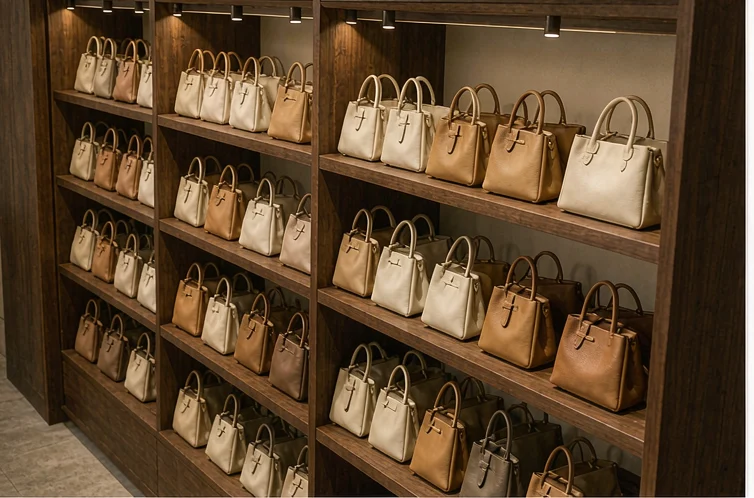
Where a Handbag Programme Loses Money Before It Starts
Most first programmes do not fail on the production floor. They fail in the weeks before it, in decisions nobody wrote down: a retail price agreed after the leather was chosen, a strap drop never measured, a finish described as gold rather than as microns of plating over a salt-spray target.
The published numbers are not the difficulty: MOQ 500 pcs per style / colourway, 6-10 working days to a first sample, 35-50 days of bulk. What costs money is the gap between an email thread and a written specification. Closing it before a deposit moves is the whole job.
Ten Service Pages, One Programme
Each page below covers one decision in the sequence buyers ask about.
Private Label Handbags
Existing patterns made under your brand name, logo and packaging — the route most first orders take.
Handbag Manufacturers
Comparing production partners on five gates: tannery records, sample room, quotation transparency, inspection discipline, slots.
Wholesale Handbags
Buying finished goods in colours somebody else chose — the reference point for judging a made-to-order run.
Custom Handbags
New patterns, new cutting dies, new hardware moulds, for a shape that does not exist yet.
Leather Handbags
Grades, thickness, temper and hide yield, and why small clean panels cost less than large ones.
Handbag Manufacturing Process
The eight operations from material receipt to packed carton, and which ones decide how a bag wears.
Handbag Materials Guide
Four material families, lining weights, hardware plating, stitch density and the evidence each needs.
Handbag Quality Control
Defect classes, sample size under ISO 2859-1, and what happens when a lot fails at AQL 2.5.
Handbag Sourcing Guide
Writing a brief that produces a usable quotation, reading it line by line, planning around peak season.
Services
The service range as deliverables: coordination, branding, packaging, compliance and logistics.
Locked Parameters: MOQ, Sampling, Bulk, Inspection, Trade Terms
- MOQ
- 500 pcs per style / colourway, not per order
- Sampling
- 6-10 working days; 12-15 for framed, hand-woven or stacked builds
- Bulk production
- 35-50 days from material release to packed cartons
- Inspection
- Pre-shipment at AQL 2.5 under ISO 2859-1; third-party available
- Trade terms
- FOB Xiamen by default; CIF and DDP quoted on request
- Capacity
- 7 production lines, about 200,000 pcs per month
- Track record
- Handbag programmes shipped since 2014
- Partner site
- Our validated partner factory Quanzhou Yingming Bags, SGS-validated
Two lines deserve a second read. The MOQ is per style / colourway, so three silhouettes in two colourways is 3,000 pcs — one container, one set of tooling across six SKUs. And the bulk window is only part of the calendar, hence the 55-80 day planning number. The MOQ explainer sets out where the floor comes from.
Six Stages From Enquiry to Shipment
| Stage | Days | What happens | What you decide |
|---|---|---|---|
| 1. Brief and quotation | 1-3 | Spec review, material check, price band | Photos or tech pack, quantity, target price |
| 2. Material confirmation | 2-4 | Swatches, Pantone matching, hardware finish | Approve the physical swatch, not a screen |
| 3. Sampling | 6-10 (12-15 complex) | Pattern cut, panels sewn, branding applied | Nothing — the specification is agreed |
| 4. Sample review | 3-6 | Fit, strap drop, closure, branding position | A numbered revision list |
| 5. Deposit and slot booking | 1-2 | Material released, slot reserved | Deposit, carton marks, barcode artwork |
| 6. Bulk, inspection, handover | 38-52 | 35-50 day run, AQL 2.5 check, packing, FOB Xiamen | Balance, forwarder, shipping marks |
Plan for 55-80 days from signed brief to goods handed to your forwarder. Ocean transit then adds 18-28 days to the US West Coast or 30-38 days to Northern Europe; air takes 5-8 days at roughly four times the cost per carton. Buyers who plan on 50 days are the ones paying to fly the last 300 units.
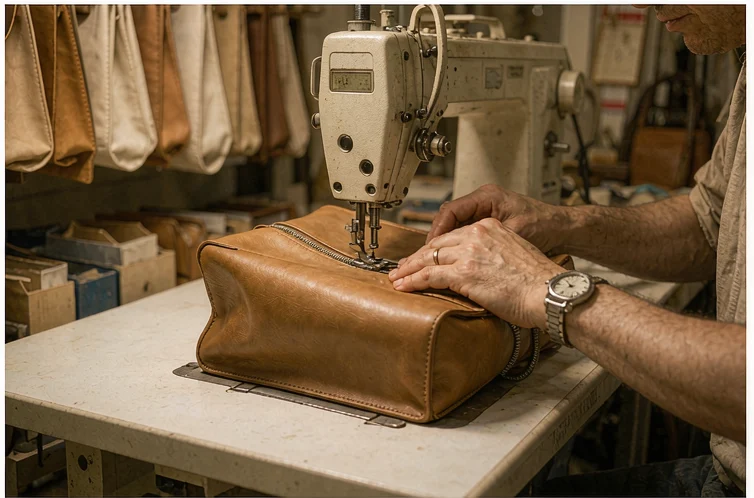
Silhouettes and Materials We Run Every Season
- Tote. 34-42 cm wide, the largest uninterrupted branding panel of any bag.
- Shoulder bag. 26-34 cm wide, 22-30 cm drop; specify the drop in millimetres.
- Crossbody. 18-26 cm wide on a 110-130 cm strap, the highest repeat purchase.
- Satchel. Structured, with interlining, stiffener and turn-lock — the most operations.
- Hobo. Soft, 30-40 cm wide; soft-temper material only, or it stands up and looks wrong.
- Bucket. 20-28 cm diameter, reinforced base; small panels give the best hide yield.
Material follows the retail price rather than the other way round: target retail less channel margin, your margin, freight, duty and packaging gives a landed-cost ceiling, and that ceiling chooses between full-grain leather, top-grain leather, PU and canvas. The material glossary for new brand owners sets out the specification language; the materials guide covers the full sheet.
Quality and Compliance: AQL 2.5, BSCI, REACH and Prop 65
Quality on a made-to-order run is a written standard, not a promise. The reference both brands and inspection companies work to is ISO 2859-1: it sets how many units are pulled from a lot and how many defects of each class trigger a pass, a fail or a re-sort.
- Inspection. Pre-shipment at AQL 2.5 under ISO 2859-1; third-party inspection through SGS available.
- EU chemicals. REACH (EC 1907/2006): chromium VI, azo dyes, nickel release, phthalates.
- California. Proposition 65 safe-harbour review of hardware, coated trim and dyes.
- Children's products. CPSIA lead and phthalate limits plus tracking labels, where relevant.
- Social compliance. BSCI (amfori) and Sedex / SMETA audit references.
- Leather traceability. Tanneries audited under the Leather Working Group protocol.
- Recycled content. Global Recycled Standard certificates for a defensible hangtag claim.
- Hardware finish. Salt-spray tested to ASTM B117; specify hours to first corrosion.
The defects that generate returns are unglamorous: stitch density below the specified 7-9 per inch, edge paint cracking at the fold, a strap that stretches because reinforcement tape was skipped. The AQL 2.5 inspection explainer shows how those are counted; the REACH and Proposition 65 basics covers the chemistry.
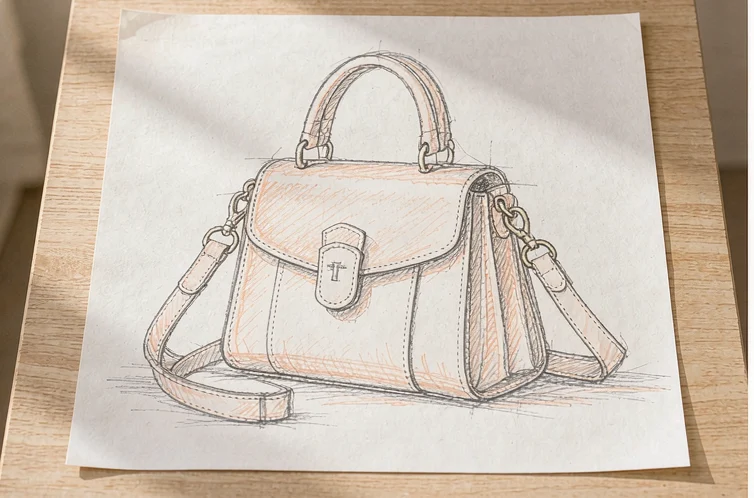
What Decides Your Unit Price
- Material — 40-55%. Priced per square foot and cut by yield; a simpler pattern costs less.
- Trimming and hardware — 15-25%. Zipper chain, webbing, closures, pullers; easiest place to cut.
- Cutting, sewing and finishing — 15-25%. A structured satchel costs more labour than a soft hobo.
- Packaging — 3-8%. Dust bag, hangtag, carton; cheap per unit, but artwork setup is fixed.
- Tooling — one-off. Embossing die, label setup, hardware mould. Ask who owns it.
Trade terms matter as much as unit price. FOB Xiamen is the default; CIF and DDP can be quoted. Incoterms 2020, published by the International Chamber of Commerce, defines where risk and cost transfer, so cite the rule in the order. See landed cost for imported handbags and comparing quotations line by line.
Branding and Packaging Decisions That Cost More Than the Bag
Branding is where a first line becomes recognisable, and where a one-off cost appears that nobody budgeted. Four methods carry almost every programme, each with its own tool, lead time and floor: an emboss needs a die and a flat panel, a woven label a loom setup, embroidery a digitised file, a metal plate a mould.
- Deboss or emboss. One die cut in about 7-10 days; cheapest per unit above 1,000 pcs, and yours if billed as a separate line.
- Woven label. Loom setup plus a roll minimum, usually 1,000-3,000 labels; surplus stays on the shelf for the reorder.
- Embroidery. Digitising charged once, stitch count priced per 1,000 stitches; set it too high and soft-temper material puckers.
- Metal plate or zip puller. Mould plus plating, 15-25 days; the longest item on the critical path and the one to release first.
- Packaging. Dust bag, hangtag, barcode sticker and 5-ply master carton: 3-8% of unit cost, but the artwork setup is a fixed charge.
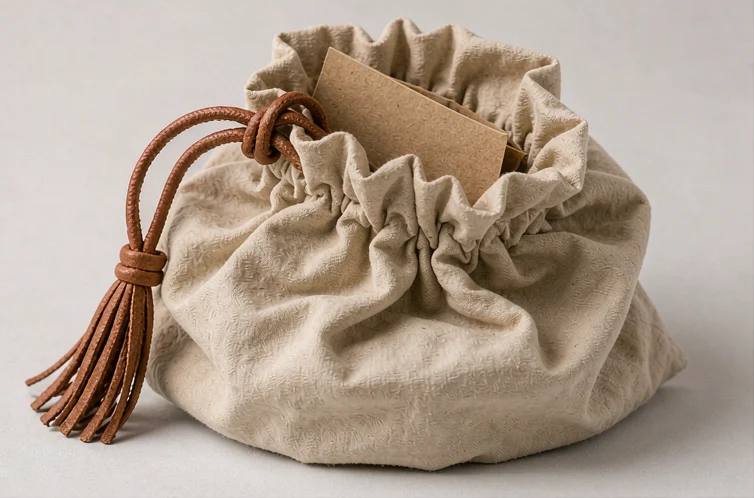
Carton marks, barcode artwork and country-of-origin labelling hold more shipments at import than any defect does. Decide them while the sample is cut, not while the cartons close: an EAN or UPC code, a carton mark your warehouse can scan, and the content statement your market requires. The private label packaging sequence covers the order of decisions.
Peak Season, Slot Booking and the Calendar Nobody Publishes
The 35-50 day bulk window is a production window, not a calendar. A slot on one of the 7 production lines is reserved when the deposit clears, and in the two busiest periods of the year the queue in front of it is longer than the run. Buyers who treat that window as the whole plan discover in week six that their zip pullers are still in a plating bath.
- Peak months. Late spring and late summer, when slots for autumn and holiday delivery are booked four to six weeks ahead.
- Material lead time. Leather 2-3 weeks from tannery release; zip chain and webbing 3-4 weeks; a custom metal puller 4-6 weeks.
- Shutdowns. Lunar New Year closes tanneries and hardware plants for two to three weeks; the autumn holiday trims a few more days.
- Critical path. Custom hardware and speciality trimming arrive last, so they set the start date far more often than cutting does.
- Buffer. Add 7-10 days to any launch-critical order; material consumes it, not sewing.
Book the slot when the deposit moves, not when the sample is approved. A 3,000-pcs order uses roughly 1.5% of a month of output at about 200,000 pcs per month across 7 lines, and only a reservation holds that share.
Handbag programmes have shipped since 2014, and the pattern repeats: the orders that landed on time had material confirmed before the first sample was cut. The sourcing guide carries the month-by-month version.
Three Illustrative Composite First Orders
The three programmes below are illustrative composites drawn from briefs buyers commonly send, not records of any named client. They show how one 500 pcs floor converts into three different calendars.
| Composite brief | Build | Calendar | Where the cost concentrates |
|---|---|---|---|
| Three silhouettes, two colourways, coated PU | Tote, shoulder and crossbody in one material family | Sampling 6-10 working days; bulk 35-50 days; about 60 days to handover | Coated material 40-50%, plus three sets of trimming |
| One satchel, one colourway, top-grain leather | Structured, interlined, turn-lock closure | Sampling 12-15 working days; production 35-50 days; about 70 days to handover | Hide yield and the extra operations of a structured build |
| Six SKUs across bucket and sling, canvas with recycled lining | Two colourways each, GRS-certified lining and webbing | Sampling 8-12 working days; production 35-50 days; about 65 days to handover | Certification documentation and six label setups |
Read the calendar column as planning, not promise: sampling starts once specification and material are signed off, bulk once material is released. Worked cost stacks sit in case studies.
The External Standards Behind Every Number on This Page
Every parameter on this page is defined by somebody else, and that is deliberate: a number a buyer can check against a published standard survives a dispute, one that lives only in an email thread does not.
- ISO 2859-1 sets the sampling procedure behind AQL 2.5: how many units are drawn from a lot, and how many defects of each class force a fail.
- ASTM International publishes the test practices used on hardware and coatings, including the B117 salt-spray practice cited on plating specifications.
- The International Chamber of Commerce publishes Incoterms 2020, the rules fixing where cost and risk transfer under FOB, CIF or DDP.
- Textile Exchange administers the Global Recycled Standard and the Recycled Claim Standard, the chain-of-custody basis for a recycled hangtag.
- The Leather Working Group runs the environmental audit protocol tanneries in the leather chain are assessed against.
- EU and US regulators write the chemical and safety rules: REACH (EC 1907/2006), Proposition 65 in California, and CPSIA for children's products.
Social and ethical expectations sit alongside those. BSCI (amfori) and Sedex / SMETA audit formats cover working hours, health and safety and management systems, and the ten principles of the United Nations Global Compact are the reference many brand codes of conduct are written against. For category size and direction, the Accessories Council tracks the accessories industry while Statista and Grand View Research publish the market reports buyers quote in range plans.
Intellectual property is separate. A trademark is registered by the brand in each market it sells in, through WIPO for international filings, USPTO in the United States or EUIPO in the European Union; a pattern is protected by design right or contract, never by placing an order.
How We Communicate and Hand Over
One private label coordinator owns a programme from the first email to the bill of lading, answers within one business day, and is the only name needed for sampling, inspection booking and shipment paperwork.
- One written specification, versioned and dated, so nobody uses an old sheet.
- A decision log recording every approval, so a slip can be traced to a day.
- Photography at three gates: material arrival, first-off bulk unit, packed cartons.
- The inspection report before release, from SGS or your own QC team, with photographs.
- A handover pack: packing list, carton marks, test reports and bill of lading draft.
Where a visit helps, it can be arranged at our validated partner factory Quanzhou Yingming Bags; a video walk-through of the cutting table, the assembly line and the finishing bench works where travel does not. Before committing, follow the seven-step verification sequence or the twelve-point audit.
- A sourcing checklist for first-time importers
- Unit economics: COGS, margin and cash flow for a bag line
Your First Email: Five Attachments That Speed Up a Quote
- Silhouettes and quantities, per style and per colourway.
- Material direction and a target retail price for each SKU.
- Reference photographs, or a tech pack with dimensions and strap drop.
- Branding method and position: embossing, woven label, embroidery or hardware.
- Destination market, preferred term, and an honest launch date.
That is enough for a price band, a sampling window and a production slot within one business day. Send it to [service@junyuanbags.com](mailto:service@junyuanbags.com) or start a quote request.
Start a private label handbag programme
Send the silhouettes, the material direction and the retail price you need to hit. A private label coordinator replies within one business day with a specification, a 6-10 working days of sampling window, a 35-50 day bulk window and a unit-price band at MOQ 500 pcs. Get a quote.
Frequently Asked Questions
What does QUANZHOU JUNYUAN BAGS actually do?
We are a sourcing and programme-management company for private label handbags. We coordinate material, sampling, bulk production, inspection and shipment through our validated partner factory Quanzhou Yingming Bags, an SGS-validated site running 7 production lines. You own the brand, the artwork and the tooling; we hold the schedule and the written specification.
Is the MOQ 500 pcs per order or per style?
Per style / colourway, not per order. One silhouette in one colourway is 500 pcs; three silhouettes in two colourways is 3,000 pcs, about one 20-foot container. The number comes from four upstream minimums: the hide or coating lot, trimming and hardware lots, the plating bath and the line changeover.
How long does sampling take?
Sampling takes 6-10 working days from an approved specification to a finished physical sample. Framed, hand-woven or stacked constructions take 12-15 working days because part of the sequence is manual. The clock starts when specification and material are signed off, so a complete brief is the fastest route.
How long does a first order take end to end?
Plan 55-80 days from signed brief to goods handed to your forwarder. Only 35-50 days of that is the bulk run; the rest is quotation, material confirmation, sampling, review, inspection and export handling. Ocean transit then adds 18-28 days to the US West Coast or 30-38 days to Northern Europe.
Can I split 500 pcs across three colourways?
No. Five hundred pieces is per style / colourway, so three colourways of one style is 1,500 pcs. Each colourway is its own dye lot or coating run with its own minimum and its own trimming setup. Splitting 500 pcs three ways costs more per unit.
Which silhouettes can I run in a first order?
Six carry most private label volume: tote, shoulder bag, crossbody, satchel, hobo and bucket. Totes give the largest branding panel, crossbody styles the highest repeat purchase, satchels the most operations, and buckets the best hide yield. A first line works well as three silhouettes in two colourways.
Which materials are available for a private label line?
Four families cover most programmes: full-grain leather, top-grain leather, PU-coated material and canvas. Full-grain is the strongest and develops a patina; top-grain is uniform enough to colour-match across 500 pieces; PU is the consistent vegan route; canvas is the cheapest carrier for a large graphic.
What does AQL 2.5 mean for my order?
AQL 2.5 under ISO 2859-1 sets how many units are pulled from your lot and how many defects of each class trigger a pass, a fail or a re-sort. It is the number to write into the purchase order, because good quality is not enforceable and AQL 2.5 is. Inspection runs 1-2 days.
Which compliance documents can you provide?
For the EU, test reports against REACH (EC 1907/2006), covering chromium VI, azo dyes, nickel release and phthalates. For California, a Proposition 65 review of hardware, coated trim and dyes. For children's products, CPSIA lead and phthalate limits plus tracking labels. Social compliance through BSCI and Sedex audits.
What are the trade terms and can you ship DDP?
FOB Xiamen is the default: goods delivered on board, with freight, insurance and customs entry yours from that point. CIF, carried and insured to your port, and DDP, delivered duty paid to your door, can both be quoted. Incoterms 2020, published by the International Chamber of Commerce, defines where risk transfers.
Who owns the logo tooling and hardware moulds?
You should, and you should have it in writing before a deposit moves. An embossing die, a woven-label setup and a hardware mould are physical assets that cost money to make. Ask whether tooling is amortised into the unit price or billed separately, and whether it will run for another brand.
How much does a private label handbag cost per unit?
Unit price is the sum of five lines: material 40-55%, trimming and hardware 15-25%, cutting and sewing labour 15-25%, packaging 3-8%, plus one-off tooling. Where a quotation sits inside those bands depends on material, how many operations the silhouette needs and whether the hardware is branded.
Who owns the tooling, and what happens to it if I stop ordering?
Tooling cut to your drawings, whether an embossing die, a woven-label setup or a hardware mould, belongs to you once you have paid for it as a separate line. Ask for it to be stored under your project code with a stated retention period after the last order, and for it never to run for another brand.
What happens if my sample fails review?
A failed sample is normal and cheap; a failed bulk run is neither. You send a numbered revision list, the specification is reissued with a new version date, and a second sample follows in 6-10 working days, or 12-15 working days for framed or hand-woven builds. Nothing enters bulk, and no deposit is called, until the revised sample is approved in writing.
How are my design files and IP handled before I place an order?
Send drawings under a mutual non-disclosure agreement that names the artwork, the tech pack and the CAD patterns, and covers non-use as well as non-disclosure. Files are held under a project code, patterns are not reused for another programme, and your trademark stays yours: register it yourself through WIPO, USPTO or EUIPO in every market you sell in.
People Also Ask
Is private label the same as white label?
No. White label sells the same product to many brands with only the name changed. Private label means you specify material, colour, hardware and packaging, so the bag differs in substance, not just in the label.
Why is 500 pcs the practical floor for a handbag run?
Four upstream minimums — the hide or coating lot, trimming and hardware lots, the plating bath and the line changeover — cost roughly the same whether 100 or 500 pieces are made. Below 500 those fixed costs dominate the unit price.
How many days should I allow before my launch date?
Allow 55-80 days from signed brief to goods handed to your forwarder, plus 18-28 days of ocean transit to the US West Coast or 30-38 days to Northern Europe. The bulk run alone is 35-50 days.
Can I use my own hardware design?
Yes. Zip pullers, logo plates and closures can be cast or engraved to your drawing, but each needs its own mould and a plating specification, and the tool cost is amortised across the run, so it is cheaper above 1,000 pcs.
Do I have to visit the production site before ordering?
No. A live video walk-through of the cutting table, the assembly line and the finishing bench answers most first-order questions, and a pre-shipment inspection at AQL 2.5 covers the rest. A visit earns its cost once annual volume passes several containers a year.
Can I reorder one colourway six months later?
Yes, but treat it as a new lot. Dye lots and plating baths are not repeatable to the exact shade, so a reorder needs a fresh swatch approval, the 500 pcs per style / colourway minimum applies again, and the sampling clock restarts from the approved swatch.
Sources and further reading
Every figure on this page is either our own programme data or attributed below. Open the originals before you write them into a specification.
- Incoterms rulesICC Defines where cost and risk transfer under FOB Xiamen, CIF and DDP.
- ASTM International — technical standardsASTM International Source of the B117 salt-spray practice quoted on hardware plating specifications.
- Textile Exchange standardsTextile Exchange Administers the Global Recycled Standard used for recycled-content hangtag claims.
- Accessories Council — accessories industry bodyAccessories Council Tracks the accessories category that private label handbag lines sell into.
- Statista market and consumer dataStatista Market and consumer data buyers cite when sizing a first handbag range.
- Grand View Research market reportsGrand View Research Publishes the handbag and accessories market reports used in range planning.