The Wholesale Handbag Order Checklist for First Time Buyers
What should a first-time buyer check before placing a wholesale handbag order? Twenty-four checks in seven decision groups, ordered by how much each one costs when it is missed rather than by when it happens. At MOQ 500 pcs per style / colourway a first order is small enough to recover from and large enough to be worth auditing, which means the checklist is about evidence, not trust. The commercial frame is fixed and belongs in your enquiry on day one: sampling at 6-10 working days (12-15 for complex constructions), bulk production of 35-50 days, inspection to AQL 2.5 under ISO 2859-1, and release FOB Xiamen. Below, each question is answered with the artefact you should hold — a numbered spec, a costed quote, a signed sample, an inspection report — before the order moves on.
- Question 1: Stock or a Private Label Run?
- Question 2: Is the Specification Written in Numbers?
- Question 3: Does the Quotation Separate Its Cost Lines?
- Question 4: Who Signs Off the Sample, and on What Evidence?
- Question 5: What Does the Inspection Actually Sample?
- Question 6: How Is the Shipment Packed and Released?
- Question 7: What Happens If the Goods Arrive Wrong?
- The 23-Point Checklist, Consolidated
- Where First-Time Buyers Run Out of Time
- Leverage That Works on a First Wholesale Order
- Feedback a Sample Room Can Act On
- The First Thirty Days After the Cartons Land
The four locked commercial parameters
Question 1: Stock or a Private Label Run?
The first check is not about the bag at all; it is about which of two very different transactions you are in. Buying stock means taking an existing pattern, in an existing colour, with no logo, usually despatched within days of payment. Ordering a private label run means choosing silhouette, material, colour, lining and hardware on an existing base pattern and putting your brand on it, which carries MOQ 500 pcs per style / colourway and a production calendar. Confusing the two is the single most common source of first-order disappointment.
The practical test is a three-line question you can answer in writing. Can the exact bag ship to you with no change at all? If yes, you are in a stock transaction and your leverage is price and availability. Does it need your logo, colour, lining or packaging? Then it is a private label run and your leverage is the specification. Do you need a shape that exists in no catalogue? That is development rather than a wholesale order, with a longer calendar and usually custom tooling.
- Stock buy: zero development time, no brand control, price-only competition, and the same bag will appear on other storefronts.
- Private label run: 6-10 working days of sampling, 35-50 days of bulk, brand control on logo, colour, lining and packaging.
- Development project: new pattern, new tooling, longer calendar, and a per-piece cost that only makes sense at higher volume.
For most first-time buyers the right answer is the middle one. The full route from brief to delivery is set out in the wholesale handbag programme guide, and the private label checklist from sketch to first order shows which documents belong at each gate. Decide the transaction type before you ask for a price.
Question 2: Is the Specification Written in Numbers?
A specification that says medium tote, tan, good quality is not a specification; it is a wish. What protects a first order is a numbered drawing plus a written measurement sheet, because every number on it becomes a measurable line at inspection. For a plain canvas tote: a 38 × 35 × 12 cm body, 25 cm handle drop, 14 oz canvas with a 210D polyester lining, 8 mm seam allowance, stitching at 8 stitches per inch with a #18 needle, and a bar-tack of roughly 6,000 stitches at each handle root.
Hardware deserves its own lines because it is where first orders most often drift. Write the plating colour, the metal base and the finish test: a light gold zamak zip pull, for example, with a 24-hour salt spray result and no visible base metal at the edges. Write the strap as width and drop, not as comfortable; write the closure as a type and a size, not as magnetic. On leather, note the finish and substance in millimetres, and ask for the tannery reference and the Leather Working Group certificate number rather than the logo.
Dimensions
Body, gusset, handle drop, strap width and drop, pocket sizes — every one in centimetres, measured on the sewn sample.
Materials
Body fabric weight or leather substance, lining denier, interlining, foam density, and the thread count.
Construction
Seam allowance, stitches per inch, needle size, bar-tack positions, edge paint or binding method.
Hardware
Base metal, plating colour, gauge, finish test hours, and the pull-test figure for straps and handles.
Colour tolerance and packing lines
Two further lines close the sheet: colour reference and tolerance. Give a Pantone TCX code for each fabric and accept a production tolerance of roughly ΔE 1.5 against the approved swatch, since a dyed lot never matches a lab dip exactly and without a written tolerance every colour argument ends in opinion. Then state packing: pieces per carton, carton dimensions, polybag thickness. A two-page numbered spec earns a faster, sharper quote than a mood board.
Question 3: Does the Quotation Separate Its Cost Lines?
A single unit price is the least useful number in a wholesale handbag order. What you want is a quotation broken into material, trim and hardware, labour, and overhead with margin, because that breakdown tells you where a price negotiation can actually go. In a mid-weight bag the split typically behaves like this: material 40-55% of the unit price, trim and hardware 12-20%, cutting and sewing labour 18-25%, and overhead with margin 12-18%. The bands are wide because trim content varies, but they show that a discount out of labour and a cheaper lining are different conversations.
| Cost line | Typical share of unit price | What moves it | Negotiation headroom |
|---|---|---|---|
| Material (body + lining) | 40-55% | Fabric weight, leather grade, dye lot size | Low-moderate; lot minimums dominate |
| Trim and hardware | 12-20% | Plated zamak vs steel, custom moulds | Moderate; stock hardware saves tooling |
| Cutting and sewing labour | 18-25% | Panel count, stitch density, edge finishing | Low; quality risk if pushed |
| Overhead and margin | 12-18% | Order size, line changeover frequency | Moderate at volume |
| Packing and documentation | 3-6% | Carton spec, retail tagging, barcodes | Low; often a fixed per-carton cost |
Ask for the quote at three quantities, not one; the shape of that curve says more than any single figure, and the wholesale handbag MOQ explained breakdown shows why the per-piece price moves most between 500 and 1,000 units and then flattens. Confirm the trade term too: on FOB Xiamen the price stops at the vessel, so freight, insurance, duty and inland delivery are yours unless you ask for CIF or DDP.
Question 4: Who Signs Off the Sample, and on What Evidence?
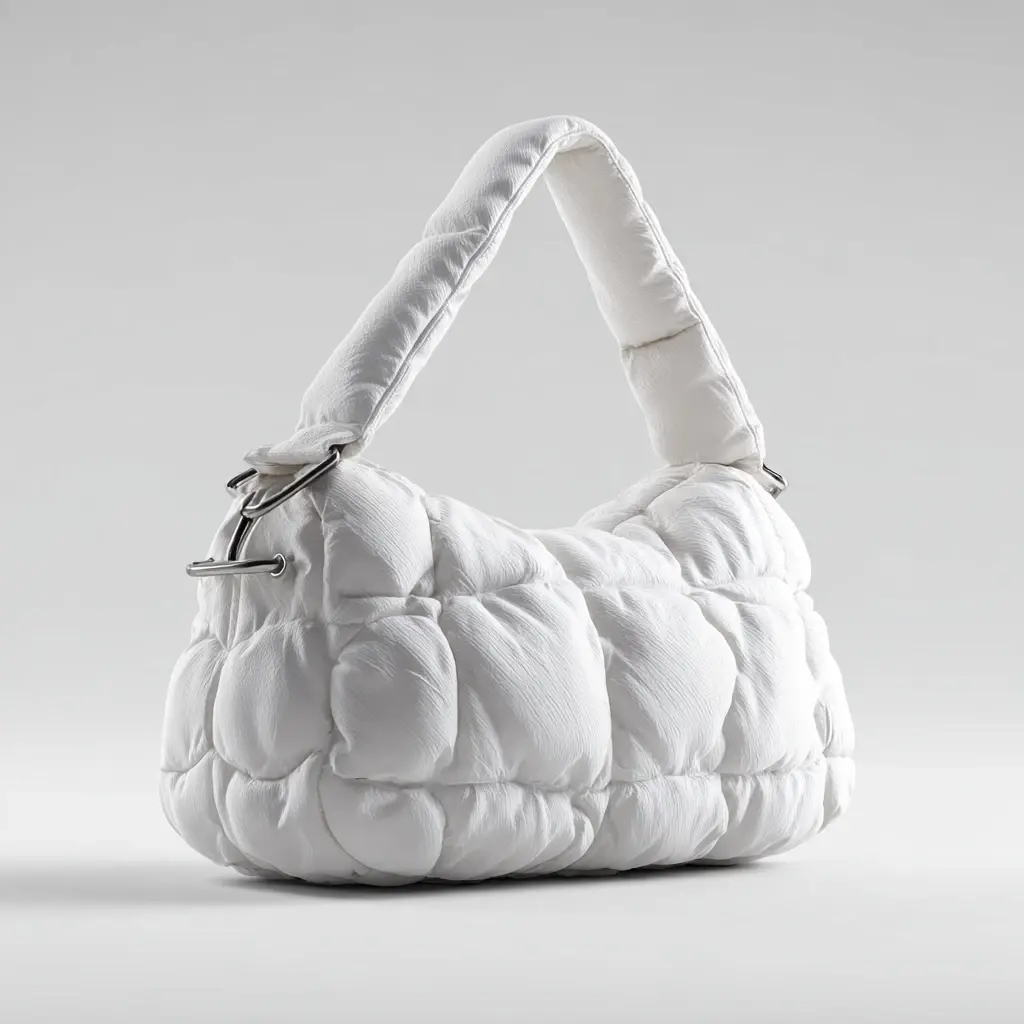
Sampling runs 6-10 working days from an approved brief for a standard construction and 12-15 working days when the build is complex — a structured body, a moulded handle, a lining with internal framing, or hardware that must be sourced rather than taken from stock. Two rounds is normal and three is not a failure; what matters is that each round is signed off against the written spec. At sign-off you should hold photographs on a neutral background, a measurement report on the sewn sample, and written approval naming the sample number.
What should the sample approval cover?
Six things, in this order: dimensions against the spec sheet, colour against the Pantone reference within the agreed ΔE tolerance, stitch density and seam finish, hardware plating and function through at least 200 open-close cycles on zips, strap and handle pull strength, and the position and method of your logo. Approve in writing with the sample number, and keep the approved sample as the physical reference the bulk run will be judged against. Issue a revised sample number for any change after approval; undocumented changes are the usual cause of a bulk run that looks wrong through no fault of the line.
Question 5: What Does the Inspection Actually Sample?
AQL 2.5 under ISO 2859-1 is the default inspection level on this programme, and it is a sampling plan, not a guarantee. At general inspection level II a lot of 501-1,200 pieces draws code letter J and an 80-piece sample, accept 5 and reject 6; a lot of 3,201-10,000 pieces draws code letter L and a 200-piece sample, accept 10 and reject 11. Critical defects are treated separately and are normally accepted at zero. Knowing those numbers changes how you read a report: an 80-piece sample says something precise about statistical confidence and nothing at all about the 420 pieces that were never opened.
| Defect class | Examples on a handbag | Typical AQL applied | Action on failure |
|---|---|---|---|
| Critical | Broken strap root, exposed sharp hardware, non-compliant coating | 0 (zero acceptance) | Reject lot, re-inspect 100% |
| Major | Visible seam grin, colour off swatch beyond ΔE, faulty zip, logo misplacement | 2.5 | Rework or reject at buyer option |
| Minor | Loose thread under 5 mm, light creasing, small ink mark on lining | 4.0 | Accept with note, or rework if cheap |
Decide in advance whether inspection happens at 80% or 100% packed, and whether it is a final random check or a during-production one. The detail behind the numbers is in what AQL 2.5 inspection really means, and the claim side is covered in wholesale handbag returns and defect claims.
Question 6: How Is the Shipment Packed and Released?
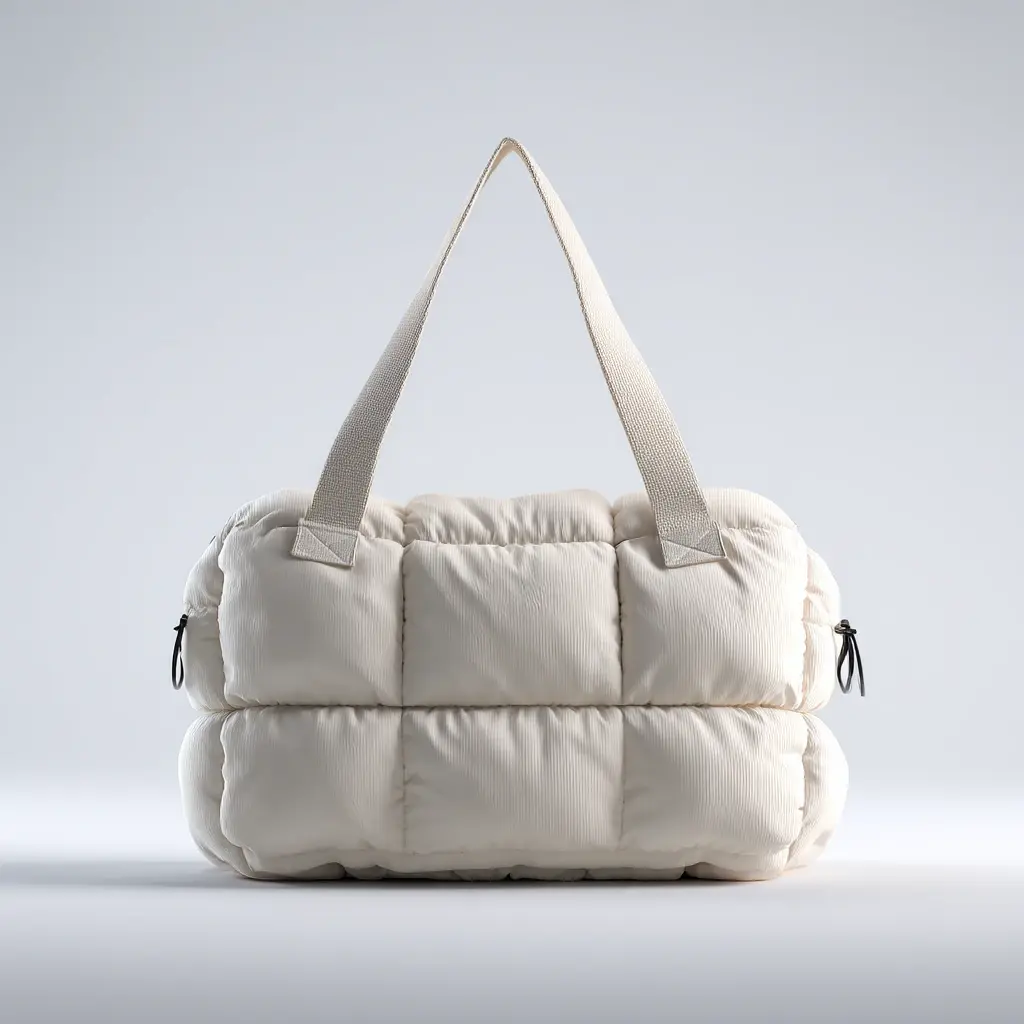
Packing is the last place a first order loses money and the easiest place to control. Specify pieces per carton, carton dimensions and maximum gross weight — 24 totes in a 60 × 40 × 40 cm carton under 18 kg gross is a workable reference — because cube drives freight and weight drives handling. A 20GP holds roughly 28 cubic metres, so a 2,000-piece tote order fills one on cube before it reaches any weight limit.
- Polybags at 0.035 mm minimum, with a suffocation warning printed where the market requires it.
- Barcode or FNSKU labelling applied before packing if goods go straight into a marketplace warehouse.
- Shipping marks on two adjacent sides: consignee, destination, carton number, style and colourway code.
- A packing list reconciling to the commercial invoice line by line, including colourway splits.
- Photographs of the sealed container or loaded cartons at the point of release.
Compliance documents for the destination market
Compliance belongs here too. For the EU, REACH Annex XVII restricts certain substances in finished articles and a written declaration belongs in the document pack. For California, Prop 65 requires a warning where listed substances exceed the threshold. For US children's products, CPSIA sets lead and phthalate limits and tracking-label rules. None are optional paperwork.
Question 7: What Happens If the Goods Arrive Wrong?
The four parts of a claim procedure
Agree the claim procedure before you need it. A workable one has four parts: a fixed window counted from delivery, typically 30 days for latent defects and shorter for visible transit damage; an evidence standard of photographs plus a counted sample plus carton and style codes; a remedy ladder of credit against the next order, then rework, then replacement; and an allowance for minor defects, often 0.5-1% of shipped quantity, below which a claim is not worth either party's time.
Put it in the pro forma invoice rather than an email thread, and keep the approved sample and the inspection report: nearly every claim turns on comparing what arrived against something signed off earlier.
The 23-Point Checklist, Consolidated
- Confirm whether this is stock, private label or development.
- Fix style and colourway count against MOQ 500 pcs per style / colourway.
- Issue a numbered dimension sheet in centimetres.
- Specify body material by weight or substance; lining by denier.
- Specify seam allowance, stitches per inch and needle size.
- Specify hardware base metal, plating, gauge and finish test hours.
- Specify strap width, drop and pull-test figure.
- Give Pantone TCX references with an agreed ΔE tolerance.
- State the logo method, position and size.
- State packing: pieces per carton, carton size, polybag thickness.
- Ask for the quote split into material, trim, labour and overhead.
- Ask for prices at three quantities.
- Confirm the trade term: FOB Xiamen, or CIF / DDP on request.
- Confirm sampling at 6-10 working days, or 12-15 for complex builds.
- Approve the sample in writing, with a sample number, and keep it as the bulk reference.
- Confirm bulk production at 35-50 days from approval and deposit.
- Confirm AQL 2.5 to ISO 2859-1, critical defects at zero.
- Decide inspection timing: 80% or 100% packed, and who performs it.
- Request REACH, Prop 65 and CPSIA declarations.
- Confirm carton marks and invoice reconciliation.
- Obtain loading photographs at release.
- Agree the claim window, evidence standard and remedy ladder.
- Book the reorder slot while the first order is on the water.
Where First-Time Buyers Run Out of Time
The pattern across first orders is consistent: the buyer spends three weeks choosing a style and one afternoon writing the specification. Those proportions should be reversed. Every hour on the measurement sheet saves a week of sample rounds, and every unclear line in the spec becomes a defect argument at inspection. The second failure is calendar arithmetic — sampling at 6-10 working days, bulk at 35-50 days, plus transit and clearance is a door-to-door figure that regularly exceeds 90 days.
The third failure is treating the first order as a trial rather than as inventory. At 500 pieces per style / colourway the order is already a real stock commitment, and the styles chosen now are the ones photographed, listed and reviewed. Choose for sell-through, not novelty: a plain tote and a shoulder bag in a core colour teach you more than five experimental silhouettes. The first bulk order guide to totes explains why a simple shape is the right place to put the first 500 pieces. Send silhouette, material direction, target retail price and destination together; a private label coordinator returns the costed quote with dates and packing spec. Get a quote.
Leverage That Works on a First Wholesale Order
A first order is a negotiation about the wrong thing if it is only about the unit price. The levers that actually move money on a first run are structural: quantity per colourway, packaging deferral, and the credit treatment of sample fees. Consolidating to one colourway of one style releases a trimming minimum; deferring retail packaging to the reorder removes a fixed artwork charge from the first invoice; and confirming the sample credit in writing is worth more than three percent on a unit price that was quoted correctly in the first place.
- Colourway consolidation. One style at 500 pcs in one colour beats two thin colourways on both cost and risk.
- Packaging deferral. Retail packaging artwork is a fixed charge; plain export packing on run one defers it to the reorder.
- Sample credit. Confirm it before the deposit; it is worth USD 120-480 on a two-round development.
- Quantity steps. Prices at 500, 1,000 and 2,000 pcs show where the curve flattens, and the answer is usually near 1,000.
Feedback a Sample Room Can Act On
The second sample round is usually caused by the first feedback email. A usable revision list is numbered, measured and photographic: each item names the panel, the current measurement, the target measurement and the tolerance. The strap feels short becomes strap drop 22 cm, target 26 cm, tolerance plus or minus 3 mm — one line a bench can act on the same day. Unnumbered feedback across five emails is how one round becomes two, and every round is 6-10 working days. The habits that prevent this are set out in the guide to sample photography and feedback.
- Numbered. One list, items 1 to n, and the reply confirms each number by number.
- Measured. Panel, current value, target value, tolerance; adjectives are not dimensions.
- Photographic. Marked-up photographs on a neutral background beat descriptions across a language gap.
- Batched. Everything released in one list; an email an hour later starts a second round.
The First Thirty Days After the Cartons Land
The checklist ends at loading, but the order is not finished at the dock. The first thirty days decide the reorder: sell-through is tracked by style and colourway weekly, the inspection report and the approved sample are filed where a claim can use them, and the claim window is diarised on arrival rather than on discovery. The reorder decision is worth making early, because a repeat of the hero at 500 pcs avoids new tooling, runs a 3-5 day confirmation sample instead of a full round, and lands roughly 20 days faster than the first order.
- Weekly sell-through. By style and colourway; under 30 percent by week eight triggers the slow-style rule.
- File the evidence. Inspection report, approved sample and loading photographs stored together.
- Claim window. Typically 30 days from delivery for latent defects; diarise it the day the cartons arrive.
- Early reorder. Book the hero's slot while the first order is on the water; it costs a deposit and nothing else.
Turn the checklist into a costed order
MOQ 500 pcs per style / colourway, sampling in 6-10 working days, bulk in 35-50 days, inspection at AQL 2.5 to ISO 2859-1, release FOB Xiamen. Send the spec sheet and target quantity. Get a quote.
Frequently Asked Questions
What is the minimum quantity for a first wholesale handbag order?
On a private label run the MOQ is 500 pcs per style / colourway, meaning 500 pieces in one colour of one silhouette; a second colourway is a separate lot. Stock buys carry no such floor, so if you need fewer than 500 pieces to test demand, start with stock and move to a branded run on the reorder.
How long does a first wholesale handbag order take from brief to delivery?
Sampling takes 6-10 working days from an approved brief, extending to 12-15 for complex constructions, and bulk production then runs 35-50 days from approval and deposit. Add sea transit and customs clearance and a first order usually exceeds 90 days door to door, so book the calendar backwards from the launch date.
Should a first-time buyer order one colourway or several?
One colourway of one style, almost always. Because the MOQ applies per colourway, three colourways triple the commitment while teaching you marginally more. Put the 500 pieces into a core neutral, read the sell-through rate, and let the second order carry whichever colour the data supports.
What exactly should be written on a handbag specification sheet?
Dimensions in centimetres for body, gusset and handle drop; material by weight or substance; lining by denier; seam allowance, stitches per inch and needle size; hardware base metal, plating and finish test hours; strap width and pull-test figure; Pantone TCX references with a tolerance; and the logo method and position.
How much of a handbag unit price is material?
Material is typically 40-55% of the unit price on a mid-weight bag, with trim and hardware at 12-20%, cutting and sewing labour at 18-25%, and overhead with margin at 12-18%. The bands are wide, but the split shows where a price conversation can realistically go.
Does AQL 2.5 mean every bag is checked?
No. AQL 2.5 under ISO 2859-1 is a sampling plan: at general inspection level II a lot of 501-1,200 pieces draws an 80-piece sample, accept 5 and reject 6; a lot of 3,201-10,000 draws 200 pieces, accept 10 and reject 11. Critical defects are held at zero regardless.
Who pays for the sample on a first order?
The common arrangement is a sample charge credited against the bulk order once it is placed at or above the MOQ, plus the buyer's courier cost. Ask for both figures in writing before the sample is made, and confirm how many revision rounds the arrangement covers, since a second round is normal on a complex build.
What does FOB Xiamen actually include?
FOB Xiamen covers the goods and all costs up to loading on board at Xiamen, including export clearance and inland delivery to the terminal. It excludes ocean freight, insurance, import duty and delivery to your warehouse, so landed cost is the FOB figure plus those elements unless you ask for CIF or DDP.
Which compliance documents should a first order carry?
For the EU, a REACH declaration addressing Annex XVII restrictions on substances in finished articles. For California, a Prop 65 assessment and warning where listed substances exceed the threshold. For US children's products, CPSIA documentation on lead and phthalate limits and tracking labels. Request them with the quote, not after production.
How should cartons be specified for a handbag shipment?
Give pieces per carton, carton dimensions in centimetres and a maximum gross weight; 24 medium totes in a 60 × 40 × 40 cm carton under 18 kg gross is a reasonable reference. Handbags are light and bulky, so freight is driven by cube, and a 20GP offers roughly 28 cubic metres against about 68 in a 40HQ.
What is a fair defect claim window after delivery?
Thirty days from delivery is common for latent defects, with a shorter period for visible transit damage noted on the delivery document at the time. Support the claim with photographs, a counted sample of affected pieces and the carton and style codes; the remedy ladder should be agreed in advance: credit, then rework, then replacement.
Is it better to start with a simple tote or a structured style?
Start with a simple tote. A flat-pattern canvas or coated-fabric tote has fewer panels, no internal framing and stock hardware, so fewer things fail at inspection, sampling is shorter and the unit price is lower at the same volume. Once sell-through data exists, the second order can carry the structured shape.
People Also Ask
Why do first wholesale handbag orders go wrong?
Because the specification is written too loosely and the calendar is counted too optimistically. A spec without numbers gives the inspection nothing to measure, and a launch date set without adding sampling, bulk, transit and clearance leaves the buyer paying for air freight or missing the season.
Can I order 500 pieces split across two styles?
Not on a private label run, where the MOQ is 500 pcs per style / colourway, so two styles means two lots. Some stock programmes allow a mixed lot, but on a branded run the per-style minimum is what makes the line changeover economical.
Do I need my own barcode before the first order?
You need one if the goods ship straight into a marketplace or retail warehouse that scans at receipt. Retail tagging and barcode application are usually a fixed per-piece cost quoted separately, so ask for that line in the quotation and supply the codes before packing rather than after arrival.
What should I inspect before releasing the balance payment?
The inspection report at AQL 2.5 with its sample size and accept or reject counts, photographs of the packed cartons, and a packing list that reconciles to the commercial invoice including colourway splits. Release the balance only when those three documents match what the pro forma invoice promised.
Sources and further reading
Every figure on this page is either our own programme data or attributed below. Open the originals before you write them into a specification.
- Incoterms rulesICC The rules that decide where cost, risk and insurance transfer.
- REACH — chemical substances regulationEuropean Commission Annex XVII restricts the substances that may appear in finished leather and coatings.
- Consumer Product Safety Improvement Act of 2008 (full text)U.S. Congress / GovInfo The statute behind childrens-product limits and tracking labels.