Best Practices for Handbag Sample Photography and Feedback
What is the best way to photograph a handbag sample and send feedback that actually gets fixed? Shoot one nine-frame set under 5500K light with an 18% grey card in the first frame, then send a numbered revision list in which every item points at one annotated image. Photographs without numbers get discussed; photographs with numbers get sewn — a numbered list tied to a single frame per item is the difference between closing a sample in one round and spending three rounds on the same bag. The whole set takes about twenty minutes to shoot and removes the 3-6 days that a vague review usually adds to a sampling window of 6-10 working days.
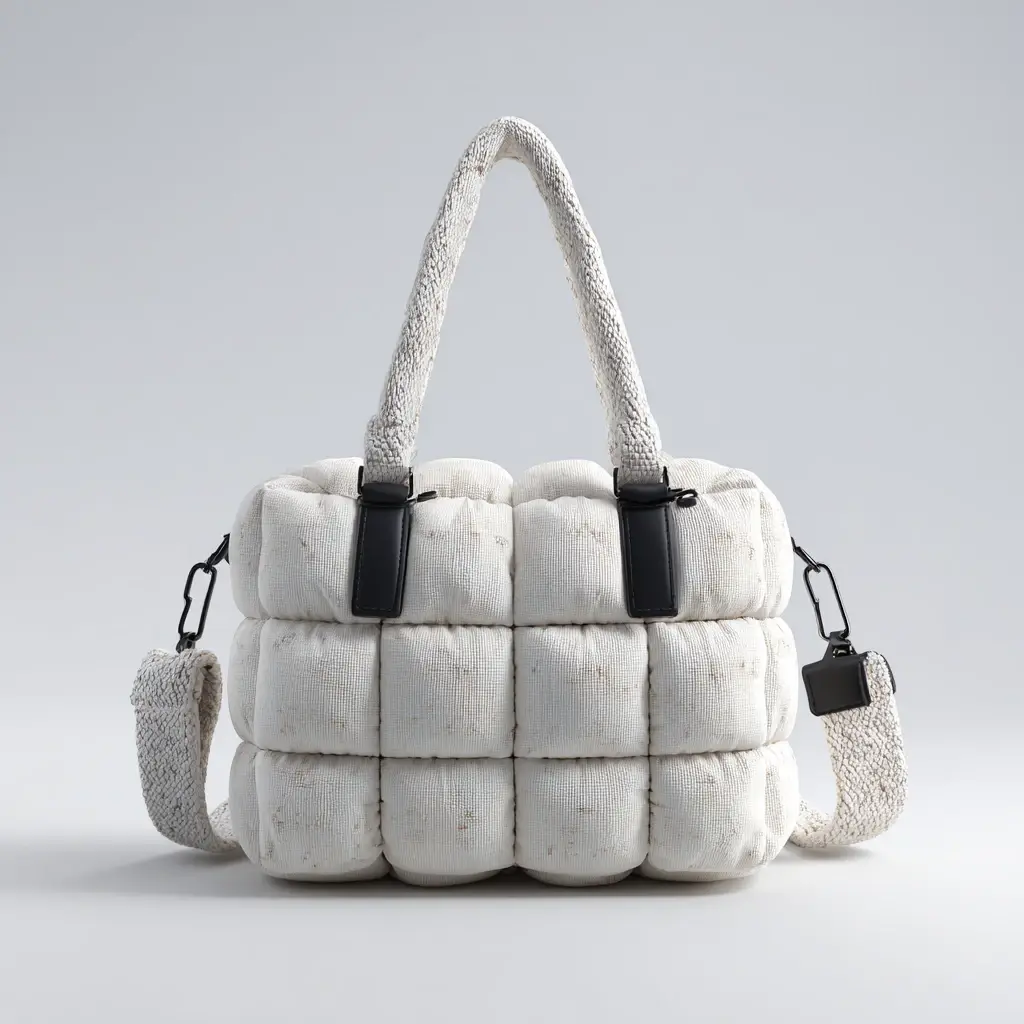
- Three Ways to Shoot a Sample, Compared
- The Nine-Frame Set That Answers Most Questions
- Feedback in Three Formats: Which One Gets Fixed
- Lighting and Colour Fidelity in Sample Photographs
- What to Photograph on Each Silhouette
- Numbering the Revision List
- Turning Photographs Into a Specification Change
- When to Stop Photographing and Start a Call
- Six Failure Signatures a Still Frame Shows
- Naming Files So Three Rounds Stay Comparable
- Where the Days Go in One Review Round
- What a Usable Reply Contains
What is the best way to photograph a handbag sample and send feedback that actually gets fixed? Shoot one nine-frame set under 5500K light with an 18% grey card in the first frame, then send a numbered revision list in which every item points at one annotated image. Photographs without numbers get discussed; photographs with numbers get sewn — a numbered list tied to a single frame per item is the difference between closing a sample in one round and spending three rounds on the same bag. The whole set takes about twenty minutes to shoot and removes the 3-6 days that a vague review usually adds to a sampling window of 6-10 working days.
Sample photography parameters we recommend
Three Ways to Shoot a Sample, Compared
There are three realistic ways a brand photographs a sample: a phone on a desk, a folding lightbox with fixed lamps, and a small macro rig with a tripod and a grey card. They differ in what they can settle. The question is not which produces the prettiest picture; it is which produces a picture that settles a dispute about a seam, a shade or a strap drop.
| Setup | Cost and time | Settles | Fails on |
|---|---|---|---|
| Phone on a desk | Nothing, 5 minutes | Silhouette, proportion, obvious flaws | Colour, stitch count, edge paint |
| Folding lightbox | Low, 15 minutes | Colour reading, panel shade, hardware tone | Macro detail on seams and joints |
| Tripod and macro rig | Moderate, 25 minutes | Stitch density, seam allowance, edge finish | Nothing, but it is slower to set up |
The recommendation is not the most expensive option. It is the lightbox for the overview frames and a phone held 15-20 cm away for the macro frames, because the two together settle everything that a revision list needs to name. A dedicated rig earns its place only when a programme runs more than about twelve samples a season, at which point the repeatability starts to matter more than the setup time.
Whatever the setup, the rule that does the work is consistency: the same distance, the same light and the same backdrop every round. A revision that looks fixed in a brighter photograph probably is not, and that is how two rounds get spent on the same seam. This is the same discipline described in the sampling and approval process, where the approved sample is a reference object rather than a memory.
The Nine-Frame Set That Answers Most Questions
Nine frames covers a bag completely without turning review into a photo project. One overview establishes proportion, seven detail frames cover the joints and finishes that fail first, and one worn frame shows how the bag sits on a body. Shooting them in a fixed order means the second round can be compared frame by frame against the first.
- Frame 1, overview with grey card. Front elevation, bag upright and empty, ruler at the base, grey card at the edge.
- Frame 2, back elevation. Same distance and light; this is where panel symmetry and back pocket placement show.
- Frame 3, base and feet. Bag inverted; base reinforcement and foot alignment are visible here and nowhere else.
- Frame 4, strap attachment. Macro of the joint where the strap meets the body, because this is the joint that fails first in the field.
- Frame 5, seam macro. 15-20 cm away, ruler flat against the seam, so stitch density can be counted off the image.
- Frame 6, edge paint. Macro along a raw edge at a shallow angle to catch gloss and coverage.
- Frame 7, hardware and closure. Zip puller, slider, feet and any plated part, shot straight on to show tone.
- Frame 8, interior and lining. Bag opened flat; pocket layout, lining tension and any raw edge inside.
- Frame 9, worn. On a body or a stand at the intended drop, showing where the bag actually falls.
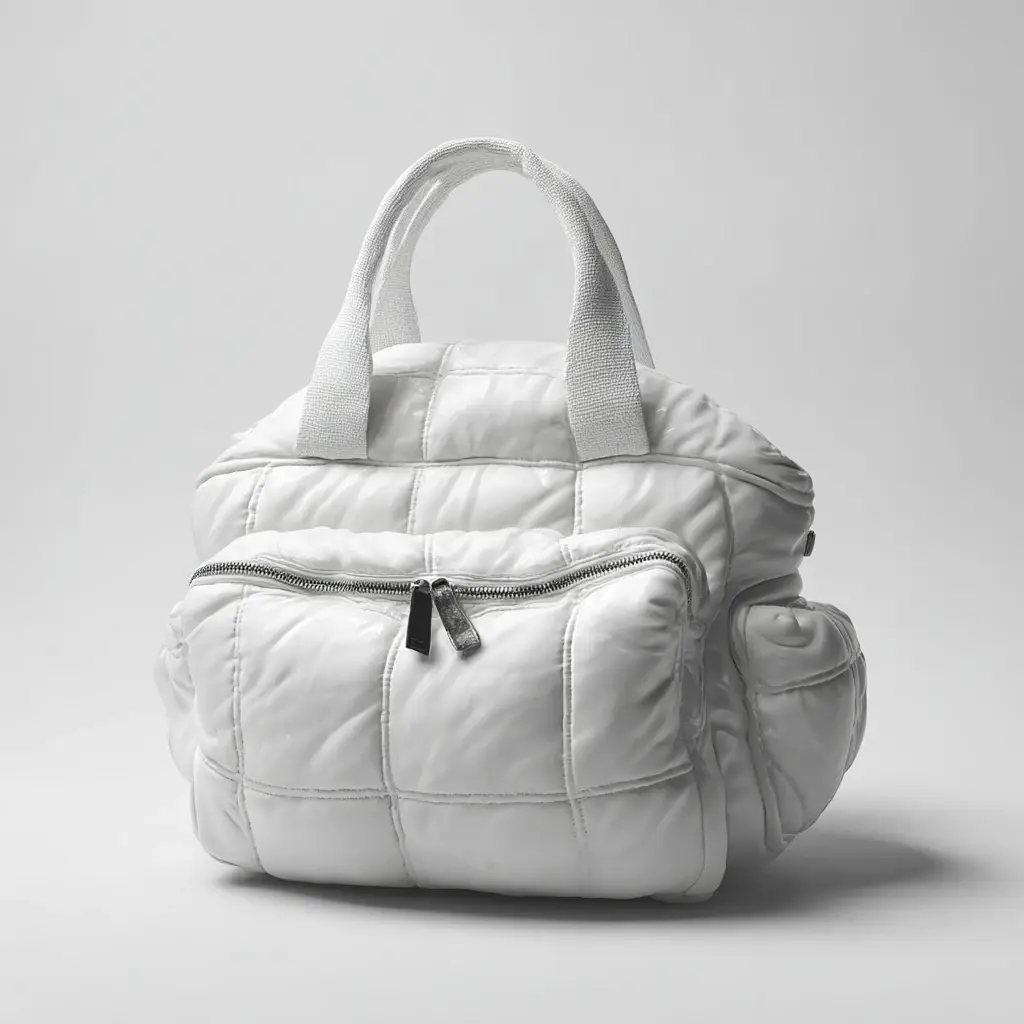
How Close Should a Macro Frame Be?
Close enough that a 10 mm seam allowance fills a third of the frame, which on most phones means 15-20 cm. At that distance stitch density can be counted directly: 7-9 stitches per inch on a body seam is the commercial norm and is legible in a 3000 px frame. Further back than that and the seam becomes a texture; closer and the depth of field collapses and half the stitch line is soft.
Feedback in Three Formats: Which One Gets Fixed
Feedback arrives in three shapes: prose in an email, annotated images, and a numbered list with images attached. They are not equivalent. Prose has to be interpreted, annotations have to be collected, and a numbered list can be worked through, ticked off and returned. The format is a stronger predictor of how many rounds a sample takes than the content of the feedback itself.
| Format | Typical result | Rounds to close | Why |
|---|---|---|---|
| Prose in an email | Partial fix, one item missed | 3 or more | Adjectives have to be interpreted by someone who cannot see the reviewer |
| Annotated images only | Most items fixed, priority unclear | 2 | Each note is clear but nothing says which item blocks approval |
| Numbered list with images | All items fixed or explained | 1 to 2 | Every item is countable, and the response can quote the same number |
A numbered list also gives the reply a structure. When the production partner answers item 3 with a measurement rather than with a promise, the exchange is finished; when it answers with we improved the strap, the exchange continues. Numbering is the cheapest control available in the whole sampling stage, and it is the one most often skipped.
Lighting and Colour Fidelity in Sample Photographs
Colour cannot be judged from a photograph that has no known light source. A lamp at 5500K with a colour rendering index of 95 or higher approximates the D65 daylight standard used in a colour approval booth, which means the sample photograph and the lab dip are being read under comparable conditions. An 18% grey card in the first frame lets the white balance be corrected afterwards, and it is the single cheapest addition to any setup.
- One light temperature. 5500K throughout; mixing a warm room lamp with a daylight lamp makes every shade judgement worthless.
- Neutral backdrop. Mid-grey or white card; a coloured backdrop reflects into the bag and shifts the reading.
- Fixed exposure. f/8, ISO 100, 1/125 s, so two rounds are comparable frame for frame.
- No enhancement. Turn off auto-enhance, portrait mode and filters; they change colour and blur edges that need to be sharp.
Even with all of that, a photograph is evidence about construction, not a colour approval. Shade should still be signed off on a physical swatch measured under D65 with a check source, as set out in the Pantone to fabric dyeing walkthrough. The photograph's job is to show whether the seam is straight and the strap sits square.
What to Photograph on Each Silhouette
The nine frames shift by silhouette, because the joint that fails differs. A tote fails at the strap-to-body junction under load; a crossbody fails at the slider and the strap adjuster; a bucket fails at the drawcord channel and the reinforced base. Photographing the generic set on a structured satchel means missing the one joint that matters.
| Silhouette | Photograph first | What the frame should show |
|---|---|---|
| Tote | Strap-to-body junction | Reinforcement patch, bar-tack, stitch line entering the panel |
| Crossbody | Slider and adjuster | Slider travel, webbing end finish, hardware tone |
| Shoulder | Flap closure alignment | Closing point within 2 mm, magnetic catch position |
| Bucket | Drawcord channel and base | Channel width, cord glide, base board and feet |
| Backpack | Strap and back panel | Load path, padding thickness, top handle attachment |
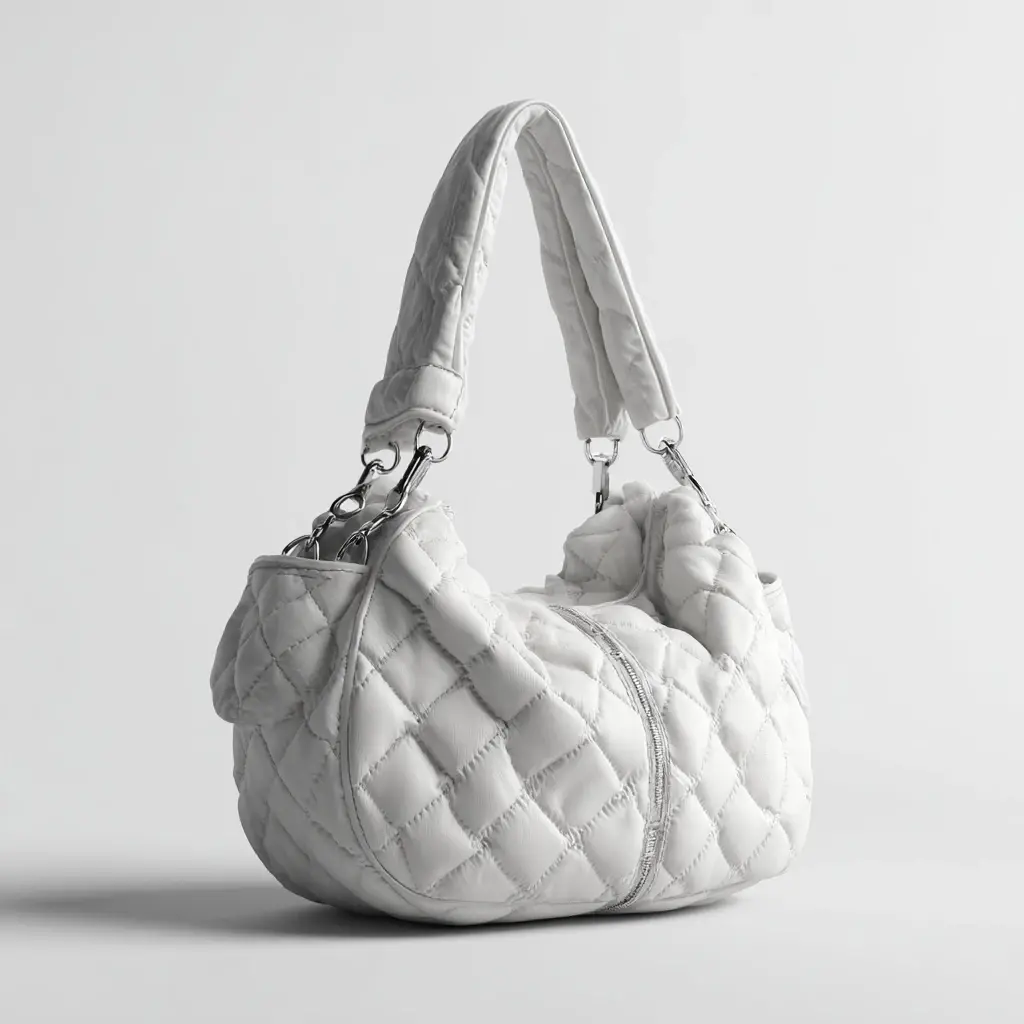
Numbering the Revision List
A revision item is only actionable if it names a place, a measurement and a direction. Move the strap 8 mm toward the centre is actionable; the strap feels wrong is not. Each item should carry a frame number from the nine-frame set, so the reader goes straight to the right picture, and each should say whether it blocks approval or is a preference.
- Place. Which panel, which seam, measured in millimetres from a stated datum edge.
- Observation. What the frame shows, stated as a measurement rather than an adjective.
- Target. The number wanted: 10 mm seam allowance, 7-9 stitches per inch, strap drop 250 mm.
- Priority. Blocks approval, or nice to have. Say which.
- Frame reference. Frame 4 of 9, so nothing has to be searched for.
Two habits make the list faster to action. Group items that touch the same pattern piece, because one pattern change can close three of them. And separate construction items from colour items: construction goes back to the bench, colour goes back to the dye house, and mixing them in one list means neither moves quickly.
Turning Photographs Into a Specification Change
Every accepted revision should end as a line in the specification, not just as a change to one bag. If the strap drop moves 8 mm on the sample, the tech pack moves with it, because the bulk run is built from the document rather than from the sample. A revision that lives only in an email thread is a revision that will be re-litigated at inspection.
- Update the measurement table. Body width, gusset depth, strap drop and pocket positions, each with a tolerance.
- Update the construction notes. Stitch density, seam allowance, reinforcement, edge finish.
- Update the colour references. Body, lining, thread, binding and hardware, each with its approved code.
- Re-issue with a version number. v1.1 dated, so nobody is working from the earlier file.
This is also the point at which the number of rounds becomes a decision rather than an accident. A programme that has revised three times on the same silhouette is usually not facing three problems; it is facing one unclear specification. The rounds a custom bag really needs is the honest answer to how many are normal before the brief, rather than the bag, needs rewriting.
When to Stop Photographing and Start a Call
Photographs stop being efficient at a predictable point: when the same item has been revised twice, or when the disagreement is about hand feel, drape or stiffness rather than about a measurement. Those properties do not survive compression, and another nine-frame set will not settle them. A fifteen-minute video call with the sample in hand on both ends will.
Use the call to agree a physical reference instead of a description. Send a cutting of the felt, interlining or foam that matches the intended hand, or a competitor bag already owned, and let the bench match an object. Then confirm in writing with one frame and one measurement, so the agreement does not evaporate on the next round. Where the prototype and pre-production sample distinction applies, hand feel should be frozen at the pre-production stage rather than at the prototype, because interlining and lining change it.
Six Failure Signatures a Still Frame Shows
A photograph cannot measure a seam, but it can show nearly every construction fault early enough to act on it. The frame has to be close enough to count stitches and flat enough to show geometry, which is what the 15-20 cm macro distance and the fixed 90 cm overview were for. Reading a set against a named list rather than against an impression catches faults that would otherwise surface at final inspection, where correcting them costs weeks rather than a round.
| Fault | What the frame shows | What to write on the list |
|---|---|---|
| Skipped or uneven stitch | Two stitches missing inside a 25 mm run, pitch swinging from 7 to 11 per inch | Stitch density to 7-9 per inch along the whole seam |
| Seam allowance drift | Allowance reading 6 mm at one end and 12 mm at the other | Allowance to 10 mm, measured from the cut edge |
| Puckering | A wave every 8-12 mm along a bound seam rather than a flat line | Feed tension reduced; 3 mm foam reused or removed |
| Edge paint breakdown | Gloss variation and a 0.4 mm ridge along the raw edge | Two coats at 1.2 mm total, sanded between passes |
| Strap twist | Webbing rotating more than about 3 degrees between anchor and slider | Anchor re-set square to the body panel |
| Lining tension | A 2 mm gap between lining and body at the base, or a visible droop | Lining re-cut to the corrected body in 210D at 60-70 gsm |
Naming Files So Three Rounds Stay Comparable
Three revision rounds produce 27 frames and one argument about which set is current. A naming convention removes it. Every file carries the style code, the round number, the frame number and the date, and nothing else; anything the receiver renames falls outside the sequence and can be ignored safely. The same convention should be used by whoever photographs the reply, agreed in the first email, so the fourth frame of round two can be placed beside the fourth frame of round one without opening both folders.
- One scheme, written once. STYLE-R2-F4-2026-03-11 states everything needed later; a file named IMG_2287 states nothing.
- Retain the raw frame. Keep the untouched file at 3000 px or more and edit a copy, so a second person can re-read the same image.
- Fix size and colour space. sRGB throughout at 3000 px on the long edge, so a stitch count means the same thing in both rounds.
- Keep every round. Deleting round one removes the evidence that a fault existed; hold all three sets until 90 days after bulk is accepted.
Where the Days Go in One Review Round
Photography itself takes under half an hour. The delay is everything around it: selecting frames, writing the numbered list, waiting for a second opinion, and the courier legs that carry the bag out and back at 3-5 days each. A round that could close in eight calendar days routinely takes eighteen, and the ten extra days almost always belong to somebody on the buying side rather than to the bench.
| Step | Days | Who holds it |
|---|---|---|
| Shoot the nine frames | 0.5 | Buyer; 15 minutes of lightbox setup and 10 to shoot |
| Select and annotate | 0.5 | Buyer; sorting takes minutes once files are named |
| Write the numbered list | 0.5 | Buyer; one consolidator rather than three commenters |
| Second opinion internally | 0-4 | The block that turns three days into seven |
| Courier out and back | 6-10 | Shared, and nothing should delay its booking |
Booking the courier before the shooting session rather than after the list is finished removes two days from almost every round, because the parcel leaves on the day the list is signed instead of the day somebody remembers to arrange it. Rounds stack quickly once they slip: two rounds at eighteen days each is five weeks of a calendar that was supposed to hold sampling inside 6-10 working days. The sample revision sequence sets out the full round.
What a Usable Reply Contains
The reply has a format too, and asking for it at the outset saves a round. An answer given item by item should re-shoot the same frames under the same settings, quote a measurement rather than a promise for each item, and say which items were left unchanged and why. Where a revision touched a pattern piece, a physical counter sample should follow by courier; where it was photographic only, images settle it and three days are saved.
- Same frame numbers. Round two frame five beside round one frame five, at the same distance and light source, so the comparison is immediate.
- A number per item. Item three answered with nine stitches per inch is closed; item three answered with improved is not.
- Declared exceptions. Anything left unchanged should be stated explicitly, with the reason, rather than disappearing from the reply.
- Courier only where it earns it. Returning the unit costs USD 35-70 and 3-5 days; still frames settle most construction items without it.
Send a numbered list, close the sample in one round
Send nine frames and a numbered revision list, and a handbag programme specialist will answer item by item with measurements. Sampling runs 6-10 working days, bulk 35-50 days, and inspection is at AQL 2.5 under ISO 2859-1. Get a quote.
Frequently Asked Questions
What is the best way to photograph a handbag sample?
Shoot a fixed nine-frame set: one overview with an 18% grey card, seven macro detail frames covering the strap joint, seams, edge paint, hardware, base and interior, and one worn shot. Use 5500K light with a CRI of 95 or more, a neutral backdrop and a fixed exposure so two rounds can be compared frame by frame.
How many photographs does a sample review need?
Nine is enough for most silhouettes. Fewer than six leaves the joints that fail first undocumented; more than twelve turns review into a photo project and slows the round. The discipline that matters is shooting the same nine in the same order every time, so round two can be compared directly against round one.
What light temperature should be used for sample photographs?
5500K with a colour rendering index of 95 or higher, which approximates the D65 daylight standard used in a colour approval booth. Never mix a warm room lamp with a daylight lamp, because mixed temperatures make every shade judgement in the set unusable.
Why should a grey card be included in the first frame?
An 18% grey card gives a known neutral reference so white balance can be corrected after shooting. Without it, the camera guesses at the light and every colour in the set shifts, which means a shade discussion based on the photographs will be argued on false evidence.
How close should a macro photograph of a seam be?
Close enough that a 10 mm seam allowance fills about a third of the frame, which on most phones is 15-20 cm. At that distance 7-9 stitches per inch is countable directly from the image. Further back loses the detail; closer collapses the depth of field and half the stitch line goes soft.
What is the most effective format for sample feedback?
A numbered list in which each item names a place in millimetres from a datum edge, states the observation as a measurement, gives the target number, says whether it blocks approval, and references one frame. Prose and unnumbered annotations are the two formats that reliably cost an extra round.
Should colour be approved from a sample photograph?
No. A photograph is evidence about construction, not about shade. Colour should be approved on a physical swatch measured under D65 with a check source such as TL84 or F11, at a Delta E of 2.0 or better against the retained reference. The photograph shows whether the seam is straight.
Which joint should be photographed first on a tote?
The strap-to-body junction, because it is the joint that fails first under load. The frame should show the reinforcement patch, any bar-tack and the stitch line entering the panel, shot at 15-20 cm with a steel ruler in frame so stitch density can be counted.
How do photographs turn into a specification change?
Every accepted revision should be written back into the measurement table, the construction notes and the colour references, and the document re-issued with a version number. Bulk is built from the document rather than from the sample, so a revision that lives only in an email thread will be re-argued at inspection.
When is a video call better than more photographs?
When the same item has been revised twice, or when the disagreement is about hand feel, drape or stiffness rather than a measurement. Those properties do not survive image compression. Fifteen minutes with the sample in hand at both ends, followed by one confirming frame and one measurement in writing, settles them.
How long does a well-run sample review add to the calendar?
About 3-6 days for review and revision on top of a sampling window of 6-10 working days. A vague review that has to be reinterpreted adds a second full round, which is the most common way a sampling stage overruns. Numbered feedback is the cheapest control available.
What should be in the frame when measuring strap drop?
A 30 cm steel ruler held flat against the bag, with the camera square to the subject at 90 cm and the bag hanging or held at its natural drop. Strap drop for a shoulder silhouette is typically 220-300 mm, and it should be recorded with a tolerance of plus or minus 5 mm.
People Also Ask
Do I need a professional camera for sample photography?
No. A recent phone at 15-20 cm with good light and a fixed exposure is enough for every frame in the set. A tripod and macro rig only earns its cost above roughly twelve samples a season, where repeatability starts to matter more than setup time.
Should filters or auto-enhance be used?
No. Auto-enhance, portrait mode and filters change colour and blur the edges that need to be sharp. Shoot at f/8, ISO 100 and 1/125 s with a fixed exposure so two rounds remain comparable frame for frame.
What is the fastest way to lose a sample round?
Sending feedback as prose. An adjective has to be interpreted by someone who cannot see the reviewer, so at least one item gets missed. Numbering the list is free and is the single strongest predictor of closing in one round.
Should construction and colour feedback be sent together?
Send them separately. Construction goes back to the bench and colour goes back to the dye house; one combined list means neither moves quickly. Label each item so the reply can quote the same number back to you.
How do I record a decision made on a call?
Confirm it the same day in writing with one frame and one measurement, and update the specification with a version number. An agreement that is not written into the document does not survive to the next round.
Sources and further reading
Every figure on this page is either our own programme data or attributed below. Open the originals before you write them into a specification.
- SATRA — technical services for leather, footwear and accessoriesSATRA Independent leather, hardware and accessories testing protocols.
- National Institute of Standards and TechnologyNIST Measurement standards and reference materials behind calibrated testing.
- World Intellectual Property OrganizationWIPO International trademark and design registration before tooling starts.