The Custom Handbag Sample Revision Process Explained
How does the custom handbag sample revision process actually work? Each round is a full pass: the pattern or specification is adjusted, panels are cut, the bag is assembled, branding is applied and the result is checked internally, which is why a round costs 6-10 working days on a standard construction and 12-15 on a framed, woven or stacked one. A revision is not a correction applied to a bag; it is a second production of one unit against a changed specification, and it costs the same calendar as the first. Below, in the order the questions are really asked: what counts as a round, why the sample differs from the drawing, what a usable revision list looks like, when to stop, who pays, and what cannot be fixed at all.
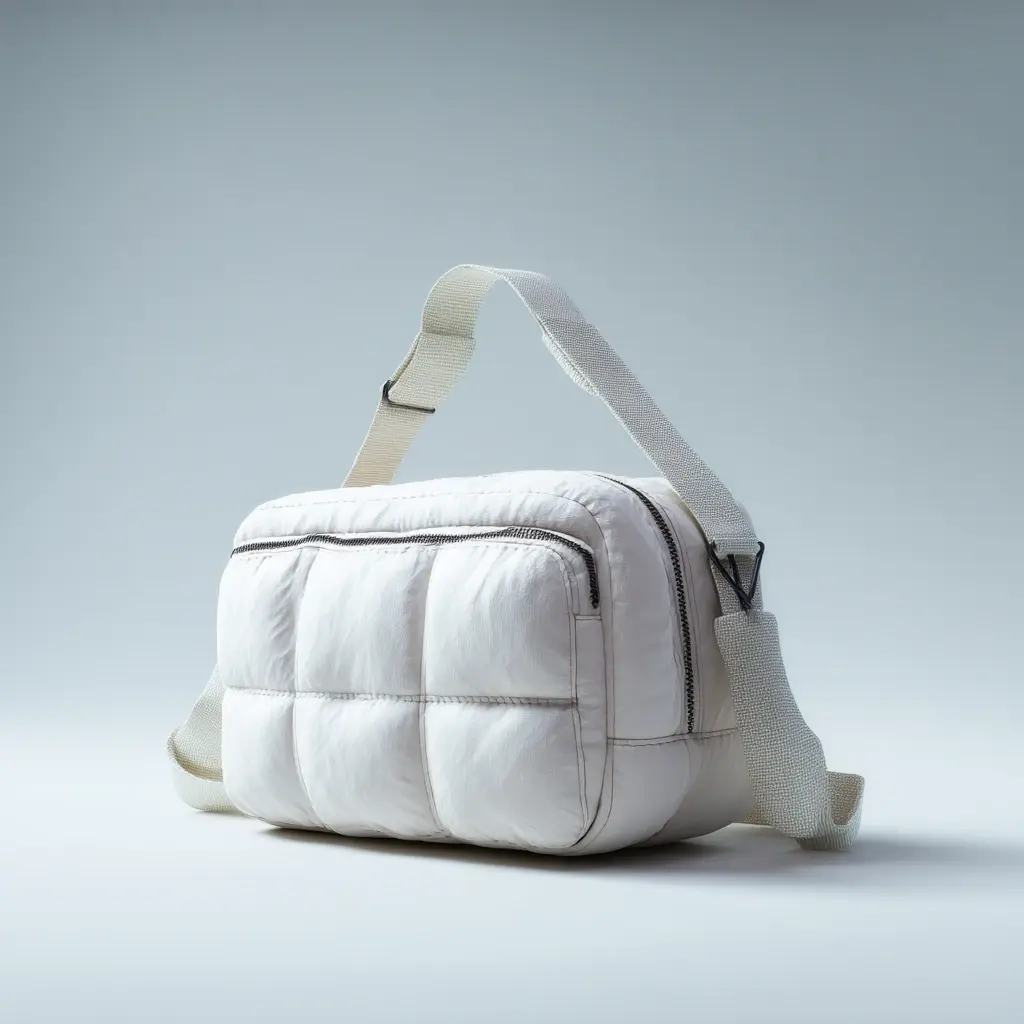
- What Actually Counts as a Revision Round
- Why the Sample Differs From the Drawing
- What a Revision List Should Look Like
- How Many Rounds Before You Rethink
- Who Pays for Round Two
- What Cannot Be Fixed in a Round
- What Is a Counter Sample
- Stopping the Same Fix Recurring in Bulk
- How Approval Actually Works
- Where the Days Go Inside One Revision Round
- What Each Revision Item Costs in Money and Days
- Why the Same Fix Comes Back in Round Two
- Triage: Blockers, Preferences and Items to Defer
How does the custom handbag sample revision process actually work? Each round is a full pass: the pattern or specification is adjusted, panels are cut, the bag is assembled, branding is applied and the result is checked internally, which is why a round costs 6-10 working days on a standard construction and 12-15 on a framed, woven or stacked one. A revision is not a correction applied to a bag; it is a second production of one unit against a changed specification, and it costs the same calendar as the first. Below, in the order the questions are really asked: what counts as a round, why the sample differs from the drawing, what a usable revision list looks like, when to stop, who pays, and what cannot be fixed at all.
Revision parameters
What Actually Counts as a Revision Round
A round is any change that requires the bag to be made again. Adjusting a strap drop by 20 mm, moving a pocket, changing a lining colour, altering hardware or repositioning a logo all count. A photograph taken at a different angle does not. Buyers often assume a small change is a quick fix, and the disappointment is real: the pattern has to be corrected, panels re-cut, and the unit re-assembled, which is the same sequence the first sample went through.
| Change | New round? | Why |
|---|---|---|
| Strap drop changed | Yes | Pattern piece changes, strap remade, body re-cut if attachment moves |
| Pocket added or moved | Yes | Lining pattern and interior assembly change |
| Lining colour changed | Yes | Material has to be sourced and the interior rebuilt |
| Hardware swapped | Yes | Hole positions and reinforcement may change |
| Logo position moved | Yes | New placement, possibly a new die position |
| Photograph requested | No | Nothing on the bag changes |
| Specification note corrected | No | Document change only, but confirm it in writing |
Understanding that distinction changes how you behave at sampling. Because a round costs the same calendar as the first sample, the cheapest revision is the one you never need, and the cheapest way to avoid one is to resolve every measurement before the pattern is cut rather than after the bag exists. In practice that means reviewing the specification line by line before approving it: dimensions, strap drop, gusset depth, pocket count, stitch density, hardware plating, branding position and lining colour.
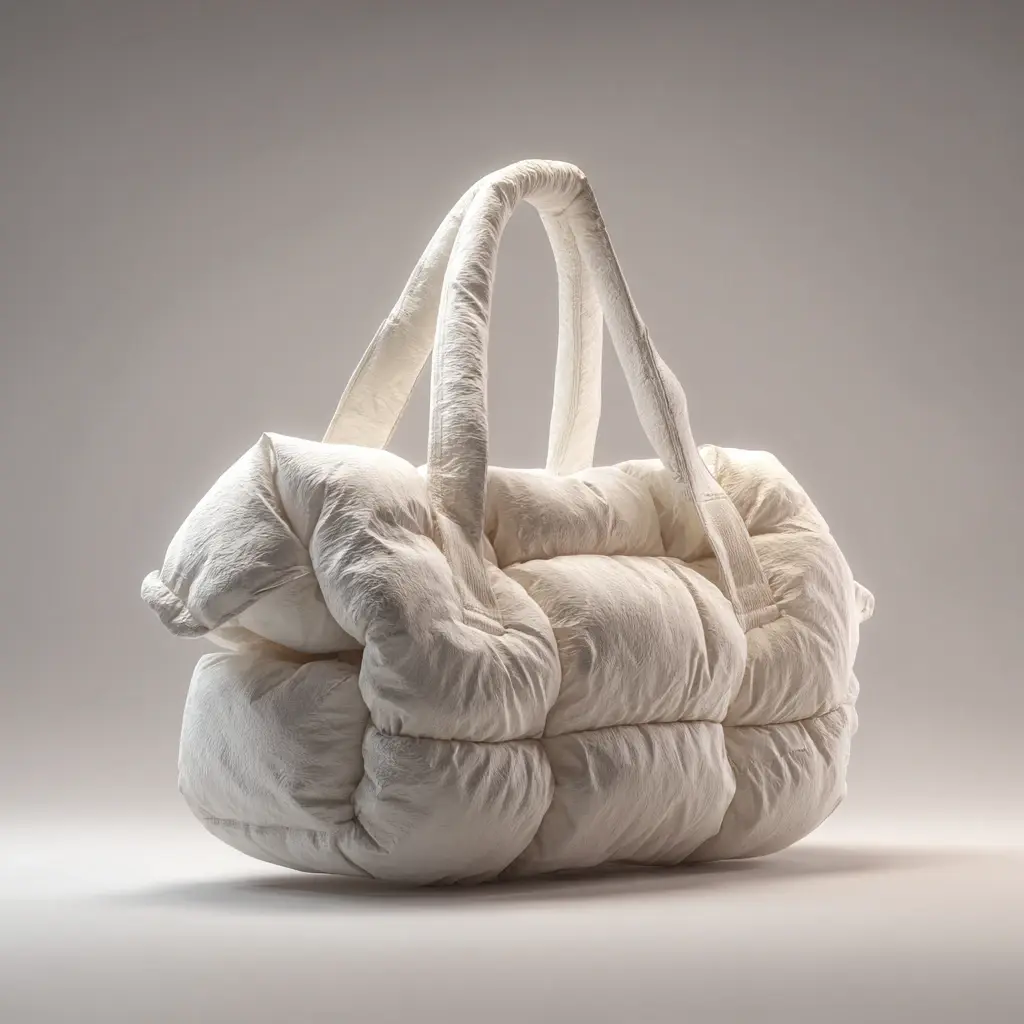
Why the Sample Differs From the Drawing
Was the Sample Made Wrong, or Was the Drawing Ambiguous?
Almost always the second. A drawing communicates proportion; it does not communicate temper, tolerance or the behaviour of a material under a fold. The three causes that account for most first-round disappointment are a strap drop that was never stated as a measurement, a material chosen for its colour rather than its temper, and a fold or turn that the drawing implies but that the specified thickness cannot physically make.
- Strap drop omitted. The bag matches the drawing and hangs wrong on a body; still the most common single revision.
- Temper mismatch. A soft drape drawn, a firm hide supplied, so the silhouette never appears.
- Impossible fold. A turn drawn in 1.2 mm leather that has not been skived to 0.8-1.0 mm will not lie flat.
- Undimensioned branding. Near the top edge is not a position; 30 mm below the top edge, centred, is.
There is a test that settles which it was. Put the sample beside the specification and measure: if the bag matches the written specification and still looks wrong, the specification was the problem, and the revision should change the document first and the bag second. If the bag does not match the specification, the production was the problem, and the revision is a correction rather than a redesign.
What a Revision List Should Look Like
The single highest-leverage document in a programme is the revision list, because it decides whether round two is the last round. It should be numbered, each item tied to a measurement or a specification clause, and each item stating the current value and the required value. A paragraph of impressions produces another round; a numbered list produces a correction.
- Number every item so each one can be confirmed individually on the next sample.
- State current and required values. Strap drop: 260 mm measured, 240 mm required.
- Separate structural from cosmetic items, and say which are blockers and which are preferences.
- Attach marked photographs as supporting evidence, never as the list itself.
- Confirm what is approved. Say explicitly which parts of round one are signed off, so they are not reworked.
How Many Rounds Before You Rethink
One or two is normal; three is a signal. On a soft construction, a single round usually closes the programme. On a structured satchel, two is the expectation. If a third round is needed on a simple bag, the cause is almost never the bag — it is an unresolved brief, usually a missing target retail price or a design that has been changed mid-process.
- Round three on a soft bag. Stop and rewrite the specification; something in it is still ambiguous.
- The design keeps changing. Freeze it. Each change resets the calendar by 6-10 working days.
- Every round produces a new complaint. The brief is being discovered rather than executed.
- Cost is still above the ceiling. That is a material or operations problem, not a sampling problem.
Who Pays for Round Two
Money is rarely the largest cost of a revision round; the calendar is. At 6-10 working days per round, three rounds on a standard construction consume between eighteen and thirty working days before bulk even begins, and at 12-15 on a complex construction they consume more than six weeks. A programme quoted for a fixed launch date can absorb one round comfortably and two with difficulty, which is the practical reason to treat the first specification as the important document rather than the first sample.
The commercial arrangement for sampling is worth settling at brief stage, because it is where relationships get tested. In many programmes the first sample is credited against the order and later rounds are chargeable, but that is an arrangement rather than a rule, and it should be stated in writing before the first sample is made rather than discovered on an invoice.
- Ask what the first sample costs and whether it is credited against the order.
- Ask what rounds two and three cost, and what a complex construction adds.
- Ask whether tooling is included or billed separately, since a die or mould is made once and reused.
- Ask whether a change you request is chargeable before requesting it, not after.
What Cannot Be Fixed in a Round
It is worth separating the two kinds of disappointment before commissioning another round, because they have completely different remedies. If the sample is wrong against the specification, the fix is a correction and it will land inside one round. If the sample is right against the specification and still wrong for your market, the fix is a specification change, and no number of rounds will help until the document is rewritten.
Some things are not revisions, they are redevelopments, and knowing the difference saves a season. A change to the fundamental geometry, a different closure mechanism, a move from a soft to a structured body or a change of material family means the pattern is being re-derived rather than adjusted. Those are quoted as new developments, not as another sample round.
One practical example: adding reinforcement to a strap attachment is a revision. Moving from a stitched strap to a riveted one changes the load path, the panel and the hardware, and is a redevelopment. The dividing line is whether existing pattern pieces can be edited or have to be redrawn. If you are unsure which side of the line a change sits on, describe the change and ask before commissioning it, because the answer changes both the calendar and the invoice.
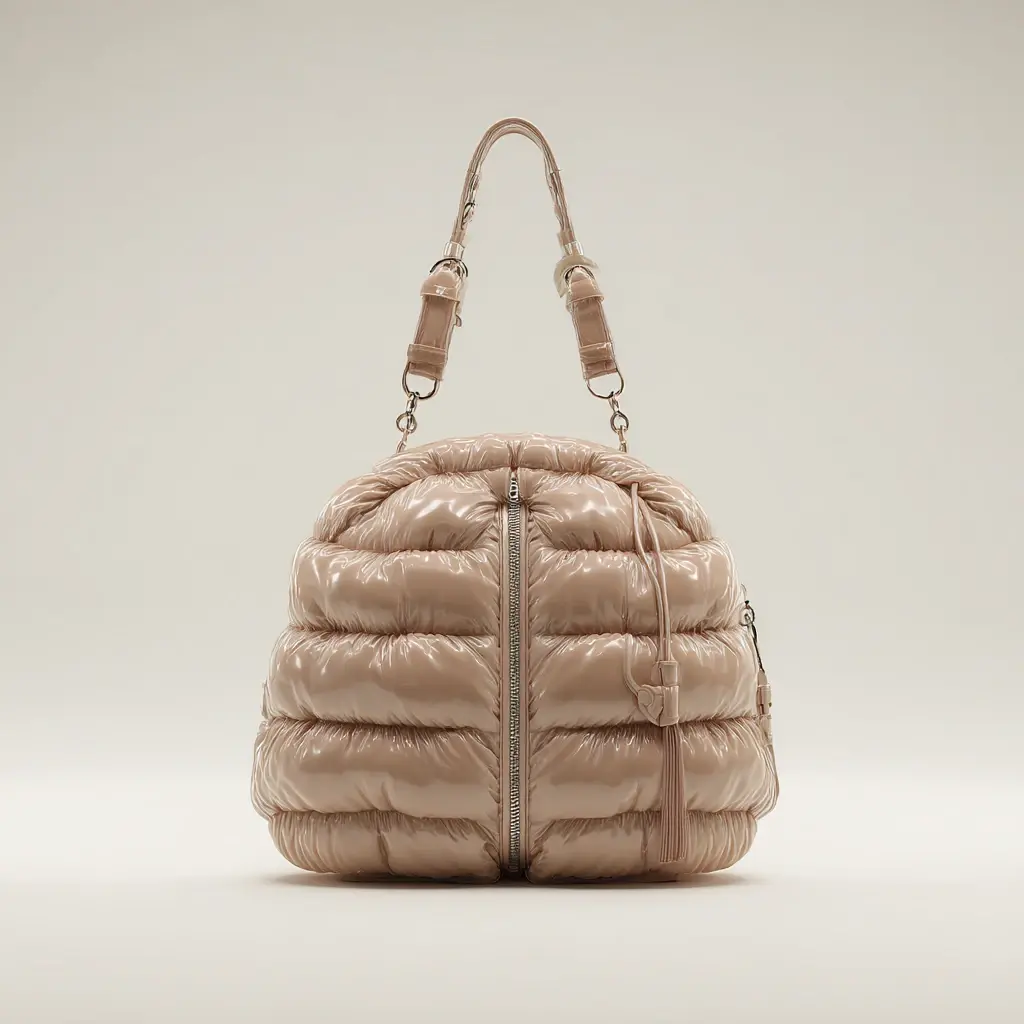
What Is a Counter Sample
Why Does Bulk Sometimes Differ From an Approved Sample?
Because a first sample is often sewn from what was available, while bulk is cut from the confirmed material on a machine set for 500 units. The counter sample closes that gap: it is made from the actual bulk material, with the branding applied, and it becomes the physical reference the run is measured against. Where a first sample answers does the design work, a counter sample answers will the run match.
Ask for one before bulk on any programme where colour, temper or plating matters, and date and keep it. At inspection, the counter sample is what the inspector compares the lot against, and it is the document that makes a colour-variance argument resolvable rather than subjective.
Stopping the Same Fix Recurring in Bulk
Every revision should end as a line in the specification, not just as a change to a bag. If the strap drop changed, version the specification and record the new number. If the lining colour changed, record the dye-lot reference. That discipline is what makes the second order a one-email job, and it is what makes an inspection argument winnable, because both sides are measuring against the same dated document.
- Version the specification every time something changes, and put the version on the purchase order.
- Keep the approved counter sample, dated and stored with the specification.
- Record measurements, not adjectives. 240 mm strap drop, 7-9 stitches per inch, 8 mm seam allowance.
- Write the inspection standard into the order: AQL 2.5 under ISO 2859-1, with third-party inspection by SGS available.
How Approval Actually Works
Approval also fixes the reference for everything downstream, which is the part buyers underestimate. The approved sample plus the dated specification is what inspection compares the lot against, what the counter sample is checked against, and what the second order is reordered from. Approving on a feeling rather than against a document means there is nothing to measure bulk against and no basis for an argument if the run drifts.
Approval is a written document, not a feeling, and it starts the production clock. Sign off the sample against the specification, confirm the quantity at 500 pcs per style / colourway, pay the deposit and book the slot, and provide the carton marks and barcode artwork. Bulk then runs 35-50 days, inspection is at AQL 2.5 under ISO 2859-1, and the default term is FOB Xiamen with CIF and DDP on request. The drawing-to-sample sequence is set out in sketch to sample, the day counts behind each round are in the production timeline, and the document that prevents most revisions is described in what a tech pack needs.
Where the Days Go Inside One Revision Round
A revision round reads as 6-10 working days and behaves like 12-20. The work inside it is sequential rather than parallel: the pattern is corrected, panels are cut, the unit is assembled, branding is applied and the result is checked before it is dispatched. On top of that sit two courier legs of 3-5 days each, which is the part of the calendar almost nobody books. Two rounds on a standard construction therefore consume 24-40 calendar days before bulk can start, and three rounds on a framed or bonded build can pass 60. The useful response is to treat the review window as the scarce resource: a numbered list returned inside three days keeps the second courier leg inside the same week, while a fortnight of silence doubles the round without changing the bag.
| Stage | Days | What makes it slip |
|---|---|---|
| Pattern correction | 1-2 | A moved pocket or strap anchor redraws a piece; a verbal note does not |
| Material check and re-cut | 1 | A changed lining colour restarts the lot search at 150-250 m |
| Skiving and preparation | 0.5-1 | Fold thickness re-specified; a 0.6-0.8 mm target adds bench time |
| Assembly in the sample room | 2-3 | Sewn by hand by one maker, not on a line set for 500 |
| Branding application | 1 | An embossed position needs the die set again; a woven label does not |
| Internal check and photography | 1 | Six frames from agreed angles before the unit is packed |
| Courier, both directions | 6-10 | The leg that turns an 8-day round into a 16-day one |
What Each Revision Item Costs in Money and Days
The money in a revision is small and the calendar is not. On a 500-piece run the per-piece effect of most corrections sits between zero and half a dollar, because the pattern and the operator already exist. What differs is whether the item needs new material, a new trim lot or a tool: a changed lining colour reopens a 150-250 m lot, a swapped hardware finish reopens a plating bath, and a new branded pull needs a die cut before anything else can happen. One rule survives every programme: spend the revision on the item that stays useful on the repeat. A corrected strap drop is a permanent specification line; a trim colour chosen for one season has to be re-decided every time it is used.
| Revision item | Added per piece | Days | Reusable on the repeat |
|---|---|---|---|
| Strap drop corrected | 0.00 | 0-1 inside the round | Yes, as a tolerance line |
| Gusset depth changed | 0.20-0.35 | 1-2, marker re-nested | Yes |
| Pocket added or moved | 0.18-0.30 | 1-2 | Yes |
| Lining colour changed | 0.10-0.25 | 1-2, new lot | Only if the lot reference is recorded |
| Hardware finish swapped | 0.15-0.40 | 2-4, bath re-run | Yes, if microns are stated |
| Branded pull added | 0.36-0.84 amortised | 4-6, die cut | Yes, die stored for 12 months |
Why the Same Fix Comes Back in Round Two
A correction that has to be made twice was never a correction; it was a preference described as a measurement. Five patterns account for most second-round disappointment, and each has a different remedy, which is why the response matters more than the observation. The diagnostic is short: hold the sample beside the version of the specification it was made against. If the bag matches the document and the complaint persists, the document is wrong. If the bag does not match the document, the correction was never carried, and the useful question is what reverted it.
| Symptom | Cause | Correction that ends it |
|---|---|---|
| Fix present in round two, gone in the counter sample | Bulk material behaves differently from sample stock | Counter sample cut from the actual lot, 6-10 working days |
| New defect beside the corrected one | An edited panel moved a neighbouring seam | Re-measure adjacent panels to +/- 2 mm |
| Measurement right, hand-feel still wrong | Temper never specified, only thickness | State thickness and temper: 1.2-1.4 mm, soft or firm |
| Same item raised for a third time | No target retail price in the brief | Freeze the brief before another round is commissioned |
| Correction survives the sample, drifts in bulk | A line setting, not the pattern | Name stitch density 7-9 per inch and check the first 20 units |
Triage: Blockers, Preferences and Items to Defer
Every revision list should be sorted before it is sent, because a round carrying twelve items will not close in one pass and a round carrying three will. Sort into three classes and say which is which: a blocker is anything that makes the bag unsellable or non-compliant, a preference is anything a customer would notice but not return for, and a deferral belongs on the repeat. The discipline that makes this work is a cap. Three preferences per round is the practical ceiling; beyond that the sample room is making a different bag each time and the programme is discovering the brief rather than executing it. Deferrals are not lost, they are versioned, which is what makes the second order a document transfer. The document that carries them is described in what a tech pack needs.
- Blockers, unlimited. Strap drop outside +/- 5 mm, colour above Delta E 1.5, a zip that fails 10 cycles, or any compliance gap. These close before bulk, whatever they cost in days.
- Preferences, capped at three. Topstitch offset, edge paint tone, hardware shade. Worth a line each; not worth a second round on their own.
- Deferrals, written down. A second colourway, a lining upgrade, a 20 mm strap. Each becomes a line in version 2 of the specification with the date it was deferred.
- Anything needing a die or a dye lot moves to the front of the queue, because tooling is the only item with its own 4-6 day lead inside a round.
- Re-state what is approved. Name the parts of round one that are signed off, so the sample room does not rework them by default.
Get the revision right first time
Send the silhouettes, dimensions, strap drop and your target retail price. A handbag programme specialist will return a specification you can approve before sampling starts, so round one is close and the 6-10 working day window is used once rather than three times. Get a quote.
Frequently Asked Questions
What counts as a sample revision round?
Any change that requires the bag to be made again: a strap drop adjustment, a moved pocket, a changed lining, swapped hardware or a repositioned logo. Each of those changes a pattern piece or an assembly sequence, so the unit is re-cut and re-assembled. Requesting a photograph or correcting a document note does not count, because nothing on the bag changes.
How long does a revision round take?
The same as the first sample: 6-10 working days on a standard construction and 12-15 on framed, hand-woven or stacked work. A revision is a second production of one unit against a changed specification, not a correction applied to an existing bag, so it goes through the whole sequence again.
Why does my sample not match my drawing?
Usually because the drawing communicated proportion but not specification. The three common causes are a strap drop never stated as a measurement, a material chosen for colour rather than temper, and a fold drawn at a thickness that cannot physically turn. Measure the sample against the written specification: if it matches and still looks wrong, the specification was the problem.
How should I write a revision list?
Numbered, with each item tied to a measurement and stating the current and required value, for example strap drop 260 mm measured, 240 mm required. Separate structural items from cosmetic ones and say which are blockers. Attach marked photographs as evidence, never as the list, and confirm explicitly which parts of the sample are approved so they are not reworked.
How many sample rounds are normal?
One on a soft construction, two on a structured satchel or any bag with a closure, and two on a framed or bonded design. A third round on a simple bag is a signal that the brief is still ambiguous rather than that the bag is difficult, and the right response is to rewrite the specification rather than to commission another round.
Do I pay for the second sample?
It depends on the arrangement, and it should be settled in writing before the first sample is made. The first sample is often credited against the order while later rounds are chargeable. Ask what round one costs, what rounds two and three cost, whether tooling is included, and whether a change you request is chargeable before you request it.
What changes cannot be made as a revision?
Anything that re-derives the pattern rather than editing it: a change to fundamental geometry, a different closure mechanism, a move from a soft to a structured body, or a change of material family. Adding reinforcement to a strap attachment is a revision; moving from a stitched to a riveted strap is a redevelopment, because the load path and the panels change.
What is a counter sample and do I need one?
A counter sample is made from the confirmed bulk material with the branding applied, and it becomes the physical reference the run is measured against. You need one wherever colour, temper or plating matters, because a first sample is often sewn from whatever was available. Date it, keep it, and let inspection compare the lot against it.
Why does bulk sometimes differ from the approved sample?
Because the sample was cut by hand from available material and bulk is cut by machine from confirmed material, on a line set for 500 units. Differences show up as plating shade, stitch density drift and colour variance against the dye lot. A counter sample and a dated specification close most of that gap before it becomes an argument.
How do I stop the same defect recurring?
End every revision as a line in the specification rather than as a change to a bag. Version the document, record measurements instead of adjectives, keep the dated counter sample, and write AQL 2.5 under ISO 2859-1 into the purchase order. That is what makes the second order a one-email job and an inspection argument resolvable.
Can I change the design during bulk production?
No, not usefully. Hardware is ordered early and cutting begins against a released pattern, so a late change means the run waits or parts are scrapped. The revision process exists precisely to resolve design questions before material is released, which is why freezing the design at approval matters more than approving quickly.
What happens after I approve the sample?
You confirm the quantity at 500 pcs per style / colourway, pay the deposit, book the production slot and supply the carton marks and barcode artwork. Material is then released, bulk runs 35-50 days, inspection happens at AQL 2.5 under ISO 2859-1, and the goods are handed over FOB Xiamen. Book the slot on the deposit, not on approval.
People Also Ask
Is a revision the same as a new sample?
In calendar terms, yes. Both produce one unit from start to finish against a specification. The difference is only that a revision starts from an existing pattern that is edited rather than derived, which is why it sometimes runs at the shorter end of the same window.
Should I approve a sample I am not happy with to save time?
No. A week saved at sampling costs 35-50 days if the problem surfaces in bulk, and at that point it cannot be corrected. Approving is the moment the specification freezes; anything unresolved at that point becomes part of the production run.
Can I revise the branding position only?
Yes, but if the mark is embossed, the die position changes and the panel may have to be re-cut. Woven labels and embroidery are cheaper to reposition because they have no hard tooling and are applied after assembly.
How do I know when a design is ready for bulk?
When the sample matches the written specification on every measured line, the closure cycles cleanly twenty times, the strap holds under realistic load, and the counter sample in bulk material has been approved. Anything less and the run will inherit the unresolved question.
Sources and further reading
Every figure on this page is either our own programme data or attributed below. Open the originals before you write them into a specification.
- FashionUnited — fashion industry news and dataFashionUnited Industry news and company data for the fashion sector.
- SATRA — technical services for leather, footwear and accessoriesSATRA Independent leather, hardware and accessories testing protocols.
- National Institute of Standards and TechnologyNIST Measurement standards and reference materials behind calibrated testing.