Custom Made Handbags: Real Timeline From Idea to Delivery
How long does a custom made handbag really take from idea to delivery? A soft tote on an existing geometry with new branding takes about 55-80 days from signed brief to goods handed to your forwarder; a structured satchel with a cast closure takes 70-95 days; a framed or bonded construction takes 85-110 days. Sampling is 6-10 working days on the first and 12-15 on the other two, bulk production is 35-50 days on all three, and transit adds 18-38 days by sea or 5-8 by air. The bulk window is the same on every programme; what changes is everything around it, and that is where launch dates are lost. Below: three scenarios compared stage by stage, what fills the 35-50 days, and the two seasonal windows that move every date.
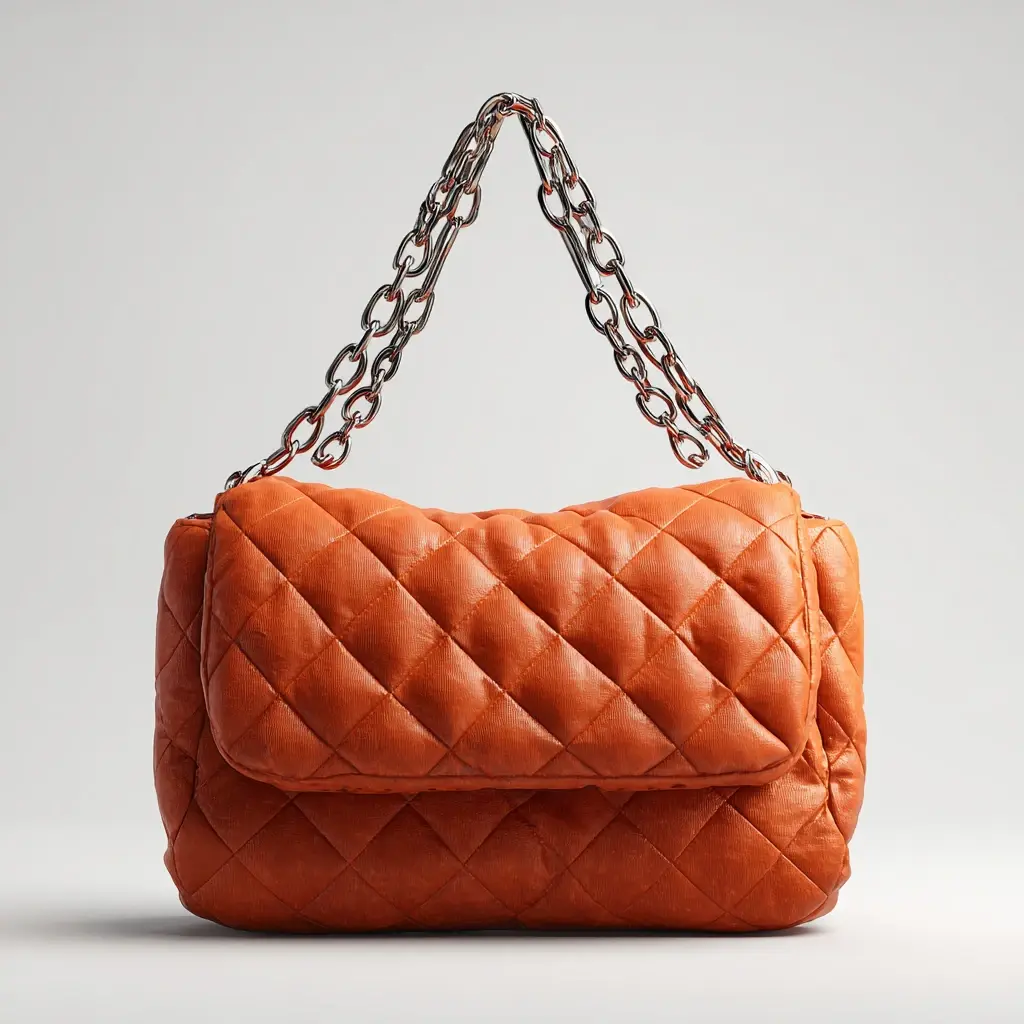
- Three Programmes, Three Calendars
- Scenario A: A Soft Tote With New Branding
- Scenario B: A Structured Satchel With a Cast Closure
- Scenario C: A Framed or Bonded Construction
- The Stage Table: Where the Days Go
- Sampling Is a Round, Not a Window
- Between Sample Approval and Cutting
- Bulk: What Fills 35 to 50 Days
- Inspection, Export and Transit
- The Two Windows That Move Every Date
- Building a Backward Plan
- What the Calendar Costs in Cash, Not Just Days
- Carton Cube and Container Fill at 500 Pieces
- A Risk Register for the Four Dates That Slip
- Compressing the Calendar and What a Day Is Worth
How long does a custom made handbag really take from idea to delivery? A soft tote on an existing geometry with new branding takes about 55-80 days from signed brief to goods handed to your forwarder; a structured satchel with a cast closure takes 70-95 days; a framed or bonded construction takes 85-110 days. Sampling is 6-10 working days on the first and 12-15 on the other two, bulk production is 35-50 days on all three, and transit adds 18-38 days by sea or 5-8 by air. The bulk window is the same on every programme; what changes is everything around it, and that is where launch dates are lost. Below: three scenarios compared stage by stage, what fills the 35-50 days, and the two seasonal windows that move every date.
Timeline parameters
Three Programmes, Three Calendars
Timelines in this trade are usually quoted as a single number, which is why they are usually wrong. What actually varies is not the sewing — a line runs 35-50 days whether the pattern is new or not — but how long it takes to get to a signed-off specification and how many sample rounds the construction needs. Compare three programmes that all start on the same day and the spread is four weeks at the front end and nothing at all in the middle.
| Stage | A: soft tote | B: structured satchel | C: framed or bonded |
|---|---|---|---|
| Brief and specification | 1-3 | 3-7 | 5-10 |
| Material and hardware confirmation | 2-4 | 4-7 | 5-8 |
| Tooling made | Die only, 3-5 | Die plus mould, 7-14 | Frame or mould, 10-20 |
| Sampling, first round | 6-10 working days | 12-15 working days | 12-15 working days |
| Revision rounds | 0-1 | 1-2 | 1-2 |
| Bulk production | 35-50 | 35-50 | 35-50 |
| Total before transit | 55-80 | 70-95 | 85-110 |
Scenario A: A Soft Tote With New Branding
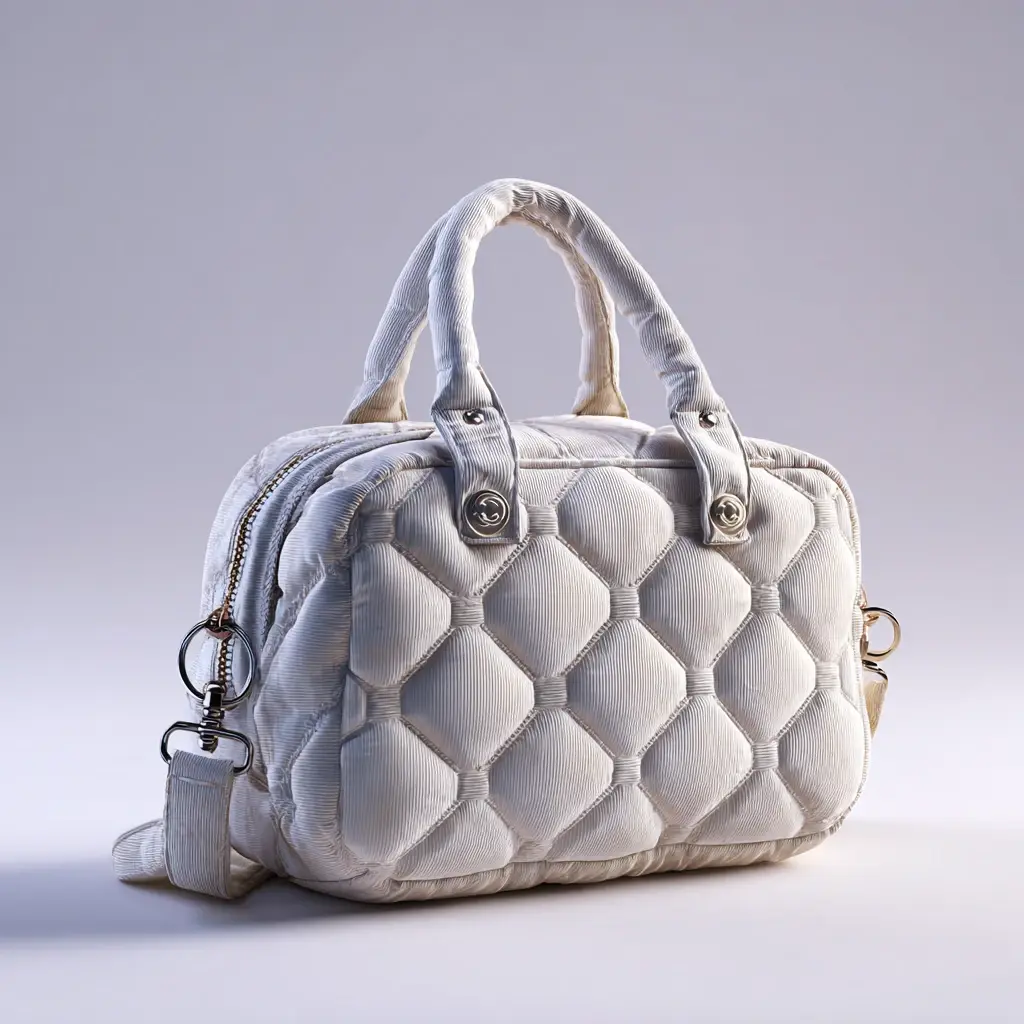
The fastest realistic programme. The geometry exists, so the specification is a confirmation rather than a derivation, and the only tooling is one embossing die. Material confirmation is a swatch and a Pantone reference. Sampling runs 6-10 working days and usually needs no second round, because there is no new geometry to get wrong. Total before transit: 55-80 days.
What can still slip it: an unclear strap drop, which is the most common single revision on any bag; a material chosen without a target retail price, which forces a requotation; and a branded hardware part added after the brief, because a cast puller needs a mould made before it can be applied to a sample.
Scenario B: A Structured Satchel With a Cast Closure
Add structure and the calendar stretches at both ends. Interlining, a stiffener and a turn-lock or magnetic closure mean more operations, more panels and more ways for the first sample to be wrong, so sampling runs 12-15 working days and one or two revision rounds are normal. The closure also needs a mould, which is made before sampling starts rather than during it.
- Specification takes longer because interlining, stiffener and closure sequence all have to be defined.
- Tooling is parallel, not serial: the die and the mould are made while the specification is finalised.
- The first sample usually needs one revision, most often on flap alignment or closure action under load.
- Total before transit: 70-95 days, of which 35-50 is bulk.
Scenario C: A Framed or Bonded Construction
A metal frame, a moulded body or a bonded rather than sewn construction is the longest route, and it is the one most likely to be underestimated. Part of the sequence is manual — a frame has to be set by hand, a woven panel built up strip by strip, a bonded seam cured under pressure — and manual operations do not compress. Sampling is 12-15 working days per round and two rounds are the expectation rather than the exception.
If your design depends on one of these and you have a fixed launch date, the honest advice is to develop the construction first and treat the first season as a prove-out rather than a volume buy. A framed bag that reaches bulk on the third round has still cost two rounds at 12-15 working days each, and that is before 35-50 days of production.
The Stage Table: Where the Days Go
The single most useful planning document is a stage table with an owner for each row, because most delay happens in the rows where the owner is you. Specification, sample review and approval are buyer-side; everything from material release onwards is programme-side. Buyers who budget 35-50 days and ignore the rest are the ones paying for air freight on the last 300 units.
| Stage | Days | Owner | Waiting on |
|---|---|---|---|
| Brief and quotation | 1-7 | Both | Tech pack or reference photographs, target price |
| Material confirmation | 2-8 | Both | Approved swatch, plating specification |
| Tooling | 3-20 | Programme | Approved vector artwork |
| Sampling | 6-15 working days | Programme | Signed-off specification |
| Sample review | 2-6 | Buyer | A written revision list, not a photograph |
| Deposit and slot booking | 1-2 | Buyer | Deposit, carton marks, barcode numbers |
| Bulk production | 35-50 | Programme | Nothing: the quiet part |
| Inspection | 1-2 | Both | Your QC checklist, if you have one |
| Export handling | 2-4 | Programme | Balance payment, forwarder, marks |
| Transit | 18-38 sea, 5-8 air | Buyer | Customs entry, HTS class, duty |
Sampling Is a Round, Not a Window
The phrase 6-10 working days describes one round, and most first programmes need more than one. A round is: pattern or specification adjustment, cutting, assembly, branding application and internal check. Everything in it is genuinely necessary work, which is why a review written as a numbered list of measurements is worth more than any amount of urgency in an email.
- Measure the sample against the specification before forming an opinion. Dimensions, strap drop, gusset, hardware position.
- Count the stitches over one inch. 7-9 on leather and heavy coated fabric.
- Cycle the closure twenty times and load the strap with realistic weight.
- Write the revision as numbered items against measurements. A photograph with circles on it produces another round.
- Approve in writing. The clock on the next stage starts at approval, not at discussion.
Between Sample Approval and Cutting
The revision process is the variable that separates the three calendars, and it is worth understanding why. A soft tote has no new geometry to resolve, so the sample is a confirmation and usually passes first time. A structured satchel has interlining, a stiffener and a closure sequence, all of which can be wrong in ways a drawing cannot show, so a round is expected. A framed or bonded body has manual operations that have to be set by hand, and hand work is the least compressible thing in a workshop.
There is a gap between approving a sample and starting bulk that surprises buyers: the deposit, the slot, the carton order and the barcode artwork all have to land before material is released. Book the slot when you pay the deposit rather than when you approve the sample, because the slot is the one thing in a programme that genuinely cannot be created on demand.
Bulk: What Fills 35 to 50 Days
Bulk is not sewing for 35 days. It is material receiving and inspection, relaxation of hides, cutting, skiving, preparation of trimming and hardware, assembly in sequence, finishing and edge work, then packing. Each stage has to complete before the next begins, and material receiving alone can take a week on a 500-piece run with dyed-to-order leather.
- Material receiving and check, including a colour check against the approved dye lot.
- Cutting and skiving, with yield nest planned against the hide or roll.
- Preparation, which is where reinforcement tape, interlining and stiffeners are applied.
- Assembly, the longest single stage, and the one that sets the labour line at 15-25% of unit cost.
- Finishing and packing, including edge work, hardware setting, branding, dust bag and carton.
Inspection, Export and Transit
Two documents decide how these last stages go, and both should be ready before bulk finishes. The first is your own QC checklist, if you have one, given to whoever inspects: the measured lines from your specification, plus the defects that generate returns in this category — stitch density below 7-9 per inch, edge paint cracking at a fold, a strap that stretches because reinforcement tape was skipped, plating rubbing off at contact points, and a zip catching the lining.
Pre-shipment inspection at AQL 2.5 under ISO 2859-1 takes 1-2 days and is the stage that decides whether the goods ship on schedule. Third-party inspection by SGS can be booked and the report is issued to you either way. Export handling adds 2-4 days, and transit then runs 18-28 days to the US West Coast, 30-38 days to Northern Europe, or 5-8 days by air.
The Two Windows That Move Every Date
Two recurring periods shift every date in the trade, and both are predictable enough to plan around. The first is the run-up to Chinese New Year, when production slows and then stops for roughly three to four weeks and freight slots tighten for weeks either side. The second is the autumn shipping rush, when ocean capacity tightens and rates rise. A programme that would take 70 days in May can take 100 in December.
- Do not approve a sample in late January and expect a February slot: the line is not there.
- Book freight before the autumn rush, not during it, because a rate rise lands directly on your margin.
- Add two weeks of contingency to any plan that crosses either window, and treat it as a real date.
Building a Backward Plan
Work backwards from the launch date rather than forwards from today. Take the date goods must be on the shelf, subtract transit, subtract inspection and export handling, subtract 35-50 days of bulk, subtract your own review time, subtract the sampling window, and you have the date the brief has to be signed. Most buyers discover that date is earlier than they assumed, which is exactly the point of doing the arithmetic first.
For the design sequence that fills the first two rows, see sketch to sample; for what governs a second round, see the sample revision process; and for the route comparison that decides whether you need a development at all, see custom versus private label. The custom handbag programme page sets the whole sequence in context.
What the Calendar Costs in Cash, Not Just Days
A custom calendar is usually drawn as a row of days, and the days are only half of what it costs. Payment terms decide when the money leaves, and they sit at fixed points on the same line. Standard terms on a programme of this kind are T/T 30/70: 30 per cent released with the order to book the slot, and 70 per cent against the bill of lading copy, which is roughly two to three weeks before the goods are on a shelf. On 500 pieces at a landed cost of about USD 16.20 each, that is about USD 2,430 up front and about USD 5,670 later, with nothing sold in between.
- Deposit at booking: about USD 2,430 on a 500-piece order, paid 35-50 days before the goods are finished and 53-85 days before they sell.
- Balance at documents: about USD 5,670, released against the bill of lading copy rather than against delivery or inspection sign-off.
- Transit exposure: 18-35 days at sea from Xiamen to northern Europe, during which the full value of the order is paid for and unsellable.
- The number to plan against: about 60-95 days between the deposit leaving and the first retail sale, which is the gap a cash plan has to cover.
Carton Cube and Container Fill at 500 Pieces
Freight on a 500-piece order is priced against volume rather than weight, because handbags cube out long before they weigh out. An everyday tote at 38 x 32 x 11 cm, nested flat, wrapped in tissue and packed 25 pieces to a carton, lands at roughly 0.084 cubic metres per carton. A 20GP container carries about 33 cubic metres of usable space, so a full box is close to 390 cartons, or roughly 9,750 pieces. Five hundred pieces is 20 cartons and about 1.7 cubic metres, which is around 5 per cent of the box.
- Packed cube per unit: about 0.0034 cubic metres for a nested tote, rising by roughly a quarter once the gusset passes 12 cm.
- Pieces per 20GP at full use: about 9,750, which is the arithmetic that makes a 500-piece order a groupage shipment rather than a full container.
- The groupage penalty: less-than-container rates run 30-60 per cent above the full-container equivalent when expressed per piece.
- The break-even: consolidating two styles into one sailing usually recovers more than the unit-price break of a larger single order.
A Risk Register for the Four Dates That Slip
Four events account for most of the delay on a custom programme, and three of them are visible two weeks before they land. Writing them down with a likelihood, a cost in days and a named mitigation turns a plan into a managed one. The combined exposure across the four is roughly 15-34 days, which is why a contingency of two weeks should be treated as a real date in the backward plan rather than as a cushion.
| Event | Days lost | Likelihood | Early warning |
|---|---|---|---|
| Custom colour needs a second strike | 4-9 | About 3 in 10 | First swatch reads outside Delta E 2.0 |
| Plating lot fails salt spray | 6-12 | About 2 in 10 | No first-article part tested before the run |
| Carton and barcode artwork late | 2-5 | About 4 in 10 | Artwork not requested at brief stage |
| Pre-shipment majors over limit | 3-8 | About 2 in 10 | Inline findings rising in week two |
Compressing the Calendar and What a Day Is Worth
Every programme eventually asks how much time can come out, and the honest answer is that the first ten days are nearly free while the last five are expensive. Cutting a second sample round removes 6-10 working days and costs nothing beyond deciding properly the first time. Choosing a stock shade instead of a custom one removes 16-30 days at no cash cost, paid for in colour choice. Flying finished goods removes 18-28 days and costs about USD 2.90 per unit landed.
| Measure | Days saved | Cost per unit | Works when |
|---|---|---|---|
| Approve the sample first time | 6-10 working days | USD 0 | The specification is written before sampling |
| Use a stock shade, not custom | 16-30 | USD 0 | The colour is close to a mill item |
| Air freight the material | 14-21 | USD 0.40-1.10 | The pattern and the slot are already held |
| Air freight the finished goods | 18-28 | USD 2.90 | The tail is above 60 per cent of peak |
Plan the calendar before the design
Send your launch date, the silhouettes and the quantities per colourway. A handbag programme specialist will return a stage table with the sampling window, the 35-50 day bulk window and the transit days, so the brief is signed on the date the calendar requires. Get a quote.
Frequently Asked Questions
How long does a custom handbag take from idea to delivery?
A soft tote on an existing geometry takes about 55-80 days from signed brief to goods handed to your forwarder, a structured satchel with a cast closure takes 70-95 days, and a framed or bonded construction takes 85-110 days. Bulk production is 35-50 days on all three. Transit then adds 18-28 days to the US West Coast, 30-38 days to Northern Europe, or 5-8 days by air.
Why is bulk production 35-50 days and not shorter?
Because bulk is not sewing for 35 days. It is material receiving and colour checking, hide relaxation, cutting, skiving, preparation of trimming and interlining, assembly in sequence, finishing and edge work, then packing. Each stage has to complete before the next begins, and material receiving alone can take a week on a run with dyed-to-order leather.
How many sample rounds should I plan for?
One on a simple soft construction, one or two on a structured bag, and two on a framed or bonded design. Each round costs 6-10 working days on a simple construction and 12-15 on a complex one. The number of rounds is driven by how much new geometry has to be proven, which is why a written revision list matters more than urgency.
What slows a handbag programme down most often?
Buyer-side stages, not production. Specification ambiguity, a missing target retail price that forces a requotation, a sample review written as an impression rather than a numbered measurement list, and a deposit paid late so the slot is booked late. Production is the reliable part; the calendar around it is where launch dates are lost.
When should I book a production slot?
When you pay the deposit, not when you approve the sample. A slot is the one thing in a programme that cannot be created on demand, and it tightens before Chinese New Year and during the autumn shipping rush. Booking on approval risks a two-week slip that no amount of urgency recovers, because the 35-50 day bulk window is fixed.
How does Chinese New Year affect my timeline?
Production slows and then stops for roughly three to four weeks, and freight capacity tightens for weeks either side. A programme that takes 70 days in May can take 100 in December. Do not approve a sample in late January expecting a February slot, and add two weeks of contingency to any plan crossing that window.
Can I pay to speed up production?
Not meaningfully. The 35-50 day window is sequence-limited rather than effort-limited: material has to arrive, relax, be cut and be assembled in order. What you can pay to speed up is transit, at 5-8 days by air against 18-38 days by sea, which is why late programmes end up as expensive air-freight bills on the last few hundred units.
How long does sampling take?
Six to ten working days for a standard construction and 12-15 for framed, hand-woven or stacked work, per round. The clock starts when the specification and material are signed off rather than when the first email arrives, and tooling such as an embossing die or cast hardware mould has to be made before the mark can be applied.
What happens between sample approval and bulk?
The deposit is paid, the slot is booked, cartons are ordered and barcode artwork is confirmed, then material is released. That gap typically takes a few days and it catches buyers out, because approval feels like the end of the process when it is the start of the production clock. Have the carton marks and barcode numbers ready before you approve.
How long does inspection and export take?
Pre-shipment inspection at AQL 2.5 under ISO 2859-1 takes 1-2 days, and export handling adds 2-4 days for carton packing, stuffing and handover at FOB Xiamen. Third-party inspection by SGS can be booked, and the report is issued to you in either case. Tie the balance payment to that report rather than to a date.
Should I use sea or air freight for handbags?
Sea, for almost everything. Bags are bulky and light, so air freight costs a multiple of the sea rate and erases the margin on a 500-piece run. Air is the rescue option for the last few hundred units when a launch date is fixed, which is why the calendar should be planned backwards from the date rather than repaired at the end.
How do I build a plan backwards from a launch date?
Take the date goods must be on the shelf, subtract transit, subtract inspection and export handling, subtract 35-50 days of bulk, subtract your own review time, subtract the sampling window, and you have the date the brief has to be signed. Most buyers find that date is earlier than they assumed, which is the point of doing the arithmetic first.
People Also Ask
Is the 35-50 day bulk window negotiable?
Rarely, and never by much. The sequence is material-dependent: dyed-to-order leather, hardware plating and trimming lots all have their own lead times that sit before assembly. What is negotiable is the queue position, which is why booking the slot early matters more than asking for a shorter run.
Does a bigger order take longer?
Not proportionally. A 3,000-piece run is not six times a 500-piece run, because the line runs continuously once it is set. Very large programmes are split across lines rather than extended, which is what 7 production lines and about 200,000 pcs per month of capacity are for.
When is the cheapest time to place an order?
Outside the two pressure windows: away from the Chinese New Year shutdown and away from the autumn shipping rush. Freight rates fall outside those periods and production slots are available, so the same programme costs less and lands closer to its quoted date.
Can several styles share one production window?
Yes, and it is the usual approach. Three styles at 500 pcs each is 1,500 pcs in one window, one inspection and one container, which is far cheaper than three separate runs. Sharing also means the branding tooling is amortised across more units.
Sources and further reading
Every figure on this page is either our own programme data or attributed below. Open the originals before you write them into a specification.
- Incoterms rulesICC The rules that decide where cost, risk and insurance transfer.
- SATRA — technical services for leather, footwear and accessoriesSATRA Independent leather, hardware and accessories testing protocols.
- FashionUnited — fashion industry news and dataFashionUnited Industry news and company data for the fashion sector.