How to Design Custom Handbags From a Sketch to a Sample
How do you get a custom handbag from a sketch to a physical sample? Send a sketch plus three numbers — overall dimensions, strap drop and target retail price — and a handbag programme specialist returns a specification in 1-3 days, a pattern in 2-3 more, and a finished sample in 6-10 working days, or 12-15 for framed, hand-woven or stacked constructions. Sketch to sample is a measurement exercise, not a drawing exercise: the sketch fixes the idea and the specification fixes the geometry, and the sample is only as good as the numbers behind it. Below: the clock day by day, what a sketch must contain, how pattern making works, and how to read the sample.
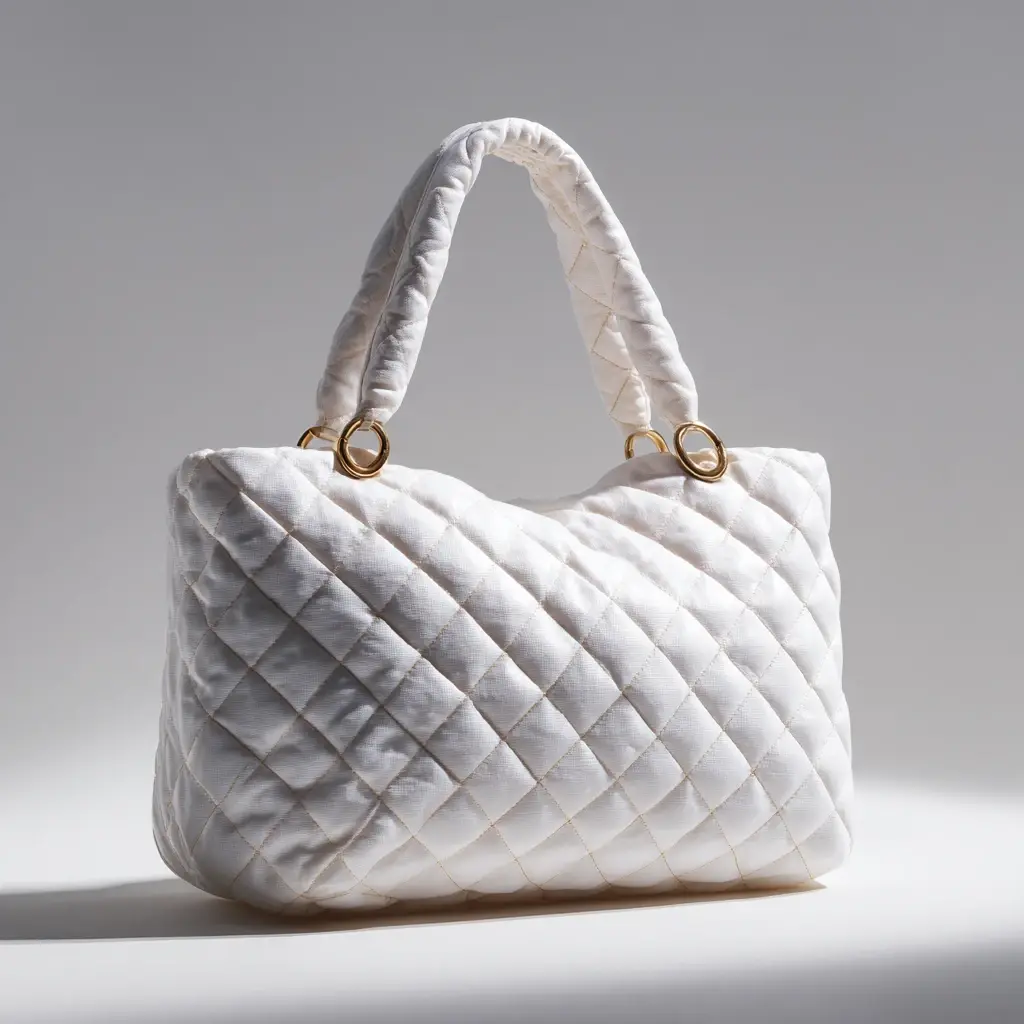
- The Clock: Sketch to Sample in Days
- Day Zero: What a Sketch Must Contain
- Turning a Sketch Into a Specification
- Pattern Making: Where Design Meets Geometry
- Material Selection Decides Whether the Sketch Survives
- Cutting, Skiving and First Assembly
- Branding on a First Sample
- What the First Sample Is For
- Reading the Sample: A Measurement List
- Why Samples Come Back Wrong
- From Approved Sample to Bulk
- What a Sample Costs and Where the Money Goes
- Getting the Sample to You: Courier, Customs and the Return Leg
- What Happens to the Pattern After Approval
How do you get a custom handbag from a sketch to a physical sample? Send a sketch plus three numbers — overall dimensions, strap drop and target retail price — and a handbag programme specialist returns a specification in 1-3 days, a pattern in 2-3 more, and a finished sample in 6-10 working days, or 12-15 for framed, hand-woven or stacked constructions. Sketch to sample is a measurement exercise, not a drawing exercise: the sketch fixes the idea and the specification fixes the geometry, and the sample is only as good as the numbers behind it. Below: what the clock looks like day by day, what a sketch must contain before it is quotable, how pattern making turns a drawing into panels, and how to read the sample when it arrives.
Sketch to sample parameters
The Clock: Sketch to Sample in Days
The first thing to understand about a first sample is that the 6-10 working day figure is the assembly window, not the whole journey. It starts when the specification and the material are signed off, not when the first email arrives. Before it sits a specification stage of 1-3 days and a material confirmation of 2-4 days; after it sits your review, any revision round, and then 35-50 days of bulk production. Anyone planning a launch on 6-10 days will be disappointed.
| Stage | Days | What is produced | What you supply |
|---|---|---|---|
| Brief and specification | 1-3 | Dimensions, construction, material, hardware, branding position | Sketch, dimensions, strap drop, target price |
| Material confirmation | 2-4 | Swatches, Pantone match, hardware finish | Approved swatch or reference |
| Pattern making | 2-3 | Panel patterns, seam allowances, notch marks | Nothing: the spec is agreed |
| Cutting and skiving | 1-2 | Panels cut, edges skived, reinforcement applied | Nothing |
| Assembly and finishing | 2-4 | Sewing, turning, edge paint, hardware set | Nothing |
| Branding application | 1 | Emboss, woven label, embroidery or hardware | Approved artwork and position |
Add those up and the honest number for a first sample in hand is 8-14 working days from a usable sketch, or 14-21 for a complex construction. That is still fast by trade standards, and it is why the first email matters: every day spent resolving an ambiguous sketch is added before the clock starts.
Day Zero: What a Sketch Must Contain
A sketch fixes an idea; it does not fix a product. What makes a sketch quotable is not artistic quality but three annotations: overall dimensions, strap drop, and an indication of how the bag closes. A front elevation and a side elevation on one sheet, with a scale reference, is more useful than a rendered three-quarter view, because the elevations are what the pattern maker works from.
- Dimensions in millimetres. Width, height and depth at the widest point, and depth at the base if the bag tapers.
- Strap drop. Measured from the top of the strap to the top edge of the bag, not the strap length.
- Closure. Zip, magnetic snap, turn-lock, drawcord or open top, and where it sits.
- Interior intent. How many pockets, whether one is zipped, and whether a laptop or bottle must fit.
- Target retail price. Without it, material selection is guesswork and the first quotation is a range too wide to use.
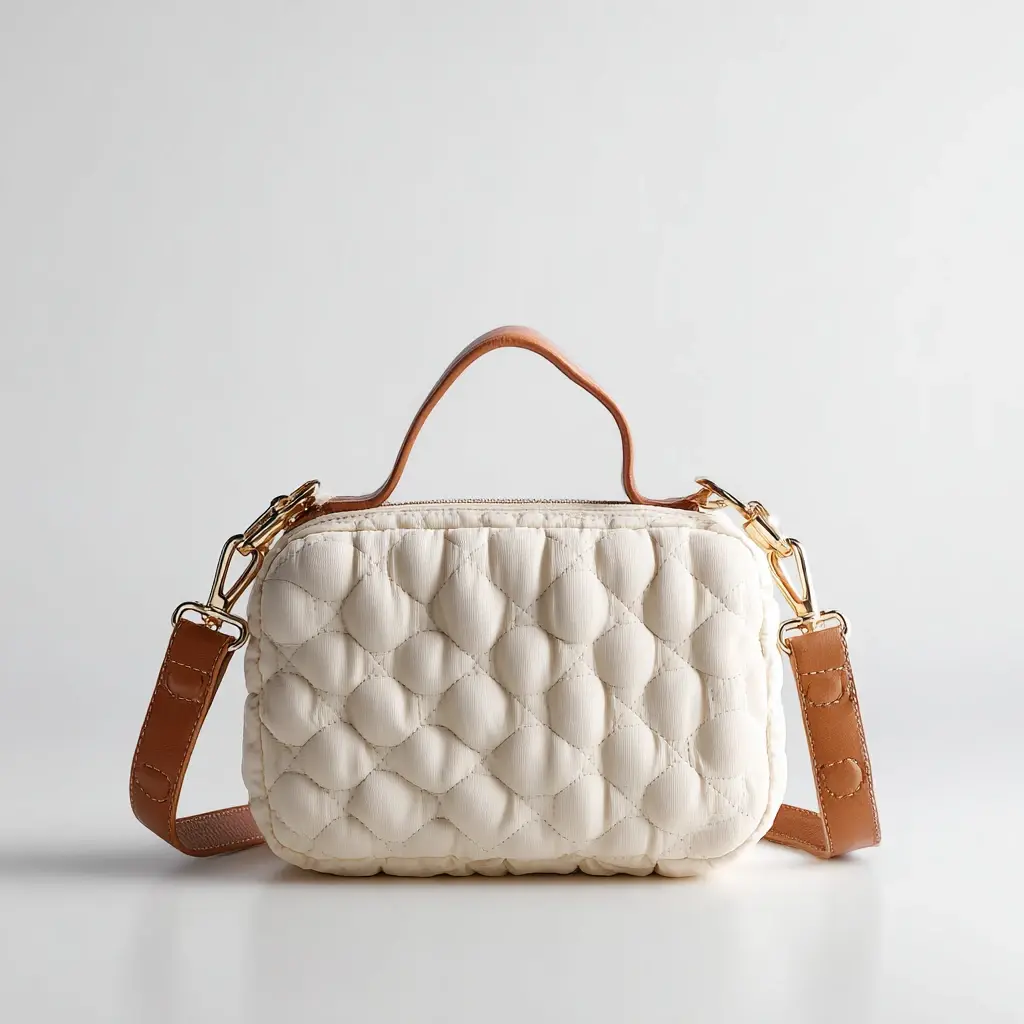
Turning a Sketch Into a Specification
The specification is the contract, and it is where a design either becomes buildable or quietly fails. Everything the sketch implies but does not state has to be resolved here: seam allowance, stitch density, edge finish, reinforcement at stress points, interlining, lining weight and hardware plating. These are not decorative details; each one is an operation on the line, and operations are 15-25% of unit cost.
| Sketch shows | Specification must state | Typical value |
|---|---|---|
| Silhouette outline | Finished dimensions and tolerances | +/- 3 mm on a 30 cm body |
| Seam | Seam allowance and stitch density | 8 mm allowance, 7-9 stitches per inch |
| Fold or turn | Skiving thickness at the fold | 0.8-1.0 mm on a 1.2 mm hide |
| Interior | Lining weight and pocket layout | 210D polyester, one zip pocket |
| Hardware | Base metal, plating thickness, salt-spray target | Zinc alloy, tested to ASTM B117 |
| Edge | Edge paint, turned edge or raw edge | Two-coat edge paint, 1.5-2.0 mm coverage |
Two of those lines catch first-time designers repeatedly. Stitch density is specified in stitches per inch, not in adjectives: 7-9 is the working range for leather and heavy coated fabrics, and asking for a fine, neat stitch without a number produces whatever the machine was set to. Skiving is the other: a fold in 1.2 mm leather is bulky and will not turn cleanly unless the underside is thinned to 0.8-1.0 mm first.
Pattern Making: Where Design Meets Geometry
Pattern making is the step most first-time designers underestimate, because it is invisible. The pattern maker takes the elevations and derives the flat panels that, when sewn, produce the three-dimensional shape in the sketch. On a simple tote that is four or five pieces. On a hobo with a curved body or a satchel with a gusseted base and a turn-lock, it is a dozen pieces plus interlining patterns, and every seam has to match its neighbour in length.
This is also where cost is decided, before a single panel is cut. Leather is priced per square foot and cut by yield, so the arrangement of panels on a hide is a direct cost variable: large clean panels waste more than smaller pieces, which is why a bucket bag can undercut a structured satchel made from the same hide. A pattern that nests well is worth more than a modest material discount.
Material Selection Decides Whether the Sketch Survives
Material is 40-55% of unit cost, and it is also the constraint that quietly rewrites designs. A sketch drawn with a soft, draping crescent in mind cannot be made in a firm-temper hide; a design that depends on a crisp standing body will not hold shape in a soft 0.8 mm leather without interlining. Choose the material from the price ceiling downwards rather than from the drawing upwards, and the first sample arrives close to what you imagined.
- Full-grain leather, 1.2-1.6 mm: strongest, develops patina, natural marks visible, top of the price band.
- Top-grain leather, 1.0-1.4 mm: uniform colour across a run, which is what makes 500 pcs colour-consistent.
- PU coated, 0.6-1.0 mm: waterproof, consistent, the vegan route, and the most forgiving of a sketch.
- Canvas, 10-16 oz: lightest and cheapest, the best carrier for a large graphic, trimmed with leather at stress points.
Sourcing transparency belongs in this decision rather than after it. Hides can come from tanneries audited under the Leather Working Group environmental protocol, and recycled linings or canvas can carry Global Recycled Standard transaction certificates. Ask for the tannery name rather than accepting the phrase genuine leather, and ask for the material test reports against REACH Annex XVII while the swatch is being approved.
Cutting, Skiving and First Assembly
Cutting a single sample is slower per unit than cutting 500, because the pattern is being proven at the same time as the panels are being cut. Skiving — thinning the underside at folds and strap attachments — is done by hand on a first sample and by machine in bulk, which is one reason a prototype can look cleaner than the production run that follows. Ask for the sample to be cut from the actual bulk material, not from whatever was nearest on the shelf.
Branding on a First Sample
Branding is the stage that most often delays a first sample, and the reason is tooling. An embossing die, a woven-label setup or a cast hardware mould has to exist before the mark can be applied, and making it takes days. Woven labels and embroidery have no hard tooling, so they can be produced quickly; embossing and hardware cannot, and a design that depends on a cast logo plate will sit at the top of the 12-15 day range rather than the bottom of the 6-10.
- Embossing or debossing. One heated brass or magnesium die per mark, 2-6 cm wide, permanent.
- Woven label. Sewn into the lining seam or an interior pocket, no hard tooling, cheap and durable.
- Embroidery. Works on canvas and lining; 3,000-9,000 stitches depending on the mark, so lettering beats a motif.
- Hardware. Cast or engraved zip puller, logo plate or closure; the most noticeable and the most expensive.
What the First Sample Is For
The first sample answers three questions and no more: does the geometry work, does the material behave as drawn, and does the closure function under load. It is not a sales sample, it is not a photograph sample and it is not the bulk product. Buyers who expect a showroom-perfect unit at round one are the ones who burn three revision rounds on cosmetic issues while the structural ones go unexamined.
How Many Samples Do You Actually Need Before Bulk?
Two in most programmes: a first sample to prove geometry and material, and a counter sample cut from the confirmed bulk material with the branding applied, which becomes the reference the run is measured against. A third round is normal on a structured satchel or any bag with a frame, and rare on a soft tote. Each round costs 6-10 working days, which is why the review has to be written as a numbered list rather than a conversation.
Reading the Sample: A Measurement List
The single most effective thing a designer can do on receiving a sample is measure it before forming an opinion. Put the bag on a table with the specification sheet beside it and work down the list: overall dimensions against tolerance, strap drop, gusset depth, pocket count, stitch density counted over one inch, hardware position against the marked point, and the closure cycled twenty times.
- Measure first. Dimensions, strap drop, gusset and hardware position, against the specification and its tolerances.
- Count the stitches. 7-9 per inch on leather and heavy coated fabric; below that is a quality issue, above it perforates.
- Cycle the closure twenty times. A turn-lock that sticks at eleven will stick in the field.
- Load the strap. Fill the bag to a realistic weight and hang it; watch the attachment, not the strap.
- Photograph the interior. Lining fit, pocket alignment and the woven label position are the details bulk will drift on.
Why Samples Come Back Wrong
Almost every disappointing first sample traces to one of four causes, and all four are preventable at brief stage. The good news is that they are cheap to fix on paper and expensive to fix after cutting starts, which is why the specification stage deserves more of your attention than the drawing does.
- No target price. Material is chosen by guesswork and the sample is beautiful at a cost the channel will not support.
- Strap drop omitted. The bag fits the drawing and hangs wrong on a body; this is the most common single revision.
- Material chosen for looks rather than temper. A soft drape drawn, a firm hide supplied, and the silhouette never appears.
- Branding position described but not dimensioned. 30 mm from the top edge is a specification; near the top is not.
From Approved Sample to Bulk
Approval is a document, not a feeling. Sign off the counter sample, freeze the specification as version one, and confirm the quantity at 500 pcs per style / colourway. Bulk then runs 35-50 days, inspection is at AQL 2.5 under ISO 2859-1 with third-party inspection by SGS available, and the default term is FOB Xiamen with CIF and DDP on request. If the shape you want does not exist yet, that is full custom development; if an existing pattern is close enough, compare the two routes in custom versus private label before spending the extra calendar. Either way the specification sheet is the same document, and its contents are set out in what a handbag tech pack needs.
What a Sample Costs and Where the Money Goes
A first sample carries a charge, and the charge is worth understanding because it is the only price in the programme that is not a unit price. It covers pattern development, the material pulled for one or two pieces, the bench time of someone who will not be building the bulk run, and the courier that gets it to you. Ask for it itemised and ask what happens to it, because those two questions tell you more about the programme than the number does.
| Line | Typical range | What it buys | Note |
|---|---|---|---|
| Pattern development | USD 80-200 | The flat panels, seam allowances and notch marks | Reusable on every later order |
| Materials | USD 30-90 | Hide, lining, hardware and thread for one or two pieces | Higher where a custom dye is needed |
| Bench time | USD 40-120 | Cutting, skiving, assembly and finishing by hand | Hand-built, not line-built |
| Courier | USD 35-85 | Two to six days each way | Send two pieces on one parcel |
- Ask whether it is credited. A sample charge credited against the bulk order is common, and the window and the conditions matter more than the fact.
- Ask for two pieces. One to keep and one to annotate and send back; the second costs bench time and saves a full round.
- Expect the first round to cost more. It absorbs pattern development and material sourcing; round two is usually materially cheaper.
Getting the Sample to You: Courier, Customs and the Return Leg
The 6-10 working days of sampling window is build time, and a parcel then has to cross a border in each direction. Most first-time designers plan for the build and not for the courier, which is how a sampling window that fitted the calendar turns into one that did not. Parcels out of Xiamen clear export within a day, and the paperwork that keeps them moving is one line on a commercial invoice.
| Destination | Transit each way | Parcel cost at 1.5 kg | Round trip added |
|---|---|---|---|
| United States | 3-5 days | USD 45-75 | 8-12 days |
| European Union | 3-6 days | USD 50-80 | 9-14 days |
| United Kingdom | 3-5 days | USD 50-80 | 9-12 days |
| Australia | 3-5 days | USD 45-70 | 8-12 days |
| Japan and Korea | 2-3 days | USD 35-60 | 6-8 days |
- Mark the parcel as samples, no commercial value. A low declared value on the commercial invoice keeps a parcel that is coming back out of a duty charge.
- Book the return label at the same time. A return arranged after approval adds 2-4 days.
- Photograph before sending. Nine annotated images are what the second round is built from, and the parcel is not insured for its development value.
What Happens to the Pattern After Approval
A sample is cut by hand and a bulk run is cut with a tool, which is one reason a prototype can look cleaner than the production that follows. The pattern that produced the sample is the same pattern the clicker die is made from, and the die is the first tooling charge in the programme. Ask when it is made, who owns it and where it is stored, because those three answers decide what the second order costs.
| Item | On the sample | In the bulk run | Consequence |
|---|---|---|---|
| Cutting method | Hand-cut or single-ply knife | Steel rule clicker die at 1.5 mm rule | A one-off charge of USD 60-180 per panel set |
| Skiving | Done by hand at each fold | Machine-set to 0.8-1.0 mm | Hand skiving can look cleaner than the machine result |
| Panel count | Proven while cutting | Fixed by the die | A panel change after the die is cut is a new die |
| Tolerance | Operator judgement | Die geometry, repeatable to about 1 mm | Bulk is more consistent, not less |
- Freeze the pattern before the die is cut. A panel changed after that point costs a second die and 3-5 days.
- Ask for the die to be yours. Retained tooling is what removes both the charge and the delay from a repeat.
- Ask where it is stored. A die held against the style code is a die that can be used next season; one held nowhere is a fresh charge.
Send the sketch, get a specification back
Send a sketch with dimensions, strap drop and your target retail price. A handbag programme specialist will return a specification in 1-3 days, a sampling window of 6-10 working days, a bulk window of 35-50 days and a unit-price band at MOQ 500 pcs per style / colourway. Get a quote.
Frequently Asked Questions
How long does it take to get a custom handbag sample?
Sampling takes 6-10 working days from an approved specification and confirmed material, and 12-15 working days for framed, hand-woven or stacked constructions. Before that sits a specification stage of 1-3 days and material confirmation of 2-4 days, so the realistic number from a usable sketch to a sample in hand is 8-14 working days, or 14-21 for a complex design.
What do I need to send to start a custom handbag design?
A sketch with front and side elevation, overall dimensions in millimetres, strap drop measured from the top of the strap to the top edge of the bag, the closure type, an indication of the interior layout, and your target retail price. Three reference photographs and a one-page specification are acceptable where no drawing exists. The target price is the item most often omitted and the one that changes the quotation most.
Can I send a hand-drawn sketch?
Yes. A hand-drawn elevation with dimensions annotated is more useful to a pattern maker than a rendered view without numbers, because the pattern is derived from flat geometry. What matters is that width, height, depth and strap drop are stated, and that the closure and interior intent are clear. Artistic finish has no bearing on whether the sample can be made.
What is the difference between a first sample and a counter sample?
A first sample proves geometry and material and is often sewn from what was available. A counter sample is cut from the confirmed bulk material with the branding applied, and it becomes the reference the production run is measured against. Most programmes need both: the first to resolve the design, the second to lock the specification before bulk.
What stitch density should I specify?
Specify 7-9 stitches per inch for leather and heavy coated fabric, and give the number rather than an adjective. Below seven the seam is weak and looks cheap; above nine the needle perforates the material and the seam becomes a tear line. The same applies to seam allowance, which is typically 8 mm and should be stated in the specification rather than left to the line.
Why does my strap drop matter so much?
Strap drop is the dimension that decides whether a bag gets worn, and it is the single most common revision on a first sample. Measure it from the top of the strap to the top edge of the bag rather than giving a strap length, because length and drop differ by the body height and by how much is taken into the seam. Check it on the physical bag, loaded, not on a drawing.
What material thickness should a custom handbag use?
Full-grain leather is typically 1.2-1.6 mm, top-grain 1.0-1.4 mm, PU-coated material 0.6-1.0 mm and canvas 10-16 oz. Where leather folds, the underside is skived to 0.8-1.0 mm so the turn stays flat. Thickness interacts with temper: a soft hide at 1.2 mm drapes, and a firm hide at the same thickness stands up.
Can my logo be applied to the first sample?
Woven labels and embroidery can, because they have no hard tooling. Embossing and debossing need a heated brass or magnesium die made first, and cast or engraved hardware needs a mould, so both push the sample into the 12-15 working day range. Send the artwork in vector form and state the position in millimetres from a fixed edge.
How many sample rounds should I budget for?
Two in most programmes: a first sample to prove geometry and material, and a counter sample from confirmed bulk material with branding applied. Structured satchels and framed bags often need three. Each round costs 6-10 working days, so the review should be written as a numbered list of measurements rather than a general impression.
What causes a first sample to come back wrong?
Four things, all preventable at brief stage: no target retail price, so material is chosen by guesswork; strap drop omitted, so the bag hangs wrong; material chosen for looks rather than temper, so the drawn silhouette never appears; and branding position described rather than dimensioned. All four are cheap to fix on paper and expensive to fix after cutting starts.
What is the MOQ after the sample is approved?
MOQ is 500 pcs per style / colourway. One style in one colour is 500 pcs; the same style in two colourways is 1,000 pcs, because each colourway is its own dye lot or coating run. Three silhouettes in two colourways is 3,000 pcs, which fills a 20-foot container and is the shape most launch programmes take.
How is a custom handbag inspected before shipping?
Pre-shipment inspection is at AQL 2.5 under ISO 2859-1, which sets both how many units are pulled from the lot and how many defects of each class trigger a pass, a fail or a re-sort. It takes 1-2 days, third-party inspection by SGS can be booked, and the report is issued to you. Write the standard into the purchase order, because good quality is not enforceable and AQL 2.5 is.
What compliance documents apply to a custom handbag?
For the EU, material test reports against REACH Annex XVII covering chromium VI, azo dyes, nickel release and phthalates. For California, a Proposition 65 review of hardware, coated trim and dyes. CPSIA applies where a bag is marketed to children. Leather can be traced to Leather Working Group audited tanneries, recycled content can carry Global Recycled Standard certificates, and plated hardware is tested by salt spray to ASTM B117.
People Also Ask
Do I need a tech pack to get a sample made?
Not strictly. A sketch with dimensions, strap drop, closure and target price is enough to start. A tech pack makes everything faster and cheaper, because it removes the guesswork from pattern making and usually keeps the job inside the 6-10 working day window.
Can I change the design after seeing the sample?
Yes, but a change means another sample round at 6-10 working days, or 12-15 for complex work. Write the changes as a numbered list against measurements, because a photograph with circles on it produces another round rather than a correction.
Who owns the pattern and tooling?
You should own the tooling you paid for: the embossing die, the woven-label setup and any hardware mould. The underlying pattern is usually shared unless the development is exclusive. Ask who owns it, where it is stored and whether it will run for another brand, in writing, before paying a deposit.
How much does a first sample cost?
It varies with material and construction, and a first sample is often credited against the order while later rounds are chargeable. Ask at brief stage what the first sample costs, what the second costs and how much is credited, because the second and third round is where relationships get tested.
Sources and further reading
Every figure on this page is either our own programme data or attributed below. Open the originals before you write them into a specification.
- Leather Working Group — environmental auditing for tanneriesLeather Working Group Environmental audit protocol for tanneries and leather traceability.
- SATRA — technical services for leather, footwear and accessoriesSATRA Independent leather, hardware and accessories testing protocols.
- REACH — chemical substances regulationEuropean Commission Annex XVII restricts the substances that may appear in finished leather and coatings.