Custom Handbags vs Private Label Bags: Which Fits Your Brand
Should your brand develop custom handbags or run a private label line? Choose custom when the silhouette itself is the product and you can fund tooling plus a 12-15 working day sampling window; choose private label when differentiation lives in material, colour, hardware and packaging and you want a sample in 6-10 working days. Both routes start at MOQ 500 pcs per style / colourway and both run 35-50 days in bulk. Custom buys exclusivity of shape and costs tooling and calendar; private label buys speed and lower unit cost and gives up exclusivity of shape. Below: two real budget shapes, what tooling costs per unit at 500 pcs, the calendar difference, and the middle route that most first lines actually need.
- Two Brands, Two Budgets
- What Each Route Actually Buys
- The Tooling Question on the Invoice
- Calendar: Both Routes Side by Side
- Where Exclusivity Actually Lives
- Cost Per Unit at Each Tier
- When Custom Is the Wrong Instrument
- When Private Label Is the Wrong Instrument
- The Middle Route: Modified Private Label
- A Decision Sequence for Today
- What to Send With the Enquiry
- How Risk Behaves Differently on Each Route
- The Cash Flow Curve: Four Payments, Two Routes
- What Each Route Can Actually Protect
- Freight, Cartons and the Line Nobody Quotes
Should your brand develop custom handbags or run a private label line? Choose custom when the silhouette itself is the product and you can fund tooling plus a 12-15 working day sampling window; choose private label when differentiation lives in material, colour, hardware and packaging and you want a sample in 6-10 working days. Both routes start at MOQ 500 pcs per style / colourway and both run 35-50 days in bulk. Custom buys exclusivity of shape and costs tooling and calendar; private label buys speed and lower unit cost and gives up exclusivity of shape. Below: two real budget shapes, what tooling costs per unit at 500 pcs, the calendar difference, and the middle route that most first lines actually need.
Two routes compared
Two Brands, Two Budgets
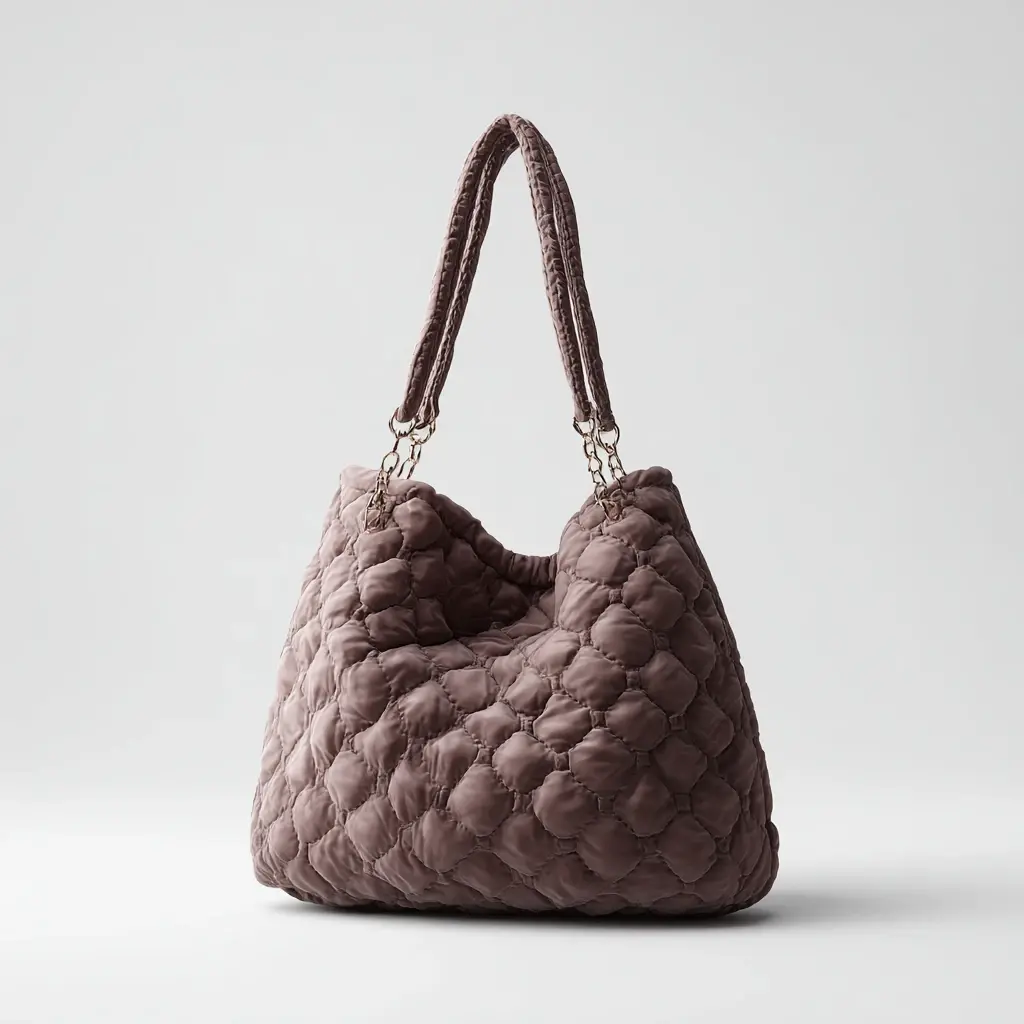
A label in Copenhagen came in with a hand-drawn satchel: a folded top flap, a base that stood up without feet, and a closure the founder had sketched as a single curved bar. Nothing like it existed in any catalogue, and the shape was the reason the brand had any attention at all. Development took three sample rounds at 12-15 working days each, a cast closure mould, and a launch that slipped by eleven weeks. It was the right decision, because the silhouette was the product.
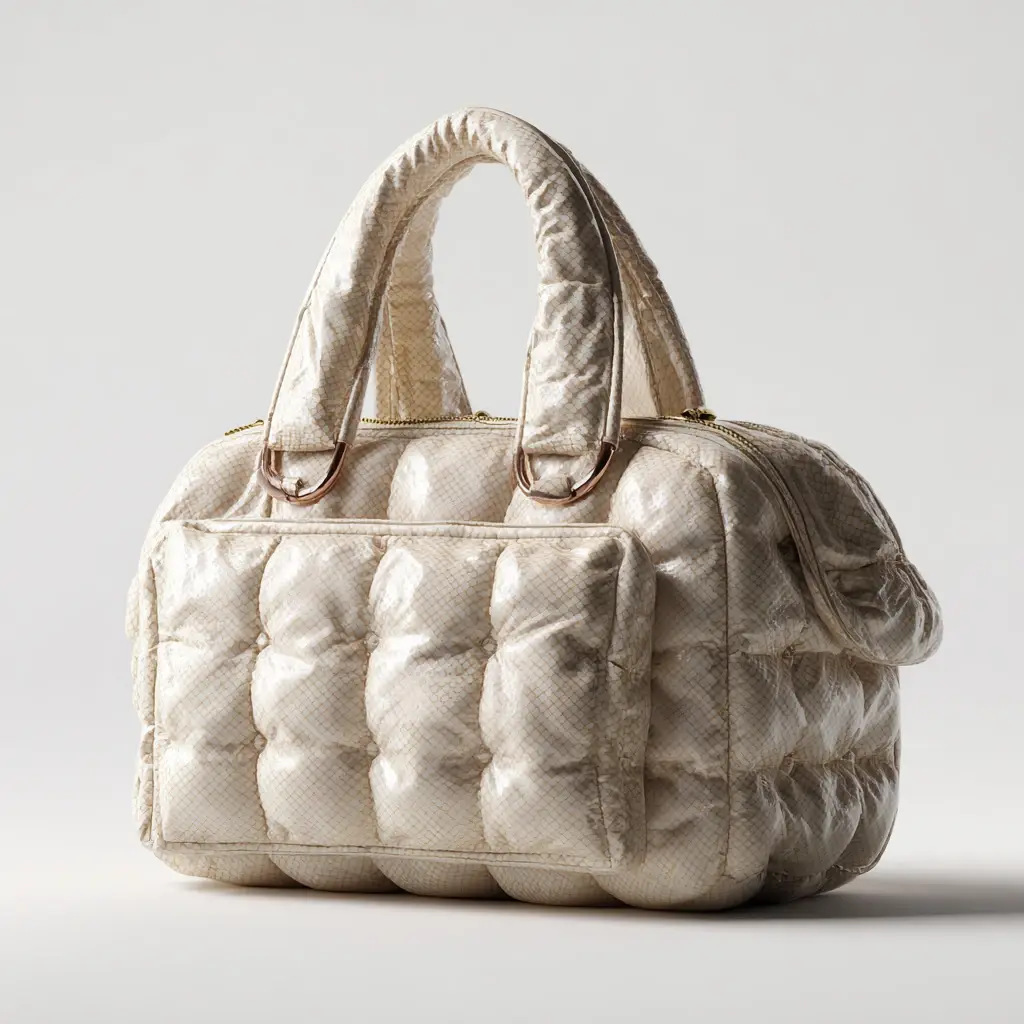
A second brand, selling through a marketplace in Texas, came in with three reference photographs of totes already on the market and a clear brief: same proportions, better leather, our own embossed mark, a dust bag with our artwork, and a landed cost under a number the channel could support. Nothing needed inventing. Sampling took 6-10 working days, no hard tooling beyond one embossing die, and the line shipped two months earlier at a unit price roughly a third lower than the Copenhagen satchel.
What Each Route Actually Buys
The distinction is not quality, and it is not prestige. It is what has to be engineered before anything can be cut. On a private label run the pattern already exists and has been produced many times; you choose silhouette, material, colour, lining, hardware and brand marks. On a custom development the pattern is derived from your design, and until it is right nothing else can proceed — which is why custom carries several sample rounds and private label usually carries one.
| Variable | Custom development | Private label |
|---|---|---|
| Pattern | Derived from your design | Existing, already proven |
| Sampling | 12-15 working days, several rounds | 6-10 working days |
| Hard tooling | Possible: dies, moulds, frames | Usually one embossing die only |
| Unit cost at 500 pcs | Higher: development and tooling absorbed | Lower: no development cost |
| Shape exclusivity | Yours if contracted | Shared |
| Suitable when | The silhouette is the product | Material and branding are the product |
One clarification that settles most arguments: private label is not the same as rebranding stock. The run is made for you — material bought against your order, colour matched to your Pantone reference, hardware plated to your specification, packaging printed with your artwork. Two brands can specify the same tote pattern in different leathers and finishes and end up with products no shopper would connect. What is shared is the geometry, not the object.
The Tooling Question on the Invoice
Tooling is the item that separates the two routes in cash terms, and it is the line buyers most often discover late. An embossing or debossing die is a one-off in the low hundreds of US dollars. A cast hardware mould — a closure, a logo plate, a custom zip puller — runs into the thousands. Neither appears in a per-unit price until you ask, and both are physical assets stored somewhere after the run.
- Embossing die. One metal die per mark, roughly US$80-200, and it is the only tooling most private label runs need.
- Woven-label setup. No hard tooling; the weaving minimum is absorbed at 500 pcs.
- Hardware mould. Roughly US$800-3,000 depending on complexity, amortised over the run.
- Cutting dies for a new pattern. Required on a custom development, and they exist for every private label pattern already.
- Amortisation at 500 pcs. A US$150 die adds about US$0.30 per unit; a US$2,000 mould adds about US$4.00 per unit.
That last line is the whole argument in miniature. Tooling cost per unit is a function of quantity, so branded hardware is genuinely expensive at 500 pcs and cheap at 5,000. If your design depends on a cast closure, either plan the volume to amortise it or accept the cost as the price of the silhouette. And settle ownership in writing: who paid, where it is stored, and whether it will run for another brand.
Calendar: Both Routes Side by Side
Bulk production is 35-50 days on both routes, because the sewing line does not care whether the pattern is new. The difference sits before it. A custom development carries a longer specification stage, a 12-15 working day sampling window and, realistically, two or three rounds rather than one. A private label run carries 6-10 working days and usually a single round, because there is no new geometry to resolve.
| Stage | Custom development | Private label |
|---|---|---|
| Brief and specification | 6-10 working days | 1-3 days |
| Material confirmation | 2-4 days | 2-4 days |
| Sampling, first round | 12-15 working days | 6-10 working days |
| Revision rounds | 1-2 rounds typical | 0-1 round typical |
| Bulk production | 35-50 days | 35-50 days |
| Total before transit | 70-110 days | 55-80 days |
Where Exclusivity Actually Lives
Founders overestimate the exclusivity value of a new pattern and underestimate the exclusivity value of a material specification. A shopper cannot tell that two totes share a panel geometry; they can absolutely tell that one is full-grain and the other is coated, that one has brass hardware and the other has a dull alloy, and that one arrives in a printed dust bag and the other in a polybag. Differentiation that lives in material, colour, hardware and packaging is visible; differentiation that lives in pattern is mostly invisible.
Cost Per Unit at Each Tier
Unit price is five components in both routes: material 40-55%, trimming and hardware 15-25%, cutting and sewing labour 15-25%, packaging 3-8%, plus one-off tooling. Custom adds development to that list and usually pushes labour up, because a new pattern has more operations and lower yield until the line learns it. Private label keeps material and labour at known values from the first unit.
- Material. Identical input on both routes; what differs is yield, which is known on an existing pattern and provisional on a new one.
- Hardware. Custom closures and cast plates add mould cost; private label uses standard parts from a catalogue.
- Labour. A new pattern needs interlining, stiffeners and unfamiliar operations, so labour sits at the top of its band.
- Packaging. Identical, and the artwork setup is a fixed charge whether you develop a pattern or not.
- Tooling. The line that differs most: one die on private label, dies plus possible moulds on custom.
When Custom Is the Wrong Instrument
Custom development is an expensive way to buy something you did not need to invent. Four situations produce the same outcome: a long calendar, a tooling bill and a first sample that converges on something already in a catalogue. Worth naming plainly, because the honest answer saves a season.
- Your reference photographs are of bags that already exist. That is a private label brief with a material upgrade.
- Your differentiation is a logo, a colour and a lining. None of those require new geometry.
- You have one launch window and no slack. Custom development realistically needs 70-110 days before transit.
- Your budget cannot absorb a second sample round. New patterns usually need two.
When Private Label Is the Wrong Instrument
The reverse is equally true, and forcing a private label pattern onto a concept that needs its own shape wastes the 6-10 day window and produces a compromise nobody likes. If the value of the product is the silhouette — a folding construction, a frame, a closure that is also the handle — no existing pattern will carry it.
- The closure or frame is the design. That needs a mould and a custom development.
- The proportions are the brand. Another label using the same geometry is a real commercial risk.
- You are protecting a design right. A shared pattern cannot be licensed as yours.
- You need a specific internal fit: a device, a bottle, a camera insert. That is engineering, not selection.
The Middle Route: Modified Private Label
Most first lines sit between the two. Modified private label takes an existing pattern and changes the variables that do not require new geometry: overall dimensions, gusset depth, pocket layout, strap drop and strap construction, hardware selection, and the branding package. It buys much of the differentiation of custom at close to the private label calendar, and it is the route a handbag programme specialist will usually propose once the brief is understood.
- Change dimensions, not geometry. A tote 4 cm taller and 2 cm deeper reads as a different bag and costs nothing extra.
- Change the strap. Width, drop and construction — webbing core, leather wrap, chain — are the most visible non-structural change.
- Change the hardware. A cast zip puller gives the shopper the sense of a designed object at a fraction of a full development.
- Change the interior. Pocket layout and lining colour are the details reviewers mention and competitors rarely copy.
A Decision Sequence for Today
Run these four questions in order and the answer is usually unambiguous, because each one removes a route rather than adding an option. The only input required is honesty about budget and launch date.
- Is the silhouette the product? If yes, custom. If the material and the mark are the product, private label.
- Can you fund tooling and two sample rounds? If not, private label, or modified private label with catalogue hardware.
- How many days until the launch date? Under 90 days before transit, private label. Over 120, either route works.
- What is the target retail price? Below a price that supports development, private label; above it, custom is affordable.
What to Send With the Enquiry
The same six items serve both routes: silhouettes and quantities per colourway, material direction, target retail price, reference photographs or a tech pack with dimensions and strap drop, branding method and position, and packaging requirements. Add your destination market, preferred trade term and an honest launch date. That is enough for a handbag programme specialist to say which route fits and to price both. The custom handbag development route is set out in full there, the drawing-to-sample sequence is in sketch to sample, and the day count behind both calendars is in the production timeline guide. Minimums are compared directly in does custom need a higher MOQ.
How Risk Behaves Differently on Each Route
A new pattern does not fail more often than a proven one across the whole run; it fails more often at the start of it, and the difference shows up in the first fifty units rather than in the approved sample. On a private label run the geometry has been cut hundreds of times, so the first-off unit usually measures inside the plus or minus 2 mm panel tolerance and the lot settles at 1-2% major defects. On a custom development the same line is meeting the operation for the first time, and first runs commonly land at 3-5% majors concentrated in the opening hundred pieces, where turning, reinforcement and edge work have not yet settled.
- First-off approval. Hold the line until one finished unit is measured against the sealed sample. On a custom development that unit appears on day two or three of the 35-50 day window, and catching a 4 mm shortfall there costs an hour rather than a re-sort of 500 pieces.
- Where the majors cluster. On a new pattern the concentration sits at strap anchors, turned corners and edge paint, three places where no operator yet has muscle memory. On a proven pattern the defects sit in the material, not the construction.
- The re-sort arithmetic. A lot of 500 is drawn at 50 units under AQL 2.5 and fails on the fourth major. Re-sorting 500 pieces at roughly 40 seconds each is about five and a half hours of line time, which a custom run usually absorbs and a tight private label schedule does not.
The Cash Flow Curve: Four Payments, Two Routes
Both routes run T/T 30/70, but the shape of the cash differs because tooling moves to the front on a custom development. On a private label order of 500 pcs at a unit price in the teens, the opening payment is roughly 30% of goods value plus one embossing die at USD 80-200, and the balance falls against the inspection report 35-50 days later.
| Payment stage | Private label | Custom development |
|---|---|---|
| With the deposit | 30% of goods plus one die, USD 80-200 | 30% of goods plus dies and a mould, USD 900-3,200 |
| At sample approval | Nothing further until bulk completes | Mould already released and paid; a second round at USD 45-120 |
| At inspection | 70% balance against the AQL 2.5 report | 70% balance, plus any agreed rework |
| Capital tied up | Roughly 8-10 weeks from deposit to balance | 12-16 weeks, because development precedes bulk |
What Each Route Can Actually Protect
Exclusivity is a contract, not a production fact. A shared pattern cannot be licensed as yours whatever the quotation says, and a new pattern is only protected once the geometry is recorded and the tooling is identified. Three instruments do the work, and all three cost far less than the development they protect.
- A recorded design. A registered design is dated evidence of the silhouette. In the EU an unregistered design right runs three years from first disclosure, which is why showing a sketch at a trade fair starts a clock, and a registered one runs five years renewable to twenty-five.
- A tooling register. Every die and mould tagged with the style code and commission date, retained 12-24 months, with a written undertaking that it will not run for another label.
- A pattern custody clause. The graded pattern and the cutting dies for a custom silhouette named as your property, held by the production partner and released on request, so a second run can be placed elsewhere if the relationship ends.
Freight, Cartons and the Line Nobody Quotes
Neither route changes the freight method, but the two produce different carton counts and the difference lands on the invoice. A 500-piece run of a medium tote packs 12-20 units per five-ply carton, so the order is 25-42 cartons and roughly 1.2-2.4 cubic metres, which is well under a 20-foot container and is why most first orders consolidate or move as LCL.
- Carton count decides the method. Below about 15 cubic metres, LCL is cheaper than a part-loaded 20-foot box; above roughly 25 cubic metres a full container wins on both rate and handling.
- Packing time moves the ship date. Twelve to twenty seconds per unit across 500 pieces is 100-165 minutes. A structured custom build with a dust bag and a hangtag sits at the top of that band.
- FOB Xiamen fixes the split. Under the Incoterms 2020 rule the goods and export clearance are handed to the forwarder at the port, then 18-28 days to the US West Coast or 30-38 to Northern Europe. The freight options for a small import page prices both ends of that choice.
Price both routes before you choose
Send the silhouettes, the material direction and your target retail price. A private label coordinator will return a unit-price band at MOQ 500 pcs per style / colourway for both the custom and the private label route, with the sampling window and the tooling lines shown separately. Get a quote.
Frequently Asked Questions
What is the difference between custom handbags and private label handbags?
Custom means the pattern is derived from your design, so new geometry, new cutting dies and often new hardware moulds are engineered before anything is cut. Private label means an existing pattern is produced to your material, colour, hardware, branding and packaging specification. Custom buys exclusivity of shape at the cost of tooling and calendar; private label buys speed and a lower unit cost while the geometry stays shared.
Does a custom handbag cost more per unit?
Usually yes, for three reasons: development has to be paid for, tooling is amortised over the run, and a new pattern has lower yield and more operations until the line learns it. Tooling is the largest single variable — a US$2,000 hardware mould adds about US$4.00 per unit at 500 pcs and about US$0.40 at 5,000. Material cost is identical on both routes.
How much does handbag tooling cost?
An embossing or debossing die is a one-off in the low hundreds of US dollars and is the only tooling most private label runs need. A cast hardware mould for a closure, logo plate or custom zip puller runs roughly US$800-3,000 depending on complexity. Woven labels and embroidery have no hard tooling. Ask whether tooling is amortised into the unit price or billed separately, and who owns it.
How long does each route take before goods ship?
Custom development realistically needs 70-110 days from first email to goods handed to your forwarder, because sampling runs 12-15 working days and usually needs two rounds. Private label needs 55-80 days, with a 6-10 working days of sampling window and usually one round. Bulk production is 35-50 days on both routes, and transit is additional.
Can I get exclusivity on a private label pattern?
Not on the geometry, which is shared. What you own is your brand, artwork, logo tooling and packaging, and what you control is material, colour, hardware finish and lining. In practice that is what shoppers perceive: two brands can use the same tote pattern in different leathers and finishes and produce products no customer would connect. Contractual pattern exclusivity is possible but is priced accordingly.
What is modified private label?
An existing pattern with the non-structural variables changed: overall dimensions, gusset depth, pocket layout, strap drop and construction, hardware selection and the branding package. It delivers much of the differentiation of a custom development at close to the private label calendar, because no new geometry has to be engineered or proven.
Is the MOQ different for custom development?
The minimum is the same: 500 pcs per style / colourway. What is higher on a custom development is the total commitment, because tooling and development sit on top of the unit price. Some developments carry a tooling or development fee billed separately, which is why the enquiry should ask for those lines to be shown separately from the unit price.
Which route suits a first handbag line?
Private label or modified private label, for most first lines. The differentiation a shopper notices — leather quality, colour, hardware finish, lining and packaging — is all available without new geometry, and the shorter 6-10 working days of sampling window leaves room for a mistake. Move to custom development once a silhouette is proven and the volume justifies tooling.
Can I switch from private label to custom later?
Yes, and it is the usual progression. Prove the silhouette, the price point and the demand on an existing pattern, then develop the shape that has earned the investment. By then you know your sell-through, your target retail price and your customer's tolerance for a higher price, which makes the development brief far sharper.
Who owns the tooling and the pattern?
You should own the tooling you paid for: the embossing die, the woven-label setup and any hardware mould, with its storage location identified and a commitment that it will not run for another brand. The underlying pattern usually remains shared unless exclusivity is contracted. Get both in writing before paying a deposit, because these are physical assets.
How is quality controlled on either route?
Identically: pre-shipment inspection at AQL 2.5 under ISO 2859-1, which sets how many units are pulled from the lot and how many defects of each class trigger a pass, a fail or a re-sort. It takes 1-2 days and third-party inspection by SGS can be booked. On a custom development, ask for a counter sample cut from bulk material to be the reference the run is measured against.
What compliance documents apply?
The same set on both routes: material test reports against REACH Annex XVII for the EU, a California Proposition 65 review of hardware, coated trim and dyes, and CPSIA lead and phthalate limits with tracking labels where a bag is marketed to children. Leather can be traced to Leather Working Group audited tanneries and recycled content can carry Global Recycled Standard certificates.
What should I send with a first enquiry?
Silhouettes and quantities per colourway, material direction, target retail price, reference photographs or a tech pack with dimensions and strap drop, branding method and position, packaging requirements, destination market, preferred trade term and an honest launch date. With that, both routes can be priced side by side and the fit becomes obvious.
People Also Ask
Is private label lower quality than custom?
No. Quality is set by material specification, stitch density, hardware and inspection standard, none of which depend on whether the pattern is new. A private label run in full-grain leather at AQL 2.5 will outperform a custom development in coated material inspected loosely.
Can I put my own hardware on a private label bag?
Yes, with a cast or engraved mould. It is the most visible upgrade available without new geometry, but the mould is amortised over the run, so it costs meaningfully more per unit at 500 pcs than at 5,000.
Why does custom sampling take longer?
Because the pattern has to be derived, cut, sewn and corrected, and unseen geometry problems only appear in three dimensions. A private label pattern has already been proven many times, so the sample is a confirmation rather than an experiment.
How do I know if my design needs custom development?
Ask whether the silhouette, the closure or the frame is the product. If removing it removes the reason anyone would buy, you need a development. If the bag still reads as yours without it, an existing pattern with your specification will do.
Sources and further reading
Every figure on this page is either our own programme data or attributed below. Open the originals before you write them into a specification.
- SATRA — technical services for leather, footwear and accessoriesSATRA Independent leather, hardware and accessories testing protocols.
- FashionUnited — fashion industry news and dataFashionUnited Industry news and company data for the fashion sector.
- Leather Working Group — environmental auditing for tanneriesLeather Working Group Environmental audit protocol for tanneries and leather traceability.