Best Freight Options for Small Handbag Imports 2026
What is the best way to freight a small handbag import in 2026? For a 500-unit order packing to about 2.4 cbm, consolidated sea LCL is the default answer at roughly USD 0.45-0.70 per unit all-in, and it wins until either the calendar or the cube forces something else. Air freight at USD 4.50-7.00 per chargeable kilogram only makes sense when the volumetric conversion is understood, because 2.4 cbm bills as roughly 400 kg and turns a USD 250 sea move into a USD 2,200 air move. This page answers the seven questions a small importer actually asks, in the order they come up, and ends with the recommendation in one paragraph.

- What Counts as a Small Handbag Shipment in 2026?
- Is Air Freight Ever Sensible for 500 Units?
- Does Consolidated LCL Beat a Courier Carton?
- When Does a 20-Foot Container Start Saving Money?
- What Does Sea-Air Actually Do to the Calendar?
- How Much Insurance Should a Small Shipment Carry?
- Which Option Fits a Launch Date You Cannot Move?
- What a Small Importer Should Lock In Before Booking
- The Short Answer, in One Paragraph
- Carton Specification: Where the Freight Bill Is Written
- Customs Entry: Classification, Duty and the Documents
- Demurrage, Storage and the Charges That Follow a Wait
What is the best way to freight a small handbag import in 2026? For a 500-unit order packing to about 2.4 cbm, consolidated sea LCL is the default answer at roughly USD 0.45-0.70 per unit all-in, and it wins until either the calendar or the cube forces something else. Air freight at USD 4.50-7.00 per chargeable kilogram only makes sense when the volumetric conversion is understood, because 2.4 cbm bills as roughly 400 kg and turns a USD 250 sea move into a USD 2,200 air move. This page answers the seven questions a small importer actually asks, in the order they come up, and ends with the recommendation in one paragraph.
Freight options for a 500-unit handbag order, compared
What Counts as a Small Handbag Shipment in 2026?
Small is a cube question, not a unit question. In freight terms anything under about 8 cbm is small, which for handbags means roughly 1,600 units at 20 per carton. Below that volume the shipper has no pricing power with a carrier, cannot fill a container, and is buying space inside somebody else's consolidation. That position has one important consequence: the rate is not negotiable in the way a full-container rate is, so the way to save money is to change the cube rather than to argue about the rate.
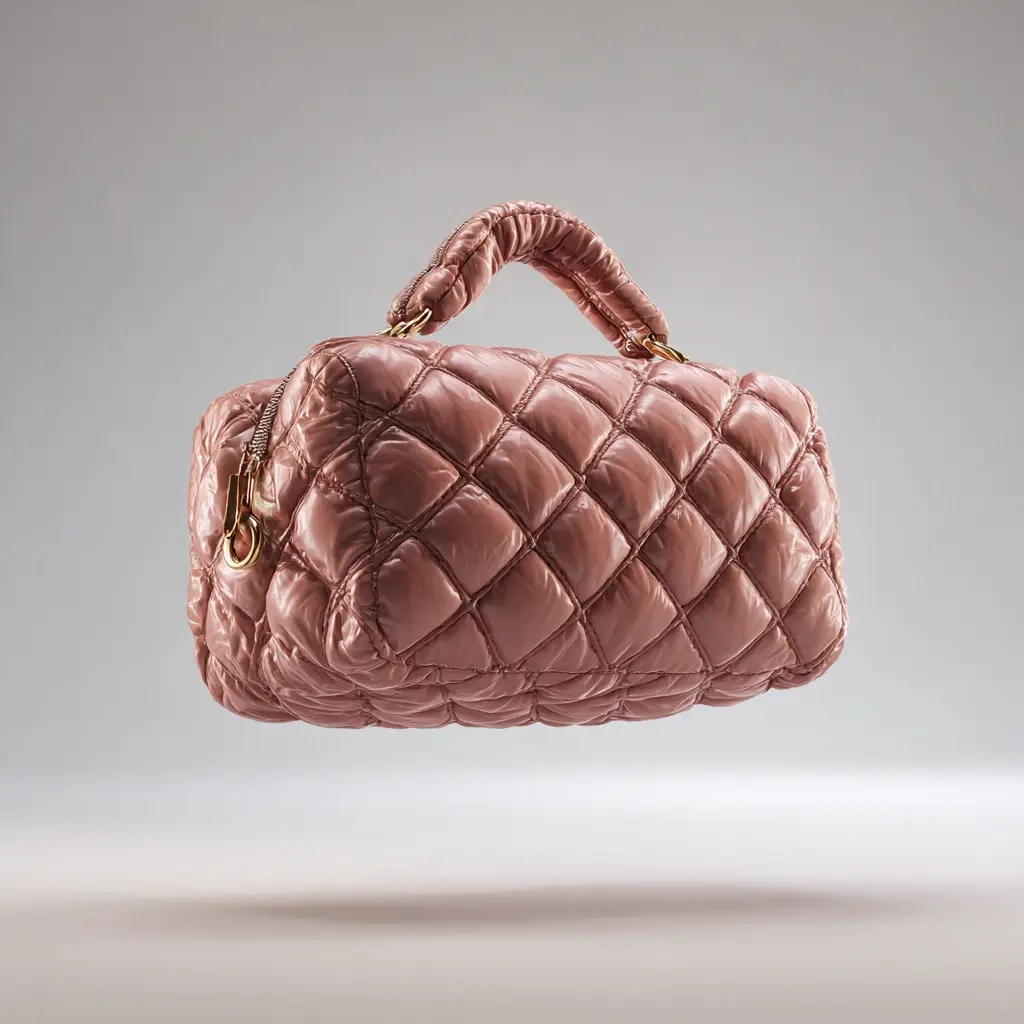
The 500-piece order at MOQ is the archetype: 25 cartons at 60 x 40 x 40 cm, about 2.4 cbm, roughly 360 kg gross and perhaps USD 6,000-8,000 of goods value. Every freight option below is priced against that shipment, because it is the one most first importers actually have. Multiply the cube and the picture changes, but the ranking of the options mostly does not.
There is also a seasonality point that matters more for small shipments than large ones. Around peak periods — roughly August to October for holiday inventory — LCL space tightens first, because consolidators fill with larger bookings before smaller ones. Reporting in Sourcing Journal and FashionUnited has tracked this pattern for several seasons running, and the practical response is simple: book a small LCL shipment seven to fourteen days out in normal periods, and three weeks out in peak.
Is Air Freight Ever Sensible for 500 Units?
Sometimes, but far less often than first-time importers assume, and the reason is the volumetric conversion. Air freight bills on chargeable weight, which is the greater of actual gross weight and volumetric weight, and the standard air conversion is 1 cbm equals 167 kg. A 2.4 cbm handbag shipment weighing 360 kg therefore bills as roughly 400 kg, not 360, and a shipment of soft, light goods like handbags almost always bills on volume.
At USD 4.50-7.00 per chargeable kilogram, that is roughly USD 1,800-2,800 for the whole order, or USD 3.60-5.60 per unit, against USD 0.45-0.70 by sea. On a tote retailing at USD 89, that difference is 4 to 6 per cent of retail, which is more than most first-season gross margin can absorb. Air is therefore not a faster version of sea; it is a different economic decision.
| Situation | Air? | Reason |
|---|---|---|
| Launch date already missed by 20 days | Yes | Selling season is worth more than the freight delta |
| Replenishing a proven seller mid-season | Yes, on the top-up only | Margin on the reorder covers it |
| First order of an untested style | No | You are paying a premium to accelerate a guess |
| Heavy structured bag with metal hardware | No | Actual weight approaches volume weight and the rate bites twice |
| Sample set under 40 kg | Yes, by courier | Below about 40 kg a courier beats air freight on handling |
Does Consolidated LCL Beat a Courier Carton?
For anything above about 40 kg, yes, and by a wide margin. Courier rates for international parcels run USD 9-14 per kilogram with door-to-door service and bundled clearance, which is excellent value at 20 kg and poor value at 360 kg. Consolidated LCL becomes cheaper somewhere around 100-150 kg depending on the lane, and by 2.4 cbm the gap is roughly four to six times the cost.
Courier has two genuine advantages worth paying for in the right situation. First, clearance is bundled, which removes the need to appoint a broker — a real saving on a first import. Second, tracking is parcel-grade rather than container-grade, which matters when a launch is being coordinated around a delivery date. Both advantages disappear in value as the shipment grows, which is why the crossover sits where it does.
When Does a 20-Foot Container Start Saving Money?
A 20-foot container holds about 28 cbm, so the naive answer is that it starts saving at 28 cbm. It does not. Because LCL carries per-cbm freight while FCL carries one box rate plus fixed origin charges, the crossing sits lower, typically between 12 and 15 cbm. For handbags at 20 units per carton that is roughly 2,500 to 3,125 units, or five to six colourways at MOQ consolidated into one booking.
- Under 8 cbm: LCL, clearly. Fixed destination charges are cheaper than paying for empty space.
- 8-15 cbm: price both. The answer depends on how expensive deconsolidation is at your destination port.
- 15-25 cbm: a 20-foot container usually wins, and it also removes deconsolidation delay at destination.
- Over 40 cbm: a 40-foot high cube at about 68 cbm becomes the cheaper box per cbm.
The non-cost argument for moving early is worth weighing too. A container that is not deconsolidated cannot be delayed by a deconsolidation queue, and it cannot be damaged in a warehouse shared with other shippers' cargo. Accessories Council members raise this point consistently in their logistics discussions: transit damage on LCL is disproportionately a warehouse handling problem rather than a vessel problem, and it is one of the few risks that actually falls when a brand moves to FCL.
What Does Sea-Air Actually Do to the Calendar?
Sea-air moves cargo by sea to a transhipment hub, then by air to the destination, and it buys back roughly half the transit time for roughly half the air premium. From Xiamen via a Gulf or a West Coast hub, expect 14-18 days door to door against 28-40 for all-sea and 5-9 for all-air. The cost typically lands at 40 to 60 per cent of full air freight, which on the 500-unit shipment means roughly USD 900-1,600.
Two cautions. The service depends on the hub connection being available, and a missed connection at the hub can cost more days than the mode saved. And the documentation is more complex, because two legs means two carriers and a through bill of lading that has to be issued correctly for both. Sea-air is a good answer for a specific situation — a fixed launch date missed by about three weeks — and an unnecessary complication otherwise.
How Much Insurance Should a Small Shipment Carry?
Cover of 110 per cent of invoice value plus freight is the standard, and the premium runs 0.25-0.45 per cent of the insured value. On a USD 7,000 order with USD 900 of freight, insured value is roughly USD 8,700 and the premium is roughly USD 22-39, which is not a decision worth agonising over. What matters is that it is bound before the vessel sails and that the policy names the Incoterm, because risk transfers at different points under FOB, CIF and DDP.
The reason to insure rather than self-insure is not the value of the goods, it is the value of the season. A 500-piece lot lost or badly damaged close to a launch cannot be remade inside the selling window: sampling alone is 6-10 working days and bulk is 35-50 days. Insurance does not restore the season, but it restores the cash, which is what funds the second attempt.
Which Option Fits a Launch Date You Cannot Move?
This is the question that actually forces most air freight decisions, and it is answered by working backwards rather than forwards. Take the landing deadline, subtract clearance and last-mile delivery, subtract transit for the mode, and see what production finish date that implies. If the implied date is earlier than the production window allows, the freight mode is not the problem — the buffer is.
| Mode | Door-to-door days | Production must finish by | Suits |
|---|---|---|---|
| Sea LCL | 28-40 | About 8 weeks before launch | Programmes with a real buffer |
| Sea-air | 14-18 | About 4 weeks before launch | A launch missed by roughly three weeks |
| Air freight | 5-9 | About 2 weeks before launch | Replenishment and rescue shipments |
| Courier | 3-6 | About 10 days before launch | Samples and top-ups under 40 kg |
The row that gets misread is the first one. Twenty-eight to forty days door to door is the transit figure, and it sits on top of 35-50 days of production, which sits on top of 6-10 working days of sampling. A launch date that does not leave roughly fourteen weeks from brief is not achievable by sea regardless of how good the freight forwarder is, and the honest options are to move the date or to pay for air.
What a Small Importer Should Lock In Before Booking
Five things, all of them before rather than after the booking, because each one is much harder to change once the cargo is moving. The list is the same whether the mode ends up being sea, air or courier.
- The cube, measured. Pack one carton properly, measure it externally, and multiply. Estimating from the folded product understates the cube by 20 to 40 per cent.
- The destination charges schedule. Requested from the agent who will release the cargo, in writing, before booking rather than discovered afterwards.
- The rate validity. Most LCL rates hold for seven to fourteen days, so a quote obtained a month early is an indication and should be re-priced at booking.
- The cut-off, and two days of slack before it. A missed consolidation on a weekly service is close to seven days, which is more than most launch plans can absorb.
- The document set. Invoice, packing list and origin certificate ready before the vessel sails, not after it arrives, so the broker can pre-lodge.
The fourth item deserves emphasis because it is the cheapest insurance on the list. Two days of internal slack before a cut-off costs nothing and removes the single most common cause of a slipped first shipment, which is not production running late but documents arriving late. How the order size itself interacts with all of this is worked through in balancing order size against shipping cost.
The Short Answer, in One Paragraph
For a first handbag import at MOQ 500 pcs per style / colourway, book consolidated sea LCL out of Xiamen, measure the cartons rather than estimating them, request the destination charges schedule in writing, and build two days of slack before the consolidation cut-off. Expect about 2.4 cbm, USD 0.45-0.70 per unit all-in, and 28-40 days door to door. Move to a 20-foot container once the programme reaches roughly 3,000 units, use sea-air when a launch date has been missed by about three weeks, and reserve air freight for replenishing a style that has already proven it sells. Insurance at 110 per cent of invoice value plus freight is worth buying at any of those volumes.
Two things follow on from that decision. The booking mechanics, cut-offs and sailing rhythm are covered in how a handbag shipment leaves Xiamen port, and the money that has to clear before any of it can move is covered in how to structure payment terms on a handbag order. The full route sits in the handbag sourcing guide.
Carton Specification: Where the Freight Bill Is Written
Freight is charged on the cube, and the cube is decided by a carton drawing rather than by a bag. A 60 x 40 x 40 cm export carton is 0.096 cbm, and 25 of them are 2.4 cbm; the same 25 at 56 x 36 x 36 cm are 1.81 cbm, a 25 per cent cut in chargeable volume for four centimetres on each dimension. Strength matters as much as size: a 5-ply wall rated to 32 ECT carries about 30 flat totes and roughly 20 structured ones. Over-fill and the carton bulges and fails a stack test; under-fill and the shipment pays for air.
- External dimensions. Measured on a packed carton, not calculated from the folded product, which understates by 15-25 per cent.
- Wall and rating. 5-ply at 32 ECT is the working standard; 3-ply at 26 ECT suits light parcels only.
- Stacking height. Six high in a container for six weeks needs a board that holds at that load and that humidity.
- Void fill. Two sheets of 17 gsm tissue and a mould insert, rather than loose fill, which shifts and abrades.
Customs Entry: Classification, Duty and the Documents
The destination end of a shipment is a document exercise, and a small importer loses more days to missing paperwork than to freight. Five items are asked for at entry: the commercial invoice, the packing list, the bill of lading or air waybill, the origin certificate, and the classification with its duty rate. Handbags sit under heading 4202 with the subheading set by the outer surface, and duty on that heading runs roughly 3-17 per cent by destination. A broker charges USD 85-150 per entry. Two habits protect the calendar, and neither costs anything.
- Invoice and packing list. Carton count, net and gross weights in kilograms, and the same unit prices as the purchase order.
- Origin certificate. Ordered before the vessel sails, not after it arrives, and it is the document most often missing.
- Classification. The outer surface sets the subheading, and a textile outer and a leather outer are not the same rate.
- Broker appointment. Made before the cargo lands, since appointing one at the port costs three to five days.
Demurrage, Storage and the Charges That Follow a Wait
A freight quotation covers the move and not the waiting. Once a container or a consolidated lot is discharged, free time starts: commonly three to five days for a container and two to four for an LCL lot. After that, demurrage on the box and storage at the terminal are charged per day, and a document problem that eats two days of free time can cost more than the saving that came from choosing the slower mode. The charge nobody budgets is the amendment fee when a bill of lading has to be changed after issue.
- Free time. Three to five days for a container and two to four for a consolidated lot, counted from discharge.
- Demurrage and storage. Charged per day, per box or per lot, and they accrue over a weekend as well.
- Amendment fee. USD 60-150 to change a bill of lading after issue, which is why the set is checked before sailing.
- Delivery order. Collected the day clearance completes rather than the week after, or storage starts at the terminal.
Send us your units, carton dimensions and destination, and we will return the measured cube, a mode comparison and the all-in landed freight per unit. Get a Quote → /contact-quote/
Frequently Asked Questions
What is the cheapest way to ship 500 handbags?
Consolidated sea LCL. At 20 units per 60 x 40 x 40 cm carton, 500 pieces is about 2.4 cbm and 25 cartons, which bills at roughly USD 0.45-0.70 per unit all-in including origin and destination charges. The cube is the lever rather than the rate, so packing efficiency matters more than negotiating with the forwarder at this volume.
Is air freight worth it for a first handbag order?
Rarely. Air bills on chargeable weight, where 1 cbm equals 167 kg, so a 2.4 cbm order weighing 360 kg bills as roughly 400 kg. At USD 4.50-7.00 per kilogram that is USD 1,800-2,800 against USD 250-350 by sea, or 4 to 6 per cent of retail on an USD 89 bag. Reserve air for replenishing a proven seller.
At what weight does a courier stop being the best option?
Around 40 kg for samples, and around 100-150 kg for commercial consignments depending on the lane. Courier rates of USD 9-14 per kilogram include door-to-door service and bundled clearance, which is excellent value on a 20 kg sample parcel and poor value on a 360 kg order, where LCL is four to six times cheaper.
When should a small importer move from LCL to a full container?
Somewhere between 12 and 15 cbm, which for handbags means roughly 2,500 to 3,125 units at 20 per carton. The crossing sits below container capacity because LCL carries per-cbm freight plus fixed destination charges while a container carries one box rate. Above 40 cbm a 40-foot high cube becomes the cheaper box.
What is sea-air freight and when does it help?
Sea-air moves cargo by sea to a transhipment hub and then by air to the destination, typically 14-18 days door to door at 40 to 60 per cent of full air cost. It suits a launch date missed by roughly three weeks. Watch the hub connection and the through bill of lading, because both add complexity that a single-mode move does not have.
How much does freight insurance cost on a small handbag shipment?
Typically 0.25-0.45 per cent of the insured value, which is conventionally 110 per cent of invoice value plus freight. On a USD 7,000 order with USD 900 of freight, insured value is about USD 8,700 and the premium roughly USD 22-39. Bind it before the vessel sails and name the Incoterm, because risk transfers at different points.
How long does a small handbag import take door to door?
By sea LCL, roughly 28-40 days: two to five days consolidation at origin, 18-38 days transit by lane, three to six days deconsolidation, one to four days clearance and two to five days last mile. Add 6-10 working days of sampling and 35-50 days of production before any of that, which is why a sea launch needs roughly fourteen weeks from brief.
Why did my LCL freight cost more than the per-cbm rate suggested?
Because the rate covers ocean freight only. Destination charges — deconsolidation, delivery order, terminal handling and a per-bill cargo handling fee — commonly add USD 180-320 on a 2.4 cbm shipment, sometimes more than the ocean freight itself. Request the destination agent's charges schedule in writing before booking.
Does freight get cheaper per unit as the order grows?
Yes, and steeply at first. Freight per unit falls from roughly USD 0.71 at 500 pieces to about USD 0.58 at 1,000 to around USD 0.38 at 3,000, because fixed per-shipment charges are spread over more units. The curve flattens once a container is full, at which point unit price and duty matter more than freight.
How far ahead should a small shipment be booked?
Seven to fourteen days before the intended cut-off in normal periods, and about three weeks during peak season, roughly August to October. LCL space tightens first when capacity is short, because consolidators fill larger bookings ahead of smaller ones. Re-price on the day of booking, since rate validity is usually seven to fourteen days.
Can samples travel with the first bulk order?
Yes, and it saves a separate courier charge. Declare the samples separately on the commercial invoice with their own value rather than at zero, because a zero-value line alongside commercial goods invites a valuation query. Keep sample units in one clearly marked carton within the same consignment so an examiner does not have to open the whole shipment.
People Also Ask
What is the best freight option for a first handbag import?
Consolidated sea LCL from the port of export, booked seven to fourteen days ahead with the destination charges schedule in hand. It costs roughly USD 0.45-0.70 per unit on a 500-piece order and takes 28-40 days door to door. Air freight looks attractive and is not, because volumetric conversion turns 2.4 cbm into about 400 chargeable kilograms.
Why is air freight so expensive for light goods like handbags?
Because air bills on chargeable weight, the greater of actual weight and volumetric weight at 1 cbm equals 167 kg. Handbags are light and bulky, so the volume figure almost always governs and the shipper pays to move air rather than product. A 360 kg order billing as 400 kg at USD 4.50-7.00 per kilogram explains the gap against sea.
Should a small importer appoint a customs broker?
Yes, for anything above a courier parcel. A broker classifies the goods, files the entry and handles any examination, and the cost is small relative to the delay of getting it wrong. Courier services bundle clearance into the rate, which is one of the few genuine advantages they hold over LCL at very low weights.
How much buffer should a small import plan carry?
About fourteen weeks from brief to launch for a sea shipment: 6-10 working days of sampling, 35-50 days production, two days before the cut-off, 28-40 days transit, then clearance and delivery. The most valuable single item is two days of internal slack before the consolidation cut-off, because a missed weekly sailing costs about seven days.
Sources and further reading
Every figure on this page is either our own programme data or attributed below. Open the originals before you write them into a specification.
- Incoterms rulesICC The rules that decide where cost, risk and insurance transfer.
- International Maritime OrganizationIMO Maritime rules governing container packing and dangerous-goods declaration.
- Sourcing Journal — supply chain reportingSourcing Journal (WWD) Supply-chain reporting on sourcing shifts and compliance enforcement.