Wholesale Handbag MOQ Explained: Low Minimum vs Bulk Pricing
Should you take the lowest minimum or chase the bulk price on wholesale handbags? Put the 500-piece unit price at an index of 100 and a typical low-minimum stock buy sits at 108-115 while a 2,000-piece run sits near 88 — but the cash committed moves from roughly USD 8,100 to USD 32,400 at the same time, and weeks of stock cover move from about 12 to about 50. The price gap is real and it is smaller than it looks; the commitment gap is what actually decides the outcome. This guide compares three ways to buy the same bag across ten variables, shows where a low minimum quietly costs more than the saving it gives up, and gives the situation in which each route is the right one. Sampling stays at 6-10 working days and bulk at 35-50 days whichever you choose, so the real question is how much inventory you are willing to own while you learn.
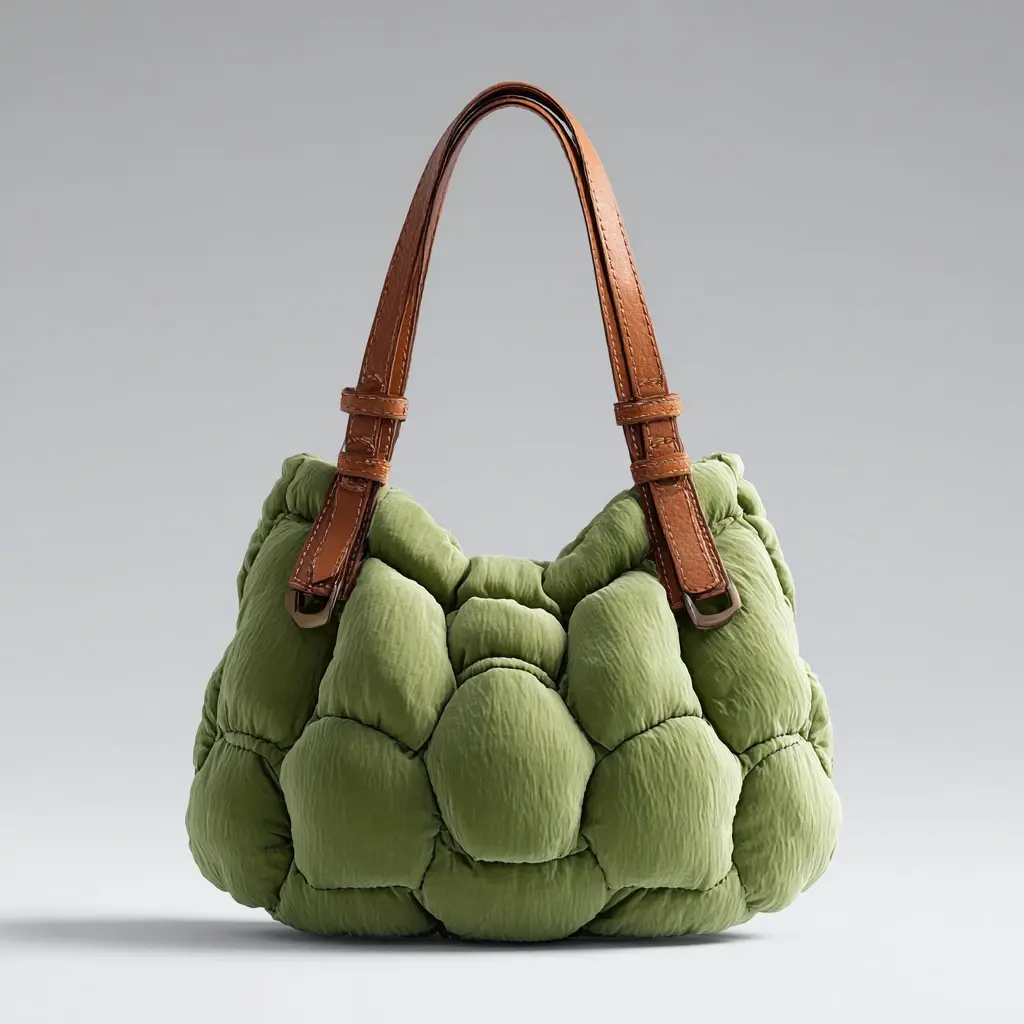
- Three Ways to Buy the Same Bag
- The Comparison Matrix
- What the Unit Price Index Is Actually Made Of
- Where the Low Minimum Costs You More
- Where the Bulk Price Fails to Pay Back
- The Hidden Third Option: One Style, Two Drops
- Reading a Low-Minimum Offer Carefully
- How MOQ Interacts With Colourway and Style Count
- Which Route Fits Your Situation
- How Long the Cash Is Gone, Route by Route
- What a Unit Costs to Hold for a Season
- Reaching a Freight Break Without Raising the Minimum
MOQ route reference points
Three Ways to Buy the Same Bag
Take one product — a 38 × 35 × 12 cm canvas tote with a 25 cm handle drop and a contrast lining — and there are three ways to put it into your warehouse. The first is a stock buy: the bag already exists, in someone else's colour, with no logo, and you can order a few hundred pieces and have them in weeks. The second is a private label run at MOQ 500 pcs per style / colourway: your material, your colour, your logo, sampled first. The third is a volume run at 2,000 pieces on the same pattern, which buys a better unit price and a longer tail of stock.
These are not three price points on one product; they are three different risk positions. The stock buy transfers risk away from you and gives up differentiation. The 500-piece run balances the two. The 2,000-piece run takes the best price and accepts the most inventory risk. Every argument about MOQ is really an argument about which of those three positions your cash and your confidence can support, and the answer changes as the data comes in. The wholesale handbag programme guide sets out where each sits in a full buying cycle.
The Comparison Matrix
| Variable | Stock buy, low minimum | Private label at 500 pcs | Volume run at 2,000 pcs |
|---|---|---|---|
| Unit price index | 108-115 | 100 | 88 |
| Typical minimum | 100-300 pcs, mixed | 500 per style / colourway | 2,000 per style / colourway |
| Cash committed at landed cost | USD 1,600-4,900 | About USD 8,100 | About USD 32,400 |
| Weeks of cover at 40 units/week | 3-8 | About 12 | About 50 |
| Sampling required | None | 6-10 working days | 6-10 working days |
| Calendar to goods | Days to a few weeks | 35-50 days plus transit | 35-50 days plus transit |
| Brand control | None | Material, colour, lining, logo, packaging | Same as 500, plus depth |
| Exclusivity | None; identical goods on other storefronts | Pattern shared, execution yours | Negotiable at this volume |
| Inspection | As received | AQL 2.5 to ISO 2859-1 | AQL 2.5 to ISO 2859-1 |
| Reorder flexibility | High | High | Low until stock clears |
Read the matrix down the columns rather than across the rows and the shape of the decision appears. The stock buy wins on cash and calendar and loses on everything that builds a brand. The 500-piece run is the only column that offers brand control without a year of inventory. The 2,000-piece run wins on price and on nothing else, which is why it is the right answer for a proven style and the wrong answer for a first one.
What the Unit Price Index Is Actually Made Of
What the unit price index is made of
The index moves because a handful of fixed costs are spread over more pieces, and knowing which ones tells you where the discount can and cannot come from. Line changeover is the largest: setting a line for a new style costs roughly the same whether the run is 500 or 2,000, so at 500 it carries three to four times the per-piece weight. Material lot minimums behave the same way — a dye lot or a fabric roll has a floor, and below it the price is set by the supplier's minimum rather than by your quantity.
What does not scale is material itself beyond the lot, and labour beyond the learning curve. Once the line has run a few hundred pieces, the operator time per bag stops falling, which is why the index flattens: most of the gain is captured by about 1,000 pieces and the last few points come slowly. That shape is the practical argument against stretching for volume — the discount you are chasing in the second thousand pieces is smaller than the one you already took in the first.
Where the Low Minimum Costs You More
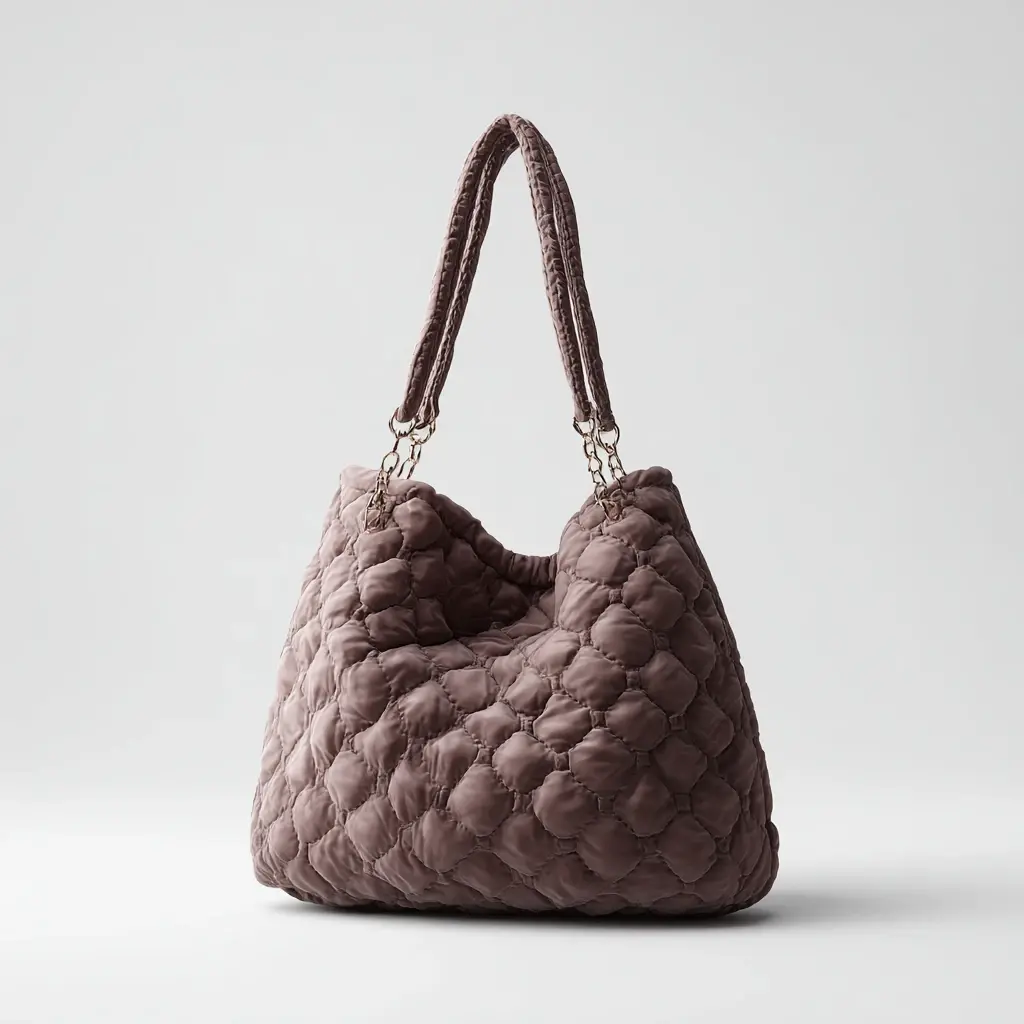
A low minimum looks like the prudent choice and is often the expensive one, for four reasons that do not appear on the quotation. First, the unit price is genuinely higher — typically 8-15% above the 500-piece figure — because small lots give up every efficiency in cutting, material buying and line changeover. Second, freight per piece is worse: a 300-piece order travels as a less-than-container load, where the landed multiplier runs nearer 1.45 than the 1.35 a fuller container achieves.
Third, there is no differentiation, and competing on an identical product means competing on price, which compresses the retail margin from both ends at once. Fourth, and least obvious, a low-minimum buy produces no learning: the pattern is not yours, the material decision was not yours, and nothing about the order transfers into the next one. A 500-piece run produces an approved sample, a booked material and a pattern that can be reordered; a stock buy produces stock and nothing else.
None of this makes a low minimum wrong. It makes it a specific tool: use it to test a channel, a price point or a customer response before committing to a branded run. What it is not is a cheaper version of the same thing. If you find yourself reordering the same stock item three times, the case for moving to 500 pieces has already been made by your own purchase history, and the MOQ reasoning at 500 pieces explains what changes when you cross that line.
Where the Bulk Price Fails to Pay Back
The 2,000-piece price is roughly 12% better than the 500-piece price, and on its own that number justifies nothing. Run it through: about USD 32,400 of cash committed instead of USD 8,100, about 50 weeks of cover at 40 units a week instead of 12, and roughly 84 cartons to store instead of 21. The saving per piece has to be earned four times over before the extra capital, the storage and the markdown exposure are covered, and it can only be earned by selling through — which is the one thing that has not yet been demonstrated.
The other cost is optionality. Capital in a year of stock is capital not available for a second style, a seasonal colour or a channel test, and a first season is exactly when optionality is worth the most. A buyer who commits 2,000 pieces to a first style has made four bets at once — on the silhouette, the material, the colour and the price — and has no dry powder left if two of the three miss. A buyer who commits 500 has made one bet and can place the next one on evidence.
There is also a schedule effect. A single 2,000-piece run occupies one production slot for longer than a 500-piece run, and if the goods need a change mid-season, the exposure is four times larger. Splitting the same annual volume into four 500-piece drops costs roughly 12% more per unit and buys the ability to change colour, hardware or lining every quarter, which in a category driven by reviews is usually worth more than the discount.
The Hidden Third Option: One Style, Two Drops
- Place 500 pcs first, at index 100, and hold the pattern, the material booking and the approved sample.
- Reorder at 1,000 pcs before the first drop sells out, typically at index 94, keeping continuity of supply.
- Use the sell-through data from drop one to change colour or hardware on drop two at no development cost.
- Total annual volume of 1,500 pcs lands near index 96, against 88 for a single 2,000-piece commitment.
- The 4-point price penalty buys two decision points and roughly USD 24,000 of capital left available.
This is the route most experienced buyers in this category actually take, and it is worth naming because it rarely appears in a quotation. It requires a programme relationship rather than a transaction: the pattern has to be held, the material has to be rebookable, and the reorder has to be able to enter the schedule without a fresh sampling round. That is precisely what the private label route is designed to support, and it is why the first 500 pieces are best understood as buying an option on the next order rather than as buying inventory.
Reading a Low-Minimum Offer Carefully
Some offers of a low minimum are genuine — a stock programme with goods on the shelf — and some are a 500-piece minimum restructured to look smaller. The tell is in the conditions. Ask what happens to the unit price at the offered quantity, whether the low quantity applies per style or across a mixed lot, and whether the material and colour are fixed or chosen. A genuine stock programme can say yes to all three; a restructured one will attach conditions that put the real minimum back at 500.
Also ask about the inspection position. A low-minimum stock buy is usually sold as received, with no AQL applied and no defect claim route beyond visible transit damage. That is acceptable for a test and unacceptable for a season. If you are buying at volume under any label, inspection at AQL 2.5 under ISO 2859-1 with critical defects at zero is the baseline worth insisting on, and the MOQ changes at 500 and 2,000 pieces set out what shifts at each threshold.
How MOQ Interacts With Colourway and Style Count
Why the MOQ is written per colourway
The MOQ of 500 pcs per style / colourway is a per-colour figure, and this is where first orders quietly quadruple. One style in four colours is 2,000 pieces, not 500. Four styles in one colour is also 2,000 pieces. The arithmetic is unforgiving and it is the single most common reason a buyer who budgeted for 500 ends up committing to four times that. Decide the style count and the colourway count together, and treat the product of the two as the real order size.
The efficient pattern is one style in one colourway for the first order, one style in two colourways for the second, and two styles once both have data behind them. That sequence keeps every individual commitment at 500 pieces while building a range, and it means each new colourway or silhouette is justified by something already sold. The alternative — launching four styles at once — multiplies both the risk and the attention each one needs during sampling, photography and listing.
There is a second-order effect on cash that deserves its own line. Holding 2,000 pieces rather than 500 does not merely commit more money; it delays the point at which that money returns, and in a seasonal category the delay can push the payback past the window in which the style is current. A buyer who turns 500 pieces twice in a season earns more on the same capital than one who turns 2,000 pieces once, even after the unit price penalty. Velocity, not volume, is what the index rewards in practice.
Which Route Fits Your Situation
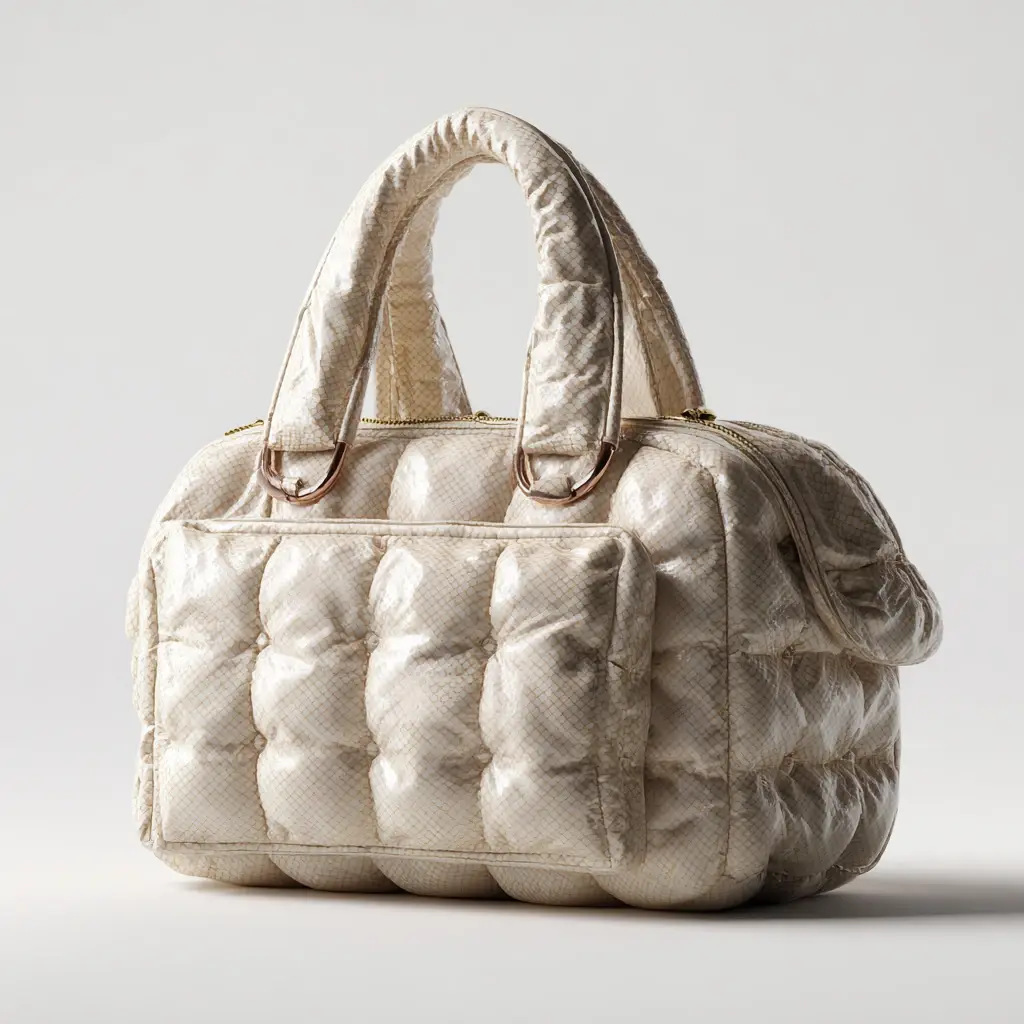
Testing a channel
Take the stock buy. Low cash, no sampling, fast arrival, and the only thing you are learning is whether customers respond. Move to 500 pieces once the answer is yes.
First branded season
Take 500 pcs per style / colourway. It is the only route offering brand control at a commitment most first-time buyers can carry, and it produces the sample and pattern the next order needs.
Proven style, stable demand
Take 1,000-2,000 pcs. The 12% price improvement is real once sell-through is demonstrated, and the capital is being deployed against known demand rather than hope.
Seasonal or gift programme
Take two drops of 500 pcs. The calendar rarely allows a single large run to be reordered within a season, and two drops let the second react to the first.
Asking for three quantities on one specification
Whichever route fits, the enquiry should ask for prices at three quantities on the same specification, because the shape of that curve is more informative than any single number. On compliance, the destination market decides the document pack: a REACH declaration against Annex XVII for the EU, a Prop 65 assessment for California, and a Global Recycled Standard transaction certificate if the material is sold as recycled. Buyers auditing social compliance usually ask for a BSCI or Sedex reference at the same time, and the landed arithmetic behind each route is set out in reseller margin calculation. Ask for all of it with the quotation, not after the deposit.
Send the silhouette and your realistic annual volume, and a private label coordinator will return prices at 500, 1,000 and 2,000 pcs with the sampling and bulk calendar attached, so the route can be chosen on numbers rather than on instinct. Get a quote.
How Long the Cash Is Gone, Route by Route
Unit price is the number everyone compares, and the cash cycle is the number that decides whether a route is survivable. A 500-piece private label order commits about USD 8,100, pays 30 per cent of it at booking and the rest around week six or seven, and sits in production 35-50 days before the first unit sells. A 2,000-piece order commits about USD 32,400 over the same production window but keeps releasing stock for close to a year.
| Route | Cash committed | Cash out | First sale | Fully recovered |
|---|---|---|---|---|
| Stock buy, 100-300 pcs | USD 1,600-4,900 | Day 0, in full | Week 1 | Week 3-8 |
| Private label, 500 pcs | About USD 8,100 | Day 0 then week 6-7 | Week 8-12 | Week 12-20 |
| Volume run, 2,000 pcs | About USD 32,400 | Day 0 then week 6-7 | Week 8-12 | Week 40-50 |
What a Unit Costs to Hold for a Season
The cost of a bag that does not sell is not the cost of the bag; it is the cost of the bag plus the months it sits there. Add storage, insurance, the capital tied up and the markdown needed to move it, and a unit held for six months carries roughly a fifth to a quarter of its landed value again. That figure belongs in the comparison matrix directly beside the unit price index.
- Storage and handling: about USD 0.18-0.45 per unit per month in a third-party warehouse, charged on carton volume.
- Insurance and shrinkage: about 0.3-0.8 per cent of inventory value a year.
- Capital cost: roughly 8-14 per cent a year on the money tied up in stock, which is the largest of the three.
- Markdown to clear: 20-40 per cent off ticket on anything left past a season, which is what ends the hold.
Reaching a Freight Break Without Raising the Minimum
The hidden third option is not only about splitting volume over two drops. Two styles booked into the same sailing share a container, and the per-piece freight gap between groupage and a full box runs 30-60 per cent. A 500-piece tote at about 0.0034 cubic metres packed leaves roughly 31 cubic metres unused, which is room for a second 500-piece style rather than a larger single commitment.
- Pieces per 20GP at full use: about 9,750 for a nested tote, against 500 pieces in a single-style drop.
- Groupage penalty: 30-60 per cent above the full-container equivalent when expressed per piece.
- Consolidation saving: one sailing for two styles removes about 7-12 days of groupage handling.
- The condition: both styles have to finish inside the same 35-50 day bulk window, so book both slots together.
Choose the route on numbers, not on the headline price
MOQ 500 pcs per style / colourway, sampling in 6-10 working days, bulk in 35-50 days, inspection at AQL 2.5 to ISO 2859-1, release FOB Xiamen. Ask for three quantities on one spec. Get a quote.
Frequently Asked Questions
What does MOQ 500 pcs per style / colourway actually mean?
It means 500 pieces in one colour of one silhouette, and each additional colourway is a separate lot. One style in four colours is therefore 2,000 pieces, and four styles in one colour is also 2,000 pieces. The product of style count and colourway count is the real order size.
How much cheaper is 2,000 pieces than 500?
About 12% per unit on a typical mid-weight style, putting the 2,000-piece index near 88 against 100 at 500 pieces. Against that saving sits roughly four times the cash, about 50 weeks of cover instead of 12, and four times the markdown exposure if the style misses.
Is a low minimum the cheaper way to start?
Usually not, once everything is counted. The unit price is typically 8-15% above the 500-piece figure, freight per piece is worse on a less-than-container load, the product offers no differentiation to defend a retail margin, and nothing about the order transfers into the next one.
When is a stock buy the right choice?
When the purpose is learning rather than selling: testing a channel, a price point or a customer response. Low cash, no sampling and fast arrival make it the cheapest way to get an answer, and the move to 500 pieces should follow once the answer is positive.
What is the advantage of two drops of 500 over one run of 1,000?
Two decision points and preserved capital. The first drop produces sell-through data that can change the colour or hardware of the second at no development cost, for roughly a 4-point penalty per unit across the year, against committing everything to one untested configuration.
How do I tell a genuine low-minimum offer from a restructured 500?
Ask what the unit price is at the offered quantity, whether the minimum applies per style or across a mixed lot, and whether material and colour are fixed or chosen. A genuine stock programme answers all three cleanly; a restructured one attaches conditions that restore the real minimum.
Does inspection apply at every quantity?
It should at volume. Stock buys are commonly sold as received, while a private label run at 500 pieces or more is inspected at AQL 2.5 under ISO 2859-1 with critical defects at zero. Insist on the same standard regardless of quantity on any order intended to carry a season.
How many colourways should the first order carry?
One. Because the MOQ applies per colourway, each additional colour is another full lot and another inventory risk that has not been tested. Add the second colourway on the reorder, supported by the sell-through data the first produced.
What is the landed cost difference between 500 and 2,000 pieces?
Freight per piece improves measurably at 2,000 because the order fills container cube rather than travelling as a less-than-container load, so the landed multiplier moves from roughly 1.45 toward 1.35. That saving sits on top of the unit price improvement but does not change the capital committed.
Can I reorder the same style without sampling again?
Yes, if the first order was a private label run. The pattern, the approved sample and the material booking all carry forward, so a reorder enters the schedule without a fresh sampling round, which is one of the main practical returns on placing the first 500 pieces properly.
Which social compliance references should I ask for?
A BSCI or Sedex reference is the usual starting point for a buyer auditing labour standards, alongside a REACH declaration against Annex XVII for the EU and a Prop 65 assessment for California. Request them with the quotation, because assembling them after production delays release.
Does a bigger order get a better production slot?
It gets a longer one, not necessarily a better one. Both routes run 35-50 days of bulk production after 6-10 working days of sampling, and a larger order simply occupies the line for longer. The scheduling advantage comes from being a repeat style with a held pattern, not from size alone.
People Also Ask
Why is the MOQ set per colourway?
Because each colourway is a separate dye lot, a separate material booking and a separate run on the line. A second colour of the same style is not a variation of the first order; it is a second order with its own minimum and its own risk.
What is the smallest sensible first branded order?
500 pcs per style / colourway. Anything below that on a branded run either does not exist or comes with conditions that restore the real minimum, and the commercial terms change very little between 500 and 1,000 pieces.
Should I negotiate the MOQ down for a first order?
Rarely. The discount you gain on unit price is usually smaller than the freight penalty of a smaller shipment, and a reduced first order sets expectations for every subsequent one. Better to ask for a second drop at a pre-agreed price.
How much capital should a first order tie up?
An amount you can afford to still be holding in six months. At 500 pieces the landed commitment is roughly USD 8,100 on a mid-price tote, which is a level most first-time buyers can carry without it constraining the second order.
Sources and further reading
Every figure on this page is either our own programme data or attributed below. Open the originals before you write them into a specification.
- FashionUnited — fashion industry news and dataFashionUnited Industry news and company data for the fashion sector.
- SATRA — technical services for leather, footwear and accessoriesSATRA Independent leather, hardware and accessories testing protocols.
- REACH — chemical substances regulationEuropean Commission Annex XVII restricts the substances that may appear in finished leather and coatings.