The Private Label Handbag Checklist: Sketch to First Order
What does a private label handbag checklist have to contain before a sketch turns into a purchase order? Nine fields, asked in a fixed order: the 1:1 drawing with dimensions and a stated tolerance, the material named by supplier reference, the brand mark positioned in millimetres, the quantity per colourway, the day count stage by stage, the inspection standard, the tooling owner, the payment triggers and the packing list. A sketch carrying those nine becomes a physical sample in 6-10 working days; the same sketch without them becomes four emails and a fortnight of clarification. MOQ 500 pcs per style / colourway, 35-50 days of bulk production and inspection at AQL 2.5 under ISO 2859-1 sit in the middle of the checklist, and every item below is arranged so that they are settled before money moves rather than after.
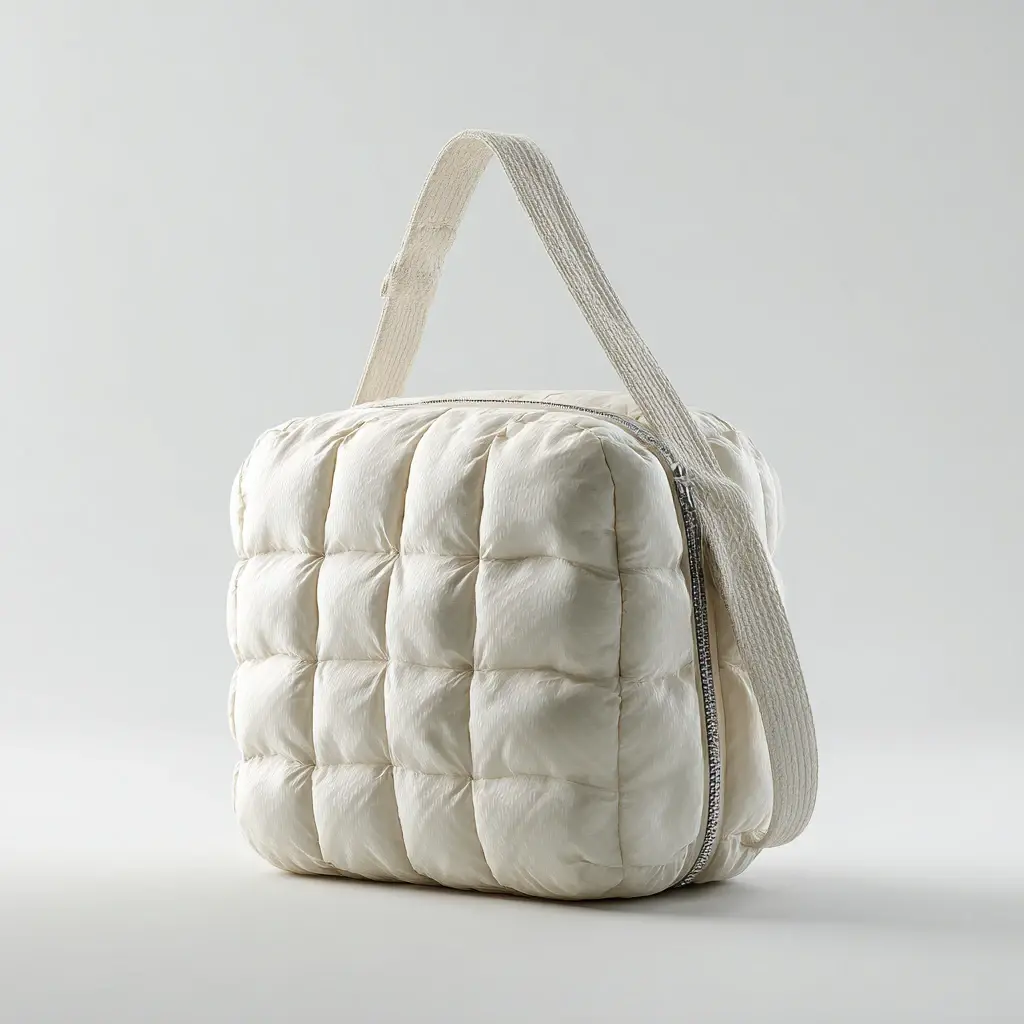
- Question One: Does the Sketch Answer What a Tech Pack Asks?
- Question Two: Which Reference Names the Material?
- Question Three: Where Does the Brand Mark Sit, in Millimetres?
- Question Four: How Many Pieces, in How Many Colourways?
- Question Five: What Does the Calendar Say, Stage by Stage?
- Question Six: Which Standard Decides Pass or Fail?
- Question Seven: Who Owns the Tooling You Are About to Pay For?
- Question Eight: What Is Paid Before a Deposit?
- Question Nine: What Arrives on the Day the Cartons Ship?
- Where a Checklist Quietly Fails Its Owner
- Allowances: The Percentage the Checklist Forgets to Add
- Version Control: How a Checklist Stays True After Round Three
- The Packing and Carton Lines on the Same Checklist
- Who Signs Which Line: An Approval Matrix
What does a private label handbag checklist have to contain before a sketch turns into a purchase order? Nine fields, asked in a fixed order: the 1:1 drawing with dimensions and a stated tolerance, the material named by supplier reference, the brand mark positioned in millimetres, the quantity per colourway, the day count stage by stage, the inspection standard, the tooling owner, the payment triggers and the packing list. A sketch carrying those nine becomes a physical sample in 6-10 working days; the same sketch without them becomes four emails and a fortnight of clarification. MOQ 500 pcs per style / colourway, 35-50 days of bulk production and inspection at AQL 2.5 under ISO 2859-1 sit in the middle of the checklist, and every item below is arranged so that they are settled before money moves rather than after.
The nine fields, with the fixed numbers attached
Question One: Does the Sketch Answer What a Tech Pack Asks?
The first question is not whether the sketch is beautiful. It is whether it answers, in writing, the nine questions a pattern cutter asks before touching leather. A mood board answers none of them; a drawing at 1:1 scale with a dimension table answers all of them. Work downwards through the bag rather than outwards from the silhouette — width and height, then the gusset, then the strap drop measured from the top edge of the body. A sketch that omits the gusset is quoted as a flat bag, and the sample arrives flat.
Does the Drawing Have to Be at 1:1 Scale?
For the first sample, no — a clean front and side view with a full dimension table is enough, and three reference photographs will do where no drawing exists. For the bulk specification, yes: the document you sign off becomes the cutting reference. State a tolerance with it. About ±3 mm on body dimensions and ±10 mm on strap drop is realistic for a soft construction; leaving the field blank means the pattern maker chooses, and then a 12 mm difference in strap drop becomes an argument rather than a measurement.
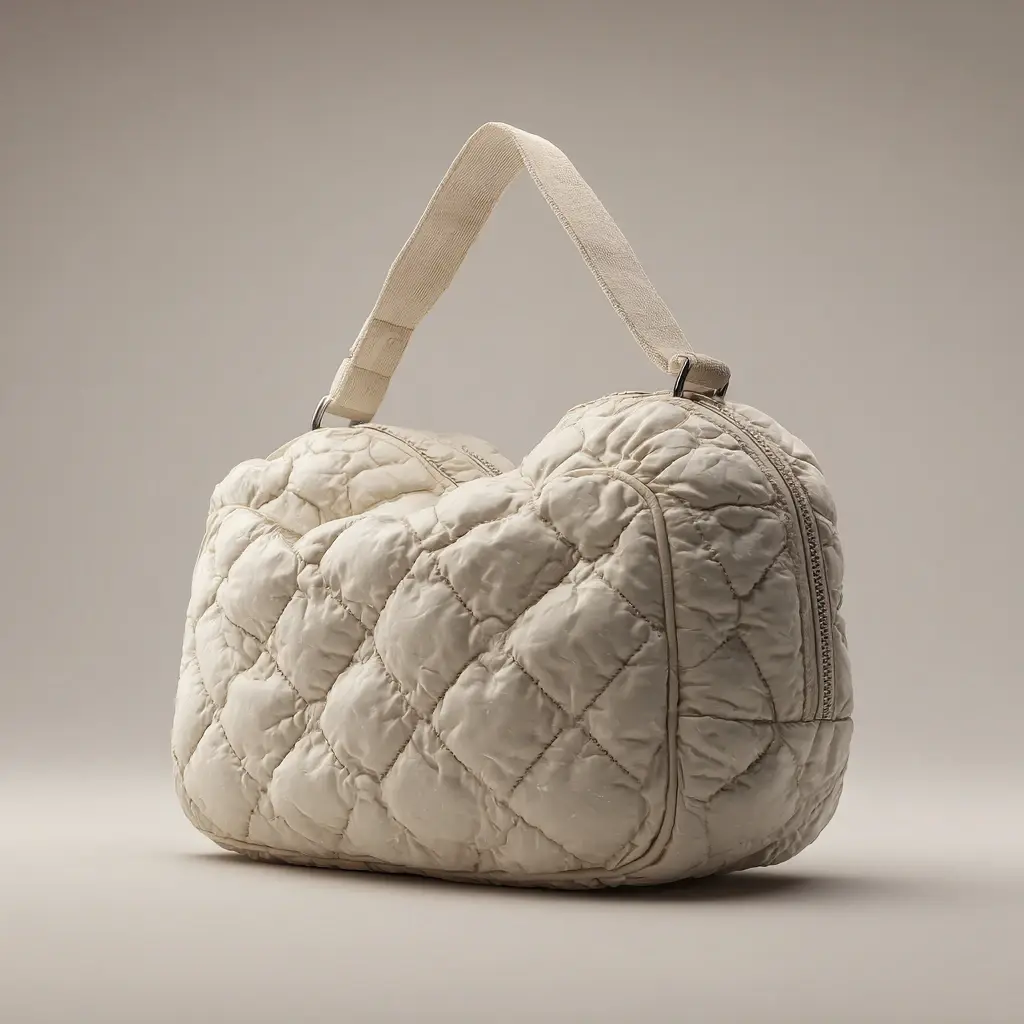
Question Two: Which Reference Names the Material?
Tan leather is not a specification, and neither is good quality PU. Both are descriptions a production partner can satisfy with any of forty materials at wildly different prices, which is why a quotation built on adjectives comes back as a range too wide to plan against. A material is named by three things together: the family, the thickness and the colour reference. Ask for all three in the first email and the first number you receive is one you can work from.
| Field | What it pins down | Filled example |
|---|---|---|
| Family and finish | Hand, abrasion behaviour, price band | Full-grain, aniline finish, soft temper |
| Thickness | Structure, weight, how the edge finishes | 1.2-1.4 mm |
| Colour reference | A dye lot matched to something physical | Pantone TCX 17-1230, swatch retained |
| Lining and interlining | Interior hand, whether the bag stands up | 210D polyester, 1.0 mm interlining |
Thickness and the colour reference do most of the work, and they are the two fields most often left blank. Thickness decides whether a bag stands or slouches, and it is what separates a 1.2 mm full-grain tote from a 0.8 mm corrected-grain one that looks identical in a photograph. A Pantone TCX code plus a retained physical swatch is enforceable; a printed description of the colour is not. When the private label handbags reference page talks about working from the retail price downwards, this is the field it means.
Question Three: Where Does the Brand Mark Sit, in Millimetres?
This question separates brands that get their mark where they wanted it from brands that get it wherever it fitted. A brand mark is a position, a size and a method, and if you send only the method the sample arrives with the mark somewhere reasonable and slightly wrong. Write centre front panel, 25 mm below the top edge, 45 mm wide, embossed without foil — and the position becomes measurable rather than arguable. Choose by reading distance: a front-panel mark is read across a shop floor or in a thumbnail, a zip-puller mark registers as hardware quality, and a woven label in the lining seam is what makes the bag feel finished to its owner.
How Many Stitches per Inch Does the Specification Name?
Seven to nine per inch is the working range for leather and coated materials, and it belongs on the tech pack for two reasons. It is a visible quality signal — a sparse, uneven seam reads as cheap at the same distance at which a dense even one reads as expensive — and it is the most frequently recorded defect on a handbag inspection report, because density drifts when a line runs at speed. Name the thread with it and add a 3 mm edge-paint width at the folds; a heavy edge bead is the second most visible shortcut on a production sample.
Question Four: How Many Pieces, in How Many Colourways?
Quantity is one number and colourways are a multiplier, and confusing the two is the most expensive mistake on this checklist. MOQ 500 pcs per style / colourway means one colour of one silhouette: two colourways is 1,000 pcs, and three silhouettes in two colourways each is 3,000 pcs and one container. The multiplier exists because of material, since every colourway is its own dye lot or coating run with its own upstream minimum. Write the quantity as a small table of silhouette, colourway, pieces and total, because a table makes the total visible before you send the email.
Question Five: What Does the Calendar Say, Stage by Stage?
The fifth question is where optimistic launch dates are made and broken. Buyers remember the 35-50 day bulk window and forget everything around it, and the surrounding stages are where the time actually goes, because each one waits for a decision. Plan against the total, not any single line.
| Stage | Days | Who holds the delay |
|---|---|---|
| Sketch, tech pack and quotation | 1-5 | You — the brief is incomplete |
| Material and colour confirmation | 2-4 | Shared — swatch approval in hand |
| Sampling | 6-10 working days (12-15 complex) | Production partner |
| Sample review and revision | 3-6 | You — a written revision list |
| Deposit and slot booking | 1-2 | You |
| Bulk production | 35-50 | Production partner |
| Inspection at AQL 2.5 | 1-2 | Inspector |
| Export handling and FOB Xiamen handover | 2-4 | Shared — documents |
| Ocean transit | 18-28 to the United States West Coast; 30-38 to Northern Europe | Carrier |
Can 500 pcs Be Split Across Three Colourways?
No, and the checklist should say so before the question is asked in an email. Splitting one 500-piece run three ways means three dye lots, three trimming setups and roughly 167 pieces of each colour to sell, which turns one workable inventory position into three unworkable ones at a higher unit price. If three colours are the point of the line, the quantity is 1,500 pcs and the calendar does not change. If the cash will not carry that, launch one colourway and add the colours that sold on the second order — which also keeps the cost breakdown per piece from being distorted by three small material lots.
Question Six: Which Standard Decides Pass or Fail?
Good quality is not enforceable; a named standard is. AQL 2.5 under ISO 2859-1 is the number to write into the purchase order, because it fixes both the sample size pulled from your lot and the accept and reject counts for each defect class. Without it, an inspection is a photography session ending in a verbal verdict, worthless once 1,000 pieces are on the water. Third-party inspection through SGS can be booked against the same standard; ask for the written report, and name the defects you care about: stitch density below the seven to nine per inch specified, edge paint cracking at a fold, and plating that rubs at contact points.
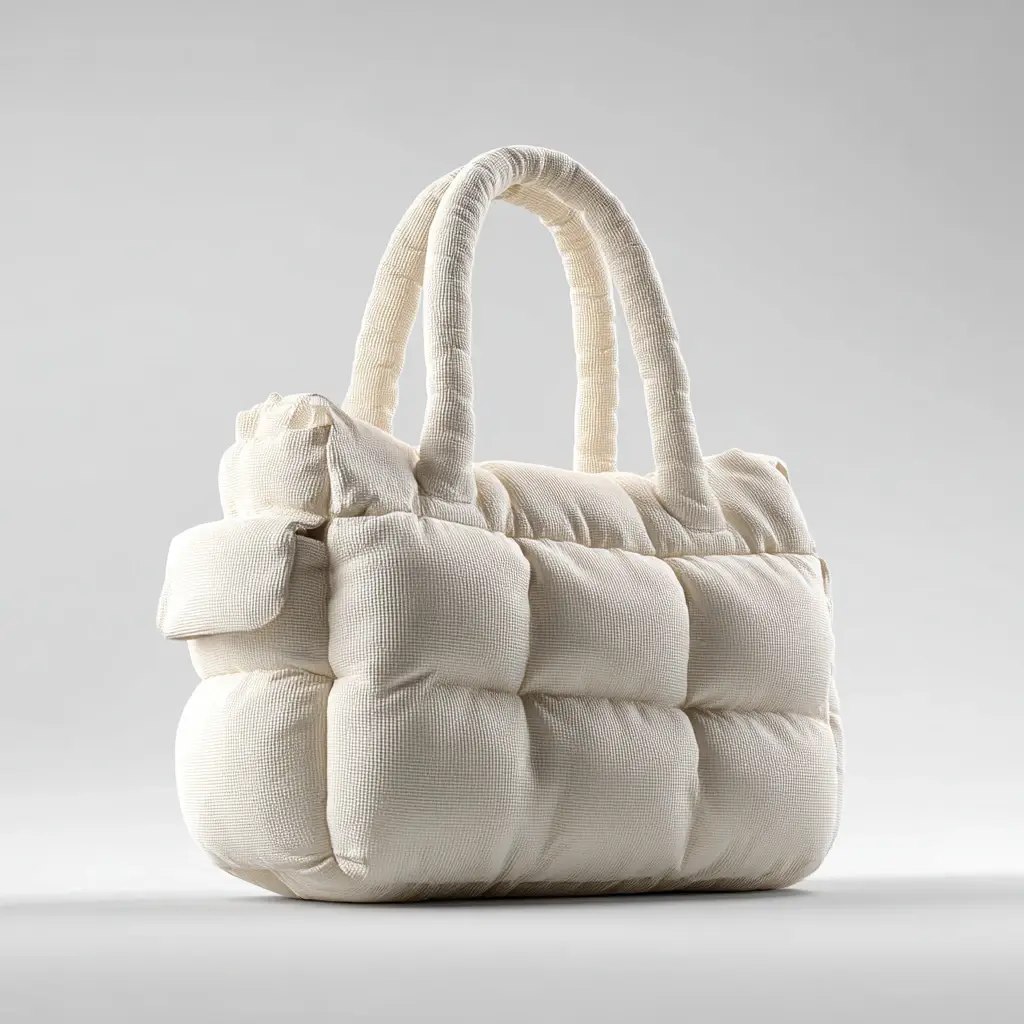
Question Seven: Who Owns the Tooling You Are About to Pay For?
An embossing die, a woven-label setup and a hardware mould are physical assets with a cost, and unless the checklist records who owns them the answer defaults to whoever is holding them. Record three things at brief stage: whether the tooling charge is amortised into the unit price or billed separately, where the tooling is stored between runs, and whether it will ever be used on another brand's order. The third matters commercially — a die is a capital asset you paid for. List the artwork as a deliverable too, so it is handed over rather than held.
Question Eight: What Is Paid Before a Deposit?
- Sampling rounds and their cost — whether the first sample is credited against the order and what later rounds cost, settled when the brief is signed rather than when a revision is requested.
- Tooling ownership and storage — named, located, and committed in writing not to be run for another brand.
- The inspection standard and who books it — AQL 2.5 under ISO 2859-1, with third-party inspection through SGS named if that is what you want, and the report issued to you.
- Payment triggers — a deposit to release material and a balance against a document, such as the inspection report or the bill of lading, rather than against a date.
- The trade term — FOB Xiamen by default, with CIF or DDP quoted if you prefer one price and one responsible party.
Question Nine: What Arrives on the Day the Cartons Ship?
- Packing list and commercial invoice, with quantity, HTS classification and origin stated consistently across both.
- Carton marks and barcodes printed to your artwork in the symbology your channel requires, with a GS1 number where a marketplace insists on one.
- Material test reports against REACH Annex XVII for the European market, and a Proposition 65 review of hardware, coated trim and dyes for California.
- Children's product documentation under CPSIA where a bag is marketed to children: lead and phthalate limits plus tracking labels.
- Audit references — amfori BSCI or Sedex / SMETA for the validated partner factory, and a Leather Working Group tannery reference where leather is in the specification.
- The inspection report at AQL 2.5 under ISO 2859-1, issued in your name.
Where a Checklist Quietly Fails Its Owner
A checklist fails in two specific ways, and neither looks like a failure at the time. The first is treating it as a form to complete rather than a set of decisions to make: every field can be filled with a guess, and a tech pack full of guesses produces a sample that is technically correct and commercially wrong. The second is treating the first sample as the finish line, when it is the point at which the checklist is tested against physical material — strap drop against the drawing, stitch count against the seven to nine per inch on the tech pack, the mark against its position in millimetres. A review that consists of a photograph with circles on it produces a second round and another 6-10 working days; a numbered list against measurements produces a bulk run that matches. Whether the exercise is worth it to you is answered in are private label handbags worth it for a first-time founder.
Allowances: The Percentage the Checklist Forgets to Add
Every quantity on a checklist has a waste figure behind it, and the waste is what turns a 500 piece order into a delivery of 476 sellable units. Cutting loss, dye lot overage, inspection rejects and the spare parts a service programme needs all come out of the same run. Naming them turns a shortfall into a line item rather than an argument at the warehouse.
| Allowance | Typical rate | What it covers |
|---|---|---|
| Cutting loss on leather | 8 to 12 per cent of the hide area | Natural marks, irregular edges and panel nesting |
| Cutting loss on coated fabric | 4 to 7 per cent of the roll | Selvedge, pattern repeat and alignment |
| Dye lot overage | 3 to 5 per cent per colourway | Panels held back for a re cut or a repair |
| Inspection reject reserve | 2 to 3 per cent at AQL 2.5 | Units drawn, failed and not replaced in the lot |
| Spare parts | 1 per cent of units | Straps, pullers and feet held for after sales |
| Packing overage | 1 to 2 per cent of cartons | Damaged cartons and a re pack after inspection |
Version Control: How a Checklist Stays True After Round Three
A checklist that is updated in an email stops being evidence. By the third sample round nobody can say which dimension was in force when the panels were cut, and that uncertainty is what a dispute feeds on. Three habits keep the document honest, and all three cost minutes rather than money. They matter most when the revision is small, because a small change is the easiest one to lose.
- Number every revision. R1, R2 and R3 with a date on the drawing sheet, and superseded files moved to an archive folder rather than deleted.
- Restate the unchanged lines. A revision that changes only the strap drop should still list the body dimensions, so the document stands alone.
- Tie the sample to the revision. Photograph the sample alongside the revision number it was built from, not alongside the latest one issued.
- Keep one owner. One person issues the file; a revision sent by somebody else is a second specification whether it was intended or not.
- Record the sign off. The approved sample is sealed and dated, and its revision number appears on the cutting ticket for the bulk lot.
The Packing and Carton Lines on the Same Checklist
Packing is specification rather than administration, and it is the part most often settled by whoever happens to be standing at the bench. Six lines decide it and each one carries a figure. Fix them at sampling, because the carton dimensions set the freight quotation, and a carton changed at packing re quotes the whole shipment at the worst possible moment.
| Line | Figure to state | Why it is checked |
|---|---|---|
| Units per carton | 20 to 25 for a medium tote | Sets the carton count and the freight cube |
| Carton dimensions | 60 by 40 by 40 cm, plus or minus 1 cm | Drives the cost per piece on a shared container |
| Board grade | Double wall, 6 to 7 kg burst test | Stacking in a container and at the destination |
| Carton marks | SKU, colourway, quantity and gross weight | Warehouse receiving and marketplace preparation |
| Polybag | 40 to 50 micron with warning text printed | Moisture in transit and receiver compliance |
| Barcode placement | One face, 20 mm from the base edge | Scanned at the distribution centre, not in a shop |
Who Signs Which Line: An Approval Matrix
A checklist with no named owner is a document everybody assumes somebody else is watching. Assigning one signatory per line removes the overnight delay that costs a working day each time it happens, and it turns approval into evidence rather than memory. Five lines need a name against them, and each one is signed against something physical: a measurement, a swatch or a report.
- Dimensions and tolerances. Signed by you at pre production against the tech pack, with all twelve measured dimensions recorded in millimetres.
- Material and colour. Signed against a physical swatch at Delta E 2.0 or better under a D65 source, with the dye lot reference recorded.
- Hardware and plating. Signed at sampling, because a change after the bulk release is a re tooling event costing 10 to 14 days.
- Inspection standard. AQL 2.5 under ISO 2859-1, booked before the run rather than negotiated after it, with the report issued to you.
- Shipment release. Signed against the inspection report and the packing list, before the 70 per cent balance is released to the programme.
Run your sketch against the nine fields
Send the drawing, the material reference, the branding position and the quantity per colourway. A private label coordinator will confirm MOQ 500 pcs per style / colourway, a sampling window of 6-10 working days, a bulk window of 35-50 days and inspection at AQL 2.5 under ISO 2859-1. Get a quote.
Frequently Asked Questions
What does a private label handbag checklist have to contain?
Nine fields, in a fixed order: a drawing with dimensions and a stated tolerance, the material named by family, thickness and colour reference, the brand mark with its position in millimetres, the quantity per colourway, the calendar stage by stage, the inspection standard, the tooling owner, the payment triggers and the document set that ships with the cartons. A sketch carrying all nine becomes a sample in 6-10 working days; one carrying three of them becomes a fortnight of clarification emails.
Does the sketch have to be a technical drawing?
Not for the first sample — a clean front and side view with a dimension table works, and three reference photographs will do where no drawing exists. It becomes necessary at bulk stage, because the signed-off document becomes the cutting reference. State a tolerance with it: around ±3 mm on body dimensions and ±10 mm on strap drop suits a soft construction, and leaving it blank means somebody else chooses it for you.
How many stitches per inch should a handbag specification name?
Seven to nine per inch is the working range for leather and coated materials, and it belongs on the tech pack because stitch density is the most frequently recorded defect on a handbag inspection report. Density drifts when a line runs at speed, and without a number on the specification there is nothing to measure the finished bag against. Name the thread too, and add a 3 mm edge-paint width at the folds.
Can the 500-piece MOQ be split across three colourways?
No. MOQ 500 pcs per style / colourway means one colour of one silhouette, because each colourway is its own dye lot or coating run with its own upstream minimum. Two colourways of one silhouette is 1,000 pcs and three is 1,500 pcs, and the calendar does not change. If the cash will not stretch to 1,500, launch one colourway and add the colours that sold on the second order.
How long does it take to turn a sketch into a sample?
From an approved brief, 6-10 working days for a standard construction and 12-15 working days where the sequence is partly manual, such as a moulded frame, a hand-woven panel or stacked leather. The clock starts when the specification and material are signed off, not when the first email arrives, which is why a complete tech pack is the fastest route to a sample. Add 3-6 days for your review.
What tolerance should I write on a handbag tech pack?
About ±3 mm on body dimensions, ±10 mm on strap drop and ±2 mm on the position of a brand mark is a realistic set for a soft construction; structured bags can be held tighter, but a tolerance you cannot inspect is not worth writing. The purpose is having a number to point at when the sample arrives and something feels different from the drawing, instead of an argument about opinion that ends in a second sampling round.
Who owns the embossing die after the run?
You should, and it should be in writing before the deposit is paid. The record needs three entries: whether the tooling charge is amortised into the unit price or billed as a separate line, where the die is stored between runs, and a commitment that it will not be used on another brand's order. The same logic covers the woven-label setup, the hardware mould, the digitised embroidery file and the carton artwork.
Which standard decides whether a shipment passes?
AQL 2.5 under ISO 2859-1, written into the purchase order. It defines the sample size pulled from your lot and the accept and reject counts for each defect class, which makes the outcome enforceable rather than a matter of opinion. Inspection takes 1-2 days at the end of the run and can be booked through SGS or your own team. Ask for the written report, and add a salt-spray target in hours to ASTM B117 for plated hardware.
What should be paid before the deposit?
Nothing beyond the deposit itself if the brief is complete. What should be settled in writing first is the sampling-round policy, tooling ownership and storage, the inspection standard and who books it, the payment triggers, and the trade term. Tying the balance to a document such as the inspection report or the bill of lading rather than to a date means a schedule slip does not cost you money for goods you have not seen.
What documents arrive with the cartons?
A packing list and commercial invoice with consistent quantity, HTS classification and origin; carton marks and barcodes printed to your artwork; material test reports against REACH Annex XVII for Europe and a Proposition 65 review of hardware and dyes for California; CPSIA documentation where a bag is marketed to children; amfori BSCI or Sedex / SMETA audit references; and the inspection report at AQL 2.5.
Do I need compliance test reports before the first order?
You need the specification for them before the order and the reports before the goods are listed. REACH Annex XVII restrictions on chromium VI, azo dyes, nickel release and phthalates are material properties, so they are settled when the material is chosen rather than when the cartons are packed. Proposition 65 is the one that catches people out, because a warning discovered after packing is a relabelling job rather than a paperwork fix.
What is the fastest way to get a usable first quotation?
Send a complete brief: the drawing with a tolerance, the material named by family, thickness and Pantone reference, the branding method and position in millimetres, the quantity per colourway, the packaging list, the destination market, the trade term and the retail price you intend to sell at. That comes back as a unit-price band at MOQ 500 pcs per style / colourway with a 6-10 working days of sampling window attached.
People Also Ask
What is the difference between a sketch and a tech pack?
A sketch shows proportion and intent; a tech pack states the proportion in millimetres, adds a tolerance, names the material by thickness and colour reference, and fixes the position of every brand mark. A sketch can be quoted approximately, while a tech pack can be quoted accurately and inspected against.
Why does one colourway need 500 pieces?
Because a dye lot or coating run has its own production minimum, and the trimming for that colourway comes in set lot sizes too. Those fixed costs are the same for 100 or 500 pieces, so below 500 they dominate the unit price.
How many samples should I approve before bulk?
At least one physical sample measured against your tech pack, and a counter sample cut from the actual bulk material wherever the material is expensive or the colour critical. A sample sewn from whatever was nearest at hand proves the pattern, not the run you are buying.
Can I change the hardware after the sample is approved?
Only with cost and calendar consequences. Plated parts are ordered early, and a plating run costs the same for 300 or 3,000 pieces, so a late change either scraps the parts or holds the line.
Sources and further reading
Every figure on this page is either our own programme data or attributed below. Open the originals before you write them into a specification.
- REACH — chemical substances regulationEuropean Commission Annex XVII restricts the substances that may appear in finished leather and coatings.
- Consumer Product Safety Improvement Act of 2008 (full text)U.S. Congress / GovInfo The statute behind childrens-product limits and tracking labels.
- SATRA — technical services for leather, footwear and accessoriesSATRA Independent leather, hardware and accessories testing protocols.