How Much Does It Cost to Private Label Handbags in 2026
How much does it cost to private label handbags in 2026? More than the unit price and less than most first-time budgets, provided the three numbers that decide it are known before the enquiry goes out: the quantity per colourway, the material family and how many operations the silhouette needs. MOQ 500 pcs per style / colourway is the quantity the price is quoted against, 6-10 working days of sampling is where a spec change is cheapest, and 35-50 days of bulk production is where a change to the same spec is most expensive. The case below follows one buyer through three quotations for the same three silhouettes, and the five rules that come out of it are the same five that apply to any private label handbag enquiry.
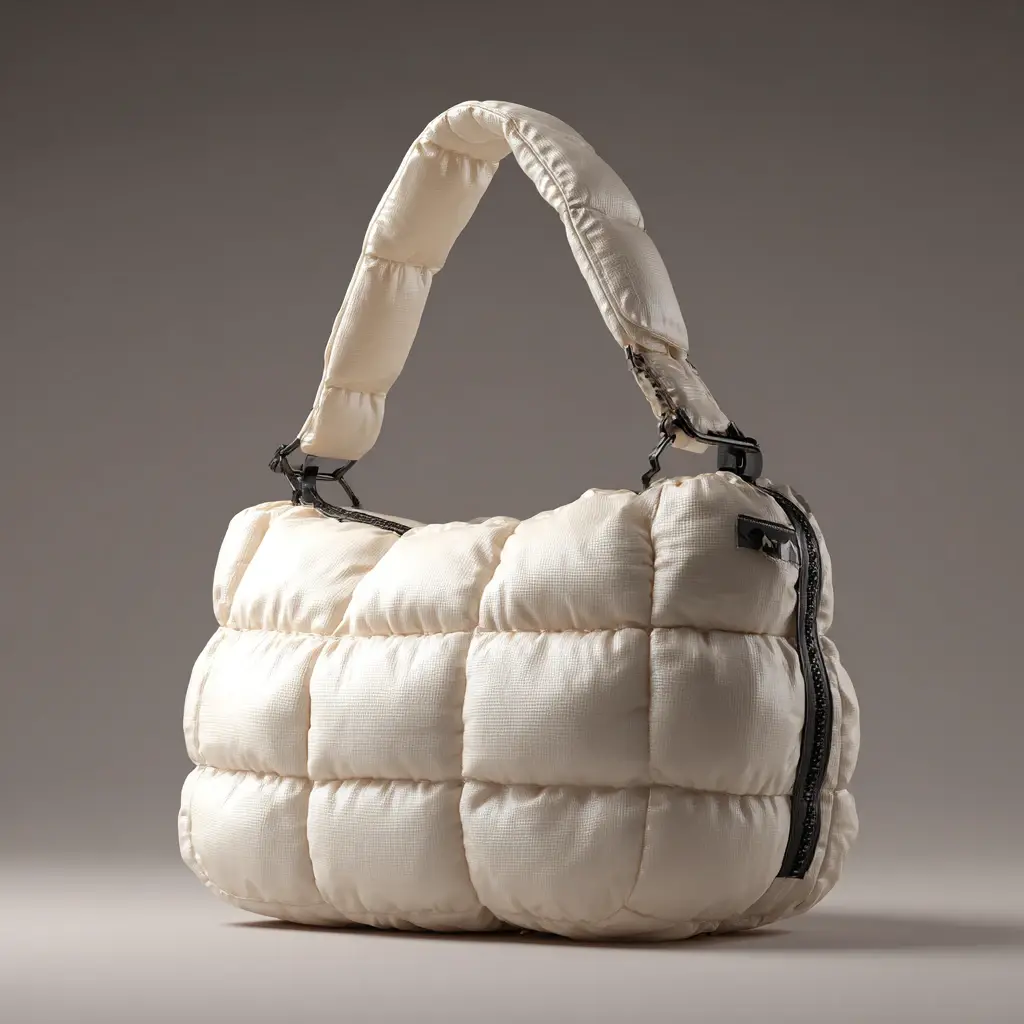
- The Case: One Buyer, a Price Ceiling and Three Silhouettes
- What the Three Quotations Actually Contained
- Rule One: The Unit Price Has Five Lines
- Rule Two: Tooling Is a Fixed Charge Spread Over a Quantity
- Rule Three: Landed Cost Is Not the Unit Price
- Rule Four: The Calendar Is a Cost
- Rule Five: The Second Order Costs Less Than the First
- What the Buyer Chose, and Why
- Six Numbers to Take From the Case
- What to Put in Your Own Cost Enquiry
- Which Line to Attack First: A Ten Per Cent Sensitivity
- What the Development Stage Actually Costs
- What a Specification Change Costs at Each Stage
- Three-Season Economics: Where the Same Style Lands
How much does it cost to private label handbags in 2026? More than the unit price and less than most first-time budgets, provided the three numbers that decide it are known before the enquiry goes out: the quantity per colourway, the material family and how many operations the silhouette needs. MOQ 500 pcs per style / colourway is the quantity the price is quoted against, 6-10 working days of sampling is where a spec change is cheapest, and 35-50 days of bulk production is where a change to the same spec is most expensive. The case below follows one buyer through three quotations for the same three silhouettes, and the five rules that come out of it are the same five that apply to any private label handbag enquiry.
Cost parameters behind every quotation
The Case: One Buyer, a Price Ceiling and Three Silhouettes
A seller with an established marketplace store wanted her own brand on three silhouettes she had already been reselling: a tote, a crossbody and a hobo. She had a retail price in mind, a launch date eight weeks away and no tech pack. The first email asked how much for a handbag, and the three replies she got back were separated by more than the difference in their material choices. Understanding why is the whole subject of this page, because the same three replies arrive in everybody's inbox and only one of them is usable.
| Reply | What it specified | Usefulness |
|---|---|---|
| A price range without a material | Nothing, pending the material choice | Too wide to plan a launch against |
| A price for a named material at 500 pcs | Top-grain at 1.0-1.2 mm, two colourways | Usable and comparable |
| A price for a named material at 500 pcs plus tooling | As above, with the embossing die and mould billed separately | Usable and the most honest of the three |
What the Three Quotations Actually Contained
The first reply was a range and told her nothing, because a range across four material families is a range across four businesses. The second and third named a material, a thickness and a quantity, which is what made them comparable — and they differed in exactly one respect, whether the tooling was inside the unit price or beside it. That single difference is worth more than the gap between the two numbers, because tooling is the one line that falls sharply on the second order. She chose the third, and the arithmetic of that choice is rule two below.
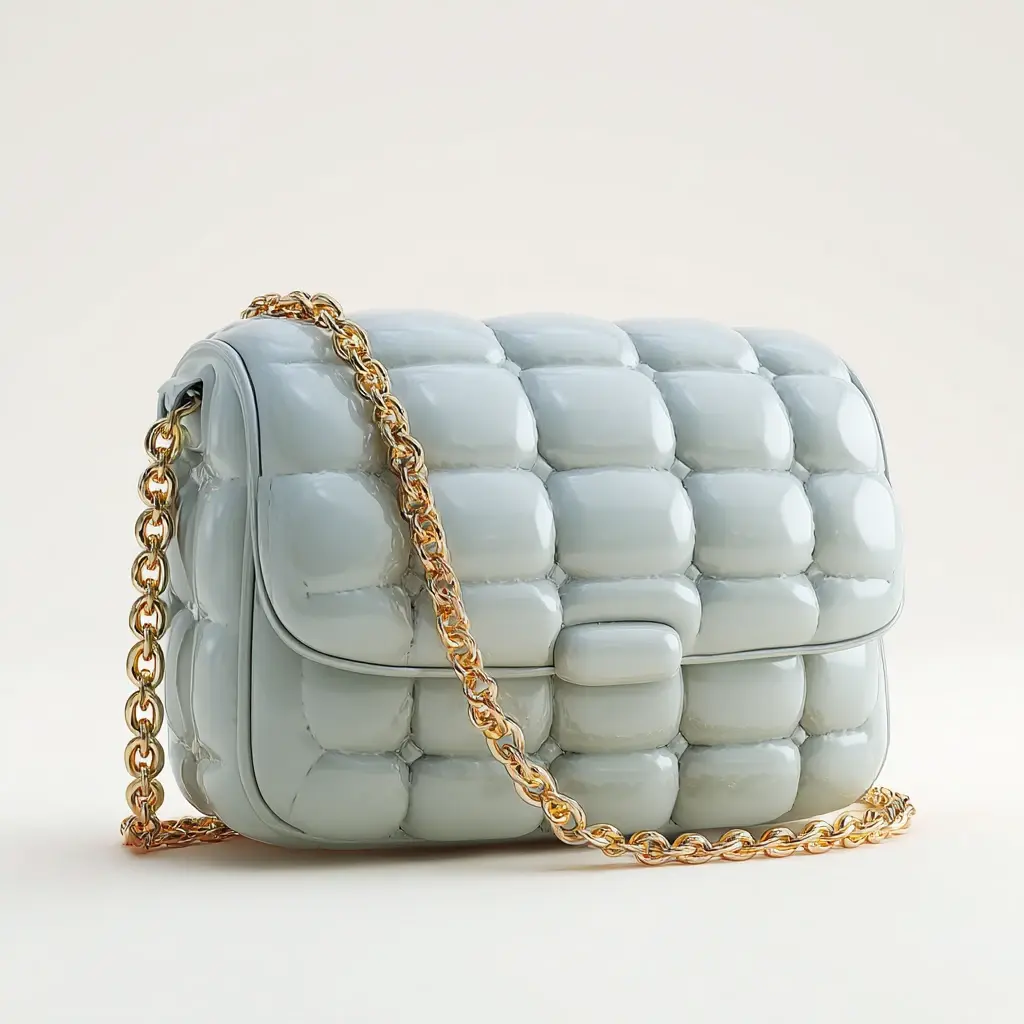
Rule One: The Unit Price Has Five Lines
A handbag unit price is a sum, and a buyer who can read the sum can move it, while a buyer who only sees the total can only ask for a discount. The five lines are material, trimming and hardware, cutting and sewing labour, packaging, and the one-off tooling that may or may not be inside the total. Expressed on an index of 100 points for the unit price, the shares are stable enough across the trade that you can sanity-check any quotation against them — and when a quote sits outside them, there is a reason worth asking about.
| Line | Share of unit price | What moves it | How to lower it |
|---|---|---|---|
| Material | 40-55 | Leather price per square foot, yield, thickness | Simplify the pattern, share the buy across silhouettes |
| Trimming and hardware | 15-25 | Zipper chain, webbing, closures, plating | Stock finishes instead of a custom mould |
| Cutting, sewing, finishing | 15-25 | Number of operations, structure, closures | Fewer pockets, fewer panels, no interlining |
| Packaging | 3-8 | Dust bag, hangtag, carton, print plates | One tag artwork across the assortment |
| Tooling | One-off | Embossing die, label setup, hardware mould | Amortise over 1,000 pcs or more |
Rule Two: Tooling Is a Fixed Charge Spread Over a Quantity
Tooling is the line that behaves unlike every other line, which is why it has a rule of its own. An embossing die, a woven-label setup and a hardware mould are made once and cost the same whether the run is 500 or 3,000 pieces, so their contribution to a unit price falls as the quantity rises. That single fact explains most of the price movement a buyer sees between a first order and a third one, and it is the reason the third quotation in the case was the honest one: it showed the tooling as a separate line so the buyer could see what would disappear from the second order.
How Much Does the Tooling Add Per Unit?
Enough to matter at 500 pieces and almost nothing at 3,000. If the three tooling items for a line are treated as one fixed sum, that sum spread over 500 pieces is six times its contribution per unit when spread over 3,000, and the difference is the price movement most buyers attribute to volume negotiating. The practical consequence is not to avoid tooling — an embossed mark is the thing that makes the bag yours — but to plan the quantity that amortises it, and to ask whether the charge is inside the unit price or beside it before comparing two quotations.
Rule Three: Landed Cost Is Not the Unit Price
The unit price is quoted FOB Xiamen, which means it covers the goods delivered on board at the port and nothing beyond it. The number your margin depends on is the landed cost: the unit price plus freight, insurance, duty and the handling at your end. Those additions are real and they vary by material, because bags are classified by their outer surface and leather, coated fabric and textile sit at different duty rates. A buyer who plans a margin on the FOB figure discovers the difference after the goods have shipped, which is the worst possible moment to find it.
- Freight. Ocean freight per container, quoted as a rate and moved by season; rates rise before Chinese New Year and during the autumn shipping rush.
- Duty. Set by the outer surface material of the bag, so the same silhouette in leather and in coated fabric lands at different rates. Check the HTS line for your market before you price the assortment.
- Handling and prep. Carton receiving, polybagging, labelling and whatever your fulfilment channel requires at the inbound dock.
- Payment and currency. The cost of the transfer and the rate on the day, which is worth building into the margin rather than discovering at the bank.
- Inspection. A third-party inspection booked through SGS, in addition to the AQL 2.5 check that is included at the end of the run.
What Does Compliance Testing Cost?
Less than a relabelling job, which is the honest way to put it. Material test reports against REACH Annex XVII and a Proposition 65 review of hardware and coated trim are commissioned per material rather than per SKU, so a three-silhouette line in one material family pays for them once. Commissioning them after the goods have shipped is the expensive version, because a warning discovered at that point is a relabelling operation rather than a paperwork fix.
Rule Four: The Calendar Is a Cost
Two costs in this trade are calendar costs rather than price costs, and both are larger than the discount anybody negotiates. The first is air freight on the last 300 units of a launch that was planned on the bulk window alone: the 35-50 days was only ever part of the schedule, and the total from brief to goods handed over is 55-80 days before transit. The second is a second sampling round, which costs another 6-10 working days and is caused almost always by an incomplete brief rather than by a bad pattern. Both are avoided by planning the whole calendar and by sending a complete specification.
There is a third calendar cost that appears in the ledger as a discount rather than as an expense, and it is the cost of holding a slot. Bulk capacity is finite — 7 production lines and about 200,000 pcs per month across a validated partner factory — and the windows before Chinese New Year and during the autumn shipping rush are the two that fill first. A buyer who approves a sample in November and pays the deposit in December is quoted a later slot than one who did the same work in September, and the difference between those two dates is a launch season. Book the slot when the deposit is paid, not when the sample is approved.
Rule Five: The Second Order Costs Less Than the First
Every private label programme gets cheaper at the second order, and it is useful to know which parts of that saving are real. The tooling is already made and does not repeat. The pattern is known, the yield is known, and the line has been set up for it before, so there is no development in the price. What does repeat is material, labour and packaging, and those three move with the market and with your quantity. A buyer who plans the second order at a higher quantity gets the tooling saving and the material-lot saving together, which is where the step from 500 to 1,000 pieces pays for itself.
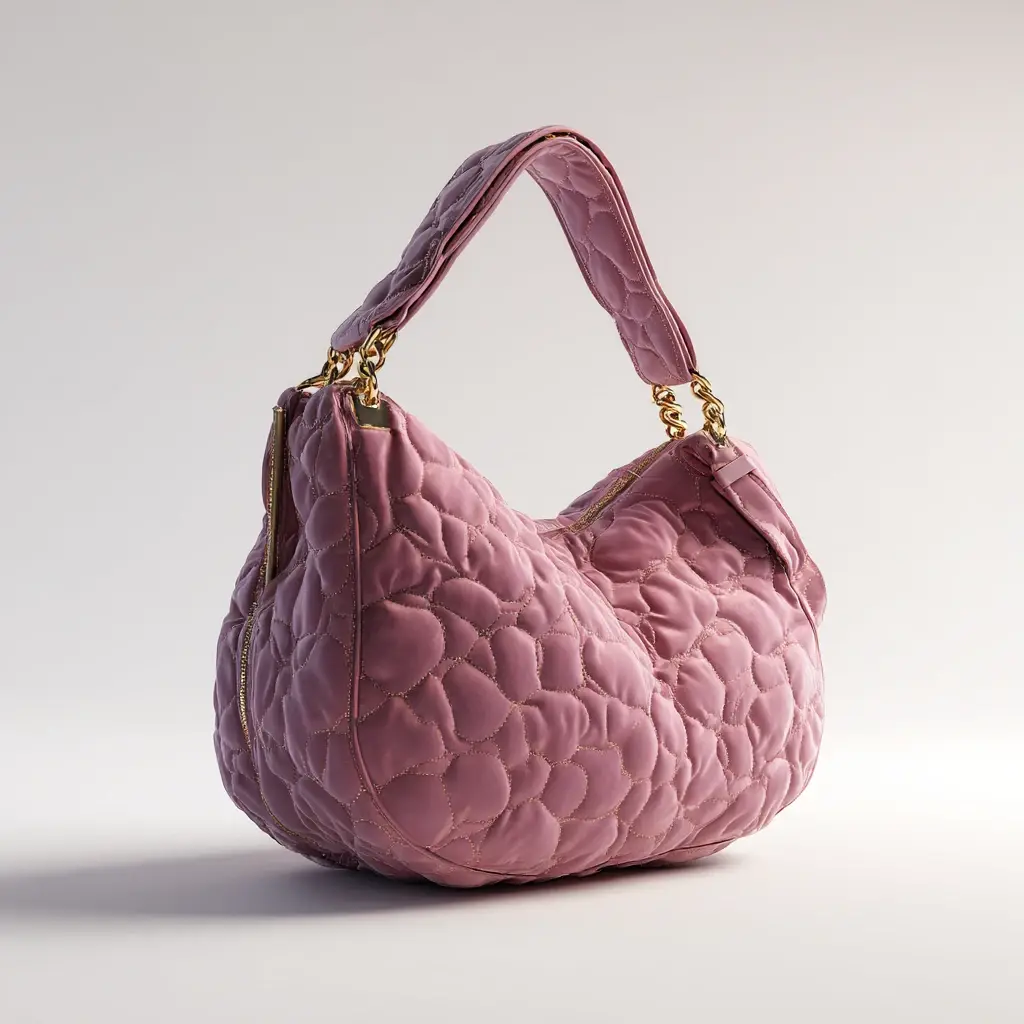
What the Buyer Chose, and Why
She took the third quotation, at 500 pcs per colourway across three silhouettes in two colourways — 3,000 pieces, one container and one inspection. The decision rested on three things she could see only because the quote was itemised: the tooling was a separate line she would not pay twice, the material was named at a thickness she could check on the sample, and the packing and carton costs were inside the total rather than beside it. The range in the first email had been lower at the bottom end and higher at the top, and it had told her nothing she could act on.
Six Numbers to Take From the Case
Six numbers travel from this case to any other private label handbag enquiry, and they are worth writing on the brief itself. MOQ 500 pcs per style / colourway; 6-10 working days of sampling, or 12-15 for a framed or hand-woven construction; 35-50 days of bulk; AQL 2.5 under ISO 2859-1 for the inspection; FOB Xiamen as the term the unit price is quoted on; and 55-80 days from brief to goods handed to the forwarder. Everything else in a cost enquiry is a variable that these six constrain.
What to Put in Your Own Cost Enquiry
The quality of a cost answer is set by the quality of the question. A brief with a material, a thickness, a quantity per colourway, a branding method, a packaging list, a trade term and a target retail price comes back as an itemised unit price inside the six numbers above. A brief that asks how much for a bag comes back as a range. The sketch-to-first-order checklist is the same point made as a workflow, and it exists because the per-piece cost breakdown only works when there is a specification to break down. Then pricing for a 3x retail margin tells you whether the landed cost fits the shelf you intend to sell from.
Which Line to Attack First: A Ten Per Cent Sensitivity
Once the unit price is decomposed, the next question is leverage: which line moves the total most for the least disturbance? Applying the same 10 percent reduction to each line in turn produces very different results, and the ranking rarely matches the order a buyer would guess. Run the exercise on the banded shares below before asking for a discount, because one of these rows is worth more than three rounds of negotiation.
| Line | Share of unit price | Effect on unit price | Difficulty |
|---|---|---|---|
| Material | 40-55 points | 4.0-5.5 percent lower | Medium: a pattern or specification change |
| Trimming and hardware | 15-25 points | 1.5-2.5 percent lower | Easy: a stock finish instead of a custom mould |
| Cutting, sewing, finishing | 15-25 points | 1.5-2.5 percent lower | Medium: fewer operations, or a softer body |
| Packaging | 3-8 points | 0.3-0.8 percent lower | Easy, but the return is small |
| Tooling already paid | One-off | Nothing on later orders | Free: it simply does not repeat |
The ordering has one warning attached. Material is the largest row and the easiest to damage: pushing it below about 40 points of unit price usually means thinner hide, a lower grade or a coarser finish, and those three surface later as returns rather than as savings.
What the Development Stage Actually Costs
Development is the line nobody budgets and everybody notices. A first programme pays for one or two sample rounds, courier parcels in both directions, at least one set of drawings, and the small jobs that fall between them. Budgeted once it is unremarkable; discovered as three separate invoices it becomes the reason a first-season margin looks worse than the plan.
- Sample rounds. USD 80-150 per style for a tote and USD 150-260 for a structured satchel or anything with custom hardware, credited in full once bulk reaches 500 pcs.
- Sample courier. USD 45-90 per parcel each way to the US or EU, plus import duty and tax on the declared value at the destination.
- Second and third rounds. Round two usually costs no more than the first; a third round is the point at which the brief, rather than the pattern, should be examined.
- Typical first-programme total. USD 400-1,100 across sampling and drawings for a three-silhouette launch, all of it non-recurring.
What a Specification Change Costs at Each Stage
A change costs very little before money moves and a great deal afterwards. Knowing where the line sits turns a change request into a decision rather than a favour, and it is the single most useful number to have before a retailer asks for an extra pocket. A third-party inspection quote belongs in the same file, since a change often triggers one.
| When the change lands | Cost | Calendar effect |
|---|---|---|
| During quotation | Nothing | Absorbed into the next revision |
| During sampling | USD 60-120 and possibly a partial re-cut | 3-6 days added to the sampling window |
| After the pre-production sample is sealed | USD 0.30-1.20 per unit plus re-cutting | 6-10 days added |
| After material release | Full material loss on cut panels | 10-20 days, in the next available slot |
| After bulk packing starts | Rework at USD 1.50-3.50 per unit | 2-6 days plus re-inspection |
Three-Season Economics: Where the Same Style Lands
Unit price should be read across seasons rather than per order. Development, tooling and the learning on the line do not repeat, and quantity usually rises once the first sell-through is known, so a plan built on the first quotation overstates cost and understates volume. Modelling three seasons changes which silhouettes are worth starting with.
| Season | Volume per colourway | Index against season one | What changed |
|---|---|---|---|
| Season one | 500 pcs | 100 | Sampling, tooling and development all inside the price |
| Season two | 500-800 pcs | 92-95 | Tooling not repeated; sampling often skipped |
| Season three | 1,000-1,500 pcs | 86-90 | Better material lot and a wider spread of the line changeover |
| Across three seasons | 2,000-2,800 pcs | About 88 blended | One tooling charge, one development spend, one compliance packet |
Get an itemised cost for your three silhouettes
Send the silhouettes, the material family, the quantity per colourway and your target retail price. A private label coordinator will return a unit price at MOQ 500 pcs per style / colourway with the tooling shown separately and the 35-50 day bulk window attached. Get a quote.
Frequently Asked Questions
How much does it cost to private label handbags in 2026?
As a structure rather than a figure: a unit price is the sum of material at 40-55%, trimming and hardware at 15-25%, cutting and sewing labour at 15-25%, packaging at 3-8%, plus one-off tooling. The number that lands on a particular quotation depends on the material family, the thickness, how many operations the silhouette needs and the quantity per colourway. Send those four and the answer is a band you can plan against; send none of them and it is a range.
What are the five lines of a handbag unit price?
Material, which is priced per square foot for leather and per metre for coated fabric and canvas; trimming and hardware, covering zipper chain, webbing, closures and plating; cutting, sewing and finishing labour, which is driven by the number of operations; packaging, including the dust bag, hangtag and carton; and one-off tooling. Knowing the split is what turns a quotation from a number you accept into one you can work on.
How much does tooling add to a private label handbag?
It depends entirely on the quantity it is spread over. A fixed tooling sum spread over 500 pieces contributes six times per unit what it contributes at 3,000 pieces, and that movement is the price change most buyers attribute to volume negotiating. The practical response is not to avoid tooling, since an embossed mark is what makes the bag yours, but to plan the quantity that amortises it and to keep it a separate line.
Is the unit price the same as the landed cost?
No. The unit price is quoted FOB Xiamen and covers the goods delivered on board at the port. Landed cost adds freight, insurance and duty, and duty is set by the outer surface material of the bag, so the same silhouette in leather and in coated fabric lands at different rates. Planning a margin on the FOB figure means discovering the difference after the goods have shipped.
How does the MOQ affect the unit price?
Most of the effect comes from fixed costs that do not change with quantity: the material lot, the trimming lots, the plating bath and the line changeover are the same for 500 or 3,000 pieces, so they are spread across more units as the quantity rises. The step from 500 to 1,000 usually buys more than the step from 1,000 to 3,000, because most fixed cost is absorbed inside the first thousand.
Does the second order cost less than the first?
Yes, and three parts of the saving are real: the tooling is already made and does not repeat, the pattern and its yield are known so there is no development in the price, and the line has been set up for the silhouette before. What does repeat is material, labour and packaging, which move with the market. Ordering at a higher quantity the second time captures both savings at once.
What does sampling cost?
Sampling is a calendar cost of 6-10 working days, or 12-15 for a framed, hand-woven or stacked construction, and a first sample is often credited against the order while later rounds are chargeable. The expensive sampling cost is the second round, which is caused almost always by an incomplete brief rather than by a bad pattern. A complete tech pack with a target retail price is the cheapest form of sampling insurance.
What costs are hidden in a first order?
Three: freight and duty above the FOB unit price, the third-party inspection if you book one through SGS in addition to the AQL 2.5 check, and the handling and prep at your end, such as polybagging and labelling for a fulfilment channel. Customers in several markets also need material test reports against REACH Annex XVII and a Proposition 65 review, which are cheaper to commission with the order than after it.
How can I lower the unit price without lowering quality?
Four levers, in order of effect: simplify the pattern, which raises hide yield and lowers the material line; share the material buy across silhouettes so there is one dye lot per colour instead of several; use stock hardware finishes instead of a custom mould, which removes a tooling charge; and raise the quantity, which spreads the fixed costs. None of the four touches the visible quality of the bag.
Which trade term gives the clearest cost comparison?
FOB Xiamen, because it separates the goods from the freight and lets you compare two quotations on the same basis. CIF and DDP can both be quoted, and both are convenient when you prefer one price and one responsible party, but they bundle costs that move with the market into the unit price. Incoterms 2020 from the International Chamber of Commerce defines where risk and cost transfer under each.
What should I send to get a usable cost answer?
The silhouettes, the material family and thickness, the quantity per colourway, the branding method and position, the packaging list, the trade term and the target retail price. That combination comes back as an itemised unit price with the tooling shown separately, inside MOQ 500 pcs per style / colourway and a 35-50 day bulk window. An email asking how much for a bag comes back as a range across four material families.
People Also Ask
Why is the material line the largest share of the cost?
Because leather is priced per square foot and cut by yield, so a pattern of large clean panels costs more than one of small pieces from the same hide. It is also the line that responds best to a change in the pattern, which is why simplifying the silhouette is the first lever to reach for.
Is a cheaper material always worse?
No. A cheaper material is worse only when it is the wrong one for the job: a coated material with a poor abrasion result fails faster than a good leather, but the same coated material in a light-use crossbody can outlast a leather that was too thin for the pattern.
Do I pay for the sample separately?
Often the first sample is credited against the order and later rounds are chargeable. Ask at brief stage rather than when the revision is requested, because it is the round after the first that is expensive and it is caused by an incomplete brief.
What is the biggest avoidable cost in a first order?
Air freight on the last units of a launch planned on the bulk window alone. The bulk window is 35-50 days, but the total from brief to goods handed to the forwarder is 55-80 days before transit, and a launch date built on the shorter number is a launch date that needs air freight.
Sources and further reading
Every figure on this page is either our own programme data or attributed below. Open the originals before you write them into a specification.
- Incoterms rulesICC The rules that decide where cost, risk and insurance transfer.
- SATRA — technical services for leather, footwear and accessoriesSATRA Independent leather, hardware and accessories testing protocols.
- Leather Working Group — environmental auditing for tanneriesLeather Working Group Environmental audit protocol for tanneries and leather traceability.