Are Private Label Handbags Worth It for a First Time Founder
Are private label handbags worth it for a first-time founder? Yes, on one condition that has nothing to do with the bags: the first buy has to be small enough to survive being wrong. A first order of 1,500 pieces — three silhouettes in one colourway — breaks even at about 60% sold at full price, ties up a 30% deposit for the length of the 35-50 day bulk window and the transit that follows it, and takes around twelve months to recover. MOQ 500 pcs per style / colourway is the commitment and 6-10 working days of sampling is where it is decided. The case below is one founder's first twelve months, and the answer it produces is conditional rather than encouraging.
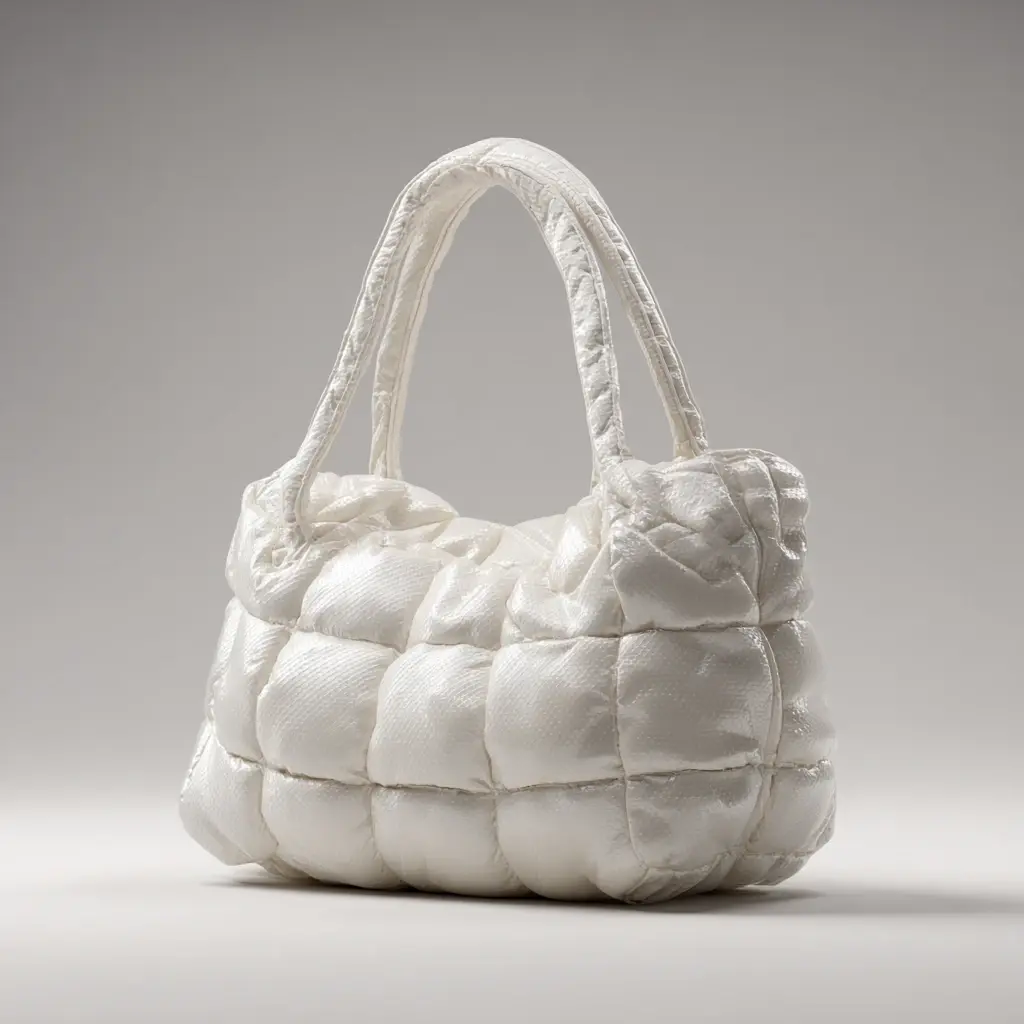
- The Case: A First Founder, 1,500 Pieces and Twelve Months
- What She Bought, and What It Cost
- What Sold, and When
- The Four Things That Made It Work
- The Three Things That Nearly Did Not
- When Private Label Is the Wrong First Move
- What the Twelve Months Actually Returned
- The Rules the Case Produces
- What a First-Time Founder Should Do in the First Ninety Days
- The Honest Answer to the Question
- How Long the Cash Sits Still Before Anything Comes Back
- What the Second Order Costs Less, Line by Line
- Setting the Retail Price Backwards From the Multiple
- What Inspection Rejects and Returns Do to the Break-Even
Are private label handbags worth it for a first-time founder? Yes, on one condition that has nothing to do with the bags: the first buy has to be small enough to survive being wrong. A first order of 1,500 pieces — three silhouettes in one colourway — breaks even at about 60% sold at full price, ties up a 30% deposit for the length of the 35-50 day bulk window and the transit that follows it, and takes around twelve months to recover. MOQ 500 pcs per style / colourway is the commitment and 6-10 working days of sampling is where it is decided. The case below is one founder's first twelve months, and the answer it produces is conditional rather than encouraging.
First-order parameters behind the case
The Case: A First Founder, 1,500 Pieces and Twelve Months
She had been reselling other people's bags for two years, which is the single most useful thing a first-time founder can have: evidence. Her best three sellers were a tote, a crossbody and a hobo, she knew the price each one sold at, and she knew roughly how many she moved a month. What she did not have was a brand, a specification or a production partner. The case is worth following because the thing that made it work was the evidence and not the enthusiasm, and the three things that nearly ended it were all absence of evidence in different places.
What She Bought, and What It Cost
Three silhouettes in one colourway, 500 pieces each — 1,500 pieces, which is the smallest order that is still a collection rather than a product. She had been advised to take three colourways of each, and the reason she did not is the reason the case worked: a colourway is a separate dye lot at 500 pieces, so three silhouettes in three colourways would have been 4,500 pieces and three times the cash. The deposit released material at the start of the 35-50 day window, and the balance was tied to the inspection report rather than to a date.
| Line | What it was | Share of the money |
|---|---|---|
| Bags | Three silhouettes, one colourway each | The largest share by far |
| Tooling | One embossing die, one label setup | Fixed, paid once, amortised over 1,500 |
| Packaging | Dust bags, cartons, card inserts | 3-8% of the unit price |
| Freight and duty | Ocean transit to her market | A real addition above FOB |
| Compliance | REACH and Proposition 65 testing | Small, and cheaper commissioned with the order |
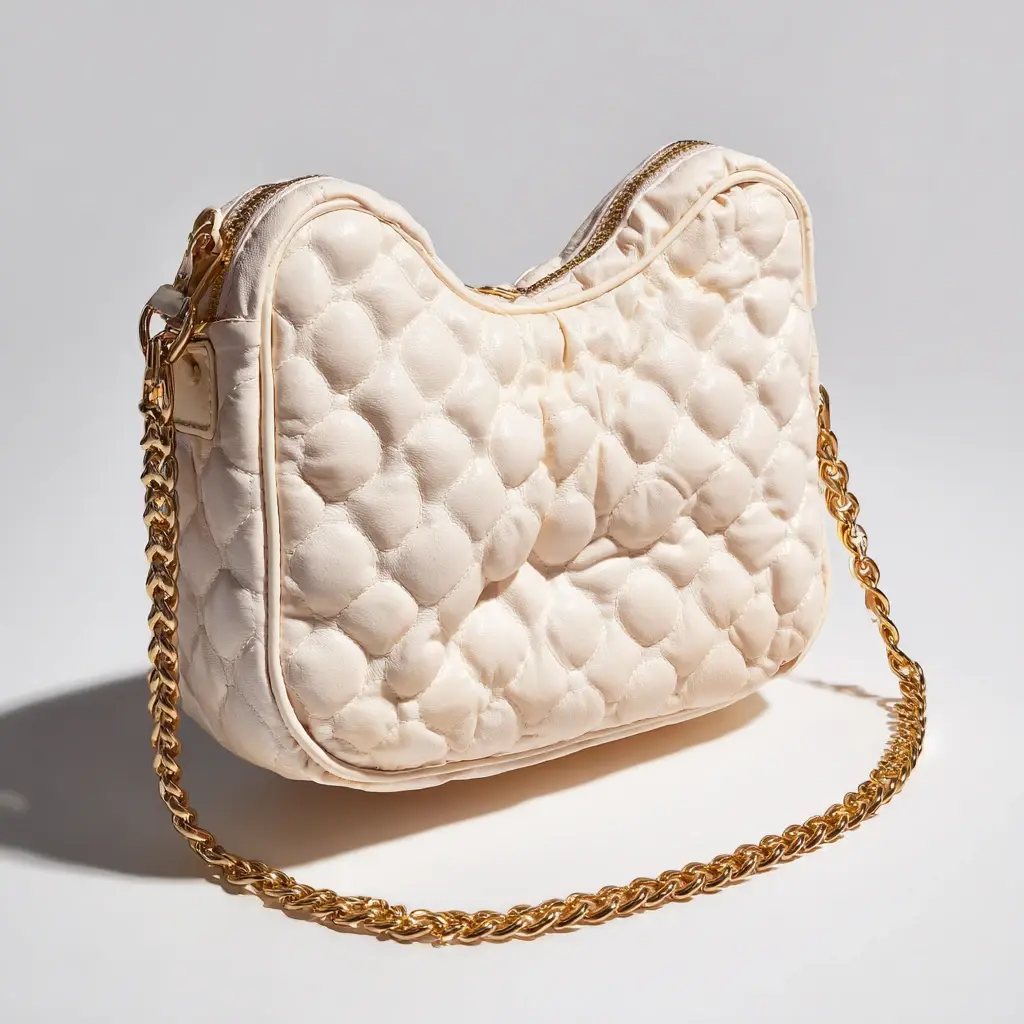
The two numbers that evidence gave her are the ones every first plan needs, and they are not the ones most founders go looking for. She knew the price each silhouette sold at in her channel and the monthly rate it sold at. Everything else in the plan follows mechanically from those two: the retail price gives the material ceiling, the rate gives the quantity per silhouette, and the two together give the months of stock the first buy represents. A founder without them is guessing at all three.
What Sold, and When
The tote sold out in four months, the crossbody in six, and the hobo took nine and was the one she would not have ordered had she known. That pattern is not unusual, and it is the reason the first buy should be one colourway: a slow silhouette in one colour is an inconvenience, while a slow silhouette in three colours is a quarter of the cash sitting still. By month seven she had the evidence she needed for the second order, which was two silhouettes, two colourways, and no development cost at all.
The months of stock the buy represented is the arithmetic that surprises founders, and it is the product of the two numbers above. Three silhouettes at 500 pieces each, at the rates she had observed, was between four and nine months of stock depending on the silhouette, and that spread is the point. A first buy across three silhouettes is always three different stock depths, and the one that came in at nine months was the one she would have been better off ordering lower or not at all.
What Sell-Through Rate Breaks Even?
About 60% at full price on a first buy of this shape, and the number is worth calculating before the order rather than after it. Below that, the markdowns needed to move the remainder take the contribution out of the buy. Above it, the second order becomes a question of timing rather than of survival. A founder who works this out in advance knows what a bad season looks like in units, which is the difference between a plan and a hope, and it is the calculation that decides whether the first buy is 1,500 pieces or 3,000.
What Happens in the Two Months Before Anything Sells?
Nothing arrives, and the calendar is the whole story. The 6-10 working days of sampling window is where the specification is fixed, the 35-50 day bulk window is where the goods are made, and the 18-28 day transit leg is where they exist but cannot be sold. A founder who has planned for 55-80 days before transit is calm through that period; one who planned on the bulk window alone is booking air freight by the end of it.
The Four Things That Made It Work
Four decisions, none of them about the bags themselves, and each one is available to any first-time founder. They are worth stating plainly because they are the transferable part of the case: the silhouettes were already proven by someone else's sales data, the buy was one colourway, the material was chosen to fit a retail price rather than the reverse, and the second order was planned before the first one arrived.
- Proven silhouettes. Three shapes with two years of resale data behind them, which removed the largest risk in a first buy: that nobody wants the bag.
- One colourway. 1,500 pieces instead of 4,500, and three dye lots instead of nine. The saving was cash, and cash is what ends first businesses.
- A retail price first. The material was chosen to fit the price she could sell at, which is the discipline most first founders skip in the other direction.
- A planned second order. She knew which silhouette and which colourway she would reorder before the first container arrived, so the second buy was not a new development.
The Three Things That Nearly Did Not
Three things went wrong, and all three were the same mistake in different clothing: deciding something after the point at which it was cheap to decide. The hobo was added because the range board looked thin, and it was the silhouette she had no evidence for. The hardware finish was upgraded after the sample was approved, which meant a new plating run and a delay. And the carton artwork was approved a week into the bulk window instead of during sampling, which held the packing line and added a week to the calendar.
When Private Label Is the Wrong First Move
It is worth stating the cases where the honest answer is no, because a private label order is the wrong instrument for several common situations and forcing it wastes a season. If there is no evidence that anybody wants the bag, the first buy is a test being run at the wrong scale, and a test costs a couple of hundred pieces of stock rather than 1,500. If the cash for the buy is the last of the cash, the 35-50 day window plus transit will find that out. And if the design depends on a shape that does not exist, this is a development programme with a different budget and a longer calendar.
What the Twelve Months Actually Returned
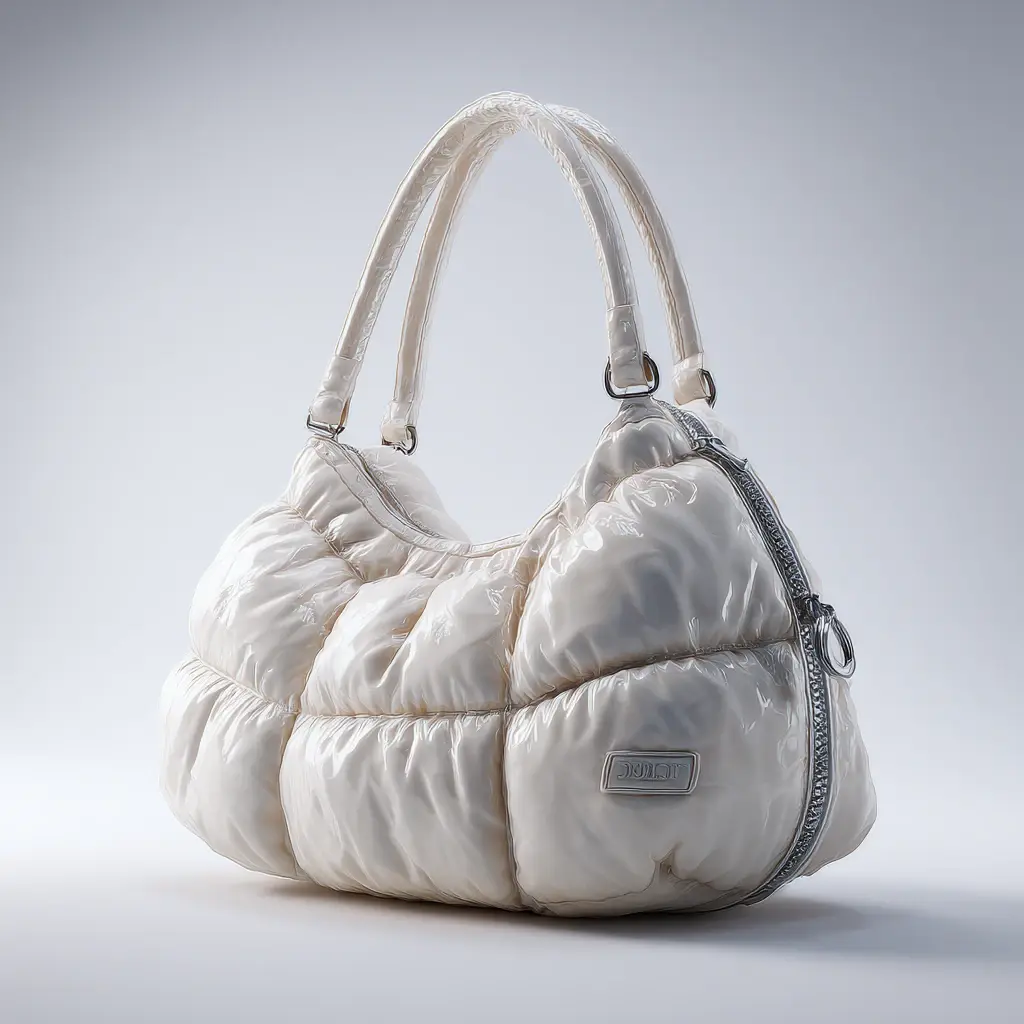
The twelve months returned slightly more than the buy cost, which is an honest result for a first year and a poor one if it is read as profit. The cash came back gradually, most of it in the second half, and the business that existed at the end was worth more than the money: a brand with a name, three known patterns, tooling she owned and a customer list. The table is the honest shape of a first year, and the last line is the one that makes the answer to the title question yes.
| Period | What happened | Cash position |
|---|---|---|
| Months 1-2 | Brief, sampling, deposit | Money out, nothing to sell |
| Months 3-4 | Bulk, inspection, transit | Money out, goods on the water |
| Months 5-8 | Tote and crossbody selling | Money in, fastest period |
| Months 9-12 | Hobo cleared at a markdown | Money in, slower and thinner |
| At month 12 | Second order placed and delivered | Roughly recovered, with an asset |
The Rules the Case Produces
Six rules come out of it, and they are worth more than the case itself because they generalise. Buy the silhouettes you have evidence for. Take one colourway in the first buy. Choose the material to fit the retail price rather than the other way round. Approve the packaging artwork during sampling. Place the second order against data rather than against a range board. And keep a working-capital buffer of about six months, because the 55-80 days from brief to goods handed over is the shortest version of the cycle, not the longest.
What a First-Time Founder Should Do in the First Ninety Days
The first ninety days are for evidence rather than for production, and they are the cheapest ninety days a founder will ever spend. Resell someone else's bags in the three silhouettes being considered, at the price intended, and watch which one moves and at what rate. That produces the two numbers the whole plan depends on — the price the market will pay and the monthly rate it will pay it at — and it costs nothing like what a wrong first buy costs. Once those two exist, the sketch-to-first-order checklist turns them into a specification.
The Honest Answer to the Question
Yes, with the condition attached. Private label is worth it for a first-time founder who has evidence and a buffer, and it is not worth it for one who has neither, because the instrument converts cash into inventory at a fixed minimum and there is no smaller version of it. The three things that decide the outcome are known before the order is placed: whether the silhouettes are proven, whether the buy is one colourway, and whether the cash can carry the cycle without the business being one bad month from stopping.
What it produces at the end is the part worth buying. A first order leaves a founder with a brand name, three patterns whose behaviour is known, tooling that belongs to her and a second order that costs less than the first. The starter roadmap for small brands covers the same twelve months step by step, and what the first order costs is the arithmetic that decides whether it can be afforded. The private label handbags programme is the instrument; the evidence is what makes it worth using.
How Long the Cash Sits Still Before Anything Comes Back
Sell-through arithmetic decides whether a first buy was worth it, and cash arithmetic decides whether it can be survived. The two run on different clocks. On the case above the 30 per cent deposit left in month one, the balance left at the end of the 35-50 day bulk window, and the first sale happened somewhere around month four once transit, clearance and listing had run. That is roughly 100 to 130 days of money out and nothing in, and it is the number that ends most first programmes rather than any judgement about whether buyers liked the bag.
- Days of exposure. Deposit to first revenue ran 100-130 days on the case, and it stretches to 150 where the transit leg is doubled by a transhipment.
- Working capital. Plan for 1.4 times the value of the goods, because freight, duty, samples and listing costs land inside the same window and none of them can be financed out of nothing.
- The gap itself. A thirty-day delay in either the bulk window or the transit leg costs the same as a 3-4 per cent unit price rise: the cash simply sits for another month.
- The useful habit. Write the date the deposit clears and the date the first invoice is expected at the top of the plan, then check them weekly rather than monthly.
What the Second Order Costs Less, Line by Line
The first order is the expensive one and nobody tells a first-time founder by how much. Three of its costs are one-off by nature and one improves by arithmetic, so a second run of the same 500 pieces is a materially different purchase from the same money. Reading the saving before complaining about the first price is what turns a programme rather than a single transaction into the thing worth starting.
| Line | First run of 500 pcs | Second run of 500 pcs | Why it moves |
|---|---|---|---|
| Pattern development | USD 1.60-4.00 per unit | Zero | The graded pattern exists and is stored |
| Tooling amortisation | USD 0.80-3.20 per unit | Zero | The embossing die and any mould are already paid |
| Sample rounds | USD 1.00-2.40 per unit | Often USD 0.00-0.60 | Sampling can frequently be skipped or reduced to one confirmation unit |
| Material buying | At 500 pcs terms | Retained lot plus first-run terms | Surplus length and a recorded colour reference |
| Inspection | Full AQL 2.5 gate | Same gate, faster | Fewer unknowns to sort at the gate |
| Typical effect | Baseline | 7-12 per cent lower unit cost | Before any change in quantity |
Setting the Retail Price Backwards From the Multiple
Most founders set a retail price by looking at competitors and then discover the number does not survive contact with the fee stack. Working backwards from the landed cost is faster and more honest. Take a unit costing USD 15.40 FOB, add roughly USD 3.20 for freight, duty and handling, and the true cost before any channel fee is about USD 18.60. A three-times multiple suggests near USD 55-59 retail, but the multiple has to be applied after the channel takes its share, not before it.
- Own site. Card processing and payment fraud losses run about 3-4 per cent of the ticket, so a 3.0x multiple is survivable.
- Marketplace. Referral and fulfilment together take 25-35 per cent of the ticket, which pushes the workable multiple to 3.6-4.2x.
- Wholesale to boutiques. The buyer needs the same margin she gets from everybody else, so keystone is the floor rather than the target and 2.5-2.7x on landed cost is realistic.
- Markdown room. Leave 30-35 per cent inside the multiple. A price set exactly at the minimum viable multiple has no room to mark down and the hobo in this case is what that looks like.
What Inspection Rejects and Returns Do to the Break-Even
The 60 per cent break-even sell-through assumes every unit delivered is sellable at full price, and it never is. Two deductions sit in front of it: units lost to a failed pre-shipment inspection, which leave the count entirely, and units returned after sale, which come back at a discount and a handling cost. Neither is large in isolation and both move the break-even noticeably when counted together, which is why they belong in the plan rather than in the post-mortem.
| Deduction | Typical band on 1,500 pcs | What it costs | Effect on break-even |
|---|---|---|---|
| Re-sort after a failed gate | 1-3 days, 0-2 per cent of units scrapped | USD 0.20-0.50 per unit plus three to six days | Raises break-even about 1 point |
| Transit damage | 0.5-1.5 per cent of units | Full unit cost plus a replacement | Raises break-even 1-2 points |
| Customer returns | 6-9 per cent on a soft or oversized shape | Ship both ways plus 20-35 per cent value loss | Raises break-even 3-5 points |
| All three together | About 45-90 units of 1,500 | Roughly USD 900-1,800 | Break-even moves from 60 to about 64-66 per cent |
Test the idea before you buy the inventory
Send the three silhouettes you have evidence for and the quantity per colourway. A private label coordinator will confirm MOQ 500 pcs per style / colourway, sampling in 6-10 working days, a 35-50 day bulk window and inspection at AQL 2.5 under ISO 2859-1. Get a quote.
Frequently Asked Questions
Are private label handbags worth it for a first-time founder?
Yes, on two conditions: the silhouettes are backed by evidence and the cash can carry the cycle. A first buy of 1,500 pieces breaks even at about 60% sold at full price and takes around twelve months to recover. Without evidence the first buy is a test run at the wrong scale, and a test costs a couple of hundred pieces of stock rather than 1,500. Without a buffer, the 35-50 day window plus transit finds the gap.
How many pieces should a first private label order be?
Three silhouettes in one colourway, which is 1,500 pieces at MOQ 500 pcs per style / colourway. It is the smallest order that is still a collection rather than a product. Three silhouettes in three colourways is 4,500 pieces, because each colourway is a separate dye lot, and most first businesses cannot carry three times the cash for the same range.
What sell-through rate breaks even on a first order?
About 60% at full price on a first buy of three silhouettes in one colourway. Below that, the markdowns needed to clear the remainder take the contribution out of the buy. Above it, the second order becomes a question of timing rather than of survival. Calculate it before the order, because a founder who knows what a bad season looks like in units has a plan rather than a hope.
How much cash does a first handbag order tie up?
A 30% deposit to release material at the start of the 35-50 day window, a balance before loading, and then freight, duty and handling on arrival. In calendar terms the money is out from the deposit to the last unit sold, which is the 55-80 days before transit plus the selling period. Hold a working-capital buffer of about six months on top of the buy.
When is private label the wrong first move?
When there is no evidence that anybody wants the bag, when the cash for the buy is the last of the cash, or when the design depends on a shape that does not exist yet. The first is a test being run at the wrong scale; the second will be found out by the calendar; the third is a full development programme with tooling and a longer window.
What should a first-time founder do before ordering?
Resell someone else's bags in the three silhouettes being considered, at the price intended, and watch which one moves and at what rate. That produces the two numbers the plan depends on — the price the market will pay and the monthly rate — for a fraction of the cost of a wrong first buy. Then turn those two into a specification and a quantity per colourway.
How long does a first private label order take to pay back?
Around twelve months, and the shape of it matters more than the total: the money is out for two months before anything can be sold, the fastest period is the four months after the goods arrive, and the slow silhouettes clear at a markdown later. Read as profit it is a poor result; read as the cost of an owned brand it is a reasonable one.
What does a first order leave behind?
A brand name, three patterns whose behaviour is known, tooling that belongs to the founder and a second order that costs less than the first. That is the part worth buying, and it is the reason the answer to the question is yes despite a first year that only roughly recovers its cost.
Why is one colourway right for a first order?
Because a colourway is a separate dye lot at 500 pieces, so three silhouettes in three colourways is 4,500 pieces instead of 1,500. A slow silhouette in one colour is an inconvenience; the same silhouette in three colours is a quarter of the cash sitting still. Add the second colourway on the second order, to the silhouette that sold.
What mistakes do first-time founders make?
Three, and they are the same mistake in different clothing: deciding something after the point at which it was cheap to decide. Adding a silhouette with no evidence behind it because the range board looked thin; upgrading the hardware after the sample was approved, which means a new plating run; and approving the packaging artwork during the bulk window instead of during sampling.
How should a first-time founder plan the second order?
Against data rather than against a range board, and before the first container arrives. Two silhouettes in two colourways, chosen by which one sold out first, costs no development, no tooling and no sampling, and the tooling that was paid for the first time does not repeat. That is where a private label programme stops being expensive.
People Also Ask
Is private label better than reselling other brands?
It is slower and more expensive to start and far more valuable to own. Reselling proves the demand; private label captures the margin and builds the asset. The order that works is to do the first for two years, then move to the second with the evidence.
Can I test a handbag design before ordering 500 pieces?
Yes, and it is the right thing to do. Buy a couple of hundred pieces of stock in the silhouette and sell them at the intended price. That is a test at the correct scale; a first private label buy is a commitment, not a test.
What if the first order does not sell?
The 60% break-even figure assumes it will not all sell. A silhouette that misses is cleared at a markdown, and the contribution from the two that worked covers it. What cannot be recovered is a buy across three colourways of a silhouette nobody wanted.
Do I need a company before placing a private label order?
You need one before you sell, and before you import commercially, since the customs entry and the duty are assessed to the importer. Set it up before the goods ship rather than while they are on the water.
Sources and further reading
Every figure on this page is either our own programme data or attributed below. Open the originals before you write them into a specification.
- FashionUnited — fashion industry news and dataFashionUnited Industry news and company data for the fashion sector.
- Incoterms rulesICC The rules that decide where cost, risk and insurance transfer.
- ITC Trade Map — import and export statisticsInternational Trade Centre Import and export statistics by HS code and destination market.