Private Label Handbags for Small Brands: A 2026 Starter Roadmap
Can a small brand launch private label handbags in 2026 without a development budget? Yes, if the roadmap starts from the retail price and works backwards: three silhouettes in two colourways at MOQ 500 pcs per style / colourway is 3,000 pieces, one container, one inspection at AQL 2.5 under ISO 2859-1, and 55-80 days from signed brief to FOB Xiamen handover. For a small brand, the entry decision is not which bag to make, it is which three to make in one material family, because the material buy is what the 500-piece minimum is really about. This roadmap follows one first-year label from a price ceiling on a spreadsheet to a packed container, showing the seven decisions in the order they have to be made and what each one costs in days and in cash.
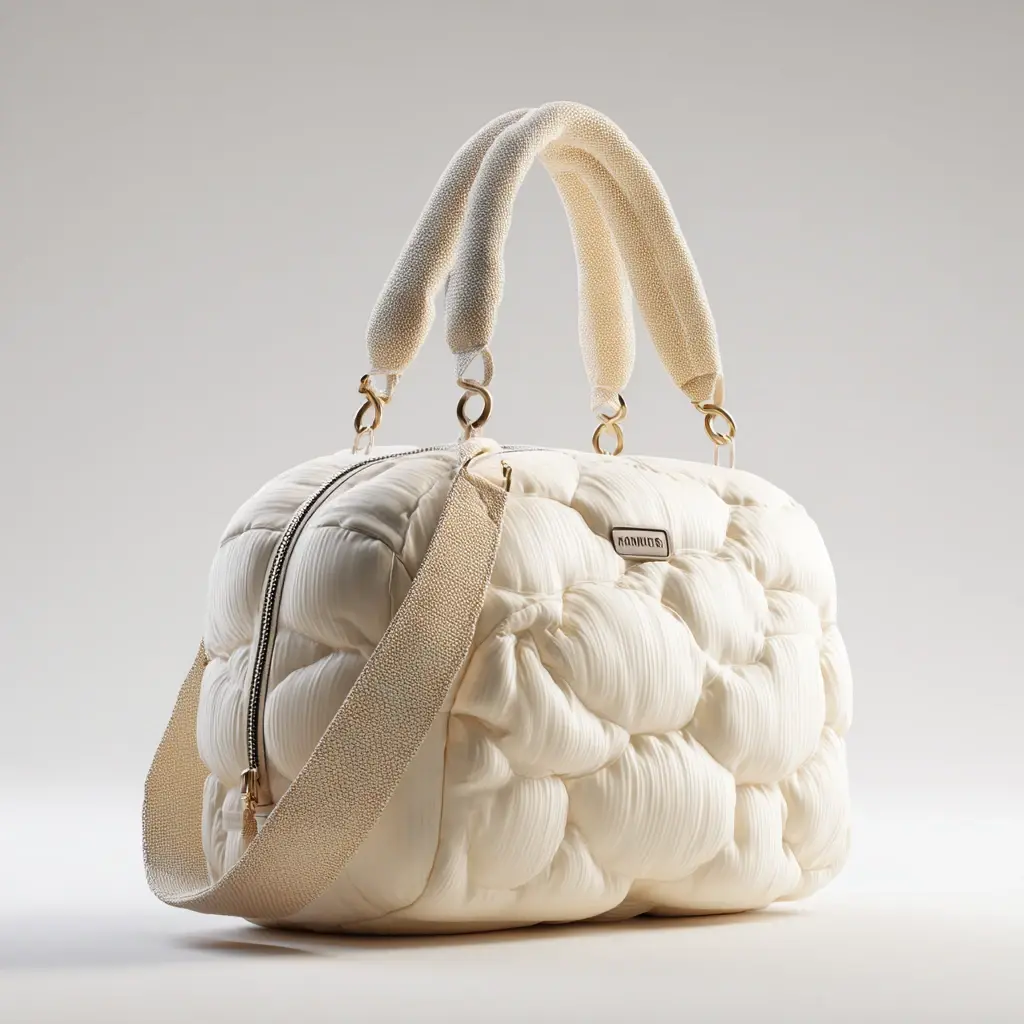
- The Situation: One Brand, Two People and a Price Ceiling
- Step One: Fix the Retail Price Before the Material
- Step Two: Choose Three Silhouettes, Not Eight
- Step Three: Read the MOQ as a Cash Plan
- Step Four: Sampling Is Where the Roadmap Is Tested
- Step Five: Branding That Costs Nothing Per Unit
- Step Six: Compliance Before the First Carton
- Step Seven: From Deposit to Delivery, Week by Week
- What Small Brands Get Wrong in Year One
- The Cash Curve Across the First Two Quarters
- A Three-Style Price Ladder and What Each Rung Contributes
- Freight, Cube and Duty on a 3,000-Piece First Order
Can a small brand launch private label handbags in 2026 without a development budget? Yes, if the roadmap starts from the retail price and works backwards: three silhouettes in two colourways at MOQ 500 pcs per style / colourway is 3,000 pieces, one container, one inspection at AQL 2.5 under ISO 2859-1, and 55-80 days from signed brief to FOB Xiamen handover. For a small brand, the entry decision is not which bag to make, it is which three to make in one material family, because the material buy is what the 500-piece minimum is really about. This roadmap follows one first-year label from a price ceiling on a spreadsheet to a packed container, showing the seven decisions in the order they have to be made and what each one costs in days and in cash.
Starter roadmap parameters
The Situation: One Brand, Two People and a Price Ceiling
Begin with a concrete case. A two-person label in Bristol sells accessories through its own store and has one number it trusts: its customers pay 78 to 120 for a bag and nothing above it. No design team, no QC team on the ground, one season of cash and a launch date fixed to a trade show in late spring. The brief that goes out is not a mood board; it is a price ceiling, three silhouettes and a date.
That shape — small team, fixed retail band, no technical resource — is most first-year private label work. The roadmap below is written for it. It deliberately ignores the parts of sourcing that do not apply yet: there is no range architecture, no seasonal drop calendar, no vendor manual. There is one container, one inspection and one chance to get the specification right.
What Does a Small Brand Actually Need to Decide First?
Not the bag. The first decision is the landed cost ceiling, because everything downstream is constrained by it. Take the retail price, subtract the channel margin and the brand margin, subtract freight, duty and packaging, and the number left is the most that can be spent per unit. Material is 40-55% of that, so the ceiling selects the material family before any silhouette is discussed.
Step One: Fix the Retail Price Before the Material
Most first-year labels do this backwards: they fall in love with a full-grain leather, design around it, then discover the landed cost forces a retail price their channel will not support. Working from the price down takes ten minutes and prevents the most expensive mistake in the roadmap. A useful rule of thumb for a marketplace channel is a landed cost of 20-25% of retail; an owned store can absorb 25-30%.
| Retail band | Landed cost ceiling | Material family this supports | Notes |
|---|---|---|---|
| Under 60 | 12-18 | Canvas 10-16 oz, PU-coated 0.6-0.9 mm | Print carries the brand |
| 60-120 | 18-30 | Top-grain 1.0-1.4 mm, heavy PU | The mid-market default |
| 120-220 | 30-55 | Full-grain 1.2-1.6 mm | Patina justifies the price |
| Above 220 | 55 and up | Full-grain with cast hardware | Tooling amortised over the run |
Two caveats make the table usable rather than theoretical. Leather is priced per square foot and cut by yield, so a tote at 34-42 cm consumes roughly 1.4-1.9 sq ft while a bucket cut from small clean panels consumes far less; the same hide produces different unit costs by pattern. And freight is not a fixed percentage: air freight at four to six times the ocean rate will destroy a 20% landed cost target, which is why the date matters as much as the price.
Step Two: Choose Three Silhouettes, Not Eight
Range discipline is the second decision, and it is where small brands overspend. Eight silhouettes at 500 pcs each is 4,000 pieces, eight sets of trimming, eight pattern setups and a warehouse problem. Three silhouettes in two colourways — a tote, a crossbody and a shoulder bag, each in black and tan — reads as a line, fills a 20-foot container and spreads one set of branding tooling across six SKUs.
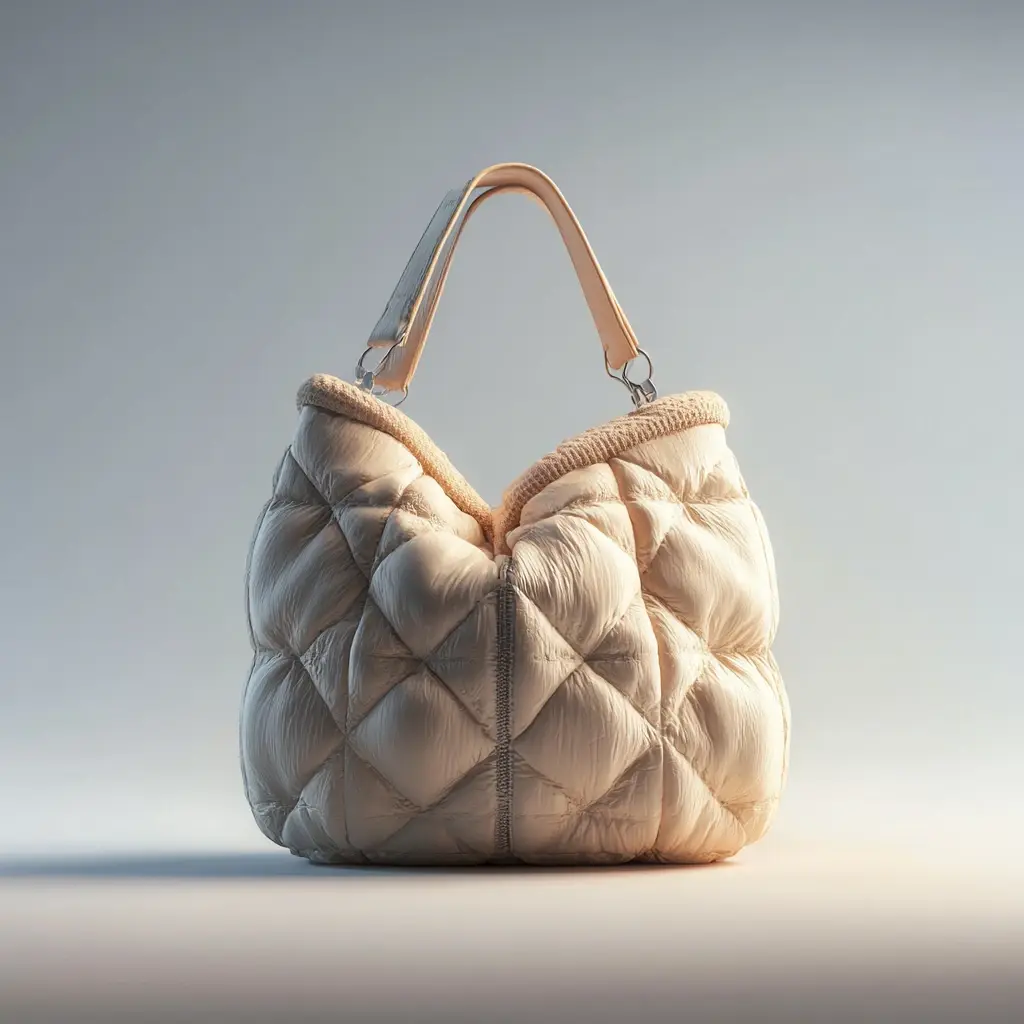
- Tote at 34-42 cm. The volume seller and the largest uninterrupted panel for an embossed mark; flat or gusseted to 8-12 cm.
- Crossbody at 18-26 cm. The highest repeat purchase in most assortments, with a 110-130 cm adjustable strap and hardware that carries the brand.
- Shoulder at 26-34 cm. A 22-30 cm strap drop decides whether it sells, so specify it in millimetres and check it on the sample.
- One shared material family. One hide or roll buy, one dye lot per colourway, one lining and one hardware finish across all three.
- One hardware finish. Two finishes mean two plating runs; the bath costs the same for 300 or 3,000 pieces, which is why it is expensive at low volume.
Step Three: Read the MOQ as a Cash Plan
What Is the Minimum Really For?
MOQ 500 pcs per style / colourway is not a negotiating position, it is where four upstream minimums stop dominating the unit price. Read it as a cash plan rather than an obstacle and the arithmetic becomes obvious: 3 silhouettes x 2 colourways x 500 = 3,000 pieces, or 1,500 pieces for three silhouettes in a single colourway. Most first-year labels start at the second number.
- Hide, roll or coating lot. One dye lot has a production minimum; a second colourway is a second lot.
- Trimming and hardware lots. Zipper chain, webbing, closures and plated parts arrive in set lot sizes.
- Plating bath. A plating run costs the same whether 300 or 3,000 pieces go through it.
- Line changeover. Setting the line for a pattern is priced into the run, and a longer run spreads it further.
- Cash shape. Typically a deposit to release material with the balance against the inspection report — so the exposure is split, not front-loaded.
The step from 500 to 1,000 pieces usually buys more than the step from 1,000 to 3,000, because most fixed cost is absorbed in the first thousand. Where the MOQ ladder at 500 and 2,000 pieces is set out in full, the practical version is this: choose one colourway for the first order and add the second on the repeat, once sell-through data exists.
Step Four: Sampling Is Where the Roadmap Is Tested
The first physical sample arrives 6-10 working days after the specification and material are signed off; framed, hand-woven or stacked constructions take 12-15 because part of the sequence is manual. Treat it as a test specimen. Approve it in the hand, not on a screen, because temper, drape, strap drop and hand-feel cannot be judged from a photograph.
- Measure the strap drop. A 22-30 cm drop specified and then delivered at 34 cm changes how the bag is worn and how it reviews.
- Count the stitch density. 7-9 stitches per inch with a 10 mm seam allowance is the ordinary standard; below it, the seam opens in use.
- Fold the painted edge. Cracking at the fold means the coating is too thick or under-cured and will crack in a customer's hands.
- Rub a dark lining with a white cloth. Crocking produces the most expensive complaint a young label can receive.
- Return a numbered revision list. Written against measurements it converts in one round; an annotated photograph usually costs a second 6-10 days.
Step Five: Branding That Costs Nothing Per Unit
Branding is where a private label run stops being somebody else's bag, and the cost structure is counter-intuitive: the methods that look expensive are often the cheapest per unit once the tooling exists. An embossing die and a woven-label setup are one-off charges; a printed hangtag is a recurring one. For a 3,000-piece first order, tooling amortises to a few cents per bag.
- Embossing or debossing. A heated die presses the mark into leather or PU at 2-6 cm wide; permanent, no separate part, no per-unit cost.
- Woven label. Sewn into the lining seam or a pocket; the cheapest route to a wordmark inside the bag and it outlasts the lining.
- Embroidery. The only one of the four that works on canvas; stitch count drives cost, so lettering beats a detailed motif.
- Hardware. A cast plate or engraved puller: the most expensive and the most noticed, because it is what customers handle in store.
Step Six: Compliance Before the First Carton
Compliance is a first-order task, not a scale-up task, because a missing document is discovered at the worst possible moment — after the goods are packed. The standards a small brand needs named in writing are few and specific, and asking for them at brief stage costs nothing.
- Inspection. Pre-shipment at AQL 2.5 under ISO 2859-1, which sets the sample size and the accept and reject thresholds; ask for the written report.
- EU chemicals. Material tested against REACH (EC 1907/2006), in practice Annex XVII restrictions on chromium VI, azo dyes, nickel release and phthalates.
- California. Proposition 65 warnings where a listed substance exceeds the safe-harbour level; on bags the exposure points are hardware, coated trim and some dyes.
- Children's items. Where a bag is marketed to children, CPSIA applies: lead and phthalate limits plus permanent tracking labels.
- Recycled claims. Global Recycled Standard transaction certificates are what make a recycled percentage on a hangtag defensible.
Social compliance and traceability are worth requesting even when no retail buyer has asked yet. BSCI (amfori) and Sedex / SMETA audit references can be supplied for our validated partner factory Quanzhou Yingming Bags, and hides can be traced to tanneries audited under the Leather Working Group environmental audit protocol. Coverage in Sourcing Journal and programmes run by the Accessories Council have pushed both from nice-to-have to standard buyer questions.
Step Seven: From Deposit to Delivery, Week by Week
What Sits Outside the 35-50 Day Window?
The schedule is where first-year labels lose the season, and always for the same reason: the 35-50 day bulk window gets budgeted and everything around it gets forgotten. The realistic planning number from signed brief to goods handed to a forwarder is 55-80 days, plus transit.
| Stage | Days | Cash event | Deliverable |
|---|---|---|---|
| Brief and quotation | 1-3 | None | Specification and price band |
| Material confirmation | 2-4 | None | Approved swatch, Pantone reference |
| Sampling | 6-10 working days | Sample fee, often credited | One physical sample |
| Review and revision | 3-6 | None | Numbered revision list |
| Deposit and slot | 1-2 | Deposit to release material | Booked production slot |
| Bulk run | 35-50 | None | Progress photograph halfway |
| Inspection and handover | 3-6 | Balance payment | AQL 2.5 report, FOB Xiamen |
| Transit | 18-38 by sea; 5-8 by air | Freight and duty | Customs entry and delivery |
Two habits make the difference between hitting the trade show and missing it. Book the slot when the deposit is paid rather than when the sample is approved, because slots tighten before Chinese New Year and during the autumn shipping rush. And build listing photography and copy while the goods are on the water; 18-28 days to the US West Coast or 30-38 days to Northern Europe is free time if it is used.
What Small Brands Get Wrong in Year One
Four mistakes account for most of the money a first-year label loses, and none of them appear as a line item on a quotation. They surface as a second sample round, an air-freight bill, a relabelling job or a season of returns.
- Choosing the leather before the retail price. Material is 40-55% of unit cost, so it sits downstream of what the channel will pay.
- Splitting 500 pcs into five colourways. Five dye lots and 100 units of each to sell; the unit price rises and the sell-through slows.
- Skipping the second sample to save a week. A week saved at sampling costs 35-50 days if the error surfaces in bulk.
- Booking freight in December. Rates rise and slots vanish, and the cost lands directly on margin.
Two further reading stops before the brief goes out: the private label handbags reference covers what the term includes and how the MOQ ladder behaves, and the marketplace article explains what a listing has to say to convert. If the question is what a programme actually delivers, the service breakdown lists every deliverable in order.
The Cash Curve Across the First Two Quarters
A roadmap is a cash plan with a calendar attached. Three styles at 500 pcs each across two colourways is 3,000 units, and the money leaves in three waves while it returns in one slow stream. Modelling the months rather than the stages is what tells a two person brand whether it can actually afford a second season, which is the question the plan exists to answer.
| Month | Cash out | Cash in | Position |
|---|---|---|---|
| Month 1 | Sample fees and material confirmation | None | Negative by a few hundred |
| Month 2 | Deposit on 3,000 pcs across three styles | None | The deepest point of the curve |
| Month 3 | Balance before loading | Pre orders open if the brand runs them | Still negative |
| Month 4 | Freight, duty and inland delivery | First wholesale invoices at 30 to 60 days | Turning |
| Month 5 | Marketing and a re shoot of the range | Retail sell through begins in earnest | Positive on the hero style |
| Month 6 | Second buy deposit, if it has been earned | Season revenue largely collected | Positive |
A Three-Style Price Ladder and What Each Rung Contributes
Three silhouettes are not three prices. A ladder gives the range a shape: an entry style that converts, a middle style that carries the margin, and a top style that sets the tone. The ladder also protects the brand, because a customer who will not pay the top price still buys the middle rung rather than leaving the range altogether.
| Rung | Style and material | Landed cost | Retail and contribution |
|---|---|---|---|
| Entry | Crossbody in coated PU at 0.6 to 0.9 mm | USD 9 to 13 | USD 49, contribution about 62 per cent |
| Middle | Shoulder in top grain at 1.0 to 1.4 mm | USD 18 to 26 | USD 109, contribution about 58 per cent |
| Top | Tote in full grain at 1.2 to 1.6 mm | USD 30 to 48 | USD 189, contribution about 55 per cent |
| Shared across all three | One lining, one hardware finish, one dye lot per colourway | Saves 4 to 7 per cent per unit | Protects the MOQ on every rung |
Freight, Cube and Duty on a 3,000-Piece First Order
The first order is where freight stops being a footnote. Three styles at 500 pcs each in two colourways is roughly 60 export cartons, and the cube decides whether the goods travel in a full container or a shared one. Work the cube at sampling, because the carton dimensions are the last thing a young brand can still change without paying for it twice.
- Carton count. About 20 cartons per 500 piece style at 24 or 25 units per carton, so 3,000 pieces is roughly 60 cartons.
- Cube. A 60 by 40 by 40 cm carton is 0.096 cubic metres, and 60 of them is about 5.8 cubic metres.
- Container decision. Below 12 to 15 cubic metres a shared container is usually cheaper; above it a 20GP at about 28 cubic metres wins.
- Transit. Plan 24 days to Los Angeles and 35 to Rotterdam, port to port, plus clearance and inland delivery at the far end.
- Duty. Commonly 9 to 17 per cent depending on the outer surface material and the destination, so confirm the classification before quoting.
Build the first container with a written roadmap
Send three silhouettes, a target retail price and a launch date. A private label coordinator will return a specification, a sampling window of 6-10 working days, a bulk window of 35-50 days and a unit-price band at MOQ 500 pcs per style / colourway. Get a quote.
Frequently Asked Questions
Can a small brand start private label handbags with a limited budget?
Yes, if the budget is planned as one container rather than one product. At MOQ 500 pcs per style / colourway the practical entry is three silhouettes in a single colourway at 1,500 pieces, adding the second colourway on the repeat once sell-through data exists. Tooling for an embossing die and a woven label is a one-off charge that amortises to a few cents per bag across that quantity.
What is the smallest first order that makes commercial sense?
Five hundred pieces in one style and one colourway is the lowest commitment and gives a product rather than a line. The more useful shape is three silhouettes in one colourway at 1,500 pieces, or three in two colourways at 3,000 pieces, which reads as a range and spreads one material buy and one set of branding tooling across six SKUs.
How do I set a target retail price before choosing a material?
Work backwards from what the channel will pay. Subtract the channel margin and your own margin from the retail price, then subtract freight, duty and packaging; what remains is the landed cost ceiling. Material is 40-55% of unit cost, so that ceiling selects the material family. A rough guide is a landed cost of 20-25% of retail for marketplace channels and 25-30% for an owned store.
How many silhouettes should a first-year label launch?
Three. A tote at 34-42 cm for volume, a crossbody at 18-26 cm for repeat purchase and a shoulder bag at 26-34 cm for the day-to-evening slot, all in one material family with one hardware finish. Eight silhouettes means eight pattern setups, eight trimming bills and a warehouse problem, and it rarely improves sell-through.
How long does the whole roadmap take from brief to delivery?
Plan 55-80 days from signed brief to goods handed to your forwarder, then transit: 18-28 days to the US West Coast, 30-38 days to Northern Europe, or 5-8 days by air. Inside that, sampling is 6-10 working days, review 3-6 days, the bulk run 35-50 days and inspection 1-2 days.
What should I test on the first sample?
Measure the strap drop against the specified 22-30 cm, count the stitch density against 7-9 per inch, fold a painted edge to check for cracking, rub a dark lining with a white cloth to check for crocking, and check the brand-mark position against the datum edge. Return any revision as a numbered list against measurements rather than an annotated photograph.
Which branding method is cheapest for a small first order?
A woven label sewn into the lining seam has no hard tooling cost and is the cheapest route to a wordmark inside the bag. An embossing die is a one-off charge with no per-unit cost afterwards, which makes it cheap across 1,500 to 3,000 pieces. Cast hardware is the most expensive because it needs a mould and a plating run, and the bath costs the same at any quantity.
Do I need compliance documents for a first order?
Yes, and asking at brief stage costs nothing. Request material test reports against REACH, a Proposition 65 review of hardware and coated trim for California, CPSIA documentation where a bag is marketed to children, and a pre-shipment inspection at AQL 2.5 under ISO 2859-1 with a written report. BSCI and Sedex audit references can also be supplied for the validated partner factory.
Can I use recycled or certified materials on a small order?
Yes. Recycled polyester linings and canvas can carry Global Recycled Standard transaction certificates, which is what makes a percentage claim on a hangtag defensible, and they are available at ordinary private label quantities. Hides can be traced to tanneries audited under the Leather Working Group environmental audit protocol. Ask for the certificate and the tannery name rather than a generic claim.
When should I pay the deposit and book the production slot?
At the same moment. The deposit releases material and books the slot, and separating the two is how first orders slip into a later window. Slots tighten before Chinese New Year and during the autumn shipping rush, which is when optimistic lead times get quoted. Tie the balance payment to the inspection report rather than to a date.
What is the biggest cost mistake a small brand makes?
Choosing the material before the retail price. Material is 40-55% of unit cost, so a leather chosen for its hand rather than for the price band forces a retail price the channel will not support. The second most common is splitting 500 pieces across five colourways, which multiplies dye lots and trimming setups and raises the unit price.
People Also Ask
Is one colourway enough for a first drop?
Yes, and it is usually the better choice. One colourway is one dye lot at 500 pieces per style, while each additional colourway is another dye-lot minimum. Add the second colour on the repeat order once sell-through tells you which silhouettes earn it.
How much of the retail price should the landed cost be?
Roughly 20-25% for a marketplace channel and 25-30% for an owned store, after freight, duty and packaging. That ceiling is what selects the material family, since material is 40-55% of unit cost.
Should a first order ship by sea or by air?
By sea, planned early enough that air is never needed. Ocean transit is 18-28 days to the US West Coast or 30-38 days to Northern Europe, while air is 5-8 days at four to six times the cost — which destroys a 20% landed cost target.
Do small brands need their own tech pack?
Not necessarily. Three reference photographs and a one-page specification with dimensions, strap drop and branding position are enough to start. A full tech pack with stitch density and hardware references is better, because it removes guesswork from the 6-10 working days of sampling window.
Sources and further reading
Every figure on this page is either our own programme data or attributed below. Open the originals before you write them into a specification.
- Leather Working Group — environmental auditing for tanneriesLeather Working Group Environmental audit protocol for tanneries and leather traceability.
- REACH — chemical substances regulationEuropean Commission Annex XVII restricts the substances that may appear in finished leather and coatings.
- Incoterms rulesICC The rules that decide where cost, risk and insurance transfer.