ODM Handbags: Tweaking a Shelf Style Without Full Custom Cost
What can be changed on an ODM shelf style without paying for full custom development? Roughly eleven things, and the useful ones are all behind a five-gate test: does it need a tool, does it change the marker, does it change the trim set, does it move the calendar, and does it survive to the second season. A tweak that passes three gates costs nothing and a tweak that fails two of them is a custom development with a friendlier name. Deepening a gusset by 4 cm adds 6-9% to the material per unit and no tooling; a bespoke clasp adds a mould, 8-12 days and a charge that only disappears on the repeat.
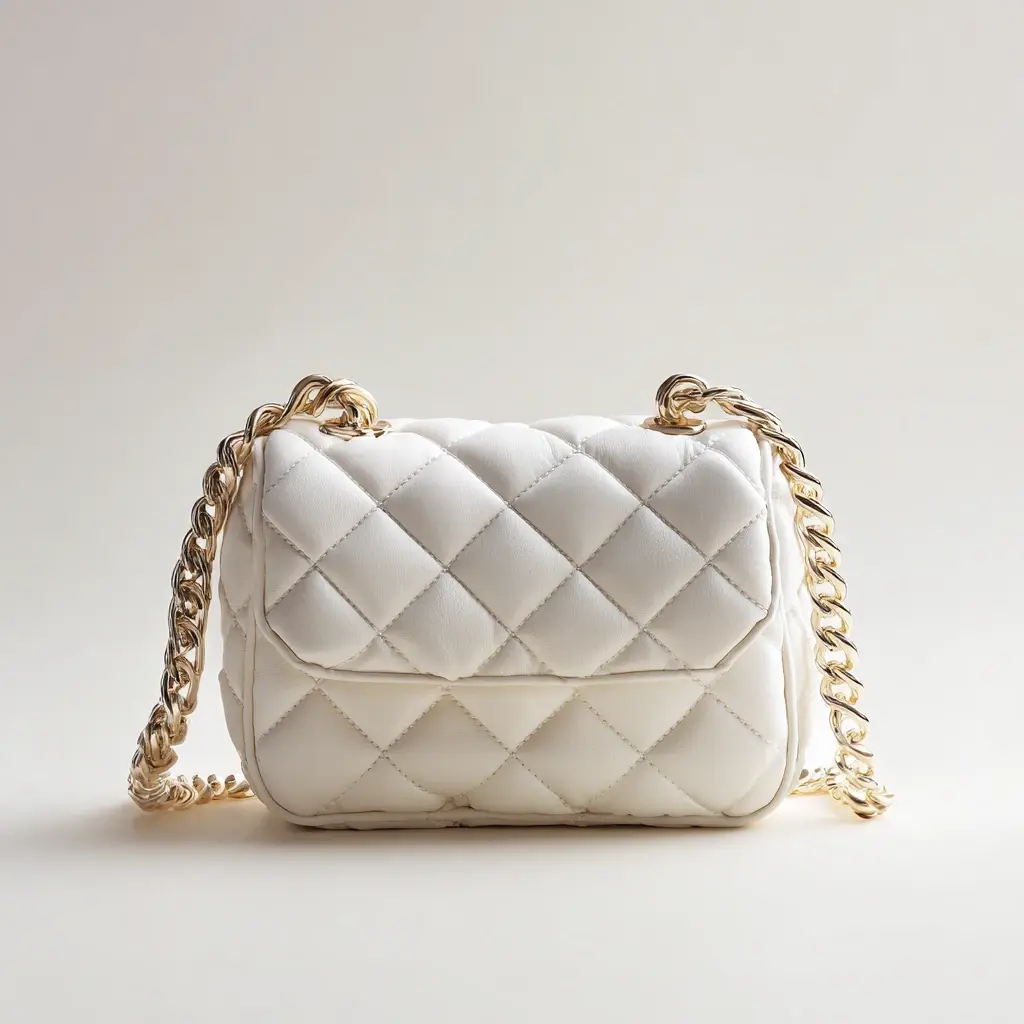
- The Five Gates Every Tweak Must Pass
- Gate One: Does It Need a Tool?
- Gate Two: Does It Change the Marker?
- Gate Three: Does It Change the Trim Set?
- Gate Four: Does It Move the Calendar?
- Gate Five: Does It Survive to the Second Season?
- The Tweak Menu, Scored Against the Five Gates
- What Can Be Changed for Nothing
- What Costs One Tool and Earns It Back
- What to Leave to the Full Custom Route
- A Worked Tweak Order for 500 Pieces
- The Tweak Brief Worth Sending
- Shelf, Tweaked or Custom: Where the Break-Even Sits
- Six Tweaks That Get Mis-Quoted
What can be changed on an ODM shelf style without paying for full custom development? Roughly eleven things, and the useful ones are all behind a five-gate test: does it need a tool, does it change the marker, does it change the trim set, does it move the calendar, and does it survive to the second season. A tweak that passes three gates costs nothing and a tweak that fails two of them is a custom development with a friendlier name. Deepening a gusset by 4 cm adds 6-9% to the material per unit and no tooling; a bespoke clasp adds a mould, 8-12 days and a charge that only disappears on the repeat.
The five gates and the entry numbers
The Five Gates Every Tweak Must Pass
Semi-custom work goes wrong because the word tweak covers two completely different activities. One is a specification change inside an existing operation; the other is a development that starts from the same drawing. The five gates below separate them in about ten minutes, and they are worth applying in this order because the first gate alone removes most of the requests.
- Does it need a tool? A die, a mould or a plating setup. If yes, it is a tooling project and should be budgeted as one.
- Does it change the marker? Any change to a panel dimension re-nests the cutting layout and changes how many units come off a hide or a roll.
- Does it change the trim set? A new webbing width or a different closure reopens the trim lot minimums.
- Does it move the calendar? Some changes add days to sampling; others add nothing at all.
- Does it survive to the second season? A change that has to be re-decided every season is a cost rather than an asset.
A change that passes gates one, two and three is genuinely free and can be made in the same 6-10 working days of sampling window as the unmodified shape. A change that fails any two of them belongs on the full custom route, and the honest thing to do at that point is to price it as development rather than to negotiate it as a favour.
Gate One: Does It Need a Tool?
This gate is a simple physical question and it is the most consequential of the five. A tool is anything that has to be manufactured before the bag can be: an embossing die at 180-420 USD, a zinc-alloy mould at 1,200-2,800 USD, or a plating setup for a new finish.
- Tool-free changes: colourway, lining, thread colour, pocket layout, gusset depth, strap width, padding thickness, topstitch thread, edge finish and hardware chosen from the stock range.
- Tool changes: a bespoke clasp, a moulded zip puller, a debossed logo plate, a custom magnetic closure or any part that does not already exist.
- Edge cases: a stock part carrying a debossed or laser mark, which is a tooling change in the sense that matters and a stock choice in the sense that costs.
The edge case is worth dwelling on, because it is the best value in the whole menu. A stock zip puller with the mark debossed into it carries the same brand signal as a bespoke mould, costs a fraction of it, and ships inside the standard sampling window. It is the single most underused move in semi-custom work.
Gate Two: Does It Change the Marker?
The marker is the nested cutting layout, and it is what turns a design drawing into a material quantity. Any change to a panel dimension re-nests it, and the consequence is measured in material per unit rather than in labour.
| Change | Material impact per unit | Tooling | Passes the gate |
|---|---|---|---|
| Gusset 10 cm to 14 cm | 6-9% more body material | None | Yes, with a cost |
| Body width 34 cm to 38 cm | 9-13% more body material | None | Yes, with a larger cost |
| Add an external slip pocket | 4-6% more, one pocket panel | None | Yes |
| Add an internal divider | 3-5% more, one operation added | None | Yes |
| Change the flap shape entirely | Re-nests the whole marker | New pattern pieces | No |
The percentages are small individually and they compound. Three changes at 6%, 5% and 4% is fifteen per cent of the material buy, which at a retail band below 59 USD is the difference between a viable product and a non-viable one. This is the gate most often skipped, because a dimension change looks free on a drawing and costs money on a hide.
Gate Three: Does It Change the Trim Set?
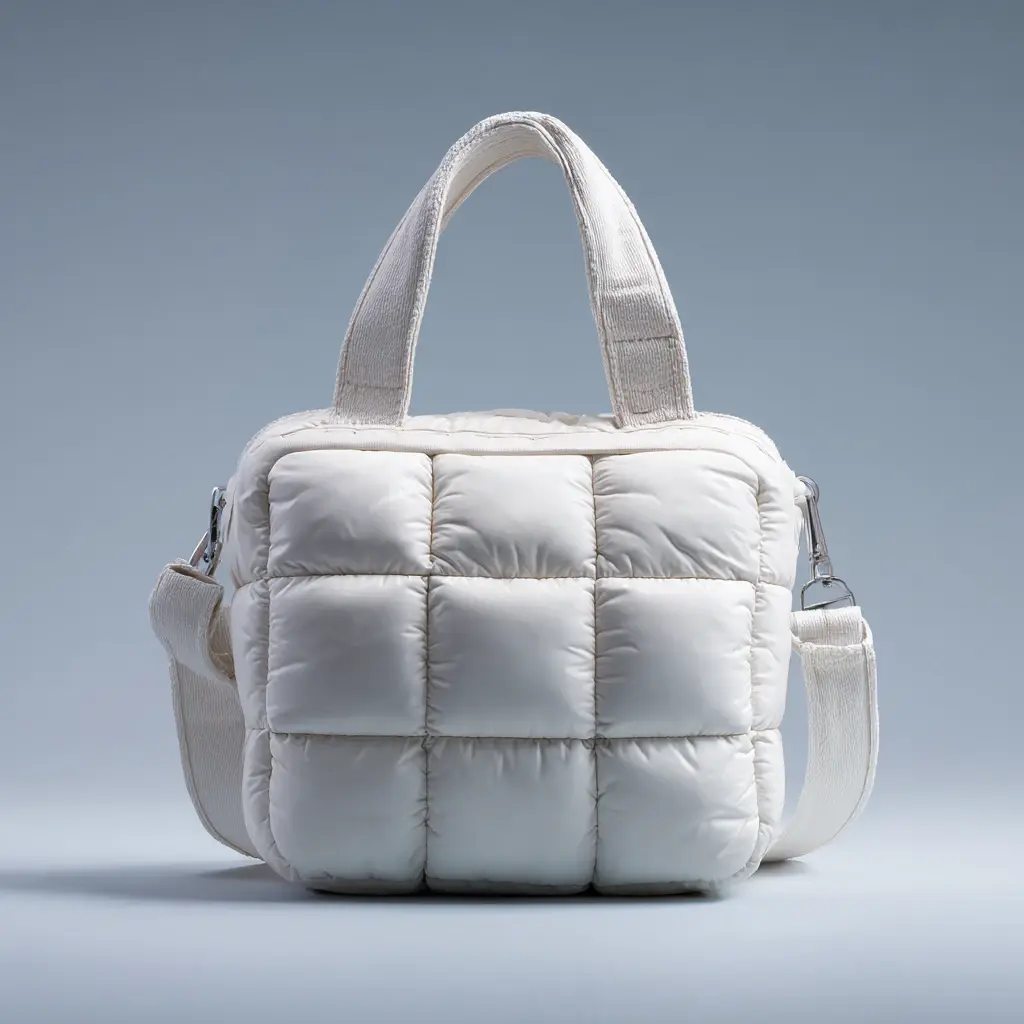
Trims are supplied in set lot sizes, and a trim change reopens them. Webbing arrives on 200 m rolls, zipper chain on 200 m reels, and closures in box quantities, so a change of width or colour is a change of purchase rather than a change of drawing.
- Strap width 12 mm to 20 mm adds about 0.35 USD per unit and uses roughly 60% more webbing per bag.
- A different zipper size, moving from #5 to #8 chain, changes the slider, the tape and the stitch sequence at the same time.
- A stronger magnet, moving from N35 to N42 at 20 x 3 mm, raises the holding force from roughly 1.8 kg to 2.6 kg and costs cents.
- A different webbing colour is a separate lot of 200 m and the cheapest visual change available.
The third item is the one worth a moment's thought, because it is the rare change that improves a product without moving a gate. A stronger magnet at the same size is a functional upgrade for cents, and it removes a genuine cause of customer complaints.
Gate Four: Does It Move the Calendar?
Time is the gate that is invisible on a quotation and decisive in a season. Some tweaks add nothing at all and some add a month, and the difference has nothing to do with how large the change looks on paper.
| Tweak | Added days | Why |
|---|---|---|
| Colourway from the card | 0 | The lot was being dyed anyway |
| Gusset or pocket change | 0-2 | Re-nesting only |
| Stock hardware swap | 0-2 | Available in the store |
| Embossed mark on an existing panel | 4-6 | A die has to be cut |
| Bespoke zip puller | 8-12 | Mould, sample, then plating |
| New flap or panel shape | 10-18 | New pattern pieces and a second round |
The first three rows are the ones that make semi-custom work worth doing. Together they produce a bag that is visibly different from the catalogue version and they do it without adding a single day to the 6-10 working days of sampling window or the 35-50 day bulk run.
Gate Five: Does It Survive to the Second Season?
The last gate is accounting rather than engineering, and it asks whether the change is an asset or an expense. A debossed die survives for years; a seasonal webbing colour has to be re-decided every time it is used.
- Survives: a stored embossing die, a retained material reference, a frozen specification, and any change recorded in the tech pack.
- Does not survive: a seasonal colourway, a promotional trim, a one-off packaging print, and any change that was approved verbally.
- Half survives: a custom part that may be superseded, which is the familiar risk of tooling a shape that has not yet proven itself.
The middle row contains the most expensive items in the list, because a seasonal change has to be re-specified, re-sampled and re-approved every time it is repeated. Recording the change in the tech pack is what moves an item from the middle row to the first, and it costs nothing.
The Tweak Menu, Scored Against the Five Gates
| Tweak | Tool | Marker | Trim | Days added | Verdict |
|---|---|---|---|---|---|
| Colourway from the existing card | No | No | No | 0 | Free |
| Deeper gusset, 4 cm | No | Yes | No | 0-2 | Cheap |
| Wider strap, 20 mm | No | No | Yes | 0-2 | Cheap |
| Lining upgrade | No | No | No | 0 | Free |
| Extra internal divider | No | Yes | No | 0-2 | Cheap |
| 3 mm EVA padding | No | No | No | 0-2 | Cheap |
| Stock hardware with a debossed mark | No | No | No | 0-2 | Best value |
| Embossed logo panel | Yes | No | No | 4-6 | Worth it |
| Metal logo plate | Yes | No | No | 6-9 | Worth it at scale |
| Bespoke zip puller | Yes | No | Yes | 8-12 | One only |
| New flap or panel shape | Yes | Yes | Maybe | 10-18 | Full custom |
Read down the Verdict column and the shape of the answer appears: seven of the eleven are free or cheap, two are worth a tool, and the last two are development projects pretending to be tweaks. The shelf styles worth rebranding as a collection is the catalogue these are applied to.
What Can Be Changed for Nothing
Four changes cost nothing at all, in money or in days, and they are enough on their own to make a bag unrecognisable next to its catalogue twin. They are also the four most underused.
- The colourway, chosen from the existing card so the dye lot was being run anyway.
- The lining, upgraded for handfeel and durability without touching the outer panels.
- The thread and topstitch colour, which changes the whole character of a seam for a few cents.
- The edge finish, painted or turned, which is the most visible of the four and the cheapest to specify.
A Lyon accessories label built an entire first line from those four in 2025, and the resulting bags were returned at a rate below its category average without a single tool having been cut. The differentiation was real; it simply was not a mould.
What Costs One Tool and Earns It Back
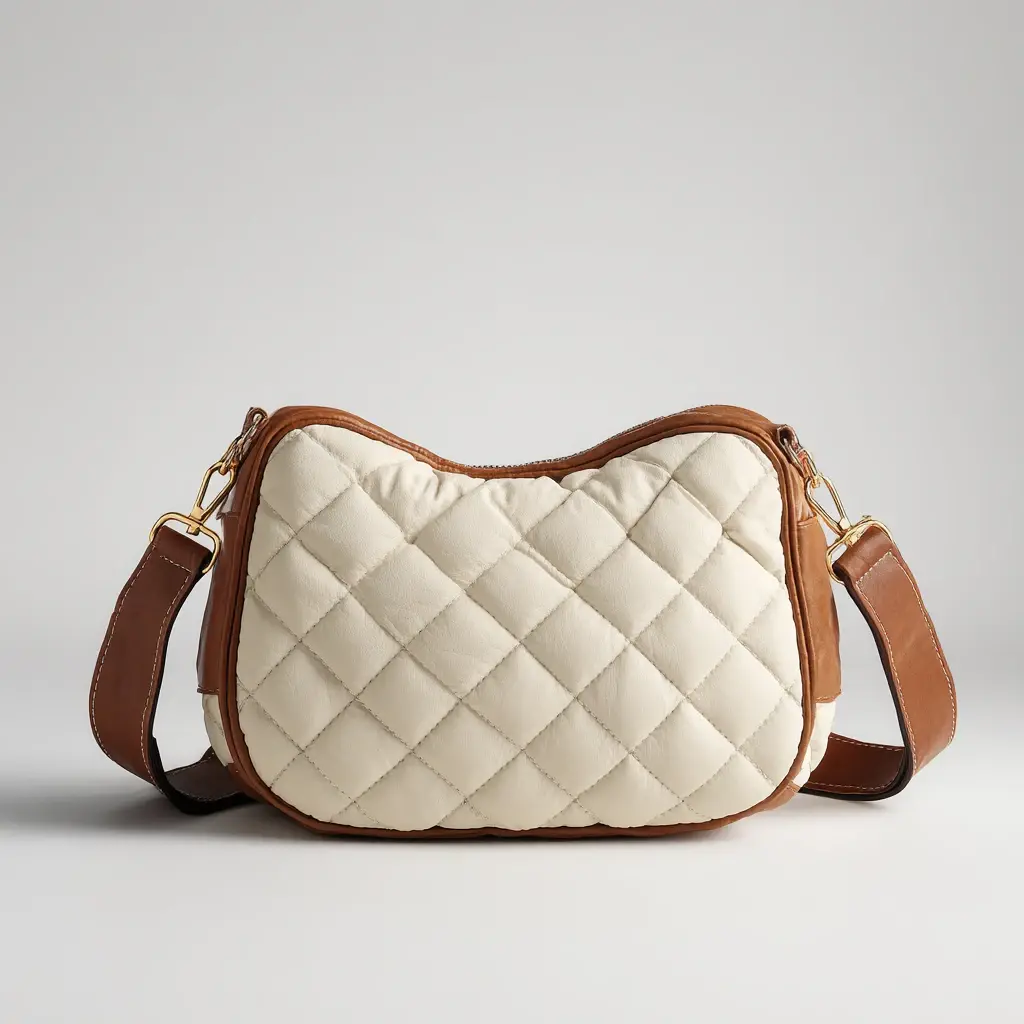
When a tool is worth it, it is because the mark is on it. Two candidates clear the bar at 500 pcs, and the rest are better deferred to the second season when the amortisation has four times the volume to fall across.
- An embossing die at 180-420 USD, amortising to 0.36-0.84 USD per piece at 500 and to nothing afterwards.
- A metal logo plate at 300-900 USD, which reads at a distance and survives a season of handling.
- Neither of them is worth it below about 59 USD retail, where a debossed mark on a stock part carries the same signal.
The rule of one tool is not austerity, it is arithmetic. A second tool at 500 pcs doubles the per-piece charge without doubling the perceived difference, and the second tool is always available next season if the shape earns it.
What to Leave to the Full Custom Route
Three requests should be recognised as development and priced as such, and the recognition is worth more than the negotiation. Each of them fails at least two gates and each one will be quoted accordingly.
- A new flap, panel or silhouette shape, which changes the marker, needs pattern pieces and usually needs a second sample round.
- A bespoke closure or clasp, which needs a mould, a sample and a plating run, and which is the single most common request that turns a tweak into a project.
Two of the three, and the third is a construction change such as a framed base or a moulded panel, which adds a jig and slows the operation. Where one of these is genuinely the product, the honest move is to develop it as a custom shape from the start, at 12-15 working days of sampling, rather than to ask for it as a modification.
A Worked Tweak Order for 500 Pieces
| Tweak | Per-piece cost | Days added | Survives |
|---|---|---|---|
| Gusset 10 cm to 14 cm | 0.28 USD | 2 | Yes, in the tech pack |
| Strap 12 mm to 20 mm | 0.35 USD | 2 | Yes |
| 3 mm EVA padding | 0.22 USD | 2 | Yes |
| Embossing die, 260 USD | 0.52 USD | 5 | Yes, stored |
| Total added | 1.37 USD | 7 | All four reusable |
One dollar and thirty-seven cents per piece buys a bag that differs from the catalogue version in proportion, in handfeel, in strap and in identity, and seven days buys the time to do it. Against a bespoke development at 12-15 working days and a mould at 1,200-2,800 USD, the comparison is not close. The OEM versus ODM cost analysis puts the same trade in cost terms.
The Tweak Brief Worth Sending
- Name the base shelf style, by its catalogue reference rather than by a description.
- List the tweaks separately, each with a dimension or a material behind it, so each can be priced on its own.
- State the quantity per colourway, remembering 500 pcs is per style and per colourway.
- State the retail band, because it decides how many tweaks are affordable at all.
- Ask for tooling to be quoted as a separate line, so the second season can be quoted without it.
Five items and the reply is a per-piece figure for each tweak and a calendar, which is a very different thing from a single number that has to be negotiated. Every item is also recorded in the tech pack, which is what makes the second order a document transfer rather than a redevelopment. The full OEM programme reference carries the document set.
Shelf, Tweaked or Custom: Where the Break-Even Sits
Three routes produce three per-piece numbers on the same shape, and the right one is decided by volume rather than by ambition. A shelf style carries no tooling and no development days. A tweaked style adds about 1.37 a piece and seven days. A custom shape adds a mould amortised across the run, which at 500 pieces is its most expensive possible value and at 2,000 is a quarter of it. The break-even is the volume at which the amortised tooling falls below the difference in unit price, and it usually sits between 1,500 and 2,000 pieces.
| Route | Per piece at 500 | Tooling | Sampling days | Better above |
|---|---|---|---|---|
| Shelf style as it stands | 9.80 | None | 6-10 | Never wrong, never differentiated |
| Four tweaks applied | 11.17 | 260 USD die | 6-10 plus about 7 | Immediately, at any volume |
| Full custom with a mould | 13.40 plus 3.60 amortised | 1,200-2,800 | 12-15 | About 1,500-2,000 pcs |
Six Tweaks That Get Mis-Quoted
The word tweak is where semi-custom budgets go wrong, because it covers a specification change and a development project with the same syllable. Six requests account for most of the mis-quotes, and in four of the six the error runs in the same direction: the buyer assumes the change is free and the marker, the trim lot or the pattern says otherwise. Asking for each tweak to be priced as its own line is the whole discipline, because a single number hides which of the six reopened a lot. The brief that gets them itemised is set out in the sketch-to-first-order checklist.
| Tweak | Assumed | What happens | Days |
|---|---|---|---|
| Gusset 10 cm to 14 cm | Free | 6-9 per cent more body material, marker re-nested | 0-2 |
| Strap 12 mm to 20 mm | Free | 0.35 a unit and about 60 per cent more webbing | 0-2 |
| Lining upgrade | Costs money | Genuinely free; no tool, no marker change | 0 |
| Debossed mark on a stock pull | Needs a mould | No mould; a stock part carries the mark | 0-2 |
| New flap shape | A tweak | New pattern pieces and a second round | 10-18 |
| Second colourway | Free | A new dye or coating lot at 150-250 m | 0 |
Tweak the shape, keep the calendar
Send the base style and the tweak list. A private label coordinator will return each tweak priced separately, with sampling at 6-10 working days, bulk at 35-50 days and inspection at AQL 2.5 under ISO 2859-1. Programmes have moved through our validated partner factory Quanzhou Yingming Bags since 2014, across 7 production lines and about 200,000 pcs per month. Get a quote.
Frequently Asked Questions
What can be changed on an ODM shelf style without full custom cost?
Four things cost nothing at all and four cost a little: the colourway from the existing card, the lining, the thread colour and the edge finish are free, while a deeper gusset, a wider strap, EVA padding and an extra internal divider each add cents per unit. All eight stay inside the 6-10 working days of sampling window.
How much does deepening a gusset by 4 cm actually cost?
About 6-9% more body material per unit, which at 500 pcs works out at roughly 0.28 USD per piece, and no tooling. The cost comes from re-nesting the marker rather than from any new operation, and it is the cheapest structural change available on a shelf shape.
Is a custom zip puller worth it at 500 pieces?
It adds 8-12 days and a mould charge amortising to 3.60-5.60 USD per piece, so it is worth it only if the puller is the signature of the brand. At a retail band below about 69 USD a stock puller with a debossed mark carries the same signal at a fraction of the cost.
Which tweaks add nothing to the production calendar?
A colourway from the existing card, a lining upgrade, a thread colour change and an edge finish change all add zero days, because none of them need a die, a mould or a new pattern piece. They are the four changes that make semi-custom work worth doing.
What is the best value change on the whole menu?
A stock hardware part carrying a debossed mark. It carries the same brand signal as a bespoke mould, costs a small fraction of it, and ships inside the standard sampling window, which is why it is the most underused move in semi-custom handbag work.
How much material does a wider strap use?
Moving from 12 mm to 20 mm webbing uses roughly 60% more webbing per bag and adds about 0.35 USD per unit, and because webbing arrives on 200 m rolls it also reopens the trim lot minimum that the standard width was sharing.
Which tweaks should be treated as full custom development?
A new flap or panel shape, a bespoke closure or clasp, and a construction change such as a framed base or a moulded panel. Each fails at least two of the five gates and each is better priced as development from the outset at 12-15 working days of sampling.
How many tools can a first 500-piece run carry?
One. A second tool doubles the per-piece amortisation without doubling the perceived difference, and it is always available next season if the shape earns it. The one tool that is worth it is the one carrying the mark.
Does a tweak change the minimum order quantity?
No. The entry quantity stays at 500 pcs per style and per colourway whatever is changed, because the minimum is set by the material and trim lots rather than by the design. What changes is the per-piece cost and, for some tweaks, the calendar.
What is the difference between a removable and a permanent tweak?
A permanent tweak is recorded in the tech pack and survives to the second season: a stored embossing die, a frozen specification, a retained material reference. A removable one has to be re-specified every season, and the recording is free.
How strong should a magnetic closure be?
An N42 grade at 20 x 3 mm holds roughly 2.6 kg, against about 1.8 kg for the N35 equivalent at the same thickness, and the upgrade costs cents. It is one of the few changes that improves a product without moving any of the five gates.
What should a tweak brief contain?
The base catalogue reference, the tweaks listed separately each with a dimension or a material, the quantity per colourway, the retail band, and a request for tooling to be quoted as its own line. That is enough for a per-piece figure for each change rather than a single blended number.
People Also Ask
Is a tweaked shelf style the same as a custom bag?
No, and the five gates separate them. A tweak passes three or four gates and costs pennies; a custom development fails two of them and needs a mould, new pattern pieces and a second sample round.
Can a shelf style look completely different after tweaking?
Yes. Colourway, lining, thread colour, edge finish, gusset depth, strap width and an embossed mark together produce a bag that a customer would not match to its catalogue twin, at under 1.40 USD per piece in added cost.
What is the cheapest structural change available?
A deeper gusset. It re-nests the marker but needs no tool and no new trim, and at 4 cm it adds 0.28 USD per piece while changing both the capacity and the silhouette of the bag.
Should tweaks be quoted separately or as one number?
Separately, because each one can then be dropped if the total lands above the retail band. A single blended number gives no way to remove the most expensive item without renegotiating the whole thing.
Sources and further reading
Every figure on this page is either our own programme data or attributed below. Open the originals before you write them into a specification.
- FashionUnited — fashion industry news and dataFashionUnited Industry news and company data for the fashion sector.
- SATRA — technical services for leather, footwear and accessoriesSATRA Independent leather, hardware and accessories testing protocols.
- Accessories Council — accessories industry bodyAccessories Council Accessories industry body tracking handbag category direction.