How to Run a Handbag ODM Pilot Order With Low Risk
How do you run a handbag ODM pilot order with low risk? Three routes, and the right one depends on what is actually unknown: a 500-piece single-shape pilot when the shape is settled and the price is not, a split pilot of 300 plus 300 across two shapes when the shape itself is the question, or a stock test of 50 units when the channel is the question. A pilot is not a small order, it is a purchase of information, and it should be sized to the single question it is meant to answer. The three routes differ in what each costs per piece, in how many ISO 2859-1 inspection units are drawn from the lot, and in what each one leaves on file afterwards.
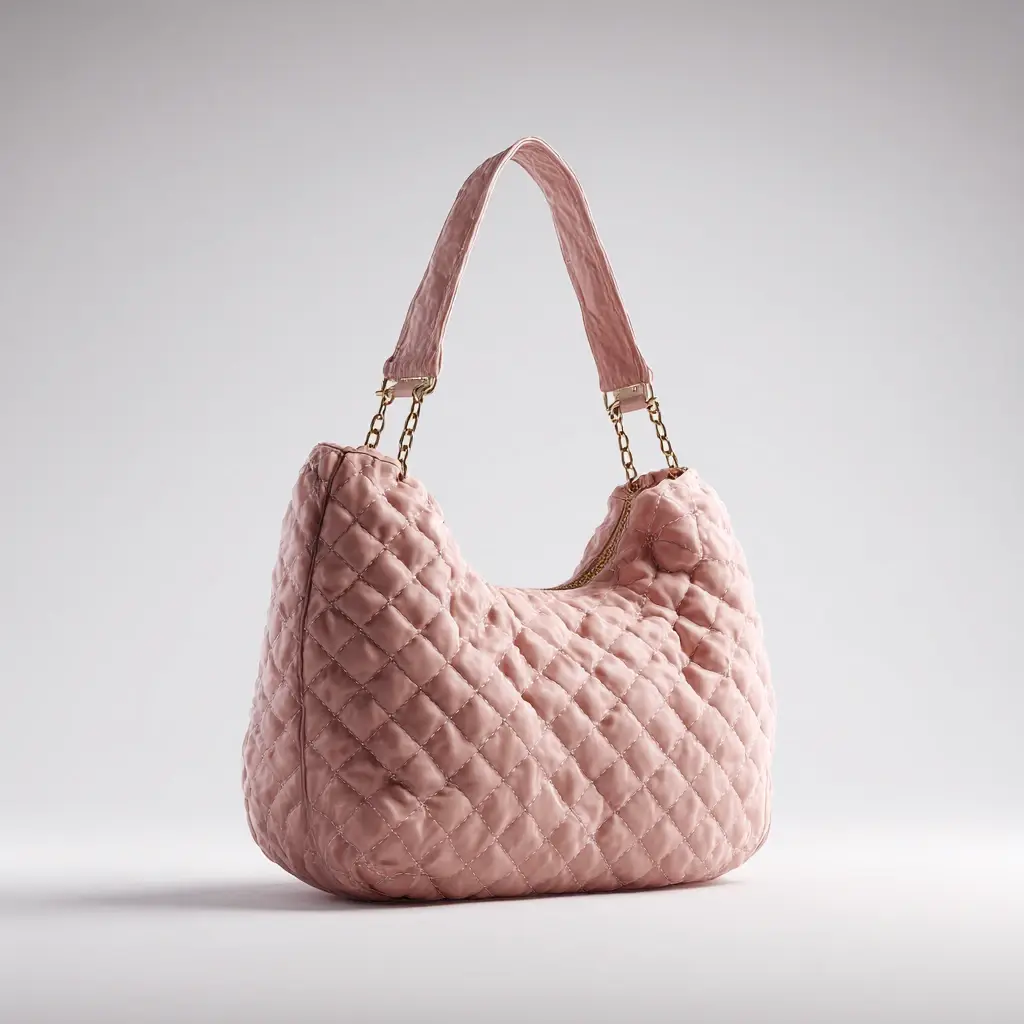
- Three Ways to Pilot, Compared First
- Route A: The 500-Piece Single-Shape Pilot
- Route B: The Split Pilot Across Two Shapes
- Route C: The Stock Test Before Any Production
- What the Pilot Is Actually Buying
- The Sampling Round That Decides Everything
- Inspection at Pilot Scale, With Real Numbers
- Reading the Result Without Fooling Yourself
- Converting a Pilot Into a Repeat
- The Five Ways a Pilot Goes Wrong
- The Pilot Budget, Line by Line
- A Go or No-Go Scorecard for the Repeat
- How Much Signal 500 Pieces Actually Carries
- What the Second Order Costs Before the First One Ships
How do you run a handbag ODM pilot order with low risk? Three routes, and the right one depends on what is actually unknown: a 500-piece single-shape pilot when the shape is settled and the price is not, a split pilot of 300 plus 300 across two shapes when the shape itself is the question, or a stock test of 50 units when the channel is the question. A pilot is not a small order, it is a purchase of information, and it should be sized to the single question it is meant to answer. The three routes differ in what each costs per piece, in how many ISO 2859-1 inspection units are drawn from the lot, and in what each one leaves on file afterwards.
The three pilot routes at a glance
Three Ways to Pilot, Compared First
Pilots fail because they are asked to answer three questions at once. A single order cannot simultaneously tell you whether the shape sells, whether the price works and whether the channel converts, and the attempt to make it do all three is what produces a result nobody can act on. Pick the question first, then the route.
| Variable | Route A: 500 single | Route B: 300 plus 300 | Route C: 50 stock |
|---|---|---|---|
| Question answered | Does the price work at scale? | Which shape sells? | Does the channel convert? |
| Quantity | 500 pcs per colourway | 600 pcs total, two lots | 50 pcs from stock |
| Per-piece cost | Baseline | 3-6% above baseline | Highest, but no tooling |
| Sampling days | 6-10 working days | 6-10 working days per shape | None |
| ISO 2859-1 sample | 50 units from 281-500 | 80 units per 501-1200 lot | 32 units from 151-280 |
| Leaves on file | Specification, swatch, tooling | Two specifications, one winner | Sell-through data only |
| Best for | A settled shape at a new price | A first line choosing its shapes | A new channel with an unproven shape |
The last three rows are the ones that matter after the goods land. Route A and Route B both produce a stored specification and an approved swatch, which is what makes the repeat cheap; Route C produces only data, which is still the most valuable of the three outputs if the shape has never sold anywhere.
Route A: The 500-Piece Single-Shape Pilot
Route A is the standard pilot and the one most brands should run, because it answers the question that actually blocks a second season: what does this bag cost at scale, and what does it cost to make twice. It treats the full minimum as an investment rather than an obstacle, and the entire output is reusable.
- The specification gets written and stored, with width, gusset and strap drop in millimetres at a tolerance of plus or minus 3 mm.
- The physical swatch gets approved and matched to a Pantone TCX reference at Delta E 2.0 or better, which is what the second lot is matched against.
- The tooling gets paid once, so the second 500 pieces carry no tooling line at all.
- The inspection gets a real report, at AQL 2.5 under ISO 2859-1, drawn from 50 units of a 281-500 lot.
The risk with Route A is concentration: 500 pieces of a shape that turns out to be wrong. That risk is real and it is the reason the shape should be one that has already sold somewhere, ideally as a catalogue style rather than as a new silhouette. A pilot is not the place to discover a shape; it is the place to confirm a price.
Route B: The Split Pilot Across Two Shapes
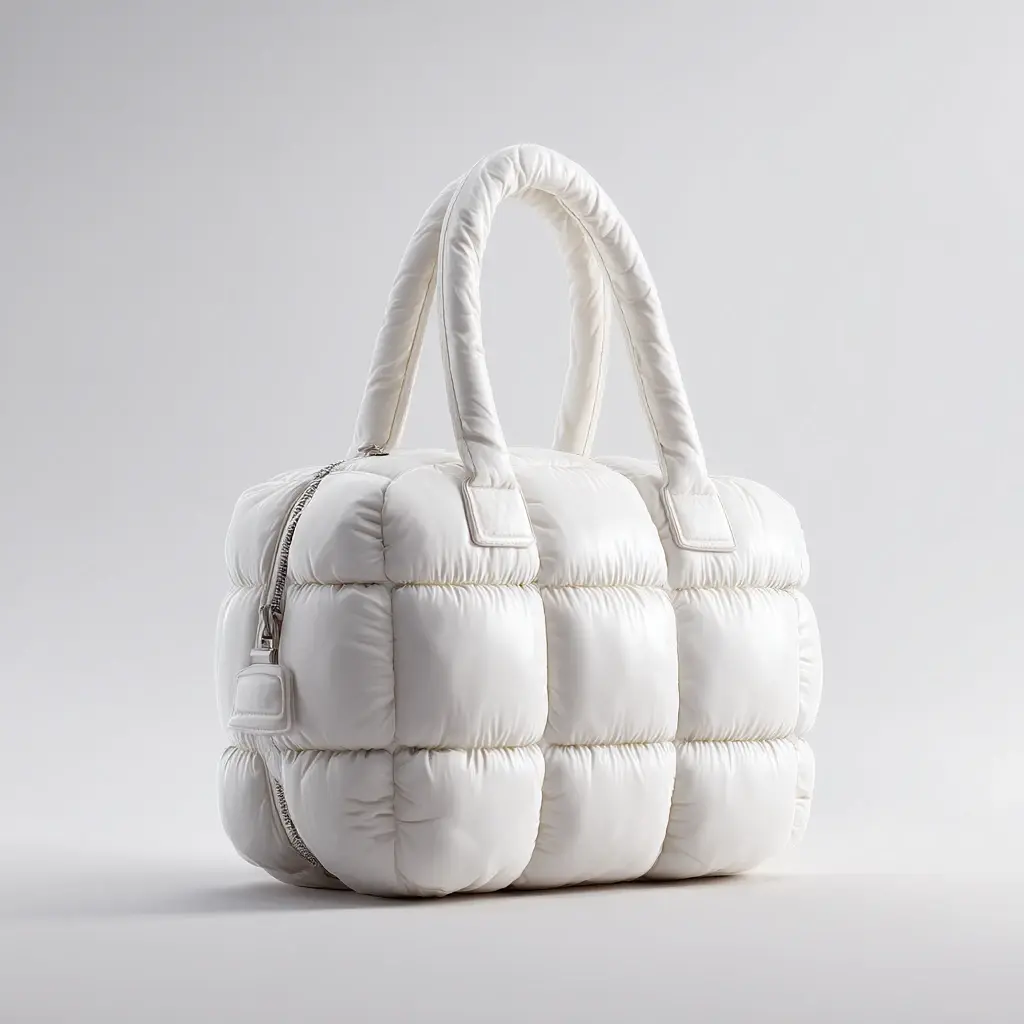
Route B costs more per piece and buys a different thing. Two shapes at 300 pieces each means two dye lots, two nesting markers and two changeovers, and the 3-6% premium is the price of not having to guess. It is the right route for a first line that has not yet chosen its silhouettes, and the wrong one for a brand that already knows.
- Both shapes share the trims and the hardware finish where possible, so only the pattern setups are doubled rather than everything else.
- Both shapes are sampled in the same 6-10 working day window, in parallel rather than in series.
- Both colourways are approved as physical swatches at the same time, so the comparison is made under one light source.
- The winner is decided by sell-through rate, not by preference, and the loser's specification is kept on file anyway.
The last point is the one that gets forgotten. A losing shape at a pilot scale is not a wasted 300 pieces; it is a stored specification for a shape that may work in a different colourway, a different retail band or a different season. Vancouver labels running this route in 2025 found the second shape outselling the first in a different territory six months later, which is only possible if the specification was kept.
Route C: The Stock Test Before Any Production
Route C is the cheapest and the least glamorous, and it is the correct first move when the channel is new. Fifty units of an existing catalogue shape, bought from stock and sold through the real listing or the real shelf, answers conversion questions that no production run can.
- No tooling, no sampling, no minimum. The units exist and can be shipped inside a week.
- The photograph is real, which matters because listing performance is mostly a function of the image.
- The price band is tested at a retail price that can be changed between weeks.
- The result is fast, typically four to six weeks of trading.
What Route C cannot tell you is the production cost of a branded version, because a stock unit is not a branded unit. It is a reconnaissance step, and its output is the brief for Route A or Route B rather than a substitute for either.
What the Pilot Is Actually Buying
| Information | Route | Cost of obtaining it | Value afterwards |
|---|---|---|---|
| Sell-through rate by shape | B or C | 3-6% premium, or a stock purchase | Decides the repeat quantity |
| Production cost at scale | A | The full 500 pcs minimum | Converts a range into a price |
| Second-season unit cost | A | Tooling paid once | Zero tooling on the repeat |
| Colour accuracy of a dye lot | A or B | A physical swatch and a courier fee | The standard for every later lot |
| Inspection behaviour of the shape | A or B | A pre-shipment inspection booked in advance | The defect profile for the repeat |
The fourth row is worth more than it looks. An approved physical swatch matched at Delta E 2.0 or better is what stops a second-season colour argument before it starts, and it costs a courier fee. Every later lot is matched to it rather than to a memory of it.
The Sampling Round That Decides Everything
- Send the specification before the sample, in millimetres, with a tolerance of plus or minus 3 mm on width, gusset and strap drop.
- Send the mark as vector artwork, because a screenshot adds days and can change the minimum area that reads.
- Approve or reject against the drawing, not against a feeling, and number the revision list.
- Keep the revision list to one round; a second round costs 3-6 days and a third costs the season.
- Approve the physical swatch in the same week, so the dye lot can be booked while the slot is being held.
Sampling is 6-10 working days for a shelf shape and 12-15 working days for a framed, woven or stacked construction. The revision round on either side of it is 3-6 days, and that is the part a pilot can compress by deciding everything in advance rather than in response.
Inspection at Pilot Scale, With Real Numbers
| Lot size | Sample size code | Units drawn | Accept | Reject |
|---|---|---|---|---|
| 151-280 pcs | G | 32 | 2 | 3 |
| 281-500 pcs | H | 50 | 3 | 4 |
| 501-1200 pcs | J | 80 | 5 | 6 |
| 1201-3200 pcs | K | 125 | 7 | 8 |
These are the numbers a pilot is inspected against, and they are the reason a 500-piece pilot is not an informal purchase. Fifty units are drawn, three defects are allowed and the fourth fails the lot; that is the whole mechanism, and it is the same mechanism that will be applied to the 5,000-piece season that follows. The AQL 2.5 checks applied to a full run extend the table to larger lots.
Reading the Result Without Fooling Yourself
A pilot result is easy to misread in both directions. Three habits keep the reading honest, and each of them is unglamorous.
- Measure sell-through, not sales. Two hundred units sold into a marketplace and two hundred sold at full price on an own site are different results with the same number.
- Separate the shape from the photograph. A shape that underperformed behind a poor image has not been tested yet.
- Wait for the return rate. A 30-day return window can turn a good result into a bad one, and it is the number a second season is actually priced on.
The most common self-deception is treating a sell-out as proof. Five hundred pieces that sold out in three weeks usually means the price was too low rather than that the product was right, and the repeat ordered on that evidence inherits the margin problem.
Converting a Pilot Into a Repeat
- Freeze the specification that won, and quote the repeat against it without a new sample round.
- Move to 2,000 pcs per colourway where the data supports it, which improves the unit price by 8-14%.
- Add the second colourway to the shape that earned it, as a separate 500-pcs lot.
- Amortise nothing twice; the tooling was paid for on the pilot and the second order carries no tooling line.
- Book the slot at deposit, before Chinese New Year or before the autumn shipping rush, whichever comes first.
Done in that order, the repeat skips sampling entirely and removes 6-10 working days from the calendar, and it is quoted in a day because every document already exists. That is the return on a pilot: not the 500 pieces, but the fact that the second 500 is a different kind of transaction.
The Five Ways a Pilot Goes Wrong
- Ordering a shape that has never sold anywhere, which makes the pilot a product development exercise with a 500-piece bill attached.
- Skipping the inspection, because a pilot is the cheapest place to discover how a shape behaves and the most expensive place to skip it.
- Changing the specification mid-run, which costs days and produces a lot that matches nothing on file.
- Reading the sell-out as success and inheriting a margin that was never there.
- Not storing what the pilot produced, so the repeat has to be redeveloped from photographs.
All five are avoided by the same discipline: decide in writing, before the deposit, what the pilot is meant to answer and what will be kept afterwards. The shelf styles worth rebranding as a collection is the catalogue most pilots are drawn from, and the OEM programme reference lists the compliance documents that travel with the shipment.
The Pilot Budget, Line by Line
A pilot is usually budgeted as quantity times unit price, and that figure is roughly two-thirds of the cheque. The rest sits in lines that appear once and never repeat: tooling, sampling, inspection, freight on a part container, photography for the listing, and the working capital tied up for the length of the run. Price every one of them before the deposit moves, or the pilot will be judged against a cost that was never the real one.
| Line | Range for a 500-piece pilot | Note |
|---|---|---|
| Unit price, 500 pcs | Baseline | The only line that repeats on the second order |
| Tooling: die, label setup, any mould | USD 120-900 | Paid once; zero on the repeat |
| Sampling, per round | USD 80-250 per piece | One to three rounds is the normal range |
| Third-party inspection | USD 300-500 per man-day | Booked inline and again pre-shipment |
| Freight as groupage | 30-60% above full-container per piece | Consolidate two styles to improve it |
| Listing photography | USD 200-800 per style | Reusable across colourways, not shapes |
A Go or No-Go Scorecard for the Repeat
The hardest part of a pilot is the decision, because the result arrives as a mixture of data and opinion. A scorecard fixes the order: six items weighted to 100 points, each with a pass condition written before the goods land. Anything scoring under 60 goes back to development rather than into a second order, and anything above 80 earns a quantity increase rather than a new shape.
| Item | Weight | Pass condition |
|---|---|---|
| Sell-through at 12 weeks | 30 | 55 per cent or better of the buy |
| Return rate | 20 | Under 10 per cent of units sold |
| Defect rate at inspection | 15 | Within AQL 2.5, criticals at zero |
| Unit cost against target | 15 | At or below the planned landed figure |
| Review score | 10 | 4.2 out of 5 or better |
| Material available for a repeat | 10 | Stock shade or a held lot |
How Much Signal 500 Pieces Actually Carries
Five hundred pieces is a large enough buy to hurt and a small enough sample to mislead. At 40 units a week it is about 12 weeks of cover, which is enough to see a sell-through curve and not enough to trust a small gap between two shapes. Treat any difference below about 8 percentage points as noise, and wait for the 30-day return window to close before naming a winner.
- Cover at 40 units a week: about 12 weeks, against roughly 50 weeks at a rate of 10 units a week.
- A gap worth acting on: 8 percentage points or more of sell-through between two shapes.
- Returns close at 30 days, so a result read at week four is a provisional one.
- Reviews accumulate slowly: a 4.2 average needs roughly 40-60 reviews before it stops moving.
What the Second Order Costs Before the First One Ships
The repeat is decided at the first order, by whether the specification was frozen and the tooling retained. Where both happened, a second 500-piece lot is quoted in about a day, skips the 6-10 working days of sampling window and carries no tooling line at all. Where they did not, the second order is a first order again: a fresh sample round, fresh tooling and another 45-60 days.
- A frozen specification lets the repeat be quoted without a new sample round, removing 6-10 working days.
- Retained tooling means USD 120-900 is not paid twice, worth about USD 0.25-1.80 per piece at 500 pcs.
- A held material lot skips the 16-30 day lead a custom shade would otherwise add.
- At 2,000 pcs the unit index falls to about 88, some 12 per cent below the 500-piece figure.
Size the pilot to the question
Send the shape, the quantity and what the pilot is meant to decide. A private label coordinator will return a route with sampling at 6-10 working days, bulk at 35-50 days, inspection at AQL 2.5 under ISO 2859-1 and the documents the repeat will need. Programmes have moved through our validated partner factory Quanzhou Yingming Bags since 2014, across 7 production lines and about 200,000 pcs per month. Get a quote.
Frequently Asked Questions
What is the safest handbag ODM pilot order?
Route A, 500 pcs of one shape in one colourway, is the safest because every output is reusable: the stored specification, the retained tooling, the approved physical swatch and the written inspection report. It costs the full minimum but it converts directly into a repeat that needs no new sampling.
How many pieces should a pilot be?
500 pcs per style and colourway for a single-shape pilot, 300 plus 300 for a split pilot across two shapes, or 50 pieces of stock for a channel test. The size follows the question; ordering a quantity that answers two questions at once usually answers neither.
Which ISO 2859-1 sample size applies to a 500-piece lot?
General inspection level II gives sample size code H for a lot of 281-500 pieces, which means 50 units are drawn. At AQL 2.5 those 50 units allow 3 defects and reject the lot at 4, and that is the whole accept-or-reject mechanism applied to the pilot.
Does a pilot still need a pre-shipment inspection?
Yes, and it is the cheapest place to have one. Fifty units drawn from 500 will reveal the defect profile of the shape, and that profile is what the 5,000-piece season will be inspected against later. Skipping it saves a small fee and removes the only objective record.
How is a split pilot across two shapes kept affordable?
By sharing everything that can be shared: the webbing and zipper colour, the hardware finish so only one plating bath runs, and the sampling window so both shapes are developed in parallel. Only the pattern setup and the dye lot are genuinely doubled.
How long does a pilot take from brief to goods?
Plan 55-80 days from signed brief to goods handed to a forwarder, then 18-28 days of transit to the United States West Coast or 30-38 days to Northern Europe. Sampling is 6-10 working days, review 3-6 days, the bulk run 35-50 days and inspection 3-6 days.
What should be measured after the pilot ships?
Sell-through rate rather than raw sales, the 30-day return rate, and the margin actually realised at the price charged. A sell-out in three weeks usually means the price was too low rather than that the product was right, and the repeat inherits that margin.
What does the repeat cost after a successful pilot?
The unit price improves by 8-14% when the quantity moves to 2,000 pcs per colourway, and the tooling line disappears entirely because it was paid for on the pilot. Sampling can be skipped where the specification is frozen, removing 6-10 working days.
Should a losing shape be abandoned after a split pilot?
No, its specification should be stored rather than discarded. A shape that lost in one colourway, one retail band or one territory very often wins in another, and the stored specification is what makes that possible without a fresh sample round or a second development fee.
When is a stock test better than a production pilot?
When the channel is new rather than the product. Fifty catalogue units sold through the real listing test conversion, the photograph and the price band within four to six weeks, and none of that requires a production run.
What documents should a pilot produce?
A stored specification with tolerances of plus or minus 3 mm, an approved physical swatch matched at Delta E 2.0 or better, a written AQL 2.5 inspection report, and the compliance dossier of REACH, Proposition 65 and CPSIA documentation with BSCI or Sedex audit references.
Can a pilot be run without any custom tooling?
Yes, and for a first pilot it usually should be. A shelf shape with a stock zip puller and a debossed mark carries the brand without a mould, which keeps the per-piece cost down and leaves the tooling budget available for the shape that proves itself.
People Also Ask
Is a pilot just a smaller first order?
No. It is a purchase of information, sized to one question. A small order that answers three questions at once produces a result nobody can act on.
What is the cheapest pilot that produces a reusable specification?
Route A at 500 pcs. Routes B and C produce useful data, but only Route A leaves a frozen specification and retained tooling that a repeat can be quoted against without a sample round.
How many sample rounds should a pilot allow?
One revision round. A second costs 3-6 days and a third costs the season, so the revision list should be numbered and decided against the drawing rather than against a feeling.
Why does a 500-piece sell-out not prove success?
Because it usually means the price was too low. The repeat ordered on that evidence inherits the margin problem, which is why sell-through rate and return rate are the numbers worth reading.
Sources and further reading
Every figure on this page is either our own programme data or attributed below. Open the originals before you write them into a specification.
- FashionUnited — fashion industry news and dataFashionUnited Industry news and company data for the fashion sector.
- Accessories Council — accessories industry bodyAccessories Council Accessories industry body tracking handbag category direction.
- China Briefing trade and manufacturing analysisChina Briefing Trade, tax and compliance analysis for sourcing from China.