Handbag ODM: Shelf Styles You Rebrand as Your Own Collection
How do shelf styles become a collection that looks like yours? By changing four things decisively rather than twelve things slightly: material, colourway, hardware finish and branding — with branding positioned in millimetres from a datum edge and carried consistently across four to six styles. A shared pattern is not the problem; an inconsistent brand execution is. Four styles in one material family, two finish options and one branding position repeated at the same measurement read as a collection, while six unrelated shelf styles read as a catalogue. The entry economics are the reason to look at this route at all: sampling in 2-4 days rather than 6-10, no tooling beyond branding, and a unit price 12-18 percent below an equivalent new silhouette at 500 pieces.
- What a Shelf Style Actually Is
- The Selection Checklist: Nine Items
- The Four Variables and How Far Each Goes
- Branding Positions That Make a Base Yours
- Hardware Finish Options and What Each Signals
- Colourway Planning Across a Shelf Range
- Packaging: Where a Range Becomes a Collection
- Exclusivity: What to Ask For and When
- When to Stop Modifying
- Where the Shelf Discount Comes From, Priced
- Reading a Shelf Catalogue: The Seven Fields
- Finding Out Who Else Is on Your Base
How do shelf styles become a collection that looks like yours? By changing four things decisively rather than twelve things slightly: material, colourway, hardware finish and branding — with branding positioned in millimetres from a datum edge and carried consistently across four to six styles. A shared pattern is not the problem; an inconsistent brand execution is. Four styles in one material family, two finish options and one branding position repeated at the same measurement read as a collection, while six unrelated shelf styles read as a catalogue. The entry economics are the reason to look at this route at all: sampling in 2-4 days rather than 6-10, no tooling beyond branding, and a unit price 12-18 percent below an equivalent new silhouette at 500 pieces.
Shelf programme figures
What a Shelf Style Actually Is
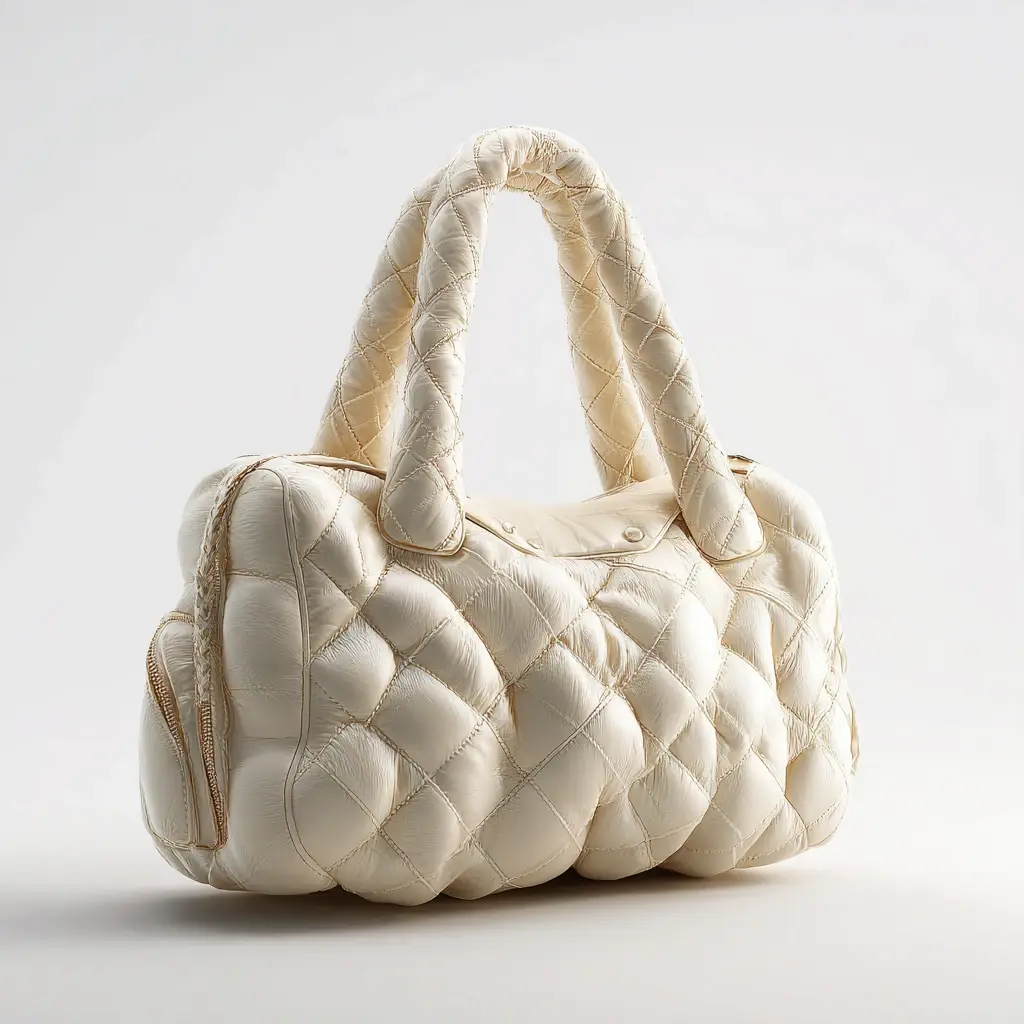
A shelf style is a pattern that already exists, has already been graded, already has a known cutting yield and has already been sewn on a line. Selecting one means selecting a proven proportion and a known operation count, which is why the price is lower and the calendar shorter. It does not mean accepting whatever is on the shelf: the four variables below are open on every base, and they are enough to produce something a customer cannot find anywhere else.
What is not open is the architecture: panel count, seam sequence, internal layout and any proportion change that would require a new pattern. Understanding that boundary before selection is what keeps a shelf programme cheap. Everything inside it is a fast, low-risk change; everything outside it converts the work into a full development with pattern charges and a longer calendar.
The Selection Checklist: Nine Items
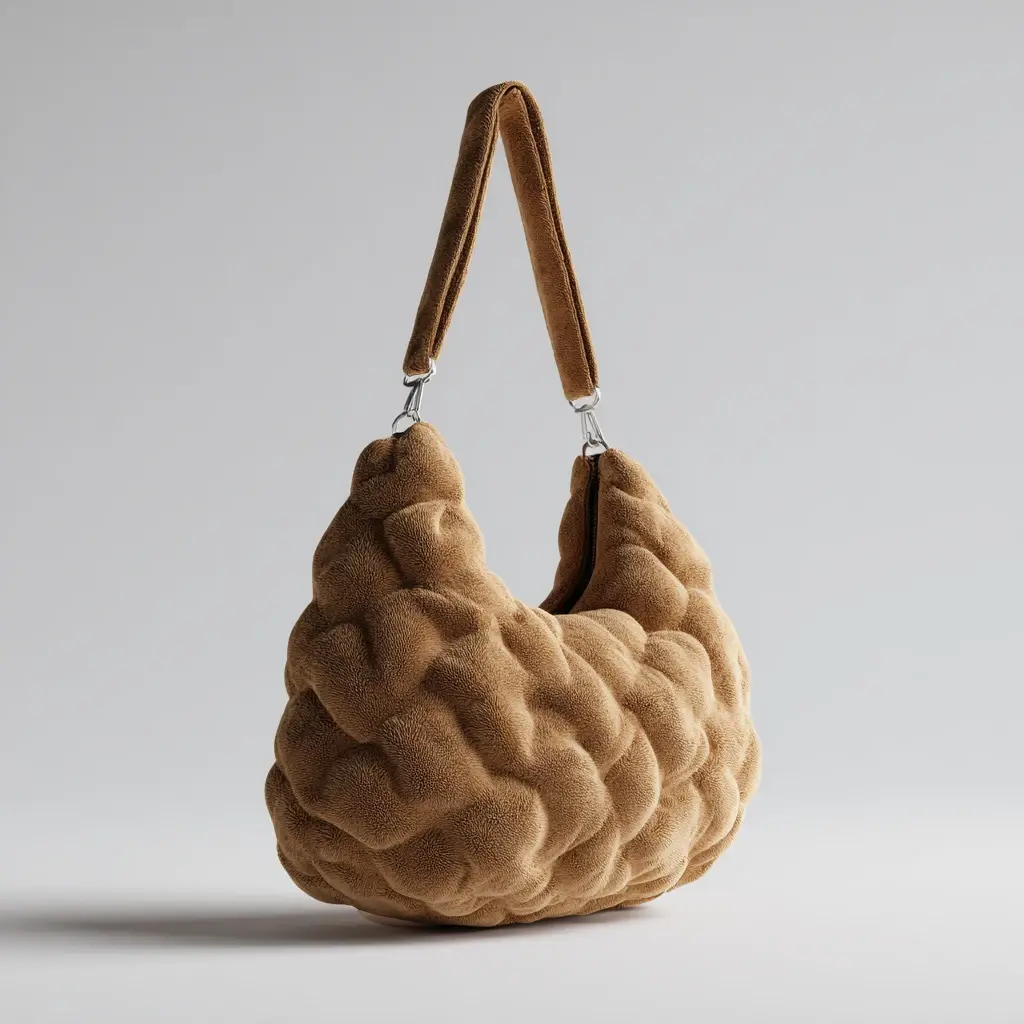
Selecting a base is a filtering exercise, and nine questions do it. Tick each one before the sample is ordered; any item left unticked becomes a question inside the sampling window, where it costs round trips instead of emails.
- Does the proportion suit the price band? A base designed for a structured leather program looks wrong in a soft coated material, however good the material is.
- Is the operation count proportionate? Between 18 and 38 operations is the workable band; above 38 the labour line starts to dominate a mid-market price.
- Can the material be sourced in the required lot? A shelf base is priced on stocked articles; moving to a new one adds the mill minimum.
- Is the hardware a stock item? Stock closures keep tooling at zero; a custom cast part adds USD 900-2,600 and 15-25 days.
- Where does the brand go? Every base needs a flat panel of at least 40 x 25 mm in a visible position, or branding has nowhere to sit.
- Is the strap attachment adequate? Look for a load path over 60-90 mm of reinforcement, not a decorative tab.
- Does the base stand or slump? Decide deliberately, because it is the single most visible quality signal on a shelf photograph.
- How many colourways does the range need? Two or three per style is normal, and each is a separate 500 pcs minimum.
- Is exclusivity available in the target market? Ask before selection, not after the range is built.
Item five is the one that gets missed most often. A base with a beautifully curved front panel may have no flat area large enough for an embossing die or a plate, and forcing one onto a curve produces a mark that reads as a defect. A flat area of at least 40 x 25 mm, positioned where a hand does not cover it, is the practical requirement.
The Four Variables and How Far Each Goes
Four variables are open on a shelf base, and each has a limit worth knowing before the brief is written. The limits are not arbitrary — each one marks the point at which a change would require a new pattern or a new material buy.
| Variable | How far it goes | Cost implication | Limit |
|---|---|---|---|
| Material | Any stocked article; others by arrangement | Full-grain vs corrected grain moves 18-26% | Mill or tannery lot minimum |
| Colourway | Any shade that can be matched | Each is a separate dye lot | 500 pcs per colourway |
| Hardware finish | Six to eight standard finishes | A new finish may need its own bath | Plating line capability |
| Branding | Fully open | USD 90-260 for a die or plate | Needs a flat panel of 40 x 25 mm |
Dimensions sit just outside the four and are worth one paragraph because they are frequently requested. Moving a body width by 10-20 mm is usually achievable without a new pattern, because it can be handled at the marker. Moving it by 40 mm, or changing the gusset depth materially, cannot — the panel architecture no longer works and the base is effectively a new silhouette.
Branding Positions That Make a Base Yours
Branding is where a shelf programme is won or lost, and it is almost entirely a matter of measurement and consistency. Four methods are available and each has a natural position on a handbag, stated in millimetres from a datum edge so it can be repeated across the range.
- Embossing. A blind or foil die of 40-90 mm width, positioned 35-45 mm above the base seam on a front panel, with a relief depth of 0.6-1.2 mm.
- Metal plate. 0.8 mm brass or zinc, typically 40 x 12 mm, set on the front panel or the strap end with two rivets at 3 mm.
- Woven label. 20 x 45 mm sewn into a lining seam or the back panel, with a stitch line 3 mm from the edge.
- Zip puller. A branded puller of 12-18 mm, which is the cheapest recognition available and the one customers touch most.
Consistency is the multiplier. One branding position, at the same measurement, across four to six styles is what makes a shelf range read as a collection. Three different positions across three styles is what makes it read as a sourcing exercise, and the difference is visible in a single photograph of the range laid out together.
Hardware Finish Options and What Each Signals
Hardware finish is the cheapest variable on a shelf base and the one with the widest effect on perceived price. A plating line typically runs six to eight standard finishes, and any of them can be specified on a stock closure without tooling. What changes is not the cost — a finish change moves the hardware line by a few percent — but the reading: the same base in light gold sits at a different price band from the same base in gunmetal.
| Finish | Typical plating | Reads as | Watch for |
|---|---|---|---|
| Light gold | Zinc alloy, 0.3-0.5 micron | Classic, mid to upper | Wear at contact points |
| Antique brass | Zinc alloy, brushed and lacquered | Heritage, relaxed | Lacquer consistency between lots |
| Gunmetal | Zinc alloy, dark chrome | Contemporary, urban | Colour drift between baths |
| Nickel | Zinc alloy, bright | Clean, entry to mid | Nickel release testing |
| Brushed steel | Stainless or plated | Minimal, architectural | Fingerprint visibility |
| Matte black | Zinc alloy, electrophoretic | Technical, modern | Scratch resistance |
Two specifications belong with any finish: a plating thickness in microns, and a corrosion benchmark. Twenty-four hours to first corrosion under ASTM B117 is the usual requirement for zinc alloy parts, and nickel release testing under REACH Annex XVII applies wherever a part sits against skin for prolonged contact. Both are documented on the hardware approval sample rather than assumed from the finish name.
Colourway Planning Across a Shelf Range
Colourway planning is arithmetic before it is creative, because every shade is a separate dye lot with its own 500 pcs minimum. Four styles in two colourways is 4,000 pieces, not 2,000 split four ways, and that is the number a first budget has to survive.
| Styles | Colourways | Total pieces | Comment |
|---|---|---|---|
| 3 | 1 | 1,500 | Minimum viable range |
| 4 | 2 | 4,000 | Standard first season |
| 6 | 2 | 6,000 | Full assortment; needs a forecast |
| 6 | 3 | 9,000 | Reserve capacity 60 days ahead |
The sensible first-season shape is four styles in two colourways, with one of the two carried across all four and the second used selectively. That gives a range that looks coherent on a category page, keeps the number of dye lots at a manageable level, and produces sell-through data per shade rather than per style, which is what the second season needs.
Packaging: Where a Range Becomes a Collection
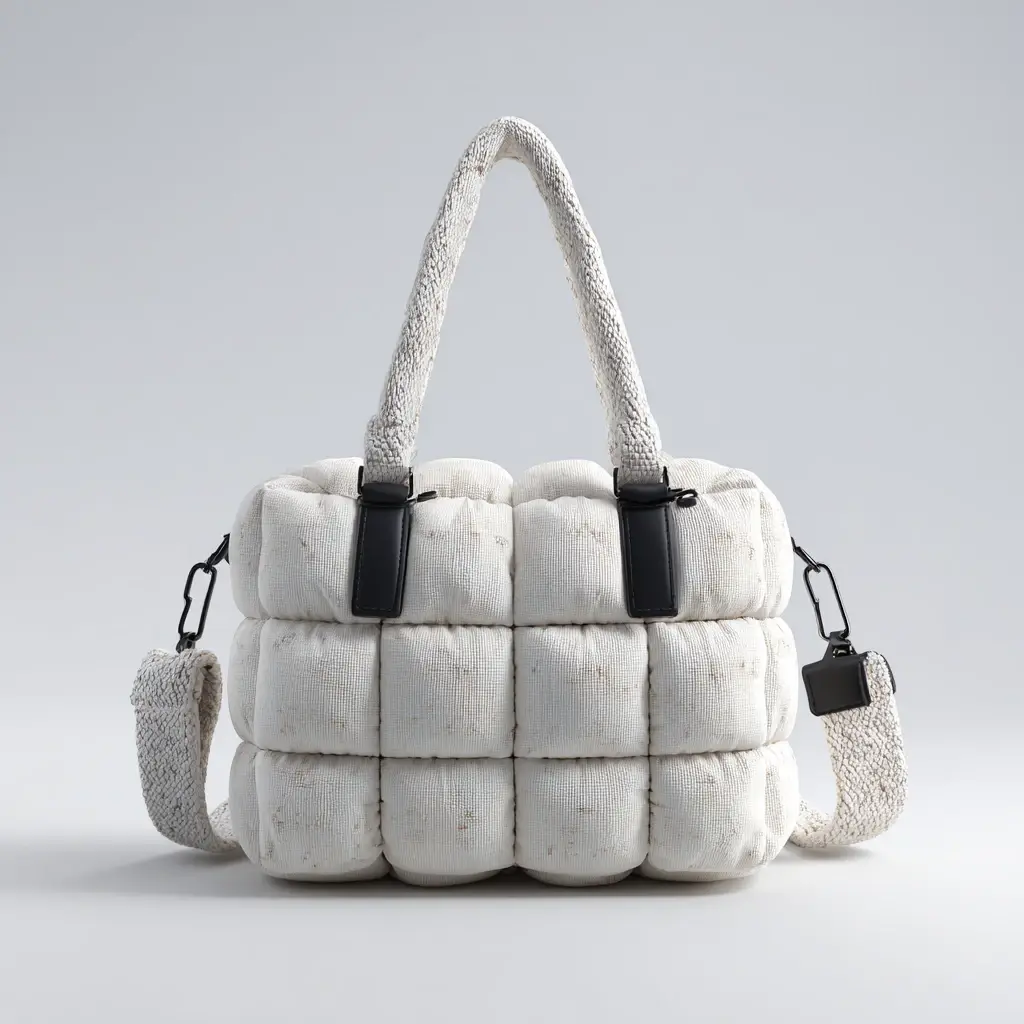
Packaging does more branding work per dollar than any other line on a shelf programme, because it is the one thing shared across every style regardless of base. A dust bag, a hangtag and consistent carton marking cost USD 0.41-1.08 per piece and turn four unrelated patterns into one range.
- Dust bag. USD 0.35-0.90, printed or with a woven drawcord, sized to the largest style in the range.
- Hangtag. USD 0.06-0.18 at 55 x 90 mm, with a consistent string length and hole position.
- Barcode symbology. EAN-13 for retail, or the marketplace label format required at the destination.
- Carton marks. Consistent shipping marks and carton numbering, which matters at the receiving warehouse.
- Insert card. A care or brand card, which costs cents and is the only piece of print a customer reads at home.
One caution on packaging with a shelf range: do not let it out-specify the bag. A rigid gift box on a mid-market shelf style signals a price band the product does not occupy, and the mismatch reads as poor value rather than as generosity.
Exclusivity: What to Ask For and When
Exclusivity on a shared base is real but bounded, and it has to be asked for before the deposit rather than after the first competitor sighting. Three forms are available, and the strongest of them costs nothing extra when requested early.
- Exclusivity by territory. The base is not offered to another label in a named market, commonly for 6-12 months. The usual arrangement and the easiest to obtain.
- Exclusivity by configuration. A specific material and hardware combination is held for one brand even where the base is shared.
- Exclusivity by category. The base is not offered to a competitor in the same product category, which is useful where the risk is a direct comparison.
- Tooling exclusivity. The branding die, plate and any mould are yours and never run for another label — true under any arrangement and the one that must always be in writing.
Ask for all four in the order paperwork rather than in an email thread, and name the territory precisely. Exclusivity limited to a single country is worth much less to a brand selling across several markets, and that is usually the point at which commissioning a proprietary pattern becomes the better answer.
When to Stop Modifying
Every shelf programme reaches a point where the requested changes exceed what a shared base can absorb. Recognising it early saves money, because modifying a base beyond its limits produces the worst of both models: development charges without an owned design.
| Signal | Why it matters | What to do |
|---|---|---|
| Asking to move a panel seam | Requires a new pattern | Commission a pattern |
| Dimension changes beyond 20 mm | Panel architecture no longer works | Commission a pattern |
| Change requests after the third revision | The base cannot satisfy the brief | Stop and reselect or develop |
| Retail partner asks for assortment exclusivity | Territory exclusivity is not enough | Develop one anchor silhouette |
| Style has reordered twice | The quantity now justifies development | Develop on the repeat |
The transition is not a failure of the shelf route; it is the natural next stage. A range built on four shared bases with consistent branding can prove the price band and the customer in one season, and the data from that season is what makes a proprietary anchor silhouette a low-risk investment rather than a gamble.
Programmes coordinated through our validated partner factory Quanzhou Yingming Bags run both routes on 7 production lines with export experience since 2014, sampling at 2-4 days for a shelf selection and 6-10 working days for a new pattern, bulk at 35-50 days, and pre-shipment inspection at AQL 2.5 under ISO 2859-1. The shelf style selection guide for fast entry narrows the shortlist further, the pilot order guide covers how to test a range cheaply, and the model comparison puts both routes side by side. The OEM services page sets the full frame.
Where the Shelf Discount Comes From, Priced
A shelf base prices below a new pattern by roughly 12-18 per cent, and the saving is not a concession anybody granted. It is the absence of four costs that a new development carries, plus one advantage that compounds: the pattern has already been sewn, so both its cutting yield and its operation count are known rather than estimated.
| Line | New pattern | Shelf base | Gap |
|---|---|---|---|
| Pattern development and grading | USD 180-450 | USD 0 | Already amortised |
| First-sample iteration | 2-3 rounds | 1 round | One less review cycle |
| Cutting yield | Estimated at 78-85% | Known at 80-88% | Less material per bag |
| Hardware tooling | USD 900-2,600 | USD 0 | Stock closures used |
The yield row is the one to watch. On a tote using 7-9 square feet of leather, three percentage points of yield is roughly 0.25 square feet per bag, which at 2.20 per square foot is about 0.55 per unit on its own before any other line moves.
Reading a Shelf Catalogue: The Seven Fields
A shelf catalogue is a specification document, and most of them are incomplete. Seven fields are what a buyer needs in order to quote, cost and plan a drop. A sheet missing more than two of them will produce a provisional number that moves later, usually after the launch date has been published.
- Construction family. Soft, semi-structured or framed, which decides the line it runs on.
- Operation count. A number between 18 and 38, not an adjective about complexity.
- Body dimensions. Width, height and gusset measured at the base, in millimetres, with a tolerance.
- Cutting yield. Usable percentage after defects, given per hide grade rather than as an average.
- Hardware. Stock or custom, with the finishes actually available on the plating line.
- Branding panel. A flat area of at least 40 x 25 mm, with its position stated from a datum edge.
- Carton quantity. Units per carton and the cube, which sets the freight line more than the board does.
Finding Out Who Else Is on Your Base
Exclusivity is worth more checked than promised. Three searches take an hour and give a brand the same information a competitor already has, before the season rather than after it. They also cost nothing, which is more than can be said for discovering the overlap from a customer who found the cheaper listing first.
- Reverse image search on the catalogue photograph. A base sold to several labels usually appears under more than one mark, often with the same styling.
- Marketplace listing scan. Search the silhouette description rather than the brand name, filtered to the price band planned for the drop.
- Trade fair and seasonal catalogue cross-check. The same base is often shown twice in a season with different trim and a different name.
- Ask directly, in writing. Which territories the base is offered in, and which configurations are held, is a fair question at brief stage.
- If the overlap is already there. Ask for a change of trim, a different hardware finish or a named territory rather than a new pattern, since all three are cheap and one of them is usually enough.
Shortlist four bases and brand them consistently
Send the price band, the target market and the number of colourways. A handbag programme specialist will return a shortlist with branding positions in millimetres — sampling 6-10 working days, bulk 35-50 days, inspection AQL 2.5. Get a quote.
Frequently Asked Questions
What is a shelf style in handbag development?
A pattern that already exists, has been graded, has a known cutting yield and has already been sewn on a line. Selecting one means choosing a proven proportion and operation count, which is why the unit price sits 12-18 percent below an equivalent new silhouette at 500 pieces and why sampling takes 2-4 days rather than 6-10.
How many things can I change on a shelf base?
Four: material, colourway, hardware finish and branding. Dimensions can sometimes move by 10-20 mm because that can be handled at the marker, but panel count, seam architecture and internal layout are fixed, and changing them converts the work into a full development.
How much branding tooling does a shelf programme need?
USD 90-260, for an embossing die, a metal plate or a woven label setup. That is the only tooling a shelf programme carries, because the pattern and any stock hardware already exist. A custom cast part would add USD 900-2,600 and 15-25 days.
Where should branding be positioned?
On a flat panel of at least 40 x 25 mm, typically 35-45 mm above the base seam on the front, with a relief depth of 0.6-1.2 mm for embossing. The same measurement repeated across four to six styles is what makes a shelf range read as a collection.
How many pieces is a four-style, two-colourway range?
Four thousand. MOQ is 500 pcs per style and per colourway, and each shade is a separate dye lot, so four styles in two colourways is eight lots of 500. Three styles in one colourway is the minimum viable range at 1,500 pieces.
Can a shelf style be made exclusive to my brand?
Yes, usually by territory for 6-12 months, by configuration where a distinct material and hardware combination is held, or by category. None of these normally costs extra when requested before the deposit, and all should appear in the order paperwork rather than in an email.
How long does a shelf programme take?
Sampling runs 2-4 days from an existing sample, quotation 1-2 days, revision 1-4 days, bulk 35-50 days and inspection 1-2 days — roughly 40-60 days to handover against 55-80 for a new pattern. Transit adds 18-28 days to the United States West Coast by sea.
Is a shelf style lower quality than a custom silhouette?
No. The price difference comes from tooling, known yield and line familiarity, not from a lower standard. Both routes run the same stitch specification, the same hardware plating requirement and the same AQL 2.5 inspection under ISO 2859-1.
How much does packaging add to a shelf range?
Between USD 0.41 and 1.08 per piece: a dust bag at USD 0.35-0.90, a hangtag at USD 0.06-0.18 and nominal carton marking. Packaging is the highest-value branding spend on a shelf programme because it is shared across every style regardless of base.
When should I stop modifying a shelf base?
At any of five signals: a request to move a panel seam, a dimension change beyond 20 mm, change requests continuing past the third revision, a retail partner asking for assortment exclusivity, or a style that has reordered twice. Each means a proprietary pattern is now the better route.
What operation count should a shelf base have?
Between 18 and 38 for a mid-market price band. Below 18 the bag may look under-built; above 38 the labour line starts to dominate the unit price. A base with a known operation count is one of the main advantages of the shelf route, because it removes guesswork from 22-30 percent of the cost.
How is a shelf range inspected before shipment?
Pre-shipment at AQL 2.5 under ISO 2859-1, which sets how many units are drawn from a lot of a given size and how many defects of each class trigger a pass, a fail or a re-sort. The written report is issued to the buyer and third-party inspection by SGS is available.
People Also Ask
Is four styles enough for a first season?
Yes, and it is better than six. Four bases in two colourways with consistent branding reads as a collection, keeps dye lots manageable and produces sell-through data per shade rather than per style.
Should every style carry the same hardware finish?
Two finishes across a range is the practical maximum. One shared finish makes the collection read as one family, and a second gives an accent option without multiplying the plating runs a programme has to book.
Can a shelf base be used in a material it has not run in?
Sometimes, subject to the mill or tannery lot minimum and to a yield check. A material change also affects how the base stands or slumps, which is worth sampling rather than assuming.
Does exclusivity by territory cost extra?
Usually not when requested before the deposit, and considerably more afterwards, particularly once another programme has selected the same base in a neighbouring market. Ask at selection, not at sighting.
Sources and further reading
Every figure on this page is either our own programme data or attributed below. Open the originals before you write them into a specification.
- SATRA — technical services for leather, footwear and accessoriesSATRA Independent leather, hardware and accessories testing protocols.
- REACH — chemical substances regulationEuropean Commission Annex XVII restricts the substances that may appear in finished leather and coatings.
- FashionUnited — fashion industry news and dataFashionUnited Industry news and company data for the fashion sector.