Best ODM Handbag Shelf Styles for Fast Market Entry 2026
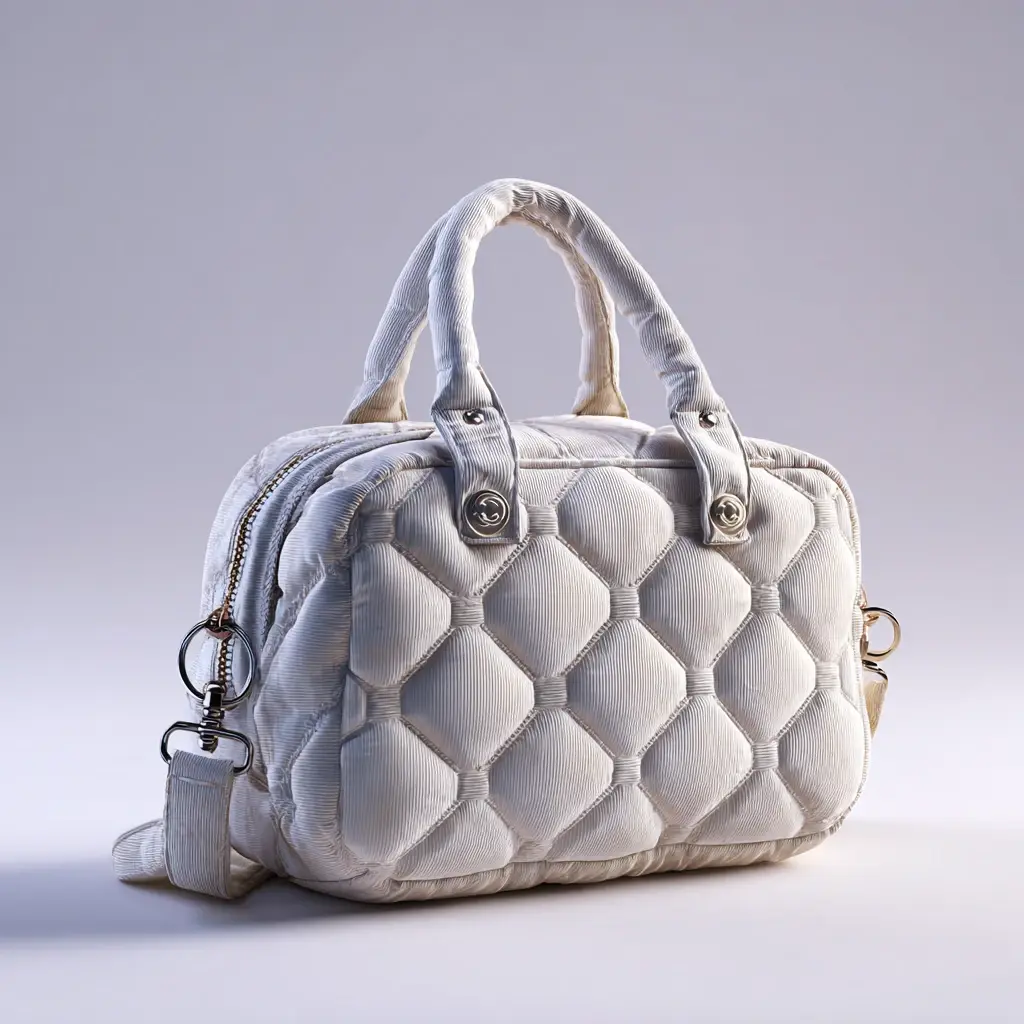
Which ODM shelf styles reach market fastest in 2026? Five shapes clear the bar: a 34-42 cm tote, a 24-28 cm crossbody, a 26-34 cm shoulder bag, a 20-26 cm bucket and a 30-38 cm day backpack, each available at MOQ 500 pcs per style and colourway. Speed is not bought by choosing a simpler bag, it is bought by choosing a shape whose pattern, tooling and material lots already exist. A shelf shape moves from approved sample to cartons inside the 35-50 day bulk window; a shape needing a new hardware mould spends 12-15 working days in sampling before that window even opens, and carries a one-off tooling charge that has to be amortised across the first run.
- Decide in This Order, Not the Catalogue's
- Tier One: Five Shapes That Need No New Tooling
- Tier Two: One Tool, Still Inside the Window
- Tier Three: What to Keep for the Second Season
- What a Tweak Costs in Days, Not Only in Money
- How Fast Entry Is Measured in 2026
- Which Shape Fits Which Sales Channel
- Five Checks Before a Shape Is Signed Off
- What Delays a Fast Entry More Often Than the Bag
- What to Send to Open the Shortlist
- What the First 500 Pieces Are Made Of
Which ODM shelf styles reach market fastest in 2026? Five shapes clear the bar: a 34-42 cm tote, a 24-28 cm crossbody, a 26-34 cm shoulder bag, a 20-26 cm bucket and a 30-38 cm day backpack, each available at MOQ 500 pcs per style and colourway. Speed is not bought by choosing a simpler bag, it is bought by choosing a shape whose pattern, tooling and material lots already exist. A shelf shape moves from approved sample to cartons inside the 35-50 day bulk window; a shape needing a new hardware mould spends 12-15 working days in sampling before that window even opens, and carries a one-off tooling charge that has to be amortised across the first run.
What the fast-entry shortlist assumes in 2026
Decide in This Order, Not the Catalogue's
Which decision removes the most options first?
A catalogue of a few hundred shapes is useless until four decisions have been made, because each one removes roughly half of it and the four together leave five or six candidates instead of three hundred. The order matters more than the content: the first three decisions are commercial and only the fourth is technical, which is the opposite of how most first conversations begin, and it is why the first shortlist so often has to be thrown away.
- One, the channel the first 500 pcs will sell through. A marketplace listing, a retail shelf and a gifting programme reward different shapes, and the pack rules attached to each differ as much as the shapes themselves do.
- Two, the retail price band. Every shelf style sits inside a cost floor set by its material buy; a shape engineered for 49 USD will not be quoted at 19 USD without a material change, and there are only two or three such moves available.
- Three, the branding position. Embossing, a woven label, embroidery and a moulded zip puller each need a different surface and a different lead time, and a shape with no flat panel rules out half of them.
- Four, the tooling that already exists. This is the decision that actually sets the calendar, but it can only be taken once the other three are fixed.
Once those four are written down, the shortlist is short enough to be quoted against. Skipping straight to the fourth is the common mistake: a shape chosen for tooling convenience and only later tested against a price band produces a sample that nobody buys, and the 6-10 working days spent making it are the cheapest part of that loss.
Tier One: Five Shapes That Need No New Tooling
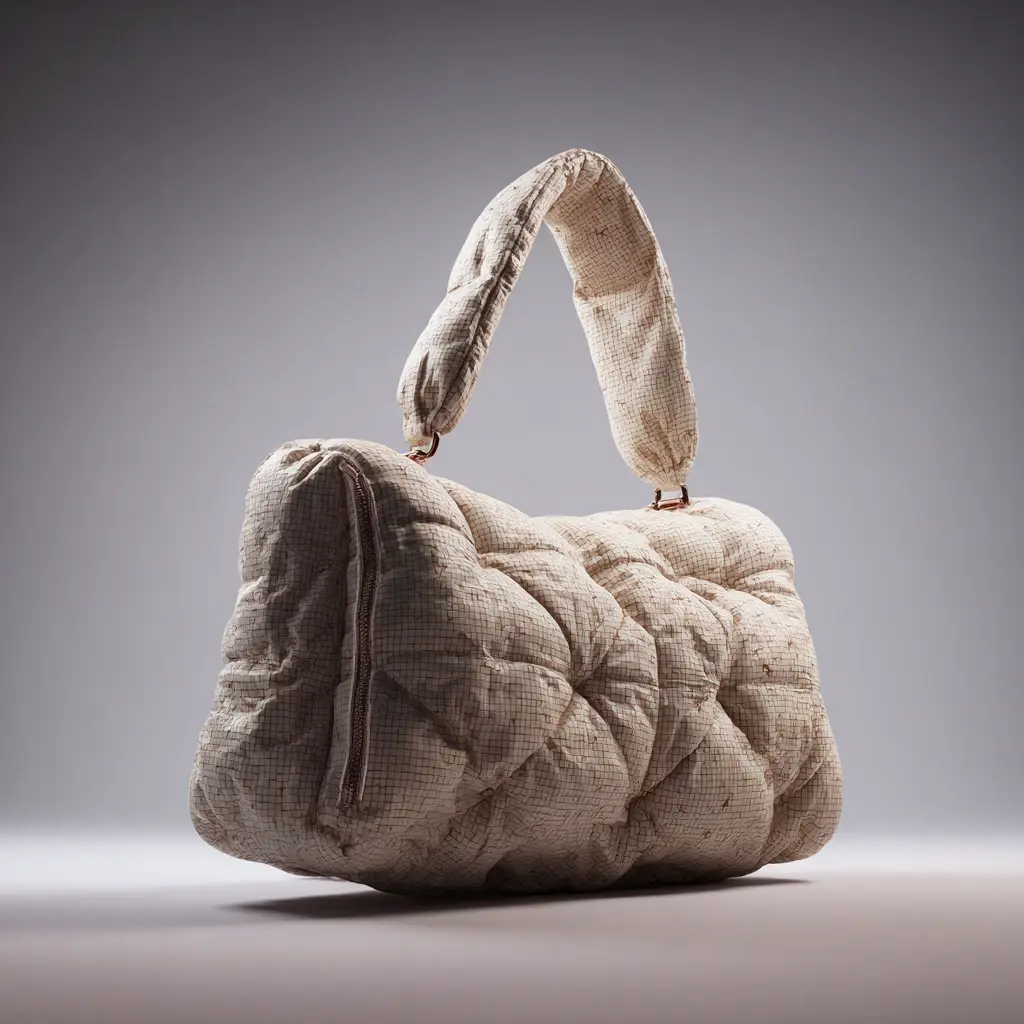
Tier one passes a single test: 500 pieces can be cut next week without ordering a die, a mould or a custom plated part. These five shapes carry most first-season volume through the network, and each has a known yield, a known stitch sequence and a known defect profile before the first unit is made. The sizes below are the working ranges worth specifying in millimetres, because those are the numbers an inspector can check and a customer can feel.
| Shelf shape | Working size | Branding surface | Why it enters fast | Retail band |
|---|---|---|---|---|
| Tote | 34-42 cm wide, 8-12 cm gusset | Centre front panel, 90 x 60 mm | Pattern exists; panel yield 1.4-1.9 sq ft of hide | 49-129 USD |
| Crossbody | 24-28 cm wide, 110-130 cm strap | Zip puller, 60 x 20 mm patch | Slider and 12 mm webbing in stock lots | 39-99 USD |
| Shoulder | 26-34 cm wide, 22-30 cm strap drop | Flap edge, 70 x 25 mm | One reinforcement operation, well known | 59-149 USD |
| Bucket | 20-26 cm base diameter | Drawcord toggle, 45 x 20 mm | No frame; base reinforcement is the only variable | 59-139 USD |
| Day backpack | 30-38 cm tall, 26-32 cm wide | Top flap panel, 80 x 50 mm | Shared with the backpack pattern library | 69-159 USD |
The branding surface column is the one that turns a shelf shape into a branded one. A 90 x 60 mm embossing area on a tote front panel will take a mark at 6-8 mm cap height legibly; below roughly 55 mm of width most marks stop reading, and the shape becomes a plain bag with a hangtag. Where the mark needs more room than the panel offers, the answer is not a bigger bag but a different branding method, and that is a decision worth making on paper before the sample is cut.
Tier Two: One Tool, Still Inside the Window
Tier two is worth the money when the tool is the brand. A shelf shape plus one identifiable part reads as a collection rather than as a resale, and one tool can usually be justified across 500 pieces. Two or more rarely can, because the amortisation has to fall across a single colourway of a single style.
- An embossing or debossing die, 180-420 USD depending on area and depth, cut once and then stored. This is the cheapest permanent identity and the one that survives into the second season.
- A moulded zip puller in zinc alloy, priced by cavity count and plating specification, with 24 hours to first corrosion tested to ASTM B117.
- A magnet closure, typically N35 grade at 18 x 3 mm, which changes the closure sequence on the line and adds one operation per unit.
- A printed or woven label setup, cheap in itself but carrying a lot minimum that has to be absorbed across the run.
Each of these adds 12-15 working days to sampling rather than the 6-10 of a pure shelf shape, and each should be quoted as a separate line so the second order can be quoted without it. The mistake is amortising the tooling silently into the unit price, which makes the repeat look identical to the first run and hides the one cost that should have disappeared.
Tier Three: What to Keep for the Second Season
Three families of shape should be left alone on a first entry, not because they are difficult but because their tooling cost cannot be recovered across 500 pieces of one colourway. They are the right answer at 2,000 pcs and the wrong one at 500.
- Framed or moulded shell constructions, where the frame or shell is itself a tool and the shape cannot exist without it.
- Three-dimensional quilted or padded panels, which need a jig and a slower operation and push the bulk run past 50 days.
- Fully custom hardware suites with a bespoke lock, clasp and chain set, where three tools have to pay for themselves on one style.
The discipline is worth stating as a rule. On a first entry, one tool maximum, and only if it carries the mark. Everything else waits for the sell-through data the first season produces, which is the only evidence that a second tool would ever earn its keep.
What a Tweak Costs in Days, Not Only in Money
| Change | Tooling needed | Added sampling days | Comments |
|---|---|---|---|
| Colourway from the existing card | None | 0 | The cheapest possible differentiation |
| Lining swap, 190T to 210D | None | 0-2 | Stock lots; changes the handfeel, not the calendar |
| Embossed mark on an existing panel | One die | 4-6 | Dies are cut in parallel with sampling |
| Custom zip puller | One mould | 8-12 | Mould, then sample, then plating |
| New panel proportion | New pattern pieces | 5-8 | Re-nests the marker and changes yield |
| Fully new silhouette | Pattern plus tools | 15-25 | Two or three sample rounds before bulk |
Read the third column as the real cost. A 4-6 day addition keeps a launch inside the same month; a 15-25 day addition moves it into the next one, and in a season-driven category that difference is the whole campaign. This is also why the OEM and ODM models compared by programme shape matters before the shortlist is written: the two routes spend their sampling days in different places.
How Fast Entry Is Measured in 2026
Fast is a number, and the number that matters is days from signed brief to goods handed to a forwarder, not the bulk window alone. The 35-50 day bulk run sits inside a longer chain, and the stages either side of it are where fast entries are won or lost.
| Stage | Days | What slips | How to hold it |
|---|---|---|---|
| Brief and shortlist | 1-3 | No target retail price | Send a price ceiling with the brief |
| Material confirmation | 2-4 | Approving colour on a screen | Approve a physical swatch |
| Sampling | 6-10 working days | Late artwork | Send the mark as vector artwork |
| Review and revision | 3-6 | Unnumbered feedback | Number the revision list |
| Deposit, payment and slot | 1-2 | Booking after approval | Pay and book together |
| Bulk | 35-50 | Mid-run changes | Freeze the specification |
| Inspection and handover | 3-6 | No inspection booked | Pencil the date in early |
| Transit | 18-38 by sea | Peak-season bookings | Ship before the autumn rush |
Two habits hold this together. Book the production slot when the deposit is paid rather than when the sample is approved, because slots across 7 production lines tighten before Chinese New Year and again during the autumn shipping rush. And treat the 18-38 days of transit as working time: listing photography, copy and marketplace prep can all be finished while the goods are on the water.
Which Shape Fits Which Sales Channel
| Channel | Best tier-one shape | Pack and prep rule | Why it fits |
|---|---|---|---|
| Marketplace (FBA) | Tote, day backpack | 1.5 mil polybag, FNSKU label, 63.5 cm max carton side | Dimensional weight favours flat shapes |
| Retail chain | Shoulder, tote | Retail barcode, hangtag, 5-ply 32 ECT carton | Hangs and shelves cleanly |
| Own DTC site | Crossbody, bucket | Branded dust bag, 300 x 400 mm mailer | Low return rate, good unboxing |
| Corporate gifting | Tote, day backpack | Individual polybag, debossed mark, carton marks | Takes a mark at volume |
The pack rule column is where fast entries die. A marketplace can refuse a shipment for a missing FNSKU label or an oversized carton regardless of how good the bag is, and re-labelling at destination costs more per piece than the bag ever saved. Where the destination is the United States, the 1.5 mil polybag and the 63.5 cm carton side are not suggestions, they are the receiving condition.
Five Checks Before a Shape Is Signed Off
- State the size in millimetres with a tolerance of plus or minus 3 mm on width, gusset and strap drop. These three measurements decide how the bag wears and how it reviews.
- Fix the construction numbers: 7-9 stitches per inch with a 10 mm seam allowance, Tex 40 thread, and a strap attachment designed for a 15 kg static load held for 30 minutes.
- Fix the hardware: zinc alloy with nickel-free plating at 8-12 microns, and 24 hours to first corrosion tested to ASTM B117.
- Fix the colour: a Pantone TCX reference matched at Delta E 2.0 or better against an approved swatch, under a defined light source.
- Fix the inspection: AQL 2.5 under ISO 2859-1, with the written report issued to the buyer and third-party inspection available.
These five are also the five an inspector reaches for first. Written into the purchase order they convert a disagreement into a measurement, which is the only version of the argument that anyone can win at the inspection table.
What Delays a Fast Entry More Often Than the Bag
In practice the bag is rarely the problem. The delays that move a launch by a month are documentation delays, and all of them are avoidable at brief stage if somebody asks for them early enough.
- Missing compliance dossier. REACH Annex XVII restricts chromium VI, azo dyes, nickel release and phthalates; Proposition 65 applies to hardware and coated trim sold in California; CPSIA applies where a bag is marketed to children.
- Missing audit references. BSCI (amfori) and Sedex / SMETA are the two frameworks a retail buyer asks for, and they are requested late often enough to cost a week.
- Missing artwork. A mark supplied as a screenshot rather than vector artwork adds days to the die and can change the quoted minimum area.
- Missing barcode and carton marks. Cheap to decide at brief stage, expensive to redo at the packing table.
All four can be closed before the deposit is paid, and the full OEM programme document set is ordered the way a retail buyer requests it. Leaving them to the last week is the single most common reason a 35-50 day run finishes on time and still misses the season.
What to Send to Open the Shortlist
One email can open a shortlist of five shapes, and it needs six things. Anything less comes back as a range too wide to plan a launch against.
- The channel and the retail price band, so the shortlist is built to a ceiling rather than to a hope.
- Two or three preferred shapes with sizes, or a reference photograph where the name is uncertain.
- The branding method and position, with the mark supplied as vector artwork.
- Quantity per colourway, remembering that 500 pcs is per style and per colourway.
- The destination and term, FOB Xiamen, CIF or DDP.
- An honest launch date, so the slot quoted is the slot actually needed.
With those six, a shortlist and a price band come back inside a day. From there the sensible next step is not the full run but a 500-piece pilot order run at low risk, which converts a shortlist into sell-through data before the second season is committed. The shapes themselves are catalogued in more detail in the shelf styles you rebrand as a collection.
What the First 500 Pieces Are Made Of
A shelf quotation arrives as a single unit price, and a unit price that cannot be taken apart cannot be improved. Six lines sit inside it, and asking for them separated at brief stage is what makes the second season cheaper. On a 500-piece first run of a tier-one shape the split below is typical before packing is added.
| Line | Share of the unit price | What moves it |
|---|---|---|
| Shell material, PU at 0.9 mm | 38-46 percent | Grade, substance and yield per hide or roll |
| Lining and interlining | 9-14 percent | Gauge, usable width and whether a foam panel is laminated |
| Hardware and trim | 12-20 percent | Stock versus custom, plating thickness |
| Cutting and sewing labour | 18-25 percent | Operation count, which follows the pattern |
| Finishing and packing | 8-12 percent | Edge treatment: painted adds 6-9 minutes per bag |
| Programme coordination | not separately charged | Present in every full-package price |
The second run changes two of the six without touching the others: tooling disappears as a line, and the operation count stops moving once the pattern is known. That is why the repeat should be priced before the first order is signed.
Shortlist five shapes, get one price band
Send the channel, the retail band and two preferred shapes. A private label coordinator will return a shortlist with sampling at 6-10 working days, bulk at 35-50 days and inspection at AQL 2.5 under ISO 2859-1. Programmes have moved through our validated partner factory Quanzhou Yingming Bags since 2014, across 7 production lines and about 200,000 pcs per month. Get a quote.
Frequently Asked Questions
Which ODM shelf styles reach market fastest in 2026?
The five that need no new tooling: a 34-42 cm tote, a 24-28 cm crossbody, a 26-34 cm shoulder bag, a 20-26 cm bucket and a 30-38 cm day backpack. Each can be cut at MOQ 500 pcs per style and colourway inside the standard 6-10 working days of sampling window, and each moves into bulk inside the 35-50 day run without waiting for a die or a mould.
Why does a shelf style launch faster than a fully custom shape?
Because the pattern, the marker, the operation sequence and the material lots already exist and have been costed before. A new silhouette needs pattern pieces cut and re-nested, a sample round or two, and often a tool, which adds 15-25 days of sampling before the bulk window can even open.
How many tools can a first 500-piece run justify?
One, and only if that tool carries the brand mark. A single embossing die of 180-420 USD amortises across 500 pieces at a cost that disappears on the repeat order, while a bespoke lock, clasp and chain set needs three tools to pay for themselves on one style and rarely does.
What does an embossing die cost and who keeps it?
Between 180 and 420 USD depending on area and depth, cut once and stored. The buyer should own it, and it should be stated in writing before the deposit moves that the die is stored and never run for another brand. Retained tooling is what makes the second order cheaper and faster.
How long does a fast ODM entry take from brief to goods?
Plan 55-80 days from signed brief to goods handed to the forwarder, then transit of 18-28 days to the United States West Coast or 30-38 days to Northern Europe. Sampling is 6-10 working days, review 3-6 days, the bulk run 35-50 days, and inspection and handover 3-6 days.
What sizes should be written into the specification?
Width, gusset depth and strap drop, in millimetres, with a tolerance of plus or minus 3 mm. For a tote that is 34-42 cm wide with an 8-12 cm gusset; for a crossbody, 24-28 cm wide with a 110-130 cm strap. These are the three measurements that decide how the bag wears and how it is reviewed.
Which construction numbers should an inspector check first?
Stitch density at 7-9 stitches per inch with a 10 mm seam allowance and Tex 40 thread, then the strap attachment under a 15 kg static load held for 30 minutes. Those two are what fail first in the field and what a pre-shipment inspection at AQL 2.5 under ISO 2859-1 will count.
What hardware specification is worth fixing before sampling?
Zinc alloy with nickel-free plating at 8-12 microns, tested to 24 hours to first corrosion under ASTM B117. Nickel release also falls under REACH Annex XVII, and Proposition 65 applies to hardware and coated trim sold in California, so the plating specification is a compliance document as much as a design one.
Which pack rules delay a marketplace launch most often?
A missing FNSKU label, a polybag below 1.5 mil, and a carton side above 63.5 cm. Any of the three can hold a receiving appointment, and fixing them at destination costs more per piece than the receiving condition costs to meet at origin.
Which compliance documents should be requested at brief stage?
Material test reports against REACH Annex XVII substances, a Proposition 65 review of hardware and coated trim, CPSIA documentation where a bag is marketed to children, BSCI or Sedex / SMETA audit references, and Leather Working Group tannery traceability where hides are sourced that way.
Can a shelf style be tested before committing to a full run?
Yes, and it should be. A pilot at 300-500 pieces across two shapes converts a shortlist into sell-through data, and the shapes that earn a repeat are the ones worth a second colourway. The cost of the pilot is the cost of the information, and it is cheaper than a warehouse of the wrong shape.
What is the smallest branding panel that still carries a mark?
About 55 mm of width for a mark at 6-8 mm cap height. Below that the mark stops reading at a distance and the shape becomes a plain bag with a hangtag, which is worth knowing before a shape is chosen rather than after the sample arrives.
People Also Ask
Is a shelf style really faster than a custom shape?
For the first entry, almost always. The pattern and the lots already exist, so the calendar loses 15-25 days of sampling and the quotation loses the one-off tooling line that a new shape always carries.
How many shapes should the first shortlist hold?
Five candidates narrows to two or three for sampling. Sampling more than three shapes at 500 pcs each spends the season's budget on samples rather than on the inventory that will actually sell.
Does a colourway change the lead time?
A colourway from the existing card adds nothing, because it is a different dye lot within a run that was going to happen anyway. A custom colour outside the card adds a dye-lot minimum and 4-8 days while the swatch is matched.
What should be sent before the shortlist is drawn up?
The channel, the retail price band, two preferred shapes, the branding method, quantity per colourway, destination and term, and an honest launch date. Six items, and the shortlist that comes back can be planned against.
Sources and further reading
Every figure on this page is either our own programme data or attributed below. Open the originals before you write them into a specification.
- REACH — chemical substances regulationEuropean Commission Annex XVII restricts the substances that may appear in finished leather and coatings.
- FashionUnited — fashion industry news and dataFashionUnited Industry news and company data for the fashion sector.
- Proposition 65 list of chemicalsOEHHA The official list that decides whether a California warning is required.