ODM Handbag Colorways: Plan Seasonal Variants Without New Tooling
How do you plan seasonal handbag colourways without paying for new tooling? Change the six parts that need no tool: the lining, the thread, the zipper tape, the webbing, the edge paint and the hardware finish, and keep the shape, the pattern and the dies untouched. Six levers and 4-6 stock shades produce a range that looks seasonal and costs nothing to develop, while a seventh — a new embossing plate or a new mould — is what turns a colourway into a project. Every colourway is still its own dye lot at MOQ 500 pcs per style / colourway, and that is the rule the whole plan is built around.
- The Five Questions in Order
- Question One: Is It a Colour or a New Tool
- Question Two: Is the Shade a Stock Shade
- Question Three: Which Parts Change With It
- Question Four: Can It Be Held to a Standard
- Question Five: Does It Fit the 500-Piece Rule
- Six Colourways Planned on One Shelf Tote
- The Colour Calendar for a Season
- What a Seventh Colourway Actually Costs
- Matching One Shade Across Five Different Substrates
- SKU, Barcode and Naming Discipline for a Colourway
- The Carry or Retire Rule for a Colourway
How do you plan seasonal handbag colourways without paying for new tooling? Change the six parts that need no tool: the lining, the thread, the zipper tape, the webbing, the edge paint and the hardware finish, and keep the shape, the pattern and the dies untouched. Six levers and 4-6 stock shades produce a range that looks seasonal and costs nothing to develop, while a seventh — a new embossing plate or a new mould — is what turns a colourway into a project. Every colourway is still its own dye lot at MOQ 500 pcs per style / colourway, and that is the rule the whole plan is built around.
The colourway constants
The Five Questions in Order
A Hamburg mail-order brand wanted twelve colourways of a shelf tote. Twelve colourways at 500 pcs each is 6,000 pieces and a container-and-a-half of one shape, and the brand's actual weekly rate would have taken two years to sell it. The five questions below cut the plan to six colourways and 3,000 pieces, and the six sold better than the twelve would have.
| Question | What a yes means | What a no means |
|---|---|---|
| 1. Is it a colour or a new tool? | Proceed to question two | It is a development project, not a colourway |
| 2. Is the shade a stock shade? | No dye lot, no lab dip, no delay | Add 7-10 working days for a dyed-to-match dip |
| 3. Do the parts change with it? | Six trim items to re-specify | A body colour alone looks cheap |
| 4. Can it be held to a standard? | Delta E 2.0, a shade band, one lot per order | The second shipment will not match the first |
| 5. Does it fit the 500-piece rule? | Order it | It is a second colourway of a second buy |
The order matters because the first question can end the conversation cheaply and the last one can only be answered after the others. A colourway that needs a new tool is a different budget entirely, and a colourway that cannot be held to a standard will cost more in the second shipment than it saved in the first.
Question One: Is It a Colour or a New Tool
Most colourway ideas arrive with a hidden tool attached. Six changes are free and three are not, and the three expensive ones are the ones that make a range look designed.
- Free: the lining. 190T or 210D polyester in six to eight stock colours, chosen against the body shade.
- Free: the thread. Tex 40 bonded nylon in forty or more shades, matched or deliberately contrasted.
- Free: the zipper tape. A #5 chain in a stock tape colour, with a matching or contrasting slider finish.
- Free: the webbing. 25 mm or 38 mm webbing in stock colours for the strap and the handle.
- Free: the edge paint. A coloured edge on a leather panel, in stock shades, three coats at 0.3-0.5 mm.
- Free: the hardware finish. Light gold, gunmetal, brushed nickel or antique brass on the existing tool.
- Paid: a new embossing plate at 180-450 dollars, needed only if the branding changes with the colourway.
- Paid: a new mould at 1,200-3,500 dollars, needed if the colourway demands a new closure shape.
- Paid: a new cutting die, needed if the colourway comes with a different panel layout.
The discipline is to keep the paid column empty. A range of six colourways that all use the same embossing plate, the same mould and the same knife is six colourways and one tool set, and that is the entire economics of the approach.
Question Two: Is the Shade a Stock Shade
A shelf range carries 4-6 stock shades per style, and they exist because they are dyed in rotation. A shade outside that set has to be dyed to match, which is where a colourway stops being free in calendar terms.
| Item | Stock shade | Dyed to match |
|---|---|---|
| Availability | In rotation, 4-6 per style | New dye lot each time |
| Lab dip | Not required | 7-10 working days |
| Minimum | Included in the 500 pcs MOQ | The dye lot minimum, usually well above 500 pcs |
| Repeat accuracy | High, from the standard card | Re-dip for every order |
| Calendar effect | None | 7-10 working days plus approval |
The rule that follows: spend the stock shades on the volume and reserve the dyed-to-match shade for the one colourway a season that earns it. A brand that dyes every shade to match has turned a shelf programme back into a custom one, and it will pay for that twice, in the 7-10 working days and in the lot minimum.
Question Three: Which Parts Change With It
A colourway is not a body colour. It is the whole combination, and the visible difference between a considered range and a recoloured one is how many trim items were re-specified with it.
- Body and external panels. The main shade, from the stock set, at the stated thickness for the grade.
- Lining. Matched or deliberately contrasted, in a 190T or 210D article with a rub fastness of four or better.
- Thread. Tex 40, matched to the body or taken to a contrast on a neutral shade.
- Zipper tape and slider. Matched to the body or to the trim, with the slider finish following the hardware.
- Webbing. Matched to the body for a quiet range, or to a contrast for a sportier one.
- Edge paint and hardware. Matched to the body, or used as the accent that makes the colourway read as intentional.
The easiest mistake is a body colour with stock-neutral trim underneath it. A tan tote with a black lining, black thread, a black tape and black edge paint reads as a tan bag someone did not finish; the same tote with a tobacco lining, a matching thread and a bronze edge reads as a designed colourway.
Question Four: Can It Be Held to a Standard
A colourway that cannot be repeated is not a colourway, it is an accident. Four controls hold it, and all four are cheap compared with a second shipment that does not match the first.
- One reference per shade. A Pantone TCX reference, approved as a physical swatch card rather than on a screen.
- One tolerance. Delta E 2.0 or better under a D65 light source, measured against the approved card.
- One metamerism check. View the card under D65, TL84 and CWF store lighting, because a panel that matches in the sample room can flip under shop lighting.
- One lot per order. A single dye or coating lot per purchase order, recorded as the article number on the approved component list.
Fastness belongs in the same file. Rub fastness under ISO 11640 at 500 dry and 250 wet rubs judged at four or better on the AATCC grey scale, light fastness under ISO 105-B02 at four or better on the blue wool scale for anything displayed in a window, and perspiration fastness under ISO 105-E04 where a bag is carried against the body.
Question Five: Does It Fit the 500-Piece Rule
MOQ is 500 pcs per style / colourway, and the rule applies to colourways more strictly than to anything else, because a colourway is a dye lot. The arithmetic of a season is therefore a multiplication, and it is the number that ends most colourway plans.
| Plan | Colourways | Pieces | Container load |
|---|---|---|---|
| One style, one colourway | 1 | 500 | Part load, 1.35 dollars per piece freight |
| One style, three colourways | 3 | 1,500 | Half a 40-foot container |
| One style, six colourways | 6 | 3,000 | A full 40-foot container at 0.85 per piece |
| Two styles, three colourways each | 6 | 3,000 | A full 40-foot container at 0.85 per piece |
The third and fourth rows are the interesting ones: they cost the same in pieces and in freight, and they are genuinely different bets. Six colourways of one shape is a deep bet on a silhouette; three colourways of two shapes is a wider bet on a range. A brand with no data should take the second.
Six Colourways Planned on One Shelf Tote
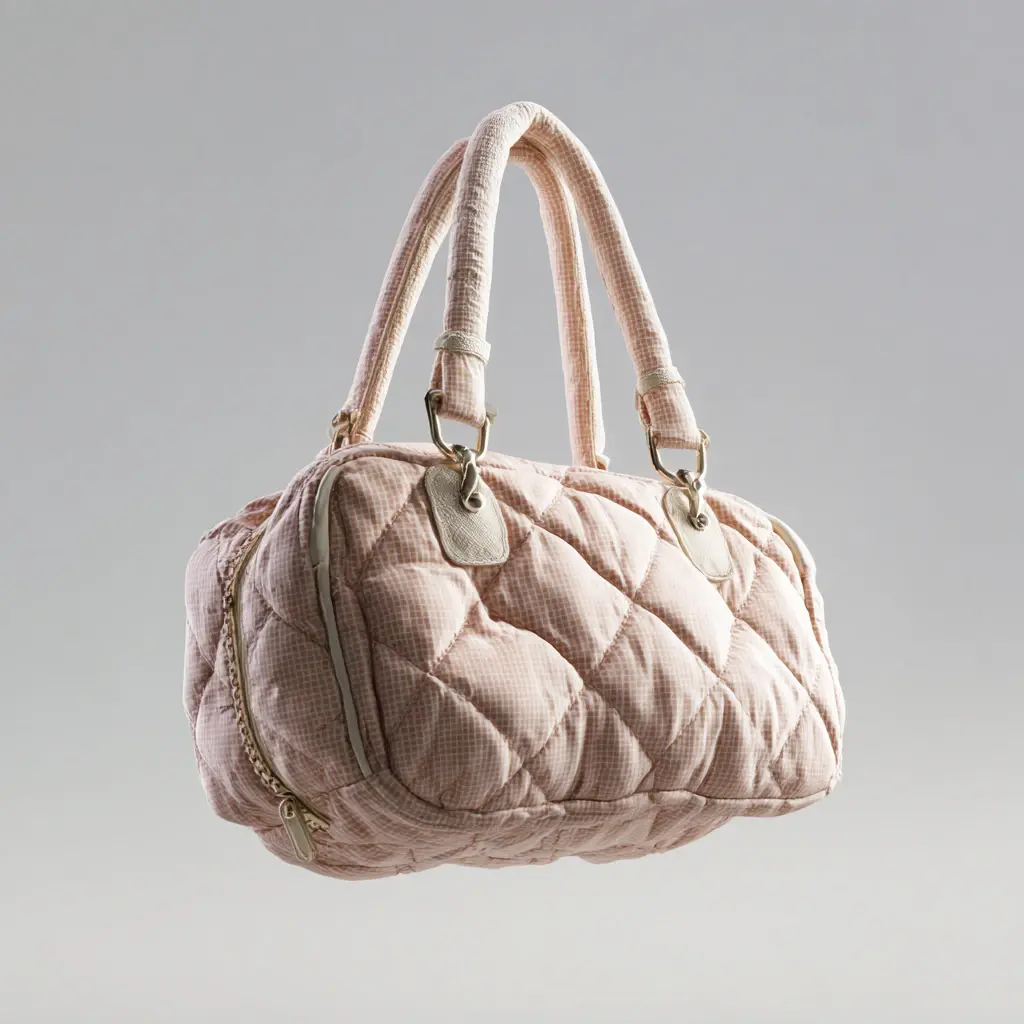
Below is a six-colourway plan for a shelf tote of 34-42 cm width with an 8-12 cm gusset, built entirely from stock shades and stock trim.
| Colourway | Body and trim | Role in the range |
|---|---|---|
| Black on black | Black body, black lining, black thread, gunmetal finish | Core: ordered every season |
| Tan with bronze | Tan body, tobacco lining, matched thread, light gold finish | Core: ordered every season |
| Navy with nickel | Navy body, grey lining, matched thread, brushed nickel | Core: ordered every season |
| Olive with antique brass | Olive body, olive lining, contrast thread, antique brass | Autumn seasonal: one order |
| Cream with tan | Cream body, tan lining, tan thread, light gold, tan edge paint | Spring seasonal: one order |
| Oxblood with bronze | Oxblood body, black lining, black thread, antique brass | Trend: one order, no reorder |
Three cores carry the volume and three seasonals carry the interest. The cores are reordered in every season and the seasonals are not, which is the pattern that keeps a range looking new without leaving 500 pieces of a trend shade in the warehouse.
The Colour Calendar for a Season
A colourway plan is a calendar as much as a colour card, and the two seasonal slots have to be booked before the rush.
- Ten to twelve weeks before the season. Approve the three core shade cards from the stock set and lock them for the year.
- Eight to ten weeks before. Approve the two seasonal combinations, with the trim and the edge colour named.
- Six weeks before. Confirm the physical swatch cards at Delta E 2.0, since screen approval is the most common source of a mismatch.
- Five weeks before. Place the order, because sampling at 6-10 working days plus production 35-50 days of transit is the minimum for a new seasonal shade.
- At arrival. Photograph the six colourways together, because a range shot sells the range and a single shot sells one bag.
Two of those steps are faster on a shelf programme than anywhere else: the shade cards already exist, and the trim combinations can be approved from stock cards rather than from a lab dip. Inspection stays at AQL 2.5 under ISO 2859-1, and the approved component list records each combination so that the second buy matches the first.
Programmes have been produced through our validated partner factory Quanzhou Yingming Bags since 2014 across 7 production lines and about 200,000 pcs per month. The shelf styles that rebrand cleanly show which patterns carry 4-6 stock shades, the fast-entry shelf styles for 2026 narrow the shortlist, and the low-risk pilot order is the way to test a colourway before 500 pieces of it.
What a Seventh Colourway Actually Costs
Six colourways is a plan and seven is a project, and the difference shows on the cash sheet before it shows on the colour card. At 500 pcs per style and colourway and a unit price of 21.40 USD, each colourway commits 10,700 USD of inventory, of which 3,210 USD leaves at deposit. A seventh shade does not simply add 500 pieces to a programme; it adds a dye lot, a cutting set, an inspection lot, a SKU and a photography slot.
| Colourways | Pieces | Dye lots | Inspection lots | Inventory committed |
|---|---|---|---|---|
| 1 | 500 | 1 | 1 | 10,700 USD |
| 3 | 1,500 | 3 | 3 | 32,100 USD |
| 6 | 3,000 | 6 | 6 | 64,200 USD |
| 7 | 3,500 | 7 | 7 | 74,900 USD |
Matching One Shade Across Five Different Substrates
A colourway is approved on the body and then manufactured across five materials at once, and the five do not take colour the same way. A full-grain hide, a 210D polyester lining, a number five zipper tape, 25 mm webbing and a plated zinc-alloy part reach their colour by five different routes, so a match that holds on the panel can sit a full Delta E unit away on the tape. Approve component by component rather than approving the assembly.
- Set the reference per component. One Pantone TCX reference for the body, plus a matched reference for lining, tape, webbing and edge paint.
- Judge under three sources. D65 for daylight, TL84 for European store lighting, CWF for North American retail.
- Band each component separately. Delta E 2.0 on the body; 2.5 is realistic on a textured webbing where the reading shifts across the weave.
- Metal is not dyed. A hardware finish is approved as a physical plated sample, not against a Pantone reference.
SKU, Barcode and Naming Discipline for a Colourway
A colourway that is not named consistently produces three problems in three departments: the warehouse picks the wrong unit, the listing carries the wrong photograph, and the reorder asks for the wrong dye lot. One convention fixes all three, and it takes an afternoon to set up. The code travels with the style; the marketing name does not, because the name changes by season.
- Structure the SKU. Style code, then colourway code, then season, so a tan core on the fourth tote reads HBT-04-TBC-26SS.
- Freeze the colourway code. A code retired from a range is never reused, because the warehouse will pick the old unit against the new record.
- One barcode per colourway. EAN-13 for retail or the marketplace format used at the destination, allocated before packing artwork is printed.
- Record the reference against the code. Pantone TCX number, dye-lot number and approval date, stored with the approved component list.
The Carry or Retire Rule for a Colourway
Cores and seasonals are decided at planning and confirmed with data, and the same three numbers settle both. A shade carries when it clears full-price sell-through of about 55 per cent across the season, returns below the category norm, and can be rerun without a new dye-lot search. It is refreshed rather than retired when it clears the first two but its material has left the stock rotation.
- Carry where sell-through clears 55 per cent at full price and the shade is still in the stock set.
- Refresh where the pattern works and the shade does not: a new stock colourway on the same tool set costs no tooling.
- Retire where sell-through depends on permanent promotion, or where a rerun needs a new dye lot at a higher minimum.
- Never promote a slow shade into a core slot. Cores are ordered every season; a slow shade reordered twice a year is dead stock with a schedule.
Plan the season on one tool set
Send the shape and the season with a target retail price. A private label coordinator will return a colourway plan: three cores and three seasonals from stock shades, each with its trim combination, at MOQ 500 pcs per style / colourway, bulk 35-50 days and inspection AQL 2.5. Get a quote.
Frequently Asked Questions
How can handbag colourways be changed without new tooling?
By changing the six parts that need no tool: the lining, the thread, the zipper tape, the webbing, the edge paint and the hardware finish. The shape, the pattern, the embossing plate, the cutting knife and the closure mould all stay untouched, so the development cost of a new colourway is zero.
Which colourway changes require new tooling?
A new embossing plate at 180-450 dollars if the branding changes, a new zamak mould at 1,200-3,500 dollars if the colourway needs a different closure, and a new cutting knife if the panel layout changes. Those three turn a colourway into a development project.
How many stock shades does a shelf style carry?
Four to six per style, dyed in rotation. A shade outside that set has to be dyed to match, which adds 7-10 working days for a lab dip and a dye lot minimum usually well above the 500 pcs MOQ.
How is a handbag colour held to a standard?
With one Pantone TCX reference per shade, approved on a physical swatch card, at Delta E 2.0 or better under a D65 light source, with one dye or coating lot per purchase order. A metamerism check under TL84 and CWF store lighting catches the mismatch that a sample room hides.
What is a shade band card?
A card holding three approved references, light, mid and dark, with a tolerance band of about 1.0 Delta E around each. It lets an inspector judge a shipment against the lightest and darkest acceptable versions rather than against one point.
Why does the MOQ apply to each colourway separately?
Because each colourway is a separate dye or coating lot with a minimum of its own. A dye lot costs the same whether 100 or 500 pieces are cut from it, which is why six colourways of one shape is 3,000 pieces rather than 500 split six ways.
How many colourways should a season carry?
Six on one shape works: three cores ordered every season and three seasonals ordered once. Adding more multiplies the pieces by 500 each time and multiplies the number of colourways that have to be photographed and merchandised before any of them has sold.
What fastness tests apply to a new colourway?
Rub fastness under ISO 11640 at 500 dry and 250 wet rubs, judged at four or better on the AATCC grey scale; light fastness under ISO 105-B02 at four or better on the blue wool scale for window displays; and perspiration fastness under ISO 105-E04 for a bag carried against the body.
Is six colourways of one shape better than three of two shapes?
They cost the same in pieces and in freight, at 3,000 pieces and a full 40-foot container. They are different bets: the first is a deep bet on a silhouette, the second a wider bet on a range, and a brand with no sell-through data should take the second.
How long does a new seasonal colourway take?
Place the order about five weeks before the goods are needed on the shelf, because sampling is 6-10 working days, bulk is 35-50 days and transit is 18-38 days. A stock shade is the fastest route, since it removes the 7-10 working day lab dip entirely.
How do you avoid dead trend stock at the end of a season?
Label the trend colourway as a single order with no reorder before it is placed. Three cores are reordered in every season and three seasonals are not, and the discipline is to decide which is which at the planning stage rather than in week thirty.
Can a colourway be approved from a photograph?
No. Colour cannot be approved from a screen, and screens differ from each other as much as lots do. A physical swatch card under a defined light source is the minimum, and it is also the reference that an inspector will hold later.
People Also Ask
Is a contrasting lining worth specifying?
Yes, when it is deliberate. A cream body with a tan lining and tan thread reads as a designed colourway, while the same body with a black lining and black thread reads as unfinished.
Should the hardware finish change with the colourway?
Usually. Light gold with tan, gunmetal with black and brushed nickel with navy are three combinations that cost nothing and do most of the visual work of a colourway.
What is the cheapest way to test a colourway?
Order it as a seasonal in one order of 500 pieces and treat a second order as the verdict. A colourway that is reordered has earned a core slot; one that is not has told the brand something for the price of one lot.
Does a mixed-colourway container complicate inspection?
Slightly, since each colourway should be drawn in proportion to its share of the lot. State the share on the packing list and the inspector can hold the AQL 2.5 sample across the colourways rather than within one.
Sources and further reading
Every figure on this page is either our own programme data or attributed below. Open the originals before you write them into a specification.
- Accessories Council — accessories industry bodyAccessories Council Accessories industry body tracking handbag category direction.
- SATRA — technical services for leather, footwear and accessoriesSATRA Independent leather, hardware and accessories testing protocols.
- FashionUnited — fashion industry news and dataFashionUnited Industry news and company data for the fashion sector.