How to Start a Custom Handbag Line on a Limited Budget
How do you start a custom handbag line on a limited budget? Spend the money on material quality and one branded detail, and take the savings out of silhouette complexity, colourway count and tooling. Three shapes work: 500 pcs of one style in PU with an embossed mark; 500 pcs of one style in top-grain leather with one cast part; or 1,000 pcs across two styles sharing one set of tooling. A limited budget is not a reason to buy less quality; it is a reason to buy fewer variables, because every colourway, every cast part and every extra panel costs money twice, once in tooling and once in inventory. Below: the three shapes compared, where to spend, where not to, and the five costs that surprise first-time founders.
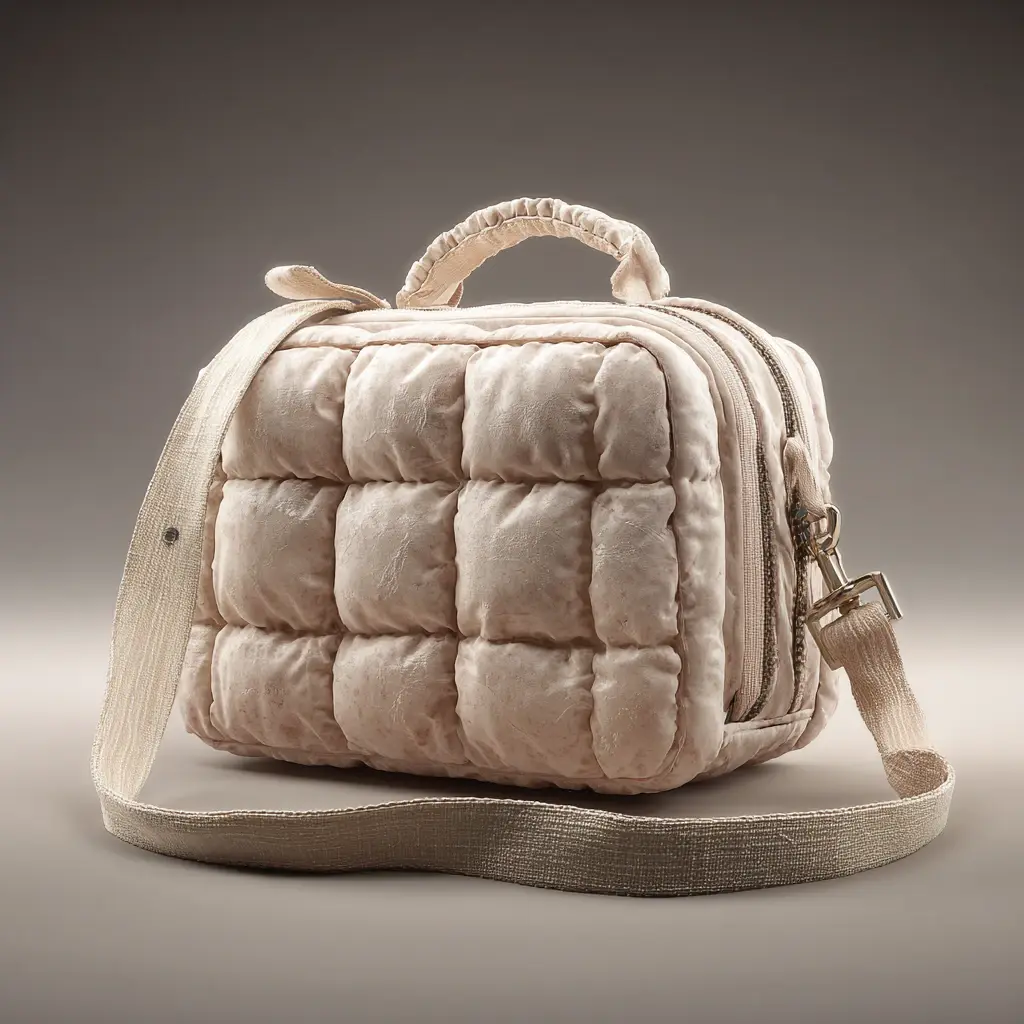
- Three Budget Shapes Compared
- Shape One: One Style, One Colour, PU
- Shape Two: Top-Grain With One Cast Part
- Shape Three: Two Styles Sharing Tooling
- Where Not to Spend
- Where to Spend
- Five Costs That Surprise Founders
- Phasing: Spend in Two Orders
- What a Limited Budget Still Buys
- The Brief That Gets a Usable Quote
- The Cash Curve: When the Money Actually Leaves
- Unit Cost Bands by Material at 500 Pcs
- The Eight-Week Read Before Order Two
- Cutting SKU Count Without Cutting the Range
How do you start a custom handbag line on a limited budget? Spend the money on material quality and one branded detail, and take the savings out of silhouette complexity, colourway count and tooling. Three shapes work: 500 pcs of one style in PU with an embossed mark; 500 pcs of one style in top-grain leather with one cast part; or 1,000 pcs across two styles sharing one set of tooling. A limited budget is not a reason to buy less quality; it is a reason to buy fewer variables, because every colourway, every cast part and every extra panel costs money twice, once in tooling and once in inventory. Below: the three shapes compared, where to spend, where not to, and the five costs that surprise first-time founders.
Budget parameters
Three Budget Shapes Compared
Most first-time founders assume a limited budget means a small order. It usually means the opposite: the fixed costs of material lots, trimming lots, the plating bath and the line changeover are the same at 300 as at 500, so a small order is the most expensive way to buy. What a limited budget should change is the number of variables, not the quantity.
| Shape | Specification | Cash profile | Best for |
|---|---|---|---|
| Lean | 1 style, 1 colourway, PU, embossed mark | Lowest total; one dye lot; one die | Testing a brand at a price-led channel |
| Balanced | 1 style, 1 colourway, top-grain, one cast part | Mid; one dye lot; die plus one mould | A brand whose story is material |
| Shared-tooling | 2 styles, 1 colourway, 1,000 pcs, shared tooling | Higher total, lower per unit | A line rather than a single product |
Read the cash profile column rather than the unit price. The lean shape has the lowest total commitment and the fastest route to a sell-through test; the balanced shape costs more per unit but buys the material story that justifies a higher retail price; the shared-tooling shape costs most in total but is the cheapest per unit and the only one that gives you a genuine line.
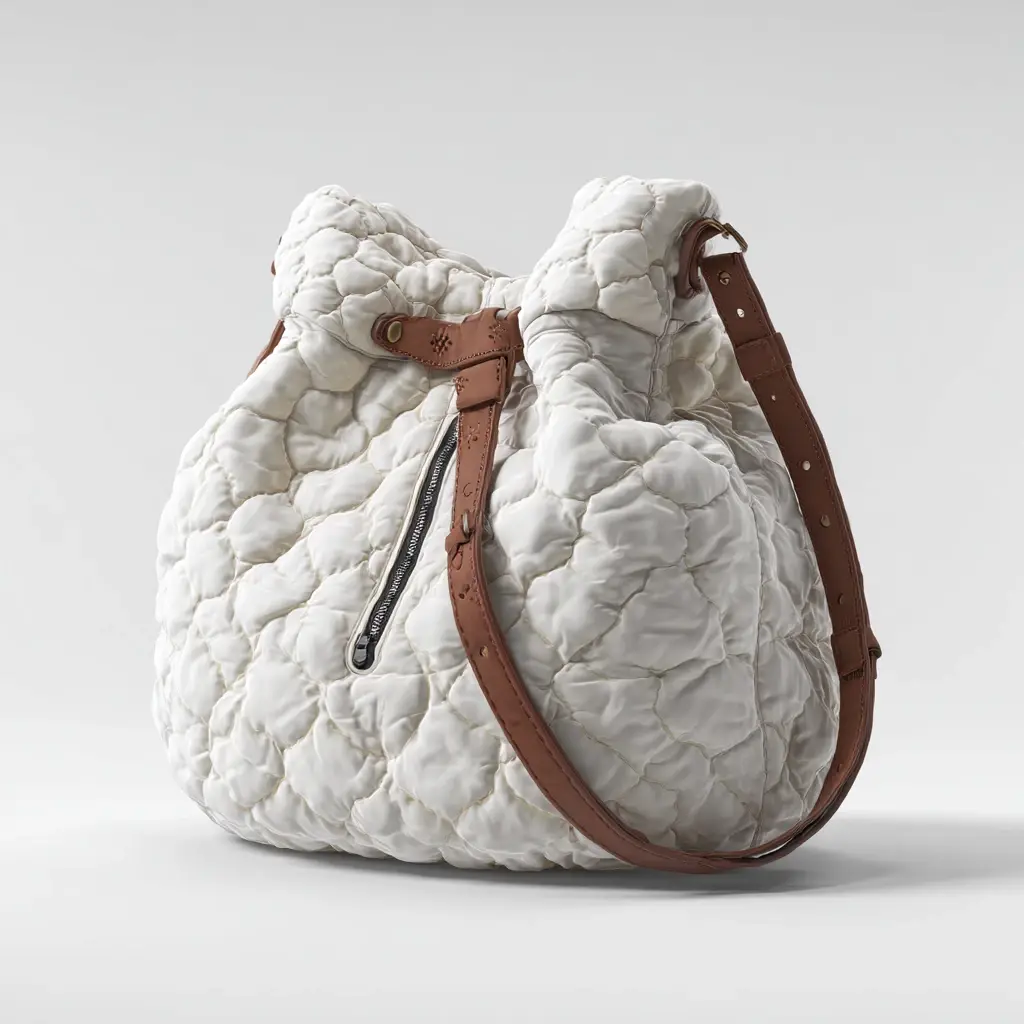
Shape One: One Style, One Colour, PU
The leanest viable programme is 500 pcs of one style in one colourway, in PU at 0.6-1.0 mm, with an embossed mark. PU is consistent, waterproof and the most forgiving material for a first specification, and because there is no hide variation, colour matching across 500 pieces is straightforward. One embossing die is the only tooling, and it adds cents rather than dollars per unit.
- One silhouette from the simple end: a tote, crossbody or bucket at 6-10 working days of sampling.
- One colourway, so one dye or coating lot and one trimming setup.
- One embossing die, which is the cheapest permanent brand mark available.
- Stock hardware in a matching finish, so no mould cost at all.
What the lean shape gives up is the patina and the hand-feel of leather, and whether that matters depends entirely on the price band. Below a retail price that supports a leather landed cost, PU is not a compromise, it is the correct specification: it is more consistent than leather, it is waterproof, and it carries an embossed mark just as cleanly. Above that price, customers expect leather and will say so in reviews, which is where the balanced shape becomes the right call.
Shape Two: Top-Grain With One Cast Part
Where the brand story is material, spend on the hide and take the saving elsewhere. Top-grain leather at 1.0-1.4 mm is uniform enough to colour-match across 500 pieces, which full-grain is not, and it reads as leather in a photograph and in the hand. The single indulgence is one cast part — usually a zip puller — because that is the element a customer touches.
The arithmetic is worth doing before committing. A cast puller mould is roughly US$800-3,000, which at 500 pcs is US$1.60-6.00 per unit. If that number breaks the budget, use an embossed leather patch instead: a die at roughly US$80-200 adds US$0.16-0.40 per unit and still puts a mark where a customer will see it.
Shape Three: Two Styles Sharing Tooling
The third shape is the counter-intuitive one: spend more in total and less per unit. Two silhouettes in one colourway at 1,000 pcs share one material buy, one embossing die, one labelling setup and one production window. The tooling is amortised across twice the units, the hide or roll nests better across two patterns, and you end up with a line rather than a single product.
- Choose two silhouettes that share components: the same strap construction, the same lining, the same hardware family.
- Keep one colourway across both, so the material buy is one lot.
- One inspection, one container, one customs entry, which is real money on a small programme.
- Four SKUs from one development, which is what makes the range photograph as a collection.
The third shape also solves a problem founders do not anticipate: a single product is hard to market as a brand. Two silhouettes that photograph together, share a lining colour and carry the same mark read as a collection, and a collection supports a higher average order value than a single item. The cost of that is one more pattern and one more sample, which is a small price against the selling advantage.
Where Not to Spend
Four lines consume budget without returning anything a customer perceives, and each is the kind of spend that looks like quality on a specification sheet and reads as nothing on a shelf. Cutting them is the fastest way to fund something that does show.
- A second or third colourway. Three dye lots, three trimming setups and three forecasting risks on the same money.
- Cast hardware on every part. One branded element is noticed; four are not noticed four times as much.
- A structured satchel as a first project. Interlining, stiffener, feet and a closure add operations at 15-25% of unit cost.
- Elaborate packaging. Packaging is 3-8% of unit cost, and the artwork setup and printing plates are fixed charges.
Where to Spend
Three lines repay spending, and all three are visible to a customer. Material is 40-55% of unit cost and is what a shopper sees first and touches longest. Edge finish is the second: a clean turned edge or a well-applied edge paint is the detail that separates a bag that looks made from one that looks assembled. The third is the one branded detail, because it is what makes the product yours.
Lining is the fourth candidate and the one most often cut to nothing. A 210D polyester lining in a colour matched to the shell costs little and is the detail reviewers mention most, because it is the part of the bag the owner sees every time they open it. A lining in a generic grey against a coloured shell is the shortcut a customer notices without being able to name.
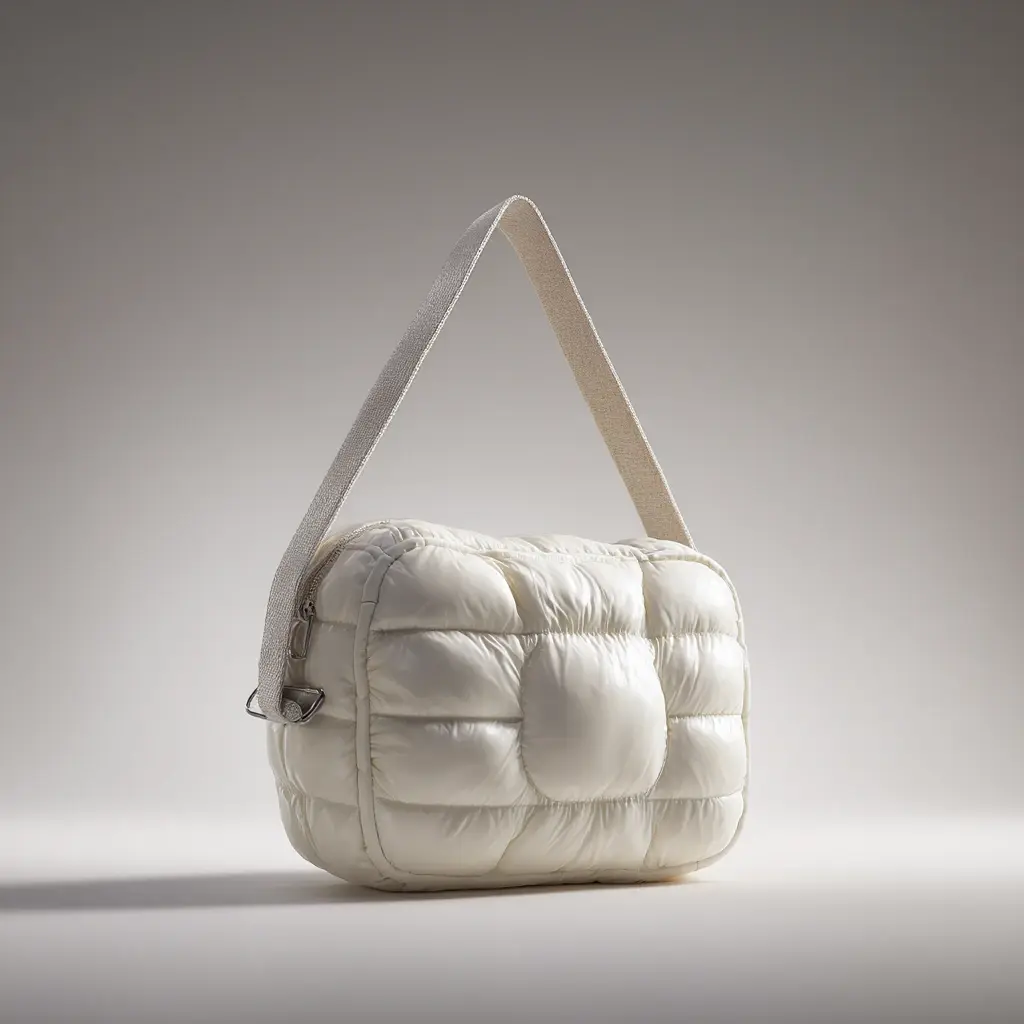
Five Costs That Surprise Founders
None of these appear in a first budget, and all of them are real. Knowing them in advance is most of the difference between a programme that finishes and one that stalls halfway.
- Tooling, shown or not shown. Ask for the tooling line separately, because a die and a mould are different sized numbers.
- Sample rounds beyond the first. The first is often credited; the second and third usually are not.
- Packaging artwork setup and printing plates, which are fixed charges regardless of quantity.
- Freight and duty under FOB Xiamen, which are yours and are quoted inside the price only under DDP.
- Compliance testing against REACH Annex XVII, Proposition 65 or CPSIA, which is per material and per market.
Phasing: Spend in Two Orders
The most effective budget strategy is not to spend less but to spend twice, in a deliberate order. Order one proves the silhouette, the price point and the demand at the minimum, with one colourway and stock or minimal hardware. Order two, placed once the sell-through data exists, adds the colourway, the cast hardware and the volume — and carries no development cost, because the pattern, material and tooling already exist.
- Order one. 500 pcs, one style, one colourway, the simplest silhouette that carries the brand.
- Prove it. Eight to twelve weeks of sell-through data is enough to know whether the style works.
- Order two. Add a colourway or a second silhouette, and introduce the cast part when the volume can amortise it.
- Reuse everything. The pattern, dye-lot reference, tooling and packaging artwork are already on file.
Phasing also protects against the failure mode that actually kills first lines, which is not a bad bag but a bag that arrives late and unmeasured. Order one, placed early enough to allow 55-80 days before transit, gives room for one revision round without risking a launch date. Order two, placed against real data, has none of that risk because the specification is frozen and the calendar is shorter.
What a Limited Budget Still Buys
More than founders expect. At 500 pcs per style / colourway the full branding package is available — embossing or debossing, a woven interior label, embroidery on canvas, printed packaging with your artwork — and the inspection standard is the same one a large programme uses: AQL 2.5 under ISO 2859-1, with third-party inspection by SGS available. What quantity buys is a lower unit price, not a better process, and that distinction is worth holding onto when a quotation for 500 pcs looks discouraging against a published figure for 5,000.
One more thing a limited budget does not change: the compliance requirements. A 500-piece import into the EU still needs material test reports against REACH Annex XVII, a California sale still needs a Proposition 65 position on hardware and coatings, and a bag marketed to children still falls under CPSIA. These are per material and per market rather than per unit, so they are proportionally more expensive on a small run, which is one more argument for concentrating colourways and materials.
The Brief That Gets a Usable Quote
On a limited budget the brief matters more, because you cannot afford a requotation cycle. Send the silhouettes and quantities per colourway, material direction, the target retail price, reference photographs or a tech pack with dimensions and strap drop, branding method and position, packaging requirement, destination market, preferred trade term and an honest launch date. State the budget ceiling if you have one: a specification engineered to a number is a faster route to a usable price than a specification quoted blind, and on a limited budget a requotation cycle is a cost you cannot afford to pay twice. The custom handbag programme sets the full sequence, the lines are broken down in the custom cost breakdown, the minimum question is answered in does custom need a higher MOQ, and the custom versus private label comparison shows where development cost is worth paying at all.
The Cash Curve: When the Money Actually Leaves
A quotation is one number and a programme is four payments, and the gap between them is what breaks a budget. Tooling is invoiced before sampling, the deposit releases material, the balance falls before shipment, and freight is payable at booking rather than at delivery. On a 500-piece first run the balance is the largest single transfer and it lands while the goods are still two to five weeks from handover.
| Event | Trigger | Share of the order |
|---|---|---|
| Tooling | Before the first sample is cut | USD 80-200 a die; USD 800-3,000 a mould |
| Deposit | Specification frozen, material released | 30 per cent, T/T |
| Balance | Inspection report and loading, whichever is later | 70 per cent, T/T |
| Freight and duty | Booking confirmed, under FOB Xiamen | Quoted separately from the unit price |
Unit Cost Bands by Material at 500 Pcs
Material is 40-55% of unit cost, so the fastest way to move a quotation is to move the material family rather than to negotiate. Four families cover most first programmes, and each supports a retail band worth deciding before the brief goes out. Reading the bands downwards from the retail price is the whole method: a band chosen first selects the material, while a material chosen first usually drags the retail price past what the channel will support. The line-by-line arithmetic sits in the custom cost breakdown.
| Material | Specification | Retail band it supports |
|---|---|---|
| PU-coated | 0.6-1.0 mm, one coating lot | Entry, USD 20-39 |
| Top-grain leather | 1.0-1.4 mm, one dye lot | Mid, USD 50-89 |
| Canvas | 12-14 oz with a 210D lining | Entry to mid, USD 25-59 |
| Recycled PET canvas | 600D with a GRS transaction certificate | Mid, USD 55-95 where the claim is documented |
The Eight-Week Read Before Order Two
Order one is a measurement exercise, and four numbers decide whether order two is a reorder or a re-specification. Measure sell-through in weeks of cover rather than in units, read return reasons by code, and check the review text against the attribute the design was meant to deliver.
- Sell-through at eight weeks. Above 60% supports a reorder; below 40% says the price band or the silhouette is wrong.
- Returns by reason code. A return rate above 5% with reasons clustered on one attribute is a specification problem rather than a taste problem.
- Weeks of cover, recomputed weekly. The reorder goes out at eight weeks of cover, not when the shelf empties.
- Review text. The strap and the lining are named in reviews more often than the panel material is.
- Second-silhouette attach rate. Where two shapes were offered, the share of baskets carrying both decides whether the range was worth the second pattern.
Cutting SKU Count Without Cutting the Range
The appearance of a range is cheaper than the range. Two silhouettes sharing one material family, one lining colour, one hardware finish and one embossing die read as a collection and cost one dye lot, one trimming setup and one inspection. A third silhouette usually costs more in development than it returns in a first season.
- One material family. One hide or roll buy across both silhouettes, so nesting improves and there is one colour match.
- Shared hardware. Stock components in one finish, which keeps sampling at 6-10 working days rather than 12-15.
- One lining colour per season. A contrast lining carries the brand signal without a second dye lot.
- One die, two positions. The same embossing tool used on two panels reads as a set rather than a repeat.
- Four SKUs from two patterns. Two silhouettes in one colourway photograph as a collection without a second development round.
Build the line to your budget
Send the silhouettes, the material direction and your budget ceiling. A handbag programme specialist will return two or three shaped options at MOQ 500 pcs per style / colourway, with tooling, sampling and bulk windows shown separately. Get a quote.
Frequently Asked Questions
What is the cheapest way to start a custom handbag line?
Five hundred pieces of one style in one colourway, in PU at 0.6-1.0 mm, with an embossed mark and stock hardware. That is one dye or coating lot, one trimming setup, one embossing die at roughly US$80-200, and no mould cost. It is the lowest total commitment that still buys full branding and a price worth planning against.
Should I order fewer than 500 pieces to save money?
No. Below roughly 500 units the fixed costs dominate, so 300 pcs costs more per unit than 500 while delivering less inventory. You pay a dye-lot minimum on material that never becomes a bag, buy hardware in a full lot, run a plating bath for 300 pieces and still set the line for the pattern.
Is one colourway really enough for a first line?
Usually yes, and it is the biggest single saving available. Each colourway is its own dye lot with its own minimum, so three colourways of one style is 1,500 pcs, not 500 split three ways. One colourway concentrates budget into material quality, which is what a customer actually perceives.
What should I spend money on with a small budget?
Material, edge finish and one branded detail. Material is 40-55% of unit cost and is what a shopper sees and touches. A clean turned edge or well-applied edge paint is the detail separating a bag that looks made from one that looks assembled. One embossed mark or cast puller makes the product yours.
What should I avoid spending money on?
Extra colourways, cast hardware on every part, a structured satchel as a first project, and elaborate packaging. A second colourway buys a second dye lot; four cast parts are not noticed four times as much as one; a satchel adds operations at 15-25% of unit cost; and packaging carries fixed setup charges.
How much does tooling cost on a first line?
An embossing or debossing die is roughly US$80-200, which adds US$0.16-0.40 per unit at 500 pcs. A cast hardware mould is roughly US$800-3,000, adding US$1.60-6.00 per unit. Woven labels and embroidery have no hard tooling. Ask for tooling to be shown as a separate line so the reorder price is visible.
Can I phase the spend across two orders?
Yes, and it is the most effective budget strategy. Order one proves the silhouette and the price point at 500 pcs with one colourway and stock hardware. Order two, once sell-through data exists, adds the colourway, the cast part and the volume, and carries no development cost because the pattern and tooling exist.
What costs do first-time founders forget?
Five: tooling if it is buried in the unit price, sample rounds beyond the first, packaging artwork setup and printing plates, freight and duty under FOB Xiamen, and compliance testing against REACH Annex XVII, Proposition 65 or CPSIA, which is per material and per market.
Does a small budget mean lower quality?
No. The inspection standard is the same at 500 as at 5,000: AQL 2.5 under ISO 2859-1, with third-party inspection by SGS available. What quantity buys is a lower unit price through better nesting, hardware breaks and amortised tooling, not a different process or a lower standard.
How long does a first line take on a tight budget?
Sampling is 6-10 working days for a simple silhouette and 12-15 for a structured one, bulk production is 35-50 days, and inspection with export handling add a few days. Plan 55-80 days from signed brief to goods handed to your forwarder, plus 18-38 days of transit by sea.
Can two styles share one production run?
Yes, and it is the cheapest way to get a line rather than a product. Two silhouettes in one colourway at 1,000 pcs share one material buy, one tooling set, one production window, one container and one inspection, and the tooling is amortised across twice the units.
What should I send to get a usable quote quickly?
Silhouettes and quantities per colourway, material direction, target retail price, reference photographs or a tech pack with dimensions and strap drop, branding method and position, packaging requirement, destination market, preferred trade term and an honest launch date. State the budget ceiling if you have one.
People Also Ask
Is PU a compromise for a first line?
Not if the price band calls for it. PU is consistent, waterproof and vegan, and a well-specified PU bag outperforms a thin, poorly finished leather one at the same retail price. Suitability to the price band matters more than the material's reputation.
How do I know if my budget is enough?
Work backwards from the retail price. Less channel margin, your margin, freight, duty and packaging gives a landed cost ceiling; multiply by 500 and you have the order cost. If that exceeds what you can hold, reduce variables rather than quantity.
Should I pay for a custom mould on the first order?
Only if the branded part is central to the design and the volume justifies it. Otherwise use an embossed leather patch or a woven label for the first run and introduce the cast part on the reorder, when the volume can amortise the mould.
What is the fastest way to lower a quotation?
Concentrate colourways, move hardware to stock parts, and simplify the silhouette. Material and operations are the two movable lines, and all three changes are design decisions rather than negotiations, so they do not depend on anyone accepting a lower margin.
Sources and further reading
Every figure on this page is either our own programme data or attributed below. Open the originals before you write them into a specification.
- SATRA — technical services for leather, footwear and accessoriesSATRA Independent leather, hardware and accessories testing protocols.
- Leather Working Group — environmental auditing for tanneriesLeather Working Group Environmental audit protocol for tanneries and leather traceability.
- FashionUnited — fashion industry news and dataFashionUnited Industry news and company data for the fashion sector.