Custom Handbag Cost Breakdown: Design Materials and Tooling
What does a custom handbag actually cost, line by line? Unit price is five components: material 40-55%, trimming and hardware 15-25%, cutting and sewing labour 15-25%, packaging 3-8%, plus one-off tooling amortised over the run. On an illustrative 500-piece tote at a landed cost of US$18.00, that is roughly US$8.10 material, US$3.60 hardware, US$3.60 labour and US$1.10 packaging, with a US$150 embossing die adding US$0.30 per unit. The two lines a buyer can actually move are material and operations, and both are decided in the specification rather than in the negotiation. Below: each line explained, what moves it, and why a quotation over your ceiling is usually a design problem rather than a pricing problem.
- Five Lines and a Worked Example
- Line One: Material, 40 to 55 Per Cent
- Line Two: Trimming and Hardware
- Line Three: Cutting, Sewing and Finishing
- Line Four: Packaging, 3 to 8 Per Cent
- Line Five: Tooling and Development
- What Moves Each Line
- When a Quotation Exceeds Your Ceiling
- The Discount Question
- How to Brief for a Usable Price
- Payment Structure and What the Money Costs
- Duty, Classification and the Landed Number
- Development Charges That Arrive Before the First Bulk
- What the Second Run Costs Less, Line by Line
What does a custom handbag actually cost, line by line? Unit price is five components: material 40-55%, trimming and hardware 15-25%, cutting and sewing labour 15-25%, packaging 3-8%, plus one-off tooling amortised over the run. On an illustrative 500-piece tote at a landed cost of US$18.00, that is roughly US$8.10 material, US$3.60 hardware, US$3.60 labour and US$1.10 packaging, with a US$150 embossing die adding US$0.30 per unit. The two lines a buyer can actually move are material and operations, and both are decided in the specification rather than in the negotiation. Below: each line explained, what moves it, and why a quotation over your ceiling is usually a design problem rather than a pricing problem.
Cost structure
Five Lines and a Worked Example
A quotation is not a number you accept or reject; it is five numbers, and knowing the split turns it into something you can work on. When a quote lands above your ceiling, the fix is almost always in one of these lines rather than in a discount, and the fix is a design decision rather than a commercial one.
| Line | Share | Illustrative value | Main lever |
|---|---|---|---|
| Material | 40-55% | US$8.10 on US$18.00 | Material choice and pattern yield |
| Trimming and hardware | 15-25% | US$3.60 | Standard versus cast parts |
| Cutting, sewing, finishing | 15-25% | US$3.60 | Number of operations |
| Packaging | 3-8% | US$1.10 | Specification, not quantity |
| Tooling amortised | One-off | US$0.30 for one die | Quantity and whether tooling is shared |
| Freight and duty | Your line | Depends on term | FOB Xiamen versus DDP |
Read across that table and two things stand out. Material dominates, so material choice is the largest single lever available to a designer. And tooling is trivial per unit at 500 pcs for a die but not for a mould, which is why the hardware decision is the one that quietly breaks budgets. Neither is visible in a single-line quotation, which is the argument for asking for the split before you compare prices rather than after.
Line One: Material, 40 to 55 Per Cent
Material is the largest line and the one most often chosen backwards. Leather is priced per square foot and cut by yield, so the real variable is not the price of the hide but how much of it becomes bag. A pattern of large clean panels might yield 60-65% from a hide; one of smaller pieces can reach 75%. That difference is worth more than any discount you will negotiate.
- Full-grain leather, 1.2-1.6 mm: highest cost, develops patina, natural marks stay visible.
- Top-grain leather, 1.0-1.4 mm: uniform hide to hide, which is what makes 500 pcs colour-consistent.
- PU coated, 0.6-1.0 mm: consistent, waterproof, vegan, and the most forgiving of a first specification.
- Canvas, 10-16 oz: cheapest, lightest, and the best carrier for a large printed graphic.
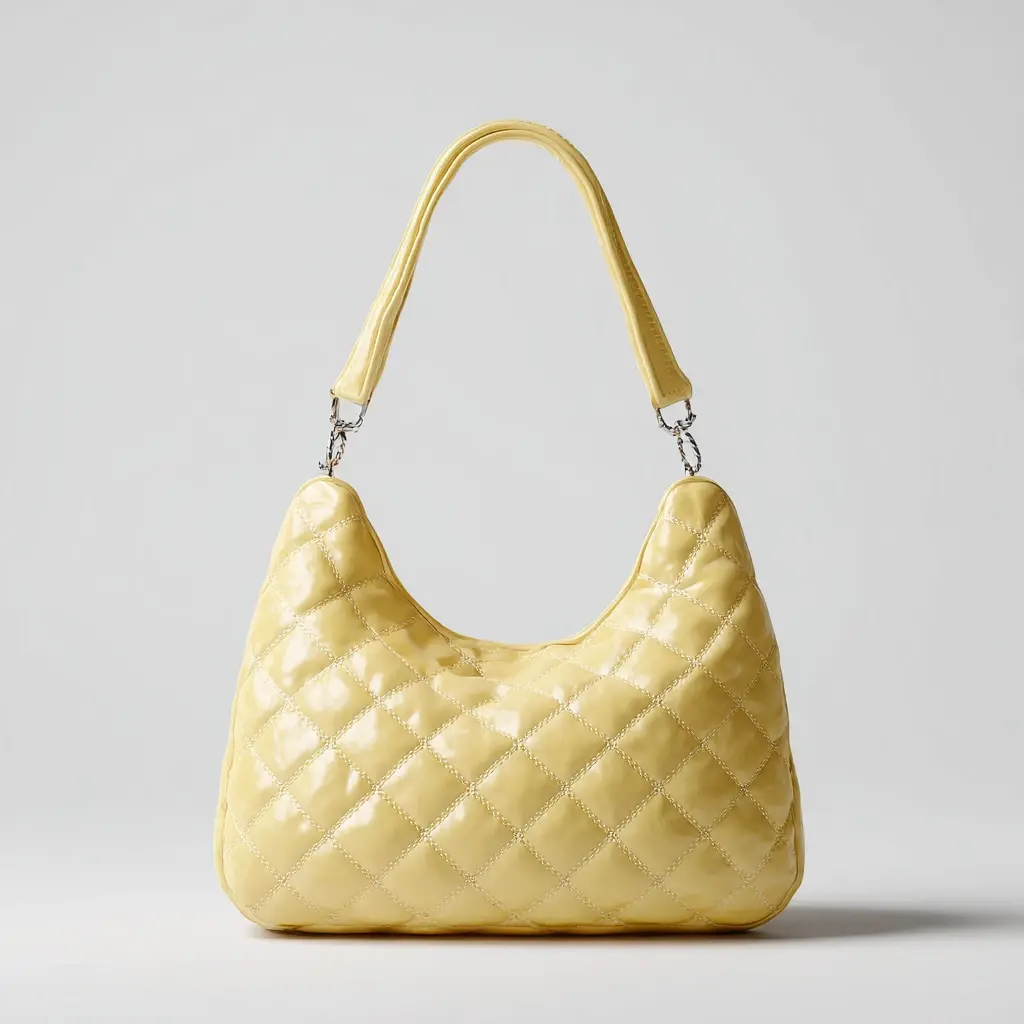
One quantity rule matters here and it is worth stating plainly: 500 pcs in one colourway is one dye lot. Split the same 500 across three colours and you have three dye lots, each with its own minimum, three trimming setups and three times the forecasting risk. The unit price rises and the sell-through gets harder. If you need three colourways, plan 1,500 pcs.
Line Two: Trimming and Hardware
Hardware is the fastest way to add cost and the easiest place to cut, which makes it the most useful lever after material. Stock parts from a catalogue are cheap; cast or engraved parts need a mould. The mould is a one-off of roughly US$800-3,000 depending on complexity, and at 500 pcs that is US$1.60-6.00 on every unit before you have paid for the part itself.
| Choice | Tooling | Added per unit at 500 | At 5,000 |
|---|---|---|---|
| Stock zip puller | None | US$0.00 | US$0.00 |
| Embossed leather patch | One die, US$80-200 | US$0.16-0.40 | US$0.02-0.04 |
| Woven interior label | No hard tooling | Absorbed at 500 | Absorbed |
| Cast zip puller | Mould, US$800-3,000 | US$1.60-6.00 | US$0.16-0.60 |
| Custom turn-lock | Mould plus plating setup | Top of the band | Amortised across the season |
Specify plating in numbers, because plating is where cheap and expensive diverge invisibly. Gold is not a specification; plating thickness in microns with a salt-spray target tested to ASTM B117 is. Vague plating instructions are the usual reason a beautiful sample is followed by bulk hardware that dulls within a season, and hardware is 15-25% of unit cost, so getting it wrong is expensive to discover late.
Sourcing transparency now sits inside the material line rather than beside it, and it is worth budgeting for. Hides can come from tanneries audited under the Leather Working Group environmental protocol, and recycled linings or canvas can carry Global Recycled Standard transaction certificates. Both are documentation costs rather than large material premiums, and both are far cheaper to arrange at specification stage than to retrofit after a run has been cut and a claim has been made.
Line Three: Cutting, Sewing and Finishing
Labour is driven by operations, and operations are driven by design. A soft hobo and a structured satchel can use almost identical leather area, but the satchel adds interlining, a stiffener, feet, a closure and a lined flap — and each one is a station on the line. This is why the cheapest silhouette in a given material is almost never the most structured one.
- Panel count. Five or six pieces on a tote, twelve to sixteen plus interlining on a satchel.
- Interlining and stiffeners. Each adds a cutting operation and a bonding or sewing stage.
- Edge work. Turned edges and two-coat edge paint are slower than a raw or bound edge.
- Closure sequence. A magnetic snap is one operation; a turn-lock is several plus reinforcement.
- Stitch density. Specified at 7-9 per inch; denser stitching is slower and not automatically better.
Line Four: Packaging, 3 to 8 Per Cent
Packaging is small per unit and disproportionately annoying, because artwork setup and printing plates are fixed charges discovered late. A dust bag, care card, hangtag, polybag and printed carton sit inside 3-8% of unit cost, but the setup is a one-off that does not shrink with quantity. Specify every item at brief stage and re-send the artwork and barcode numbers with every order.
Line Five: Tooling and Development
Tooling is the line that separates a private label run from a full custom development. A private label programme usually needs one embossing die. A custom development can need cutting dies for a new pattern, a die for the mark, and a mould for any cast hardware. Ask three questions about every item: is it amortised into the unit price or billed separately, who owns it, and will it run for another brand.
Development cost is the second item on this line: the work of deriving a pattern, proving it and revising it. It is real work and it is why a custom development costs more than a private label run at the same quantity and material. It is also a one-off, which is the argument for developing a shape only once a silhouette has proven itself commercially.
What Moves Each Line
The useful question is not what discount can I get but which line can I move, and by how much. The table is the honest answer: material and operations are movable with a design decision, packaging is movable only by specification, and tooling is movable only with quantity.
| Line | Realistic movement | Decision that moves it |
|---|---|---|
| Material | Large, in both directions | Material family, thickness, colourway count, pattern yield |
| Hardware | Large, in both directions | Stock versus cast, plating specification |
| Labour | Moderate | Silhouette complexity, panel count, edge finish |
| Packaging | Small per unit, fixed setup | What is specified, not how many |
| Tooling | Falls sharply with quantity | Order size and whether tooling is shared across styles |
When a Quotation Exceeds Your Ceiling
A quotation above your target is information, not a rejection. Work down the lines in order of size: material first, because it is 40-55%; hardware second, because stock parts are a large saving; operations third, by simplifying the silhouette or the edge finish; tooling last, because it only moves with quantity. Two or three changes usually close a gap that looked unbridgeable.
- Restate the ceiling. Confirm the target retail price and the landed cost it implies, so the exercise has a number to hit.
- Change the material family, not the quality within it. PU instead of leather is a step change; a thinner leather is a smaller one.
- Move hardware to stock parts and keep one branded element, usually the zip puller or an embossed patch.
- Simplify the silhouette: fewer panels, a bound edge instead of edge paint, a magnetic snap instead of a turn-lock.
- Concentrate colourways. One colourway at 500 pcs beats three at 167 pcs on price and on risk.
The Discount Question
Every buyer asks for a discount and most get one, which is why the useful question is what a discount is actually made of. Below roughly 500 units, the fixed costs of material lots, trimming lots, the plating bath and the line changeover dominate the unit price, so there is very little margin to give. Above it, quantity is a far stronger lever than negotiation: the step from 500 to 1,000 usually buys more than any percentage you will talk your way into.
How to Brief for a Usable Price
The price you get back is a function of the brief you send. Give the silhouettes and quantities per colourway, material direction, target retail price, reference photographs or a tech pack with dimensions and strap drop, branding method and position, packaging requirement, destination market, preferred trade term and an honest launch date. With a ceiling attached, the specification can be engineered to it rather than quoted blindly. The custom handbag route sets this in context, the custom versus private label comparison shows where development cost is worth paying, and the document that makes a price quotable is described in what a tech pack needs.
Payment Structure and What the Money Costs
Two quotations can show the same unit price and demand very different cash. The usual structure is a deposit that releases material and a balance against documents, and each half carries its own costs. A T/T transfer settles in two to five working days and is charged at roughly USD 18-40 per leg by the banks on each side, so a two-payment order pays those charges twice. Exchange movement between deposit and balance is normally held inside an agreed band, commonly 2 per cent, beyond which the price is reopened. On a material line worth 40 to 55 per cent of the unit, that move is not noise.
- Deposit size. Thirty per cent is the usual release figure, and it buys material and the slot rather than finished goods.
- Balance trigger. Paid against documents or before release of the bill of lading, and the two sit four to seven days apart.
- Currency band. A 2 per cent movement clause is standard; outside it the unit price is reopened rather than absorbed.
- Bank charges. USD 18-40 per leg, charged twice, and the easiest line to omit from a budget.
Duty, Classification and the Landed Number
Every line in a cost breakdown lands at the factory gate or at the port. What the business actually pays is the landed number, and duty is the largest item in it that nobody in the breakdown owns. Handbags enter most markets under heading 4202, with the subheading decided by the outer surface: leather, sheeting of plastics, or textile. Duty rates on that heading run from about 3 per cent to 17 per cent depending on destination and material, and a bag classified as textile rather than leather can move several points. Add a customs entry fee, a broker charge of roughly USD 85-150, and VAT or GST applied to the duty-inclusive value.
- Subheading by outer surface. A leather outer and a coated-fabric outer sit in different subheadings, and the rate follows.
- De minimis threshold. Many markets clear low-value consignments duty free; a 500-piece order is never below the threshold.
- Broker and entry fees. USD 85-150 per entry plus a per-line charge, fixed whether the shipment is 25 cartons or 250.
- VAT or GST base. Applied to goods plus freight plus duty, which is why a freight saving reduces tax as well as transport cost.
Development Charges That Arrive Before the First Bulk
Development is the part of a first order that behaves like a fee rather than a cost line, and it arrives before anything is made. A prototype cut to a new pattern is commonly charged at USD 120-260, a second or third revision at USD 60-140, and a physical swatch set at USD 30-70 including the cards. Sending samples internationally adds USD 45-90 per parcel and three to five days each way. The useful question is not the fee but what happens to it: on most programmes the sampling charge is credited against the bulk order once it passes a stated quantity, and the development work is retained rather than charged again on the repeat.
- Prototype fee. USD 120-260 for a first build from a new pattern, and the line most often quoted without a revision allowance.
- Revision rounds. USD 60-140 each, and three rounds is normal for a new silhouette.
- Swatch and hardware cards. USD 30-70 per set; keep two, one with the specification and one in the store.
- Courier. USD 45-90 per parcel and three to five days each way, which is why sample rounds are batched.
What the Second Run Costs Less, Line by Line
The second run of the same pattern is cheaper for reasons that have nothing to do with negotiating. Four lines fall on their own: the tooling is already paid, the pattern already exists, the material already has an approved reference, and the test protocol already covers the construction. What does not fall is material, which is bought again at whatever the hide market is doing, and labour, which is set by the operation count rather than by the order number. The useful exercise is to ask for the price at three quantities and compare the shape of the curve rather than the first column, because a fall that steep is usually a different bag.
| Line | First run | Second run |
|---|---|---|
| Pattern and dies | USD 180-420 | USD 0 |
| Sampling charge | USD 120-260 | USD 60-140 |
| Test protocol | USD 260-480 | USD 60-120 |
| Material | Bought at market | Bought at market |
| Labour | Set by operations | Set by operations |
Get the cost broken into lines
Send the silhouettes, the material direction and your target retail price. A handbag programme specialist will return a unit-price band at MOQ 500 pcs per style / colourway with material, hardware, labour, packaging and tooling shown as separate lines, so you can see which one to move. Get a quote.
Frequently Asked Questions
What are the main cost components of a custom handbag?
Five: material at 40-55% of unit cost, trimming and hardware at 15-25%, cutting and sewing labour at 15-25%, packaging at 3-8%, plus one-off tooling amortised over the run. Freight and duty sit on top under FOB terms and inside the price under DDP. Knowing the split turns a quotation into something you can work on rather than a number you accept or reject.
How much does handbag tooling cost?
An embossing or debossing die is roughly US$80-200 and is the only tooling most private label runs need. A cast hardware mould for a closure, logo plate or custom zip puller runs roughly US$800-3,000 depending on complexity. Woven labels and embroidery have no hard tooling. Ask whether tooling is amortised into the unit price or billed separately, and who owns it.
How much does tooling add per unit?
Divide the tool cost by the quantity. A US$150 embossing die adds about US$0.30 per unit at 500 pcs and about US$0.03 at 5,000. A US$2,000 hardware mould adds about US$4.00 per unit at 500 pcs and about US$0.40 at 5,000. That is why branded hardware is genuinely expensive at low volume and cheap on a seasonal programme.
Why is material such a large share of the cost?
Because leather is priced per square foot and cut by yield, so you pay for the hide and recover only the part that becomes bag. A pattern of large clean panels might yield 60-65%; one of smaller pieces can reach 75%. That difference is worth more than any discount, which is why simplifying the pattern is the most effective cost move available.
Does splitting a run across colourways raise the price?
Yes. 500 pcs in one colourway is one dye lot. The same 500 split three ways is three dye lots, each with its own minimum, plus three trimming setups. The unit price rises and the sell-through gets harder, because you now have 167 pcs of each colour to sell. If you need three colourways, plan 1,500 pcs.
What is the cheapest way to reduce a quotation?
Work down the lines by size. Material first: changing material family is a step change, and thinning within a family is a smaller one. Hardware second: stock parts instead of cast ones. Operations third: fewer panels, a bound edge instead of edge paint, a magnetic snap instead of a turn-lock. Concentrating colourways helps both price and risk.
How much can I negotiate the unit price down?
Less than you expect at low volume, because below roughly 500 units the fixed costs of material lots, trimming lots, the plating bath and the line changeover dominate the price. Quantity is the stronger lever: the step from 500 to 1,000 pcs usually buys more than any percentage you negotiate, because most fixed cost is absorbed in the first thousand.
Does a custom development cost more than private label?
Yes, at the same quantity and material, because development is real work: deriving a pattern, proving it and revising it. It is a one-off, which is the argument for developing a shape only once a silhouette has proven itself. Development also tends to push labour up, because a new pattern has more operations and lower yield until the line learns it.
How does packaging affect unit cost?
Packaging is 3-8% of unit cost: dust bag, care card, hangtag, polybag and printed carton. It is small per unit but the artwork setup and printing plates are fixed charges that do not shrink with quantity, and they are often discovered late. Specify every packaging item at brief stage and re-send the barcode numbers with each order.
What does plating specification have to do with cost?
Everything, because plating is where cheap and expensive diverge invisibly. A plating thickness in microns with a salt-spray target tested to ASTM B117 costs more than an unspecified finish and is worth it, because hardware is 15-25% of unit cost. Vague plating instructions are the usual reason bulk hardware dulls within a season of a beautiful sample.
How should I brief to get a usable price?
Give the silhouettes and quantities per colourway, material direction, target retail price, reference photographs or a tech pack with dimensions and strap drop, branding method and position, packaging requirement, destination market, preferred trade term and an honest launch date. With a price ceiling attached, the specification is engineered to that number rather than quoted blindly.
Are freight and duty included in the unit price?
Not under FOB Xiamen, which is the default: goods are delivered on board and freight, insurance and customs entry are yours. Under DDP both are inside the price, and under CIF freight and insurance are included up to your port. Incoterms 2020, published by the International Chamber of Commerce, defines where risk and cost transfer under each term.
People Also Ask
Why is my 500-piece quote higher per unit than a 5,000-piece one?
Because fixed costs dominate at low volume. The dye lot, the trimming and hardware lots, the plating bath and the line changeover cost roughly the same whether 500 or 5,000 pieces are made, so at 500 each unit carries a far larger share of them.
Is a cheaper material always worse?
No. PU at 0.6-1.0 mm is more consistent than leather, waterproof and appropriate for a price band leather cannot reach. A well-specified PU bag outperforms a thin, poorly finished leather one at the same retail price. Suitability to the price band is what matters.
Can I reuse tooling on a second order?
Yes, and that is the point of owning it. An embossing die, a woven-label setup and a hardware mould are physical assets stored between runs, so the second order carries no tooling cost. Confirm storage and ownership in writing before paying for them.
What is the single biggest cost mistake?
Choosing the material before the retail price. Material is 40-55% of unit cost and therefore downstream of what you can sell at. Work backwards from the retail price to a landed cost ceiling, and let that number choose the material rather than the reverse.
Sources and further reading
Every figure on this page is either our own programme data or attributed below. Open the originals before you write them into a specification.
- Incoterms rulesICC The rules that decide where cost, risk and insurance transfer.
- Leather Working Group — environmental auditing for tanneriesLeather Working Group Environmental audit protocol for tanneries and leather traceability.
- SATRA — technical services for leather, footwear and accessoriesSATRA Independent leather, hardware and accessories testing protocols.