Best Custom Handbag Styles for First Time Designers in 2026
Which custom handbag style should a first-time designer develop in 2026? Start with a tote or a crossbody: both are forgiving of a first specification, both carry branding well, and both reach bulk in 6-10 working days of sampling against 12-15 for a structured satchel. A shoulder bag and a bucket bag are the safe second tier; a hobo depends entirely on material temper; a satchel is the most expensive first project because interlining, a stiffener and a closure add operations. For a first programme, choose the silhouette with the fewest pattern pieces that still carries your brand visibly, because every extra panel is cost, calendar and one more way for the first sample to be wrong. Below: a four-question decision tree, the six styles ranked by difficulty, and what each costs in operations.
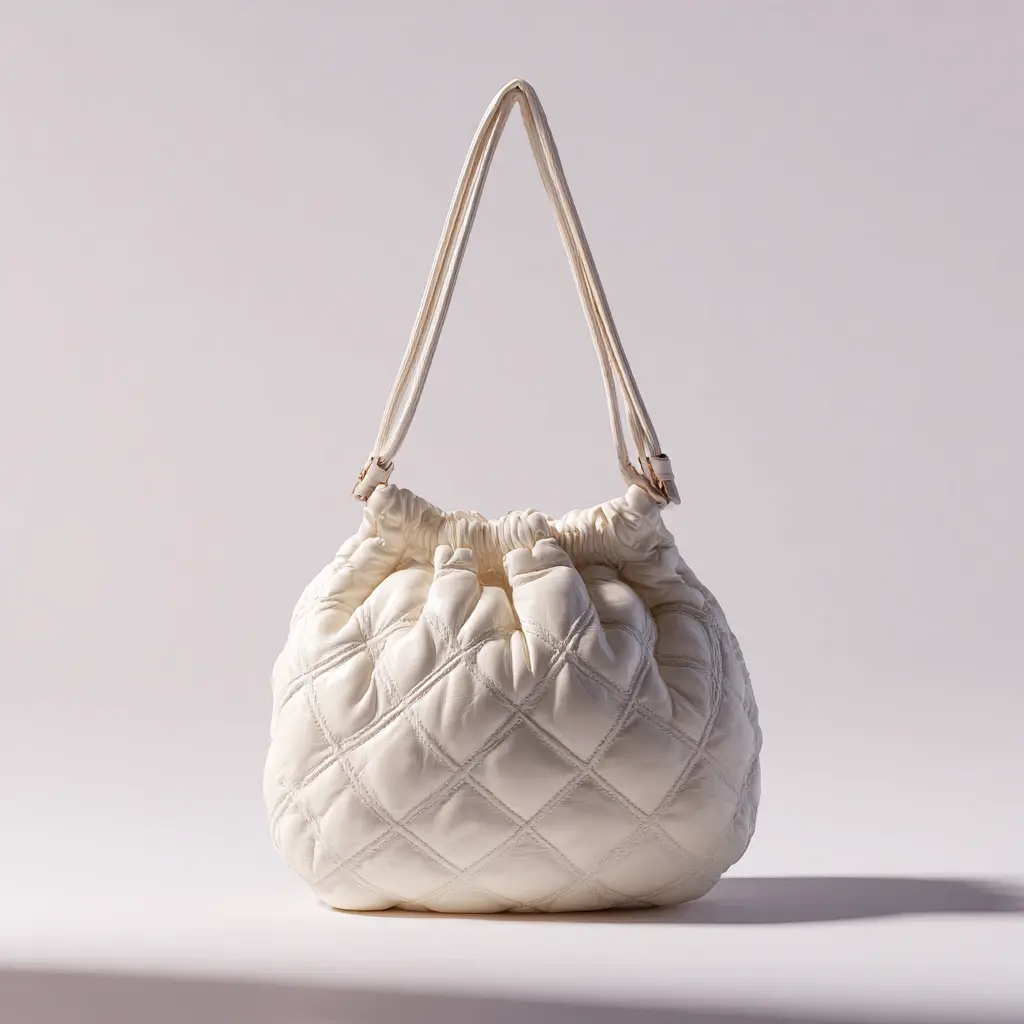
- The Decision Tree: Four Questions to a Silhouette
- Tier One: The Tote
- Tier One: The Crossbody
- Tier Two: The Shoulder Bag
- Tier Two: The Bucket Bag
- Tier Three: The Hobo
- Tier Four: The Satchel
- What First-Time Designers Get Wrong
- How Many Styles for a First Line
- Style Choice and Unit Cost
- What Each Silhouette Consumes in Material
- How Each Silhouette Packs and Freights
- Which Silhouettes Come Back, and Why
- A Four-Season Roadmap for a First Line
Which custom handbag style should a first-time designer develop in 2026? Start with a tote or a crossbody: both are forgiving of a first specification, both carry branding well, and both reach bulk in 6-10 working days of sampling against 12-15 for a structured satchel. A shoulder bag and a bucket bag are the safe second tier; a hobo depends entirely on material temper; a satchel is the most expensive first project because interlining, a stiffener and a closure add operations. For a first programme, choose the silhouette with the fewest pattern pieces that still carries your brand visibly, because every extra panel is cost, calendar and one more way for the first sample to be wrong. Below: a four-question decision tree, the six styles ranked by difficulty, and what each costs in operations.
First-line parameters
The Decision Tree: Four Questions to a Silhouette
Style choice is usually made on taste and then defended on cost. Run it the other way: four questions, in order, and each one eliminates silhouettes rather than adding them. The only input needed is an honest answer about your budget, your channel and your launch date.
- How many days until the launch date? Under 90 before transit, only a tote, crossbody or bucket sampled at 6-10 working days is realistic. A satchel needs 70-95 days before transit.
- Where does the customer carry it? Hands-free and commuting points to crossbody. Work and travel points to tote. Day-to-evening points to shoulder. If you cannot answer, the tote has the widest appeal.
- What is your target retail price? Material is 40-55% of unit cost, so a low ceiling rules out full-grain leather and any silhouette with many operations. A bucket from small panels beats a satchel from large ones.
- Where will the brand mark sit? A tote offers the largest uninterrupted panel; a crossbody carries the brand through hardware; a bucket brands at the toggle or base. If branding is the point, that decides it.
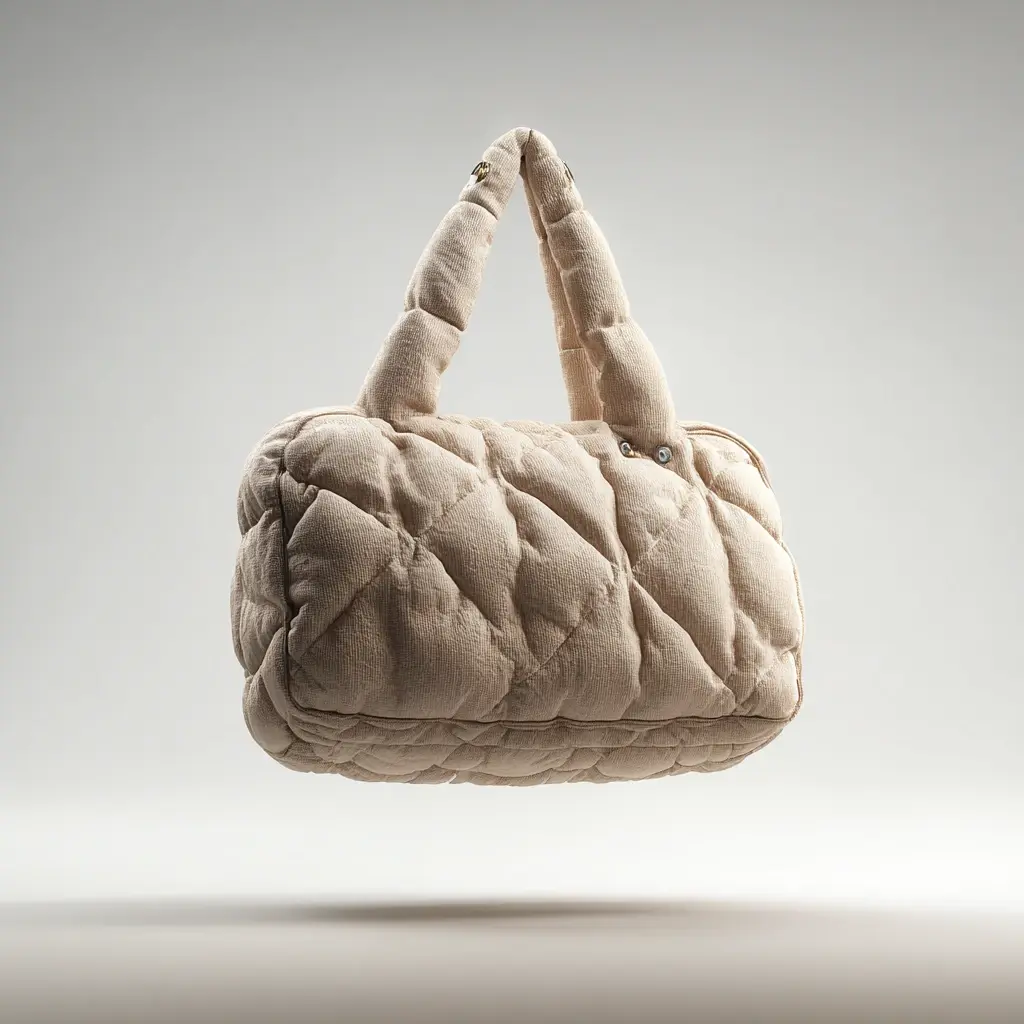
Tier One: The Tote
The tote is the correct first project for most designers, and the reason is structural rather than fashionable. It is five or six pattern pieces, the seams are straight, and there is no closure sequence to get wrong unless you add one. It also offers the largest uninterrupted panel on any bag, which is where an embossed mark or a print belongs, and it photographs well because it holds its shape empty.
Three variants cover almost every brief, and the choice between them changes the cost noticeably. An open tote with no closure is the cheapest and the fastest to sample. A gusseted tote with a base panel holds its shape and reads better in a photograph, at the cost of two extra pieces and a reinforced base. A zip-top tote adds a closure, a zip panel and the lining work around it, which is where the operation count starts to matter. All three carry an embossed mark equally well.
Tote
Open or zip-top, flat or gusseted. The fewest operations of any silhouette and the biggest branding surface, which is why it is the default first development.
Crossbody
Long adjustable strap and the highest repeat purchase in most assortments. Hardware carries the brand: buckle, slider and zip puller.
Shoulder Bag
Single strap, mid volume, carried under the arm. Strap drop decides whether it sells, so specify it in millimetres and check it loaded.
Bucket Bag
Cylindrical body with a drawcord or cinch top. Small clean panels mean good hide yield, but the base needs reinforcement.
Hobo
Soft crescent body. The pattern is forgiving and the leather does all the work, so material temper is the whole design.
Satchel
Structured, top-handle, usually with a turn-lock. Interlining, stiffener and closure add operations, so it sits at the top of the cost band.
Tier One: The Crossbody
The crossbody is the other correct first project, and for a different reason: it has the highest repeat purchase rate in most assortments and the lowest return rate, because the fit is adjustable. The pattern is small, so hide or roll yield is excellent, and a 500-piece run in one colourway is easy to sell through. What it does demand is hardware quality, because the buckle, slider and zip puller are the parts a customer handles.
- Strap. 110-130 cm adjustable, in webbing, leather or a chain combination, with the slider specified by finish.
- Branding. Best carried on hardware: a cast zip puller, an engraved buckle, an embossed patch at the flap edge.
- Interior. One zipped pocket and one slip pocket is enough; more adds operations without adding perceived value.
- Cost. Low material area and good yield, so the unit price sits at the bottom of the band for a given material.
Tier Two: The Shoulder Bag
The shoulder bag is where a first programme usually goes wrong, and it is always the same dimension. Strap drop — measured from the top of the strap to the top edge of the bag — decides whether the bag gets worn, and it is the item most often omitted from a brief. A drop of 22-30 cm covers most of the market, but the right number depends on the body height of the bag, so specify it in millimetres and check it on the sample with weight in it.
The second risk is the strap attachment. It is the highest-stress joint on any bag and the one that fails first in the field: reinforcement tape in the seam, a skived fold at 0.8-1.0 mm on a 1.2 mm hide, and stitch density at 7-9 per inch. On the sample, fill the bag to a realistic weight and hang it, then look at the attachment rather than the strap.
The shoulder bag rewards designers who think about how it is carried rather than how it looks flat. A flap closure changes the whole front elevation and gives a second branding position at the flap edge; a top zip keeps the line clean and moves the brand to a small embossed patch. Neither is cheaper in any meaningful way, so the decision is aesthetic, and it should be made from photographs of the bag worn rather than from a drawing on a table.
Tier Two: The Bucket Bag
The bucket is the best value silhouette in the trade and the most underused by first-time designers. Because it is built from small clean panels, yield is high and a bucket often undercuts a structured satchel made from the same hide. The two things that separate a good one from a cheap one are the base, which needs a reinforced disc, and the drawcord channel, which shows sloppy work faster than any other detail.
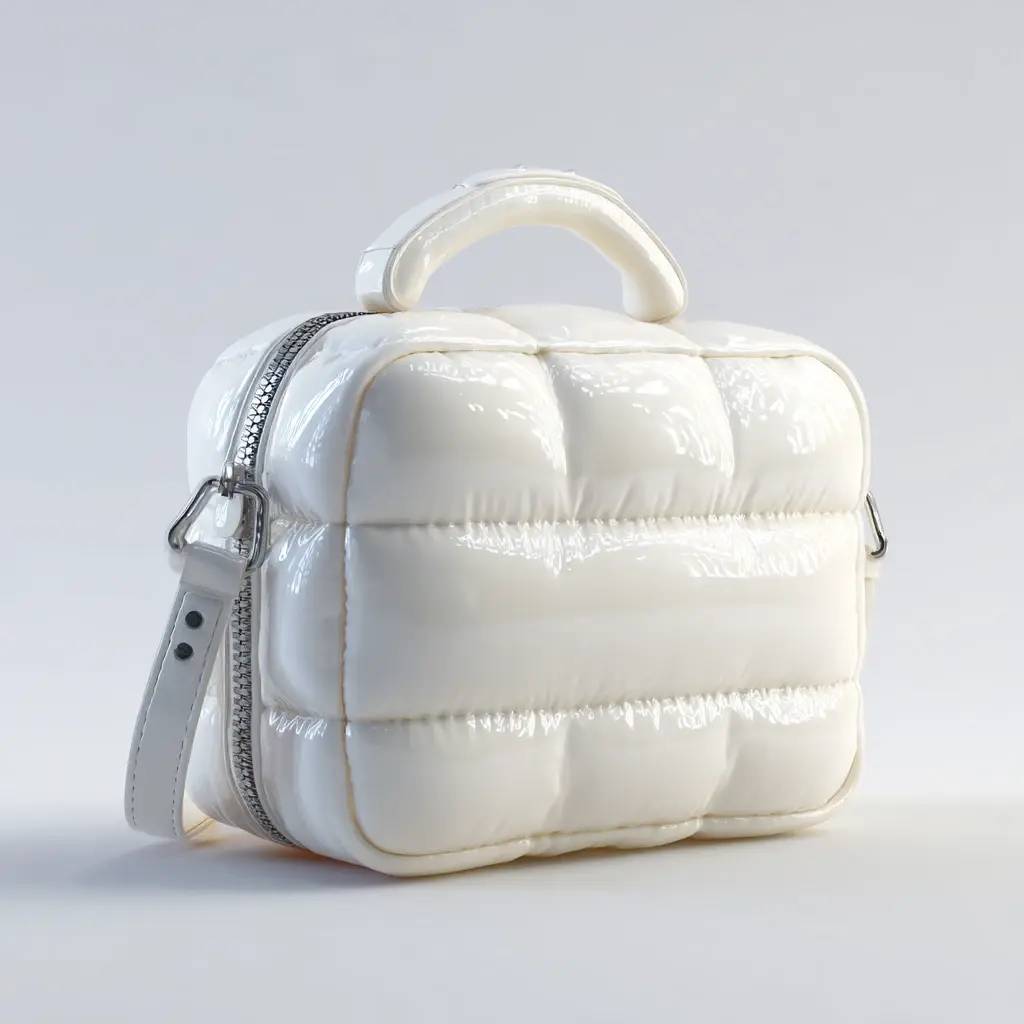
Tier Three: The Hobo
A hobo is a material project dressed as a design project. The pattern is simple and forgiving, and everything depends on temper: a soft hide drapes into the crescent that makes the style work, and a firm hide stands up and looks wrong. Specify temper explicitly alongside thickness, typically 1.0-1.2 mm in a soft temper, and approve a physical swatch rather than a description, because temper cannot be judged on a screen.
Tier Four: The Satchel
The satchel is the silhouette most first-time designers want and the one they should usually postpone. It needs interlining, a stiffener, a structured base, feet and a closure — a turn-lock, a magnetic snap or a strap-and-buckle arrangement — and each of those is an operation. Operations are 15-25% of unit cost, which is precisely why a satchel sits at the top of the band while a soft hobo from the same hide sits lower.
| Silhouette | Pattern pieces | Operations load | Sampling | First project? |
|---|---|---|---|---|
| Tote | 5-6 | Low | 6-10 working days | Best choice |
| Crossbody | 6-9 | Low-mid | 6-10 working days | Best choice |
| Bucket | 7-10 | Mid | 6-10 working days | Strong value |
| Shoulder | 7-11 | Mid | 6-10 working days | Good, mind the drop |
| Hobo | 6-9 | Low, but temper-critical | 6-10 working days | Only with the right hide |
| Satchel | 12-16 | High | 12-15 working days | Second programme |
What First-Time Designers Get Wrong
Four mistakes account for most disappointing first programmes, and none of them is about drawing ability. All four are decisions made before the brief is sent, which is what makes them cheap to avoid.
- Choosing the silhouette before the price. Material is 40-55% of unit cost; work from the retail price down, not the drawing up.
- Designing a satchel first. More operations, a 12-15 working day sampling window, and usually two rounds rather than one.
- Ignoring strap drop. The most common single revision on any first sample, and entirely preventable with one number.
- Adding branded hardware late. A cast puller or plate needs a mould made before it can be applied to a sample.
Packaging is the third line style touches, at 3-8% of unit cost, and it is the one where a simple silhouette benefits most. A structured satchel needs a stiffer dust bag and often a formed insert; a soft tote or a crossbody packs flat into a printed dust bag. Packaging artwork setup and printing plates are fixed charges, so a first line of two silhouettes pays them once and spreads them across 2,000 pcs.
How Many Styles for a First Line
Two silhouettes in two colourways is the most common starting shape: 2,000 pcs, four SKUs, one production window and one set of branding tooling spread across four items. One silhouette in one colourway is 500 pcs and the lowest commitment, but it gives you a product rather than a line. Three silhouettes in two colourways is 3,000 pcs, which fills a 20-foot container and suits a designer who already knows which styles sell.
Style Choice and Unit Cost
Style drives two of the five cost lines and touches a third. Operations drive labour at 15-25% of unit cost, yield drives material at 40-55%, and a structured silhouette usually needs more hardware, which is 15-25%. Choose a simple silhouette in a good material rather than a complex one in a cheap material: the first reads as quality and the second reads as busy.
Whichever silhouette you pick, the sequence is the same: send the sketch with dimensions, strap drop and target retail price, get a specification back, approve a sample in 6-10 working days or 12-15 for structured work, then run 35-50 days of bulk at MOQ 500 pcs per style / colourway with inspection at AQL 2.5 under ISO 2859-1. The drawing-to-sample sequence is in sketch to sample, the document that prevents most revisions is in what a tech pack needs, and the day counts are in the production timeline. Minimum questions are answered in does custom need a higher MOQ.
What Each Silhouette Consumes in Material
Two silhouettes can look the same size on a sketch and differ by a factor of three in what they take off the roll. Consumption is the first cost a shape decides, and it is decided before a single stitch is specified. The figures below are for 140 cm wide material at a marker yield of 78-86 per cent, which is the normal band for a first programme on a simple shape.
| Silhouette | Material per unit | Units per 4.6 m2 hide | Yield band |
|---|---|---|---|
| Crossbody | 0.20-0.30 m2 | 15-18 | 82-86 per cent |
| Shoulder | 0.34-0.46 m2 | 10-13 | 80-84 per cent |
| Bucket | 0.38-0.52 m2 | 8-11 | 79-83 per cent |
| Tote | 0.62-0.78 m2 | 5-7 | 78-82 per cent |
| Satchel | 0.66-0.88 m2 | 4-6 | 74-79 per cent |
On a hide of 4.2-5.0 m2 with 80 per cent usable area, a 500-piece tote run calls for roughly 95 hides and a 500-piece crossbody run for about 33. That difference is the reason a crossbody prices below a tote in the same material, and the reason a satchel belongs in a later season when the material budget has grown with the retail band.
How Each Silhouette Packs and Freights
The second cost a shape decides is cube, and it moves independently of everything else on the sheet. A structured satchel occupies twice the space of a crossbody in the same carton, so freight per unit can differ by a factor of two on the same lane. At an LCL rate of USD 60-110 per cbm plus USD 55-75 of documentation, that gap is worth pricing before the silhouette is chosen rather than after the cartons are measured.
| Silhouette | Units per carton | Cartons and cube on 500 | Freight per piece |
|---|---|---|---|
| Crossbody | 32-36 | 15 cartons, 1.44 cbm | USD 0.35-0.55 |
| Shoulder | 26-30 | 18 cartons, 1.73 cbm | USD 0.40-0.62 |
| Bucket | 22-26 | 21 cartons, 2.02 cbm | USD 0.45-0.70 |
| Tote | 18-22 | 25 cartons, 2.40 cbm | USD 0.50-0.78 |
| Satchel | 14-16 | 34 cartons, 3.26 cbm | USD 0.64-1.00 |
On a first order the difference is small in absolute money and large as a habit: a satchel-heavy first line pays USD 120-250 more per 500 pieces than a crossbody-heavy one on the same sailing, and the same money buys four extra cartons of stock. The packing and carton detail sets out which finishing choices move the cube.
Which Silhouettes Come Back, and Why
Return rate is the cost line a first-time designer never prices and the easiest one to predict, because it is driven by fit and structure rather than by taste. The pattern across boutique and direct channels is stable: silhouettes with a fixed carrying position generate the most complaints, and silhouettes that collapse when empty generate the second most. Both are specification problems in disguise.
| Silhouette | Return band | Dominant complaint | The specification that fixes it |
|---|---|---|---|
| Crossbody | 3-5 per cent | Strap length over a winter coat | Publish the adjustment range in cm |
| Tote | 5-7 per cent | Size different from the listing | Publish body dimensions with a tolerance |
| Bucket | 6-8 per cent | Mouth closes, contents hard to reach | Stiffen the mouth, publish the opening width |
| Shoulder | 7-9 per cent | Slips off the shoulder | Drop at 25-27 cm, textured underside |
| Hobo | 9-13 per cent | Slumps when empty | Temper and interlining, not a pattern change |
| Satchel | 10-14 per cent | Stiff, heavy, will not soften | Lighter interlining, publish empty weight |
At a landed cost of USD 15.75 and a return handling cost of USD 8-14 per unit, one percentage point of returns on a 500-piece run costs USD 119-149. Moving a first line from a hobo to a crossbody is worth two to four percentage points, which is USD 240-600 on the first buy alone and the same again on every reorder that follows the same pattern.
A Four-Season Roadmap for a First Line
A first line is a sequence rather than a single drop, and the order below is the one that keeps cash and risk aligned. The two forgiving silhouettes carry the first season and pay for the tooling; the structured ones arrive when the pattern room already knows the brand's tolerances and the weekly run rate already exists.
| Season | Silhouettes | Pieces | Tooling per piece |
|---|---|---|---|
| One | Tote and crossbody | 1,000 | USD 4.86, paid once |
| Two | Shoulder, same material lot | 500 | USD 0 on retained tooling |
| Three | Bucket | 500 | USD 0.52, embossing die only |
| Four | Satchel | 500 | USD 1.80-2.40, one new part |
By the fourth season the line has run 2,500 pieces across five silhouettes and the tooling paid in season one has amortised from USD 4.86 per piece to about USD 0.97 across the programme. That is the argument for sequencing instead of launching five shapes at once: the same money buys five silhouettes and one tooling charge rather than five silhouettes and five, and the second and third seasons skip the 6-10 working days of sampling window entirely.
Pick the silhouette, get it priced
Send the silhouette, the dimensions, the strap drop and your target retail price. A handbag programme specialist will return a specification, a sampling window and a unit-price band at MOQ 500 pcs per style / colourway, with the operations load shown so you can see where the cost sits. Get a quote.
Frequently Asked Questions
Which handbag style should a first-time designer develop?
A tote or a crossbody. Both are built from five to nine pattern pieces, both sample in 6-10 working days rather than 12-15, and both carry branding visibly — the tote through a large front panel, the crossbody through hardware. They also have the widest appeal, which matters when 500 pcs of one colourway has to sell through.
Why is a satchel a difficult first project?
It needs interlining, a stiffener, a structured base, feet and a closure, and each of those is an operation added to the run. Operations are 15-25% of unit cost, so a satchel sits at the top of the price band, and the sampling window is 12-15 working days with usually two rounds rather than one. It is an excellent second programme.
How many pattern pieces does each silhouette need?
A tote needs five or six, a crossbody six to nine, a hobo six to nine, a bucket seven to ten, a shoulder bag seven to eleven, and a satchel twelve to sixteen plus interlining patterns. Every extra piece is another seam to match, another source of variance, and another way for a first sample to be wrong.
What is the cheapest handbag silhouette to make?
Usually the bucket bag, because it is built from small clean panels that nest well on a hide or roll, so material waste is low. Material is 40-55% of unit cost, so yield matters more than any single discount. A soft hobo is also economical on operations, but it depends on buying the right temper.
How important is strap drop?
It is the single most common revision on a first sample and the dimension most often omitted from a brief. Measure it from the top of the strap to the top edge of the bag rather than giving a strap length, and check it on the physical sample with weight in the bag. A shoulder bag typically needs 22-30 cm.
How many styles should a first line include?
Two silhouettes in two colourways: 2,000 pcs, four SKUs, one production window and one set of branding tooling spread across four items. One silhouette in one colourway is 500 pcs and the lowest cash commitment; three silhouettes in two colourways is 3,000 pcs and fills a 20-foot container.
Can I develop more than one style at once?
Yes, and it is efficient. Several styles can share a production window, a container and an inspection, and the branding tooling is amortised across more units. What each style needs is its own specification and its own sample, so the calendar is set by the slowest of them rather than by the sum.
Does the silhouette change the MOQ?
No. MOQ is 500 pcs per style / colourway on every silhouette, because the upstream minimums — the dye lot, the trimming and hardware lots, the plating bath and the line changeover — are the same. What the silhouette changes is unit cost, through operations and yield, and the sampling window.
Which silhouette brands best?
The tote, because it offers the largest uninterrupted panel for embossing, foil or print. If branding through hardware matters more, the crossbody gives you a zip puller, a buckle and a slider, which are the parts a customer handles. A bucket brands at the drawcord toggle or the base panel.
What material suits a first custom style?
Top-grain leather at 1.0-1.4 mm for a tote, shoulder or crossbody, because it is uniform enough to colour-match across 500 pieces. Full-grain at 1.2-1.6 mm if the price supports it and you want patina. PU at 0.6-1.0 mm for the most forgiving and consistent first run. Canvas at 10-16 oz for graphics.
How long does a first custom style take?
Six to ten working days of sampling on a tote, crossbody, bucket, shoulder or hobo, and 12-15 on a satchel or any framed or bonded construction. Bulk production is 35-50 days, inspection 1-2 days, and transit 18-38 days by sea. The realistic total before goods reach you is 55-80 days for a simple style.
What is the most common first-time mistake?
Choosing the silhouette before the retail price. Material is 40-55% of unit cost and operations are 15-25%, so the price ceiling decides the material and the complexity, not the other way round. Send a target retail price with the brief and the specification can be engineered to it rather than quoted blindly.
People Also Ask
Should my first bag be leather or PU?
Whichever your retail price supports. Work backwards from the price: less channel margin, your margin, freight, duty and packaging gives a landed cost ceiling, and that number chooses the material. A well-made PU tote outsells a thin leather one at the same price.
Is a tote too basic for a designer brand?
No. The tote is the largest uninterrupted branding surface in the category and the silhouette with the widest appeal. Differentiation comes from material, hardware, edge finish, lining and packaging, all of which are visible and none of which require a complex pattern.
Can I add a closure to a tote?
Yes, and it is the most common upgrade: a magnetic snap, a zip top or a turn-lock. It adds operations and one hardware item, which is why a zip-top tote costs more than an open one from the same hide, and it may add a sample round if the closure sequence is complicated.
Which style has the lowest return rate?
The crossbody, because the adjustable strap removes most fit risk and the small body means fewer scale surprises on screen. Returns in this category are driven by perceived size and colour, both of which a compact adjustable bag suffers from least.
Sources and further reading
Every figure on this page is either our own programme data or attributed below. Open the originals before you write them into a specification.
- SATRA — technical services for leather, footwear and accessoriesSATRA Independent leather, hardware and accessories testing protocols.
- Leather Working Group — environmental auditing for tanneriesLeather Working Group Environmental audit protocol for tanneries and leather traceability.
- FashionUnited — fashion industry news and dataFashionUnited Industry news and company data for the fashion sector.