How Many Samples Do You Need Before Custom Handbag Production
How many samples do you really need before custom handbag production? For a silhouette that has been built before, two rounds plus a pre-production piece; for a genuinely new shape, expect three development rounds before anything is sealed. Put in numbers: roughly 70 percent of first programmes finish in two rounds, about 20 percent need three, and roughly 10 percent — nearly all of them novel constructions or projects with no dimensioned tech pack — take four or more, at 6-10 working days each. Two things shorten this reliably: a tech pack with millimetres instead of adjectives, and a revision list that is numbered rather than narrated. Neither costs anything, and together they are usually the difference between booking bulk in week three and arguing about it in week seven.
- The Short Answer: Three Samples, Sometimes Two, Occasionally Zero
- What Does the First Sample Actually Establish?
- What Should Change Between Round One and Round Two?
- When Is Round Two Enough to Book Bulk?
- What Is a Pre-Production Sample and Do You Need One?
- How Many Rounds Does a Novel Silhouette Take?
- When Can You Skip Sampling Entirely?
- Who Pays for Samples and What Happens to That Money?
- The Discipline That Keeps You to Two Rounds
- What Happens If Round Three Still Is Not Right?
- Getting Samples to You and Back: Parcel, Courier and Customs
How many samples do you really need before custom handbag production? For a silhouette that has been built before, two rounds plus a pre-production piece; for a genuinely new shape, expect three development rounds before anything is sealed. Put in numbers: roughly 70 percent of first programmes finish in two rounds, about 20 percent need three, and roughly 10 percent — nearly all of them novel constructions or projects with no dimensioned tech pack — take four or more, at 6-10 working days each. Two things shorten this reliably: a tech pack with millimetres instead of adjectives, and a revision list that is numbered rather than narrated. Neither costs anything, and together they are usually the difference between booking bulk in week three and arguing about it in week seven.
Sampling numbers that matter
The Short Answer: Three Samples, Sometimes Two, Occasionally Zero
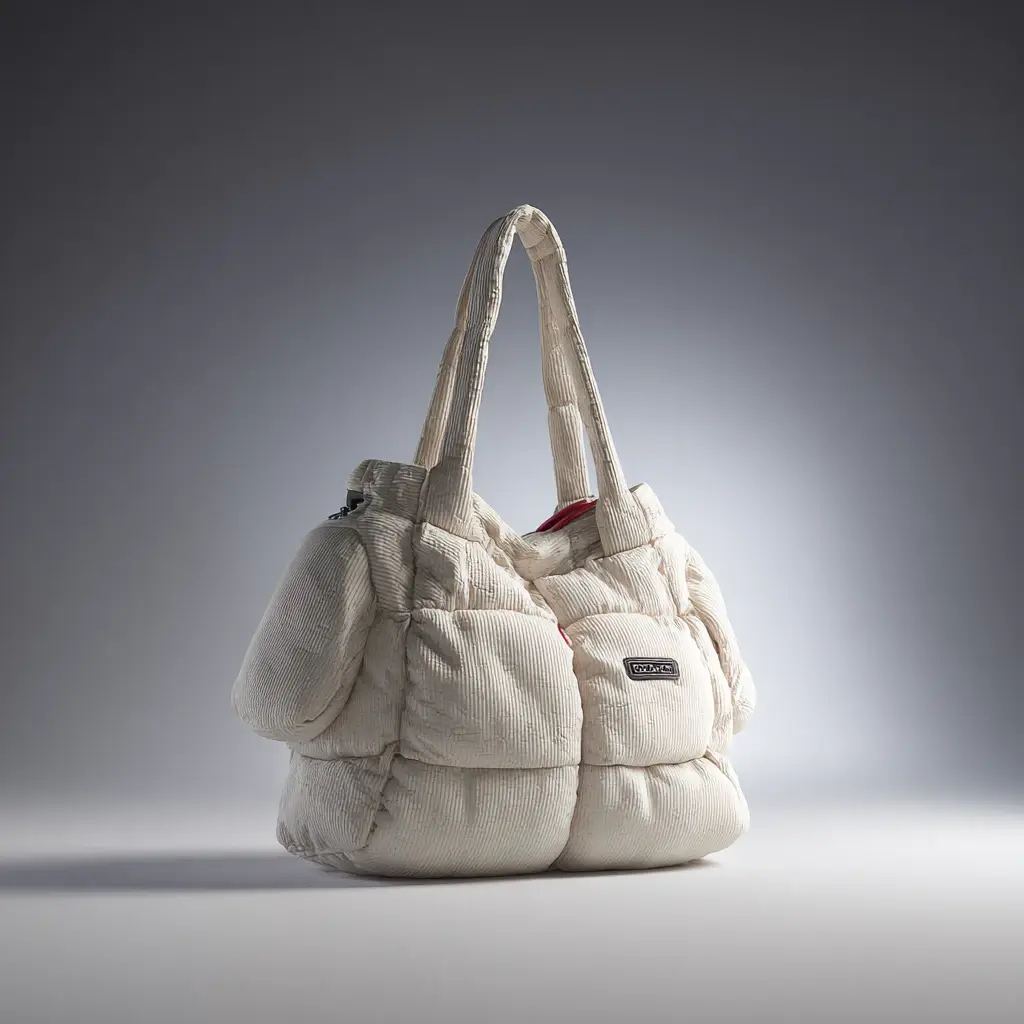
Count properly and most programmes produce three physical pieces before bulk begins, though only two of them are development samples. Round one is a proto: it establishes whether the silhouette, proportions and materials behave as drawn. Round two is the development sample carrying the corrections. The third piece is a pre-production or confirmation sample pulled from the actual bulk materials and, ideally, from the bulk line. Only the third is a legal artefact; the first two are arguments between you and reality.
- Round one — proto. Establishes shape, proportion, whether the drawing translates to three dimensions. Usually four to six corrections.
- Round two — revised development sample. Establishes corrections plus material, colour and branding. Usually zero to three corrections.
- Pre-production piece — the golden seal. Made from bulk materials on bulk tooling. This is what the inspector compares the shipment against.
- Optional fourth — photo or sales set. Early copies for listings and wholesale lines, pulled from the first pieces off the bulk line rather than from a separate round.
The number that surprises people is not the count but the timing: each round is 6-10 working days of build time, to which review days must be added. A three-digit delay in your own review adds more calendar than anything that happens on the line, which is why the single highest-leverage habit in sampling is returning annotated notes within two working days. The real timeline from brief to delivery breaks that calendar down stage by stage.
What Does the First Sample Actually Establish?
The proto answers three questions and should be judged only on them: does the silhouette work in three dimensions, do the proportions match the drawing, and does the material behave the way the design assumes. It should not be judged on thread ends, edge paint variation or interior pocket placement, for the honest reason that those are second-round items that nobody expects right on a first pull. Brands that judge a proto on finishing spend their round-one review on things that would have been fixed anyway.
- Volume versus silhouette. A drawing always looks flatter than a body. The proto is where gusset depth, strap drop and base footprint get judged on a real form.
- Material behaviour. Whether a leather actually slouches, whether a coated panel actually creases at the mouth, whether canvas stands up.
- Operation count. Whether the design needs more operations than was assumed, which changes cost before pockets or branding are even discussed.
Judge it in good light and on a body, not on a desk. Photograph it from eight angles — front, back, both sides, base, mouth open, worn on shoulder, worn handheld, and beside a size reference — because the photographs are what the next round is built from and what the listing will eventually use. A Lisbon-based brand shortened its second round to nothing by sending back nine annotated photographs with mm callouts instead of a paragraph about how the bag felt.
What Should Change Between Round One and Round Two?
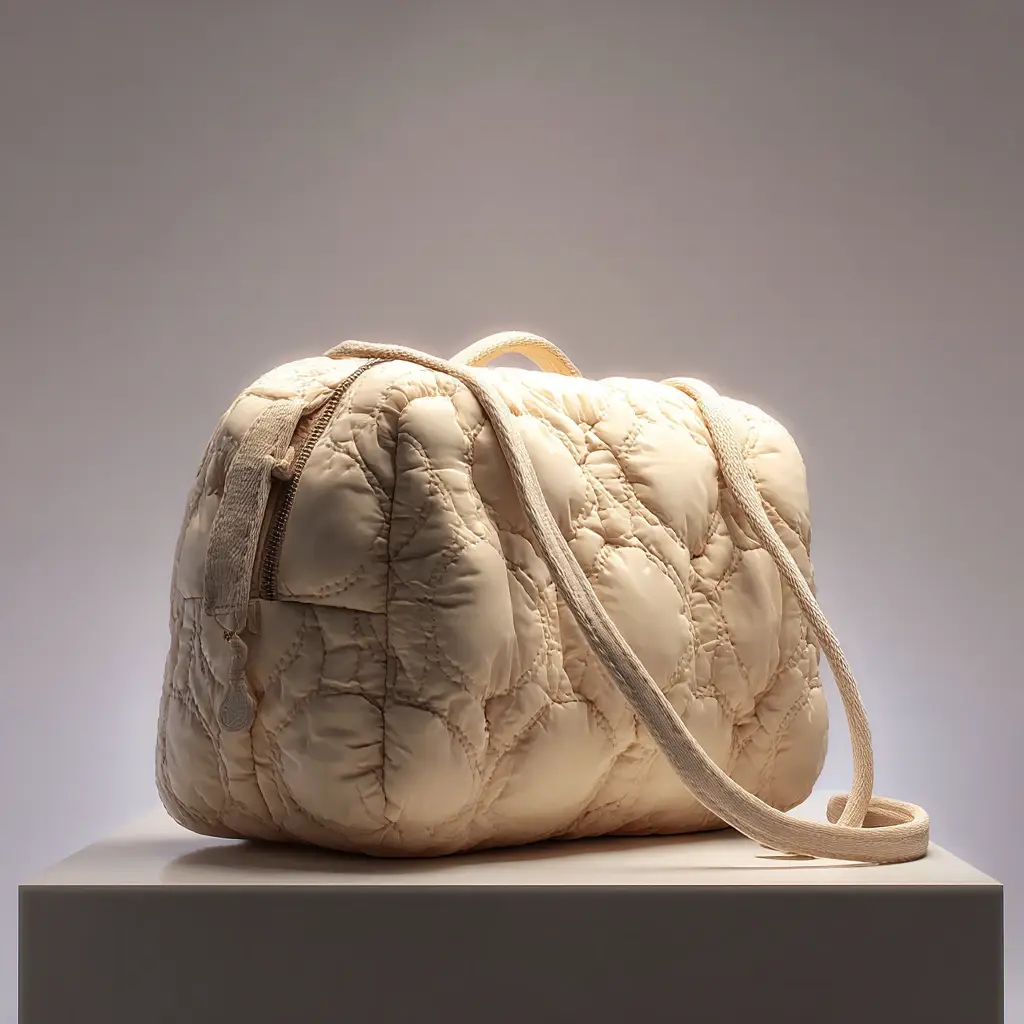
Everything on the numbered list, and nothing else. This sounds obvious and is routinely violated: round two arrives with unrequested improvements alongside the requested corrections, which makes it impossible to tell what was addressed and what appeared. Ask explicitly that only listed changes be made, so each line item can be ticked. Typical first-round corrections run four to six and fall into three categories.
| Category | Typical items | Example |
|---|---|---|
| Dimension | One to two | Gusset 10 mm shallower; strap drop 25 mm shorter |
| Construction | One to two | Base board added; bar-tack moved to the strap return |
| Material or colour | One to two | Lining changed to 90 gsm; dye development started |
| Specification gap | Zero to one | Pocket depth was never stated; now 120 mm |
Notice that the most common single item is a specification gap: something nobody had drawn, so it was built to the operator's judgement. Every such item should be added to the tech pack rather than just corrected on the sample, because the tech pack is what repeats at 500 pieces. This is the entire argument for writing dimensional specifications before sampling opens.
When Is Round Two Enough to Book Bulk?
Round two is enough when four things are simultaneously true: every item on the round-one list has been corrected; material and colour have been approved against a physical standard rather than a photograph; branding has been approved in position and in method; and nothing in this round introduced a new question. That last clause is the one people skip. If approving round two required inventing a fix that has never been seen, that fix is a third-round item regardless of how small it looks on paper.
- Corrections ticked. Each numbered line from round one has been addressed and physically verified on the new sample.
- Material approved. A signed physical swatch exists for body, lining and trim, with retained halves on both sides.
- Branding approved. Method and position confirmed, measured from a datum edge in millimetres and recorded.
- No open questions. Nothing on the sample was accepted conditionally or with a note that it will be fixed in bulk.
There is a commercial gate here too. Booking the production slot when the deposit is paid rather than when the sample is approved protects 2-3 weeks of calendar, because slots tighten before Chinese New Year and during the autumn shipping rush. If rounds one and two have both been prompt, this usually means the difference between shipping before the peak and shipping into it.
What Is a Pre-Production Sample and Do You Need One?
Yes, always, and this is the piece most brands try to skip because it looks like a third sample. It is not a third attempt at a design. A pre-production sample is the control object: built from the actual bulk materials, on the actual tooling, to the actually frozen specification, and then retained. It is what the inspector puts next to the shipment, what settles any dispute about what was agreed, and what future reorders are matched against.
- Retained reference. Three pieces are typically retained: one for you, one sealed on file for 24 months, one held at inspection.
- Comparison standard. Pre-shipment inspection compares against this object at AQL 2.5 under ISO 2859-1, with colour checked against the retained swatch.
- Cost. Usually billed at or near unit price because it is made from bulk components rather than bench-made.
- Timing. Produced immediately before the bulk run begins, typically adding three to six days to the calendar and never adding weeks.
Ask two questions about it before approving. Was it really made on the bulk line and from bulk materials, or was it bench-made by the most skilled operator? And will photographs plus physical retention both be available, because photographs alone cannot settle a construction argument. A pre-production sample that was not made from bulk materials has no predictive value at all.
How Many Rounds Does a Novel Silhouette Take?
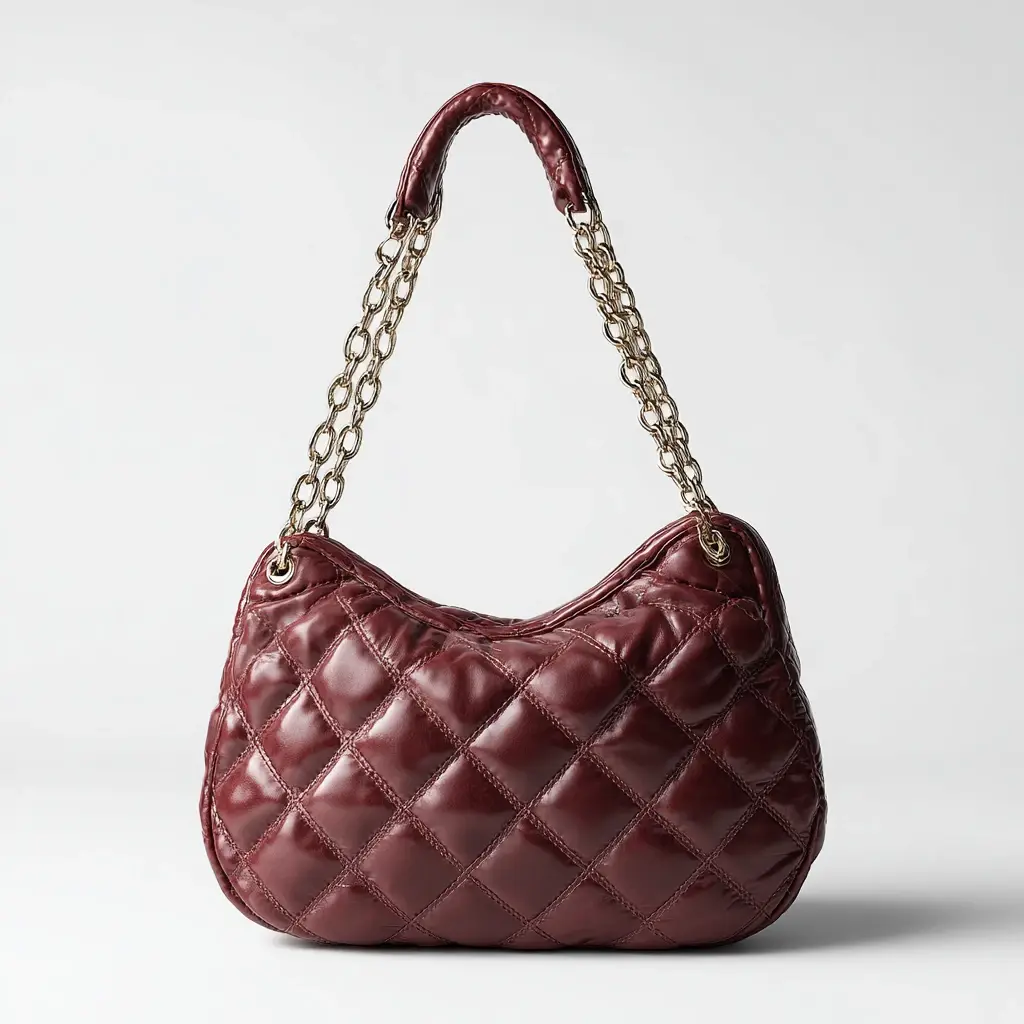
Three development rounds rather than two, and occasionally four. The reason is pattern risk rather than difficulty: a silhouette nobody has built has unknown yield, unknown stress points and unknown operation sequence, and each of those unknowns is discovered by building rather than by drawing. A framed or moulded construction, a shape relying on a curved binding, or anything combining leather with chain and quilting will typically sit at the upper end.
- Familiar silhouette
- Two development rounds, 6-10 working days each
- Modified familiar silhouette
- Two rounds, occasionally a third for fit
- Novel silhouette
- Three development rounds budgeted, plus pre-production
- Framed, moulded or hybrid construction
- Three to four rounds; sampling window 12-15 working days per round
- Multiple materials sharing one tolerance
- Add one round for cross-component colour matching
Budget the third round rather than being surprised by it. A programme planned for three rounds that finishes in two is a pleasant outcome; one planned for two that takes four produces exactly the kind of late panic that leads to approving a sample nobody is happy with. This is also why the revision loop worth running twice is worth reading before the first sample arrives.
When Can You Skip Sampling Entirely?
On a reorder with an unchanged specification, sampling can often be skipped altogether, which removes 6-10 working days from the calendar and means the goods can be booked straight into a bulk slot. This is the single clearest benefit of running a programme rather than placing separate orders, and it requires three things to exist from the first run: a stored specification, retained tooling, and an approved material reference.
- The stored specification. Everything that was once a verbal instruction — bar-tack placement, seam allowance, pocket depth — has to have been written down.
- Retained tooling. The die, mould or screen still exists, is identified as yours, and has been stored.
- Material reference. An approved swatch with a recorded tolerance rather than a colour described in an email.
The other legitimate case for skipping is running a proven pattern in a new colourway where nothing but dye is changing. Measure how often this happens and it becomes clear that the second year of a programme is structurally cheaper than the first, which is the argument for putting energy into documenting round one properly rather than rushing it.
Who Pays for Samples and What Happens to That Money?
Development samples carry a charge, and while policies differ, three points are worth knowing. First, expect the first round to cost more than the second, because it absorbs pattern development and material sourcing. Second, sample charges are often credited against the bulk order; ask whether the credit is automatic, what the window is, and whether it survives cancellation. Third, this is the one place where chasing the lowest fee actively hurts: a partner who develops patterns for free is pricing that work somewhere else, usually into unit price.
- Ask for it itemised. Pattern development, materials, sampling labour and shipping should each be visible rather than bundled into one number.
- Ask about the credit. Is the sample charge credited against bulk, is there a time limit, and does it apply if the order is smaller than first discussed?
- Ask how many are included. Do you get one piece or two? A second piece lets you keep one and ship one for photography.
- Ask who owns the pattern. A pattern developed for you should be identifiable as yours and reusable on future runs.
The hidden cost, though, is calendar rather than money. Every extra round costs roughly two weeks once shipping to you and back is counted, and two weeks in September is what pushes a delivery into December. Judged that way, the expensive thing is rarely the sample fee. It is the delay, and the delay is caused far more often by review time than by build time.
The Discipline That Keeps You to Two Rounds
Every programme that finishes in two rounds has three habits in common, and none of them costs money. They are all documentation habits, and all three take maybe an hour of extra work across the whole development.
- A dimensioned tech pack before round one. Width, height, gusset, strap drop, pocket depth, branding position from a datum edge — all in millimetres with a stated tolerance of plus or minus 3 mm.
- A numbered revision list after each round. Not a narrative. Twelve lines maximum, each stating the item, the current measurement and the wanted measurement.
- Annotated photographs rather than descriptions. Nine images with callouts resolve more than three paragraphs of prose, and they survive being forwarded.
A fourth unofficial habit: approve or reject within two working days of receiving a sample. Not because the line is waiting on that specific hour, but because delay resets attention, and by week three nobody remembers why pocket depth mattered. Every programme we coordinate keeps the round history with the specification, so a repeat starts from evidence rather than from memory, and that file lives alongside the tooling carried by our validated partner factory Quanzhou Yingming Bags.
What Happens If Round Three Still Is Not Right?
This happens in maybe 8-10 percent of programmes and there are three honest options, in increasing order of cost. First, accept the sample with a documented deviation and a credit against the next order, which is right when the issue is cosmetic and the selling window matters more. Second, freeze the design at what it is and fix it on the reorder, which usually means accepting this season and correcting the drawing. Third, stop and redevelop, which is correct when the failure is functional rather than aesthetic.
The diagnostic question is simple: will the buyer's complaint be about something they can see in a photograph, or something they experience wearing it? Photographable problems can be credited and survived. Functional problems — a strap that slips, a zip that jams, a magnet that does not hold — will generate returns, and returns cost several times the price of another sample round. In practice, most third-round disappointments turn out to be specification gaps that were never written down, which is why they belong on the tech pack rather than in another round of hope. Either way, bulk production runs 35-50 days and inspection sits at AQL 2.5 under ISO 2859-1, whose report — together with an ISO 9001 quality system reference — is the last checkpoint before goods leave. Start the conversation through the custom handbag development page.
Getting Samples to You and Back: Parcel, Courier and Customs
Each round is 6-10 working days of build time, and the sample then has to cross a border twice before the next round can start. Most programmes lose more calendar to the parcel than to the bench, and none of that appears in the sampling window. A development parcel of one or two bags weighs 1.2-2.4 kg packed and leaves Xiamen by express courier.
| Destination | Transit each way | Parcel cost at 2 kg | Round trip added per round |
|---|---|---|---|
| United States | 3-5 days | USD 50-80 | 8-12 days |
| European Union | 3-6 days | USD 55-85 | 9-14 days |
| United Kingdom | 3-5 days | USD 55-85 | 9-12 days |
| Australia | 3-5 days | USD 50-75 | 8-12 days |
| Japan and Korea | 2-3 days | USD 40-65 | 6-8 days |
- Send two pieces on one parcel. One to keep and one to annotate and return; the marginal cost is freight and it removes a whole round.
- Mark the parcel as samples, no commercial value. A low declared value keeps a parcel that is coming back out of a duty charge.
- Book the return label with the outbound parcel. A return arranged after approval adds 2-4 days to a round that is already 6-10 working days of build.
Send a dimensioned spec and skip a sample round
Reply with your silhouette, dimensions and target price. A private label coordinator will return a sampling plan with the number of rounds estimated for your specific shape, sampling at 6-10 working days per round, bulk at 35-50 days and inspection at AQL 2.5 under ISO 2859-1. Get a quote.
Frequently Asked Questions
How many samples should I expect before bulk production?
Two development rounds plus one pre-production piece for any silhouette that has been built before. Novel shapes typically need three development rounds, and framed or moulded constructions up to four. Each round takes 6-10 working days to build, or 12-15 for complex work.
What is the difference between a development sample and a pre-production sample?
A development sample is an attempt; a pre-production sample is a control. The pre-production piece is built from the actual bulk materials on the actual tooling to the frozen specification, then retained as the object the inspector compares the shipment against and future reorders match to.
Can I approve bulk on the second sample without a pre-production piece?
It is possible but unwise. Without a retained control object there is nothing measurable to compare 500 units against, and every later discussion about whether that is what was agreed becomes a contest of memory rather than a comparison of objects.
How long does each sample round take?
Six to ten working days of build time for standard shapes, extending to 12-15 for framed, woven or moulded constructions. Add your own review time and courier days: shipping a sample out and back usually accounts for most of the elapsed calendar.
Why did my first sample come back wrong in places I did not specify?
Because unspecified items get built to the operator's judgement rather than to your intention. Every correction of this kind should be added to the tech pack, not merely fixed on the sample, because the tech pack is the thing that repeats at 500 units and the sample is not.
In which cases can I skip sampling altogether?
On a reorder with an unchanged specification, and when running a proven pattern in a new colourway where only dye is changing. Both cases require that the first run left behind a stored specification, retained tooling and an approved material reference.
Do I pay for development samples?
Usually yes, and the charge is often credited against the bulk order. Ask three things: whether the credit is automatic, what its time window is, and whether it survives a smaller first order than originally discussed. The first round generally costs more because it absorbs pattern development.
How many pieces should be retained from pre-production?
Three is standard practice, and each one has a different job. One goes to the brand so both sides hold the same object. One is sealed and filed for 24 months against future reorders, stored with the tooling and the material reference. The third is held for the inspector, who compares the finished shipment against it at pre-shipment inspection running to AQL 2.5 under ISO 2859-1.
What is the most effective way to shorten a sample cycle?
Return annotated photographs carrying millimetre callouts within two working days of the sample arriving. Nine annotated images resolve more than three paragraphs of prose, and they survive being forwarded between teams intact. Delay costs more calendar than build time does in almost every programme, because after a week nobody remembers why pocket depth mattered in the first place.
How many corrections are normal after round one?
Four to six items across three categories: dimension changes such as gusset or strap drop, construction changes such as adding a base board, and material or colour decisions. A seventh item is usually a specification gap that nobody had drawn.
What should I do if the third round is still not right?
Choose by failure type rather than by frustration. Accept with a documented deviation and a credit where the issue is cosmetic, freeze and correct on the reorder where it affects the season, and redevelop where the problem is functional. Functional failures generate returns, and returns cost several times another round.
People Also Ask
Is three samples too many for a simple tote?
No, because the third is not another attempt. It is the control piece. A simple tote usually needs two development rounds, and the pre-production piece is administrative rather than creative.
Should I ask for two identical samples in each round?
Yes where practical. One stays untouched as a reference and the other goes for photography or to a wholesale buyer, which avoids handling damage on the reference piece.
Does a cheaper sample fee mean a cheaper partner?
Not necessarily. Pattern development absorbed for free is generally recovered in unit price later, so compare the total of sample charges plus quoted unit cost rather than either number alone.
Why does my second sample include changes I never asked for?
Because unrequested improvements get made alongside requested ones. Ask explicitly that only listed lines be changed, so each item can be verified rather than guessed at.
Sources and further reading
Every figure on this page is either our own programme data or attributed below. Open the originals before you write them into a specification.
- World Intellectual Property OrganizationWIPO International trademark and design registration before tooling starts.
- Incoterms rulesICC The rules that decide where cost, risk and insurance transfer.
- FashionUnited — fashion industry news and dataFashionUnited Industry news and company data for the fashion sector.