Hobo Bags: Soft Silhouettes That Sell on Social Commerce
A hobo bag either films beautifully or it films like a sack, and the difference is decided by four numbers rather than by styling. Ask first whether the shape films, then work through slump, hide, strap, interior support and pack format. In a Seoul test, a hobo in 0.9 mm milled full-grain with a 280 mm strap drop moved 12 mm at the hem after a 24-hour hang test and read as a soft slouch on camera; the same pattern in a 1.2 mm firm hide moved 4 mm and read as a tote that had lost its shape. Softness is a specification, not an accident, and it is the reason the category converts on video better than any other silhouette in the book.
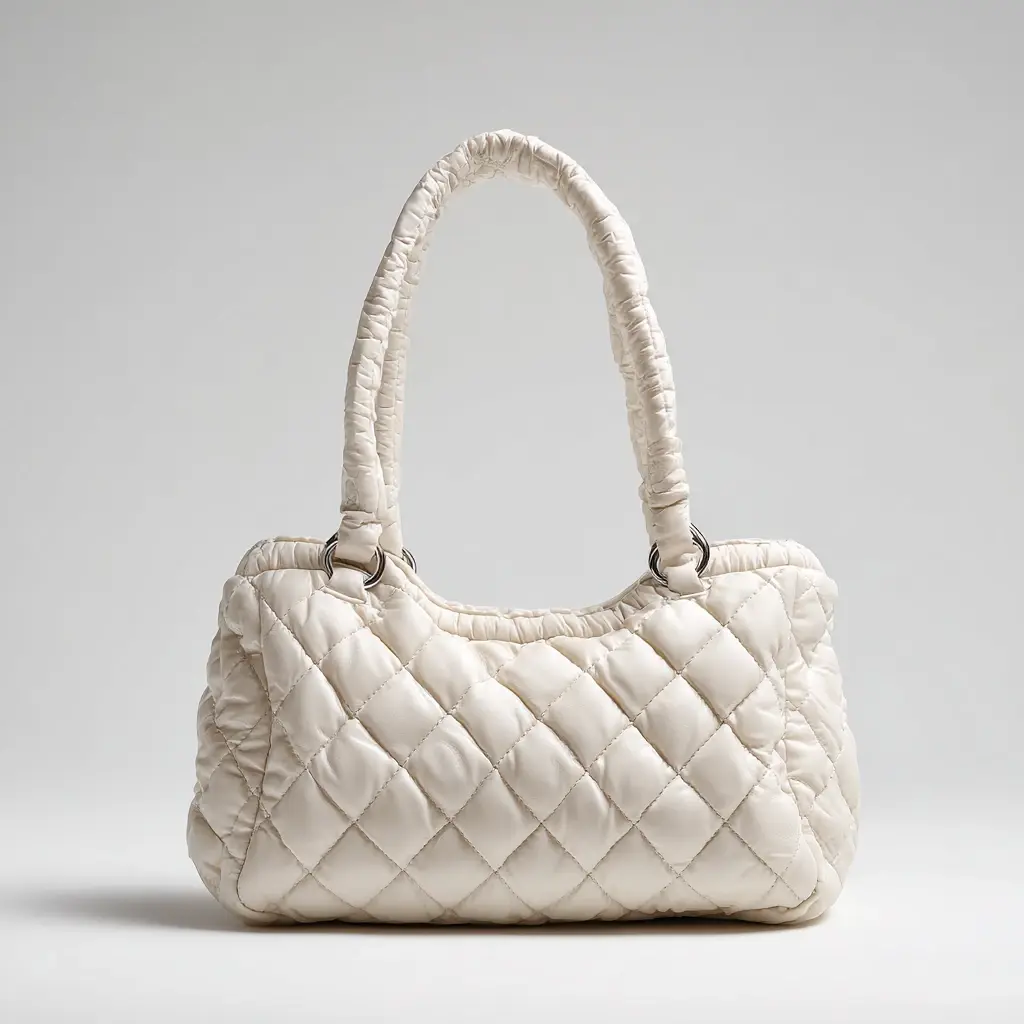
- First Question: Does the Shape Film Well?
- Branch One: How Much Slump Is Too Much?
- Branch Two: Which Leather Reads Soft on Camera?
- Branch Three: One Strap or an Adjustable Shoulder?
- Branch Four: What Holds the Shape Inside?
- Branch Five: Does It Ship Flat or Stuffed?
- What Social Commerce Punishes
- Cost and Yield on a Soft Body
- Where the Hobo Sits Beside the Tote
- Humidity, Conditioning and What Six Weeks Does to the Slouch
- What Soft Bodies Get Returned For, and the Specification Behind It
A hobo bag either films beautifully or it films like a sack, and the difference is decided by four numbers rather than by styling. Ask first whether the shape films, then work through slump, hide, strap, interior support and pack format. In a Seoul test, a hobo in 0.9 mm milled full-grain with a 280 mm strap drop moved 12 mm at the hem after a 24-hour hang test and read as a soft slouch on camera; the same pattern in a 1.2 mm firm hide moved 4 mm and read as a tote that had lost its shape. Softness is a specification, not an accident, and it is the reason the category converts on video better than any other silhouette in the book.
The soft hobo, measured
First Question: Does the Shape Film Well?
Before any other decision, ask whether the shape reads in nine by sixteen. A hobo has one advantage over a structured bag on a phone screen: it changes shape when it moves. A slouch that swings and settles is a moving image with a beginning and an end, which is exactly what a short video needs, while a rigid satchel looks identical in every frame.
The test is crude and effective. Film the sample for three seconds, hand-held, at chest height, with one strap held and the body swinging once. If the silhouette reads as a bag at the start and the end of those three seconds, it will sell. If it reads as a lump, no amount of styling will fix it, and the pattern is the thing to change rather than the camera.
- A curve that reads at thumbnail size. A crescent or a soft arc survives compression; a straight top line does not.
- One visible movement. A single swing that settles is enough; more reads as fidgeting.
- A hem that stays in frame. If the bottom of the bag leaves the shot, the shape is too long for the format.
- Hardware that catches light. One metal element gives the eye a reference point for scale.
Branch One: How Much Slump Is Too Much?
If the bag films well but collapses when it is set down, the slump is too much. The measurable version of that judgement is a 24-hour hang test: hang the bag empty by its strap, measure the hem at the start and after a day, and compare the movement. Below about 8 mm the bag reads as a tote that has sagged; between 8 and 12 mm it reads as a slouch; above 15 mm it reads as a bag with no structure at all.
| Movement at the hem | How it reads on camera | Verdict |
|---|---|---|
| Under 6 mm | A structured bag that has softened | Wrong silhouette, change the hide |
| 6 to 10 mm | A soft shoulder bag with a defined top line | Good for a premium tier |
| 10 to 14 mm | A slouch that moves and settles | The commercial sweet spot |
| 14 to 18 mm | A soft sack with a strap | Only with a strong base panel |
| Over 18 mm | No identifiable shape | Rejected by most buyers at sample |
The lever that controls slump is hide temper, not pattern alone. A 0.9 mm milled full-grain relaxes into a slouch; the same pattern in a 1.2 mm firm hide stays upright. That is why two bags that look identical on a technical drawing can behave completely differently on a shelf, and why the hide specification belongs in the same document as the pattern.
Branch Two: Which Leather Reads Soft on Camera?
Softness is read through three visual cues: how light rolls across a fold, how deep a crease sits, and how the surface moves when the bag is lifted. A milled full-grain at 0.9 mm produces all three, because the grain has been tumbled into a broken surface that catches light unevenly. A smooth corrected-grain reflects light evenly and reads flat on video even when the hand-feel is fine.
- Milled full-grain, 0.9 mm. The default for video. Broken grain, deep folds, and a natural slouch after a week of use.
- Suede or nubuck, 0.9 mm. Reads the softest of all and marks the fastest, which is a problem for a bag that is set down.
- Smooth calf, 1.1 mm. Reads premium in a photograph and stiff on video, because it reflects light in a single direction.
- Coated split, 1.0 mm. Consistent and cheap, and the plastic hand is visible in the way a fold behaves.
Colour interacts with all of it. A mid-tone tan or taupe shows the folds that make a hobo read soft; a black hides them, because the shadows and the surface sit at similar values. That is why the category photographs better in neutrals, and why a black hobo needs a lighter lining or a visible hardware element to keep any sense of shape on screen.
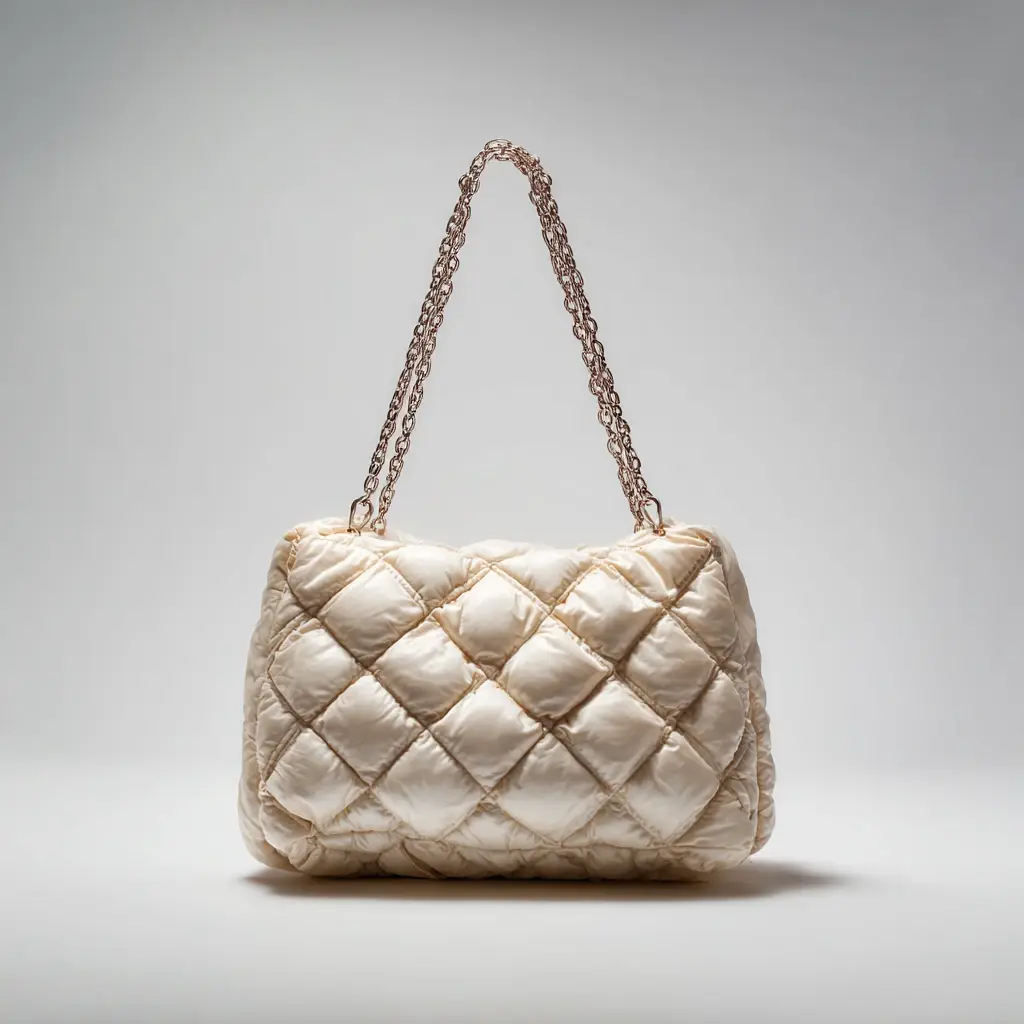
Branch Three: One Strap or an Adjustable Shoulder?
If the bag is meant to slouch on the shoulder, a single continuous strap is the right answer, because a strap that runs from hem to hem becomes part of the silhouette and holds the curve. A 280 mm drop puts the bag at the hip on most wearers, which is where a hobo is designed to sit and where the slouch reads most clearly.
- Single continuous strap. 22 mm wide, running from hem to hem. Best for the shape and the cheapest to make.
- Adjustable strap with a slider. Adds about USD 0.28 and gives a crossbody option, at the cost of a hardware break in the curve.
- Two straps. Reads as a tote and removes the slouch, which defeats the category.
- 280 mm drop. The working number for a shoulder hobo; below 240 mm it becomes a hand-carry bag.
Strap construction deserves more attention than it gets, because a soft body puts the whole load on two attachment points. A 22 mm strap needs a 30 mm reinforcement patch behind each seam, and the stitching at the attachment should be locked rather than back-stitched, because a back-stitch on a soft hide creates a perforation line that tears under load. That is a USD 0.06 detail that prevents a warranty return.
Branch Four: What Holds the Shape Inside?
Almost nothing, and that is the point. A hobo that is fully interlined becomes a satchel with a curved top, so interior support belongs in the base only. A 0.6 mm base panel keeps the bottom flat enough to stand when loaded, while the body stays free to slouch. Add more than that and the silhouette stops moving, which removes the reason the category exists.
- Base panel, 0.6 mm. Enough to keep the bottom from rounding out when the bag is set down.
- No panel interlining. The body must stay free, or the bag stops slouching and stops filming.
- Lining, 210D polyester. Takes a seam, adds about 60 g, and does not stiffen the body.
- One interior zip pocket. 180 mm wide on the back wall, which is where a phone is actually reached for.
The exception is a hobo with a heavy hardware story, where a metal ring or a chain adds load to one side. In that case a 0.4 mm reinforcement behind the hardware is enough, and it should be local rather than a full panel. Local reinforcement solves the load problem without changing how the bag moves, which is the whole discipline of the category.
Branch Five: Does It Ship Flat or Stuffed?
A hobo ships better stuffed than flat, but only lightly. About 220 g of recycled paper inside holds the shape well enough that the bag arrives as a bag rather than a folded piece of leather, and it still compresses enough to keep the carton small. Fully flat packing creases the hide along the fold line, and that crease does not come out.
- 220 g of recycled paper stuffing. Enough volume to hold the body, light enough not to distort the hem.
- Tissue around the strap. A strap pressed against the body for a month leaves a mark on a milled grain.
- A carton, not a mailer. A soft body can survive a mailer, but the crease risk makes a carton the safer choice.
- 15 mm clearance. The same rule as any packed bag, because the stuffing can migrate in transit.
Pack format also drives the cost of the freight, which for a soft body is the one place the category wins. A hobo stuffed at 220 g packs into a cavity roughly 40 percent smaller than a satchel of similar capacity, and that difference is worth more per unit than the entire hardware budget on a mid-tier bag.
What Social Commerce Punishes
Social commerce is unforgiving about four things, and a hobo meets all four badly if the specification is lazy. It punishes a bag that looks different on arrival from the video, a bag that will not sit upright in a photograph, a bag whose strap slips off a shoulder, and a bag whose colour reads differently under a ring light than in daylight. Each of those is a specification question rather than a content question.
- Colour drift. Approve colour under D65 and check it again under a warm ring light, because a tan that reads warm on video can read grey in daylight.
- Strap slip. A 22 mm strap on a soft shoulder slips; a 25 mm strap with a slightly textured lining does not.
- The upright test. If the bag will not stand for a flat lay, every photograph has to be styled around it.
- Return rates. A bag that slumps more in the customer's hands than in the video is returned as not as described.
Sourcing Journal has documented the shift of accessories discovery toward short video for several seasons, and the Accessories Council's retail commentary makes the same point from the buying side: the product has to work in motion and in a still. For a hobo that means the specification has to be stable enough that the fiftieth unit films like the first, which is a consistency question rather than a creativity question.
Cost and Yield on a Soft Body
A soft body is cheaper to make than a structured one and slightly dearer in material, which is the opposite of what most buyers expect. There is no interlining to laminate, no panel skiving to run and no edge paint to build, so the labour falls by roughly 15 percent. But a milled hide at 0.9 mm has a lower yield than a firm hide at 1.4 mm, because the softer temper stretches and the cutter has to avoid areas where the grain has relaxed unevenly.
| Line | Structured satchel | Soft hobo |
|---|---|---|
| Hide | 1.4 mm, higher yield | 0.9 mm milled, about 8 percent lower yield |
| Interlining and board | USD 1.15 | USD 0.18 (base panel only) |
| Additional operations | USD 0.60 | USD 0.12 |
| Closure hardware | USD 0.45 | USD 0.14 |
| Edge finishing | USD 0.30 | USD 0.08 |
| Net effect on unit cost | Baseline | About 12 percent lower, before freight |
Freight then widens the gap. A hobo packs into a cavity about 40 percent smaller than a satchel of similar capacity, which on a 24-unit master carton is the difference between two cartons and three. That is the reason the category is attractive to a direct-to-consumer brand with a low ticket: the landed cost advantage is real, and it does not come from cutting the hide.
Where the Hobo Sits Beside the Tote
The hobo and the tote overlap on capacity and separate on everything else, which is why they coexist in a range rather than competing. A tote is a volume product with a flat base and a structured top line; a hobo is a movement product with a curved top line and a soft body. The tote photographs better in a flat lay; the hobo films better in the hand.
- Stock the tote first if the channel is search-led. Buyers search by capacity, and a tote answers a query.
- Stock the hobo first if the channel is video-led. The silhouette needs movement to be understood.
- Carry both at 500 pcs per colourway. They share a hide family and a hardware finish, so the range reads as one book.
- Do not carry both in the same colourway if the budget is tight. Two silhouettes in two colours beats two in four.
Whichever order is chosen, the production arithmetic is the same. Sampling runs at 6-10 working days for a standard hobo and 12-15 where the strap attachment or the base is new, bulk sits inside the 35-50 day window, and the lot is inspected at AQL 2.5 under ISO 2859-1 with slump measured on a hanging sample rather than judged by eye. Hide chemistry is declared against REACH Annex XVII, and a Leather Working Group rated tannery is named in the specification where the brand is claiming one.
The shoulder versus tote decision frames the same choice from the volume side, the budget silhouettes for new brands ranks the category by cost per sellable unit, and the crossbody case for ecommerce explains why the compact shapes convert. The leather handbag range overview shows where the hobo sits in the wider book.
Humidity, Conditioning and What Six Weeks Does to the Slouch
The twenty-four hour hang test measures a bag that has never been carried, and the interesting result arrives later. A milled hide continues to relax with use and with ambient moisture, so the shape approved in the sample room is not the shape shipped in month three. Conditioning units before they are measured removes most of the surprise, and telling the customer what to expect removes the rest.
- Condition before measuring. Twenty-four hours at about 20 °C and 65 per cent relative humidity before any drape measurement, because hide gains and loses moisture fast enough to move a reading.
- Expect further relaxation. A sound soft body commonly adds a further 3-6 mm of hem movement over the first six weeks of carry before it stabilises.
- Watch the wet season. Above roughly 75 per cent relative humidity for a sustained period a milled grain darkens and softens; a care line about drying slowly away from heat belongs on the insert.
- Protect the transit leg. Desiccant at about 5-10 g per carton plus the 0.05 mm vented sleeve keeps a soft body from arriving with mildew in the grain.
- Re-measure at repeat. Record the conditioned measurement against the original lot number so the seventh reorder still matches the first photograph.
What Soft Bodies Get Returned For, and the Specification Behind It
Soft shapes are returned noticeably more often than structured ones, and the reasons are consistent enough to be specified against. Roughly one return in three on this silhouette is not a fault at all: it is a mismatch between what the video appeared to promise and the bag that arrived. That kind of return is cheap to remove and expensive to ignore, because every one of them costs both legs of carriage plus handling.
| Return reason | Share of returns | Root cause | Answer |
|---|---|---|---|
| It looked bigger on video | 24-32 per cent | Volume shot without a reference object | State external dimensions in millimetres and include a hand or a bottle in every clip |
| It does not stand up | 18-25 per cent | Base panel too light for the load | A 0.6 mm base panel plus a loaded base shot in the listing |
| The strap slips off | 15-20 per cent | 22 mm strap on a soft shoulder with no grip | 25 mm strap with a suede or textured back face |
| Colour looks different at home | 14-20 per cent | Warm light in the video, daylight at the kitchen table | Approve under D65, shoot a daylight frame, and say so on the card |
| Combined effect | About a quarter of units returned | Mostly expectation rather than making | Three stated measurements and one honest line of copy |
Engineer the slouch, then film it
Send us the silhouette, the strap drop you want and the channel. A private label coordinator will specify hide temper, base panel, stuffing weight and pack format, sample the bag in 6-10 working days and measure slump on a hanging sample before inspecting at AQL 2.5 under ISO 2859-1, FOB Xiamen. Get a quote.
Frequently Asked Questions
Why do hobo bags sell well on social commerce?
Because the silhouette changes shape when it moves, and a short video needs movement to hold attention. A three-second clip of a hobo being lifted and settling shows the slouch, the grain and the drape at once, while a structured bag looks identical in every frame and gives the viewer nothing to watch.
How much should a hobo bag slouch?
Between 10 and 14 mm of hem movement after a 24-hour hang test, which is the commercial sweet spot. Under 6 mm the bag reads as a structured shape that has softened, and over 18 mm it reads as a sack with a strap and gets rejected at sample stage by most buyers.
Which leather makes the best hobo bag?
A 0.9 mm milled full-grain, because the tumbled grain has a broken surface that catches light unevenly and produces the deep folds that read as soft. A smooth calf at 1.1 mm looks premium in a photograph and stiff on video, and a coated split shows a plastic hand in the way a fold behaves.
What strap drop should a hobo bag have?
About 280 mm for a shoulder hobo, which puts the bag at the hip where the slouch reads most clearly. Below 240 mm it becomes a hand-carry bag, and a two-strap version reads as a tote and loses the movement that makes the category work on video.
Should a hobo bag be interlined?
Only in the base. A 0.6 mm base panel keeps the bottom from rounding out when the bag is set down, while the body has to stay free or the bag stops slouching. Full panel interlining turns a hobo into a structured satchel with a curved top, which removes the reason the category exists.
How should a hobo bag be packed for shipping?
Lightly stuffed with about 220 g of recycled paper rather than packed flat, because a fold crease in a milled hide does not come out. Wrap the strap in tissue so it does not press into the grain, use a carton rather than a mailer, and keep 15 mm of clearance so the stuffing cannot migrate.
How does a hobo compare with a tote on cost?
About 12 percent lower per unit at 500 pcs, before freight. There is no interlining to laminate, no panel skiving and no edge paint to build, so labour falls roughly 15 percent, though a milled hide at 0.9 mm yields about 8 percent less than a firm 1.4 mm hide.
Why does freight favour a soft body?
Because a stuffed hobo packs into a cavity roughly 40 percent smaller than a satchel of similar capacity. On a 24-unit master carton that is often the difference between two cartons and three, which on a low-ticket direct-to-consumer bag is a larger saving than the entire hardware budget.
What does social commerce punish in a soft bag?
Four things: colour that reads differently under a ring light than in daylight, a strap that slips off a shoulder, a bag that will not sit upright for a flat lay, and a slouch that is bigger in the customer's hands than in the video. Each one is a specification issue rather than a content issue.
How do you keep a soft bag consistent across 500 units?
Specify hide temper with a thickness tolerance of 0.8 to 1.0 mm, measure slump on a hanging sample from each lot, and inspect at AQL 2.5 under ISO 2859-1 with the hang test treated as a measured criterion. A range that films consistently is a range whose specification has a number in it.
Is a hobo suitable for a first order of 500 pieces?
Yes, and it is often the better first order because the construction is simpler than a structured satchel and the freight is lower. The risks are hide yield and slump consistency, both of which are controlled by the temper specification and the hang test rather than by volume.
What hardware suits a hobo bag?
One visible metal element is enough, because the shape needs a reference point for scale on a phone screen. A ring at the strap attachment or a single stud at the base works, and any hardware that adds load to one side needs a 0.4 mm local reinforcement behind it rather than a full panel.
People Also Ask
Do hobo bags go out of fashion?
Less than most shapes. The category is defined by a strap drop and a soft body rather than by a detail, so it survives trend cycles that remove hardware-led styles from the book.
Can a hobo be worn crossbody?
Only with an adjustable strap, which adds about USD 0.28 and introduces a hardware break in the curve. It works commercially, but the bag reads as a shoulder bag on video, which is where it sells.
What is the best colour for a first hobo?
A mid-tone tan or taupe, because the folds that make the bag read soft are visible in a mid-tone and disappear in black. A black hobo needs a lighter lining or visible hardware to keep any sense of shape on screen.
How long does a hobo sample take?
6-10 working days for a standard construction and 12-15 where the strap attachment or the base panel is new. Bulk then runs inside the standard 35-50 day production window.
Sources and further reading
Every figure on this page is either our own programme data or attributed below. Open the originals before you write them into a specification.
- Leather Working Group — environmental auditing for tanneriesLeather Working Group Environmental audit protocol for tanneries and leather traceability.
- Incoterms rulesICC The rules that decide where cost, risk and insurance transfer.
- SATRA — technical services for leather, footwear and accessoriesSATRA Independent leather, hardware and accessories testing protocols.