Shoulder Bags vs Tote Bags: Which to Stock First
Shoulder bags or tote bags first? For most new labels the tote comes first, because it converts the same 500 pcs per style / colourway into a higher retail multiple with fewer operations. The rule is concrete: if your average order value target is above 120 USD, lead with a tote at 360 x 300 x 110 mm; if it is below 90 USD, lead with a shoulder bag at 280 x 200 x 80 mm and take the volume instead. A shoulder bag uses about 0.62 sq ft of hide per unit against 1.63 for a tote, so it lands cheaper, but it supports 2.8-3.2x retail against 3.0-3.5x for the tote. Both sample in 6-10 working days and run in 35-50 days at AQL 2.5 under ISO 2859-1.
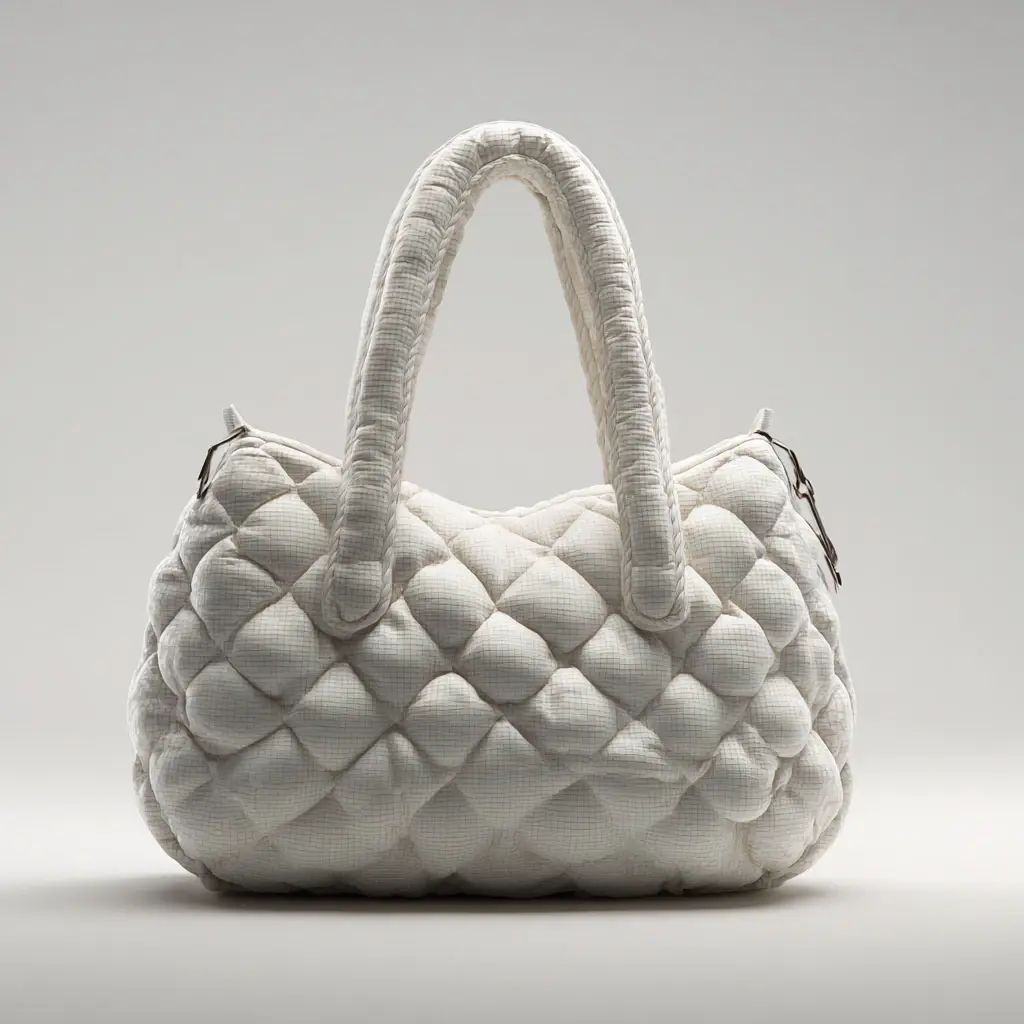
- One Buyer, Two Shortlists
- What the Two Categories Ask of a Buyer
- Side by Side: Margin, Risk and Repeat Rate
- The Specification Gap Between the Two
- When a Shoulder Bag Should Come First
- When a Tote Should Come First
- How to Run Both Without Doubling the Risk
- The Decision in One Paragraph
- How the Two Shapes Ship and Display
- The Two Shapes Do Not Carry Colour the Same Way
- Hardware Count and the Spare-Parts Question
Shoulder bags or tote bags first? For most new labels the tote comes first, because it converts the same 500 pcs per style / colourway into a higher retail multiple with fewer operations. The rule is concrete: if your average order value target is above 120 USD, lead with a tote at 360 x 300 x 110 mm; if it is below 90 USD, lead with a shoulder bag at 280 x 200 x 80 mm and take the volume instead. A shoulder bag uses about 0.62 sq ft of hide per unit against 1.63 for a tote, so it lands cheaper, but it supports 2.8-3.2x retail against 3.0-3.5x for the tote. Both sample in 6-10 working days and run in 35-50 days at AQL 2.5 under ISO 2859-1.
Shoulder versus tote at a glance
One Buyer, Two Shortlists
A buyer running four boutiques across Brisbane and the Gold Coast came to a brief with two shortlists and one problem: 6,000 USD of open-to-buy and no sell-through history. Shortlist A was a structured shoulder bag at a 79 USD retail. Shortlist B was a soft tote at 129 USD. Both were quoted at 500 pcs per style / colourway, both sampled in 6-10 working days, and the landed price difference was under two dollars per unit once the hide consumption was priced in.
The decision was not about taste. At 79 USD retail and a 2.9x multiple, the shoulder bag needed roughly 27 USD landed and would have to sell 185 units to break even on the buy. At 129 USD and a 3.4x multiple, the tote needed about 38 USD landed and had to sell 132 units. The same money bought more units of the cheaper bag, but the tote needed 29 percent fewer sales to return the cash, and the tote had four fewer operations, which meant fewer defects and a cleaner first inspection.
They ran the tote in one colourway at 500 pcs, sold through in eleven weeks, and added the shoulder bag on the second order from a stored specification. The general rule that came out of it is the one at the top of this page, and it holds in most markets: lead with the silhouette whose retail multiple clears your target order value, not with the one whose unit price looks lowest on the quotation.
What the Two Categories Ask of a Buyer
The two shapes ask for different things from the business behind them, and mixing those up is the usual reason a first buy underperforms. A tote is a consideration purchase: a customer compares it against a working day, expects it to hold a laptop, and forgives a higher price if the leather is convincing. A shoulder bag is an occasion purchase: it is compared against an evening, judged on strap comfort and closure quality, and it is bought more often by the same customer.
- Tote buyers read capacity first. Body width, gusset depth and whether a 13-inch laptop fits are the three questions in every review thread, and they are answered by dimensions rather than by styling.
- Shoulder buyers read comfort first. Strap drop, strap width and whether the strap slides off are what reviewers mention, which is why an 18 mm strap at a 280 mm drop is a specification decision and not a design detail.
- Tote returns cluster on structure. Base sag, handle elongation and lining seam slip account for most of the field returns above 3 kg of load.
- Shoulder returns cluster on hardware. Magnetic snap strength, slider wear and strap-end finish account for most of the returns, and they are hardware specifications rather than leather ones.
That split has a practical consequence for the brief: a tote specification should spend its tolerance budget on dimensions and base reinforcement, while a shoulder specification should spend it on the strap assembly and the closure. Spending it evenly on both is how a first sample gets revised twice. The leather handbag programme reference treats the two as separate specification tracks for exactly this reason.
Side by Side: Margin, Risk and Repeat Rate
| Factor | Shoulder bag 280 x 200 x 80 mm | Tote 360 x 300 x 110 mm | Which wins |
|---|---|---|---|
| Hide per unit | 0.62 sq ft | 1.63 sq ft | Shoulder, on landed cost |
| Cutting operations | 10-13 | 6-8 | Tote, on labour |
| Sewing length | about 15 m | about 11 m | Tote |
| Hardware items | Snap, 2 D-rings, slider | Optional snap, 4 studs | Tote |
| Typical retail multiple | 2.8-3.2x | 3.0-3.5x | Tote |
| Sample rounds to approval | 2-3 | 1-2 | Tote |
| Units to cover a 6,000 USD buy | about 185 | about 132 | Tote |
| Repeat purchase frequency | Higher, seasonal colour | Lower, one per customer | Shoulder |
The table looks like a tote victory until the last row, and the last row is the one that matters for a second season. A shoulder bag is the category a customer buys twice, in two colours, twelve weeks apart, because it is priced for an occasion. A tote is closer to one per customer per year. If the plan is a fast second reorder rather than a maximum first margin, the shoulder bag earns its place, and it is why many labels run tote first and shoulder second rather than the reverse.

The Specification Gap Between the Two
The two shapes are not variations on one tech pack. A shoulder bag of this size is built around a strap assembly and a closure, and roughly 60 percent of its labour sits in those two subsystems. A tote of this size is built around panels and a base, and most of its labour sits in the box construction. Writing one specification and changing the dimensions produces a bag that fails at the strap or at the base, depending on which direction it went.
- Shoulder body
- 280 mm wide x 200 mm high x 80 mm gusset, tolerance +/- 3 mm
- Shoulder strap
- 18 mm wide, adjustable 260-300 mm drop, tolerance +/- 3 mm
- Strap reinforcement
- 45 x 45 mm hidden patch behind each strap end, two 10 mm rivets
- Strap pull test
- 220 N static load for 60 seconds at each attachment, no slippage
- Shoulder closure
- 18 mm magnetic snap, 1.8 kg pull force, 10,000 open cycles
- Shoulder lining
- 190T polyester at 52 gsm, 3.4 m per bag
- Tote body
- 360 mm wide x 300 mm high x 110 mm gusset, tolerance +/- 3 mm
- Tote handle
- Two 20 mm straps, 240 mm drop, 12 mm rivets plus 40 x 40 mm patch
- Tote base
- 0.8 mm interlining plus four brass studs, 8 mm head
- Tote lining
- 210D polyester twill at 78 gsm, 4.2 m per bag
- Shared stitch spec
- Bonded nylon Tex 40 at 8 stitches per inch, 10 mm seam allowance
- Shared hardware finish
- Zinc alloy, 24 hours to first corrosion under ASTM B117
Note the two numbers that differ most: 3.4 m of lining against 4.2 m, and 0.62 sq ft of hide against 1.63. Those two lines are the landed cost difference, and they are both material-side rather than labour-side. The labour difference runs the other way, which is why the landed gap between the two is smaller than the size difference suggests and why the decision should be made on retail multiple instead.
When a Shoulder Bag Should Come First
There are four situations where a shoulder bag is the correct first buy, and they are all about the business model rather than about the product. If any two of the four apply, the shoulder category is the safer opening.
- Your target order value sits below 90 USD. At that ceiling the tote multiple will not clear the landed cost without dropping the hide grade, and a thin hide on a large panel is a returns problem.
- You sell through marketplaces with a weight-based fee band. A shoulder bag at about 420 g ships in a cheaper band than a tote at about 780 g, and the fee difference is recurring rather than one-off.
- Your customer buys seasonally. Colour-led, occasion-led buying favours a category a customer will own in three colours, which is the shoulder bag's pattern.
- Your photography is flat-lay only. A tote needs to be shown being carried to read at scale; a shoulder bag reads at 280 mm wide in a flat lay, which suits a small studio.
When a Tote Should Come First
The tote wins the first buy when the plan needs margin rather than frequency. It is also the more forgiving of the two at inspection: fewer operations means fewer defect classes, and a first-time buyer with one shot at a season should prefer the construction with the smaller rejection surface.
- The retail target is above 120 USD. Only the tote multiple supports that number on a first run without premium hardware.
- The brand story is material-led. A large flat panel is where a full-grain hide reads best, and a 1.4-1.6 mm milled finish at 360 mm wide is the cheapest way to look expensive.
- The customer carries a laptop. A 110 mm gusset and a 360 mm width is the practical minimum for a 13-inch device, and no shoulder bag at 280 mm meets it.
- You want the second order to be cheaper. A tote specification stores cleanly, so the repeat can skip sampling and start from retained tooling.
It is worth saying plainly that the tote is not the more profitable category in absolute terms. It is the more profitable first category, which is a different claim: it is the one where a first-time label can be wrong about the market and still land a sellable bag. The tote economics breakdown sets out the per-unit numbers behind that.
How to Run Both Without Doubling the Risk
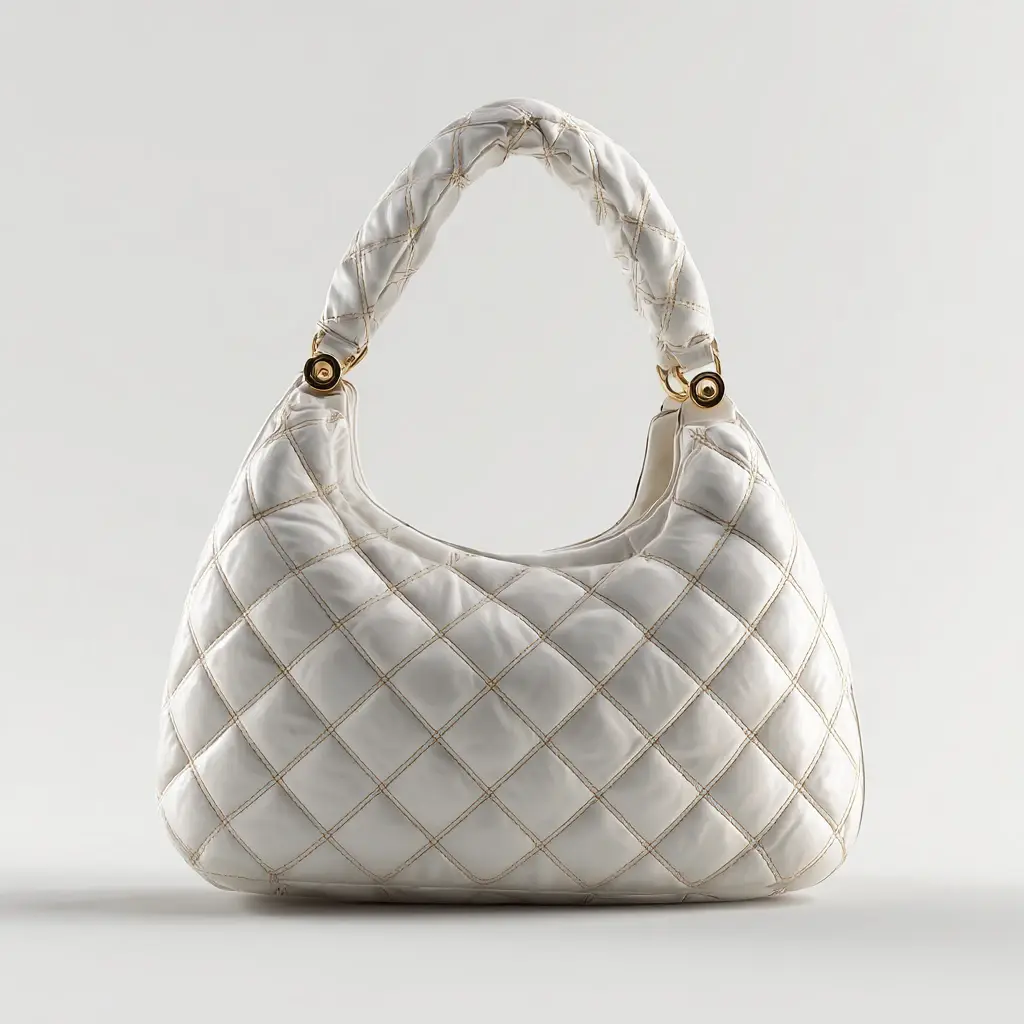
Running both categories in a first season is possible, but only if the material buy is shared. Ordering one hide in one colourway for both shapes means one dye lot, one minimum and one colour-matching problem instead of two. That is the whole trick, and it is why the shared specification lines in the table above matter more than the category-specific ones.
- One hide, one colourway, two shapes. 500 pcs of the tote and 500 pcs of the shoulder bag from the same lot keeps the colour reference common and cuts one approval round.
- One hardware finish. Zinc alloy in light brass across both shapes runs one plating bath instead of two, and the plating minimum is the most punishing fixed cost at this volume.
- One embossing die, two positions. The same die works on the tote front panel and on the shoulder flap; only the datum dimensions change, so tooling is amortised across 1,000 units rather than 500.
- One inspection, one report. Two styles in one shipment can be inspected as one lot at AQL 2.5 under ISO 2859-1, with the report issued per style.
The cost of this approach is that both shapes must be right at the same time, which means the sampling window runs in parallel rather than in sequence. That is fine at 6-10 working days per shape, but it does mean the review round is the bottleneck: annotate both samples on one numbered list and return them together, because a staggered review adds 3-6 days to the calendar twice. The crossbody category read covers the same shared-material trick at a third size point.
The Decision in One Paragraph
Lead with the shape whose retail multiple clears your target order value at 500 pcs per style / colourway, and treat the landed cost difference as a secondary number. Above 120 USD that is a tote at 360 x 300 x 110 mm with a 240 mm handle drop and a lined base. Below 90 USD that is a shoulder bag at 280 x 200 x 80 mm with an 18 mm strap at a 260-300 mm drop and a reinforced attachment. Both sample at 6-10 working days, both run in 35-50 days, both are inspected at AQL 2.5 under ISO 2859-1 and both ship FOB Xiamen, so the only real variable is which one your customer will pay for.
How the Two Shapes Ship and Display
The two shapes behave differently in the two places that cost money after the purchase order: the carton and the shelf. A tote stacks flat in a carton but occupies shelf depth, while a shoulder bag nests but needs its strap laid flat to avoid a set. In a 60 x 40 x 40 cm carton a tote packs 16-22 and a shoulder bag 30-36, so 500 pieces is 23 cartons against 15. On the shelf the comparison reverses, because a wall of shoulder bags holds more SKUs per linear metre. The shipping and handling pack specification covers the carton side in detail.
- Carton count. 500 totes at 16-22 per carton, and 500 shoulder bags at 30-36 with straps laid flat.
- Shelf depth. A tote needs about 100 mm and a shoulder bag about 90 mm, which decides SKUs per bay.
- Creasing in transit. A tote arrives with a fold line unless the cavity is filled; a shoulder bag with a strap set unless laid flat.
- Hanging display. A shoulder bag hangs from its strap and reads at a glance, while a tote needs a shelf or a hook.
The Two Shapes Do Not Carry Colour the Same Way
One colour plan across both shapes usually wastes half of it. A tote is a large flat panel, which is where a full-grain hide or a printed canvas reads best, and it is the shape that can carry a seasonal colour at depth. A shoulder bag is seen in smaller area and closer to the face, so its colour is read against clothing rather than against a shelf. The practical consequence is a split: the core neutral on the tote and the seasonal shade on the shoulder bag, because a second colourway on a tote is the larger stock commitment of the two.
- Tote. The large panel carries a seasonal colour and 60-70 per cent of a first season's volume.
- Shoulder bag. Read against clothing, so one neutral plus one seasonal shade is the usual shape of the buy.
- Shared dye lot. Both shapes cut from one hide in one colourway keeps the colour record to a single lot.
- Second colourway. On a tote it doubles the piece commitment for that shape; on a shoulder bag it adds 500 pcs.
Hardware Count and the Spare-Parts Question
Hardware is where the two shapes diverge on after-sales. A tote carries four base studs and an optional snap, roughly five metal items; a shoulder bag carries a closure, two D-rings, a slider and its keepers, which is eight to twelve components each with its own failure mode. That matters twice: at inspection, where every component is a defect opportunity, and after the sale, where the slider is the part a customer asks to have replaced. A small spares allowance on a first order converts an exchange into a repair, which is the cheaper of the two.
- Tote components. Four base studs and one optional snap, five items and five separate settings.
- Shoulder components. Eight to twelve, including the slider, and each is a separate setting operation.
- Spares allowance. Two to three per cent of components held loose, which turns an exchange into a repair.
- Plating consistency. One bath across both shapes, tested to ASTM B117 at 24 hours to first corrosion.
Send both shortlists, get one quote
Send target retail price, quantity per colourway and a material direction for each shape. A private label coordinator will return a single quote covering both, at MOQ 500 pcs per style / colourway, sampling in 6-10 working days and bulk in 35-50 days. Get a quote.
Frequently Asked Questions
Should a new brand stock shoulder bags or tote bags first?
Lead with the shape whose retail multiple clears your target order value. Above 120 USD that is a tote at 360 x 300 x 110 mm; below 90 USD that is a shoulder bag at 280 x 200 x 80 mm. Both carry the same MOQ of 500 pcs per style / colourway and the same calendar, so price is a secondary variable.
Which category has the better margin?
The tote supports a 3.0-3.5x retail multiple against 2.8-3.2x for a shoulder bag, because buyers judge a tote against a full working day and a shoulder bag against an evening. The shoulder bag lands cheaper per unit, using 0.62 sq ft of hide against 1.63, but the multiple gap usually outweighs the cost gap on a first buy.
How much leather does each shape use?
A shoulder bag at 280 x 200 x 80 mm uses about 0.62 sq ft including the strap and trim. A tote at 360 x 300 x 110 mm uses about 1.63 sq ft including handles and trim. That difference, plus 4.2 m of lining against 3.4 m, is most of the landed cost gap between them.
What strap width and drop should a shoulder bag specify?
An 18 mm strap with an adjustable drop of 260-300 mm, tolerance plus or minus 3 mm. The strap end should carry a 45 x 45 mm hidden reinforcement patch and two 10 mm rivets, and each attachment should hold 220 N of static load for 60 seconds without slippage.
Which category has fewer defects at inspection?
The tote, because it has six to eight cutting operations against ten to thirteen for a shoulder bag, and about 11 metres of sewing against 15. Fewer operations mean fewer places for a defect to enter, which is why first-time buyers usually clear AQL 2.5 more comfortably on a tote.
Can both shapes be ordered from one hide lot?
Yes, and it is the recommended approach. One hide, one colourway and one hardware finish across two shapes means one dye lot, one plating run and one colour approval rather than three. The same embossing die can then serve both, amortised over 1,000 units instead of 500.
What closure should a first shoulder bag use?
An 18 mm magnetic snap rated at about 1.8 kg of pull force and 10,000 open cycles. It is cheap, it needs no mould beyond a standard setting die, and it avoids the plating and corrosion exposure of a turn-lock, which is tested to 24 hours under ASTM B117.
How many units have to sell to cover a first buy?
On a 6,000 USD buy at a 2.9x multiple, a shoulder bag at 79 USD retail needs roughly 185 units. A tote at 129 USD and a 3.4x multiple needs about 132 units. The cheaper bag buys more units but the higher-multiple bag needs about 29 percent fewer sales to return the cash.
Which category drives more repeat purchases?
The shoulder bag. Customers buy occasion-led shapes in two or three colours across a season, while a tote is closer to one per customer per year. If the plan depends on a fast second reorder rather than maximum first margin, that frequency argument can outweigh the multiple argument.
How long does each category take from brief to shipment?
Identical: 6-10 working days for sampling, 3-6 days for review, 35-50 days of production 35-50 days for inspection and handover, which is 55-80 days from signed brief to goods with your forwarder. Transit adds 18-28 days to the US West Coast or 30-38 days to Northern Europe.
Is it better to run both categories in the first season?
Only with a shared material buy. One hide, one colourway, one hardware finish and one embossing die across two shapes keeps colour consistent and amortises tooling over 1,000 units. Without that sharing, a two-shape launch doubles the dye lots, the plating runs and the approval rounds.
People Also Ask
Does a tote always beat a shoulder bag on profit?
On retail multiple, yes: 3.0-3.5x against 2.8-3.2x. On repeat frequency, no. The tote wins the first buy because it is more forgiving at inspection and supports a higher price; the shoulder bag wins the second and third buys.
What is the cheapest first category to land?
A shoulder bag, at about 0.62 sq ft of hide and 3.4 m of lining per unit. But cheapest to land is not the same as easiest to sell at a margin, and a first buy should be optimised for sell-through rather than for landed cost.
Should both shapes use the same thread and stitch spec?
Yes. Bonded nylon Tex 40 at 8 stitches per inch with a 10 mm seam allowance works across both, and standardising it means one needle size, one thread colour reference and one inspector count.
What if the target retail price sits between 90 and 120 USD?
Take the tote, but drop to a 1.2-1.4 mm hide and an unlined or lightly lined construction. The multiple still clears at 3.0x, and the reduced specification keeps the landed cost inside the band.
Sources and further reading
Every figure on this page is either our own programme data or attributed below. Open the originals before you write them into a specification.
- SATRA — technical services for leather, footwear and accessoriesSATRA Independent leather, hardware and accessories testing protocols.
- FashionUnited — fashion industry news and dataFashionUnited Industry news and company data for the fashion sector.
- Leather Working Group — environmental auditing for tanneriesLeather Working Group Environmental audit protocol for tanneries and leather traceability.