Tote Bags: The Most Profitable First Category for New Brands
Why are tote bags the most profitable first category for a new brand? Because a tote converts one material buy into the largest sellable surface at the lowest pattern risk in the catalogue: 500 pcs per style / colourway of a 36 x 30 x 11 cm body consumes roughly 1.35 sq ft of hide per unit, cuts from flat panels at a known yield of 68-74 percent, and carries a 20 x 12 cm branding panel that needs nothing more than an embossing die. In unit-economics terms, the tote is the only silhouette where a first-time label can reach a 3.0-3.5x retail multiple on a 500-piece run without paying for a frame, a mould or a second sample round. A sourcing partner can quote it in one pass: sampling at 6-10 working days, bulk at 35-50 days, inspection at AQL 2.5 under ISO 2859-1, shipped FOB Xiamen.
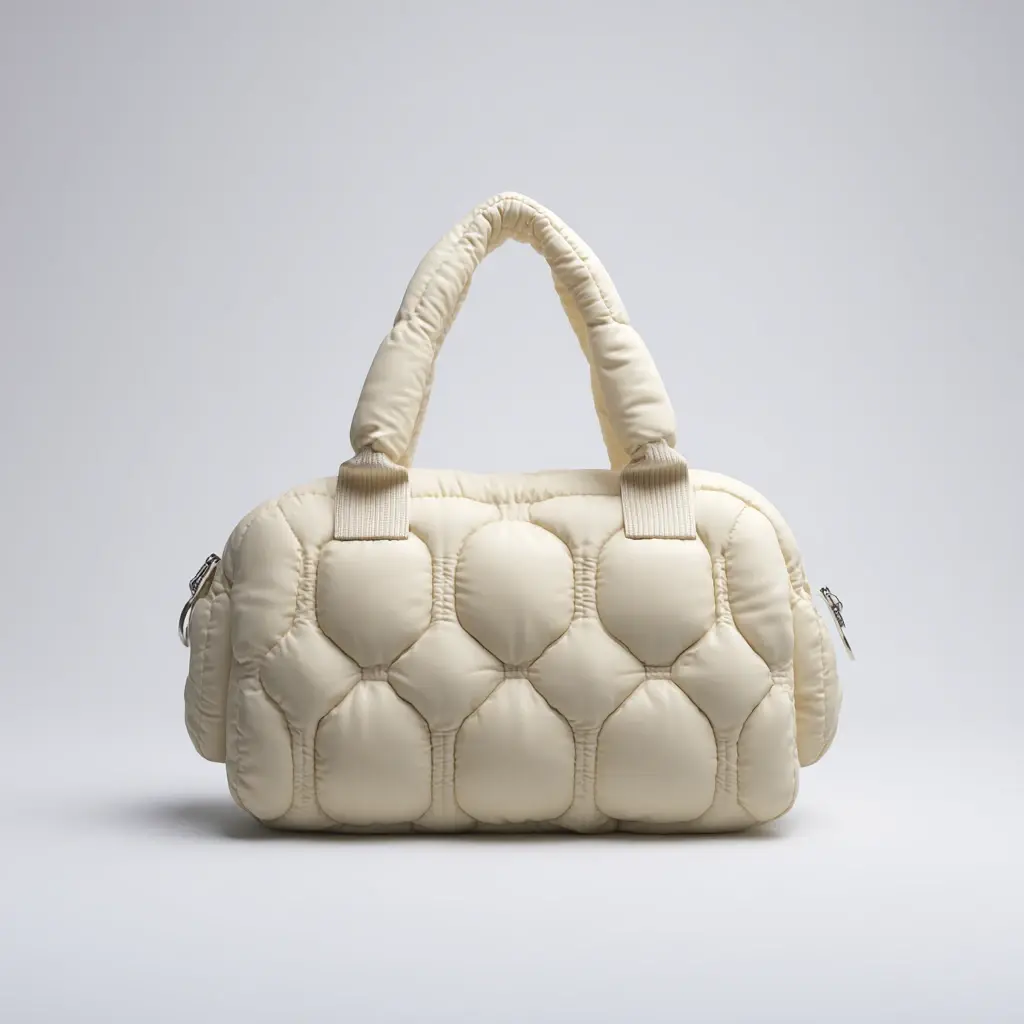
- What the Numbers Say About a First Category
- Unit Economics: Where a Tote Wins
- Specification Sheet for a 500-Piece Tote Run
- Yield, Hide Consumption and Flat Panel Cutting
- Three Tote Constructions and What Each Costs
- Branding Real Estate on a Tote Body
- Where a Tote Line Goes Wrong
- Building the First Order Around One Proven Shape
- Handle Constructions: Four Ways to Carry the Load
- Carton Pack and Freight for a 500-Piece Tote Run
Why are tote bags the most profitable first category for a new brand? Because a tote converts one material buy into the largest sellable surface at the lowest pattern risk in the catalogue: 500 pcs per style / colourway of a 36 x 30 x 11 cm body consumes roughly 1.35 sq ft of hide per unit, cuts from flat panels at a known yield of 68-74 percent, and carries a 20 x 12 cm branding panel that needs nothing more than an embossing die. In unit-economics terms, the tote is the only silhouette where a first-time label can reach a 3.0-3.5x retail multiple on a 500-piece run without paying for a frame, a mould or a second sample round. A sourcing partner can quote it in one pass: sampling at 6-10 working days, bulk at 35-50 days, inspection at AQL 2.5 under ISO 2859-1, shipped FOB Xiamen.
The tote as a first programme
What the Numbers Say About a First Category
A first category earns its place with three numbers, not with taste: how many units one material buy produces, how many operations each unit needs, and how many sample rounds it takes before the shape is right. The tote scores well on all three. A 36 x 30 x 11 cm body is four flat panels plus a base, which is about six cutting operations and roughly 11 metres of sewing. A structured satchel of the same retail price needs a gusset assembly, a flap with a closure and a lining set, which is closer to 24 operations and 19 metres of sewing, and the difference shows up as labour minutes rather than as material cost.
The second number is the one founders underestimate. Every additional operation is a place where a defect can be introduced, and defect rates compound with operation count. At AQL 2.5 under ISO 2859-1, a 500-piece lot is sampled at 50 units with an accept of 3 minor and 2 major; a construction with twice the operations has roughly twice the surface for those defects to appear. A handbag programme specialist will tell you the same thing in plainer language: the cheapest bag in the catalogue is the one that passes inspection the first time.
| Silhouette | Cutting operations | Sewing length | Typical sample rounds | Tooling beyond a die |
|---|---|---|---|---|
| Tote | 6-8 | about 11 m | 1-2 | None |
| Shoulder | 10-13 | about 15 m | 2-3 | Strap-end mould optional |
| Crossbody | 12-16 | about 14 m | 2-3 | Slider branding |
| Satchel | 16-22 | about 19 m | 2-4 | Frame or closure mould |
| Bucket | 9-12 | about 13 m | 2-3 | Base disc, eyelet set |
Read the table as a risk table rather than a price table. The tote column is not cheaper because the leather is cheaper; it is cheaper because there is less of everything else attached to it. That is also why the leather handbag programme reference opens with flat-panel constructions before it moves to framed ones, and why the shoulder versus tote decision is the first fork most new labels face.
Unit Economics: Where a Tote Wins
Profitability in a first line is a function of the retail multiple rather than the landed cost. A tote that lands at a given cost can be retailed at 3.0-3.5 times that figure because buyers judge it against a full day of carrying: laptop, water bottle, a jacket. The same leather in a compact crossbody is judged against an evening out and rarely supports more than 2.6-3.0 times. That gap of half a turn is where a new label either funds its second season or does not.
- Material is the dominant line, and the tote uses it efficiently. At 1.35 sq ft per unit and a cutting yield of 68-74 percent, a 500-piece tote run consumes roughly 950-1,000 sq ft of hide, which is about 55-60 average hides. That is a single dye lot, which is what keeps colour consistent across the run.
- Hardware is optional. A tote can ship with no closure at all, or with a single magnetic snap. A satchel needs a turn-lock or a frame, and plated hardware is priced per piece with a plating bath minimum that punishes small runs.
- Tooling is one die. An embossing die at 20 x 12 cm is the entire branding investment. Every other silhouette in the catalogue asks for a second tooling item, and each one has to be paid for before the unit price falls.
- Repeat orders get cheaper faster. With a stored specification and retained tooling, the second tote run can skip sampling entirely, removing 6-10 working days and one amortised tooling charge from the calendar.
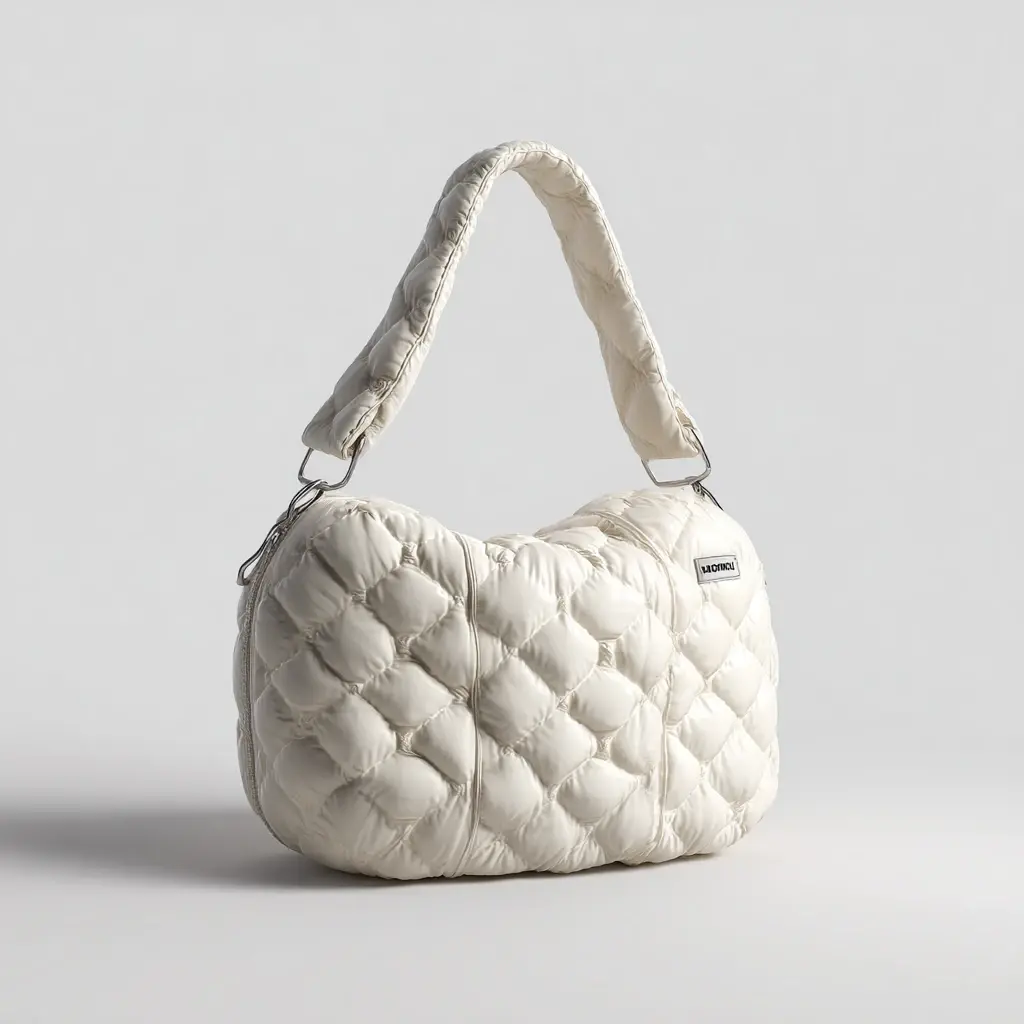
Specification Sheet for a 500-Piece Tote Run
The numbers below are the ones that belong on a purchase order for a mid-market leather tote. They are written as ranges with a tolerance, because a specification without a tolerance is a request rather than a standard, and inspectors measure against the tolerance rather than against the intention. Every figure here is checkable at the inspection table with a tape, a gauge or a count.
- Body dimensions
- 360 mm wide x 300 mm high x 110 mm gusset, tolerance +/- 3 mm
- Handle drop
- 240 mm, tolerance +/- 3 mm, measured from the top edge to the apex
- Body leather
- Full-grain bovine, 1.4-1.6 mm, milled, semi-aniline finish
- Gusset and base
- Same hide split to 0.9-1.0 mm to reduce bulk at the fold
- Lining
- 210D polyester twill, 78 gsm, colour matched to Delta E 2.0 or better
- Interlining
- 0.8 mm non-woven on the base panel only, to hold the floor flat
- Thread
- Bonded nylon Tex 40, colour 402, at 8 stitches per inch
- Seam allowance
- 10 mm on all structural seams, 8 mm on lining
- Stitch density at stress points
- 11 stitches per inch with a 25 mm back-tack at each handle end
- Handle attachment
- Two 12 mm rivets per end plus a 40 x 40 mm reinforcement patch
- Base protection
- Four brass studs, 8 mm head, set at 40 mm from each corner
- Hardware finish
- Light brass plating on zinc alloy, 24 hours to first corrosion under ASTM B117
Three of those lines deserve a comment. The 240 mm handle drop is the difference between a tote that sits under the arm and one that drags at the hip; it is also the single most common revision on a first sample, so specify it in millimetres rather than in a photograph. The 25 mm back-tack at each handle end is what turns a handle from a decorative strip into a load path, because the handle joint is where field returns start. And the 0.9-1.0 mm split on the gusset is what keeps the corner from folding into a hard crease after a month of use.
Yield, Hide Consumption and Flat Panel Cutting
How Much Hide Does One Tote Actually Use?
About 1.35 sq ft of finished leather per unit for the body, plus 0.20 sq ft for the handles and 0.08 sq ft for trim, which is 1.63 sq ft per bag before waste. Cutting yield on flat panels runs 68-74 percent because the pieces are rectangles and rectangles nest efficiently; a shaped flap or a curved gusset drops yield by 8-12 points. Across 500 pieces that difference is 80-110 sq ft of hide, which is four to six hides and a visible line on the quotation.
This is also the argument against a heavily shaped first silhouette. A designer who wants a curved top edge is not asking for a more expensive bag in the abstract; they are asking for a yield penalty that has to be paid for somewhere, and on a 500-piece run it is paid for in the unit price rather than absorbed. Where the shaped edge matters to the brand, the usual compromise is a straight body with a shaped top panel, which keeps the nesting loss to about 4 points instead of 10.
Three Tote Constructions and What Each Costs
Tote is a family, not a single bag, and the three constructions below behave very differently on the line. Choosing between them is a decision about price band and about durability, and it should be made before the tech pack is drawn rather than after the sample arrives.
| Construction | What holds the shape | Cost driver | Best price band | Field risk |
|---|---|---|---|---|
| Unlined soft tote | The hide itself at 1.6-1.8 mm | Hide thickness and grade | Entry to mid | Base sag under load above 3 kg |
| Lined flat tote | 210D lining plus 0.8 mm base interlining | Lining labour, 4.2 m per bag | Mid | Lining seam slip at the top edge |
| Structured tote | Full interlining set plus a bound base | Interlining, edge paint, extra operations | Mid to premium | Edge paint cracking at the handle join |
For a first run, the lined flat tote is usually the right answer. It holds a shape at retail, it photographs well because the interior is a single clean colour, and it uses 4.2 m of lining per bag, which is a labour cost that scales predictably. The structured version is a second-season bag: it carries a better multiple, but edge paint on a 500-piece run adds three operations and a rejection class of its own, because edge finish is judged by eye rather than by gauge.
Branding Real Estate on a Tote Body
A tote front panel is the largest uninterrupted branding surface in the handbag catalogue, which is the second reason it suits a new label. A 20 x 12 cm blind emboss sits comfortably in the lower third of a 360 mm panel with 60 mm of clearance from each side seam and 55 mm from the base seam, and it needs one die, one press setting and about 12 seconds per unit.
- Blind emboss. One die, no foil, no colour registration. Depth of 0.6-0.9 mm reads well on milled full-grain and survives abrasion testing.
- Foil stamp. Adds a foil roll and a temperature setting; registration tolerance is +/- 0.5 mm, and the failure mode is a broken edge on fine serif type.
- Woven label. Set 25 mm below the top edge, 45 x 20 mm, folded and topstitched on two sides. Cheap, replaceable, and legible in listing photography.
- Branded hardware. A zip puller or a base stud with a mark costs a mould and a plating run, which is a second-season investment rather than a first-season one.
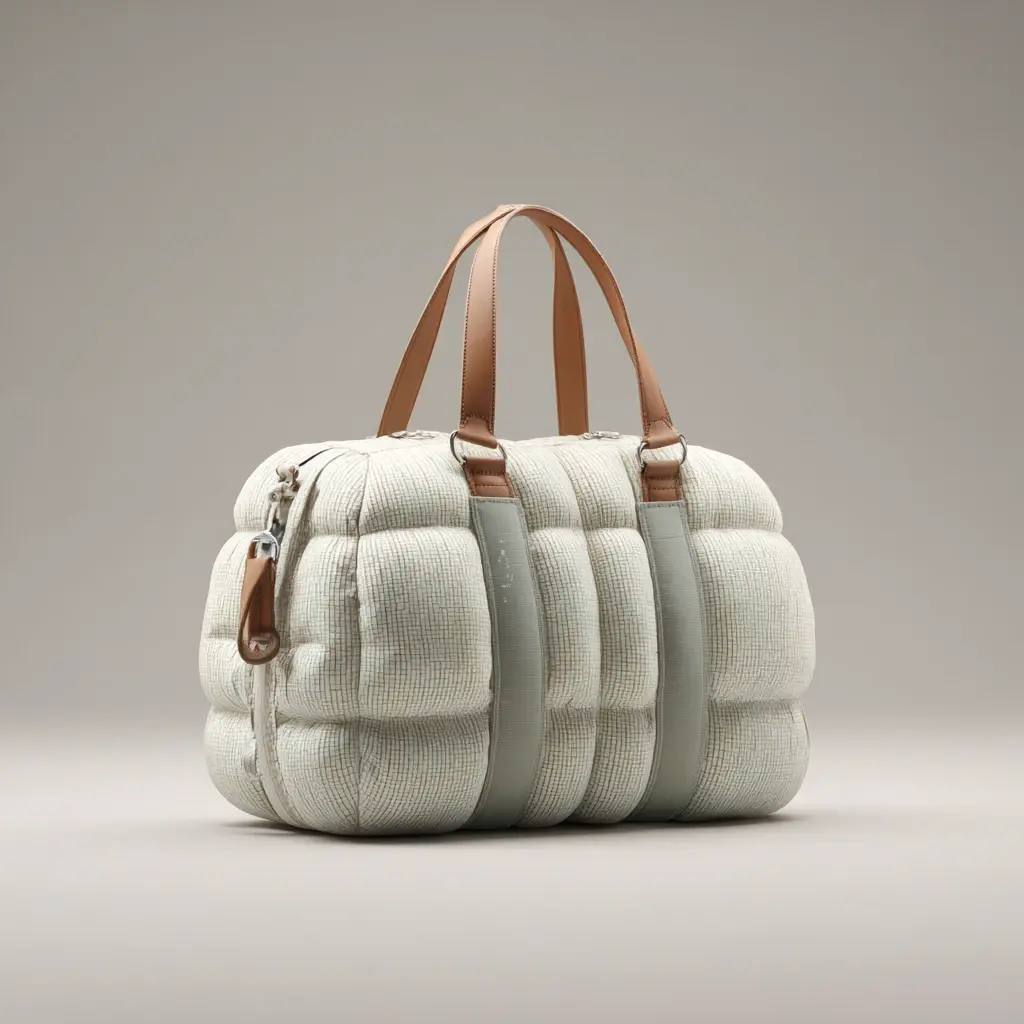
Whichever method is chosen, the position belongs in the tech pack as a dimension from a datum edge, not as a sketch. An emboss placed by eye drifts by 5-8 mm across a run, and a drift that small is invisible in a sample photograph but obvious on a shelf of twelve. The crossbody demand analysis shows the same rule applied to a smaller panel, where the tolerance is tighter still.
Where a Tote Line Goes Wrong
The failure modes are consistent enough to list, and all five are specification failures rather than craft failures. Each one has a number attached, which is the point: a tote that fails usually fails at a dimension somebody left to interpretation.
- Handle drop left undefined. A 30 mm swing in drop changes how the bag wears and how it reviews. Specify 240 mm +/- 3 mm.
- Base left unlined. Above 3 kg, an unlined 1.4 mm base will dish. Specify 0.8 mm interlining on the base panel and four studs.
- Top edge left raw. A raw turned edge on unlined construction frays at about month four. Specify a 10 mm turn with two rows of stitching, or a bound edge.
- Colour approved on screen. A screen proof is not a dye lot. Approve a physical swatch under a defined light source and hold Delta E 2.0 as the tolerance.
- Interior left generic. A slip pocket at 160 x 120 mm and a zip pocket at 180 x 140 mm are the two features that appear most often in positive reviews, and they cost 1.1 m of lining each.
Building the First Order Around One Proven Shape
The order that works is one silhouette in one colourway at 500 pcs, then a second colourway on the repeat. It is a dull plan and it survives contact with a warehouse, which is more than can be said for a five-style launch. The sequence below is what a private label coordinator will run without asking for clarification.
- Send the brief with a target retail price per SKU, so the specification can be engineered to a ceiling rather than guessed at.
- Approve a physical material swatch, matched to a Pantone TCX reference at Delta E 2.0 or better, before sampling starts.
- Sample in 6-10 working days, 12-15 for a lined and structured construction, and review with numbered annotations rather than prose.
- Freeze the specification and pay the deposit together, so the production slot is booked at the same moment the design stops moving.
- Run bulk in 35-50 days, with pre-shipment inspection at AQL 2.5 under ISO 2859-1 and the written report issued to you.
- Ship FOB Xiamen, with CIF or DDP available, and use the 18-38 days of transit to build listing photography and copy.
Two habits hold the calendar. Book the production slot when the deposit is paid rather than when the sample is approved, because slots tighten before Chinese New Year and through the autumn shipping rush. And keep the second colourway for the repeat: once sell-through data shows which size and which colour earned the reorder, the second run can skip sampling and start from a stored specification, which is where the unit price actually falls.
Handle Constructions: Four Ways to Carry the Load
The handle is the load path on a tote and the joint is where field returns start. Four constructions carry that load, and they differ in what they survive, how many operations they need and what they cost. The choice belongs on the tech pack at brief stage, because a handle changed after the panels are cut is a different bag.
| Construction | Static load | Operations | Cost index | Best for |
|---|---|---|---|---|
| Stitched flat strap, 25 mm bar-tack | 15-20 kg | 3 | 1.0 | Entry to mid, unlined soft totes |
| Rivet plus stitched patch at each end | 25-35 kg | 5 | 1.5 | Mid, lined flat totes carrying a laptop |
| Tubular leather over a webbing core | 30-45 kg | 7 | 2.0 | Premium, structured bodies |
| Webbing core with a leather sleeve | 35-50 kg | 8 | 2.4 | Heavy carry, 3 kg and above |
- Bar-tack the handle root. A 25 mm bar-tack at about 6,000 stitches is what turns a strip into a load path.
- Carry the reinforcement down the panel. A patch carried 40-60 mm spreads the load past the seam.
- Test at 3 kg for 48 hours. A handle that holds 20 kg for 30 seconds and creeps under a weekend load is not the same handle.
Carton Pack and Freight for a 500-Piece Tote Run
A tote cubes out before it weighs out, so the freight decision is a packing decision made weeks before the port. Five hundred totes packed flat, nested and stacked at 20-24 pieces per carton land in a different freight bracket from the same order packed loosely at twelve per carton, and the difference is a line on the quotation rather than a conversation at the terminal.
| Pack method | Pieces per carton | Cartons and volume | Freight per unit |
|---|---|---|---|
| Flat, nested, alternating direction | 20-24 | 21-25 cartons, 3-5 cbm | USD 2.20-3.40 |
| Flat, stacked without nesting | 12-15 | 34-42 cartons, 5-7 cbm | USD 3.10-4.60 |
| Stuffed with tissue, standing | 8-10 | 50-63 cartons, 8-11 cbm | USD 4.40-6.20 |
- Pack flat. A tote folded at the gusset travels at roughly half the cube of one stuffed and standing.
- Use a 63 x 43 x 38 cm carton at 12-15 kg gross. It loads a 120 x 100 cm pallet without overhang and stays liftable by one handler.
- Ask for the freight figure with the unit price. The two move in opposite directions as the order grows, and only the sum matters.
Quote a 500-piece tote run in one pass
Send body dimensions, handle drop, material direction and a target retail price. A private label coordinator will return a quote against sampling at 6-10 working days, bulk at 35-50 days and inspection at AQL 2.5 under ISO 2859-1. Get a quote.
Frequently Asked Questions
Why are tote bags the most profitable first category for a new brand?
Because a tote converts one material buy into the largest sellable surface with the fewest operations. A 500-piece run of a 360 x 300 x 110 mm body uses about 1.63 sq ft of hide per unit, needs six to eight cutting operations and roughly 11 metres of sewing, and brands with a single embossing die. That combination supports a 3.0-3.5x retail multiple on a first run.
How much leather does one tote bag consume?
About 1.35 sq ft for the body panels, plus 0.20 sq ft for the handles and 0.08 sq ft for trim, which is 1.63 sq ft per bag before cutting waste. At a flat-panel yield of 68-74 percent, a 500-piece run consumes roughly 950-1,000 sq ft of finished leather, which is about 55-60 average bovine hides in one dye lot.
What handle drop should a first tote specify?
240 mm measured from the top edge to the apex of the handle, with a tolerance of plus or minus 3 mm. That dimension is the most common revision on a first sample, because it decides whether the bag sits under the arm or drags at the hip, and it should be written in millimetres rather than shown in a reference photograph.
What leather thickness works best for a mid-market tote?
Full-grain bovine at 1.4-1.6 mm for the body, with the gusset and base split to 0.9-1.0 mm so the fold does not build bulk at the corner. Below 1.2 mm the body will dish under load without interlining; above 1.8 mm the bag gains weight without gaining structure, and the handle joints carry more stress.
How many operations does a tote need compared with a satchel?
A tote is about six to eight cutting operations and roughly 11 metres of sewing. A structured satchel of similar retail value needs a gusset assembly, a flap and a closure, which is 16-22 operations and about 19 metres of sewing. Operation count drives labour minutes and also drives defect surface, which is why it shows up in the price twice.
What should the inspection standard be for a 500-piece tote run?
AQL 2.5 under ISO 2859-1, which for a 500-piece lot means 50 units drawn with an accept of 3 minor defects and 2 major. Ask for the written report, and ask for an ISO 9001 quality system reference and a BSCI or Sedex audit reference for the validated partner factory at the same time.
Should a first tote be lined or unlined?
Lined, for a first run. A 210D polyester twill at 78 gsm costs 4.2 m of lining per bag and holds the interior as one clean colour, which photographs well and reads as a finished product. An unlined tote at 1.6-1.8 mm can work at an entry price band but will dish at the base above about 3 kg of load.
Where should the logo go on a tote bag?
A 20 x 12 cm blind emboss in the lower third of the front panel, 55 mm above the base seam and with 60 mm clearance from each side seam. Specify the position as dimensions from a datum edge rather than as a sketch, because placement by eye drifts 5-8 mm across a run, which is invisible in one sample and obvious across a shelf.
What makes a tote fail in the field?
Five specification gaps, in order of frequency: handle drop left undefined, base left unlined so it dishes above 3 kg, top edge left raw so it frays around month four, colour approved on screen rather than on a physical swatch, and an interior with no slip or zip pocket. Each is a missing number rather than a craft failure.
How long does a first tote order take from brief to shipment?
Plan 55-80 days from signed brief to goods handed to your forwarder: 1-3 days for the brief, 2-4 for material confirmation, 6-10 working days for sampling, 3-6 for review, then 35-50 days of bulk and 3-6 for inspection. Transit adds 18-28 days to the US West Coast or 30-38 days to Northern Europe.
Can a second colourway be added to the same 500-piece order?
Not as 500 split across two colours. MOQ is 500 pcs per style and per colourway, because each colourway is its own dye lot or coating run with its own upstream minimum. The efficient path is one colourway at 500 pcs, then a second colourway on the repeat once sell-through data shows which colour earned it.
People Also Ask
Is a tote really safer than a crossbody for a first launch?
For a first run, yes. The tote needs fewer operations, no slider or strap-slider hardware, and one tooling item, so it passes inspection more often and supports a higher retail multiple. Crossbody volume is larger, which is a reason to add it second rather than first.
What is the cheapest way to brand a first tote run?
A blind emboss with a single die. It needs no foil, no colour registration and about 12 seconds per unit. A woven label set 25 mm below the top edge is the cheapest alternative and can be changed between runs without new tooling.
How much does a shaped top edge cost in yield?
About 8-12 points of cutting yield compared with a straight rectangle, which on 500 pieces is 80-110 sq ft of hide. A straight body with a shaped top panel keeps the loss to roughly 4 points and gives most of the design effect.
Should the first tote have a closure?
A magnetic snap is enough for a first run and costs a fraction of a turn-lock or a frame. Closures add operations and a plating run, and a plated closure is the single most common source of corrosion claims at 24 hours under ASTM B117.
Sources and further reading
Every figure on this page is either our own programme data or attributed below. Open the originals before you write them into a specification.
- SATRA — technical services for leather, footwear and accessoriesSATRA Independent leather, hardware and accessories testing protocols.
- Leather Working Group — environmental auditing for tanneriesLeather Working Group Environmental audit protocol for tanneries and leather traceability.
- FashionUnited — fashion industry news and dataFashionUnited Industry news and company data for the fashion sector.