Best Budget Friendly Bag Silhouettes for New Brands
Which bag silhouettes are genuinely cheap to make? Cost follows three numbers, not the material: panel count, closure type and structure. A six-panel open tote with a magnetic closure and 0.8 mm interlining lands in a different price band from a fourteen-panel satchel with a framed lock and a 2 mm board, on identical leather. A silhouette is cheap when it can be cut in few panels, closed without hardware and folded rather than assembled — and those three properties can be read off a sketch before a swatch is chosen. The tree below runs those three tests in order and ranks seven shapes by what they cost per unit at 500 pcs.
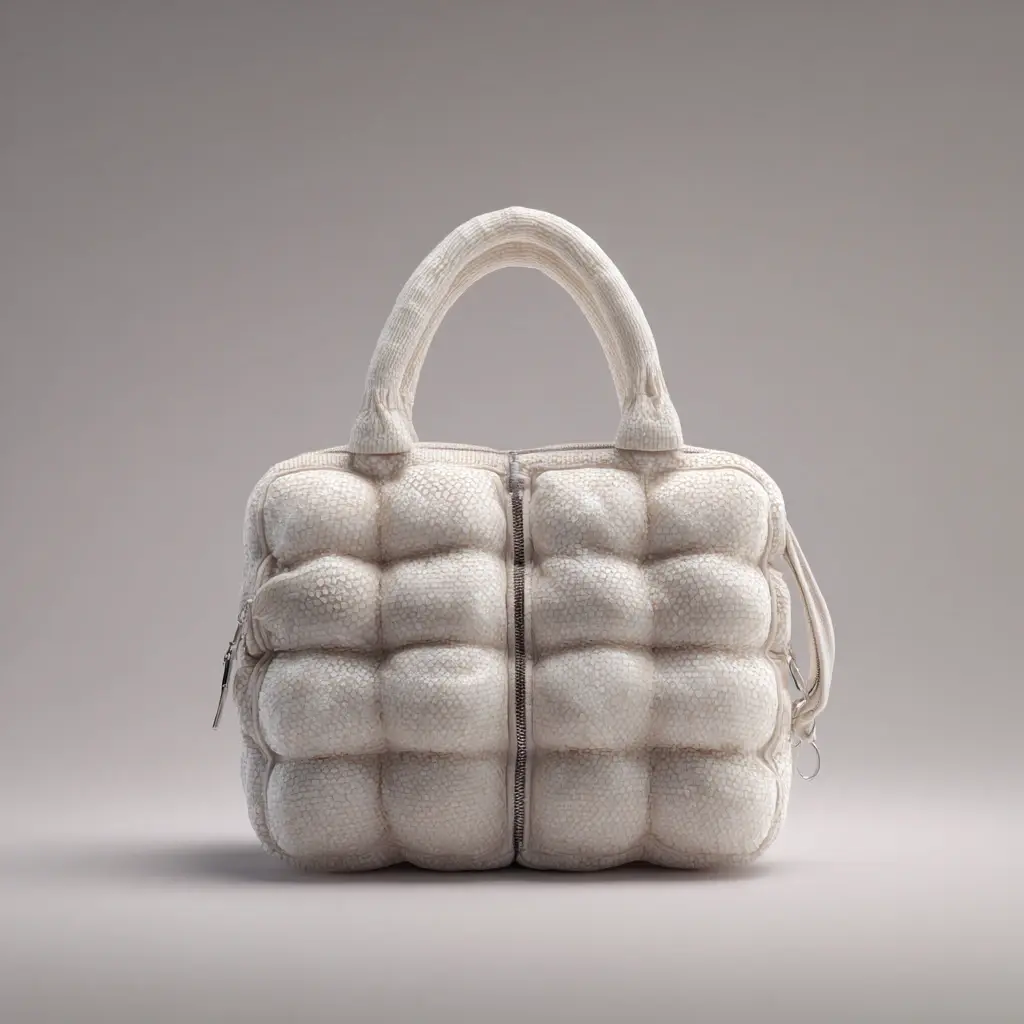
- The Decision Tree: Four Questions, One Answer
- Branch One: Panel Count Sets the Floor Price
- Branch Two: Closure Choice Is the Biggest Saving
- Branch Three: Where Structure Costs Money
- Seven Shapes Ranked by Cost per Unit
- What a Budget Specification Must Not Drop
- Materials That Hold a Low Price Band Together
- Turning the Tree Into a 500-Piece Order
- Cutting Yield by Shape: What the Marker Wastes
- Labour Minutes by Shape at the Same Material Weight
Which bag silhouettes are genuinely cheap to make? Cost follows three numbers, not the material: panel count, closure type and structure. A six-panel open tote with a magnetic closure and 0.8 mm interlining lands in a different price band from a fourteen-panel satchel with a framed lock and a 2 mm board, on identical leather. A silhouette is cheap when it can be cut in few panels, closed without hardware and folded rather than assembled — and those three properties can be read off a sketch before a swatch is chosen. The tree below runs those three tests in order and ranks seven shapes by what they cost per unit at 500 pcs.
Three numbers that set the floor price
The Decision Tree: Four Questions, One Answer
Work the tree in this order, because each question can end the conversation and the cheapest shape is the one that survives all four. It takes about ten minutes with a sketch in front of you, and it replaces the usual three rounds of quotation ping-pong.
- Can the body be cut in fewer than eight panels? Count front, back, gusset pieces, base and pockets. Six to eight is cheap; twelve to sixteen is not, and the difference is cutting time and seam length rather than material.
- Can it close without hardware? An open mouth with a magnetic snap or a hook-and-loop tab removes a zip, two sliders and the fitting operation that installs them.
- Can it hold its shape by folding rather than by assembly? A folded gusset is one piece; a sewn gusset is three seams plus a base seam. Folded constructions are cheaper and, up to a point, stronger.
- Can the strap be the body? A handle cut as a continuation of the front and back panels removes two attachment points, which are the most reinforced and most inspected part of any bag.
A shape that answers yes to all four is a six-panel open tote with a folded gusset and a continuous handle, and it is the cheapest thing a line can make at any material weight. A shape that answers no to all four is a framed satchel, and it is roughly double the labour. Most shapes sit in between, and the tree is useful precisely because it tells you which branch you are paying for rather than just that one shape costs more than another.
Branch One: Panel Count Sets the Floor Price
Panels are the unit of cost in this trade, more than leather is. Every panel is a cut, a skive, an edge finish and a seam, and every seam is a place where the lining, the interlining and the shell have to be brought together in register. A six-panel tote has roughly 2.4 metres of seam; a fourteen-panel satchel has closer to 6 metres. At 7-9 stitches per inch with Tex 40 thread, that difference is the better part of an hour of operator time, and operator time is the line item that moves a unit price.
- Front and back body panels — unavoidable; two panels minimum for any bag with a front and a back.
- Gusset — one folded piece is cheap, two side pieces plus a base is three operations more.
- Base — a separate base panel adds a seam around the whole footprint; a folded base adds none.
- Pockets — each one adds a cut, an edge finish and a topstitch. An open slip pocket is cheap; a zipped pocket adds a zip and two operations.
- Flap — a flap is effectively a second front panel, plus the closure hardware it carries.
The practical rule is that a first budget line should stay under eight panels per silhouette and under eighteen hardware pieces in total. Hardware count is worth tracking separately because it is invisible in a sketch and brutal in a quotation: two D-rings, four base studs, a magnetic closure, a zip, two sliders, a puller, an adjuster and two strap ends is already fourteen pieces before branding is added.
Branch Two: Closure Choice Is the Biggest Saving
If one line in the specification has to give ground, it is the closure, because closure choice moves both purchase price and fitting time. A magnetic snap is a purchased part costing a fraction of a zip, and it installs in one operation. A #5 zip costs more and installs in two, plus a slider and a puller. A framed lock costs several times either and needs a frame, a fitting and a reinforcement behind it. The saving from a framed lock to a magnetic closure is typically the largest single reduction available to a line that has come back above its target retail price.
| Closure | Operations to fit | Cost band | Best used on |
|---|---|---|---|
| Open mouth, no closure | 0 | Lowest | Market totes, beach and shopper shapes |
| Hook-and-loop tab | 1 | Very low | Casual totes where silence is not required |
| Magnetic snap | 1 | Low | Everyday totes and shoulder shapes |
| Turn-lock on a flap | 3 | Medium | Structured satchels in a mid price band |
| #5 or #8 zip | 2 | Medium | Crossbody and travel shapes needing security |
| Framed metal lock | 5 or more | Highest | Premium briefcases and occasional shapes |
Choose the closure by the carrying position rather than by the price. A crossbody carried away from the body needs a zip regardless of budget, because a magnetic closure on a crossbody is a security risk and a hook-and-loop tab is a pickpocket invitation. A tote carried in the hand can use a magnetic snap at any price band and look correct. That is the one place where spending more is not optional.
Branch Three: Where Structure Costs Money
Structure is the third branch and the least visible in a sketch. A bag holds its shape either from the shell, from interlining laminated to the shell, or from a board inserted between shell and lining. The first is free but only works above about 1.4 mm of leather. The second is the cheap default: 0.8-1.2 mm of non-woven interlining, laminated, one operation, and it is what most mid-market bags use. The third — 2 mm of board, cut, skived and inserted — is three operations, adds 120-180 g, and is the reason a cheap bag can feel heavy.
- 0.8-1.2 mm laminated interlining — the budget default. Holds a shape, adds almost no weight, one operation.
- 1.5 mm board insert — needed only where a bag must stand empty and rigid. Adds weight and cost.
- Folded base reinforcement — a turned base seam is cheaper than a separate board and survives being set down.
- Edge finish — a turned and topstitched edge is one operation; edge paint is three coats with drying time between them. On a budget line, specify turned edges.
- Base studs — four 8 mm studs cost little and prevent the single most visible wear point on a tote. Do not drop these.
Edge finishing deserves a note because it is where budget lines quietly lose their margin. Painted edges look premium and cost three passes with drying time between them, which on a 38 cm tote with two handles is meaningful. Turned and topstitched edges, at a 10 mm seam allowance with a clean 3 mm topstitch, look honest and cost one pass. A budget line that specifies turned edges and spends the saving on better hardware will always look more expensive than the reverse.
Seven Shapes Ranked by Cost per Unit
Ranked from cheapest to most expensive at the same material weight, with the reason given as a panel count and a closure. These are relative bands, not prices, and the ordering is stable across materials: changing the leather moves every row by the same amount without reordering them.
- Open tote, folded gusset, continuous handle — six panels, no closure, no board. The cheapest bag that still looks like a bag.
- Market tote with a magnetic snap — seven panels, one closure. Adds a clean mouth and a branding position on the front panel.
- Simple shoulder shape with an open mouth — eight panels, no closure, a strap with two attachment points.
- Bucket with a drawcord — nine panels, no hardware closure, but the base is reinforced and the drawcord channel is a seam of its own.
- Crossbody with a #5 zip — ten panels, one zip and an adjuster. The zip is unavoidable and is why this sits mid-table.
- Hobo with a slouchy gusset — eleven panels, one closure, plus a strap that must be cut on the bias to drape correctly.
- Structured satchel with a turn-lock — fourteen panels, a flap, a framed or turn-lock closure, and a board insert. The most expensive of the seven.
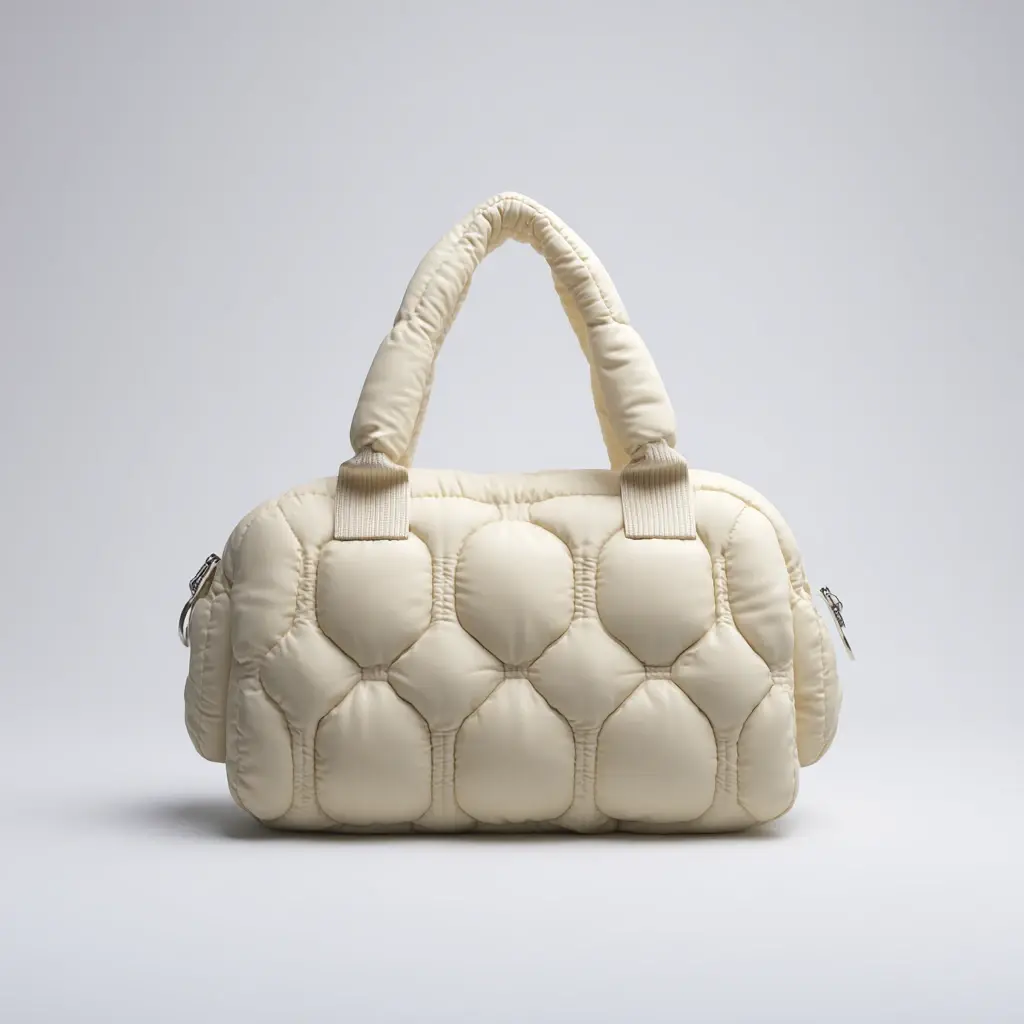
Two entries need explaining. The bucket sits higher than founders expect because a drawcord channel is a full seam around the mouth and the base needs reinforcement to stop the shape collapsing into a sack. The hobo sits higher because a strap cut on the bias to drape properly wastes material — the same strap cut straight costs less and hangs badly. Both are cheap-looking mistakes waiting for a specification that under-prices them.
What a Budget Specification Must Not Drop
Cheap and badly made are different things, and four items should never be traded away regardless of the price band. Stitch density: 7-9 stitches per inch with Tex 40 thread is the same on a budget line as on an expensive one, and dropping below 6 SPI is what makes seams open. Attachment reinforcement: strap ends get a bar-tack or a riveted patch whether the bag sells at a low band or a high one. Base studs: four 8 mm studs are cheap insurance against the most visible wear point. And inspection: AQL 2.5 under ISO 2859-1 applies at every price band.
- Stitch density and thread — 7-9 SPI, Tex 40, 10 mm seam allowance. This is the first thing an inspector counts and the first thing a customer notices.
- Strap attachment reinforcement — bar-tack or rivet, never a single pass of straight stitch.
- Base protection — four 8 mm studs, folded corner construction on any shape over 30 cm wide.
- Inspection standard — AQL 2.5 under ISO 2859-1 with a written report, at any price band.
- Chemistry compliance — REACH Annex XVII and Proposition 65 do not have a budget exemption; the documents are the same either way.
Materials That Hold a Low Price Band Together
When the price band is low, the material choice has to work harder rather than cost less. A 600D coated polyester at 210 gsm with a PU face reads as considered when it is paired with a clean hardware family and turned edges; the same material with painted edges and mixed plating reads as cheap. A 1.0-1.2 mm corrected-grain leather at 650-800 gsm behaves similarly: correct at a low band, wrong above it, and the giveaway is always the edge and the lining rather than the shell.
Lining is the highest-leverage material decision on a budget line. A 190T lining at 52 gsm is cheap and, in a dark mid-tone, hides a great deal; a 210D at 68 gsm is the standard that most mid-market buyers expect and costs marginally more. What should never happen is a pale lining in a cheap bag, because pale linings show adhesive bleed and handling marks and they are the first thing a reviewer photographs when they are disappointed. Specify a mid-tone, in either weight.
One hardware discipline covers the rest: one plating colour across the whole line. A budget line with a light gold zip, a gunmetal closure and nickel D-rings reads as three purchases. The same line with a single antique brass family across all of them reads as a collection, and it costs less, because one plating bath is cheaper than three. Corrosion resistance is tested to ASTM B117 with 24 hours to first white corrosion as the practical floor, and sealed plating is what stops marks appearing on that mid-tone lining in the first month.
Turning the Tree Into a 500-Piece Order
MOQ 500 pcs per style / colourway is the constraint under all of this, and it is worth understanding why the tree matters more at that quantity. At 500 pieces, the fixed costs — the pattern, the cutting die, the plating bath, the line changeover — are spread across a small number of units, so the variable cost of labour dominates the unit price. Labour is exactly what the tree measures. At 5,000 pieces the fixed costs are diluted and the material dominates instead, which is why a shape that is cheap at 500 is not automatically cheap at scale.
The order itself is straightforward once the tree has been worked. Send the sketch with a panel count marked on it, the closure choice with the reason, the interlining and edge finish, the material direction with a target retail price, the hardware family, the branding position in millimetres from a datum edge, and the quantity per colourway. A handbag programme specialist can return a costed specification from that in 1-3 days, and sampling runs 6-10 working days with bulk at 35-50 days.
For the shapes at the cheap end of the ranking, the tote category economics show why the open tote is usually the first 500 pieces, and the shoulder versus tote decision covers where to go second. The leather handbag programme reference sets out how the same shapes are costed across a shared material buy.
Cutting Yield by Shape: What the Marker Wastes
Two shapes with the same panel count can cost different amounts of money, because panel shape decides what the marker wastes. Long rectangular panels reject the belly and neck zones of a hide; small panels nest anywhere. The difference is not small: on a 500-piece order two percentage points of yield is real material, and on a budget line material is the largest line there is.
| Silhouette | Yield on hide | Yield on synthetic | Waste cost per unit at USD 3.20 per sq ft |
|---|---|---|---|
| Open tote, six panels | 76-82 per cent | 88-92 per cent | USD 0.85-1.30 |
| Bucket with a drawcord channel | 66-72 per cent | 84-88 per cent | USD 1.40-2.10 |
| Crossbody, compact panels | 82-88 per cent | 90-94 per cent | USD 0.35-0.60 |
| Framed satchel | 58-66 per cent | 78-84 per cent | USD 2.30-3.40 |
Labour Minutes by Shape at the Same Material Weight
Panel count predicts cutting time and closure cost predicts fitting time, but neither predicts the number of minutes a unit spends on the line, and minutes are what the quotation ultimately prices. Measured on the same 1.2-1.4 mm material with the same hardware family, the spread across seven shapes is close to three to one. At a direct labour rate of USD 0.10 to 0.16 per minute that is the difference between a viable budget line and one that is not.
- Open tote, folded gusset: 18-24 minutes, or USD 1.80-3.80 of direct labour.
- Market tote with a magnetic snap: 24-32 minutes, and the snap adds one operation rather than three.
- Compact crossbody: 26-34 minutes, because a zip placket and a lining pocket both survive into the budget band.
- Hobo with a cut-on strap: 34-44 minutes, the strap being the reason it sits above the crossbody.
- Bucket with a channel and reinforced base: 36-46 minutes, and the base reinforcement is the expensive part.
Send a sketch, get a panel count and a price
Reply with your sketch, target retail price and quantity per colourway. A private label coordinator will return a panel count, a closure recommendation and a costed specification — sampling at 6-10 working days, bulk at 35-50 days, inspection at AQL 2.5 under ISO 2859-1. Get a quote.
Frequently Asked Questions
What makes a bag silhouette cheap to produce?
Three properties, in order: few panels, a closure that needs no hardware, and structure that comes from folding rather than assembly. A six-panel open tote with a folded gusset and a continuous handle is the cheapest configuration at any material weight, and all three properties can be read off a sketch.
How many panels should a budget bag have?
Under eight. Every panel is a cut, a skive, an edge finish and a seam, and a six-panel tote has roughly 2.4 metres of seam against close to 6 metres for a fourteen-panel satchel. That difference is most of the gap in unit price at 500 pieces.
Which closure saves the most money?
A magnetic snap instead of a framed lock. The snap is a fraction of the purchase price and fits in one operation, while a framed lock needs a frame, reinforcement and five or more operations. It is the largest single reduction available when a quotation lands above target.
Is a zip worth the extra cost on a budget line?
On a crossbody, yes, and it is not optional — a bag carried away from the body needs a secure closure and a magnetic snap is a pickpocket risk. On a tote carried in the hand, a magnetic snap is correct at any price band and saves both purchase cost and fitting time.
What is the cheapest way to make a bag hold its shape?
0.8-1.2 mm of non-woven interlining laminated to the shell, which is one operation and adds almost no weight. A 2 mm board insert is three operations and adds 120-180 g, which is why a cheaply made bag often feels heavier than an expensive one.
Should a budget line use painted edges?
No. Painted edges are three coats with drying time between them, while a turned and topstitched edge at a 10 mm seam allowance is one pass. A budget line that specifies turned edges and spends the saving on better hardware always looks more expensive than the reverse.
What lining weight suits a low price band?
190T at 52 gsm at the cheapest end and 210D at 68 gsm as the standard most mid-market buyers expect. In both cases specify a mid-tone rather than a pale colour, because pale linings show adhesive bleed and handling marks and are the first thing a disappointed reviewer photographs.
Why does a bucket bag cost more than founders expect?
Because a drawcord channel is a full seam around the mouth and the base needs reinforcement to stop the shape collapsing into a sack. It is nine panels with no hardware closure, but the two reinforcing seams put it mid-table rather than at the cheap end.
Why is a hobo more expensive than a tote?
The strap has to be cut on the bias to drape correctly, which wastes material compared with a strap cut straight. It is also eleven panels rather than six or seven, and a strap cut straight to save money hangs badly enough to be returned.
What must never be dropped to save money?
Four things: stitch density at 7-9 stitches per inch with Tex 40 thread, strap attachment reinforcement by bar-tack or rivet, four 8 mm base studs, and inspection at AQL 2.5 under ISO 2859-1. Chemistry compliance also has no budget exemption.
Does the cheapest shape stay cheapest at larger quantities?
Not necessarily. At 500 pieces the fixed costs are spread thin, so variable labour dominates and the panel count matters most. At 5,000 pieces the fixed costs are diluted and the material dominates instead, which reorders the ranking slightly toward material-efficient shapes.
How long does a budget first run take?
Quotation 1-3 days, sampling 6-10 working days, review and revision 3-6 days, bulk production 35-50 days. Plan 55-80 days from signed brief to handover, plus transit of 18-28 days to the US West Coast or 30-38 days to Northern Europe.
People Also Ask
Can a cheap bag still look expensive?
Yes, through three choices: one plating colour across all hardware, turned rather than painted edges, and a mid-tone lining. All three cost less than the alternatives buyers assume they signal.
Is a folded gusset as strong as a sewn one?
Up to a point, yes, and it has one fewer seam to fail. It is the correct choice for any tote under 40 cm wide and is standard across most mid-market programmes.
How much hardware should a first line carry?
Under eighteen pieces per bag. Two D-rings, four base studs, a closure, a slider, a puller, an adjuster and two strap ends is already fourteen before branding is added.
Should I use PU or leather at a low price band?
Whichever reads better in the target photograph. A 600D coated polyester with a PU face looks considered with clean hardware; a low-grade corrected-grain hide looks cheap with painted edges. The finish decides it, not the substrate.
Sources and further reading
Every figure on this page is either our own programme data or attributed below. Open the originals before you write them into a specification.
- SATRA — technical services for leather, footwear and accessoriesSATRA Independent leather, hardware and accessories testing protocols.
- FashionUnited — fashion industry news and dataFashionUnited Industry news and company data for the fashion sector.
- World Intellectual Property OrganizationWIPO International trademark and design registration before tooling starts.