Handbag Market Opportunities for Small Private Label Brands
Where are the real handbag market openings for a small private label brand in 2026? Seven segments are worth scoring, and only those above 20 points out of 25 survive the arithmetic of a 500-piece first order. The binding constraint is not demand, it is working capital: at a landed cost of USD 9.60 per unit, one colourway commits about USD 4,800 before a single unit sells, and the cash cycle runs 62 days from purchase order to marketplace settlement. This page scores each segment against five gates, shows which two or three clear 20 points for most small labels, and ends with a go / no-go checklist you can run on your first three styles in an afternoon.
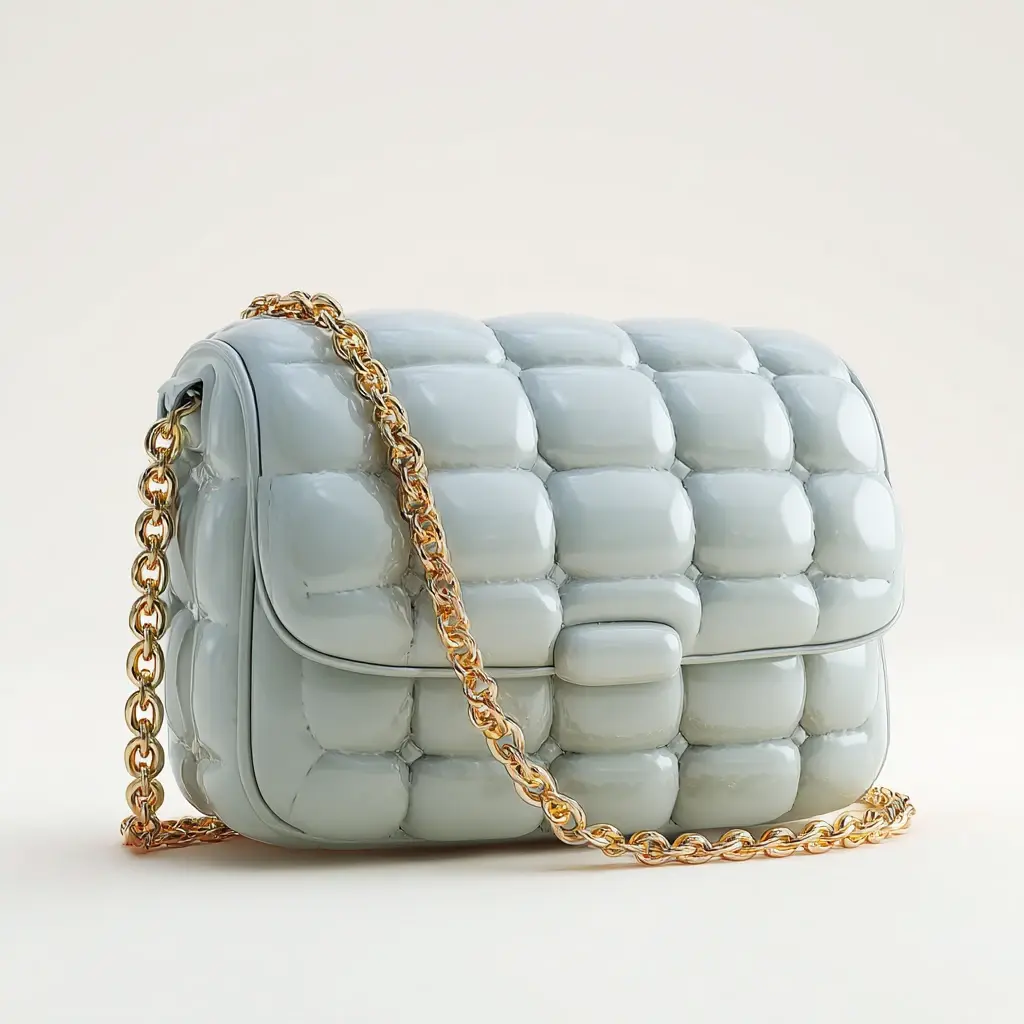
- Where the Openings Are: Seven Segments
- The Scorecard: Five Gates Before You Commit
- Gate One: Can You Afford the Minimum Twice
- Gate Two: Does the Segment Reward Specification
- Gate Three: Can You Win on Calendar
- Gate Four: Is There a Defensible Niche Inside
- Gate Five: What Does the Second Order Look Like
- Seven Segments Scored Against the Five Gates
- The Go or No-Go Checklist for Your First Styles
- Channel Economics: What Each Segment Pays the Channel
- Contribution per Unit and the Break-Even Sell-Through
- How Many Lots a First Season Can Carry
- When Each Segment Peaks, and What That Does to the Order Calendar
Where are the real handbag market openings for a small private label brand in 2026? Seven segments are worth scoring, and only those above 20 points out of 25 survive the arithmetic of a 500-piece first order. The binding constraint is not demand, it is working capital: at a landed cost of USD 9.60 per unit, one colourway commits about USD 4,800 before a single unit sells, and the cash cycle runs 62 days from purchase order to marketplace settlement. This page scores each segment against five gates, shows which two or three clear 20 points for most small labels, and ends with a go / no-go checklist you can run on your first three styles in an afternoon.
Five gates, twenty-five points
Where the Openings Are: Seven Segments
A small label cannot compete across the whole category, so the first useful move is to cut it into segments and score them rather than to chase whatever is trending. Seven segments account for most private label volume in 2026, and they differ far more on capital intensity and calendar risk than they do on demand, which is why demand is the wrong first filter.
| Segment | Typical retail band | Capital intensity |
|---|---|---|
| Everyday tote | USD 89-149 | Low |
| Compact crossbody | USD 59-119 | Lowest |
| Work satchel | USD 149-249 | Medium |
| Weekender and short-travel | USD 129-229 | Medium |
| Convertible backpack | USD 99-179 | Medium |
| Evening and occasion | USD 79-199 | High, seasonal |
| Premium leather shoulder | USD 249-399 | Highest |
Capital intensity here means something specific: how many units at the minimum are required before the segment can be entered credibly. The evening and occasion segment looks attractive on margin and fails on intensity, because it needs three or four styles to read as a range at all. The compact crossbody is the opposite, which is why it is the usual first style for a label with limited working capital.
The Scorecard: Five Gates Before You Commit
Each gate scores one to five points, and a segment needs 20 or more to be worth a first order. The gates are weighted equally on purpose, because in practice a segment that fails any one of them badly tends to fail the whole programme regardless of how well it scores on the others. Score honestly rather than hopefully; the value is in the segments you eliminate.
- Gate one: can you afford the minimum twice, not once.
- Gate two: does the segment reward specification, or only branding.
- Gate three: can you win on calendar rather than on price.
- Gate four: is there a defensible niche inside the segment.
- Gate five: does the second order look like the first one.
One more filter belongs before the scoring starts, and it is the one most range plans skip: which segment your channel already rewards. A marketplace account with traffic built around search terms favours segments buyers describe in words, which pushes towards specification-led shapes. An account built around social video favours segments with one strong visual detail. Scoring the same segment across two different channels produces different answers, and the difference is usually four or five points, which is the difference between a go and a no-go.
Gate One: Can You Afford the Minimum Twice
The most common failure in this category is not a bad style, it is a good style ordered once with no capital left for the repeat. MOQ 500 pcs per style / colourway applies per colourway, so one style in one colourway is about USD 4,800 at a USD 9.60 landed cost, and a restock is the same again. A label that can afford one order but not two is not running a programme, it is running a test it cannot capitalise on.
Score this gate on the repeat rather than the first order. Five points if the repeat is fully funded before the first ships; three if it depends on the first selling through; one if it depends on outside funding. The cash cycle matters here too: 62 days from purchase order to settlement means the money from the first order is not available in time to fund a 35-50 day bulk run without overlap.
Gate Two: Does the Segment Reward Specification
This is the gate that decides whether a small label can win at all. Segments that reward specification are winnable without a brand: the buyer is judging pocket layout, strap adjustment, weight and hardware, all of which a small label can specify as well as anyone. Segments that reward branding are not winnable at this scale, because the brand is the product and a new label has none.
- Specification-led: utility totes, convertible backpacks, weekenders. Winnable on the drawing.
- Specification-led with a caveat: compact crossbody, where silhouette and hardware carry it.
- Branding-led: premium leather shoulder, evening and occasion. Winnable only with a position.
- Mixed: work satchel, where specification wins the first sale and brand wins the second.
- Test: if the review section discusses features, the segment is specification-led.
Gate Three: Can You Win on Calendar
A small label rarely wins on price and often can win on calendar, because the large programmes are slower to move. Sampling at 6-10 working days and bulk at 35-50 days means a range decision made in week one can be on the water by week eight, which is faster than most seasonal competitors can react to a shift in demand.
| Situation | Calendar advantage | Price advantage |
|---|---|---|
| Trend-led shape with a short window | Decisive: arrive inside the window | Irrelevant if the window closes |
| Evergreen shape with steady demand | Marginal: nobody is waiting | Decisive over a long horizon |
| Restock of a proved style | Strong: reserved slot wins it | Weak: the price is already set |
| Entry into a crowded segment | Weak: speed does not differentiate | Weak: margin war |
| Compliance-heavy material | Decisive: the file is the delay | Irrelevant |
The last row is the one small labels underrate. A compliance file assembled in week one removes weeks from the calendar at zero cost, and it is the single most reliable speed advantage available. LWG traceability, a GRS transaction certificate, REACH Annex XVII evidence and Prop 65 documentation all belong with the tech pack, not with the bulk order.
Gate Four: Is There a Defensible Niche Inside
Entering a segment is not the same as having a position inside it. A defensible niche is narrow enough that a large programme will not bother with it and specific enough that buyers search for it by name: a tote sized for a 13-inch laptop with a bottle compartment, a crossbody with a stated 300 g weight ceiling, a weekender at a width that fits an overhead bin.
Score five points if buyers can describe what they want in a search box and no incumbent owns that phrase. Score one if the only differentiator is price or colour. Niches built on a named dimension tend to hold, because a dimension is something a competitor has to change their pattern to copy, and most will not bother for a segment they consider small. The test is whether the phrase already exists before you invent it: search the term, read the listings that come back, and check whether any of them claims the dimension you were about to claim. If none does, the niche is open.
Gate Five: What Does the Second Order Look Like
The second order is where a private label programme either compounds or stalls, and the two look very different on paper. A compounding second order is the same style in a new colourway or a deeper quantity, which reuses the pattern, the material call-off and the compliance file. A stalling one is a new style, which restarts all three.
- Reuses the pattern: five points, and the repeat becomes a cutting instruction.
- Reuses the material: a further advantage, because the mill call-off is already placed.
- Reuses the compliance file: the largest single saving, worth two to three weeks.
- Reuses the listing: photography and reviews carry over inside the same colourway.
- Needs a new style: one point, and the calendar restarts at 6-10 working days of sampling.
There is a second-order trap worth naming here, because it looks like success and behaves like a stall. A style that sells out quickly often triggers a new style rather than a repeat, on the reasoning that the momentum should be spent while it lasts. In practice the new style arrives 45-60 days later, by which point the momentum has decayed, and the proved style is out of stock with no repeat on the water. Ordering deeper on the proved style is almost always the better use of the same money.
Seven Segments Scored Against the Five Gates
Scored honestly for a label with limited working capital and no brand position, the seven segments separate cleanly. Two clear 20 points for almost every small label, a third clears it for those with a channel already running, and the rest fail on a single gate that no amount of demand would fix.
| Segment | Score | Binding gate |
|---|---|---|
| Compact crossbody | 23 | Gate four, if no dimension is claimed |
| Everyday tote | 22 | Gate two, when the shape is generic |
| Convertible backpack | 20 | Gate three, calendar is the whole game |
| Work satchel | 18 | Gate two, brand wins the second sale |
| Weekender and short-travel | 17 | Gate one, high unit cost per piece |
| Evening and occasion | 14 | Gate one, needs three styles to read |
| Premium leather shoulder | 11 | Gate two, branding-led throughout |
Read that table as a starting point rather than a verdict. A label with an existing audience in the work segment scores the satchel far higher, and one with a strong wholesale relationship scores the weekender differently. What does not move is the bottom two rows: evening and premium leather shoulder fail on capital and branding respectively for almost every small label, and they fail that way consistently.
The Go or No-Go Checklist for Your First Styles
Run this on the first three styles before committing to any of them. Six lines, and every one is answerable from documents you already have or can produce in an afternoon. A style that fails two or more lines is a no-go for now rather than a no-go forever.
- Landed cost per unit is known, and the markup clears 3.1 times that figure at the intended retail price.
- Funding exists for two orders, not one, at MOQ 500 pcs per style / colourway per colourway.
- The compliance file is attached to the tech pack: LWG, GRS, REACH Annex XVII, Prop 65 as applicable.
- Every feature has a number: empty weight in grams, strap range in centimetres, cycle counts for hardware.
- The acceptance gate is named: AQL 2.5 under ISO 2859-1, criticals at accept zero, single sampling normal.
- The calendar is written down: 6-10 working days of sampling, 35-50 days bulk, FOB Xiamen, then transit.
Our programmes run through an SGS-validated partner factory with 7 production lines and about 200,000 pcs per month of capacity, and export work has run since 2014, so those six lines come back as dates and prices rather than as intentions. Two companions close the loop: how social commerce reshapes the demand curve for what happens after the first drop sells, and the minimalist against stocking decision for how to split a first range. The wider picture sits in our handbag sourcing guides.
Channel Economics: What Each Segment Pays the Channel
Segment margin is decided after the channel has taken its share, and the share is not proportional to price. A marketplace referral fee of 8 to 15 per cent, a per-unit fulfilment fee that steps by size band, and return handling of USD 6 to 12 on every unit sent back change which of the seven segments is worth entering at all. The correction matters most at the bottom of the price ladder, where the fixed part of the fee is a larger fraction of the ticket.
| Charge | Typical value | Effect on a USD 119 bag |
|---|---|---|
| Referral or commission | 8-15 per cent | USD 9.50-17.85 off the top |
| Fulfilment, medium size band | USD 4.50-9.00 | Steps up sharply above 38 cm longest side |
| Return handling at a 14 per cent rate | USD 6.00-12.00 per return | About USD 1.20-1.70 per unit sold |
| Storage, July to October | USD 0.40-0.90 per unit per month | Penalises slow-selling colourways |
| Advertising cost of sale | 12-22 per cent of revenue | USD 14.30-26.20 on a paid-first sale |
Contribution per Unit and the Break-Even Sell-Through
A segment earns its place only if one unit sold at its retail band leaves enough contribution to fund the next lot, and that is a single subtraction. Take the everyday tote at USD 119 retail: USD 18.40 landed, USD 15.20 of channel cost, USD 1.60 of return provision and USD 21.00 of advertising at an 18 per cent cost of sale leaves USD 62.80 of contribution. Five hundred units cost USD 9,200 landed, so the order breaks even at 147 units, or 29 per cent sell-through, before overhead.
- Do the same sum at the bottom band. A USD 49 bag with USD 12.10 landed and USD 11.40 of channel cost leaves USD 25.50, and needs 236 of 500 units sold to break even.
- Watch the second-order funding. Contribution that clears the first lot but not two lots of 500 is a style that stalls after the first season.
- Price the return rate in, not out. A segment at a 19 per cent return rate needs roughly 8 per cent more sell-through than the same margin at 9 per cent.
- Recompute after freight moves. A USD 20 per cubic metre rise adds USD 0.06-0.10 per unit, which is small per unit and 1.5-2.5 per cent of contribution.
How Many Lots a First Season Can Carry
Every lot is a separate 500-piece minimum, so the shape of a first season is a cash decision before it is a design one. Three plans cover most first seasons, and the difference between them is not ambition but how much of the working capital is committed before any sell-through data exists.
| Plan | Lots and units | Order value at USD 18.40 | Deposit at 30 per cent | What it buys |
|---|---|---|---|---|
| One style, one colourway | 1 lot, 500 pcs | USD 9,200 | USD 2,760 | Cheapest test; no colourway read |
| One style, two colourways | 2 lots, 1,000 pcs | USD 18,400 | USD 5,520 | A colourway read and one marker |
| Two styles, one colourway each | 2 lots, 1,000 pcs | USD 18,400 | USD 5,520 | A silhouette read; two patterns, two sets of boards |
When Each Segment Peaks, and What That Does to the Order Calendar
Segments are not equally spread across the year, and the concentration changes when the brief has to be signed. A segment that sells 40 per cent of its units in six weeks has to be in bulk sixteen weeks before those six weeks begin, which is a different calendar from a segment with flat demand.
- Gift buyer. 38 to 45 per cent of annual units fall in November and December, so the brief is signed in early June and the goods are on the water in early September.
- Work satchel. A back-to-work peak in late August and early September accounts for 22-28 per cent of units, putting bulk in May.
- Everyday tote. The flattest of the seven, with a mild spring lift of 12-15 per cent, which is why it tolerates a two-drop plan better than any other segment.
- Occasion. Concentrated into two windows, with 55-65 per cent of units inside ten weeks, and the shortest usable selling season of the seven.
Send us your three candidate styles and we will score them, price them and return a calendar. Get a Quote → /contact-quote/
Frequently Asked Questions
What is the best handbag segment for a small private label brand to enter?
Compact crossbody and everyday tote, scoring 23 and 22 out of 25 for most small labels. Both are specification-led, both sit at a low capital intensity, and both can be entered with a single colourway at MOQ 500 pcs per style / colourway without needing a range around them.
How much working capital does a first handbag order need?
About USD 4,800 for one colourway at a landed cost of USD 9.60 per unit, and the same again for the repeat. The cash cycle runs 62 days from purchase order to settlement, which means the first order's revenue is not available in time to fund a 35-50 day bulk run without overlap.
Why do some small handbag labels stall after one successful order?
Usually because the second order is a new style rather than a repeat. A new style restarts sampling, material purchasing and compliance, while a repeat of the same style in a new colourway reuses all three and becomes a cutting instruction instead of a project.
Can a small label compete on price against larger programmes?
Rarely, and it should not try. The defensible advantage is calendar: sampling at 6-10 working days and bulk at 35-50 days means a decision made in week one can be on the water by week eight, which is faster than most seasonal competitors can react.
What markup does a private label handbag need?
At least 3.1 times landed cost. That covers marketplace fees, returns handling at roughly USD 11.40 per unit, and the 62-day cash cycle. Below 3.1 times the programme survives the first order and struggles with the second, because the repeat is funded from margin rather than from revenue.
How do I know if a segment rewards specification or branding?
Read the review sections. If buyers discuss pocket layout, strap adjustment, weight and hardware, the segment is specification-led and winnable on the drawing. If they discuss the name and the status, it is branding-led and a new label has very little to work with until it has an audience of its own.
Should a first range carry one style or three?
Three candidate styles scored on paper, but one committed to production. The scoring is cheap and the commitment is not, at MOQ 500 pcs per style / colourway per colourway. Prove one silhouette in one colourway, then add the second colourway as the repeat, and the third style only once cash is recycling.
What is a defensible niche for a new handbag label?
One narrow enough that a large programme will not bother with it and specific enough that buyers search for it by name. A tote sized for a 13-inch laptop with a bottle compartment, or a crossbody with a stated 300 gram ceiling, both hold because a competitor must change their pattern to copy them.
How long does the whole first order take from decision to delivery?
Roughly 62 days from purchase order to settlement, within which sampling takes 6-10 working days, bulk takes 35-50 days, and the balance is transit from FOB Xiamen plus the marketplace settlement period. Writing that calendar down before ordering is what prevents a launch date being missed.
Which compliance documents does a small label actually need?
LWG tannery traceability for leather, a GRS transaction certificate for recycled content, REACH Annex XVII evidence for restricted substances, and Prop 65 documentation for the destination state. Attaching them to the tech pack in week one is free and removes two to three weeks from the calendar.
Is the premium leather segment worth entering later?
Once a brand position exists, yes, because the margins are the best in the category. Before that it scores about 11 out of 25, failing on gate two almost entirely: the buyer is purchasing the name, and a new label has no name to sell yet.
People Also Ask
Is private label handbag production profitable for small brands?
It can be, provided the markup clears 3.1 times landed cost and the repeat is funded before the first order ships. The common failure is not margin per unit but working capital: one colourway at 500 pieces commits about USD 4,800 against a 62-day cash cycle.
What handbag niche is easiest to enter?
Compact crossbody, which scores highest on capital intensity and can be entered with a single style and colourway. It is specification-led, so a small label can compete on pocket layout, strap adjustment range and a stated weight ceiling without needing brand recognition.
How do small handbag brands compete with large ones?
On calendar and specificity rather than on price. Sampling in 6-10 working days beats a slower seasonal cycle, and a niche defined by a named dimension is one a large programme will not change its patterns to chase.
What is the biggest risk in a first private label handbag order?
Committing both the capital and the calendar to a single style with no funding for a repeat. If the first drop sells, the repeat has to be affordable and quick, which means the pattern, material and compliance file all need to be reusable from the start.
Sources and further reading
Every figure on this page is either our own programme data or attributed below. Open the originals before you write them into a specification.
- Accessories Council — accessories industry bodyAccessories Council Accessories industry body tracking handbag category direction.
- SATRA — technical services for leather, footwear and accessoriesSATRA Independent leather, hardware and accessories testing protocols.
- REACH — chemical substances regulationEuropean Commission Annex XVII restricts the substances that may appear in finished leather and coatings.