Functional Bags: Utility Driven Styles That Are Rising
Which utility-driven bag styles are actually rising, and why? A private label brand came to us in March with a failing tote: 900 pieces on the first order, a return rate of 9.4 per cent, and one repeated complaint in the reviews about water bottles tipping over inside the bag. The reorder shipped 47 days later at 1,200 pieces, and returns fell to 3.1 per cent. Nothing about the silhouette changed. What changed was three interior dimensions, a strap load test, and a zip cycle count written into the specification. This page tells that order end to end, then pulls out the four utility rules it produced, and closes with the style shortlist and the specification lines that keep utility from turning into bulk.
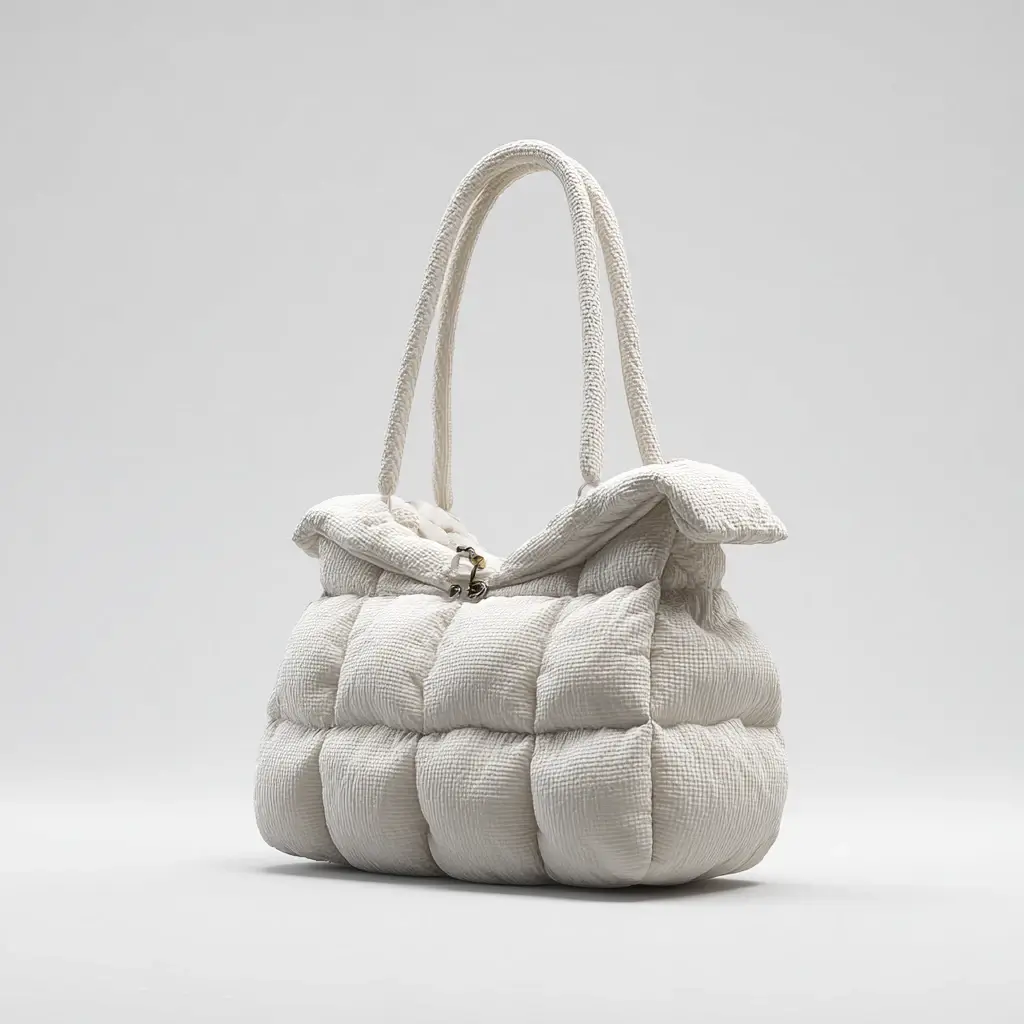
- A 900-Piece Order That Started With a Complaint
- What the Buyer Measured Before Reordering
- The Four Utility Rules That Came Out of It
- Rule One: Pockets Must Be Named, Not Counted
- Rule Two: Access Has to Work While Wearing
- Rule Three: Weight Is the Enemy of Utility
- Rule Four: Durability Claims Need a Cycle Count
- The Utility Style Shortlist for 2026
- Writing a Utility Specification That Survives Bulk
- The Feature Budget: Grams and Cents per Compartment
- The Load Profile That Sets the Dimensions
- The Functional Test Card at Pre-Shipment
- Cutting the Features Buyers Never Use
Which utility-driven bag styles are actually rising, and why? A private label brand came to us in March with a failing tote: 900 pieces on the first order, a return rate of 9.4 per cent, and one repeated complaint in the reviews about water bottles tipping over inside the bag. The reorder shipped 47 days later at 1,200 pieces, and returns fell to 3.1 per cent. Nothing about the silhouette changed. What changed was three interior dimensions, a strap load test, and a zip cycle count written into the specification. This page tells that order end to end, then pulls out the four utility rules it produced, and closes with the style shortlist and the specification lines that keep utility from turning into bulk.
One utility order, measured end to end
A 900-Piece Order That Started With a Complaint
The brand sold a medium tote at a USD 149 retail price, sourced at MOQ 500 pcs per style / colourway and shipped FOB Xiamen. Nine hundred pieces moved in the first quarter, which looked like success until the returns file was opened. The rate sat at 9.4 per cent, and 41 per cent of those returns carried the same sentence in the reason field: the bottle falls over.
The interesting part was that the bag already had five interior pockets. It had plenty of storage and no utility, which is a distinction the returns data made very clearly. The pockets were sized for a phone, a card case and a pen, none of which was the item causing the problem, and the one compartment wide enough for a 600 ml bottle was 4 cm too shallow to hold it upright.
| Element | First order | Reorder |
|---|---|---|
| Interior pockets | Five, sized around a phone | Three named, one sized for a 600 ml bottle |
| Bottle compartment | None deep enough | 24 cm deep, elasticated top |
| Strap test | None specified | 15 kg for 30 minutes, no failure |
| Zip requirement | Smooth action, verbally | 10,000 cycles, tested loaded |
| Empty weight | Unstated, came in at 710 g | 620 g ceiling in the tech pack |
| Return rate | 9.4 per cent | 3.1 per cent |
None of those five changes cost tooling money. Two of them were deletions, one was a dimension, and two were tests that should have been in the first specification. The whole revision was agreed in a single call, sampled in eight working days, and shipped 47 days after the specification was signed. That ratio, of cheap specification changes to a 6.3 point drop in returns, is the reason utility is worth treating as a specification discipline rather than a styling trend.
What the Buyer Measured Before Reordering
The brand did one useful thing before committing to 1,200 pieces: it read every return reason rather than every review. Reviews told them the bag was popular; returns told them why it failed, and the two files disagreed. That habit is worth copying, because the return reason field is the only place a private label programme gets an unfiltered specification error report.
- Return reason before review text: reasons are categorised and counted, reviews are anecdotal and skewed to extremes.
- Frequency over intensity: one furious review matters less than forty identical mild return reasons.
- Timing: returns cluster in the first 14 days, which maps to the specification rather than to durability.
- Channel split: a return rate that differs sharply by channel usually indicates a photography or description fault.
- Cost per return: USD 11.40 landed handling cost, which is what made the 9.4 per cent rate worth fixing.
That last figure is the one that unlocked the budget. At 900 pieces and a 9.4 per cent rate, returns cost about USD 966 in handling alone, before the lost margin on the units. The specification revision was free. Framing utility as a cost line rather than a design preference is what got it prioritised, and it is the framing that works with finance teams generally.
The Four Utility Rules That Came Out of It
Four rules came out of that order and they have held across every utility programme since. They are ordered by how often they are violated rather than by importance, which is roughly the same thing in this category. Each one has a number attached, because a utility rule without a number is just an opinion about pockets.
- Name every pocket for the object it holds; count is meaningless without the object.
- Access must work while the bag is being worn, which rules out anything behind the body.
- Weight is the enemy: utility features that add grams destroy the reason for carrying the bag.
- Every durability claim needs a cycle count, a load figure, or both, written into the tech pack.
Rule One: Pockets Must Be Named, Not Counted
A specification that says five pockets has specified nothing, because five pockets can all be phone-sized. Naming means writing the object and the dimension: a 600 ml bottle upright in a 24 cm deep compartment, a large phone case in a slip pocket reachable from outside, a cable on an elastic loop. Three named pockets outperform five unnamed ones in every returns file we have seen, including the one above.
Naming also changes the sampling conversation usefully. When the object is written down, the sample can be tested against it, and a bottle can be physically placed in the compartment during a review. When the count is written instead, the only available test is whether five pockets exist, which passes every time and predicts nothing. A named pocket also survives a change of production partner, because the object and its dimension travel in the document rather than in someone's memory of the last sample.
Rule Two: Access Has to Work While Wearing
This is the rule utility bags fail most often, and it is invisible on a flat lay. A pocket on the back panel is unreachable while the bag is worn; a magnetic closure that needs two hands fails when the wearer is holding something; a zip that runs the wrong way makes the bag awkward on the wrong shoulder. All three pass a photoshoot and all three fail in a week.
| Position | Reachable while worn | Verdict |
|---|---|---|
| Front slip pocket | Yes, with either hand | Best location for a phone |
| Side elastic pocket | Yes on a tote, no on a crossbody | Use for bottles on totes only |
| Back panel pocket | No, sits against the body | Avoid for anything used daily |
| Interior zoned pocket | Only if the closure is one-handed | Depends entirely on the closure |
| Base compartment | No, requires setting the bag down | Reserve for items used twice a day |
The test is simple and takes two minutes: load the sample at 2.4 kg, put it on, and try to reach each pocket without setting it down. Anything that fails that test will generate a return reason within the first fortnight, and the return reason will not mention access, which is why the test has to be run rather than inferred from complaints.
Rule Three: Weight Is the Enemy of Utility
Utility features add grams: reinforcement, a base board, extra pockets, a bottle compartment, heavier hardware to carry the load. Left unchecked, a medium utility tote arrives at 710 g empty, at which point it is heavier than the contents it was designed to organise. The reorder above set the ceiling at 620 g and hit it by changing the lining rather than by removing any feature.
- Lining weight: moving from a heavy polyester to a lighter twill saved 62 g on its own.
- Base board: a thinner board with a turned edge saved 18 g without losing shape.
- Hardware: matte black fittings weigh less than plated brass and read as more utility.
- Reinforcement: placed at the strap roots only, rather than across the whole panel.
- Ceiling: 620 g for a medium tote, 300 g for a compact crossbody, both written in grams.
Rule Four: Durability Claims Need a Cycle Count
Utility bags are bought to be used hard, and they are reviewed on whether they survive it. A specification that says heavy-duty has specified nothing. A specification that says 10,000 zip cycles tested loaded, and 15 kg strap load for 30 minutes with no failure, gives an inspector something to check and a production partner something to build to.
Cycle counts also settle the argument that follows a failure. A zip that fails at 4,000 cycles is a defect; one that fails at 11,000 is a specification that was too optimistic. Either way the number tells you what to change, whereas an adjective tells you only that someone is unhappy. ASTM test methods exist for most of these, and naming the method alongside the number removes the last ambiguity. The same logic applies to the claims a listing makes. Heavy-duty, hard-wearing and built to last all fail the same test, which is that nobody can check them. A cycle count and a load figure can be checked on the sample, argued about once, and then forgotten, which is the outcome a specification exists to produce. There is also a scheduling reason to write them early: cycle testing occupies a bench, and a strap loaded to 15 kg for 30 minutes cannot be rushed. Booking those tests alongside the sample rather than after it saves about a week of the sampling window, which is the week most programmes lose without noticing.
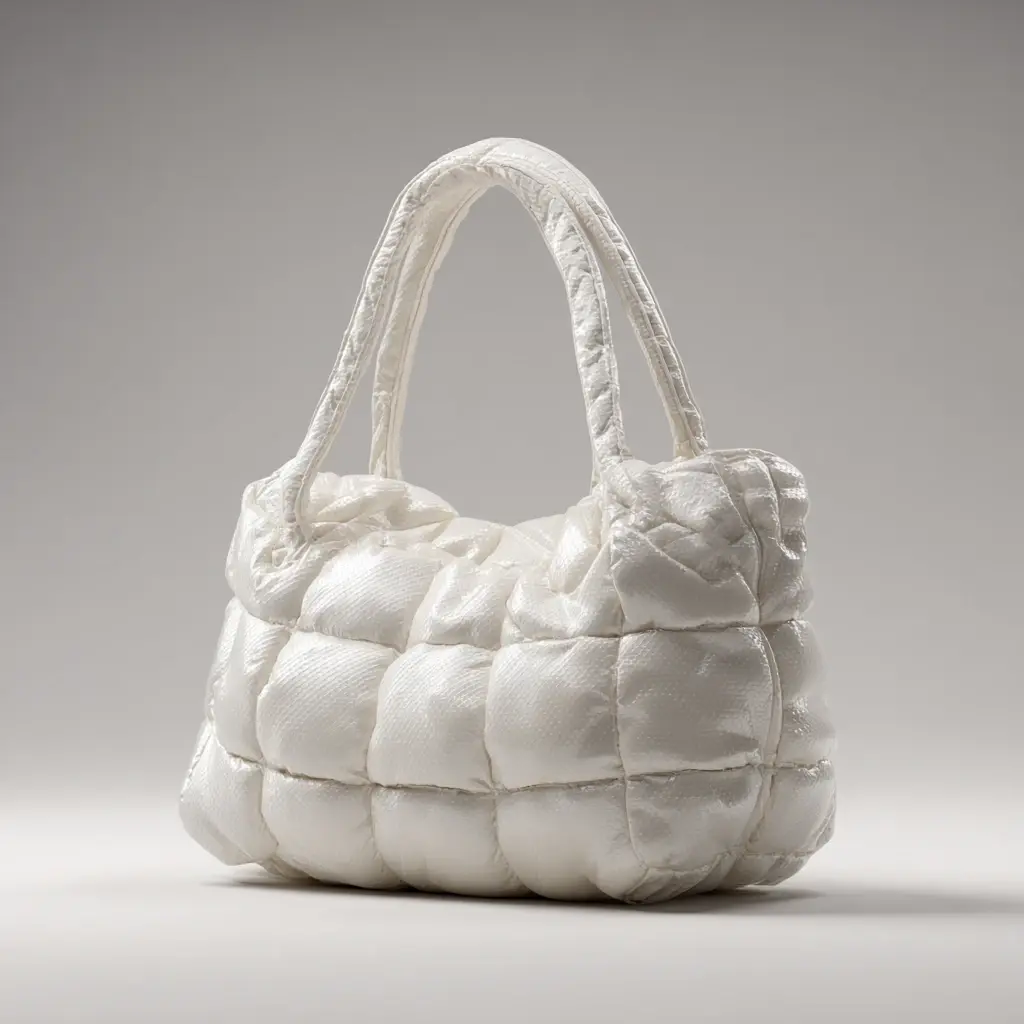
The Utility Style Shortlist for 2026
Six shapes carry the utility movement this year, and they rise for the same reason: each one solves a specific carrying problem rather than expressing a mood. The list below gives the problem, the shape, and the one specification line that decides whether the shape works.
- Utility tote: the weekday load. Decided by base width at 26-32 cm and a 24 cm bottle compartment.
- Convertible backpack: commuting. Decided by strap conversion hardware rated to 15 kg.
- Sling and crossbody: hands-free errands. Decided by an adjustment range written in centimetres.
- Bucket with a drawstring: open access. Decided by whether the closure is one-handed when loaded.
- Structured satchel: work carry. Decided by empty weight against a 620 g ceiling.
- Weekender: short travel. Decided by abrasion cycles on the base panel, at 40,000 minimum.
Writing a Utility Specification That Survives Bulk
A utility specification survives bulk when every feature on it has a number and every number has a test. That is the whole discipline, and it is what separates a bag that reads as useful from one that reads as complicated. Five lines cover it, and all five belong in the tech pack before sampling rather than in an email afterwards.
The commercial frame around those lines is unchanged: MOQ 500 pcs per style / colourway, 6-10 working days for sampling, 35-50 days for bulk, FOB Xiamen, and AQL 2.5 under ISO 2859-1 with criticals at accept zero. Our programmes run through an SGS-validated partner factory with 7 production lines and about 200,000 pcs per month, and export work has run since 2014, so those numbers come back as dates. The demand side of the utility shift is covered in what the next buyer wants, the decision sequence in how consumers choose a bag, and the wider picture in our handbag sourcing guides.
The Feature Budget: Grams and Cents per Compartment
Every utility feature is a line in two currencies, grams and cents, and writing both down is what stops a useful bag becoming a heavy one. A bottle compartment costs about 0.04 sq m of lining, 32 g and 18 cents; a padded laptop sleeve 45 g and 35 cents; a key leash 6 g and 5 cents; a trolley strap 22 g and 14 cents. Four modest-sounding features add 105 g and 72 cents, which is a third of the weight ceiling and more than the gap between two hardware finishes.
| Feature | Added weight | Added cost a piece | Verdict |
|---|---|---|---|
| Bottle compartment, 24 cm | 32 g | 0.18 dollars | Keep, used by 68 per cent of buyers |
| Padded laptop sleeve | 45 g | 0.35 dollars | Only on styles sold as work carry |
| Trolley strap | 22 g | 0.14 dollars | Keep on travel and weekender styles |
| Key leash | 6 g | 0.05 dollars | Keep, cheapest retention feature made |
| Second front pocket | 19 g | 0.11 dollars | Cut where the first pocket is named |
The table is a budget rather than a menu. Choose against the ceiling first and the price second, because weight is what a customer feels on the first day and cost is what the programme feels once the whole range has been specified the same way.
The Load Profile That Sets the Dimensions
Dimensions should come from a load, not from a drawing. A weekday commute typically carries a 1.4 kg laptop, a 0.6 kg bottle, a 0.4 kg charger and cable, a 0.3 kg notebook and 0.2 kg of small items, which is 2.9 kg before the bag itself. A 620 g tote therefore carries 3.5 times its own weight, and that ratio is what decides a 25 mm strap, an 8 mm rivet and a base that does not bow in the hand.
- Base width. 26-32 cm for a 14-inch laptop plus a bottle; under 26 cm the laptop sits at an angle and the bag tips.
- Strap width. 25 mm webbing at a 3.5 kg load; 20 mm is comfortable to 2 kg and cuts into the shoulder past it.
- Rivet and stitch. An 8 mm rivet sharing load with a 25 by 25 mm box stitch at the strap root, not one or the other.
- Centre of gravity. Load the sample to 2.9 kg and stand it up; a bag that tips at rest will tip while being carried.
The Functional Test Card at Pre-Shipment
Durability is proved in a laboratory; utility is proved on a bench, in twenty minutes, on three units. The card that works carries eight checks and one rule: a failure on a functional item is a critical defect, not a major. Pull the zip 200 cycles loaded with 1.5 kg and measure pull force against 60 N, load the strap to 15 kg for 30 minutes, stand a 600 ml bottle in its compartment and invert the bag three times, and reach every pocket while wearing it at 2.9 kg.
- Sample size. Three units from the drawn sample under AQL 2.5 and ISO 2859-1, because one unit proves only that it can be done.
- Zip cycle. 200 loaded cycles at the bench against 10,000 in the laboratory; the bench test finds the badly set slider first.
- Pull force. 60 N to open a slider from rest; below 35 N the zip opens in the hand under a full load.
- Inversion. Three inversions with a 600 ml bottle fitted; a compartment that spills is a critical, and it ends the inspection.
Cutting the Features Buyers Never Use
The cheapest way to lighten a utility bag is to remove the features nobody uses, and the usage numbers are more lopsided than a specification meeting assumes. Across utility programmes, a front slip pocket is used by about 81 per cent of buyers, a bottle compartment by 68, a trolley strap by 48, a key leash by 22, and a padded laptop sleeve by 12 on a bag not sold as work carry. Removing the last two saves 51 g and 40 cents a unit.
- Test before committing. A 200-unit run with a short follow-up survey costs less than 500 units of a feature nobody touches.
- One object a pocket. A pocket that serves two objects usually serves neither, and the 81 per cent belongs to the single front slip.
- Weight against use. A padded sleeve adds 45 g to every unit for the one buyer in eight who opens it, which is a poor trade at 620 g.
- Keep the cheap wins. The key leash costs 6 g and 5 cents and is among the most quoted details in reviews, so it survives the cut.
Send the carrying problem your bag is meant to solve and we will return the named pockets, the tests and a sampling slot. Get a Quote → /contact-quote/
Frequently Asked Questions
What makes a handbag a utility or functional style?
Named storage rather than general storage. A utility bag has a compartment sized for a specific object, such as a 600 ml bottle in a 24 cm deep pocket, plus access that works while the bag is being worn. Five pockets sized for a phone is storage without utility.
How many pockets should a functional handbag have?
Three named ones, usually more useful than five unnamed ones. Name the object and the dimension for each: a bottle upright, a large phone case reachable from outside, and a cable on an elastic loop. Count alone predicts nothing about whether the bag works, and it cannot be tested at sampling.
What weight should a medium utility tote target?
620 grams empty, written into the tech pack as a ceiling rather than left as an outcome. Reinforcement, base boards and extra pockets push a tote past 710 g quickly, at which point the bag is heavier than the contents it was designed to organise.
How should a strap be tested for a functional bag?
At 15 kilograms for 30 minutes with no failure, using a named test method rather than a verbal description. That figure covers a loaded weekday carry plus margin, and it turns a durability claim into something an inspector can actually check at sampling, on the sample unit rather than on paper.
What zip cycle count should a utility bag specify?
10,000 cycles, tested loaded rather than empty. A zip that fails at 4,000 cycles is a defect while one that fails at 11,000 is an optimistic specification, and the number tells you which change to make. Pair it with a pull force in newtons.
Why do utility bags have high return rates?
Because access fails in use rather than in photographs. A back-panel pocket is unreachable while worn, and a magnetic closure needing two hands fails whenever the wearer is carrying something. Both pass a photoshoot and both generate returns inside a fortnight, usually before any review appears.
Which utility styles are rising fastest in 2026?
Utility totes, convertible backpacks, slings and crossbodies, drawstring buckets, structured satchels and weekenders. Each rises because it solves one carrying problem, and each has a single specification line that decides whether it works, such as base width or adjustment range, and none rises on style alone.
How long does it take to revise a utility specification and reorder?
In the case above, 47 days from specification sign-off to shipment, with sampling taking eight working days. The revision itself was agreed in one call because the return reasons had already identified exactly what needed to change, which is why reading return reasons first is worth the hour.
Is a bottle compartment worth adding to a tote?
Yes, and it was the single change that moved the return rate most in the case above. The compartment needs to be about 24 cm deep with an elasticated top so a 600 ml bottle stands upright; a shallow compartment simply relocates the complaint, and buyers notice within a week.
What does MOQ 500 pcs per style / colourway mean for a utility range?
It applies per colourway, so a two-colour utility launch commits 1,000 pieces. Utility styles reward depth over variety, because the features are the selling point rather than the colour, so a single colourway restocked is usually the better first plan, with the second colour held for the repeat.
Should utility bags carry more hardware than standard styles?
Only where it serves a function, and never at the cost of weight. Matte black fittings weigh less than plated brass and read as more utility, which is why they are the usual choice. Every extra fitting is also another failure point at AQL 2.5 under ISO 2859-1.
People Also Ask
What are functional bags?
Handbags built around named storage and access rather than around a silhouette. Each compartment is sized for a specific object, such as a 600 ml bottle or a large phone case, and access is designed to work while the bag is being worn at a realistic load.
Why are utility bags becoming more popular?
Because the everyday carry changed. Hardware replaced documents, so buyers want organisation for a phone, power bank, cable and bottle. Styles that solve that specific problem outsell decorative shapes, and the demand shows up in return data before it shows up in trend coverage.
What should I look for in a utility handbag?
Named pockets, access you can reach while wearing the bag, an empty weight under 620 grams for a tote, and a stated cycle count or load figure for the hardware. Those four separate a genuinely useful bag from one that is merely complicated.
Are utility handbags heavier than normal handbags?
They can be, which is the trap. Reinforcement, base boards and extra pockets pushed one first-order tote to 710 grams. Setting a 620 gram ceiling in the tech pack forces the weight out through lining and hardware choices rather than through removing features.
Sources and further reading
Every figure on this page is either our own programme data or attributed below. Open the originals before you write them into a specification.
- SATRA — technical services for leather, footwear and accessoriesSATRA Independent leather, hardware and accessories testing protocols.
- FashionUnited — fashion industry news and dataFashionUnited Industry news and company data for the fashion sector.
- World Intellectual Property OrganizationWIPO International trademark and design registration before tooling starts.