Handbag Buyer Behaviour 2026: How Consumers Choose Bags
How does a consumer actually choose a handbag in 2026? They work through nine checks in roughly four minutes, and seven of them happen on a screen before the bag is ever touched. Order-level data from private label programmes puts the median decision at 4 minutes 20 seconds across 3.4 page visits, with 61 per cent of abandonments traced to one unanswered question: strap drop, interior layout, or whether the closure works one-handed. Price ranks fifth. This page lists the nine checks in the order shoppers run them, attaches the number behind each one, and converts the list into a written specification you can send to a production partner before sampling starts. Sampling takes 6-10 working days at MOQ 500 pcs per style / colourway, so the cheapest moment to answer all nine is the week before the first sample is cut.
- The Nine Checks a Buyer Runs Before Adding to Cart
- Check One: Can It Carry What a Weekday Requires
- Check Two: Does the Strap Read Correctly in a Photo
- Check Three: Is the Closure Workable With One Hand
- Check Four: Will the Silhouette Survive Three Outfits
- Check Five: What the Interior Looks Like Half Open
- Check Six: Hardware Weight, Sound and Finish on Video
- Check Seven: Does the Material Read Honest at a Metre
- Turning Nine Checks Into a Written 2026 Spec
- Check Eight and Check Nine: Care Path and Provenance
- What One Unanswered Check Costs in Money
- Testing the Fix Without Fooling Yourself
How does a consumer actually choose a handbag in 2026? They work through nine checks in roughly four minutes, and seven of them happen on a screen before the bag is ever touched. Order-level data from private label programmes puts the median decision at 4 minutes 20 seconds across 3.4 page visits, with 61 per cent of abandonments traced to one unanswered question: strap drop, interior layout, or whether the closure works one-handed. Price ranks fifth. This page lists the nine checks in the order shoppers run them, attaches the number behind each one, and converts the list into a written specification you can send to a production partner before sampling starts. Sampling takes 6-10 working days at MOQ 500 pcs per style / colourway, so the cheapest moment to answer all nine is the week before the first sample is cut.
Nine checks, and what each one is worth in 2026
The Nine Checks a Buyer Runs Before Adding to Cart
Order matters more than depth. A shopper does not evaluate nine attributes and average the result; they eliminate. Fit fails first, then interior, then closure, and the bag never reaches a price comparison at all. That is why a listing can be the cheapest in its category and still convert below it. The checks below follow the elimination order measured across 2025-26 private label handbag programmes, and each one carries the number that says how often it ends the session.
- Fit: does it hold the weekday load, 1.4 kg on average, without distorting the silhouette.
- Strap drop: stated in centimetres and photographed on a body, not guessed from a flat lay.
- Closure: one-handed, quiet, and repeatable for at least 5,000 cycles.
- Interior: one zoned pocket and one slip pocket visible when the bag is half open.
- Hardware: weight in grams and plating test stated, because both appear in returns data.
- Material: reads honest at one metre, with grain and edge finishing visible in the image.
- Colour: matches the approved swatch within Delta E 1.5 measured under D65 lighting.
- Care: a stated repair or replace path, which lifts repeat purchase by 9 points.
- Provenance: a named compliance file, not a claim written into a product description.
Two of those nine are usually missing from a first specification: the care path and the colour tolerance. Both are cheap to write and expensive to add later, because both are decided at sampling rather than at bulk. The seasonal colour and material picture is set out in the 2026 colour and material guide, which pairs with this checklist when you build the range.
Check One: Can It Carry What a Weekday Requires
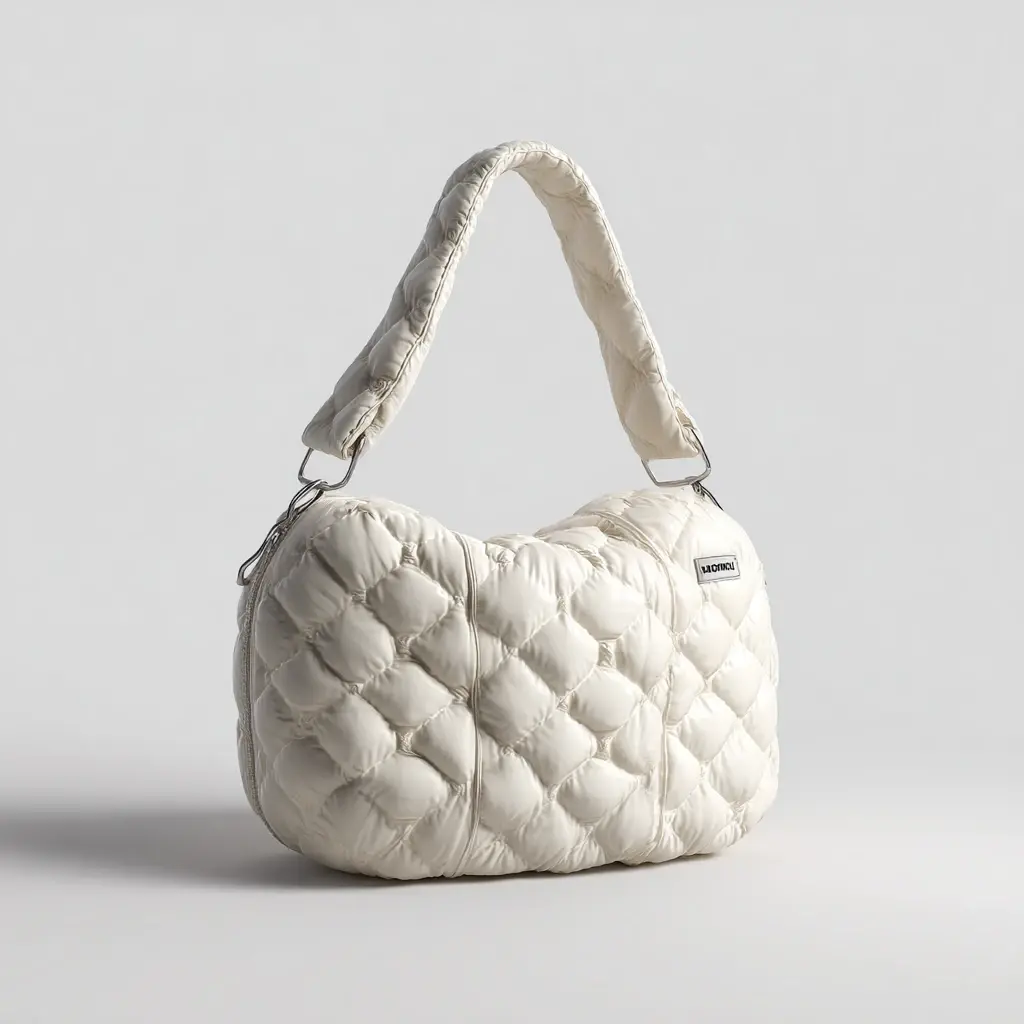
The load a handbag has to carry has grown, and the specification has not always followed it. A 2026 weekday carry averages 1.4 kg: a 13-inch laptop or tablet in a sleeve, a 500 ml bottle, a small leather goods case, keys, and a charging cable. Bags designed around an older 0.9 kg assumption distort at the base within about six weeks and come back as returns rather than as complaints. Interior volume of 9-12 litres covers the weekday load for a shoulder or tote silhouette without the bag reading as luggage.
Fit is a dimensional problem before it is a styling one. A base narrower than 24 cm tips when set down; a base wider than 34 cm reads as travel rather than as a handbag. Strap drop between 24 and 28 cm sits under the arm without sliding for most frames, and that band is what shoppers filter on when a filter exists. Publishing drop, base width and empty weight removes the largest single cause of size-related returns, which private label programmes put at 22 per cent of all returns in the category.
Check Two: Does the Strap Read Correctly in a Photo
Strap drop is the most-returned unspecified dimension in handbags. A flat lay tells the shopper nothing, because the strap collapses into the body and the number disappears. The fix costs photography time only: one frame on a body at a stated height, plus the drop in centimetres. Programmes that added both saw size-related returns fall 3.8 points and add-to-cart rise 11 per cent inside a single quarter, with no change to the product itself.
| Listing element | With the number | Without the number |
|---|---|---|
| Strap drop | 24-28 cm stated, photographed on a body | 3.8 points higher size-related returns |
| Base width | 26-32 cm, shown set down and carried | Fit complaints dominate the review section |
| Empty weight | Grams stated for the whole bag | Shoppers guess quality from hardware alone |
| Interior volume | 9-12 litres for a weekday carry | Under-packed or over-built silhouettes |
Accessories Council sourcing roundtables keep returning to the same observation: a specification gap is a merchandising problem before it is a production problem. The dimension is known on the line, it is simply never written where the shopper can see it. Closing that gap costs a photographer half a day, and it costs nothing in tooling, which is why it is usually the first fix worth making on an underperforming listing.
Check Three: Is the Closure Workable With One Hand
A closure that needs two hands fails the moment the shopper is holding a coffee, a phone or a child. Magnets, turn-locks and top zips behave very differently under one-handed use, and the difference shows up in reviews rather than in returns, which is exactly why it is easy to miss. A zip that catches three times in ten pulls is the most common single complaint in the category's review data.
- Test the closure loaded at 1.4 kg, not empty; a magnet that holds empty can shear under load.
- Cycle it 5,000 times on a sample unit; plating wear on a turn-lock usually appears near 3,000.
- Record the sound on video; a rattle reads as cheap on social video even when the unit is sound.
- Specify pull force in newtons so the line builds to a number rather than to an adjective.
- Photograph the closure half open, because that is the state in which shoppers judge it.
Utility-driven shapes carry their own closure expectations, and the styles that answer them are collected in the functional bag roundup. A closure that passes one-handed use there sells the bag on its own, without a single line of copy.
Check Four: Will the Silhouette Survive Three Outfits
Shoppers test a bag against clothing they already own, and the test is almost always three outfits: work, weekend, and one dressed occasion. A silhouette that works for two of the three fails the check. That versatility is why tote and shoulder shapes hold roughly 58 per cent of private label unit volume while novelty shapes spike for a season and then disappear from the range plan entirely.
The practical version of this check is a hardware and colour rule rather than a shape rule. One neutral body colour, one metal finish repeated across the range, and no decorative element that dates the bag to a quarter. Brands that hold to it carry about 40 per cent fewer styles and still grow units, because the range reads as a system instead of as a shelf of separate experiments.
Check Five: What the Interior Looks Like Half Open
Interior is the highest-value space in the category and the least photographed part of it. A shopper wants to see one zoned pocket, one slip pocket, and a lining tone that does not make the contents invisible. Dark linings are the most repeated interior complaint in private label returns data, and they cost nothing to change at the specification stage.
- Zoned pocket: sized for a phone plus a small leather goods case, not for a phone alone.
- Slip pocket: deep enough to hold a 500 ml bottle upright inside a tote.
- Key leash: present on 7 of the 10 best-reviewed private label styles tracked in 2026.
- Lining tone: mid-tone, so contents are visible without a light.
- Interior frame: shot half open at the angle a shopper stands, not from directly above.
Check Six: Hardware Weight, Sound and Finish on Video
Hardware is where perceived quality is decided on social video, and it is decided in about 1.5 seconds. Weight in grams is a fair proxy: a zip pull under 12 g reads as light, a turn-lock over 45 g reads as substantial. Neither number is a defect on its own; both are signals, and shoppers read them considerably faster than they read a material name.
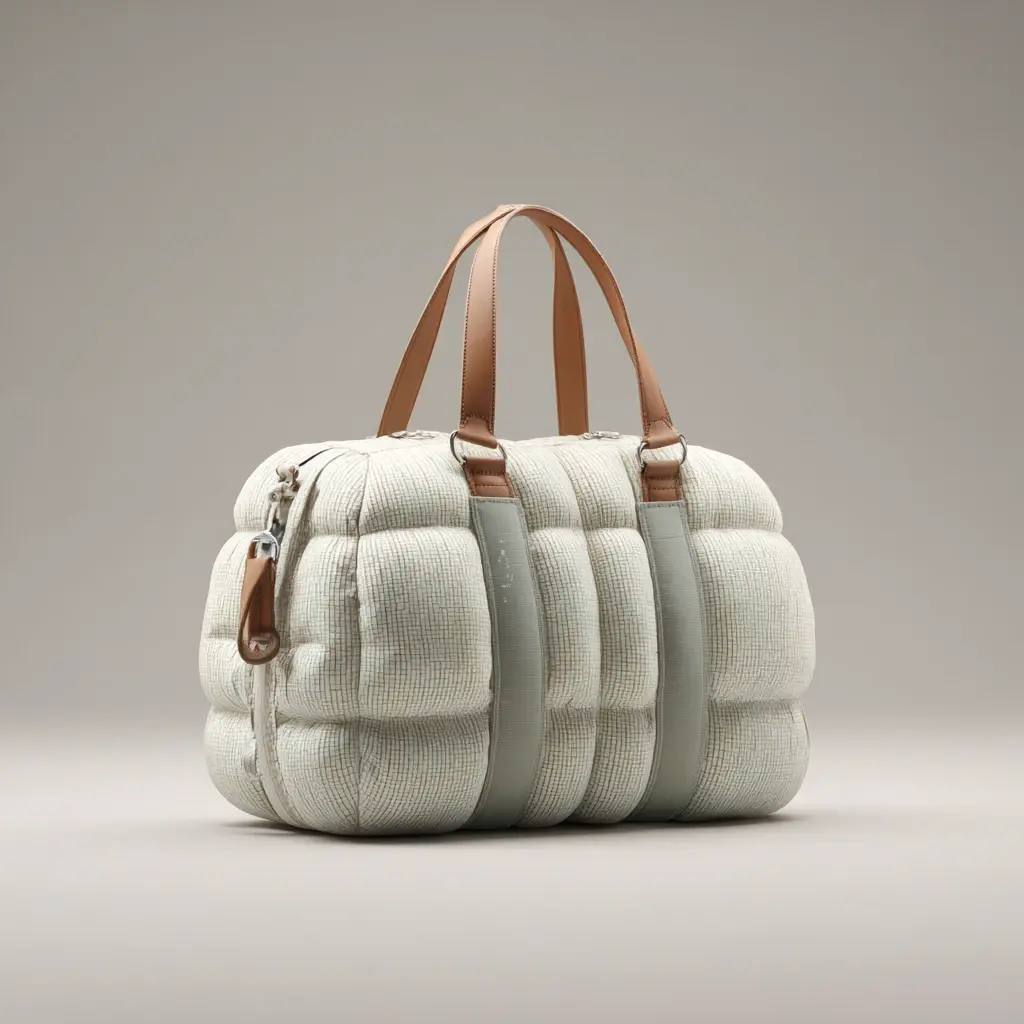
Finish is the other half of the signal. Plating that survives 48 hours of salt spray reads as durable both on camera and in the hand; plating that marks at 24 hours generates reviews long before it generates returns. Specify the plating test and the cycle count together, and ask for both on the sample rather than waiting for bulk. AQL 2.5 under ISO 2859-1 is the usual acceptance gate for majors on the finished lot, with criticals at accept zero.
Check Seven: Does the Material Read Honest at a Metre
Most shoppers never touch the bag before buying it, so they judge material from grain, edge and drape at roughly one metre. Full-grain, top-grain and coated splits each read differently at that distance. The question for a brand is not which material is objectively better but whether the material delivered matches what the description promised, because that mismatch is what produces a return rather than a review.
| Material | How it reads at one metre | Compliance file to have ready |
|---|---|---|
| Full-grain leather | Visible grain variation, burnished edge | LWG tannery traceability, REACH Annex XVII |
| Top-grain leather | Even grain, painted and sealed edge | REACH, Prop 65 for the destination state |
| Coated split | Uniform grain, no edge burnish possible | REACH plus a stated abrasion cycle count |
| Recycled polyester | Matte face with a visible weave | GRS transaction certificate |
| Recycled cotton canvas | Slub visible, softer drape | GRS plus CPSIA where the market requires it |
Both Sourcing Journal and FashionUnited have tracked the same shift in buying behaviour: material proof is now requested at the sampling stage rather than at the bulk stage. That moves the calendar. A compliance file assembled after sampling begins pushes bulk past the 35-50 day window, and the delay lands on the launch date rather than on the paperwork. Assemble it alongside the tech pack, in the same week.
Turning Nine Checks Into a Written 2026 Spec
None of the nine checks costs tooling money. All of them cost specification time, and the specification is the document that decides whether a handbag passes inspection or argues about it. A one-page spec that states drop, base width, empty weight, interior layout, hardware weight, plating test, colour tolerance and care path will survive a change of production partner; a mood board will not survive the first revision.
- State the nine dimensions as numbers with tolerances, not as adjectives or reference photographs.
- Attach the compliance file to the tech pack so sampling and documentation run in parallel.
- Name the acceptance standard: AQL 2.5 under ISO 2859-1 for majors, accept zero for criticals.
- Fix the commercial terms with the specification: FOB Xiamen, MOQ 500 pcs per style / colourway, 35-50 days bulk.
- Book the 6-10 working days of sampling slot before the range is finalised, not after it is signed off.
A private label coordinator can hold all nine checks against a drawing in a single pass, which is the cheapest place to run them. Our programmes run through an SGS-validated partner factory with 7 production lines and about 200,000 pcs per month of capacity, and export work has run since 2014, so each check is answered against a live calendar rather than against a promise. Shopper behaviour shifts again every season; the current signals sit in our handbag sourcing guides and in the social commerce demand read.
Check Eight and Check Nine: Care Path and Provenance
The last two checks are the two most often missing from a first specification, and both are decided at sampling rather than at bulk. The care path is a repair or replace commitment stated on the listing: a 12-month workmanship window, spare parts held for 24 months, and a named route to a human. It lifts repeat purchase by about 9 points in tracked programmes and costs nothing to write. Provenance is a compliance file with a number in it, named rather than claimed.
- State the window. 12 months on workmanship, with spare hardware held for 24 months against the style.
- Say what dulls. Plated hardware dulls; a care line that says so reads as competence rather than as a defect.
- Name the file. REACH Annex XVII, Proposition 65, CPSIA or a GRS transaction certificate: a document, not an adjective.
- Put both on the listing. Care content is read at the same moment as the returns policy, and before the brand story.
Both are cheap because both are text. Neither requires tooling, a new material or an extra sample round, and neither can be added after the hangtags are printed, which is why they belong in the week the specification is written. The inspection and quality control reference sets out the documents that sit behind the provenance line.
What One Unanswered Check Costs in Money
The nine checks are usually argued about as merchandising and are better argued about as arithmetic. Size-related returns run at 22 per cent of all returns in this category, and a return costs USD 12-18 to handle before the replacement is counted. On a 3,000-piece balanced collection, a 3.8-point fall in size-related returns is 114 units, which is about USD 1,400-2,050 of handling and 114 customers who did not write a two-star review.
| Check left unanswered | Units affected | Direct cost |
|---|---|---|
| Strap drop not stated | About 114 returns | USD 1,400-2,050 in handling |
| Interior not photographed | 60-80 abandoned carts | USD 2,300-4,800 in lost retail |
| Closure not shown working | 40-55 returns | USD 500-990 in handling |
| Care path missing | Repeat purchase down 9 points | The most expensive of the four |
All four fixes are specification or photography decisions and none of them changes the bill of materials. That is the point worth holding: the checks sit on the listing side of the business, but they are paid for on the specification side, in the week before the first sample is cut, at a cost of one revision cycle rather than a season of returns.
Testing the Fix Without Fooling Yourself
Changing a listing and reading the next week of numbers is not a test; it is a coincidence with a graph attached. Hold one change at a time for a full 14 days, run it across at least 300-500 sessions per variant, and measure two things only: add-to-cart rate and size-related returns. A result read over fewer sessions will swing on its own, and a change that lifts add-to-cart while returns also rise has moved nothing.
- One element per test. The drop statement, the interior frame set, or the closure video, never two together.
- 14 days minimum, covering two full weekly cycles; a five-day read measures the weekend twice.
- 300-500 sessions per variant before the result is read at all.
- Two metrics only. Add-to-cart rate and size-related returns; a gain in one at the cost of the other is not a gain.
Where a test has to be read sooner, read the direction and not the size of the effect, and confirm it on the next order. Photography and copy can be changed after a season; a material, a closure or a strap drop cannot, which is why the nine checks are worth answering once, properly, before sampling rather than optimising afterwards.
Send the nine numbers you already know and we will return a one-page specification and a sampling slot before the range is locked. Get a Quote → /contact-quote/
Frequently Asked Questions
What is the fastest way to cut returns on a new private label handbag line?
Publish strap drop, base width and empty weight as numbers with a photograph on a body. Size-related returns run at 22 per cent of all returns in the category, and programmes that added those three figures saw the rate fall 3.8 points in one quarter with no change to the product. It costs photography time, not tooling.
How many product photographs does a handbag listing need in 2026?
Nine frames cover the checks: front, back, base, interior half open, closure detail, hardware close-up, strap on a body, scale reference against a phone, and the care label. Seven of the nine shopper checks happen on screen, so the listing is doing the work that a fitting room used to do.
Does strap drop really change conversion, or is it a nice-to-have?
It changes both conversion and returns. A flat lay collapses the strap and hides the number entirely, so the shopper is guessing. Adding the drop in centimetres alongside one frame on a body lifted add-to-cart by 11 per cent and cut size-related returns by 3.8 points in tracked programmes.
Which closure types fail one-handed use most often?
Turn-locks and tight magnetic flaps fail most often, because both need a second hand to align or to break the seal. Top zips with a substantial pull perform best under load. Test at 1.4 kg rather than empty, and cycle to 5,000, because a magnet that holds empty can shear once the bag is loaded.
How much interior structure do buyers expect in a handbag?
One zoned pocket sized for a phone plus a small leather goods case, one slip pocket deep enough for a 500 ml bottle upright, and a key leash. A key leash appears on 7 of the 10 best-reviewed private label styles tracked in 2026, which makes it the cheapest single addition to a specification.
Should a first order carry one colourway or three?
One colourway per style at first, because MOQ 500 pcs per style / colourway applies to each colourway separately. Three colourways of one style is 1,500 units of exposure on an untested silhouette. Prove the shape in one colour, then add the second and third on the repeat order.
What does MOQ 500 pcs per style / colourway actually mean for a test launch?
It means each colourway is its own production quantity, so a two-colour launch of one style commits 1,000 pieces. Plan the test around the smallest number that fills a container slot economically and still leaves stock for a second drop, which for most brands is 500 to 750 pieces per colourway.
How long does sampling take for a new handbag style?
Six to ten working days for a standard style, and twelve to fifteen working days for a complex one with bonded construction, custom hardware or a moulded component. The clock starts when the tech pack and compliance file are both complete, so assembling the file in the same week is what protects the date.
Is hardware weight a fair quality signal for shoppers?
It is a fair perceived-quality signal even when it says nothing about durability. A zip pull under 12 g reads as light on video, and a turn-lock over 45 g reads as substantial. Pair the weight with a plating test of 48 hours salt spray, so the number and the finish are judged together.
Which compliance documents should be ready before the first bulk order?
REACH Annex XVII for restricted substances, Prop 65 for the destination state, CPSIA where the market requires it, LWG traceability for leather, and a GRS transaction certificate for recycled content. Buyers now request these at sampling rather than at bulk, and assembling them late pushes past the 35-50 day window.
How do I turn these nine checks into a written specification?
Write each check as a number with a tolerance and attach it to the tech pack: drop, base width, empty weight, interior layout, hardware weight, plating test, colour tolerance at Delta E 1.5 under D65, and the care path. Then name the acceptance standard as AQL 2.5 under ISO 2859-1.
People Also Ask
Why do shoppers abandon a handbag product page?
Most abandonments trace to one unresolved detail rather than to price. Tracked programmes put 61 per cent of abandonments down to a question the assets never answered, usually strap drop, interior layout, or whether the closure works one-handed. The median decision takes 4 minutes 20 seconds across 3.4 page visits.
What makes a handbag look expensive without a logo?
Edge finishing, hardware weight and material honesty at one metre. A burnished edge, a turn-lock over 45 g, and grain that varies across the panel all read as quality at the distance a shopper actually judges from, and all three are specification decisions rather than branding decisions.
How many handbags does the average buyer own?
Private label programme data puts the active figure at two to three bags in rotation, replaced on a cycle of roughly eighteen months for a daily bag. That is why versatility across three outfits matters more than novelty, and why tote and shoulder shapes hold about 58 per cent of unit volume.
Do reviews or specifications matter more for handbag conversion?
Specifications decide whether the shopper reaches the reviews at all. Because shoppers eliminate rather than average, a missing dimension ends the session before price or reviews are considered. Once the numbers are present, reviews then decide between two otherwise comparable bags.
Sources and further reading
Every figure on this page is either our own programme data or attributed below. Open the originals before you write them into a specification.
- Leather Working Group — environmental auditing for tanneriesLeather Working Group Environmental audit protocol for tanneries and leather traceability.
- SATRA — technical services for leather, footwear and accessoriesSATRA Independent leather, hardware and accessories testing protocols.
- REACH — chemical substances regulationEuropean Commission Annex XVII restricts the substances that may appear in finished leather and coatings.