Custom Handbag Lining and Interior Details Buyers Love
Which custom handbag lining and interior details do buyers actually notice? The ones they touch first: a lining that does not pill at 20,000 Martindale rubs, a slip pocket deep enough to swallow a 165 mm phone without tipping it out, an interior that is light rather than black so the contents can be found, and a branded label sitting 15 mm below a pocket facing rather than floating somewhere in the middle of a panel. Interior specification is a sequence of seven decisions — fabric weight, pocket count and depth, interior closures, colour contrast, brand placement, reinforcement, and test standard — and each one costs between nothing and about 9 percent of unit price, so the order matters more than the budget. Specified in that sequence, the inside of the bag stops being the cheapest thing in the tech pack and becomes the part reviewers describe in the first line of their feedback.
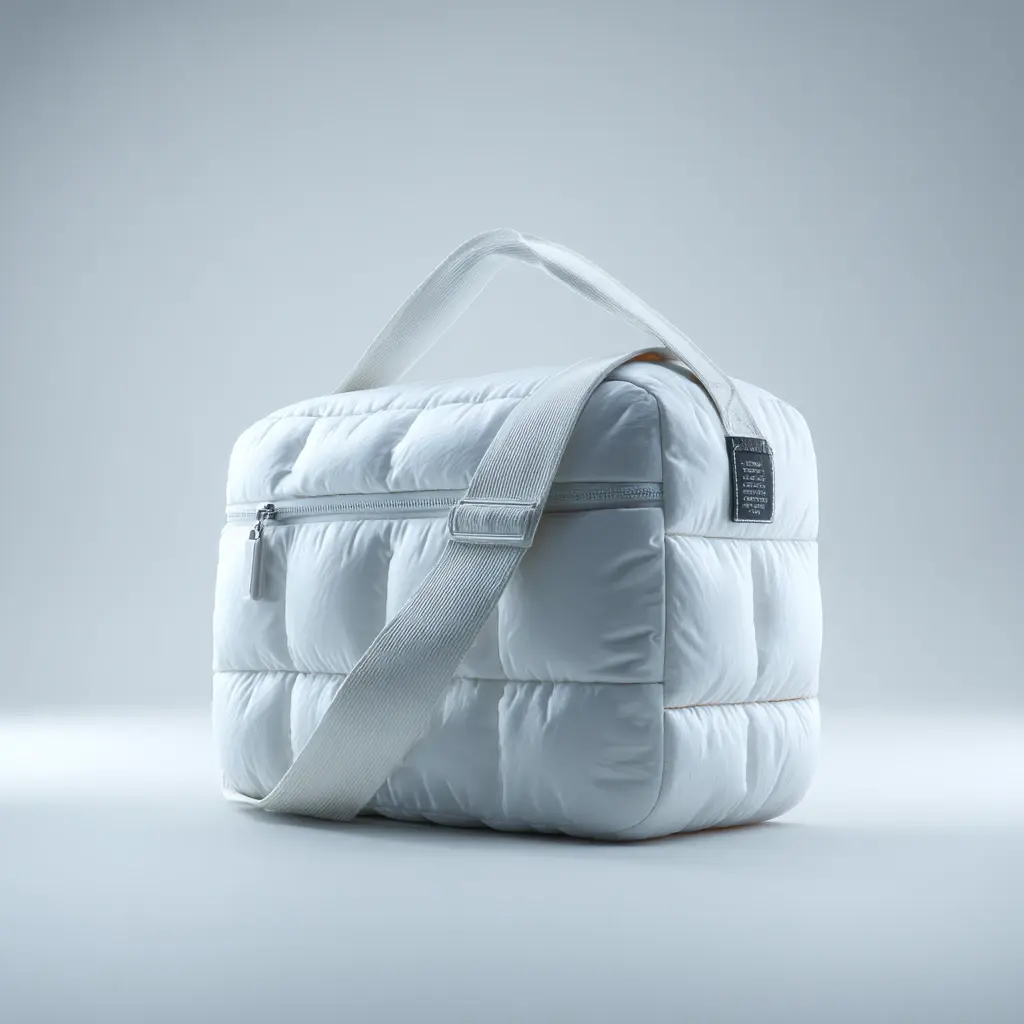
- Start With Three Questions, Not Fabric Swatches
- Decision One: Lining Fabric Weight and Abrasion Class
- Decision Two: How Many Pockets and How Deep
- Decision Three: Closures Inside the Bag
- Decision Four: Colour Contrast or Colour Match
- Decision Five: Where the Brand Goes Inside
- Decision Six: Reinforcement at the Interior Failure Points
- Decision Seven: What Gets Tested and to Which ISO Number
- Where Interior Spend Stops Paying Back
- The Assembly Sequence Nobody Writes Down
Which custom handbag lining and interior details do buyers actually notice? The ones they touch first: a lining that does not pill at 20,000 Martindale rubs, a slip pocket deep enough to swallow a 165 mm phone without tipping it out, an interior that is light rather than black so the contents can be found, and a branded label sitting 15 mm below a pocket facing rather than floating somewhere in the middle of a panel. Interior specification is a sequence of seven decisions — fabric weight, pocket count and depth, interior closures, colour contrast, brand placement, reinforcement, and test standard — and each one costs between nothing and about 9 percent of unit price, so the order matters more than the budget. Specified in that sequence, the inside of the bag stops being the cheapest thing in the tech pack and becomes the part reviewers describe in the first line of their feedback.
The seven interior decisions at a glance
Start With Three Questions, Not Fabric Swatches
Interior specification usually starts the wrong way round: a swatch book arrives, somebody picks a colour, and pocket layout gets invented later by whoever is sewing. The result is an inside that photographs well empty and behaves badly loaded. A better start is three questions that can be answered before any material is chosen, because their answers narrow the fabric shortlist from dozens to three or four and fix the pocket count without a debate.
- What goes in the bag every day? A 1.2 kg laptop, a 500 ml bottle and a glasses case are each a load case, and load cases decide lining weight and base reinforcement rather than taste.
- Who opens it, and how often? A commuter tote opened forty times a day needs a different abrasion class and top-edge finish than a bag carried twice a week.
- Where does the brand need to be seen? Every time a buyer opens the bag is an impression, and interior branding costs a fraction of exterior tooling while being seen more often.
Answer those three and most of the seven decisions below resolve themselves. This is also the point at which a handbag programme specialist can quote, because the answers are quantities and dimensions rather than adjectives. The same logic applies upstream: the custom handbag development route begins with intended load rather than with a sketch, for exactly this reason.
Decision One: Lining Fabric Weight and Abrasion Class
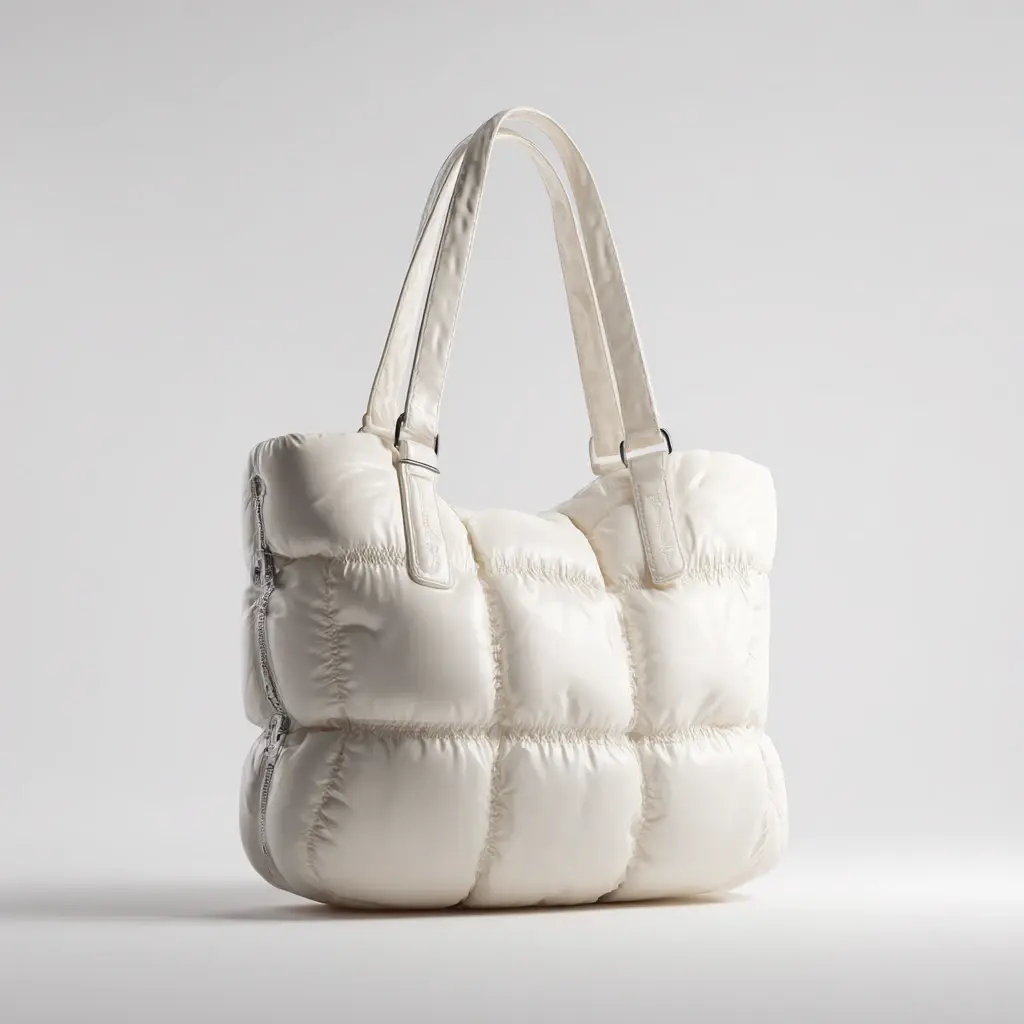
Lining is specified by weight and abrasion, not by how it feels under a thumb in a showroom. Weight is given in grams per square metre and decides how the lining drapes and whether it bags out at the corners after a season; abrasion is given in Martindale rubs to ISO 12947-2 and decides how long it takes before keys and cosmetics cases fuzz the surface grey. The two are related but not interchangeable, and a buyer who asks for one without the other gets whichever roll was nearest the cutting table.
| Lining | Weight | ISO 12947-2 target | Best used for |
|---|---|---|---|
| 190T polyester taffeta | 55-65 gsm | 10,000 rubs | Light-use lining where cost is the constraint |
| 210D polyester twill | 90-100 gsm | 20,000 rubs | Daily-use shoulder bags and structured totes |
| 290T nylon ripstop | 68-75 gsm | 30,000 rubs | Travel pieces where tear strength matters |
| Cotton twill, 8 oz | 260-290 gsm | 15,000 rubs | HeritageLooks where hand feel sells the bag |
| Brushed microfibre, 0.6 mm | 170-190 gsm | 40,000 rubs | Premium interiors and soft slouchy silhouettes |
Which Lining Weight Suits Which Silhouette?
Match weight to silhouette and the interior stops fighting the shell. A slouchy hobo needs a lining with enough body to return to shape, so 90-100 gsm twill or a 0.6 mm microfibre works and 55 gsm taffeta does not: too light a lining creases permanently at the fold line and the bag looks second-hand within a month. A structured tote already carries interfacing and a base board, so a lighter lining saves weight without losing shape. Notebook compartments want 290T ripstop because tear strength, not abrasion, is what fails there — a pen pressed against fabric for six weeks cuts a lighter cloth.
Decision Two: How Many Pockets and How Deep
Pocket count is where brands overspend, and pocket depth is where they underspend. Four pockets inside a 28 cm shoulder bag sounds generous on paper and becomes four unusable slots on the body, because each one steals width from the main cavity. Three is the practical ceiling for bags under 30 cm: one zip pocket, two slip pockets, plus a pen slot if the buyer carries one. Depth is what makes a pocket actually hold something, and it is given in millimetres from the finished top edge, not from a seam.
- Slip pocket for a phone: 110-130 mm deep and at least 95 mm wide, so a 165 mm phone sits with 35-45 mm still inside the pocket rather than standing proud at the opening.
- Zip pocket: 160-180 mm opening, #3 nylon coil chain 4.5 mm wide, with 12 mm bar-tacks at both ends of the stop so the slider cannot ride out under load.
- Pen slot: 15-18 mm wide with a 1.5 mm folded facing; wider and the pen disappears sideways, narrower and it splits the seam.
- Base of any pocket: keep 25 mm clear of the bag base seam, or the pocket becomes the lowest point of the bag and contents sit in a pool of lint.
Every pocket costs operations, and operations are the piece of the unit price that cannot be negotiated away. Adding a fourth interior pocket typically adds 4-6 percent to unit cost on a mid-range build, while simply deepening existing pockets by 20 mm usually costs nothing but pattern correction. That is why the tech pack detail that decides the quote pays for itself before sampling starts: pocket depth is a dimension on a drawing, and a request after approval is a change order.
Decision Three: Closures Inside the Bag
The third decision is whether the interior closes at all. Nothing is a legitimate answer and often the right one: a hidden magnet costs more than it returns on a soft sling bag, while on a commuting tote a top closure is the difference between arriving with everything and arriving without a phone. The choice is between coil zip, concealed magnet and a snap on a tab, and each has a spec that matters more than the brand of component.
| Closure | Specification to write | Watch out for |
|---|---|---|
| #3 nylon coil zip | 4.5 mm chain, auto-lock slider, 12 mm bar-tack at each stop | Slider riding past the stop under load |
| Concealed magnet | N35 grade, 12 mm diameter, 1.2-1.8 kgf pull | Placed within 40 mm of card strips |
| Snap on tab | 9.5 mm prong ring, cap and socket matched in one finish | Cap pulling through a single-layer facing |
| Drawcord channel | 6 mm cord, 20 mm channel, cord stop with a locked pin | Channel twist after the first wash test |
Two details get missed repeatedly. Magnets must sit at least 40 mm away from any pocket intended to hold cards with magnetic strips, and this should be dimensioned on the tech pack rather than left to the sewing floor. And every closure needs a facing with enough substance behind it — a magnet set into single-layer 190T will show a visible ring on the shell within weeks, which is why a 0.4 mm non-woven interfacing behind any closure position is written into every interior we specify.
Decision Four: Colour Contrast or Colour Match
Colour is the cheapest perceived-value upgrade available in a handbag programme. A black-on-black interior reads as a hole; the same bag lined in a warm sand at a twenty-point step lighter reads as considered, and the cost difference between the two is usually within 1-2 percent of unit price because the fabric is the same cloth in a different dye lot. Contrast is not only aesthetic — a lighter lining lifts interior light reflectance enough that contents are findable at the bottom of a 26 cm bag.
Match tolerance follows different rules inside than out. Exterior panels are commonly held to Delta E 2.0 against an approved reference; interiors are held to Delta E 3.0, because nobody compares lining to exterior under a light box and chasing the tighter tolerance adds rejects for no buyer benefit. What does need specifying is fastness: colour fastness to rubbing at ISO 105-X12 should reach grade 4 dry and grade 3-4 wet for any light-coloured lining, since a light interior that transfers onto contents generates the angriest kind of review. Where a lining dyed to a Pantone TCX reference is required, the reference number belongs on the tech pack alongside the exterior one.
Decision Five: Where the Brand Goes Inside
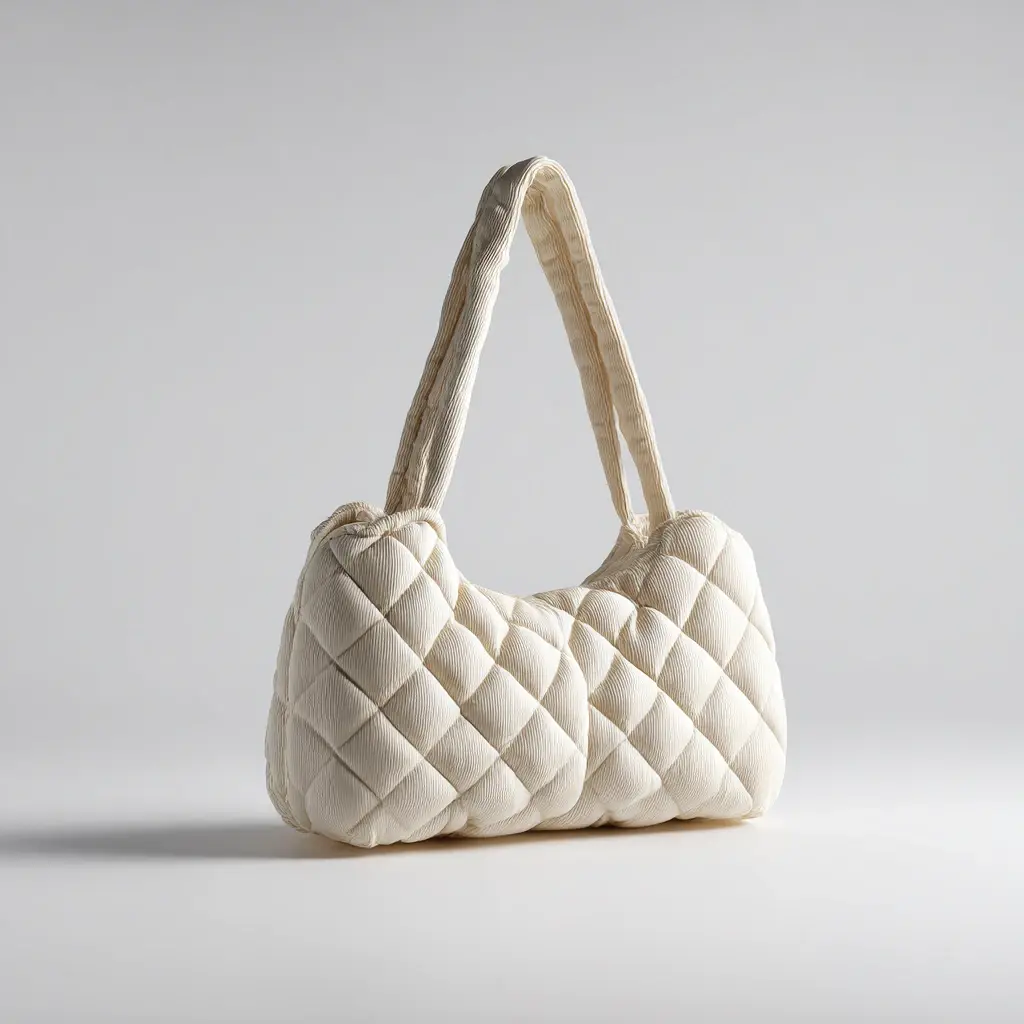
Interior branding is seen more often than exterior branding and tooled for less, which makes it the most under-used real estate in the whole package. Three positions work, and each needs a dimension from a datum edge rather than a phrase like somewhere on the lining. A woven label sewn to a pocket facing, an embossed patch on the interior back panel, or a printed composition label at the side seam: pick one primary position and one secondary, and write both in millimetres.
- Woven label on the pocket facing: 20 x 50 mm, polyester satin, sewn 1.5 mm from both edges so it can never curl away from the cloth.
- Embossed leather patch: 45 x 25 mm, 0.8-1.0 mm split leather, positioned 15 mm below the top edge of the facing and centred to the pocket width.
- Composition and care label: printed polyester, folded 30 mm deep, inserted into the side seam at the pocket line.
- Debossed interior strap end: an 8 mm blind emboss on the webbing end, costing nothing extra once the die exists.
Two compliance points attach to interior branding. Dyes and finishes on anything that touches skin are covered by REACH Annex XVII restrictions on azo dyes, chromium VI and nickel release, and a Prop 65 review covers lead in coated and printed trim for California. Printed labels on care-relevant items also carry content rules, so composition percentages should be stated in fibre weight order and checked before the artwork is released.
Decision Six: Reinforcement at the Interior Failure Points
Interiors fail at five predictable places, and none of them fail because the fabric was too cheap. They fail because nobody specified what happens at the joint. A pocket corner pulls out, a top edge frays where hands brush forty times a day, a key leash tears free, a facing rolls. Each has a specific fix measured in millimetres, and written together they make up the difference between an interior that survives a season and one that survives two years.
- Pocket corners: 12 mm x 3 mm bar-tack, boxed rather than diagonal, with the stitch density raised to 8-9 stitches per inch at the return.
- Pocket mouth: 10 mm seam allowance pressed open and topstitched 3 mm from the fold, which stops the edge rolling outward.
- Top edge of the bag: a 20 mm folded facing rather than a 10 mm turning, because the wider facing is what holds the shape when the bag is empty.
- Key leash or tab: 20 mm polyester webbing taken 25 mm into the seam, never 10 mm, with an extra row of stitching across the live end.
- Thread and needle: Tex 40 polyester thread with a size 14/90 needle for lining weights above 90 gsm, dropping to a 12/80 for lighter cloth.
These are the details an inspector sees first and a reviewer photographs. Put them in writing, because verbal instructions given at sampling rarely survive into bulk. Our validated partner factory Quanzhou Yingming Bags stores the approved interior specification with the pattern so that the second run repeats exactly what was approved, and it is the reinforcement notes — not the lining colour — that most often need to be recorded that way.
Decision Seven: What Gets Tested and to Which ISO Number
The seventh decision turns the previous six into something enforceable. Adjectives do not survive contact with 500 units; a standard with an accept and a reject number does. The inspection itself runs at AQL 2.5 under ISO 2859-1, which fixes how many units are drawn from a lot of a given size and how many defects of each class are tolerated. The interior-specific clauses that belong in the purchase order are the material tests, and each is cheap to run once and expensive to argue about later.
| Property | Standard | Typical pass level |
|---|---|---|
| Abrasion resistance | ISO 12947-2 (Martindale) | 20,000 rubs daily use; 40,000 premium |
| Colour fastness to rubbing | ISO 105-X12 | Grade 4 dry, grade 3-4 wet |
| Colour fastness to light | ISO 105-B02 | Grade 4 for light linings |
| Seam strength | ISO 13935-2 | Minimum 180 N at the pocket seam |
| Restricted substances | REACH Annex XVII | Azo dyes, chromium VI, nickel release |
| Lot acceptance | ISO 2859-1 | AQL 2.5 with a written report |
Ask for the report to be issued to you by name and for an ISO 9001 quality system reference alongside it; a test result without a system behind it is a photograph of one good lining rather than evidence about 500. Where hides are used for interior trim, Leather Working Group tannery traceability is the reference retail buyers ask for, and BSCI (amfori) or Sedex / SMETA audit references cover the social side.
Where Interior Spend Stops Paying Back
Interior upgrades follow a steeply diminishing curve, and knowing where the knee sits is worth more than any single specification. Moving from 55 gsm taffeta to 90 gsm twill is the largest perceived-quality gain in the whole interior — typically 3-5 percent of unit cost, felt every time the bag is opened. Going from contrast colour to dyed-to-match custom colour adds a dye lot minimum for maybe one improvement in ten that a buyer would articulate. A fourth pocket adds cost and clutters the cavity. In practice the order of return is: lining weight, then colour contrast, then pocket depth, then branded label position, then everything else.
Two practical constraints sit behind every decision above. MOQ is 500 pcs per style / colourway, and a custom-dyed lining colour counts toward customisation but not toward a new style; the sample to produce all of this takes 6-10 working days, extending to 12-15 where the interior includes framed or bonded panels, and bulk runs 35-50 days on FOB Xiamen terms. Sampling is where interior problems are cheap: the revision loop worth running twice costs a week, while the same correction after 500 units are packed costs the season.
The Assembly Sequence Nobody Writes Down
Pocket count and lining weight get specified, but the order in which the interior goes together usually does not, and the sequence is where cost and failure both live. A lining closed, bagged out and turned through a gap is a different operation count from one sewn in flat, and the turning opening is the dimension that decides whether the sequence works at all.
- Pre-assemble pockets on the lining shell before it goes into the bag, with 12 mm bar-tacks at each corner and the mouth topstitched 3 mm from the fold.
- Close the lining as a separate bag, leaving a turning opening of 150-180 mm in the base seam, because below 150 mm a structured body will not turn cleanly.
- Set the lining into the shell at a 10 mm seam allowance and stitch the top edge in one pass at 8-9 per inch.
- Close the turning gap with a 5 mm topstitch and press it, since a gap closed by hand rather than by machine is the first place a lining opens.
Adding a bagged-out lining to a pattern drawn for a flat one typically adds two operations and 4-6 per cent of unit cost, which is why the sequence belongs on the tech pack beside pocket depth. Agreed at pattern stage it is a dimension, and agreed after approval it is a change order.
Send the interior layout and get it costed both ways
Reply with the silhouette, what goes inside it every day, and how many pockets you think you want. A private label coordinator will return two costed layouts — one at your pocket count and one at the count we would build — with sampling at 6-10 working days, bulk at 35-50 days and inspection at AQL 2.5 under ISO 2859-1. Get a quote.
Frequently Asked Questions
What lining fabric is best for a custom handbag?
For daily-use shoulder bags and structured totes, 210D polyester twill at 90-100 gsm surviving 20,000 rubs to ISO 12947-2 is the practical default. Travel pieces benefit from 290T nylon ripstop at 68-75 gsm for tear strength, and premium interiors use 0.6 mm brushed microfibre at 170-190 gsm reaching 40,000 rubs.
How many interior pockets should a handbag have?
Three is the practical ceiling for bags under 30 cm: one zip pocket, two slip pockets, and a pen slot where relevant. Each additional pocket adds 4-6 percent to unit cost and steals width from the main cavity, so deepening the pockets you already have usually returns more than adding a fourth.
How deep should a phone slip pocket be?
110-130 mm from the finished top edge, and at least 95 mm wide. That leaves a 165 mm phone sitting with 35-45 mm still inside the pocket rather than standing proud where it can tip out when the bag is set down.
Should the lining match the shell colour or contrast with it?
Contrast, almost always. A lighter lining raises interior light reflectance so contents can be found at the bottom of the bag, and the cost difference is usually within 1-2 percent of unit price because it is the same cloth in another dye lot. Black-on-black interiors read as a hole in photography and in reviews.
What tolerance should be applied to lining colour?
Delta E 3.0 against the approved reference is adequate for interiors, while exterior panels are commonly held at Delta E 2.0. Chasing the tighter figure inside adds rejections without a buyer ever noticing the difference. Fastness matters more: ISO 105-X12 grade 4 dry and grade 3-4 wet for light linings.
Which closure should the interior have?
A #3 nylon coil zip with a 4.5 mm chain and an auto-lock slider for anything carried daily; a concealed N35 magnet at 12 mm diameter with 1.2-1.8 kgf pull where quiet closing is wanted; or nothing at all on soft slings where a closure would not repay its cost. Magnets should sit at least 40 mm from card pockets.
Where should the brand label go inside a handbag?
On the pocket facing rather than the back panel, because the facing is the first thing seen when the bag opens. A woven label at 20 x 50 mm sewn 1.5 mm from both edges, or an embossed leather patch at 45 x 25 mm positioned 15 mm below the facing top edge and centred to the pocket width.
What causes interior pockets to fail?
Unreinforced pocket corners are the most common cause, followed by too narrow a seam allowance at the pocket mouth and key leashes taken only 10 mm into the seam. A 12 mm boxed bar-tack at each corner, a 10 mm pressed-open allowance and 25 mm of webbing engagement remove nearly all of them.
Which tests should be written into the order for lining?
ISO 12947-2 for abrasion, ISO 105-X12 for rubbing fastness, ISO 105-B02 for light fastness, ISO 13935-2 at a minimum of 180 N for seam strength, and REACH Annex XVII for restricted substances. Acceptance of the lot itself runs at AQL 2.5 under ISO 2859-1 with the report issued to you.
How much does upgrading the interior add to unit cost?
Moving from 55 gsm taffeta to 90 gsm twill is typically 3-5 percent of unit cost and is the largest perceived-quality gain in the whole interior. Adding a fourth pocket runs 4-6 percent. A dyed-to-match custom lining colour carries a dye-lot minimum and returns comparatively little.
Can the lining be a different colourway count within the MOQ?
MOQ remains 500 pcs per style / colourway, measured by the shell colour. Changing only the lining colour does not create a new style, which makes a two-lining approach across one shell colour the cheapest way to create visual variety in a first order.
People Also Ask
Do buyers really care about bag interiors?
Yes, and disproportionately. Interior comments dominate first-impression reviews because the inside is what a buyer touches within the first ten seconds of opening the box, before the shell has been worn long enough to have an opinion about.
Is a heavier lining always better?
No. Weight above about 120 gsm adds bulk and makes a soft silhouette stand up, which is wrong for slouchy shapes. Match weight to silhouette rather than assuming that heavier reads as more expensive.
Why does pocket depth matter more than pocket count?
Because depth is free at pattern stage and expensive afterwards, while each extra pocket is a paid operation that narrows the main cavity. A buyer complains about a phone falling out long before complaining that there were three pockets instead of four.
What single interior upgrade gives the best return?
Raising lining weight from 55 gsm to 90 gsm twill. It is felt every time the bag is opened, it resists creasing permanently at the fold line, and it typically costs 3-5 percent of unit price.
Sources and further reading
Every figure on this page is either our own programme data or attributed below. Open the originals before you write them into a specification.
- REACH — chemical substances regulationEuropean Commission Annex XVII restricts the substances that may appear in finished leather and coatings.
- ASTM International — technical standardsASTM International Test methods for strap pull, seam strength and hardware corrosion are published here.
- SATRA — technical services for leather, footwear and accessoriesSATRA Independent leather, hardware and accessories testing protocols.