Wholesale Shoulder Bags: A Category Guide for Stocking Buyers
How should a stocking buyer approach wholesale shoulder bags? Start with the two numbers that decide whether the bag gets worn: a body around 30 × 24 × 9 cm and a strap drop of 28-32 cm, which puts the bag at the hip rather than under the arm. Everything else — closure, strap construction, material, colourway depth — follows from those two, and getting them wrong cannot be corrected downstream by better hardware or a nicer lining. The commercial frame is fixed: MOQ 500 pcs per style / colourway, sampling at 6-10 working days, bulk at 35-50 days, inspection at AQL 2.5 under ISO 2859-1 and release FOB Xiamen. Below is the decision sequence in the order it should be taken, then the specification benchmarks worth writing onto a spec sheet, then the three failure points that show up most often at inspection on this particular silhouette.
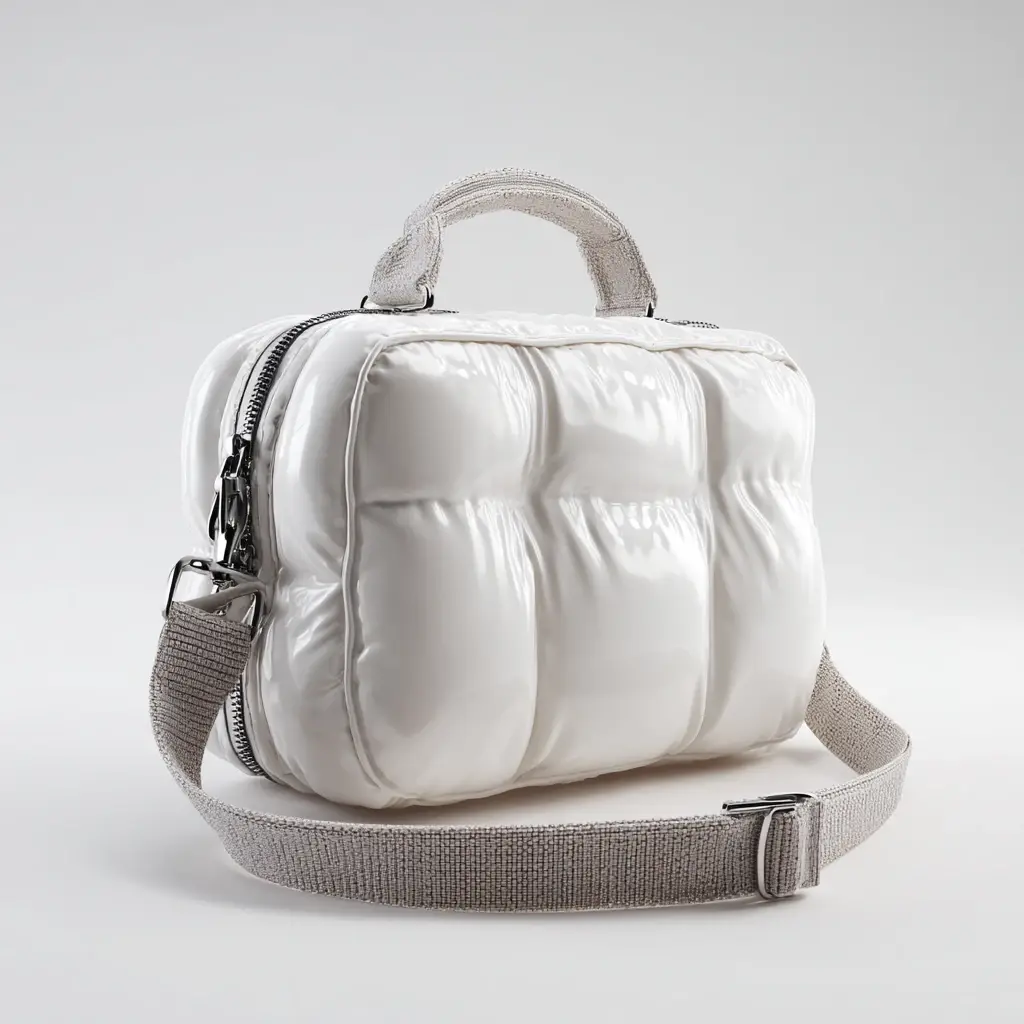
- The Shoulder Bag Decision Tree
- Decision 1: Body Size and Drop
- Decision 2: Closure Type
- Decision 3: Strap Construction
- Decision 4: Material and Lining
- Decision 5: Colourway Depth
- Specification Benchmarks
- Packing and Presentation for Shoulder Bags
- Where Shoulder Bags Fail at Inspection
- Building the Shoulder Bag Into a Range
- Three Price Bands and What Each One Must Contain
- Field Returns: What Comes Back After the Sale
- The Care Card and the Service Load Behind It
Shoulder bag reference points
The Shoulder Bag Decision Tree
The shoulder bag is the most forgiving silhouette to sell and the easiest to specify badly, because it sits between the tote and the crossbody and inherits failure modes from both. Six decisions cover it, and the order is not interchangeable: body and drop first, because they determine whether the bag is worn; closure second, because it determines returns; strap third, because it determines durability; material and lining fourth; colourway depth fifth; and price band last, because it is constrained by everything above.
- Body size and strap drop — the two numbers that decide whether the bag gets worn at all.
- Closure type — a magnet, a zip or an open top, and the return rate each one produces.
- Strap construction — width, fill, and how it is anchored into the body.
- Material and lining — the visible surfaces and the one most often substituted.
- Colourway depth — one core neutral first, then the second colour on data.
- Price band and packaging — set by the decisions above, not chosen independently.
Taking them in a different order is the usual cause of a shoulder bag that sells once and comes back. A buyer who chooses material first ends up with a leather body too heavy for the strap width chosen later, and a buyer who sets the price band first ends up with an open top at a price point where customers expect a zip. The sequence is cheap to follow and expensive to ignore, and it applies whether the bag is a stock buy or a private label run. The wholesale handbag programme guide sets the wider context.
Decision 1: Body Size and Drop
The benchmark body and the 9 cm gusset
The benchmark body for a stocking shoulder bag is 30 × 24 × 9 cm. That is large enough for a large phone, a card holder, sunglasses and a small bottle, and small enough not to read as a tote. The 9 cm gusset is the number most often got wrong: at 6 cm the bag will not hold a glasses case without bulging, and at 14 cm it stops being a shoulder bag and starts competing with the tote in the same range.
The drop — the measurement from the top of the strap to the top of the body — should sit between 28 and 32 cm. Below 28 cm the bag rides under the arm and reads as formal; above 32 cm it swings at the hip and reads as casual. The current preference is toward the lower end of that band, around 28-30 cm, and the difference of 2 cm is more visible on a person than any other specification change on this silhouette. Specify it in centimetres on the spec sheet and measure it on the sewn sample, loaded, not empty.
Weight is the third number in this group and the one most often omitted. A finished shoulder bag should land near 420 g; above roughly 550 g it pulls on the strap and, more importantly, moves the parcel into a more expensive fulfilment band. Weight also signals quality in a way customers read instinctively — too light feels insubstantial, too heavy feels utilitarian — so it belongs on the spec sheet as a range rather than as an afterthought.
Decision 2: Closure Type
| Closure | Return behaviour | Cost position | Best for |
|---|---|---|---|
| Open top with magnetic snap | Highest return rate; contents security complaints | Lowest | Fashion-led ranges at lower price points |
| Zip top (#5 coil) | Lowest return rate; customers expect it above mid band | Mid | Everyday and work-adjacent styles |
| Flap with turn-lock | Low returns, higher perceived value | Highest; hardware may need sourcing | Upper band and gift programmes |
| Drawcord under a flap | Moderate; cord wear shows in reviews | Mid | Soft bodies and casual ranges |
The rule of thumb that holds across the category: above roughly USD 60 retail, customers expect a zip. Below it, a magnetic snap at 18 mm is acceptable and is the cheapest closure that still feels deliberate. A flap with a turn-lock reads as the most expensive option and is the one most likely to require sourced hardware, which pushes sampling from 6-10 working days toward 12-15 and adds a tooling line. Decide the closure against the price band, not against the drawing.
Decision 3: Strap Construction
Why the strap fails at the anchor
The strap is the part that fails, and it fails at the anchor rather than in the middle. A strap width of 18-25 mm is the working range for this body size; below 18 mm it digs under load, above 25 mm it looks heavy against a 24 cm tall body. The strap should be anchored into the body with a bar-tack of roughly 6,000 stitches at each end, and on a lined body the anchor should pass through the lining rather than being sewn to it, which is the single most common cause of a strap tearing away from a bag that is otherwise intact.
- Strap width 18-25 mm for a 30 x 24 x 9 cm body; narrower digs, wider overpowers the silhouette.
- Bar-tack of about 6,000 stitches at each anchor point, through the lining rather than onto it.
- A filled or padded strap adds comfort but adds roughly 40-60 g and one more construction step.
- Adjustability adds a slider and a keeper: two more components and two more things to get wrong.
- Test the anchor by load rather than by eye; a pull test figure belongs on the spec sheet.
One further consideration on the anchor: the pull test figure belongs on the spec sheet rather than in a conversation. A shoulder strap should hold a static load well beyond anything a customer will apply, and stating a figure makes the requirement measurable at inspection instead of arguable afterwards. It costs nothing to write and it converts the most common structural failure on this silhouette from an opinion into a check.
Decide early whether the strap is adjustable. Fixed straps are simpler, cheaper and more durable, and at a fixed 28-32 cm drop they fit most customers. Adjustable straps add a slider and a keeper — two components, two failure points and a small cost — but they remove the fit risk entirely, which matters if the bag is sold online where nobody tries it on first. For an online-first programme, adjustable is usually worth the two extra components.
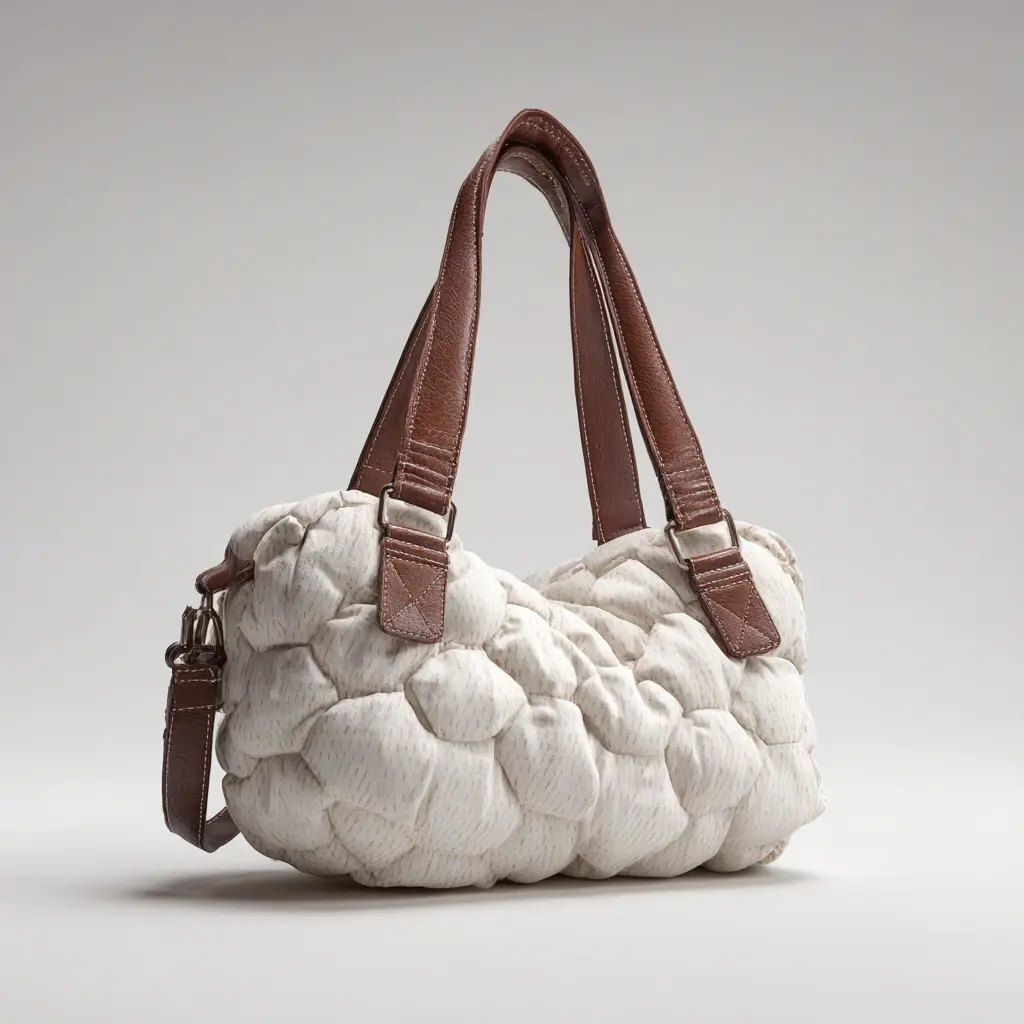
Decision 4: Material and Lining
Material choice on a shoulder bag is a weight and drape decision rather than an appearance one. A 0.9-1.1 mm PU gives a clean structured body at low weight; a 12-14 oz canvas gives a softer, more casual read; a leather at 1.0-1.2 mm substance gives the best drape and the highest cost. All three work at this body size, and the deciding variable is usually the price band rather than the look. On leather, ask for the tannery reference and check it against the Leather Working Group audit protocol rather than accepting a printed logo.
The lining is the most substituted component in the whole category and the one customers notice most, because it is what they see every time they open the bag. Specify it by denier — 210D polyester is the working standard — and specify the colour in writing. A contrast lining costs nothing extra at this volume and does more for brand recognition than most packaging. On restricted substances, an Oeko-Tex certificate is the reference buyers recognise for textiles, and a REACH declaration against Annex XVII remains the EU baseline.
Decision 5: Colourway Depth
One core neutral for the first order, then a second colourway on data. Because the MOQ is per colourway, a shoulder bag in three colours is three 500-piece lots and three inventory risks, and the strongest pattern in this category is one black or tan body with a contrast lining, followed by a seasonal colour once weekly sell-through is known. Colour is also the attribute most likely to drift in production, so agree a Pantone TCX reference and a tolerance of roughly ΔE 1.5 against the approved swatch before the run starts.
Specification Benchmarks
| Line | Benchmark | Why it matters |
|---|---|---|
| Body | 30 x 24 x 9 cm | Holds a large phone, card holder and glasses case without bulging |
| Strap drop | 28-32 cm, measured loaded | Decides whether the bag sits at the hip or under the arm |
| Strap width | 18-25 mm | Below 18 mm digs; above 25 mm overpowers a 24 cm body |
| Finished weight | About 420 g | Above roughly 550 g the parcel moves into a costlier fulfilment band |
| Lining | 210D polyester, colour specified | Most substituted component and most seen by the customer |
| Stitch density | 8 per inch, #18 needle | The tolerance a line can hold across 500 pieces |
| Bar-tack | About 6,000 stitches per anchor | Prevents the most common structural failure on this silhouette |
Write these onto the spec sheet in this form and the inspection has something to measure. A 501-1,200 piece lot at general inspection level II draws an 80-piece sample with accept 5 and reject 6 at AQL 2.5 under ISO 2859-1, and every line on that table is a checkable item within it. The quality grading system buyers should know explains how each defect is classified when it is found.
Packing and Presentation for Shoulder Bags
Shoulder bags pack differently from totes and the difference is worth specifying. Because the body is smaller and the strap can be laid flat, 30-36 pieces fit a 60 × 40 × 40 cm carton against roughly 24 for a tote, which means 500 shoulder bags arrive in about 15 cartons rather than 21. That is a smaller receiving event and a better freight position per piece, and it is one of the quiet reasons this silhouette is economical to add to a range even before the unit price is considered.
Straps should be laid flat rather than coiled, and each bag individually polybagged at 0.035 mm minimum, because a coiled strap takes a set in transit and arrives with a visible kink that no amount of steaming fully removes. If the destination is a marketplace warehouse, apply the scannable label before the carton is sealed; if it is a boutique, tissue and a branded hang tag are what the shop floor needs. Specify which one at quotation stage, because repacking on arrival costs more than getting it right the first time.
Where Shoulder Bags Fail at Inspection
The three defects that dominate this shape
Three defects account for most of the failures on this silhouette, and all three are preventable at specification stage rather than at inspection stage. The first is strap anchor weakness, which is a bar-tacking problem and is fixed by specifying roughly 6,000 stitches through the lining at each end. The second is colour drift between the body and the strap when the two come from different dye lots, which is fixed by requiring both from the same lot or by agreeing a tolerance in writing.
The third is base sag, which is specific to this shape: a shoulder bag with no base board and a soft body will slump by 10-15 mm at the bottom within weeks, and customers read that as poor quality even though nothing has failed. An interlined base or a base board costs very little and removes the complaint entirely. If the body is specified as soft, say so on the listing, because a soft body is a legitimate design choice and an unexpected one is a return.
Building the Shoulder Bag Into a Range
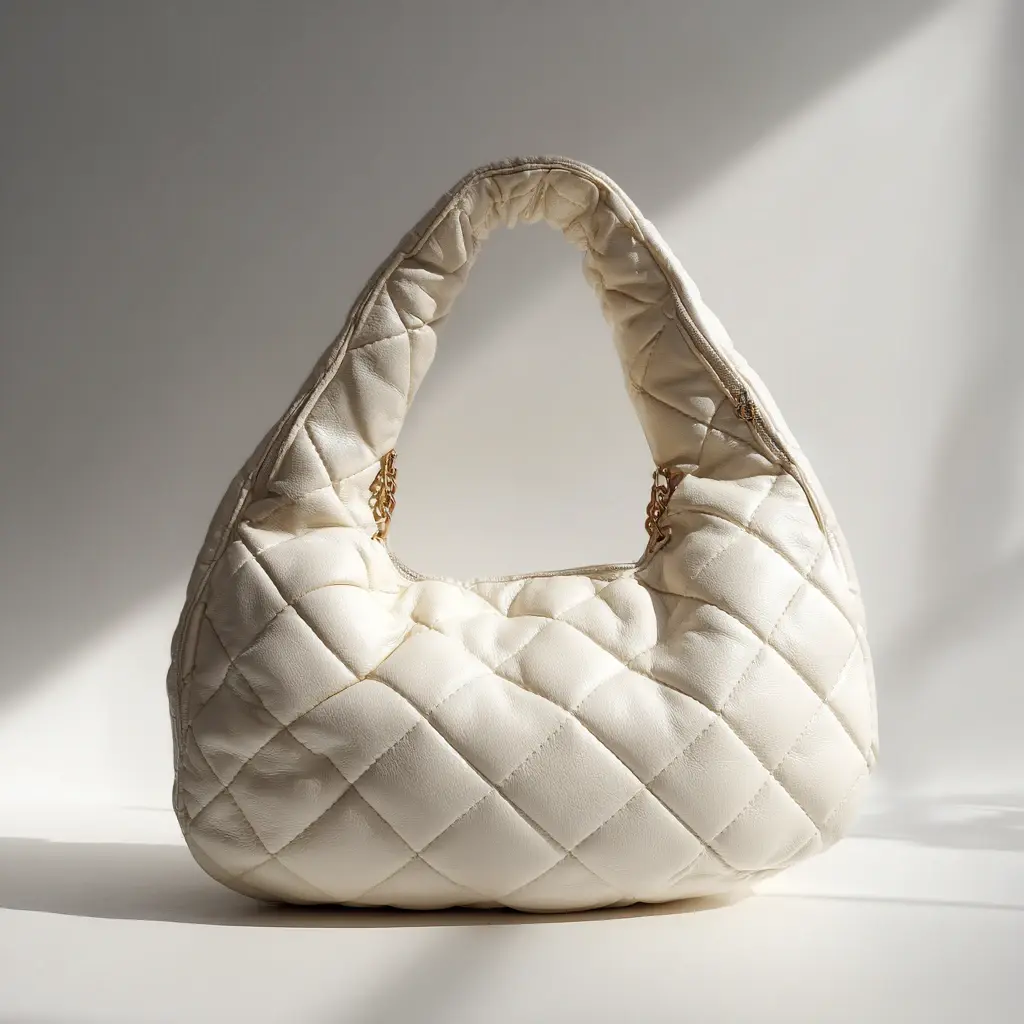
The shoulder bag is the natural second style in a range, after the tote. It shares material, lining, hardware finish and packaging with a tote while reaching a different use case, which means the second order can add it without building a new supply chain. That shared-specification logic is what makes a two-style range economical at 500 pieces each, and it is the argument behind the mixed-style approach to a balanced first collection.
It also pairs well with a hobo in a cost-led range, because the two silhouettes use similar soft bodies and similar strap construction and can share a material booking. Where they differ is margin: the hobo is cheaper to make at the same retail price, the shoulder bag holds its shape better and returns less. A cost-conscious boutique range will often run both, with the hobo as the entry price and the shoulder bag as the step-up. That pairing is worked through in the hobo guide for cost-conscious boutiques.
Send the body size, drop and closure you have in mind, and a private label coordinator will confirm whether it sits inside the benchmark, what the sampling window will be, and what the run will inspect against at AQL 2.5. Get a quote.
Three Price Bands and What Each One Must Contain
The shoulder bag sells across three retail bands, and what a customer expects in each one differs enough that a single specification cannot cover them. Below USD 60 the expectation is an 18 mm magnetic snap and a 190T lining. Between USD 60 and 120 a #5 coil zip and a 210D lining are what a shopper checks for. Above USD 120 the closure, the edge finish and the hardware weight have to rise together, or the bag reads as overpriced in the hand. The band is a specification, and it should be chosen before the shape.
| Band | Closure | Lining | Finish detail |
|---|---|---|---|
| Under USD 60 | 18 mm magnetic snap | 190T | Bound or slicked edge |
| USD 60-120 | #5 coil zip | 210D | Two-pass edge paint |
| Above USD 120 | Turn-lock or #5 metal zip | 210D or 230T | Four-pass edge, 0.35-0.55 mm |
Field Returns: What Comes Back After the Sale
Inspection catches what is wrong when the carton opens; the returns that cost a season are the ones that appear later. On a shoulder bag they cluster in four places. The slider, which wears at the tape edge and is the single most returned component. The strap anchor, which elongates under load after six to ten weeks rather than in the first. The lining seam at the pocket mouth, which slips where the bar-tack was short. And the magnetic snap, which loses pull or pulls through a thin body. The function tests used on hardware name a standard for each of the four.
- Slider. The most returned component, tested through 500 open-close cycles against the tape width.
- Strap anchor. A bar-tack of about 6,000 stitches through the lining and a static pull test above 15 kg.
- Pocket mouth. A bar-tack at each end of the opening, since a slipped seam is a return rather than a repair.
- Magnetic snap. A rated pull in kgf and a backing patch, because pull-through appears after weeks of use.
The Care Card and the Service Load Behind It
Every SKU arrives with its own questions, and a shoulder bag generates more of them than a tote because it is worn rather than carried. Four recur: how to clean the lining, whether the strap is adjustable, what the drop is, and whether the plating will tarnish. A four-line care card answers all four and removes them from the inbox, which is the cheapest service investment in the category. The two figures worth printing are the drop in centimetres and the finished weight in grams, because those are what a customer compares between two products.
- Cleaning line. A damp cloth and pH-neutral soap, stated for the specific finish rather than for leather in general.
- Drop and weight. Printed in centimetres and grams, the two figures a customer actually compares.
- Storage line. Stuffed to shape and stored in the dust bag, since a shoulder body creases at the flap fold.
- Plating line. A named finish wiped with a dry cloth, because salt-spray life depends on how the bag is kept.
Specify the shoulder bag before you price it
MOQ 500 pcs per style / colourway, sampling in 6-10 working days, bulk in 35-50 days, inspection at AQL 2.5 to ISO 2859-1, release FOB Xiamen. Send body size, drop and closure. Get a quote.
Frequently Asked Questions
What is the standard size for a wholesale shoulder bag?
A body of 30 x 24 x 9 cm is the benchmark. It holds a large phone, a card holder, sunglasses and a small bottle without bulging, and the 9 cm gusset is the critical dimension: at 6 cm the bag will not take a glasses case, and at 14 cm it starts competing with the tote in the same range.
What strap drop should a shoulder bag have?
Between 28 and 32 cm, measured from the top of the strap to the top of the body on a loaded bag. Below 28 cm the bag rides under the arm and reads as formal; above 32 cm it swings at the hip and reads as casual. The current preference is toward the lower end, around 28-30 cm.
Should a shoulder bag have a zip or a magnetic snap?
Above roughly USD 60 retail, a zip. Below that, an 18 mm magnetic snap is acceptable and is the cheapest closure that still feels deliberate. A flap with a turn-lock reads as the most expensive option but usually needs sourced hardware, which pushes sampling from 6-10 working days toward 12-15.
How wide should a shoulder strap be?
Between 18 and 25 mm for a 30 x 24 x 9 cm body. Narrower than 18 mm digs under load, and wider than 25 mm overpowers a bag only 24 cm tall. Whatever the width, the anchor should be bar-tacked at roughly 6,000 stitches through the lining rather than sewn onto it.
What lining should a shoulder bag use?
210D polyester is the working standard, specified by colour in writing. The lining is the most substituted component in the category and the surface the customer sees every time the bag opens, so a contrast colour costs nothing extra and does more for recognition than most packaging.
How much should a shoulder bag weigh?
About 420 g finished. Above roughly 550 g it pulls on the strap and moves the parcel into a more expensive fulfilment band, and weight also signals quality instinctively to a customer. Put a weight range on the spec sheet rather than discovering it at inspection.
What causes most shoulder bag defects?
Three things: strap anchor weakness from insufficient bar-tacking, colour drift between body and strap when they come from different dye lots, and base sag on a soft body with no interlining. All three are prevented at specification stage rather than caught at inspection.
Should a shoulder bag strap be adjustable?
For an online-first programme, yes. Adjustability adds a slider and a keeper, which is two more components and two more failure points, but it removes fit risk entirely when nobody tries the bag on before buying. A fixed strap at 28-32 cm fits most customers and is cheaper and more durable.
How many colourways should a shoulder bag order carry?
One core neutral first. Because the MOQ is 500 pcs per style / colourway, three colours is three lots and three inventory risks. Add the second colourway once weekly sell-through data exists, and agree a Pantone TCX reference with a tolerance of about ΔE 1.5.
Where does a shoulder bag sit in a range?
As the natural second style, after the tote. It shares material, lining, hardware finish and packaging with a tote while serving a different use case, so the second order can add it without building a new supply chain. In cost-led ranges it pairs well with a hobo.
Which certificates should a shoulder bag order carry?
An Oeko-Tex certificate for the textile where restricted substances are in question, a REACH declaration against Annex XVII for the EU, a Prop 65 assessment for California, and a Leather Working Group tannery reference where a leather body is specified. Request them with the quotation.
How is a shoulder bag lot inspected?
At AQL 2.5 under ISO 2859-1, with critical defects at zero. A lot of 501-1,200 pieces at general inspection level II draws an 80-piece sample with accept 5 and reject 6, and every line on the spec sheet — dimensions, drop, strap anchor, lining, colour — becomes a checkable item within it.
People Also Ask
Is a shoulder bag or a crossbody the better second style?
The shoulder bag, unless your price band is at the entry level. It shares materials and hardware with a tote, returns less than a crossbody, and reaches customers who will not carry a crossbody. The crossbody is the better add once a lower price point has been proven.
Can a shoulder bag body be shared with a tote pattern?
Partly. Panel shapes differ enough that the body is a new pattern, but material, lining, hardware finish, thread and packaging can all be shared, which is what makes a two-style range economical at 500 pieces each.
How do I stop a soft shoulder bag sagging?
Interline the base or add a base board. A soft body with no support will slump 10-15 mm within weeks, and customers read that as poor quality even though nothing has actually failed. If a soft body is the design intent, state it on the listing.
What is the cheapest way to make a shoulder bag feel expensive?
A contrast lining, a consistent hardware finish and a branded hang tag. None of the three add meaningful unit cost at 500 pieces, and together they change the perception more than a more expensive body material does.
Sources and further reading
Every figure on this page is either our own programme data or attributed below. Open the originals before you write them into a specification.
- REACH — chemical substances regulationEuropean Commission Annex XVII restricts the substances that may appear in finished leather and coatings.
- SATRA — technical services for leather, footwear and accessoriesSATRA Independent leather, hardware and accessories testing protocols.
- Leather Working Group — environmental auditing for tanneriesLeather Working Group Environmental audit protocol for tanneries and leather traceability.