Best Wholesale Hobo Bags for Cost Conscious Boutiques in 2026
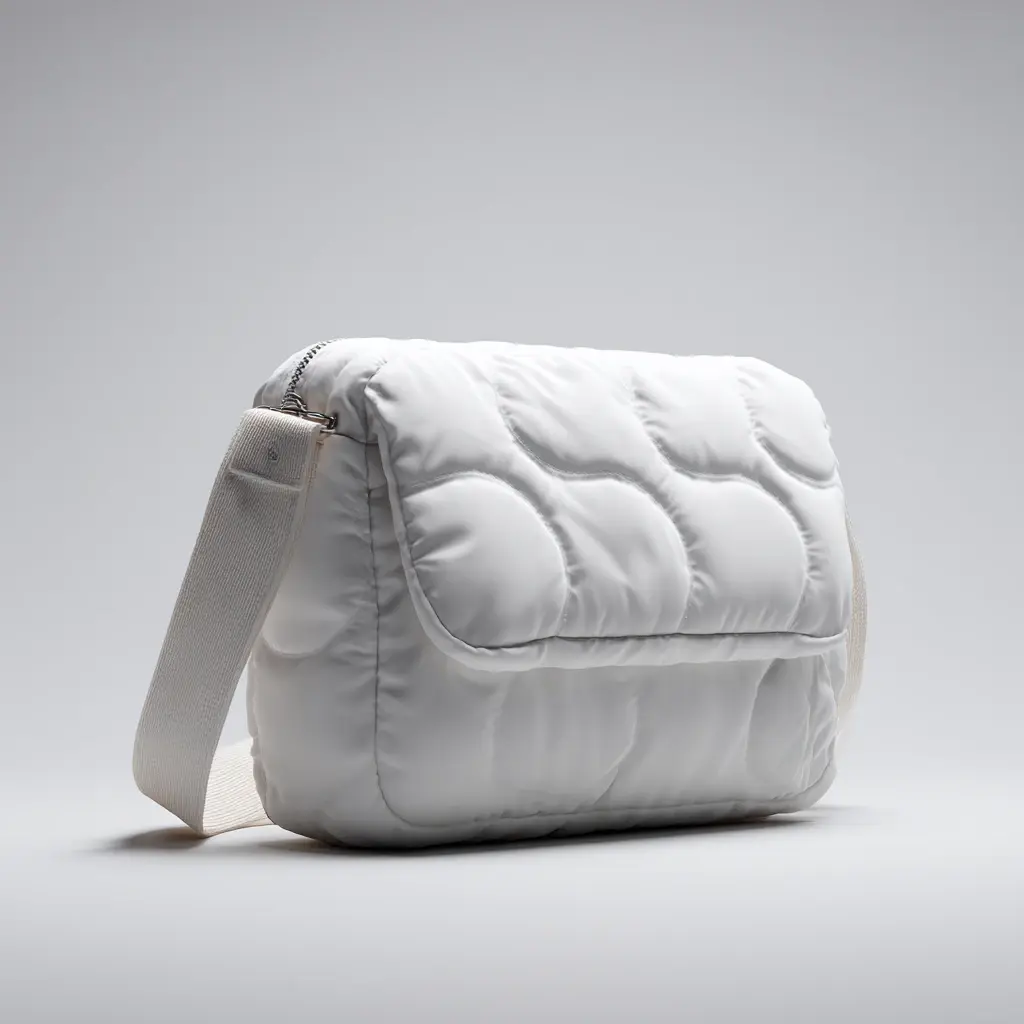
Why is the hobo the right wholesale silhouette for a cost-conscious boutique in 2026? Because a soft crescent body is the cheapest construction in the category to make and one of the easiest to sell: no internal framing, no base board, no structured interlining, and a finished weight near 380 g — which puts a 34 × 28 × 10 cm hobo at the bottom of the unit price range while still retailing in the mid band. The trade is structural, and it is the one thing a buyer has to manage: a soft body sags, and sagging is the defect that turns a cheap bag into a returned one. This guide works through six questions in order — why the price is low, what size works, what the soft construction costs and saves, which closure and hardware, how to stop the sag, and where the hobo sits in a range — with the specification numbers that make the answers actionable at MOQ 500 pcs per style / colourway.
- Question 1: Why Is the Hobo the Cheapest to Stock?
- Question 2: What Size Should It Be?
- Question 3: What Soft Construction Costs and Saves
- Question 4: Which Closure and Hardware?
- Question 5: How Do You Stop the Sag?
- Question 6: Where Does It Sit in a Range?
- Merchandising a Hobo in a Cost-Led Boutique
- The Reorder Pattern for a Hobo
- Specification Benchmarks
- Three Picks for a 2026 Cost-Led Range
- What the Hobo Lands At, Line by Line
- The Markdown Ladder a Cost-Led Boutique Should Plan
- Defects Specific to a Soft Body
Hobo reference points
Question 1: Why Is the Hobo the Cheapest to Stock?
Because the cost of a bag is mostly operations, and the hobo has the fewest of any silhouette a boutique would stock. There is no base board, no framed lining, no structured interlining, no top zip and usually no separate gusset panel — a crescent body cut from two shaped pieces with a single seam around the curve, a strap anchored at two points, and a magnetic snap. In the standard split of material 40-55%, trim and hardware 12-20%, labour 18-25% and overhead with margin 12-18%, the hobo sits at the bottom of the labour band.
The second reason is weight. A finished hobo lands near 380 g against roughly 480 g for a canvas tote and 450 g for a bucket, which means less material and, on a marketplace or parcel-shipped channel, a cheaper fulfilment band. Weight is not usually the first thing a boutique buyer looks at, and it is one of the two variables that make this silhouette consistently the cheapest to land as well as to make.
The third reason is the one that matters commercially: the hobo retails above its cost position. A soft body with a wide strap and a good hardware finish reads as relaxed and considered rather than as cheap, and customers do not price it against the structured bag next to it on the rail. That gap between cost position and perceived value is exactly what a cost-conscious boutique needs, and it is the reason this silhouette appears in ranges far above the price band its unit cost would suggest. The wholesale handbag programme guide sets the wider context.
Question 2: What Size Should It Be?
Thirty-four by twenty-eight by ten centimetres is the benchmark. The 34 cm width is what gives the crescent its shape — narrower and it looks like a small shoulder bag, wider and it stops holding the slouch that defines the silhouette. The 28 cm height leaves the top of the body below the strap anchor, which is what creates the characteristic dip. And the 10 cm gusset is enough for a full day's carry without the bag becoming a tote.
- Width 34 cm: below about 30 cm it reads as a shoulder bag; above 38 cm it loses the crescent.
- Height 28 cm: the dip between the two strap anchors is what makes the silhouette recognisable.
- Gusset 10 cm: enough capacity without turning the bag into an unstructured tote.
- Shoulder drop 30 cm: slightly longer than a shoulder bag, because a hobo sits lower on the body.
- Strap width 25 mm: wider than a shoulder bag strap, because a soft body needs a broader anchor.
Why strap width decides durability
The strap width figure is the one most often wrong, and the reason is mechanical rather than aesthetic. A soft body has no structure to distribute load, so the entire weight of the contents hangs from two anchor points, and a narrow strap concentrates that load into a small area of a flexible panel. Twenty-five millimetres spreads it; eighteen millimetres eventually tears it. If a hobo returns with a torn strap anchor, the strap was too narrow rather than too weak.
One measurement caveat applies to this silhouette more than to any other: measure the height empty and loaded, and specify both. A soft hobo will drop by 15-20 mm at the mouth once it is full, and a buyer who specifies only the empty height will find the loaded silhouette looks different from the sample. Write the drop tolerance into the spec sheet and the surprise disappears.
Question 3: What Soft Construction Costs and Saves
Soft construction saves the base board, the framed lining, the structured interlining and usually the zip, which together are a meaningful share of the labour line. It costs in three ways: the bag does not stand up, it sags under load, and it travels poorly. The first is a photography problem, the second is a durability problem, and the third is an arrival problem, and all three have cheap mitigation if they are specified rather than discovered.
Soft body, supported base
The mitigation is a partial one, and this is the important nuance: do not try to make a hobo structured. Add a light interlining to the base only, leave the body soft, and accept that the bag sits rather than stands. A hobo with a full structured body is a shoulder bag with a longer strap, and it loses both the price advantage and the character. The correct specification is soft body, supported base, which costs one operation and removes the two complaints that matter.
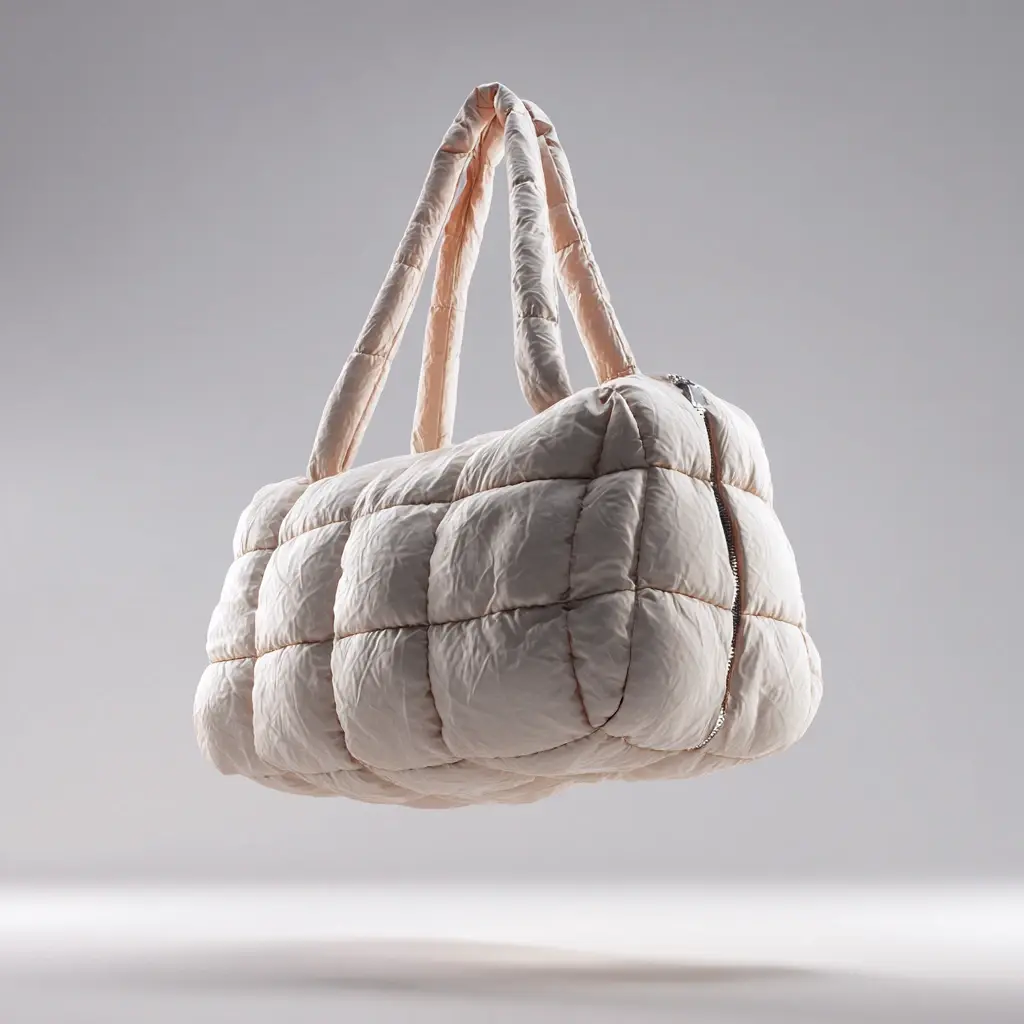
There is a second saving worth naming. Because the body is soft, a hobo packs flatter than any other silhouette — roughly 30-36 pieces per 60 × 40 × 40 cm carton against 24 for a tote — which means 500 pieces arrive in about 15 cartons rather than 21. On a category where freight is charged on cube, that improves the landed cost per piece by more than most price negotiation achieves, and it is free.
Question 4: Which Closure and Hardware?
An 18 mm magnetic snap is the standard and it is the right answer at this price band: cheap, silent, one-handed, and it keeps the top of the body closed without adding a zip and its two extra operations. Above roughly USD 70 retail, customers begin to expect a zip, and at that point the hobo stops being the cheapest silhouette in the range. Below that, the snap is correct and the saving is real.
Hardware should be stock finish in gunmetal or brushed gold, consistent across the snap, the D-rings and any strap adjuster, because mixed finishes are the first thing a customer notices on an otherwise plain bag. Specify a finish test in hours — a 24-hour salt spray result with no visible base metal at the edges is a reasonable baseline — and specify the D-rings by gauge rather than by description. On a soft body, the ring gauge matters more than usual, because the ring pulls directly against unsupported material.
Question 5: How Do You Stop the Sag?
Three lines that stop the sag
Three specification lines, in order of effect. First, a light interlining in the base only, which stops the bag collapsing at the bottom while leaving the body soft. Second, strap anchors bar-tacked at roughly 6,000 stitches and reinforced through the lining rather than sewn onto it, which stops the anchors elongating under load. Third, a stated drop tolerance — the amount the mouth is allowed to fall when loaded — so the silhouette is measured rather than argued about.
| Failure | Cause | Specification fix | Cost of the fix |
|---|---|---|---|
| Base collapse | No interlining in the base | Light interlining, base panel only | One operation, minimal material |
| Anchor elongation | Strap sewn to the lining, not through it | Bar-tack about 6,000 stitches through the lining | No cost; a stitching specification |
| Mouth drop when loaded | Soft body, no tolerance stated | State a drop tolerance in millimetres | No cost; a written figure |
| Strap tear under load | Strap narrower than 25 mm | Specify 25 mm minimum on a soft body | Marginal material cost |
| Tarnish on the snap | No finish test specified | 24-hour salt spray with no base metal at edges | No cost; a written figure |
Note how many of those fixes are free. Four of the five are specification lines rather than material additions, which is the general lesson of this silhouette: a hobo fails from what was not written down rather than from what was not spent. At inspection, a 501-1,200 piece lot draws an 80-piece sample with accept 5 and reject 6 at AQL 2.5 under ISO 2859-1, and every line in that table is checkable within it. The quality grading guide explains the classification behind it.
Question 6: Where Does It Sit in a Range?
The hobo is the entry or step-up rung, not the volume driver. It sells well, it holds margin, and it will not carry the turnover that a flat tote does, because its use case is narrower — it is a daytime, relaxed-occasion bag rather than a work-and-weekend one. In a cost-led boutique range the usual structure is a hobo at the entry price, a shoulder bag at the step-up and a tote as the volume driver, each at 500 pieces.
It also pairs unusually well with the shoulder bag, because the two share a body material, a lining, a hardware finish and a strap construction while reaching different customers at different price points. That sharing is what makes a two-silhouette range economical at this volume, and it is worked through in the shoulder bag category guide and the balanced first collection guide.
Merchandising a Hobo in a Cost-Led Boutique
A hobo sells on hand-feel and on how it hangs, and both are lost on a hanger. On a shop floor the silhouette should be displayed sitting on a shelf or a low rail with the body allowed to fall into its natural shape, because a hobo hung by its strap looks narrow and limp and a hobo sitting looks generous and soft. That is a fixture decision rather than a product one, and it costs nothing to get right.
Online, the equivalent is one photograph taken on a person at the actual 30 cm drop, which shows where the bag sits on the body, and one taken sitting on a surface, which shows the crescent. Those two images answer the questions a customer cannot answer from a flat lay, and they are the reason this silhouette returns less when it is photographed properly. Add a scale reference and the size objection disappears as well.
The Reorder Pattern for a Hobo
Because the unit cost is low and the construction is simple, the hobo is the silhouette best suited to a two-drop pattern within a season. Five hundred pieces before the season and five hundred at the reorder trigger keeps the entry price stocked without committing a year of inventory at the start, and the second drop can change colour or hardware without a new sampling round because the pattern and the specification already exist.
The reorder is faster on this silhouette than on most: sampling is removed, material is already booked, and the construction is the simplest in the range, so bulk often lands at the shorter end of the 35-50 day window. What should not change between drops is the strap width, the base interlining and the anchor specification, because those three are what make the difference between a hobo that lasts and one that comes back with elongated anchors in month three.
Specification Benchmarks
| Line | Benchmark | Why it matters |
|---|---|---|
| Body | 34 x 28 x 10 cm | Below 30 cm wide it reads as a shoulder bag and loses the crescent |
| Shoulder drop | 30 cm | A hobo sits lower on the body than a structured shoulder bag |
| Strap width | 25 mm minimum | A soft body concentrates load into two anchors |
| Closure | 18 mm magnetic snap | Correct below about USD 70 retail; above it, customers expect a zip |
| Lining | 210D polyester, colour specified | The most substituted component and the one a customer sees most |
| Base | Light interlining, base panel only | Stops collapse without structuring the body |
| Anchors | About 6,000 stitches, through the lining | Prevents elongation, the most common hobo failure |
| Finished weight | About 380 g | Keeps the parcel in the cheaper fulfilment band |
Three Picks for a 2026 Cost-Led Range
| Pick | Specification | Role | First-order advice |
|---|---|---|---|
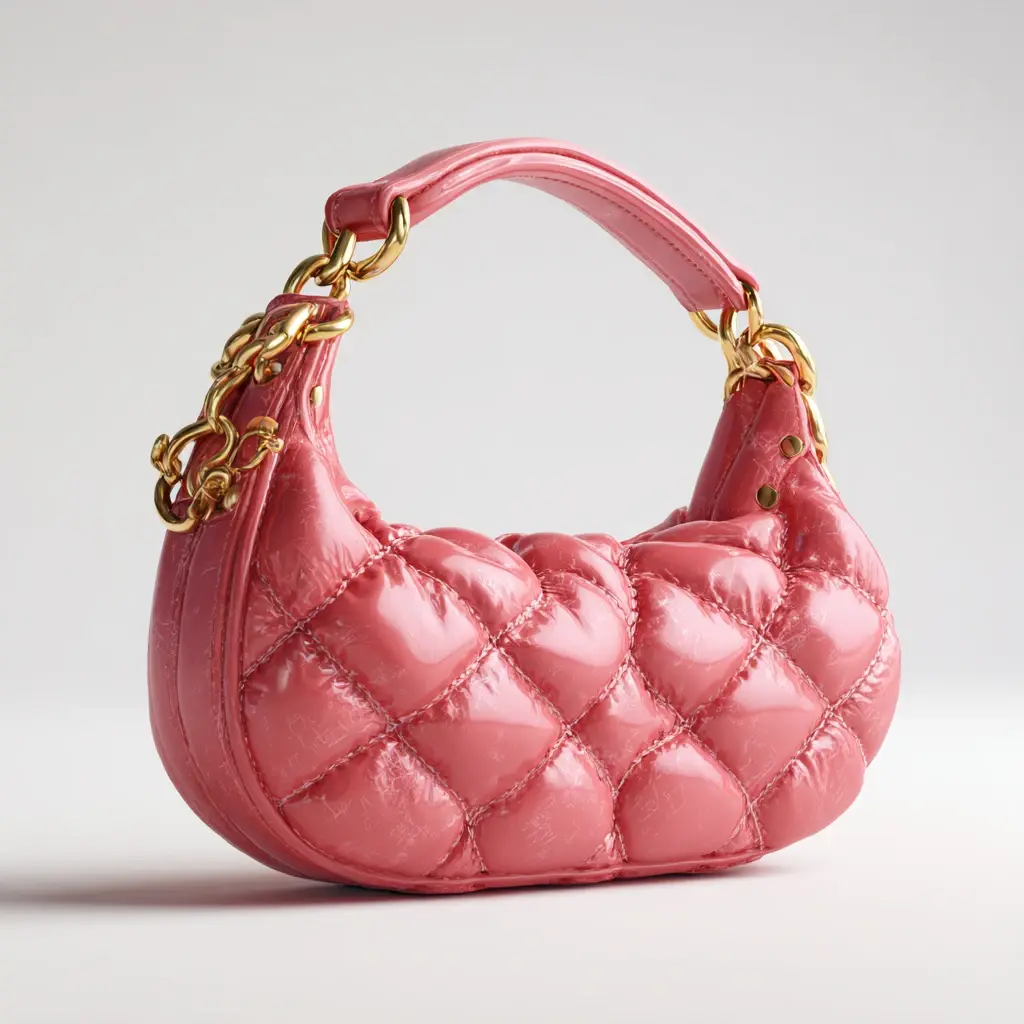
| Core neutral hobo | 34 x 28 x 10 cm, PU, gunmetal snap | Entry price, volume within the range | Order first; one colourway at 500 pcs |
| Canvas hobo | 34 x 28 x 10 cm, 12 oz canvas, contrast lining | Casual step-up, lower unit cost | Add once the core has data |
| Leather-look hobo | 34 x 28 x 10 cm, 1.0 mm PU, brushed gold | Upper rung of a cost-led range | Third order; the hardware finish carries it |
One material note applies across all three. A hobo in a coated fabric at 0.8-1.0 mm holds the drape correctly; below about 0.7 mm it looks thin and creases at the anchors, and above about 1.2 mm it stops slouching and reads as a structured bag. Where the material is sold as recycled, the Global Recycled Standard transaction certificate is what substantiates the claim, and an Oeko-Tex certificate is the reference for restricted substances in the textile. For the EU, a REACH declaration against Annex XVII is the baseline; for California, a Prop 65 assessment.
Send the size, material direction and price band, and a private label coordinator will confirm whether the specification holds its shape, what the unit cost will be and what the run will inspect against at AQL 2.5. Get a quote.
What the Hobo Lands At, Line by Line
Unit price is the first line of the economics and the least useful on its own. The number a boutique actually buys is the landed cost per piece: the unit, the pack, the freight share, the duty and the inbound handling. On a 500-piece order at 8.60 USD per unit the pack adds about 1.85 USD and freight at 1.9 kg per piece across about 15 cartons adds roughly 0.95 USD.
| Line | Per piece | Note |
|---|---|---|
| Unit, FOB Xiamen | 8.60 USD | PU at 0.9 mm, 18 mm snap, gunmetal finish |
| Pack, eight components | 1.85-3.40 USD | Dust bag, hangtag, tissue, seal, card, polybag, carton share |
| Freight, consolidated | 0.95 USD | About 15 cartons at 1.9 kg each |
| Duty, indicative | 1.30-1.70 USD | Depends on the outer surface and the destination |
| Landed cost per piece | 12.70-14.65 USD | Against a retail band of 49-79 USD |
The Markdown Ladder a Cost-Led Boutique Should Plan
The number worth planning is not sell-through, it is the price at which the remaining units clear. A hobo is a low-risk unit precisely because discounting it is not fatal: the margin at full price is wide enough that a first markdown still returns cash and a second still clears the rail. Deciding the ladder before the season means the decision in week twenty is arithmetic rather than panic.
- Weeks one to ten, full price. Target 55-65 per cent of the lot sold at the entry price.
- Week twelve, first markdown at 20 per cent. Applied to the units remaining, not to the sell-through of the whole lot.
- Week eighteen, second markdown at 40 per cent. Typically clears the balance; below this the unit competes with the boutique's own sale rail.
- End of season, bundle or retire. Two units at a fixed price, or carry the colour forward rather than the style.
Defects Specific to a Soft Body
A soft body fails differently from a structured one, and half of those failures are not visible on a packed carton. They appear after a few weeks of carry, which puts them outside the return window and into the review column. All five below are checkable at the pre-shipment inspection on units drawn at AQL 2.5 under ISO 2859-1.
- Elongated strap anchors. Under a 15 kg static load held for 30 minutes the anchor should not lengthen; bar-tacking through the lining is the fix.
- Base collapse. Specified as a light interlining in the base panel only, cut 3 mm short of the seam line.
- Creasing at the anchors. Material below about 0.7 mm creases permanently where the strap pulls.
- Mouth drop when loaded. A soft body falls by 15-20 mm at the mouth when full; state the tolerance.
- Rucking at the lining mouth. A free-hanging lining rides up; bind the top edge or tack it at the anchors.
Get the entry price without the entry look
MOQ 500 pcs per style / colourway, sampling in 6-10 working days, bulk in 35-50 days, inspection at AQL 2.5 to ISO 2859-1, release FOB Xiamen. Send size, material and price band. Get a quote.
Frequently Asked Questions
Why is a hobo bag cheaper to make than other silhouettes?
Because it has the fewest operations: no base board, no framed lining, no structured interlining and usually no zip, just a crescent body, two strap anchors and a magnetic snap. That puts it at the bottom of the labour band, and a finished weight near 380 g keeps material and fulfilment costs down too.
What size should a wholesale hobo bag be?
34 x 28 x 10 cm, with a shoulder drop of 30 cm and a strap width of at least 25 mm. Below about 30 cm wide it reads as a shoulder bag and loses the crescent; the 10 cm gusset gives capacity without turning it into an unstructured tote.
Why does a hobo need a wider strap than a shoulder bag?
Because a soft body has no structure to distribute load, so the entire weight hangs from two anchor points. A 25 mm strap spreads that load; an 18 mm strap concentrates it and eventually tears the panel. A torn strap anchor is almost always a width problem rather than a strength one.
How do I stop a hobo bag sagging?
Three lines: a light interlining in the base panel only, strap anchors bar-tacked at roughly 6,000 stitches through the lining, and a stated drop tolerance for how far the mouth may fall when loaded. Four of the five common hobo failures are fixed by specification rather than by spending more.
Should a hobo have a zip or a magnetic snap?
An 18 mm magnetic snap below about USD 70 retail, which is cheap, silent and one-handed. Above that price customers begin to expect a zip, and adding one brings two extra operations that remove the cost advantage that made the silhouette attractive in the first place.
What material suits a wholesale hobo bag?
A coated fabric at 0.8-1.0 mm holds the drape correctly. Below about 0.7 mm it looks thin and creases at the anchors; above about 1.2 mm it stops slouching and reads as a structured bag. A 12 oz canvas works for a casual version, and a 210D lining is the standard.
How many cartons does a 500-piece hobo order make?
About 15, at roughly 30-36 pieces per 60 x 40 x 40 cm carton, because a soft body packs flatter than any other silhouette. That is materially better than a tote at 24 per carton and improves the landed cost per piece without any negotiation.
Where should a hobo sit in a boutique range?
At the entry or step-up rung rather than as the volume driver. Its use case is narrower than a tote's, so the usual structure is a hobo at the entry price, a shoulder bag at the step-up and a tote carrying turnover, each at 500 pieces.
Can a hobo share materials with a shoulder bag?
Yes, and it should. Body material, lining, hardware finish, thread and packaging can all be shared, while the two reach different customers at different price points. That sharing is what makes a two-silhouette range economical at 500 pieces each.
How is a hobo lot inspected?
At AQL 2.5 under ISO 2859-1 with critical defects at zero. A lot of 501-1,200 pieces at general inspection level II draws an 80-piece sample with accept 5 and reject 6, covering dimensions, drop, anchor security, snap function and hardware finish.
What compliance documents does a hobo order need?
A REACH declaration against Annex XVII for the EU, a Prop 65 assessment for California, an Oeko-Tex certificate where restricted substances in the textile are in question, and a Global Recycled Standard transaction certificate where the material is sold as recycled. Request them with the quotation.
Should I measure a hobo empty or loaded?
Both, and specify both. A soft hobo drops by 15-20 mm at the mouth once it is full, so a buyer who specifies only the empty height will find the loaded silhouette differs from the sample. Writing a drop tolerance into the spec sheet removes the surprise.
People Also Ask
Is a hobo bag too casual for a boutique range?
No, provided the hardware and material are specified well. A soft body with a consistent gunmetal or brushed gold finish and a good lining reads as relaxed and considered rather than as cheap, which is why the silhouette appears in ranges well above its cost position.
Can a hobo be the first style in a new range?
It can, but a tote is safer. The hobo has more specification traps — strap width, base support, drop tolerance — and a first order is better spent on a silhouette with fewer ways to go wrong. Add the hobo as the second style.
Does a hobo sell better in one colour or several?
One core neutral first. The MOQ applies per colourway, so three colours is 1,500 pieces, and a relaxed silhouette in a neutral sells across more occasions than the same shape in a seasonal colour.
How long does a hobo first order take?
About 75-105 days door to door, counting 6-10 working days of sampling, 35-50 days of bulk, and transit and clearance. Because the construction is simple, sampling usually lands at the shorter end of the window.
Sources and further reading
Every figure on this page is either our own programme data or attributed below. Open the originals before you write them into a specification.
- REACH — chemical substances regulationEuropean Commission Annex XVII restricts the substances that may appear in finished leather and coatings.
- Global Recycled Standard (GRS)Textile Exchange Chain-of-custody standard for recycled content and its transaction certificates.
- SATRA — technical services for leather, footwear and accessoriesSATRA Independent leather, hardware and accessories testing protocols.