Private Label Shoulder Bags: A Category Guide for New Brands
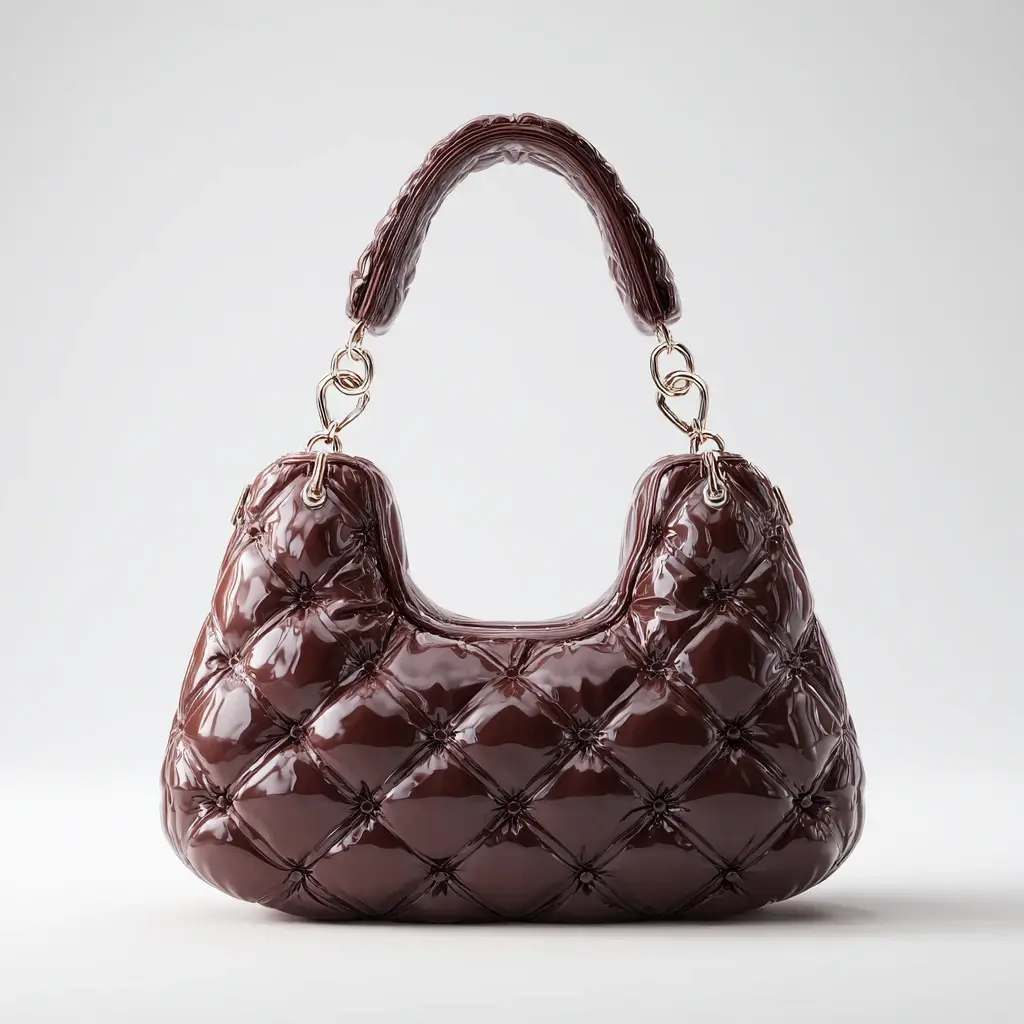
What should a new brand check before ordering a private label shoulder bag? Fourteen things, and the one that decides the sale is a measurement: a strap drop of 22-30 cm, which puts the bag under the arm where a customer expects it, and which a 20 mm error moves out of that position entirely. MOQ 500 pcs per style / colourway is the quantity a shoulder bag is bought in, 6-10 working days of sampling is the window in which the fourteen checks are answered, and 35-50 days of bulk production is when the strap attachment either holds or does not. This page is written as a checklist because the shoulder bag is the silhouette where a missed measurement is felt by the customer before it is seen.
- The Fourteen Checks, and What Each One Prevents
- Group One: The Measurements That Decide the Sale
- Group Two: The Strap, Which Is the Part That Fails
- Group Three: Body, Structure and Closure
- Group Four: Interior and Lining
- Group Five: Branding Positions on a Shoulder Bag
- Group Six: Material and Colour for a Shoulder Bag
- The Checks That Decide the Cost
- Shoulder Bags in an Assortment: What Sits Next to Them
- What a Shoulder Bag Sample Should Be Tested Against
- Four Field Failures, and the Line That Prevents Each
- Three Costed Builds at 500 Pieces
- Strap Drop by Market: Fitting One Bag to Different Bodies
What should a new brand check before ordering a private label shoulder bag? Fourteen things, and the one that decides the sale is a measurement: a strap drop of 22-30 cm, which puts the bag under the arm where a customer expects it, and which a 20 mm error moves out of that position entirely. MOQ 500 pcs per style / colourway is the quantity a shoulder bag is bought in, 6-10 working days of sampling is the window in which the fourteen checks are answered, and 35-50 days of bulk production is when the strap attachment either holds or does not. This page is written as a checklist because the shoulder bag is the silhouette where a missed measurement is felt by the customer before it is seen.
Shoulder bag parameters at a glance
The Fourteen Checks, and What Each One Prevents
A shoulder bag is the least forgiving silhouette in a launch line, for a reason that has nothing to do with how it looks. It hangs from two points, it carries its whole load through those two points, and it sits against the body, so every error in it is felt rather than inspected. The fourteen checks below are grouped into six, and each group prevents a specific failure. Work through them before the sample is ordered rather than after it arrives, because the sampling window is the only cheap place to change any of them.
- Group one, measurements — prevents a bag that sits in the wrong place on the body, which is the return reason nobody puts in writing.
- Group two, the strap — prevents the failure that dominates the warranty claims on this silhouette: a strap that stretches or tears at its attachment.
- Group three, body and closure — prevents a bag that slumps on the shelf or opens itself when it is set down.
- Group four, interior — prevents the complaint that costs the least to fix and the most to receive: a lining that tears or shows through.
- Group five, branding — prevents a mark placed where nobody sees it, or one that abrades against clothing.
- Group six, material and colour — prevents a colour that cannot be matched across 500 pieces and a temper that stands up when it should drape.
Group One: The Measurements That Decide the Sale
Three numbers decide whether a shoulder bag sells, and they are the three most often missing from a brief. Strap drop, body width and the depth of the gusset. Everything else about the bag is a preference; these three are constraints, and a bag that is wrong on any of them is returned by a customer who cannot say why. Write them on the tech pack in millimetres with a tolerance, and measure the sample against them before you look at anything else.
How Is the Strap Drop Measured?
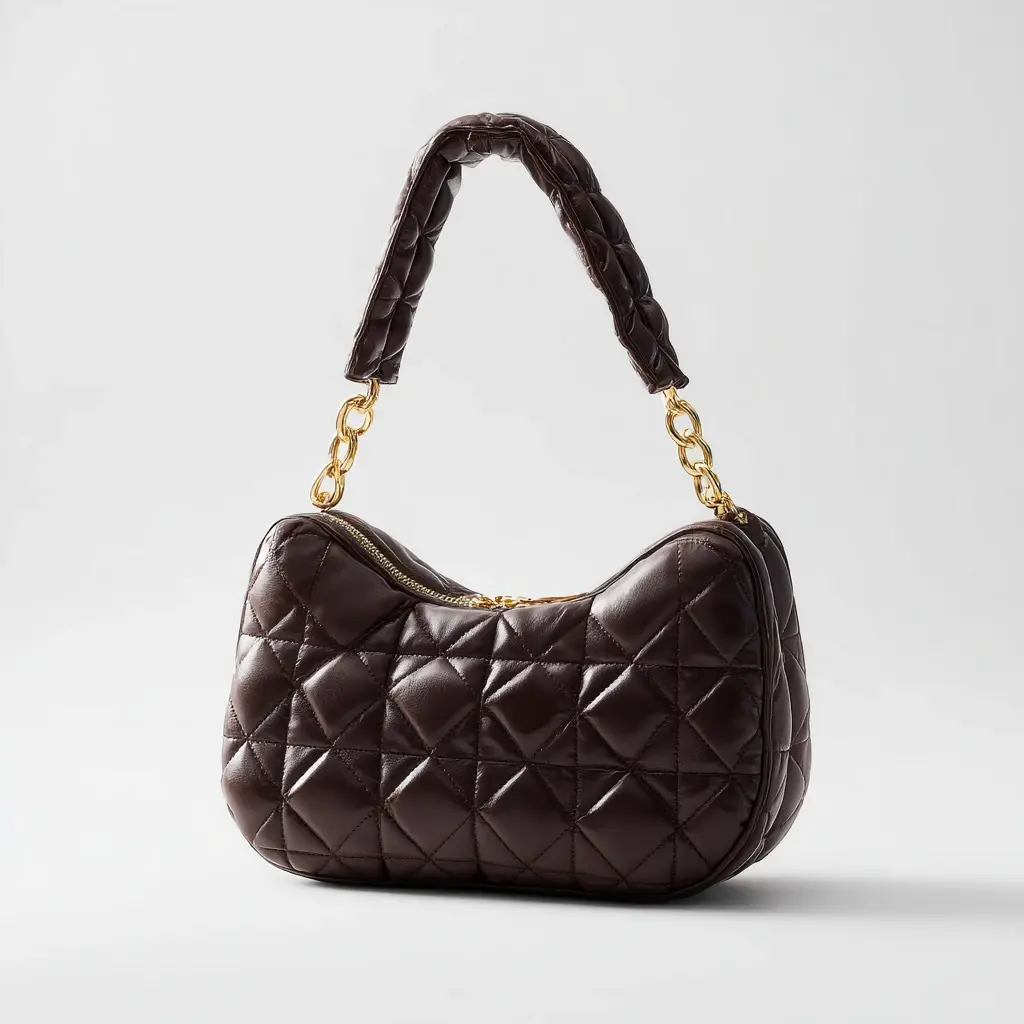
From the top edge of the body, at the point where the strap enters it, to the highest point on the inside of the strap when the bag is held up by it. That definition matters, because the two obvious alternatives — measuring from the bottom of the bag, or measuring the strap alone — give numbers 80-150 mm apart, and a specification built on the wrong one produces a sample that is exactly as wrong as the difference. A drop of 22-30 cm covers the working range for a bag carried under the arm; below 22 cm it rides too high, and above 30 cm it swings at the hip.
| Measurement | Working range | Tolerance | What a miss causes |
|---|---|---|---|
| Strap drop | 22-30 cm | ±10 mm | The bag rides high or swings at the hip |
| Body width | 26-34 cm | ±3 mm | Too wide to sit under the arm comfortably |
| Gusset depth | 6-12 cm | ±3 mm | Too shallow for what the customer carries |
| Strap width at the shoulder | 12-20 mm | ±2 mm | Narrow straps dig in under load |
| Interior pocket count | 1-3 | Fixed | A lining without structure at the base |
Group Two: The Strap, Which Is the Part That Fails
If a shoulder bag fails in the field, it fails at the strap, and it fails in one of two ways: the attachment tears out of the body, or the strap itself stretches under load. Both are specification problems rather than material problems, and both are entirely preventable with two numbers. The strap needs a reinforcement tape inside it — 12 mm wide, running the full length — and the attachment needs to be sewn into the body with a box stitch at the base, not a single line of stitching across the top edge.
What Makes a Strap Attachment Fail?
Two things, and they usually happen together. The first is a stitch line that ends at the top edge of the body: the load pulls on the last stitch and the thread walks out of the leather, which is why a box stitch that carries the load down into the panel is the specification to write. The second is a strap cut across the hide rather than along it, because leather stretches far more across the grain than with it. A load test of 5 kg held for 30 minutes is a fair check on a sample, and it is the kind of test a production partner can run before the bulk run starts.
Group Three: Body, Structure and Closure
A shoulder bag can be soft or structured, and the choice is a cost decision as much as a design one. A soft body in a 1.0-1.2 mm soft-temper leather drapes and is cheap to make; a structured body needs interlining and a base stiffener, which adds operations and moves the bag up a price band. Where the bag is structured, the stiffener has to be a separate piece at the base rather than a glued-in card, because a glued stiffener is the part that delaminates in the second season.
- A magnetic closure holding about 1.5 kg of pull is the default for a mid-market bag, and it is the closure most often specified too weakly.
- A turn-lock reads as premium and costs a mould plus a plating specification, which is why it belongs on the structured version.
- A zip top is the safest closure for travel and commuting, and it needs a #5 chain with a branded puller to look finished.
- A flap with no closure is the cheapest option and the one that opens itself when the bag is set down.
- Feet on the base are four small parts that keep a structured bag off a wet table, and they are the cheapest premium signal in the category.
Group Four: Interior and Lining
The interior is where a shoulder bag is judged after the sale rather than before it, and the specification is short. A 210D polyester lining is the working weight: light enough not to add bulk, strong enough to survive keys. One zip pocket and two slip pockets is the usual layout, and more than that is a cost without a benefit on a bag this size. The lining should be cut and sewn as a separate insert rather than glued to the body, because a glued lining is the one that peels away from the leather at the corners in the second year.
Group Five: Branding Positions on a Shoulder Bag
A shoulder bag offers three branding positions and they are not equivalent. A mark on the flap edge or on a small leather patch at the strap root is read at close range and registers as quality. A mark on the front panel is read across a shop floor, and on a bag this size it has to be small — 30-40 mm wide, placed 20 mm below the flap edge, which is a position that does not interfere with how the flap closes. A woven label in the lining seam is read by the owner and costs almost nothing. Two of the three is the usual answer.
Group Six: Material and Colour for a Shoulder Bag
Material on this silhouette is chosen for drape before it is chosen for price, and that is the opposite of the way most briefs are written. A shoulder bag at 1.0-1.4 mm in a top-grain leather is the mid-market default: uniform enough to colour-match across 500 pieces, thick enough for the strap to carry load without a lining. A soft-temper full-grain at 1.2-1.4 mm suits the version with no structure, and a coated material at 0.8-1.0 mm suits the entry price point. Hides can be sourced from tanneries audited under the Leather Working Group environmental protocol, which is what makes the material claim on a tag defensible.
The Checks That Decide the Cost
Of the fourteen checks, five of them move the unit price and nine do not. The five that do are worth knowing before the brief is sent, because they are also the five a buyer can change during sampling without another round. Everything else on the list costs nothing to specify correctly and a great deal to specify late, which is the argument for doing all fourteen at once rather than in the order they occur to you.
| Check | Effect on unit price | Changeable during sampling? |
|---|---|---|
| Material family and thickness | Large — it is 40-55% of the total | Yes, before the material is released |
| Structured or soft body | Medium — operations and interlining | Yes, before cutting |
| Closure type | Medium — a mould and a plating run | Only before the tooling is ordered |
| Branded hardware | Medium — amortised over the quantity | No, the mould is made early |
| Colourway count | Large — one dye lot per colour | No, it multiplies the quantity |
| Strap drop and width | None directly | Yes, at any point in the window |
Shoulder Bags in an Assortment: What Sits Next to Them
A shoulder bag is the middle of an assortment rather than its beginning. The tote is the volume seller and the cheapest of the group to make; the crossbody is the repeat purchase; the shoulder bag is the one that carries the upper-middle price point and the one where a customer tries the bag on. That makes it the silhouette to sell alongside a tote rather than instead of one, and it is why the boutique assortment five gives it two rail slots rather than four. In a profitable collection it is the style that justifies a second colourway before the tote does, because the fit is what brings the customer back.
What a Shoulder Bag Sample Should Be Tested Against
A sample review on this silhouette is a physical exercise, not a visual one. Hold the bag up by its strap and look at where it falls; load it with the weight a customer would carry and leave it for half an hour; open and close the closure twenty times; turn the lining out and pull at the pocket seams. Those four take ten minutes and they find everything the fourteen checks are designed to prevent. A photograph of the sample on a table finds none of it.
Then measure. Strap drop against the ±10 mm on the tech pack, strap width at the shoulder, the position of the mark against the 20 mm below the flap edge, and the stitch count against the seven to nine per inch. Write the results as a numbered list rather than as a description, because a numbered list becomes the revision instruction for the bulk specification and a description becomes another 6-10 working days. Inspection at the end of the run is at AQL 2.5 under ISO 2859-1, which is the standard that makes those measurements enforceable on 500 pieces rather than on one.
Four Field Failures, and the Line That Prevents Each
Returns on this silhouette cluster around four failures, and each one has a specification line that prevents it for a few cents. Sampling is the place to spend that money, because the same line added after bulk means re-cutting panels or re-sorting finished goods, and both cost more than the specification ever would have.
| Failure in the field | Usual cause | Line for the spec |
|---|---|---|
| Strap tears out of the body | Load on the last stitch | Box stitch 40 mm down plus 12 mm tape |
| Strap stretches under load | Soft strap, no core | 2.0 mm strap over a core, tested at 5 kg |
| Bag opens when set down | Magnet too weak | Rated to 1.5 kg pull, flap weight stated |
| Lining tears at a pocket | 190D, short allowance | 210D pockets, 10 mm allowance, back-tacked |
The pattern across the four rows is that none of them is a material defect. Three are geometry and one is a component rating, and every one of them is cheap to specify and expensive to discover in a review left by a customer.
Three Costed Builds at 500 Pieces
Shoulder bags span a wider cost range than their size suggests, because the body can be soft or structured and the strap is priced separately from the panels. The three builds below sit on the same 30 cm body and show where the money goes at the standard minimum.
| Line | Value | Commercial | Premium |
|---|---|---|---|
| Body | PU 0.8 mm, USD 1.90 | Top grain 1.2 mm, USD 3.80 | Full grain 1.4 mm, USD 5.60 |
| Strap | Webbing, USD 0.45 | Leather 2.0 mm, USD 1.30 | Leather, cored, USD 2.10 |
| Hardware | Stock zamak, USD 0.70 | Plated 0.3 micron, USD 1.60 | Plated 0.5 micron, USD 2.80 |
| Lining | 190D, USD 0.35 | 210D, USD 0.55 | Cotton duck 8 oz, USD 1.20 |
| Indicative FOB | USD 7.40-8.60 | USD 13.20-15.10 | USD 19.80-23.40 |
Two lines behave differently from the rest. Structure, meaning the interlining and the base stiffener, is what separates the middle build from the bottom one in a photograph, and hardware is the line a customer touches most.
Strap Drop by Market: Fitting One Bag to Different Bodies
The 22-30 cm working range covers most bodies but not all markets, and the same bag sits differently depending on shoulder slope and torso length. Where a range sells into more than one region, the cheapest adjustment is not a new pattern but a strap length option, which can be handled at the cutting table without touching the body.
- Northern Europe. A taller average frame, so the top of the range near 28-30 cm drop keeps the bag at the hip rather than the waist.
- Southern Europe and Japan. 24-27 cm is the usual pick, sitting the body under the arm.
- United States. A wider spread of frames, so two strap lengths on one SKU removes a return reason for perhaps USD 0.20 per unit.
- Crossbody crossover. Above a 45 cm drop the silhouette changes category and should be quoted as a separate SKU rather than as an option.
- How to record it. State the drop as a range from the top edge of the body to the highest point inside the strap, with a plus or minus 10 mm tolerance, so the measurement can be repeated at inspection.
Specify a shoulder bag that fits on the first sample
Send the strap drop, the body width, the material and thickness, the closure and the branding position. A private label coordinator will confirm MOQ 500 pcs per style / colourway, sampling in 6-10 working days, a 35-50 day bulk window and inspection at AQL 2.5 under ISO 2859-1. Get a quote.
Frequently Asked Questions
What strap drop should a private label shoulder bag have?
22-30 cm, measured from the top edge of the body to the highest point on the inside of the strap when the bag is held up by it. Below 22 cm the bag rides too high under the arm; above 30 cm it swings at the hip. The definition matters as much as the number, because measuring from the bottom of the bag or measuring the strap alone gives figures 80-150 mm apart, and a sample built on the wrong definition is exactly that far out.
What makes a shoulder bag strap fail?
Two specification faults that usually occur together: a stitch line that ends at the top edge of the body, so the load pulls on the last stitch and the thread walks out of the leather; and a strap cut across the hide instead of along it, since leather stretches far more across the grain. The fix is a box stitch carrying the load down into the panel and a 12 mm reinforcement tape running the full length of the strap.
How is a shoulder bag load tested?
A load of 5 kg held for 30 minutes is a fair test on a sample, and it is one a production partner can run before the bulk run starts. The point is not to prove the bag can carry five kilograms in use, it is to show that the strap attachment and the reinforcement are doing their job, because the failure mode is a slow stretch rather than a sudden tear.
How wide should a shoulder bag strap be?
12-20 mm where it sits on the shoulder. Below 12 mm the strap digs in under a real load, and a narrow strap on a heavy bag is the complaint that reaches a brand weeks after delivery rather than at the till. Width is also a branding opportunity: a wider strap carries an embossed mark or a contrast stitch that a narrow one cannot.
Should a private label shoulder bag be structured or soft?
It depends on the price band. A soft body in a 1.0-1.2 mm soft-temper leather drapes, needs no interlining and is cheap to make, which suits an entry or mid-market bag. A structured body needs interlining and a base stiffener, which adds operations and moves the bag up a price band. Where the bag is structured, the stiffener should be a separate piece at the base rather than a glued-in card.
What closure suits a shoulder bag best?
A magnetic closure holding about 1.5 kg of pull is the mid-market default, and it is the one most often specified too weakly. A turn-lock reads as premium and costs a mould plus a plating specification, so it belongs on the structured version. A zip top is the safest for travel and commuting and needs a #5 chain with a branded puller. A flap with no closure is cheapest and opens itself when the bag is set down.
What lining should a shoulder bag use?
A 210D polyester lining is the working weight: light enough not to add bulk and strong enough to survive keys. One zip pocket and two slip pockets is the usual layout on a bag this size. The lining should be cut and sewn as a separate insert rather than glued to the body, because a glued lining is the one that peels away from the leather at the corners in the second year.
Where should a brand mark go on a shoulder bag?
Three positions, and they are not equivalent. A mark on the flap edge or on a small patch at the strap root is read at close range and registers as quality. A front-panel mark is read across a shop floor and on a bag this size should be 30-40 mm wide, placed 20 mm below the flap edge so it does not interfere with the closure. A woven label in the lining seam is read by the owner and costs almost nothing.
What material suits a private label shoulder bag?
Top-grain leather at 1.0-1.4 mm is the mid-market default: uniform enough to colour-match across 500 pieces and thick enough for the strap to carry load without a lining. A soft-temper full-grain at 1.2-1.4 mm suits an unstructured version, and a coated material at 0.8-1.0 mm suits the entry price point. Hides can be sourced from tanneries audited under the Leather Working Group environmental protocol.
Which checks move the shoulder bag unit price?
Five of the fourteen: material family and thickness, which is 40-55% of the total; structured or soft construction; the closure type, because a mould and a plating run are involved; branded hardware, amortised over the quantity; and the number of colourways, since each is its own dye lot. The other nine, including strap drop and width, cost nothing to specify and a great deal to specify late.
How should I review a shoulder bag sample?
Physically rather than visually. Hold it up by the strap and see where it falls; load it with the weight a customer would carry and leave it for half an hour; open and close the closure twenty times; turn the lining out and pull at the pocket seams. Then measure: strap drop against the ±10 mm, strap width, the position of the mark and the stitch count against the seven to nine per inch.
People Also Ask
Why is the shoulder bag harder to specify than a tote?
Because it hangs from two points and sits against the body, so every error is felt rather than seen. A tote can be slightly the wrong shape and still work; a shoulder bag with the wrong strap drop is returned by a customer who cannot say why.
Can I use the same pattern for a shoulder bag and a crossbody?
Rarely. The strap drop differs by 80-100 cm and the load path is different, so the attachments are engineered differently. Sharing the body pattern and changing the strap is possible, and it is worth asking about because it halves the development.
How many colourways should a first shoulder bag order have?
One, or two at most. Each colourway is a separate dye lot at 500 pcs, so two colourways of one style is 1,000 pieces. The shoulder bag is bought for its shape, which makes a single colourway a reasonable first buy.
What is the most common defect on a shoulder bag inspection?
A strap attachment without a box stitch, followed by stitch density below the seven to nine per inch specified. Both are visible to an inspector and both are written into the tech pack, which is what makes the inspection at AQL 2.5 meaningful rather than cosmetic.
Sources and further reading
Every figure on this page is either our own programme data or attributed below. Open the originals before you write them into a specification.
- Leather Working Group — environmental auditing for tanneriesLeather Working Group Environmental audit protocol for tanneries and leather traceability.
- SATRA — technical services for leather, footwear and accessoriesSATRA Independent leather, hardware and accessories testing protocols.
- World Intellectual Property OrganizationWIPO International trademark and design registration before tooling starts.