What Is a BOM for Handbags and Why Factories Ask for It
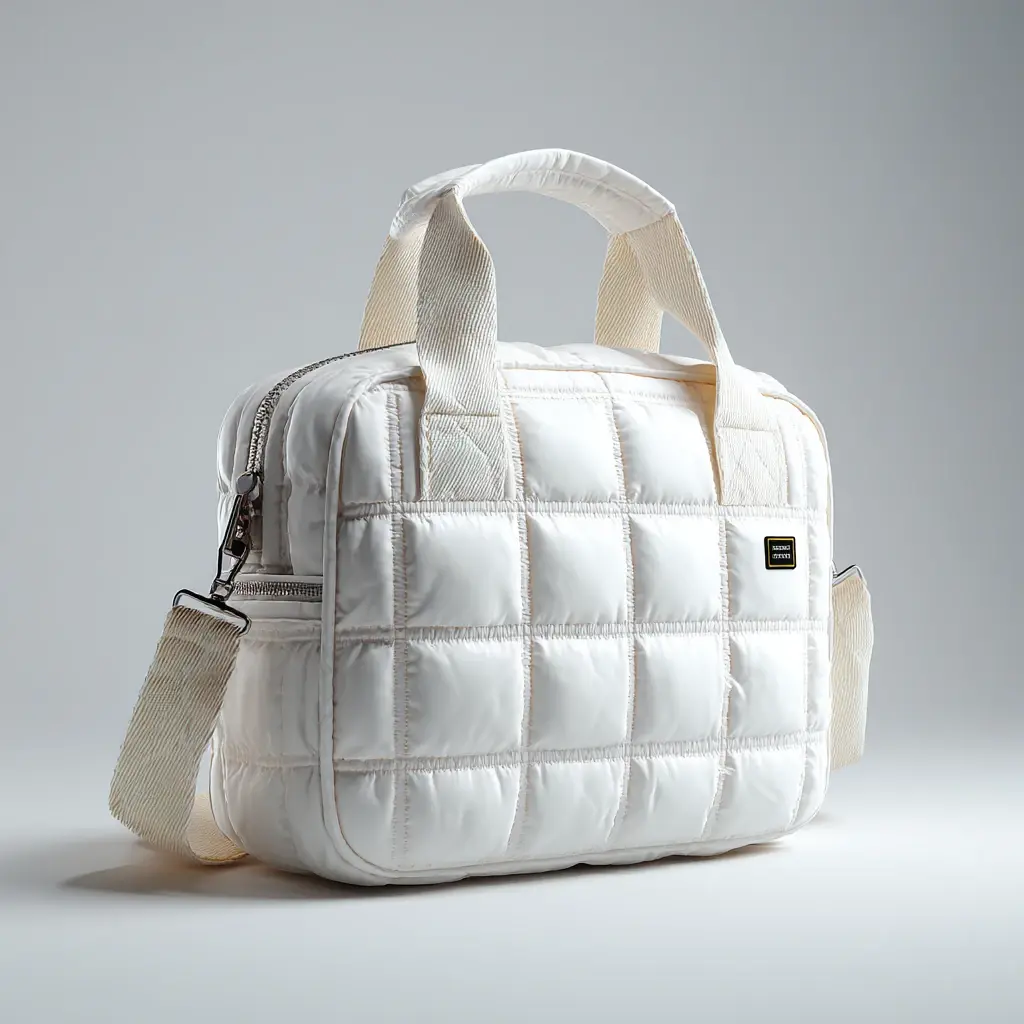
What is a BOM for handbags? It is the bill of materials: one numbered line per physical component, with substance, quantity, colour reference and supplier code, that converts a drawing into a cost and a purchase list. A lined tote carries 22-34 BOM lines, and the split is not evenly weighted — shell accounts for 34-42 percent of unit cost, hardware 18-26 percent, labour 14-20 percent, lining 8-12 percent and trim plus packaging 6-10 percent. It is requested before a quotation because a price given without one is a guess, and a guess cannot be defended when the second order arrives.
- What a BOM Actually Is in One Sentence
- Where the Unit Cost Sits: A 22-Line Split
- Why a BOM Is Requested Before a Quotation
- What Each BOM Line Has to Specify
- How One BOM Line Becomes a Cost Variable
- Which BOM Errors Move the Price Most
- How a BOM Travels Into Bulk Production
- What a Complete BOM Looks Like for One Tote
- Numbering Blocks, So One Line Never Means Two Things
- Booking Material: Overage, Spares and Close-Out
- Units of Measure: The Conversions That Go Wrong
- How Complete a BOM Has to Be Before It Can Be Costed
What is a BOM for handbags? It is the bill of materials: one numbered line per physical component, with substance, quantity, colour reference and supplier code, that converts a drawing into a cost and a purchase list. A lined tote carries 22-34 BOM lines, and the split is not evenly weighted — shell accounts for 34-42 percent of unit cost, hardware 18-26 percent, labour 14-20 percent, lining 8-12 percent and trim plus packaging 6-10 percent. It is requested before a quotation because a price given without one is a guess, and a guess cannot be defended when the second order arrives.
The BOM at a glance
What a BOM Actually Is in One Sentence
A bill of materials is the complete numbered list of everything that goes into one finished bag, written so that each line can be priced, bought and counted separately. It is not a tech pack, although it is derived from one. The tech pack says how the bag is made; the BOM says what it is made of and how much of each thing one unit consumes.
The distinction matters for a practical reason. A tech pack can contain a drawing, a photograph and a note that says soft pebbled leather, and a designer will understand it perfectly. A BOM has to turn that into a line: shell, full-grain bovine, 1.4 mm, colour Pantone TCX 17-1230, consumption 1.4 sq ft per unit, with a named tannery and a reference swatch. The first is a description and the second is a purchase.
- One line per component, including components that seem trivial, because rivets and edge paint are where a quotation quietly drifts.
- A unit of measure per line: area for panels, length for webbing and zip chain, count for hardware pieces.
- A consumption figure per unit, which is the number that turns a material price into a unit cost.
- A waste or yield allowance, because hides and coated rolls do not yield 100 percent of usable area.
Where the Unit Cost Sits: A 22-Line Split
Most first-time buyers expect hardware to dominate and it does not. On a lined leather tote at 500 pcs per colourway, the shell is the largest single share of unit cost, and the reason is consumption rather than price: a 34 cm tote with a 10 cm gusset consumes about 1.4 sq ft of hide, and hide is priced by area with a yield loss of 15-25 percent depending on how the panels nest.
- Shell (hide or coated material)
- 34-42 percent, about 1.4 sq ft per unit
- Hardware (closures, feet, rings, sliders)
- 18-26 percent, typically 6-9 pieces per unit
- Labour (cutting, skiving, sewing, finishing)
- 14-20 percent, 12-18 operations per unit
- Lining (210D polyester or cotton twill)
- 8-12 percent, about 0.55 linear metres
- Trim (thread, webbing, edge paint, interlining)
- 6-10 percent, including 42 linear metres of Tex 40 thread
- Packaging (dust bag, hangtag, polybag, carton)
- 3-6 percent depending on retail prep
- Tooling, amortised
- One-off, then amortised across the run
- Overhead and margin
- Varies by term: FOB Xiamen, CIF or DDP
Read that table as a map of where to work. A buyer who wants a lower unit price and starts by asking for a cheaper zip is working on a line that is 2-4 percent of the cost and is also the part most likely to generate a field failure. A buyer who starts with panel nesting, substance thickness or yield is working on the 34-42 percent line.
Why a BOM Is Requested Before a Quotation
Because a quotation built without one is built on assumptions, and the assumptions are the buyer's risk. Two quotations for the same photograph can differ by 30 percent and both be honest, if one assumed a 1.4 mm full grain and the other assumed a 0.9 mm split, or one assumed a branded zip and the other a generic one.
- It converts a picture into comparable prices. With a BOM, two quotations can be lined up line by line and the difference explained rather than negotiated.
- It makes the price defensible on the repeat. A stored BOM is what allows the second order to be quoted against the first instead of from scratch.
- It is the purchase list. Materials with long lead times are ordered from the BOM, and a missing line at that stage means an unplanned delay.
- It sets the substitution rule. Where a named component becomes unavailable, the BOM is what defines what an acceptable substitute looks like.
The fourth point is the one that matters in a bad month. Component availability changes, a tannery runs out of a finish, a plating bath is down. A BOM with named references and stated tolerances lets a sourcing partner propose a substitute that can be evaluated in an hour. A BOM that says brown leather turns the same event into a three-week search.
What Each BOM Line Has to Specify
A line is complete when it can be bought without a follow-up question. Most BOMs that arrive with a first enquiry have six or seven incomplete lines, and those are exactly the lines that generate the clarification email that costs three days.
- A line number and a component name, so the same rivet is the same rivet in every document that follows.
- The substance or alloy. Full-grain bovine, corrected grain, PU-coated split, 210D polyester, zinc alloy, brass, stainless steel.
- A dimension. Thickness in millimetres for sheet materials, width in millimetres for webbing, gauge or length for metal parts.
- A colour reference. Pantone TCX for soft goods, a plating code for metal, each tied to an approved physical swatch.
- Consumption per unit, with the unit of measure stated: area, length or piece count.
- A position or a function, so a ring at the strap end is distinguishable from a ring inside the lining.
- A compliance note where the line carries one: REACH Annex XVII, Proposition 65, CPSIA, GRS or Leather Working Group traceability.
That last field is not decoration. A hardware line without a plating specification and a compliance note is the single most common cause of a shipment that passes visual inspection and fails a retailer's chemical screen, and by then the goods are already on the water.
How One BOM Line Becomes a Cost Variable
Every BOM line has a price and a consumption, and unit cost is the product of the two. Most buyers negotiate the price and ignore the consumption, which is the larger lever on the bigger lines. Below are four worked examples from real specification changes.
| Change on the BOM | Effect on the line | Effect on unit cost |
|---|---|---|
| Shell thickness 1.4 mm to 1.2 mm | Consumption roughly unchanged, material price down 12-18 percent | Shell line down 7-11 percent |
| Panel nesting re-graded | Yield loss 25 percent to 18 percent | Shell line down 5-9 percent |
| Generic zip to branded zip | Component price up 40-70 percent | Hardware line up 6-10 percent |
| Lining 210D to cotton twill | Material price up, consumption up 8 percent | Lining line up 15-22 percent |
The second row is the one worth remembering, because it is free. Re-grading a pattern so panels nest better on a hide can remove 5-9 percent from the largest cost line without changing how the bag looks, feels or performs. It is also the reason the cost conversation before tooling belongs before the pattern is frozen rather than after.
Which BOM Errors Move the Price Most
Four errors, ranked by how much money they move and how late they are usually caught.
- A missing yield allowance. Assuming 100 percent usable area on a hide understates the shell line by 15-25 percent, and the correction arrives with the material invoice.
- An unspecified lining weight. 210D and 420D look identical in a note and differ in price and in how the bag holds its shape.
- Hardware counted but not specified. Nine pieces is not a specification; a slider and a ring differ in cost by a factor of three.
- Packaging omitted entirely. Dust bag, hangtag, barcode label and carton marks are 3-6 percent of unit cost and are the most frequently forgotten lines.
There is also a fifth error that costs time rather than money: numbering lines differently between the tech pack and the BOM. When a revision note says change item 14 and the two documents disagree about what item 14 is, the round is spent on administration. Number once, in one master list, and reference that number everywhere.
How a BOM Travels Into Bulk Production
The BOM is the document that connects the sample to the run. Once the sample is approved, the BOM becomes the purchase list, the cutting plan and the inspection checklist, and it is the reference an auditor asks for.
- Material purchase. Long-lead items are bought first from the BOM, typically hardware with custom plating and any non-stock shell colour.
- Cutting plan. Panel consumption per unit drives how many units nest per hide or per roll.
- Line loading. The number of operations per unit, usually 12-18 on a lined tote, drives how the 7 production lines are balanced.
- Inspection. Each BOM line becomes a check: does the delivered component match the specified substance, dimension and colour.
- Repeat orders. The stored BOM is what lets the second run skip sampling where the specification is unchanged.
Verification at the end follows ISO 2859-1 at AQL 2.5, which sets how many units are drawn from a lot of your size and how many defects of each class trigger a pass, a fail or a re-sort. The BOM is what makes that check specific: without it, an inspector is checking a bag against an impression rather than against a list of 26 named components. The full handbag private label process reference shows where the BOM sits between tech pack and bulk.
What a Complete BOM Looks Like for One Tote
Below is an abbreviated but complete-in-structure BOM for a 32 cm lined leather tote. Real ones run 22-34 lines; this one is trimmed to show the shape of each entry rather than the full count.
| Line | Component | Specification | Consumption per unit |
|---|---|---|---|
| 01 | Shell, front and back panels | Full-grain bovine, 1.4 mm, Pantone TCX 17-1230 | 0.95 sq ft |
| 04 | Gusset and base | Full-grain bovine, 1.6 mm, matching | 0.45 sq ft |
| 08 | Lining | 210D polyester, 150 cm wide, colour-matched | 0.55 linear metres |
| 12 | Main zip | Nylon coil, 45 cm, branded slider, nickel-free plating | 1 piece |
| 15 | Feet | Zinc alloy, 10 mm, 24 hours to first corrosion, ASTM B117 | 4 pieces |
| 19 | Thread | Tex 40 bonded polyester, colour 462 | 42 linear metres |
| 23 | Edge paint | Water-based PU, matched to shell | 6 g |
| 28 | Dust bag and hangtag | Non-woven 80 gsm, printed, barcode label | 1 set |
Every line there has a substance, a dimension, a colour reference and a consumption figure, which is the whole test. Compliance runs alongside: REACH Annex XVII for restricted substances in coated materials and trim, a Proposition 65 review for hardware and coated trim bound for California, CPSIA where a bag is marketed to children, the Global Recycled Standard where a lining or shell carries a recycled content claim, and Leather Working Group traceability where hides are bought through audited tanneries. A sourcing partner working to ISO 9001 will attach the paperwork with the BOM rather than after it, and the tech pack contents guide sets out how the two documents are kept in step.
Numbering Blocks, So One Line Never Means Two Things
Numbering is administrative until a revision arrives, and then it is money. Most bills of materials are numbered sequentially from 01, so the first component anyone adds pushes every following line down one and leaves the costing sheet, the cutting ticket and the inspection checklist all carrying stale numbers. Reserving blocks instead keeps a line's identity fixed for the life of the style: 01-09 for shell and exterior panels, 10-19 for lining and interior, 20-29 for hardware, 30-39 for trim and thread, 40-49 for branding and packaging. On a 22-line document, that one habit removes most of the clarification messages that cost three days each.
- The change note. One line per revision: what changed, from which figure to which figure, effective from which units.
- The revision stamp. R1, R2, R3 on every page, dated, so an inspection always has exactly one reference in force.
- Withdrawn lines stay listed. Marked withdrawn with a date rather than deleted, so a 2024 packing list still reads against a 2026 BOM.
- Never reuse a number. A withdrawn line number is retired permanently, even when its replacement is very similar.
Booking Material: Overage, Spares and Close-Out
The moment a sample is approved, the BOM stops being a costing instrument and becomes a purchase list, and the quantities ordered are never the quantities consumed. Each material carries an overage allowance set by how it fails, not by habit. Ordering to the theoretical consumption is how a 500-unit run arrives at unit 470 with nothing left to cut.
| Material | BOM consumption | What gets booked | Why |
|---|---|---|---|
| Shell hide | 700 sq ft | 770-805 sq ft, plus 10-15 per cent | Yield varies 10-15 per cent within a single hide lot |
| Lining 210D | 275 linear metres | 300 metres, plus 8-10 per cent | Marker waste and end-of-roll shorts |
| Zips and sliders | 500 sets | 515 sets, plus 3 per cent | Plating rejects and assembly damage run 1-3 per cent |
| Thread Tex 40 | 21,000 linear metres | 22,000 metres per colour | Cones are bought whole; part cones are not stockable |
| Edge paint | 3 kg | 4 kg | Pot life of six to nine months once opened |
The close-out note matters as much as the booking. Spare hardware, typically USD 60-180 of components on a 500-unit order, belongs to the brand and should be listed on the final packing document rather than left on a shelf; it is what makes a repair route possible later. Usable hide off-cuts are the reverse case: below about 0.2 sq ft they are not worth the freight to return, but asking for the total off-cut area to be stated on the closing note lets the next order of the same style consume it instead of buying fresh.
Units of Measure: The Conversions That Go Wrong
Most BOM disputes are unit disputes wearing the clothes of a price dispute. The list below covers the six conversions where two documents most often disagree, each of which produces either a mismatched invoice or a false measurement at inspection. Keeping one master unit per line, with the conversion written beside it, costs a minute and closes the argument permanently.
| Unit | Equals | Where it appears |
|---|---|---|
| 1 square foot | 0.0929 square metres | Hide consumption against tannery pricing in metric areas |
| 1 ounce per square yard | 33.9 gsm | Canvas quoted by a US agent against a mill selling in gsm |
| 1 linear metre at 150 cm width | 1.5 square metres | Lining, interlining and foam quantities |
| 1 inch | 25.4 mm | Webbing widths, foot diameters and hardware gauges |
| 8 stitches per inch | 3.15 stitches per centimetre | Stitch density; a drawing in centimetres read with an inch gauge is a false fail |
| Tex 40 | About ticket 40, roughly 590 denier | Thread size quoted under two naming systems |
Three of those rows produce real money. Canvas bought in ounces while the mill sells in gsm arrives about 15 per cent lighter than the specification allows. Stitch density written as 8 per inch and counted with a centimetre gauge fails every unit on the line. And strap webs specified as 1 inch rather than 25 mm accumulate three or four millimetres across a folded assembly, which is enough to move the bag out of its plus or minus 3 mm tolerance at inspection.
How Complete a BOM Has to Be Before It Can Be Costed
Completeness has four useful bands, and each produces a different kind of number. Buyers usually ask for a firm price after the second band, which is why first quotations arrive with a tolerance nobody planned for. The third band is where a quotation becomes something a deposit can be placed against, and it costs one ninety-minute session rather than three rounds of email.
| Lines complete | What it produces | Typical outcome |
|---|---|---|
| Below 70 per cent | Nothing quotable | A request for the missing fields; two to three days lost |
| 70-90 per cent | A band with a tolerance of about plus or minus 10 per cent | Enough to decide whether to proceed |
| 90-100 per cent with tolerances | A firm quotation held for 30 calendar days | Enough to place a deposit |
| 100 per cent plus compliance per line | A quotation that survives a retailer technical file review | Enough to quote a repeat without resampling |
Three groups of lines carry most of the weight in reaching the third band: the plating specification on every metal component, the denier and width on every lining, and the consumption figure with its stated unit of measure on every shell panel. Settled once, they stay settled for the life of the style, and the tech pack contents guide sets the same fields out from the drawing side so the two documents never drift apart.
Send a sketch, get a line-by-line BOM
Send silhouettes, material direction and a target retail price. A private label coordinator will return a numbered BOM with consumption per unit, then sampling at 6-10 working days, bulk at 35-50 days and inspection at AQL 2.5 under ISO 2859-1. Get a quote.
Frequently Asked Questions
What is a BOM in handbag production?
A bill of materials: one numbered line per physical component, each giving the substance, a dimension, a colour reference and the consumption per unit. A lined tote runs 22-34 lines. It is derived from the tech pack but is a different document, because the tech pack says how the bag is made and the BOM says what it is made of.
How is a BOM different from a tech pack?
The tech pack carries drawings, dimensions, construction notes and tolerances, and answers how the bag is put together. The BOM carries components, quantities and references, and answers what has to be bought. Both are needed: the BOM is generated from the pack and priced against it, and revisions must be numbered in one master list.
How many lines does a handbag BOM usually have?
Between 22 and 34 for a lined leather tote, and as few as 12 for a simple unlined sling. The count rises with pocket count, hardware complexity and packaging requirements. A bag with a framed closure, six internal pockets and retail prep can exceed 40 lines, and every line is a thing that can be wrong.
Why is a BOM requested before a quotation?
Because a price given without one rests on assumptions about substance, hardware and packaging that the buyer then carries as risk. Two honest quotations for the same photograph can differ by 30 percent if one assumed 1.4 mm full grain and the other a 0.9 mm split. With a BOM, the difference can be lined up and explained.
Which BOM line has the biggest effect on unit price?
The shell, at 34-42 percent of unit cost, because a 32 cm tote with a 10 cm gusset consumes about 1.4 sq ft of hide and hide is priced by area. The cheapest lever on that line is not a lower material price but better panel nesting, which can move yield loss from 25 percent to 18 percent.
What does a complete BOM line have to specify?
A line number and component name, the substance or alloy, a dimension such as thickness in millimetres, a colour reference tied to an approved physical swatch, consumption per unit with the unit of measure stated, a position or function, and any compliance note such as REACH Annex XVII or Proposition 65.
Why does hardware cause so many BOM problems?
Because it is usually counted rather than specified. Nine pieces is not a specification when a slider and a ring differ in cost by a factor of three and each has its own plating and pull tolerance. Hardware is 18-26 percent of unit cost and is the line most likely to fail a chemical screen after the goods have shipped.
How much does packaging add to unit cost?
Typically 3-6 percent, covering the dust bag, hangtag, barcode label, polybag and carton marks. It is the most frequently omitted group of lines in a first BOM, so the number appears late and looks like a price increase when it is really a completion of the specification.
What compliance notes belong on a BOM?
REACH Annex XVII for restricted substances in coated materials and trim, a Proposition 65 review for hardware and coated trim bound for California, CPSIA documentation where a bag is marketed to children, the Global Recycled Standard where recycled content is claimed, and Leather Working Group traceability for hides bought through audited tanneries.
How does a BOM affect the second order?
It is what makes the repeat cheap. A stored BOM with named references and consumption figures allows the second run to be quoted against the first rather than re-derived, lets long-lead materials be bought earlier, and where the specification is unchanged allows sampling to be skipped entirely, removing 6-10 working days.
What is the most expensive BOM error?
A missing yield allowance on the shell. Assuming 100 percent usable area on a hide understates the largest cost line by 15-25 percent, and the correction surfaces with the material invoice rather than with the quotation, which is the worst possible moment to discover it.
How is a BOM verified during bulk production?
Each line becomes an inspection check: does the delivered component match the specified substance, dimension and colour reference. The lot as a whole is then measured at AQL 2.5 under ISO 2859-1, which sets how many units are drawn from a lot of your size and how many defects of each class trigger a pass or a fail.
People Also Ask
Do I need a BOM if I already have a tech pack?
Yes. The pack describes construction and the BOM describes components and consumption. Without a BOM, two quotations for the same pack cannot be compared line by line.
Who writes the BOM on a private label programme?
Usually the private label coordinator derives it from the buyer's tech pack and sends it back for confirmation. The buyer confirms substances, colours and packaging, then the confirmed BOM is priced.
Can a BOM line be substituted later?
Yes, and it should be anticipated. Named references with stated tolerances let a substitute be evaluated in hours when a tannery or plating bath becomes unavailable, instead of restarting a search.
Is a shorter BOM always cheaper?
Not necessarily. Fewer lines usually means fewer pockets and less hardware, which lowers unit cost, but removing a reinforcement or a base board raises the return rate by more than it saves.
Sources and further reading
Every figure on this page is either our own programme data or attributed below. Open the originals before you write them into a specification.
- REACH — chemical substances regulationEuropean Commission Annex XVII restricts the substances that may appear in finished leather and coatings.
- Leather Working Group — environmental auditing for tanneriesLeather Working Group Environmental audit protocol for tanneries and leather traceability.
- SATRA — technical services for leather, footwear and accessoriesSATRA Independent leather, hardware and accessories testing protocols.