Handbag Sampling Timeline: From Artwork to Approved Sample
How long does handbag sampling take from artwork to an approved sample? Six to ten working days for conventional construction, twelve to fifteen for framed, woven or stacked designs, and the clock starts when the brief is complete rather than when it arrives. Sampling slips at four gates — material confirmation, pattern cutting, your review window and the revision list — and three of the four are controlled by the brand rather than by the workshop. Hold those four and the sample is approved inside two calendar weeks; miss them and the same bag takes five, which is usually the difference between making a season and missing it.
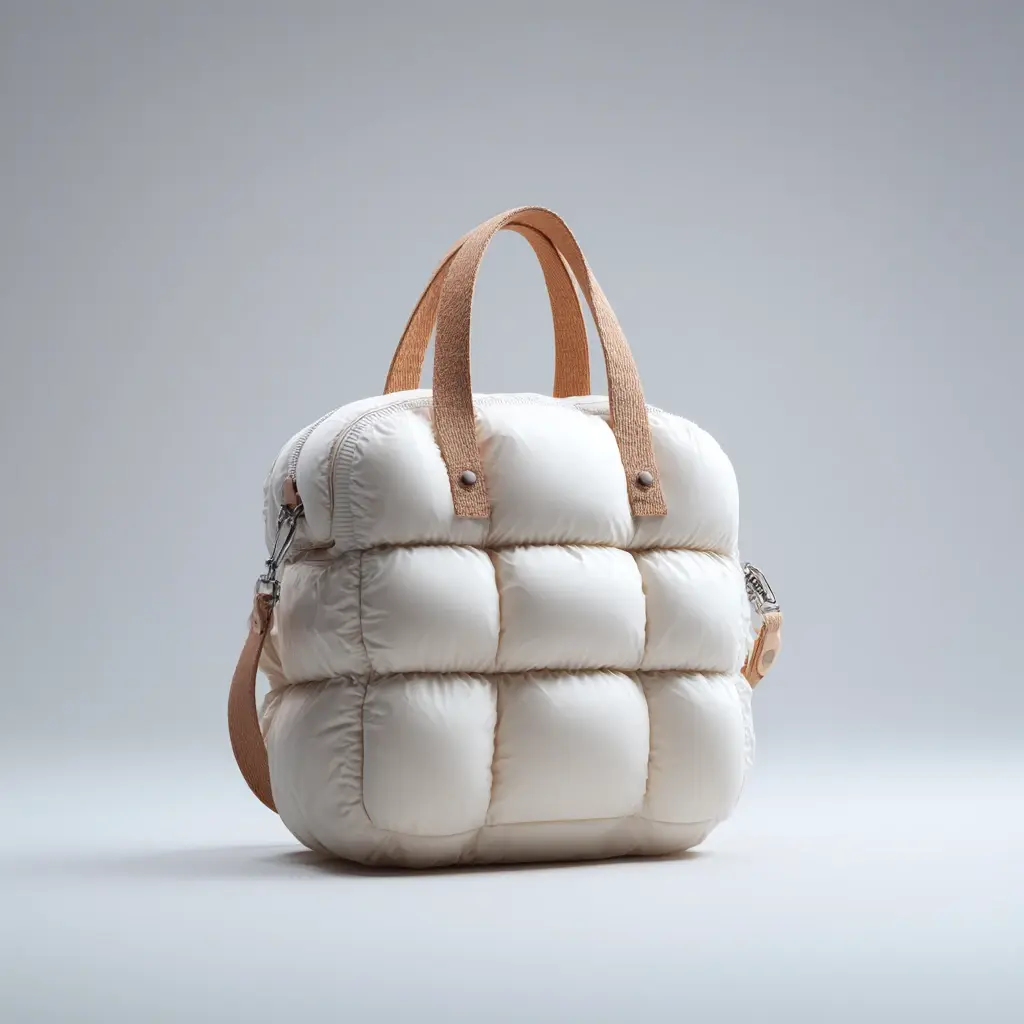
- The Clock Starts When the Brief Is Complete
- Day 0-1: Brief Intake and the Completeness Check
- Day 1-3: Material Confirmation and Swatch Approval
- Day 2-4: Pattern Release and the First Cut
- Day 4-7: Sewing, Assembly and Finishing
- Day 7-9: Internal Check, Photography and Dispatch
- Day 9-20: Your Review Window and the Revision List
- What 12-15 Working Days Looks Like Instead
- A Checklist to Hold Each Gate
- From Approved Sample to Bulk Slot
How long does handbag sampling take from artwork to an approved sample? Six to ten working days for conventional construction, twelve to fifteen for framed, woven or stacked designs, and the clock starts when the brief is complete rather than when it arrives. Sampling slips at four gates — material confirmation, pattern cutting, your review window and the revision list — and three of the four are controlled by the brand rather than by the workshop. Hold those four and the sample is approved inside two calendar weeks; miss them and the same bag takes five, which is usually the difference between making a season and missing it.
The sampling clock, in working days
The Clock Starts When the Brief Is Complete
The single most useful thing to understand about a sampling window is that it measures build time, not conversation time. Six to ten working days covers pattern, cutting, sewing, finishing and photography. It does not cover the days spent answering questions. A brief that arrives complete enters the window on the day it arrives; a brief that arrives as a folder of photographs enters the window once the last dimension has been confirmed, which can be nine or ten days later.
This is why the first working day is administrative. A handbag programme specialist runs a completeness check before anything is cut: dimensions with tolerances, materials with thickness, hardware with a size, colour with a reference, branding with a position, quantity with a colourway split, destination with a trade term. Anything missing becomes one email with numbered questions rather than a week of piecemeal correspondence. The check is free and it is the highest-return hour in the whole programme.
Day 0-1: Brief Intake and the Completeness Check
Intake is one day when the brief is complete and three to five when it is not. The output of this gate is a short written confirmation: what is being sampled, in what material, at what dimensions, with which hardware, and what the target retail price is. Nothing else should be ambiguous at the end of day one, because ambiguity at intake becomes rework at day seven, and rework at day seven costs a fresh cut rather than a phone call.
- Dimensions confirmed. Body width, height, gusset, handle drop, pocket layout, each with a tolerance.
- Material direction confirmed. Body thickness in millimetres, lining specification, hardware finish.
- Quantity and colourways. MOQ is 500 pcs per style / colourway, so a two-colour sample set is a decision about two dye lots, not one.
- Target retail price. Without a ceiling the specification is engineered to the wrong grade and the sample is built twice.
- Destination and term. FOB Xiamen by default; CIF and DDP available, and the term affects documentation rather than build time.
Teams that skip intake because they are in a hurry typically discover the missing item at the material gate, where it costs three days instead of one. The disciplined version is unglamorous: one numbered email, one numbered reply, and a written confirmation before anything is cut. How much of that can be avoided by sending a proper pack is set out in how to create a tech pack that passes on the first submit.
Day 1-3: Material Confirmation and Swatch Approval
Materials are the first real gate and the one that slips most often, because it requires a decision from the brand. Body material, lining, interlining and hardware are sourced during this window, and a physical swatch is sent for approval. Approve against a physical swatch rather than a screen image: a colour matched on a monitor drifts by a noticeable margin on a dyed hide, and the drift is discovered at the worst possible moment.
| Item | Confirmed by | Slip cost if missed | How to hold it |
|---|---|---|---|
| Body material and thickness | Brand, on a physical swatch | 3-5 working days | Approve the swatch, not the screen |
| Lining and interlining | Brand, against a card | 2-3 working days | State gsm and thickness up front |
| Hardware size and finish | Brand, against a sample | 6-10 working days if plated | Send a schedule, not a photograph |
| Colour reference | Brand, under stated light | One full swatch cycle | Pantone TCX, Delta E ≤ 2.0, D65 |
| Branding method and position | Brand | Die re-cut if changed | Measure from a datum edge |
| Quantity per colourway | Brand | Re-quotation | Remember 500 pcs is per colourway |
Hardware is the expensive line in this table and the one brands underestimate. A branded slider in a specified finish is a plated part with a tooling step; if the finish is changed at day six, the part is re-plated or re-made and the sample waits. Five to ten working days is the realistic penalty, which is longer than the entire build window for the rest of the bag. Naming the finish once, in writing, at day two is the whole defence.
Day 2-4: Pattern Release and the First Cut
The pattern is where a drawing becomes geometry, and it is the gate that separates a good sample from a good photograph. A pattern is graded, checked for seam alignment, and cut as a trial before any production material is committed. For a silhouette that has run before this is fast; for a new one it is where the extra days go, because a pattern that does not close has to be revised before cutting.
- Pattern release. Digitised from the pack, or adapted from an existing block where the silhouette is close to a proven one.
- Seam alignment check. Panel edges, gusset and base are checked for matched lengths before cutting, since a 3 mm mismatch telegraphs as a twist in the assembled bag.
- Trial cut. Usually in a substitute material first, so the expensive hide is not consumed by a first attempt.
- Nesting check. Where consumption was stated in the pack, the trial confirms the yield figure; where it was not, this is where the estimate moves.
This gate is also where the argument for a good pattern over a render is settled in practice. A render can look finished while concealing a seam that will not close; a trial cut cannot. Two days spent here is cheaper than a revision round at day ten, because a pattern revision is a piece of card and a bulk revision is 500 units.
Day 4-7: Sewing, Assembly and Finishing
Assembly is the visible part of the window and it takes three days for a conventional construction. Skilled operators work the panels in sequence: pocket and lining assembly, body closing, gusset, strap attachment, closure setting, then finishing — edge paint in two passes at 1.2 mm width, thread trimming, hardware polishing and final pressing. Each operation is short; the sequence is what takes the time.
- Lining and interior. Pockets closed at 8 mm allowance with 7-9 stitches per inch using Tex 40 thread.
- Body closing. Structural seams at 10 mm allowance, corners clipped rather than folded where the material is thick.
- Strap attachment. Box stitch 25 × 25 mm plus a rivet through a 2 mm reinforcement patch — the joint checked at this stage rather than later.
- Closure setting. Magnetic snap, turn-lock or zip set against the hardware schedule; closing force on magnets reads 1.2-1.8 kgf.
- Finishing. Edge paint, thread trim, hardware clean, final press, then a 24-hour rest before photography so the material relaxes.
One habit is worth copying: rest the finished sample for a day before photographing it. Leather and webbing both relax after assembly, and handle drop measured immediately after sewing differs from drop measured 24 hours later by 5-8 mm. Photographing too early produces a sample that looks right in the images and measures wrong in the hand, which is exactly the kind of surprise that costs a second round.
Day 7-9: Internal Check, Photography and Dispatch
Before a sample is dispatched it is checked against the pack, and the check is a measurement rather than an opinion. Dimensions against tolerance, stitch density over a 25 mm length, colour against the approved swatch, hardware function over a cycle count, and the branding position against the datum. Photographs follow: full views, detail crops of every joint, interior, base and hardware, taken in consistent light.
| Check | Method | Reference | Threshold |
|---|---|---|---|
| Assembled dimensions | Steel rule, relaxed unit | Pack geometry | ±3 mm |
| Handle drop | Loaded with 1 kg | Pack geometry | ±5 mm |
| Stitch density | Count over 25 mm | Construction page | 7-9 SPI |
| Colour | Spectrophotometer, D65 | Pantone TCX swatch | Delta E ≤ 2.0 |
| Branding position | Gauge from datum edge | Branding page | ±1 mm |
| Zip cycling | Manual cycle count | Hardware schedule | No binding over full travel |
| Plating | Neutral salt spray | Hardware schedule | 24 h to first corrosion, ASTM B117 |
| Defect classes | Random sampling by lot | Purchase order | AQL 2.5 under ISO 2859-1 |
Those last two rows are worth stating explicitly because they are the ones buyers recognise. ASTM B117 is the standard neutral salt-spray method for plated parts, and 24 hours to first corrosion is a reasonable threshold for a fashion handbag; ISO 2859-1 is the sampling standard that turns AQL 2.5 into an accept and a reject number for a lot of your size. Both are documents, and both can be attached to the sample dispatch rather than promised for later.
Day 9-20: Your Review Window and the Revision List
The fourth gate is yours, and it is the one that decides whether the programme runs on calendar or on hope. A sample arrives with photographs and a measurement sheet; you have a review window, and what you do with it determines the next two weeks. The failure mode is a paragraph of impressions — the shape feels a bit big — which requires interpretation and produces a second round. The working format is a numbered revision list.
- Number every item. Item 1, item 2, item 3, so nothing is lost in a reply and nothing is assumed.
- Attach a number to every item. Reduce body height by 20 mm, not make it smaller. Move the mark 8 mm up from the datum, not centre it better.
- Separate must-fix from nice-to-have. Three must-fix items and two preferences produce a different decision from five must-fix items.
- Reply inside 48 hours. A sample sitting on a desk for a week is the most common single cause of a five-week sampling process.
- Say what is approved. Explicit approval of everything not listed prevents a slow drift of changes across rounds.
Courier time sits inside this window too: three to five working days to most European and North American addresses, faster by express. Book the return leg as early as the outbound one where a physical round is expected, and where speed matters more than touch, review on a video call with the sample on the bench. The practical question of how many rounds a custom handbag really needs is answered almost entirely by how disciplined this gate is.
What 12-15 Working Days Looks Like Instead
Framed, woven or stacked constructions carry a longer window, and the extra days are not inefficiency. A framed bag needs a frame made before the body can be closed; a woven style consumes operator hours per panel rather than per bag; a stacked, multi-compartment build has more operations and more internal alignment to check. Add two to five working days to the assembly stage and one to two to material preparation.
- Framed construction. Frame fabrication and fitting add 3-5 working days, and the frame is a tooling item with its own owner.
- Woven or braided panels. Hand-work adds hours per panel; a single woven tote front can occupy an operator for most of a shift.
- Stacked compartments. More panels, more alignment checks, and more opportunities for a 3 mm mismatch to show as a twist.
- Novel geometry. Where no close block exists, pattern release takes longer and a trial cut in substitute material is not optional.
The right response to a longer window is not to compress it; it is to start it earlier. If a launch needs goods on a shelf by a fixed date, work backwards from the transit leg — 18-28 days to the US West Coast, 30-38 days to Northern Europe — then the 35-50 day bulk window, then sampling. That arithmetic, run at the beginning, is what stops the autumn rush from being a surprise.
A Checklist to Hold Each Gate
Print this and keep it beside the sample. Each line is a gate, and each gate has an owner; where the owner is you, the line is the one worth watching.
- Intake. Dimensions, materials, hardware, colour, branding, quantity and destination all confirmed in writing. Owner: brand.
- Materials. Physical swatch approved, hardware schedule signed off, colour reference agreed. Owner: brand.
- Pattern. Released, seam lengths matched, trial cut made in substitute material. Owner: workshop.
- Assembly. Built to the construction page, strap joints reinforced, closure set to the schedule. Owner: workshop.
- Internal check. Measured against the pack, photographed in consistent light, with the check sheet attached. Owner: workshop.
- Review. Numbered revision list, each item with a number, returned within 48 hours. Owner: brand.
- Approval. Written, dated, with everything not listed stated as approved. Owner: brand.
- Slot. Deposit paid and the bulk slot booked at the same time, not after approval. Owner: brand.
Notice who owns five of those eight lines. Most sampling delay attributed to workshop capacity is actually brand-side decision latency, and the fix is procedural rather than commercial: one named decision owner, a 48-hour rule on review, and a deposit that travels with the approval rather than a week behind it.
From Approved Sample to Bulk Slot
Approval is a commercial event, not only a technical one. The moment a sample is approved in writing, two things should happen together: the deposit moves and the production slot is booked. Booking the slot at approval rather than a week later matters because slots tighten before Chinese New Year and during the autumn shipping rush, and a slot lost in October is not recovered in November.
What follows is the bulk window of 35-50 days, inspection at AQL 2.5 under ISO 2859-1 with the written report issued to you, and handover FOB Xiamen. Compliance documents travel alongside: REACH Annex XVII test reports for the EU, a Proposition 65 review for California, CPSIA documentation where an item is marketed to children, plus BSCI or Sedex audit references and an ISO 9001 quality-system reference for our validated partner factory Quanzhou Yingming Bags. The full sequence, with the gates where money moves, is set out in the private label process from enquiry to shipment.
Book the sample and the slot together
Send dimensions, material direction and a target retail price. A private label coordinator will confirm the 6-10 working days of sampling window, quote bulk at 35-50 days and pencil the inspection date. Get a quote.
Frequently Asked Questions
How long does handbag sampling take?
Six to ten working days for conventional construction and twelve to fifteen for framed, woven or stacked designs, measured from a complete brief to a dispatched sample. Add three to five working days of courier time each way and your own review window, so a realistic calendar is two to three weeks for a first round and longer where a revision is needed.
When does the sampling clock actually start?
When the brief is complete, not when it arrives. Intake checks dimensions, materials, hardware, colour, branding, quantity and destination; anything missing becomes a numbered question, and each unanswered item costs two to three working days before the build window opens.
Which gate slips most often?
The brand review window. A sample sitting on a desk for a week is the single most common cause of a five-week sampling process, well ahead of material sourcing or workshop capacity. A numbered revision list returned within 48 hours is the whole remedy.
Why does hardware add five to ten working days when changed late?
Because a branded slider or plate is a plated part with a tooling step. If the finish is changed after the sample has been cut, the component is re-plated or re-made while the rest of the bag waits, and that penalty is longer than the build window for everything else.
Should I approve a colour swatch on screen or in hand?
In hand, every time, under a stated light source. A colour matched on a monitor drifts noticeably on a dyed hide, and the acceptance criterion should be a Pantone TCX reference at Delta E 2.0 or better measured under D65 against a retained physical swatch.
What happens in the pattern stage?
The drawing is digitised or adapted from an existing block, seam lengths are matched so the panels close without a twist, and a trial cut is made in substitute material before the expensive hide is committed. Where a consumption figure was stated in the pack, the trial confirms it.
What is checked before a sample is dispatched?
Assembled dimensions to ±3 mm, handle drop to ±5 mm under a 1 kg load, stitch density of 7-9 per inch over 25 mm, colour to Delta E 2.0, branding position to ±1 mm from the datum edge, zip travel, plating to 24 hours under ASTM B117, and defect classes at AQL 2.5 under ISO 2859-1.
Why rest a finished sample for 24 hours before photographing it?
Because leather and webbing relax after assembly, and handle drop measured immediately after sewing differs from drop measured a day later by 5-8 mm. Photographing too early produces a sample that looks right in images and measures wrong in the hand.
How should I write a revision list?
Number every item, attach a number to each one rather than an adjective, separate must-fix from nice-to-have, reply within 48 hours, and state explicitly that everything not listed is approved. That last line prevents a slow drift of changes across successive rounds.
Why is a framed or woven bag slower to sample?
A framed bag needs the frame fabricated and fitted before the body can close, woven panels consume operator hours per panel rather than per bag, and stacked compartments add alignment checks. Each adds operations rather than inefficiency, so the right response is to start earlier rather than to compress.
When should the bulk slot be booked?
At written sample approval, in the same action as the deposit. Slots tighten before Chinese New Year and during the autumn shipping rush, and a slot lost in October is not recovered in November. Bulk then runs 35-50 days before inspection and handover.
How do I work backwards from a launch date?
Start with transit — 18-28 days to the US West Coast or 30-38 days to Northern Europe — add the 35-50 day bulk window, then sampling, then review. Run that arithmetic at the beginning rather than at the end and the autumn rush stops being a surprise.
What documents should arrive with the approved sample stage?
The internal check sheet and photographs, plus compliance documents for the destination: REACH Annex XVII test reports for the EU, a Proposition 65 review for California, CPSIA documentation for children's items, BSCI or Sedex audit references and an ISO 9001 quality-system reference.
People Also Ask
Can sampling be compressed below six working days?
Rarely, and rarely usefully. The window is dominated by material sourcing, pattern release and assembly sequence; compressing it usually means skipping the trial cut, which is the step that prevents a wrong bulk run.
Is a video review as good as a physical sample?
For a first round, no: touch and drape decide most first impressions. For a revision round, yes — a video call with the sample on the bench resolves a numbered list faster than another courier leg.
Who causes most sampling delay?
Decision latency on the brand side. Five of the eight gates in the checklist are owned by the brand, which is why one named decision owner and a 48-hour review rule do more for the calendar than any commercial concession.
Does a proven silhouette sample faster than a new one?
Yes. A silhouette close to an existing block skips most of the pattern work and has known yield and known stress points, which is why a reference sample plus a change list often beats a drawing from scratch.
Sources and further reading
Every figure on this page is either our own programme data or attributed below. Open the originals before you write them into a specification.
- REACH — chemical substances regulationEuropean Commission Annex XVII restricts the substances that may appear in finished leather and coatings.
- FashionUnited — fashion industry news and dataFashionUnited Industry news and company data for the fashion sector.
- SATRA — technical services for leather, footwear and accessoriesSATRA Independent leather, hardware and accessories testing protocols.