Handbag Pattern Making: Why a Good Pattern Beats a Render
Why does a good pattern beat a render in handbag development? Because a render shows a silhouette without cost, sequence or tolerance, while a pattern answers three questions a drawing cannot: how many operations it takes to build, how much material the outline eats, and whether the panel edges meet after 500 pieces rather than one. A render is a picture of an intention; a pattern is a set of instructions that either works on a bench or does not, and that difference is what separates a design that survives quoting from one that survives nothing. Below is the fourteen-item check used before a pattern is released, written as things a buyer can ask to see rather than as talent nobody explains.
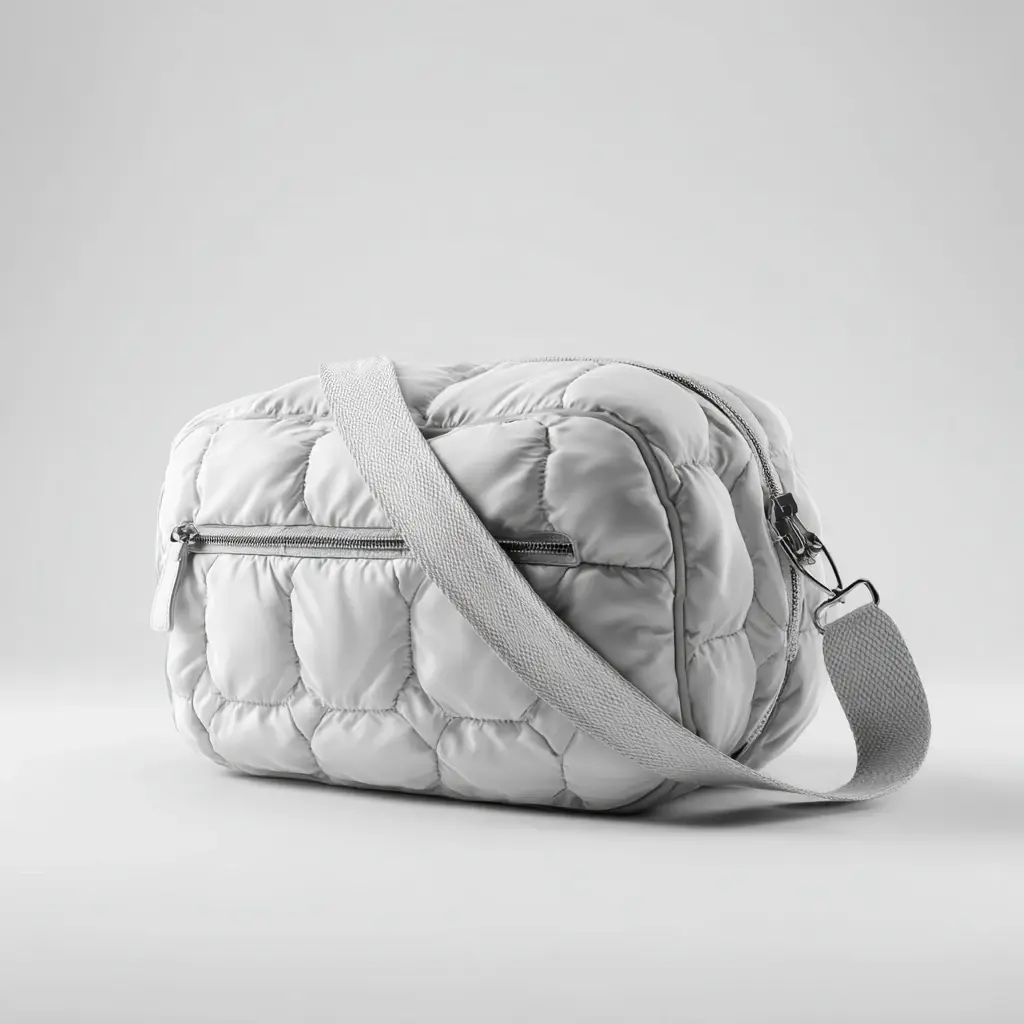
- What a Pattern Is, Physically Speaking
- The Fourteen Checks Before a Pattern Is Released
- Grain Direction Comes Before Geometry
- Seam Allowance and Skive: The Two Numbers That Decide Feel
- What the Pattern Must Say About Hardware
- How Yield Comes Out of the Same Outline
- Why the Second Pattern Is the One Worth Keeping
- Reading a Pattern Sheet as a Buyer
- Pattern Versus Render: The Comparison Table
- Five Questions to Ask Before the First Cut
- What a Pattern Costs and How Long It Takes
Why does a good pattern beat a render in handbag development? Because a render shows a silhouette without cost, sequence or tolerance, while a pattern answers three questions a drawing cannot: how many operations it takes to build, how much material the outline eats, and whether the panel edges meet after 500 pieces rather than one. A render is a picture of an intention; a pattern is a set of instructions that either works on a bench or does not, and that difference is what separates a design that survives quoting from one that survives nothing. Below is the fourteen-item check used before a pattern is released, written as things a buyer can ask to see rather than as talent nobody explains.
What the pattern settles that a render cannot
What a Pattern Is, Physically Speaking
In most pattern rooms the answer is a stack of 0.4-0.6 mm boards, one per panel, each with a name, a material reference, a quantity, a grain arrow, notches, drill holes and a note about any operation that will happen to it later. Some rooms add metal or aluminium templates for panels that repeat across seasons; more use digital pattern files cut on a plotter and then checked by hand against a physical board. Either way the object is the same: a shape plus instructions, at full size, that can be laid on material and traced.
Compare that with what a render contains. A render has a silhouette, some proportions, a colour block and a lighting assumption. It does not contain a seam allowance, a skive instruction, a stitch line, a sequence or a tolerance, because none of those are visible in a picture. A Copenhagen accessories label once sent eleven rendered views of a soft satchel and no dimensions at all; every one of the eleven questions that came back from the pattern room concerned things no render can show, starting with where the seam actually sits and how much of it will be visible from the front.
None of this makes rendering useless. Render cost per view sits in a useful place for the colour and proportion decisions at the front of a line, and there is a proper place for that work, described in 3D renders before physical samples. The point is narrower and more practical: the render decides which direction to go, and the pattern decides whether anybody can follow it at 500 pcs per style / colourway.
The Fourteen Checks Before a Pattern Is Released
Fourteen items, run in this order, each with the reason it exists. This is the checklist rather than a narrative, because a checklist is what you can hand to whoever is doing the work and then verify. Every item should be answerable from the pattern sheet itself without a conversation.
- Panel count and names. Every piece named and counted per bag, because the count drives both assembly time and the material calculation.
- Grain arrow on every panel. Without it, hide panels get rotated to save material and then stretch differently in wear.
- Notch depth and spacing. 3 mm notch depth at intervals of 80-120 mm keeps alignment through closing without weakening the edge.
- Seam allowance stated per seam, generally 10 mm and 12 mm on seams that carry load.
- Skive callouts at folds and turns, normally 0.6 mm at a clean fold and 0.8-1.0 mm where material turns a corner.
- Stitch line distance from the edge: 6 mm on visible seams, 8 mm wherever a strap or handle attaches.
- Hardware positions with drill or punch sizes, typically 3.5 mm holes for rivets and posts.
- Clearance from every hole to the nearest edge, at least 4 mm so that a loaded rivet cannot tear out.
- Interlining and reinforcement shapes included as their own panels, numbered and shown on the lay plan.
- Lining patterns cut separately and marked to the lining material, since linings are usually thinner and rarely share the outer outlines.
- A tolerance block, usually plus or minus 1.0 mm against the pattern outline and plus or minus 3 mm against quoted body dimensions.
- A grading rule where sizes differ, such as 15 mm additional body width and 6 mm additional strap drop per size step.
- A version number and date on every board, so the correct revision is the one being cut.
- An operation count or time estimate, derived from the panels, which is what the quotation is actually built on.
Grain Direction Comes Before Geometry
Hide is anisotropic: it stretches more across the backbone than along it, and a gusset cut across that direction will creep under load while its twin beside it does not. Coated canvas and synthetic material behave the same way for a different reason - warp and weft differ - and fabric trims do too. The grain arrow on each board is therefore not decoration; it is the difference between a bag that holds its shape after a season and one whose base has gone baggy.
- Straps and handles always run with the strongest direction, which is why webbing and rolled handles are specified by tensile behaviour rather than by look.
- Gussets and bases take the least stretch available, because they carry weight and determine whether the silhouette reads crisp.
- Matching gussets on one bag come from the same hide area, so that left and right stretch alike.
- Asking for rotation to save material should be a decision, not an accident, because it trades 2-4% of yield against visible sag.
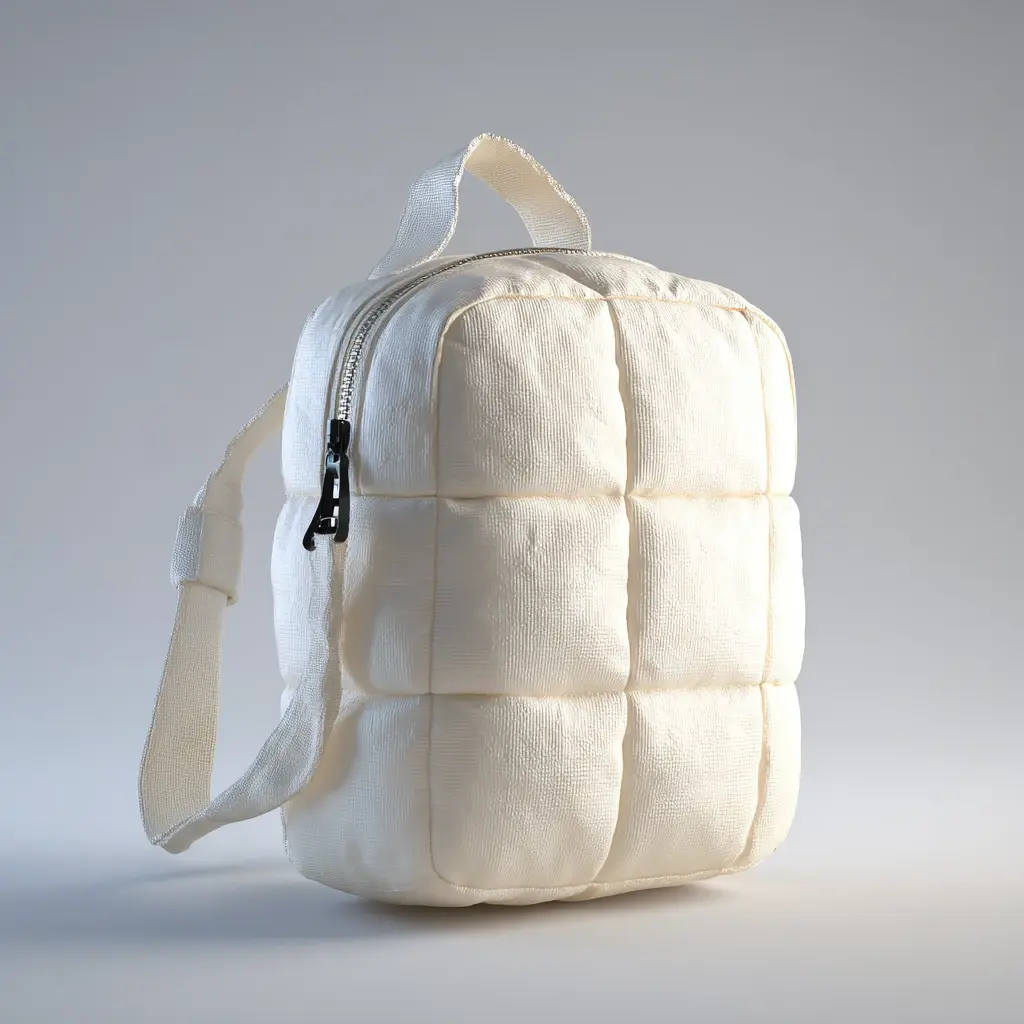
Seam Allowance and Skive: The Two Numbers That Decide Feel
Ask any experienced maker what separates a bag that looks expensive from one that merely looks expensive in a photograph, and the answer usually involves an edge. Too much material left inside a seam makes a bulky, reluctant fold; too little makes a weak one that opens under load. Two numbers control it. Seam allowance sets how much material is available to close and finish, typically 10 mm and raised to 12 mm at a load-bearing seam. Skiving sets how thin that material becomes at a fold, typically 0.6 mm, thicker at 0.8-1.0 mm where the material turns rather than folds.
| Position | Seam allowance | Stitch line from edge | Note |
|---|---|---|---|
| Side and base seams | 10 mm | 6 mm | The standard closing seam |
| Zip panels and welts | 10 mm on the welt, 12 mm on the panel | 6 mm | Keeps the tape from crowding the slider |
| Strap attachment | 12 mm plus a reinforcement box | 8 mm | The joint most likely to fail under load |
| Turned edge binding | Skive to 0.6 mm before folding | 3-4 mm on the topstitch | Thin entry equals a clean, flat edge |
| Corner turns on a gusset | Skive to 0.8-1.0 mm | 6 mm with a backstitch | Prevents the corner from tearing out |
| Magnetic or twist closure pad | Reinforcement panel 180-220 gsm | Hidden within the lining | Spreads the pull over the panel |
Both numbers affect cost as well. A smaller allowance saves nothing meaningful once Yield is calculated but does make closing slower, because there is less material to hold while stitching. A deeper skive takes an extra operation per panel. These are the kinds of trade-off a handbag programme specialist can price before the first cut, and they are invisible in any render ever made.
What the Pattern Must Say About Hardware
Hardware holes are stress concentrations, so the pattern has to state not just where they sit but how big the hole is, how far it is from the nearest edge, and what sits behind it. A rivet through thin leather with 2 mm of clearance will tear out; the same rivet with 4 mm behind it and a reinforcement panel spread underneath will not. The same logic applies to twist closures, magnetic catches and bag feet, all of which pull on the panel rather than merely decorating it.
- Name the hole size, commonly 3.5 mm for rivets and slightly larger for twist-lock posts, with the mating hardware reference beside it.
- State edge clearance of at least 4 mm, which is what keeps a loaded fastener from walking through the material.
- Add a hidden reinforcement panel under every closure and strap end, usually 180-220 gsm interlining or 0.8-1.2 mm foam.
- Mark which holes are punched before assembly and which after, because sequencing errors here produce misaligned front panels visible across a whole run.
Corrosion behaviour belongs in the same conversation. Plating measured in microns and tested for 24 hours to first corrosion under ASTM B117 salt spray is a specification; shiny gunmetal is an aspiration. Where a buyer sells into California, Proposition 65 applies to hardware and coated trim, and REACH Annex XVII restricts nickel release, so those references belong on the pattern sheet that goes with the material order rather than in an email later.
How Yield Comes Out of the Same Outline
Two patterns can trace an identical silhouette and differ by 15% in the amount of material consumed, purely by how panels are nested. Nesting is the arrangement of those boards onto a hide or a roll before cutting, and across lines of around 200,000 pcs per month across 7 production lines, a yield difference of that size is real money on every single order. This is why the pattern and the marker are reviewed together rather than separately: a pretty panel shape that nests badly is expensive for the life of the style.
- Aim for marker yield of 82-88% on a hide of 45-55 sq ft; below about 80% usually means the panel split needs rethinking rather than that the hide is smaller than usual.
- Split large panels where a seam already exists. Joining a gusset seam nobody sees can save 4-7% of material.
- Keep the lay direction-consistent, which costs a little yield and protects appearance.
- Price the waste explicitly: whoever carries offcuts should say so in writing before the first order is priced.
Why the Second Pattern Is the One Worth Keeping
First patterns are almost always slightly wrong in ways nobody predicted, because the first time a panel folds it reveals something about the material rather than about the drawing. The second pattern incorporates those discoveries, and it is the one that should be graded, versioned and retained. Retention is what makes the repeat cheaper: a stored board, its grading rules and the corrected marker are assets that remove most of the pattern work next season, alongside retained tooling for branding.
Version control is unglamorous and fails constantly. Every board needs a number and a date, old boards need to be withdrawn rather than left in a drawer, and one party needs to own the master file. Where the first pattern is kept and the second is treated as a working change, the third order eventually gets cut against whichever board was nearest to hand, and that is how a style that sold well comes back subtly different.
Reading a Pattern Sheet as a Buyer
Nobody expects a brand owner to operate a pattern plotter. But five things can be read off a sheet with no training at all, and asking for them changes the tone of a relationship immediately. Where the answer to any of them is vague, the version being developed is still a picture.
- Count the panels. More panels means more operations and usually more seam failure points; ask why each one exists.
- Find the grain arrow on every piece. If some are missing, ask whether those panels have been rotated for yield.
- Look for a tolerance block. No tolerance means no later argument can be settled objectively.
- Ask for the operation count. This is the number the labour portion of the quotation is built on, and it correlates with price far better than material weight does.
- Ask which direction the load-bearing panels are cut in. Behaviour under a sustained load is a function of material direction, not of how the drawing looked.
Pattern Versus Render: The Comparison Table
| Question | Render | Pattern |
|---|---|---|
| Does the silhouette read right? | Yes, minutes per view | Only after the first cut |
| How much material does it consume? | Not at all | Yield stated as 82-88% |
| How many operations does it take? | Not at all | 24-52, counted from the boards |
| Will panel edges meet after 500 units? | No evidence either way | Yes, once tolerances are set |
| Can it be graded to another size? | No | Yes, at 15 mm width per step |
| Can it be costed today? | No - only guessed | Yes, from operations and yield |
The practical reading of that table is a sequence rather than a verdict. Use renders to choose between directions while they are cheap, then convert the winner into a pattern before spending anything on samples, because the pattern is the first artefact in the process that can be costed. Everything downstream - sampling at 6-10 working days, the bulk run at 35-50 days, and final inspection at AQL 2.5 under ISO 2859-1 - is administered against the pattern rather than against the picture. The full development sequence is set out in the process reference, and the tech pack build order covers what documents travel with the boards.
Five Questions to Ask Before the First Cut
Ask these at brief stage, in writing, and judge the answers on whether they contain numbers. A partner running a real process answers all five in one email; one that answers by describing its enthusiasm is describing a picture. A clear answer here also tells you what the first sample will be able to prove, which is the subject of the prototype versus pre-production comparison.
- How many panels and operations does this silhouette take? Expect a number, not a category; 24-52 is the usual band for a structured bag.
- What yield does the marker achieve, in percent? Below roughly 80% invites a redesign of the panel split rather than a surcharge.
- Where are the seam allowances and skives, stated numerically? Look for 10 mm and 12 mm, and 0.6 mm at folds.
- What is the tolerance on body dimensions and on panels themselves? Typically plus or minus 3 mm and plus or minus 1.0 mm respectively.
- How will this pattern be versioned and retained for the repeat? A stored board plus retained tooling removes sampling altogether on an unchanged rerun.
What a Pattern Costs and How Long It Takes
Pattern work is the first money a proprietary silhouette spends, and it is usually quoted inside a development charge rather than as its own line. Split out, a first pattern for a conventional panel bag takes 2-4 working days and costs USD 60-180; each revision adds 1-2 days and a smaller charge; grading a second size adds a day and USD 30-60 per step; and cutting dies, where a style will repeat, run USD 120-260 per panel set. Digital files change the storage cost, not the bench time.
| Item | Working days | Charge | Retained? |
|---|---|---|---|
| First pattern, conventional panel bag | 2-4 | USD 60-180 | Yes, versioned |
| Revision after the first cut | 1-2 | USD 25-70 | Yes |
| Grading, per additional size | 1 | USD 30-60 | Yes, with the grading rule |
| Cutting dies, per panel set | 3-6 | USD 120-260 | Yes, against the style reference |
| Digitising boards to file | 1 | USD 15-40 | Yes, alongside the boards |
The charges are worth paying separately from the sample fee, because they are the assets that make a repeat cheap. A programme holding a versioned second-revision pattern, its grading rule and its dies can skip pattern work entirely on an unchanged rerun, which removes 2-4 working days before the sampling window even opens. The tech pack build order covers what travels with the boards.
Turn your render into something that can be costed
Send the render, the target dimensions and the material direction. A private label coordinator will return a panel and operation count, a yield estimate, seam and skive specifications, and a quote with sampling at 6-10 working days and bulk at 35-50 days, FOB Xiamen. Get a quote.
Frequently Asked Questions
Why does a pattern matter more than a render for a handbag?
Because a pattern is the first artefact that can be costed, toleranced and repeated, whereas a render only shows how something might look. The pattern defines how many operations the bag takes, how much material the outline consumes, and whether edges still meet on unit 500. Everything downstream, from sampling through to final inspection, is administered against the pattern rather than the picture.
What thickness of card is used for handbag patterns?
Most rooms work on 0.4-0.6 mm pattern board, sometimes PVC-backed for durability, with metal or laminated templates for panels that repeat season after season. What matters more than the board itself is that every panel carries a name, quantity, grain arrow, seam allowance note and version date.
How deep should pattern notches be and how far apart?
Three millimetres deep at intervals of 80-120 mm is a common working figure. Notches exist to keep long seams aligned through closing, so spacing them too widely lets panels drift, while cutting them too deep weakens the very edge they are meant to protect. Short seams can be assembled without them.
What seam allowance should be specified on a structured bag?
Ten millimetres as standard and twelve millimetres on seams carrying load, such as strap attachments, base gussets and handle joins. Stitch lines then sit 6 mm from a visible edge and 8 mm at a stress point. Reducing the allowance rarely saves material once yield is calculated and does make closing slower and less accurate.
What does skiving do and how thin should it be?
Skiving thins material locally so a fold sits flat instead of bulky. Zero-point-six millimetres is typical at a clean fold such as a turned edge, and 0.8-1.0 millimetres where material turns a corner and needs some body left in it. The operation adds time per panel and is one reason two similar bags cost differently.
Why is grain direction critical when cutting hide panels?
Hide stretches differently across the backbone than along it, so two panels cut from the same skin can behave completely differently under load. Running straps and gussets in the low-stretch direction keeps a silhouette crisp; cutting them across it produces a bag that looks the same on day one and sags by autumn.
How much clearance should a rivet hole have from a panel edge?
At least four millimetres, usually around a 3.5 mm hole for rivets and posts, with a hidden reinforcement panel behind it spread over the panel. Below that clearance, a loaded fastener gradually tears toward the nearest edge, which is one of the commonest field failures reported after several months of real use.
What is marker yield and what percentage is realistic?
Yield is the proportion of the hide or roll that ends up as usable panels once the boards are nested, and 82-88% on a hide of 45-55 square feet is the normal working range. Sustained results below about 80% usually indicate that the panel split needs redesigning rather than that the hides were smaller than usual.
Can a render be used instead of a tech pack when asking for a quote?
Only for a rough indication. A quotation needs panel count, materials with weights, hardware references and an operations count, none of which exist in a picture. Sending eleven rendered views and no dimensions reliably produces eleven questions back, and each answer waited for delays the sampling window by several days.
How does grading work when a style comes in more than one size?
Each size step adjusts body width by around 15 millimetres and strap drop by around 6 millimetres, applied consistently to every panel plus its lining and reinforcement boards. Without a written grading rule, graders improvise per size, and the second size silently becomes a slightly different bag from the one that was approved.
Who keeps the pattern after the first order?
The retained second-revision boards, their grading rules and the corrected marker should be held against your reference along with any tooling you paid for. Retention is what removes most of the pattern work on a repeat order and lets an unchanged rerun skip sampling entirely rather than starting again from the drawing.
People Also Ask
Is a digital pattern file as good as a physical board?
A file is better for storage, grading and transmission, but it does not validate itself. Most rooms plot the result and check it on the bench against a physical board before cutting anything, which is why the physical check survives even where software handles the grading.
Should 3D renders come before or after pattern development?
Before, and then stop. Renders are cheapest when several directions are still open and expensive once a decision has been made, because the useful conversation moves from pictures to operations, yield and tolerance at exactly that point.
Why do two quotations differ so much on the same drawing?
Usually because the operations count and the yield assumption differ. Two partners looking at one render may imagine different constructions, different seam allowances and different linings, which is precisely why asking for those numbers in writing narrows the gap faster than negotiating the total.
How often should unit patterns be reviewed?
At every repeat, even when nothing appears to have changed. Material substitutions happen quietly, hides come from different tanneries, and a board that has not been checked against a current sample eventually produces a bag that no longer matches the approved reference.
Sources and further reading
Every figure on this page is either our own programme data or attributed below. Open the originals before you write them into a specification.
- SATRA — technical services for leather, footwear and accessoriesSATRA Independent leather, hardware and accessories testing protocols.
- Incoterms rulesICC The rules that decide where cost, risk and insurance transfer.
- Accessories Council — accessories industry bodyAccessories Council Accessories industry body tracking handbag category direction.