Sling Bags: Compact Carrying for Gen Z and Alpha Buyers
Sling bags convert with Gen Z and Alpha buyers when three numbers are right: body volume under 3.5 litres, strap adjustment from 70 to 130 cm, and a phone pocket that is specified in millimetres rather than described in marketing copy. A 1,200-piece programme split across two colourways costs about USD 7.80 per unit FOB Xiamen at 0.8 mm full-grain and a 150D recycled lining, samples in 6-10 working days and bulk in 35-50 days. The eleven-week timeline below is the one that actually decides whether the drop lands.
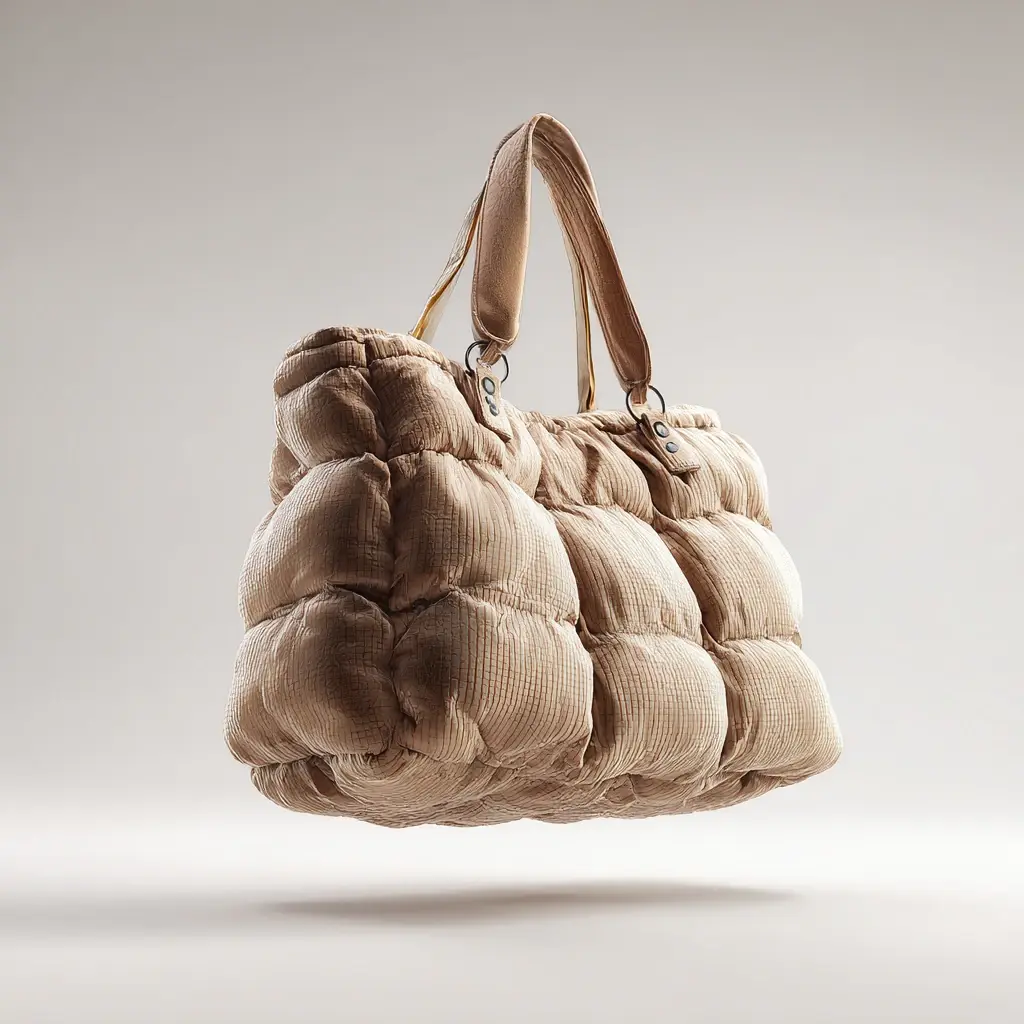
- The Rotterdam order: 1,200 pieces, two colourways, eleven weeks
- What the brief said and what was missing
- The body panel sets the price, not the strap
- 3.5 litres is the ceiling for this buyer
- Hardware is where younger buyers read quality
- The phone pocket is a specification, not a feature
- A colour drop beats a colour range
- Where the 1,200 pieces got split, and why
- How the eleven weeks were actually spent
- What the reorder looked like
Sling bags convert with Gen Z and Alpha buyers when three numbers are right: body volume under 3.5 litres, strap adjustment from 70 to 130 cm, and a phone pocket that is specified in millimetres rather than described in marketing copy. A 1,200-piece programme split across two colourways costs about USD 7.80 per unit FOB Xiamen at 0.8 mm full-grain and a 150D recycled lining, samples in 6-10 working days and bulk in 35-50 days. The eleven-week timeline below is the one that actually decides whether the drop lands.
The order in numbers
The Rotterdam order: 1,200 pieces, two colourways, eleven weeks
In March a streetwear label in Rotterdam asked for a compact sling that could retail at EUR 59 and still leave room for a second drop before summer. The order was 1,200 pieces, split 700 in black and 500 in a washed olive, on a budget of USD 8.40 per unit landed before duty. The deadline was a festival activation eleven weeks out. The first quotation came back at USD 9.65, which was over budget, and the gap was closed not by negotiating the rate but by changing three specifications that the buyer had assumed were fixed.
The three changes were the leather substance, the zipper grade and the strap construction. Dropping the body from 1.0 mm to 0.8 mm full-grain saved 0.55 USD and made the bag slouch the way the customer wanted anyway. Moving from a metal zipper to a number 5 nylon coil saved 0.70 USD and removed 80 grams. Replacing a padded leather strap with a 25 mm webbing strap saved 0.60 USD and, critically, made the 70 to 130 cm adjustment range possible at all, because leather does not slide through a cam buckle the way webbing does.
Final cost landed at USD 7.80 FOB Xiamen, which was 0.60 USD under budget and gave the label room to add a woven label and a recycled hangtag without moving the retail price. The goods shipped in week ten of eleven and the activation went ahead. What follows are the rules that came out of that order, and they have held across every compact sling programme since.
What the brief said and what was missing
The original brief ran to four paragraphs and was entirely about aesthetics: washed leather, matte black hardware, a shape that reads technical rather than heritage. None of that was wrong, but none of it was quotable. A production partner cannot price a mood, and the first round of sampling is always consumed by the questions the brief did not answer. The gaps here were typical and worth listing, because the same four gaps appear in almost every compact bag brief.
- No target volume. The buyer knew the look and had not decided what the bag had to hold, which drives every dimension.
- No strap range. 'Adjustable' is not a specification; 70 to 130 cm is, and it decides the hardware and the webbing length.
- No phone pocket dimension. A pocket that fits a 6.1-inch phone does not fit a 6.9-inch one with a case on it.
- No compliance target. The bag was heading for the European Union, so REACH Annex XVII documentation was required and had not been requested.
Filling those four gaps took one email and removed two full sampling rounds from the calendar. That is the single highest-value hour in any compact bag programme, and it happens before any leather is cut. A handbag programme specialist will always ask these questions; the buyer who answers them first gets a quotation in two days instead of two weeks.
The body panel sets the price, not the strap
The intuition on a sling bag is that the strap is the expensive part, because it is the part the buyer notices. The arithmetic says otherwise. On this build the body panel accounted for 3.40 USD of the 7.80, hardware 1.10, the strap 0.95, lining and packing 0.95, and overhead and inspection 1.40. The body costs the most because it is the largest single piece of leather in the bag and because a curved front panel cuts poorly from a rectangular hide.
| Cost line | Per unit (USD) | Main variable |
|---|---|---|
| Body panel and gusset | 3.40 | Leather substance, panel shape, yield |
| Hardware | 1.10 | Buckle type, zipper grade, plating class |
| Strap | 0.95 | 25 mm webbing versus padded leather |
| Lining and packing | 0.95 | 150D recycled lining, carton count |
| Overhead and inspection | 1.40 | AQL 2.5 level, documentation package |
The practical consequence is that substance is the fastest lever on unit cost and the safest one to pull. At 0.8 mm the bag slouches, folds flat for shipping and weighs 285 grams. At 1.2 mm it stands on its own, looks more expensive in a photograph and weighs 410 grams, but a sling that stands up is not what this customer wants, so the extra leather is paying for a property nobody asked for.
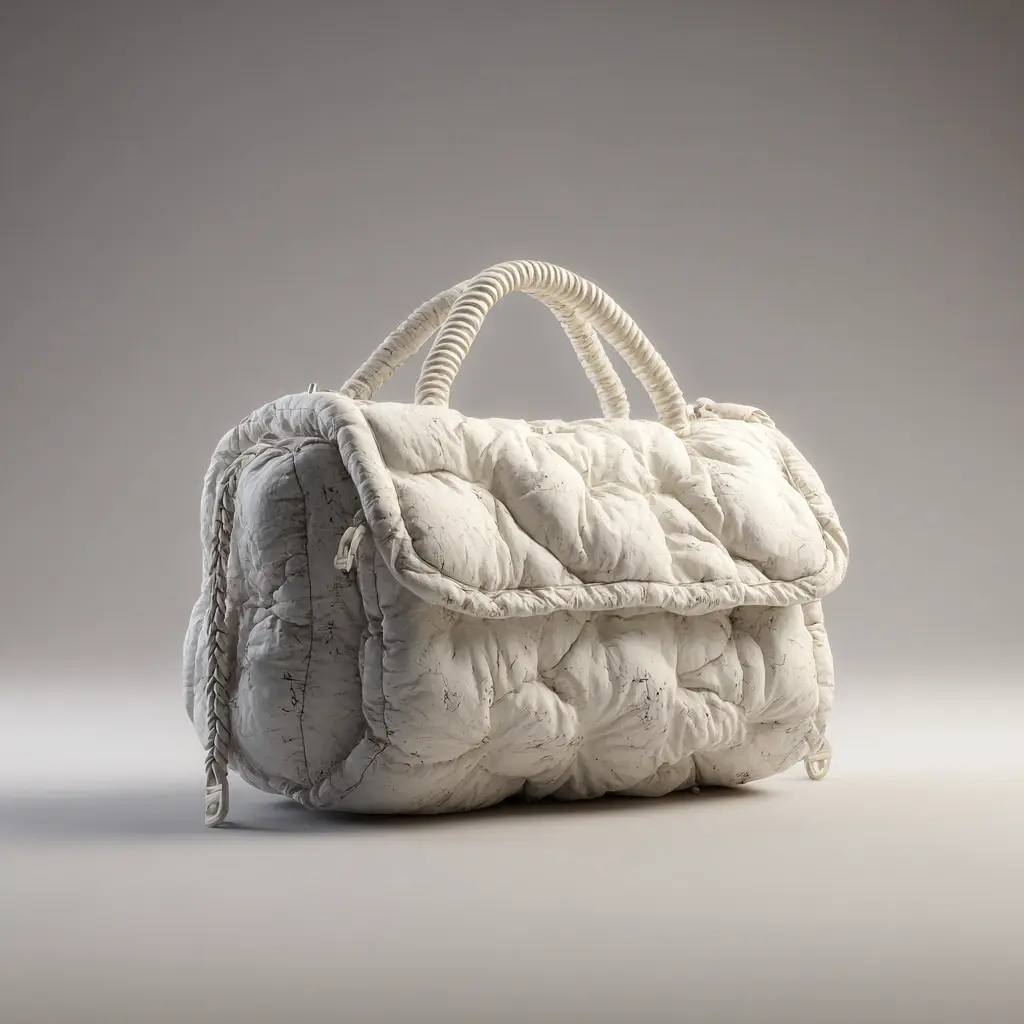
3.5 litres is the ceiling for this buyer
Gen Z and Alpha buyers do not want a small bag that can be made big; they want a small bag that is honestly small. The volume ceiling that keeps a sling reading as a sling rather than as a small backpack is about 3.5 litres, which in flat dimensions is roughly 26 cm high, 17 cm wide and 8 cm deep. Above that the bag starts to bounce against the back when the wearer walks, and the bouncing is the complaint that ends up in reviews.
- 26 x 17 x 8 cm, about 3.5 litres: the maximum that still reads as a sling and clears a large phone, a small leather goods case and a 500 ml bottle.
- 22 x 15 x 6 cm, about 2 litres: the festival and evening size, sells at a lower ticket but converts faster online.
- 30 x 19 x 10 cm, about 5.5 litres: technically a small backpack, and returns rise sharply once the wearer starts moving quickly.
There is a second reason to hold the line at 3.5 litres, and it is freight rather than ergonomics. A 2-litre sling packs 36 pieces to a carton and a 5.5-litre version packs 18, which nearly doubles the per-unit freight cost on an already thin margin. For a bag retailing at EUR 59, that difference is the whole of the second drop's marketing budget.
Hardware is where younger buyers read quality
Leather is judged by touch and hardware is judged by sound and weight, and the second judgement happens every time the bag is opened. This is the one place in a compact build where spending more pays back visibly. On this order the buyer held the matte black hardware brief and spent the savings from the leather and the strap on a better buckle, and it was the right trade. A cam buckle that slips under load is remembered far longer than leather that is 0.2 mm thinner than it could have been.
The specification worth writing into the tech pack is a 25 mm cam buckle in a matte black finish tested to 48 hours of salt spray, a number 5 nylon coil zipper tested to 5,000 open and close cycles, and a pull test at 2,500 grams on the strap attachment bar. Those are ordinary, achievable numbers, and they are the difference between a bag that survives a summer and one that comes back in September. Choosing hardware by finish name alone, which is how most briefs are written, leaves all three of them to chance.
The phone pocket is a specification, not a feature
If a sling bag fails for this customer, it fails because the phone does not fit. That is not a design opinion, it is the single most common one-star review in the category, and it is entirely preventable with two measurements. The pocket needs a clear internal width of at least 82 mm and a clear height of at least 165 mm to take a 6.9-inch phone in a case, and it needs to sit on the body panel rather than on the gusset so the phone lies flat against the back.
- Measure the largest phone in the target market with a case on it, then add 4 mm of clearance in both directions.
- Put the pocket on the back panel so the phone sits flat, not on the gusset where it presses into the wearer's side.
- Use a stretch mesh or a 150D lining panel rather than leather, because leather pockets stretch permanently and then the phone falls out.
- Add a 15 mm lip above the pocket opening so the phone cannot walk out when the wearer sits down.
The same logic applies to hardware and closure choices on compact shapes, where the decision is less about which closure looks best and more about which one can be opened one-handed while the wearer is walking. A zipper that needs two hands is a zipper that gets left open, and an open sling on a crowded street is a security complaint waiting to happen.
A colour drop beats a colour range
The instinct of a new label is to launch six colours and see which one wins. The economics say the opposite. Every colourway carries the 500-piece floor, so six colours is a 3,000-piece commitment on an unproven shape. The pattern that works is a drop: one colour in a first order of 500, a second colour added at reorder once the first has proven itself, and a third only when monthly sell-through justifies it.
The Rotterdam order was already past that point, which is why two colourways at 700 and 500 made sense. The split was deliberately uneven: black carries the volume and the olive carries the story. A 50/50 split looks fair on a spreadsheet and leaves the label with 250 unsold bags of the colour that was always going to be the slower one. Colour decisions like this belong with matching silhouettes to customer profiles, because the customer decides which colour is the story and which is the volume.
Where the 1,200 pieces got split, and why
Two colourways at 700 and 500 is not the same product twice. The black run used a standard finish and shipped on the standard 35-50 day cycle. The olive run used a washed finish that adds two operations and pushes bulk to the long end of that range, which is why the buyer dropped it to 500 pieces rather than splitting evenly. Washed and tumbled finishes look exceptional and behave unpredictably: the colour shifts between panels, and the tolerance that holds on a standard finish does not hold on a washed one.
| Colourway | Quantity | Finish | Effect on cost and timing |
|---|---|---|---|
| Black | 700 | Standard aniline | Baseline cost, production 35-50 days |
| Washed olive | 500 | Tumbled and washed | Adds 0.45 USD, production 35-50 days |
| Accent (planned) | 500 | Standard, second drop | Reuses pattern and photography |
How the eleven weeks were actually spent
Ask a buyer where the time goes and the answer is usually production. On this order production was 41 days of the 77, and the rest went on decisions made before and after the sewing. That distribution is typical and it is the reason the timeline is worth writing down before the order is placed rather than discovered halfway through.
- Week 1: tech pack completed, all four specification gaps closed, quotation issued.
- Weeks 2 to 3: sampling at 6-10 working days, plus courier time and a 48-hour review window.
- Week 4: sample revision, colour approval under a D65 light source, compliance documents requested.
- Weeks 5 to 10: bulk production at 41 days, including cutting, closing, lining and packing.
- Week 10: inspection at AQL 2.5 (ISO 2859-1), carton packing and container booking.
- Week 11: buffer, which is the week that disappears first when any earlier step slips.
The buffer week is the honest lesson. It existed, it was consumed by a late decision on the hangtag artwork, and the shipment still made the activation with three days to spare. Programmes that plan eleven weeks of work into eleven weeks of calendar always slip, because something in week 4 always takes two weeks instead of one.
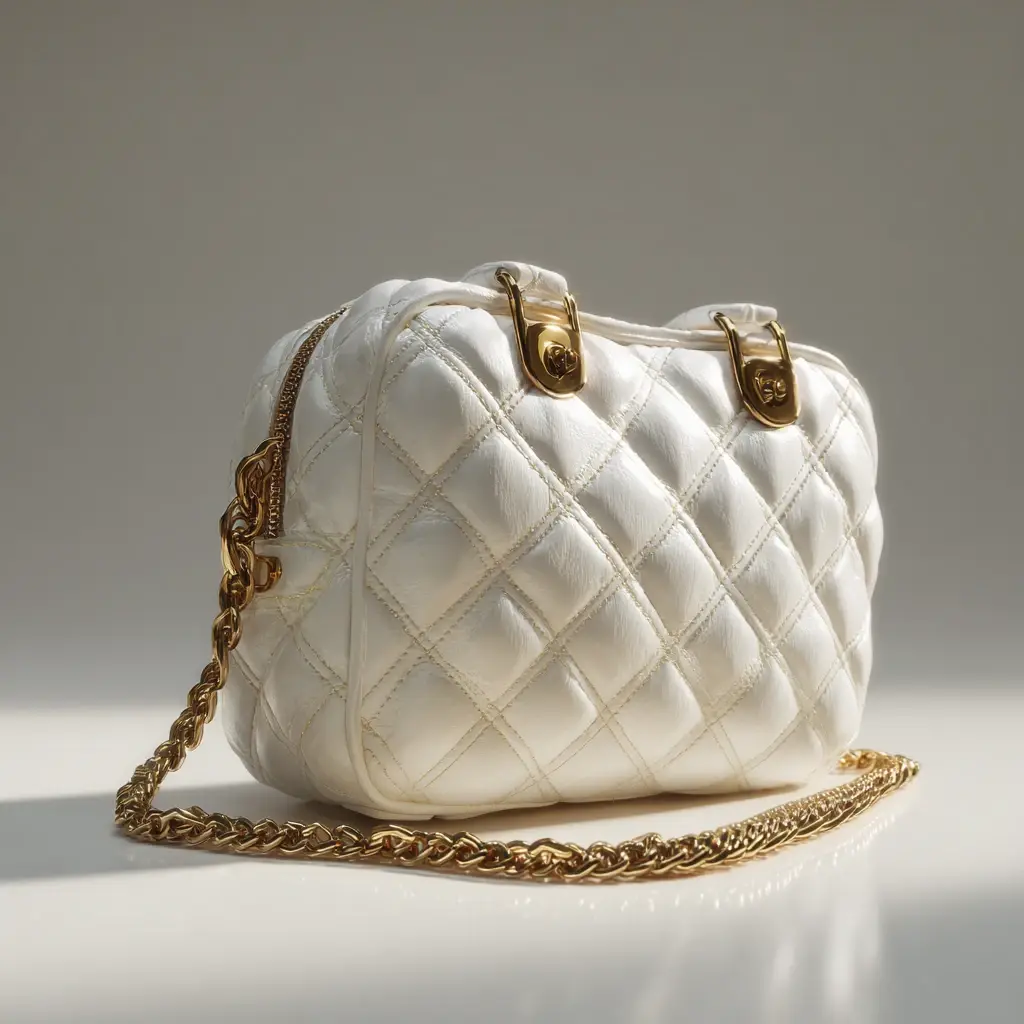
What the reorder looked like
The second drop was 900 pieces in a single new colour, placed six weeks after the first landed. Because the pattern, the tooling and the photography already existed, sampling was skipped entirely and the order went straight to production 35-50 days. That is the real argument for building a compact sling around one proven shape: the second order is cheaper, faster and lower risk than the first, and the third is cheaper again.
Two things changed on the reorder and they are worth noting. The lining moved to a GRS-certified 150D recycled polyester, which cost 0.12 USD more and allowed a recycled-content claim on the product page that the customer base responds to. And the phone pocket grew by 3 mm, because the first run had been specified for a 6.1-inch phone and the market had moved to 6.7-inch devices inside a single season. Specifications on compact bags have a shorter shelf life than anyone expects.
For brands deciding whether this shape belongs in the range at all, the leather handbag sourcing programme view is that a sling is a volume and frequency product rather than a margin product: the ticket is lower than a tote, the reorder cycle is shorter, and the customer who buys one buys a second in a different colour within the year. Compact shapes also explain part of why crossbody formats lead online handbag sales, and the two categories feed the same cart.
Compliance on this build was straightforward but not optional. A REACH Annex XVII declaration covered the European Union, CPSIA documentation covered the United States marketplace listing, and the GRS transaction certificate covered the recycled lining claim. Audited social compliance through BSCI or Sedex is requested by most chain retailers at onboarding, and the audit reference belongs in the quotation file rather than in a later scramble. Reports from Sourcing Journal and data cited by the Accessories Council both point the same way on compact formats: the growth is in frequency of purchase, not in ticket size.
Bring the four specification gaps closed - volume, strap range, phone pocket dimension and compliance target - and a compact sling quotation comes back on FOB Xiamen terms with sampling at 6-10 working days. Our validated partner factory Quanzhou Yingming Bags has run export programmes since 2014 across seven production lines at about 200,000 pcs per month, released at AQL 2.5 (ISO 2859-1). Get a quote at /contact-quote/.
Frequently Asked Questions
What size should a sling bag be for Gen Z buyers?
Aim for 26 x 17 x 8 cm, about 3.5 litres. That clears a large phone, a small leather goods case and a 500 ml bottle without the bag bouncing against the back when the wearer walks. Larger volumes start to read as a compact backpack, and returns rise once the wearer starts moving quickly with the bag loaded.
How much does a 1,200-piece sling bag order cost?
Around USD 7.80 per unit FOB Xiamen for a 0.8 mm full-grain body with a 150D recycled lining and webbing strap. The split is roughly 3.40 for the body, 1.10 for hardware, 0.95 for the strap, 0.95 for lining and packing, and 1.40 for overhead and inspection at AQL 2.5.
What is the minimum order quantity for sling bags?
The working minimum is 500 pcs per style and colourway. A first order is usually one colourway at 500 pieces; two colourways means 1,000 pieces. The Rotterdam case ran 1,200 split 700 and 500, which is a reasonable step once the shape has already proven sell-through in a first drop.
How long does sling bag sampling take?
Sampling takes 6 to 10 working days for a standard build, and 12 to 15 working days for complex versions such as tumbled or washed finishes. Courier time and the buyer's review window sit on top of that, so the sampling step realistically occupies two to three calendar weeks rather than one.
Why is the phone pocket specified in millimetres?
Because it is the most common cause of one-star reviews in the category. A pocket needs at least 82 mm of clear internal width and 165 mm of clear height to take a 6.9-inch phone in a case. Describing it as a phone pocket in a brief leaves the dimension to chance, and phones grow every season.
Should a sling bag use a webbing or leather strap?
Webbing, at 25 mm, is the better choice for a compact sling. It costs about 0.60 USD less than a padded leather strap, it is 40 grams lighter, and crucially it slides through a cam buckle so the 70 to 130 cm adjustment range works. Leather does not slide cleanly through the same hardware.
What hardware specification suits a compact sling bag?
Specify a 25 mm cam buckle in the chosen finish tested to 48 hours of salt spray, a number 5 nylon coil zipper tested to 5,000 open and close cycles, and a pull test at 2,500 grams on the strap attachment bar. Write these into the tech pack rather than naming a finish alone.
How many colourways should a sling bag launch with?
One. Every colourway carries the 500-piece floor, so six colours is a 3,000-piece commitment on an unproven shape. Launch a single colour at 500 pieces, add the second at reorder once sell-through is proven, and treat the third as a decision for the following season.
Does a washed or tumbled finish change the production plan?
Yes. It adds two operations and about 0.45 USD per unit, and it pushes bulk to the 45-50 day end of the range. Colour also shifts between panels on washed finishes, so the tolerance agreed for a standard aniline finish will not hold. Plan a smaller quantity in the washed colourway.
What compliance documents does a sling bag need for the EU and US?
For the European Union, a REACH Annex XVII declaration covering restricted substances. For United States marketplace listings, CPSIA documentation. A GRS transaction certificate is needed only when a recycled-content claim is made on the lining or body. BSCI or Sedex audit references are requested by chain retailers at onboarding.
How is a compact sling inspected before shipment?
At AQL 2.5 under ISO 2859-1, which sets sample size and acceptable defect count for the lot. Checks cover panel alignment, phone pocket dimensions, zipper cycling, buckle function, strap attachment pull tested to 2,500 grams, and colour verified under a D65 light source against the approved reference.
People Also Ask
Are sling bags still popular in 2026?
Yes, and the growth is in purchase frequency rather than ticket size. Compact hands-free formats suit phone-first, transit-based routines, and the same customer tends to buy a second colour within the year rather than trading up to a larger bag.
What is the difference between a sling bag and a crossbody?
A sling is worn high on the back with a short adjustment range and a body built around a phone; a crossbody sits at the hip with a longer strap and is built around a small leather goods case. The overlap is real, but the wear position drives different dimensions.
How much should a sling bag weigh?
About 285 grams for a 0.8 mm leather body with a webbing strap. Moving to 1.2 mm leather and a padded strap takes it to around 410 grams, which is noticeable on a bag worn against the back for a full day.
Can a sling bag be made with recycled materials?
Yes. A GRS-certified 150D recycled polyester lining is the common route and costs about 0.12 USD more than standard. Recycled webbing is also available in 25 mm widths and matches the standard webbing specification for strength and hand feel.
Sources and further reading
Every figure on this page is either our own programme data or attributed below. Open the originals before you write them into a specification.
- REACH — chemical substances regulationEuropean Commission Annex XVII restricts the substances that may appear in finished leather and coatings.
- Leather Working Group — environmental auditing for tanneriesLeather Working Group Environmental audit protocol for tanneries and leather traceability.
- SATRA — technical services for leather, footwear and accessoriesSATRA Independent leather, hardware and accessories testing protocols.