Private Label Handbags vs Licensed Brand Bags: Which Wins for Margin
Which wins for margin, private label handbags or licensed brand bags? Private label, and by a wide margin on the same bag: a 3.1x markup against about 2.2x, because the licence adds a royalty in the high single digits to low teens as a share of wholesale, an annual minimum guarantee and 8-12 weeks of approval to a calendar that private label closes in 6-10 working days of sampling and 35-50 days of bulk. MOQ 500 pcs per style / colourway is the commitment on one side and a minimum guarantee on the other, and they are not the same kind of risk. The seven questions below settle it for a particular business, because the answer genuinely differs for a brand with traffic and a brand without it.
- Question One: Who Decides What the Bag Looks Like?
- Question Two: What Does Each Route Cost Per Unit?
- Question Three: Who Owns the Design at the End of It?
- Question Four: How Long Does Approval Take?
- Question Five: What Happens to Your Margin at the Till?
- Question Six: What Do You Do With Slow Sellers?
- Question Seven: Which Route Scales Better in Year Three?
- The Margin Arithmetic, Side by Side
- What a Licence Buys That Private Label Does Not
- Which Route Wins, and for Whom
- The Contract Terms Sitting Behind the Royalty
- Three Years of Cash, Both Routes, Side by Side
- The End of the Term: Sell-Off, Stock and the Tail
Which wins for margin, private label handbags or licensed brand bags? Private label, and by a wide margin on the same bag: a 3.1x markup against about 2.2x, because the licence adds a royalty in the high single digits to low teens as a share of wholesale, an annual minimum guarantee and 8-12 weeks of approval to a calendar that private label closes in 6-10 working days of sampling and 35-50 days of bulk. MOQ 500 pcs per style / colourway is the commitment on one side and a minimum guarantee on the other, and they are not the same kind of risk. The seven questions below settle it for a particular business, because the answer genuinely differs for a brand with traffic and a brand without it.
Two routes, six shared parameters
Question One: Who Decides What the Bag Looks Like?
On a private label programme you decide: the silhouette, the material, the thickness, the colour, the hardware finish, the branding position and the packaging. On a licensed programme you propose all of those and the licensor approves them, usually through a submission process with a written product brief attached to the contract. The difference is not aesthetic, it is commercial. A private label brand can change a strap drop because it sold better at 26 cm; a licensee changes it by submitting a revision and waiting.
Question Two: What Does Each Route Cost Per Unit?
The bag itself costs roughly the same either way, because it is made the same way from the same materials and inspected to the same standard. The difference sits above the unit price. A private label buyer pays a unit price that is FOB Xiamen and one-off tooling. A licensee pays the same unit price plus a royalty on the wholesale price, plus a minimum guarantee against that royalty, and often a contribution to the licensor's marketing. The table separates the two, and the answer to which is cheaper depends entirely on whether the licence sells more units at the same price.
| Cost line | Private label | Licensed brand |
|---|---|---|
| Unit price FOB | Yes | Yes |
| One-off tooling | Yes, amortised over the quantity | Yes, amortised over the quantity |
| Royalty on wholesale | No | High single digits to low teens per cent |
| Annual minimum guarantee | No | Yes, paid whether or not it sells |
| Approval and submission costs | No | Yes, in time and in samples |
| Marketing contribution | Optional, yours to set | Usually contractual |
Question Three: Who Owns the Design at the End of It?
This is the question that decides it for most brands, and the answer is asymmetric. A private label buyer owns the brand, the artwork, the logo tooling and the packaging, and shares the underlying pattern. A licensee owns none of the brand equity being built: when the term ends, the goodwill that the range created belongs to the name on the bag, not to the company that paid for the development. A licence of typically 24 months leaves a business with more experience and no asset, while the same 24 months in private label leaves a brand with a name worth something.
Question Four: How Long Does Approval Take?
Private label closes the development question in 6-10 working days of sampling, or 12-15 for a framed, hand-woven or stacked construction. A licensed submission typically runs 8-12 weeks from the first submission to a signed approval, because it passes through several people and each one can return it. That difference compounds: a private label brand can put three silhouettes through development in the time a licensee gets one approved, and the licensee's 35-50 day bulk window starts later in the calendar for the same launch date.
What Is a Minimum Guarantee?
The sum the licensee pays the licensor for the year whether or not the goods sell, credited against the royalty earned on actual sales. It is the reason a licence is a fixed cost rather than a variable one, and it is the number that decides whether the deal works: it is paid in advance, it is not refundable, and a shortfall is a cash loss rather than a margin reduction. A private label commitment is different in kind, because 500 pieces of a bag is inventory that can be sold, discounted or held, while an unearned guarantee is money spent on a right that expired.
Question Five: What Happens to Your Margin at the Till?
The arithmetic is unfashionable but it is the whole point of the comparison. On a bag with the same landed cost, private label supports a markup around 3.1x because there is no royalty above it, while a licensed version of the same bag supports about 2.2x once the royalty and the marketing contribution are inside the retail price. The licensed bag may sell faster at the same ticket, and if it does, the lower multiple can still produce more contribution per month. The table is the honest version of that trade.
| Line | Private label | Licensed brand |
|---|---|---|
| Landed cost per unit | 100 index | 100 index |
| Royalty and contributions | 0 | 12-18 index |
| Retail price | 310 | 310 |
| Multiple on landed cost | 3.1x | 2.2x effective |
| Contribution per unit | Highest | Lower |
| Units needed for the same contribution | Fewer | More |
Question Six: What Do You Do With Slow Sellers?
A private label brand discounts them, bundles them, moves them to an outlet channel or holds them for next season, and the only cost is the margin it gives away. A licensee often cannot do any of those things, because most licence contracts restrict where the goods may be sold and at what price, and a discounted licensed bag damages the name on it. Slow-moving licensed stock is therefore the worst kind of inventory: it cannot be moved through the channels that would move it, and it is still occupying the cash that the minimum guarantee has already taken.
Question Seven: Which Route Scales Better in Year Three?
Private label, for a reason that is structural rather than financial. A private label brand in year three has a name of its own, a customer list, a known pattern library and tooling it owns, and it can add a silhouette for the cost of a sampling round and a dye lot. A licensee in year three is negotiating a renewal against its own sales data, with the licensor holding the leverage that a brand name always holds. The business that scales is the one whose asset grows with it, and only one of the two routes produces an asset.
What Happens to the Tooling at the End of a Licence?
Whatever the contract says, which is why it has to say something. An embossing die, a woven-label setup and a hardware mould are physical assets, and without a clause they default to whoever is holding them. That is the one piece of a licensed programme that can be carried into a private label line afterwards, and it is worth securing before the term ends rather than negotiating for afterwards.
What the licence gives back during the term is real, and it is worth pricing rather than dismissing. Two years of a recognised name on a bag reaches customers a new brand cannot afford to reach, and the discipline of running a licensed range — the submission process, the compliance documentation, the retail requirements — is a genuine education. Those benefits belong to the term and not to the business afterwards, and they are worth roughly what a marketing budget would otherwise pay for them, which is the number to set against the royalty.
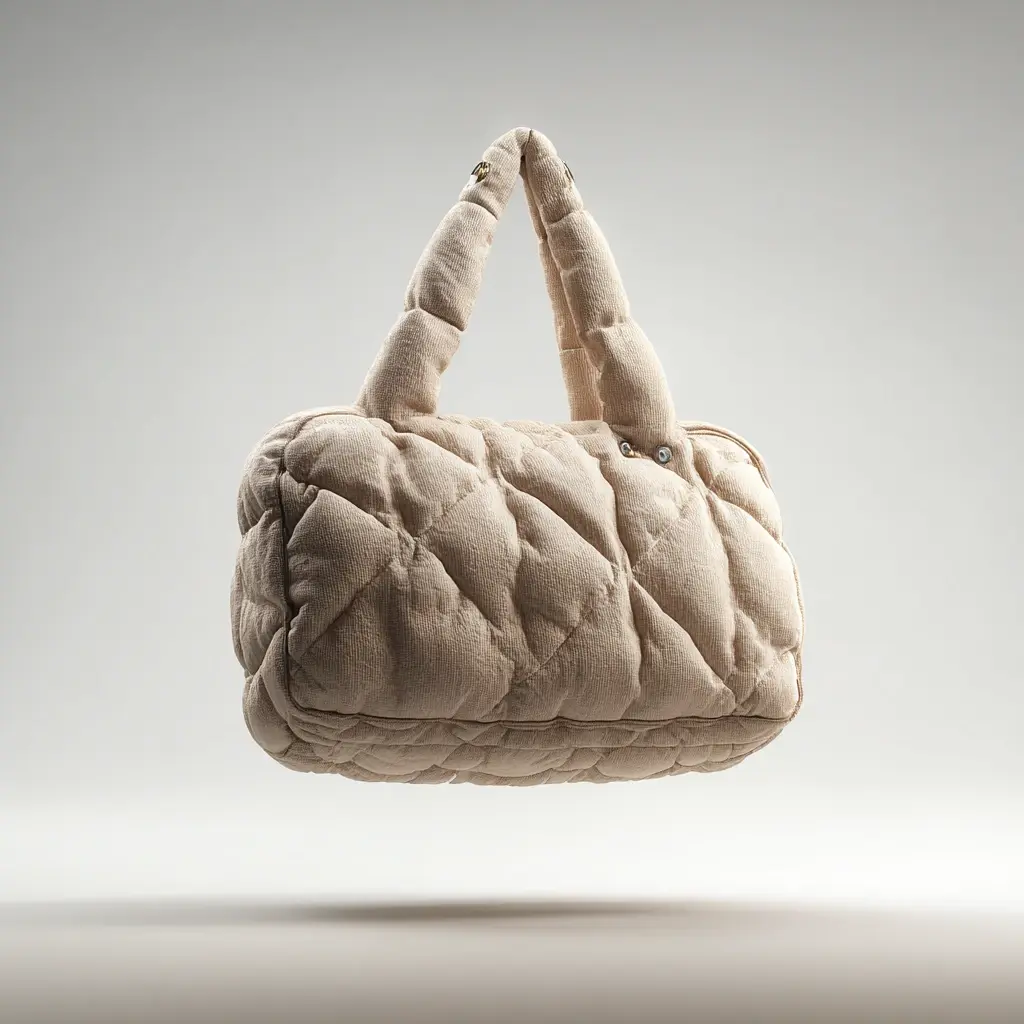
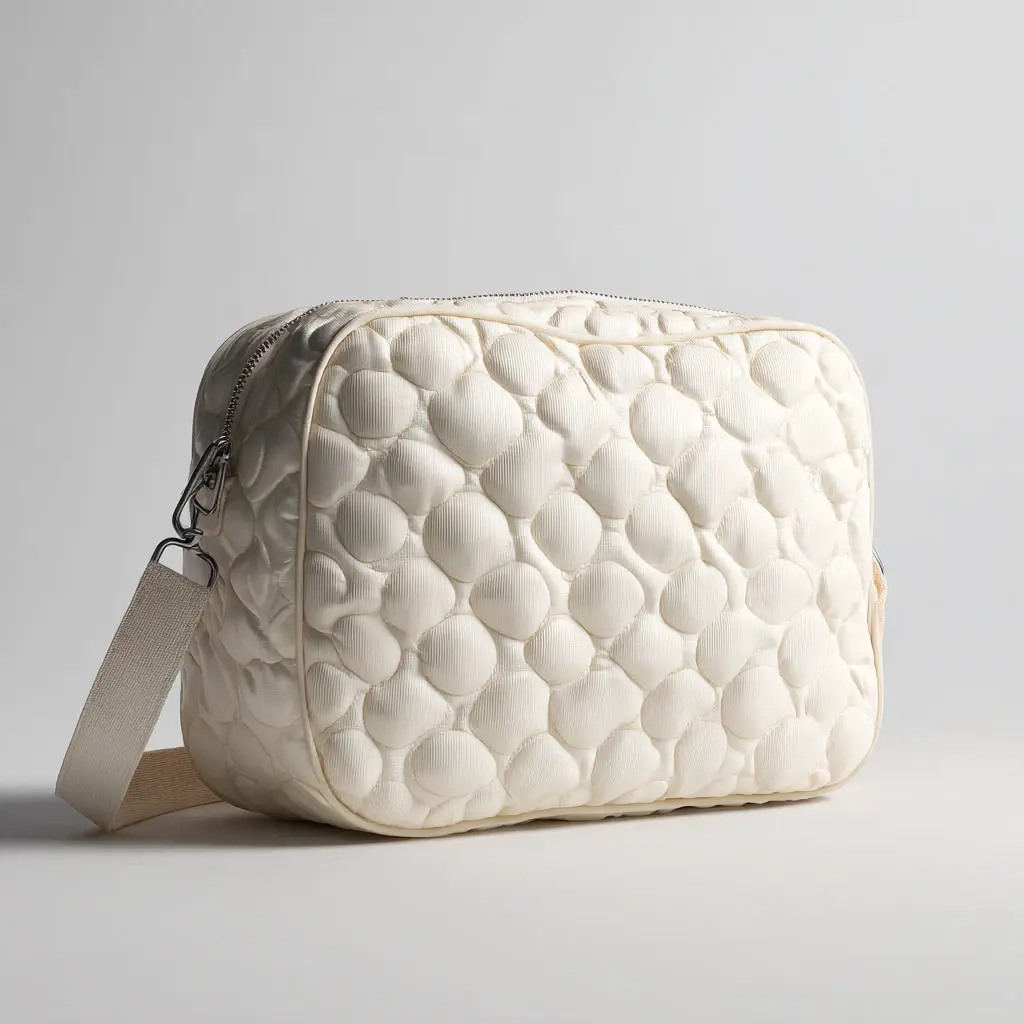
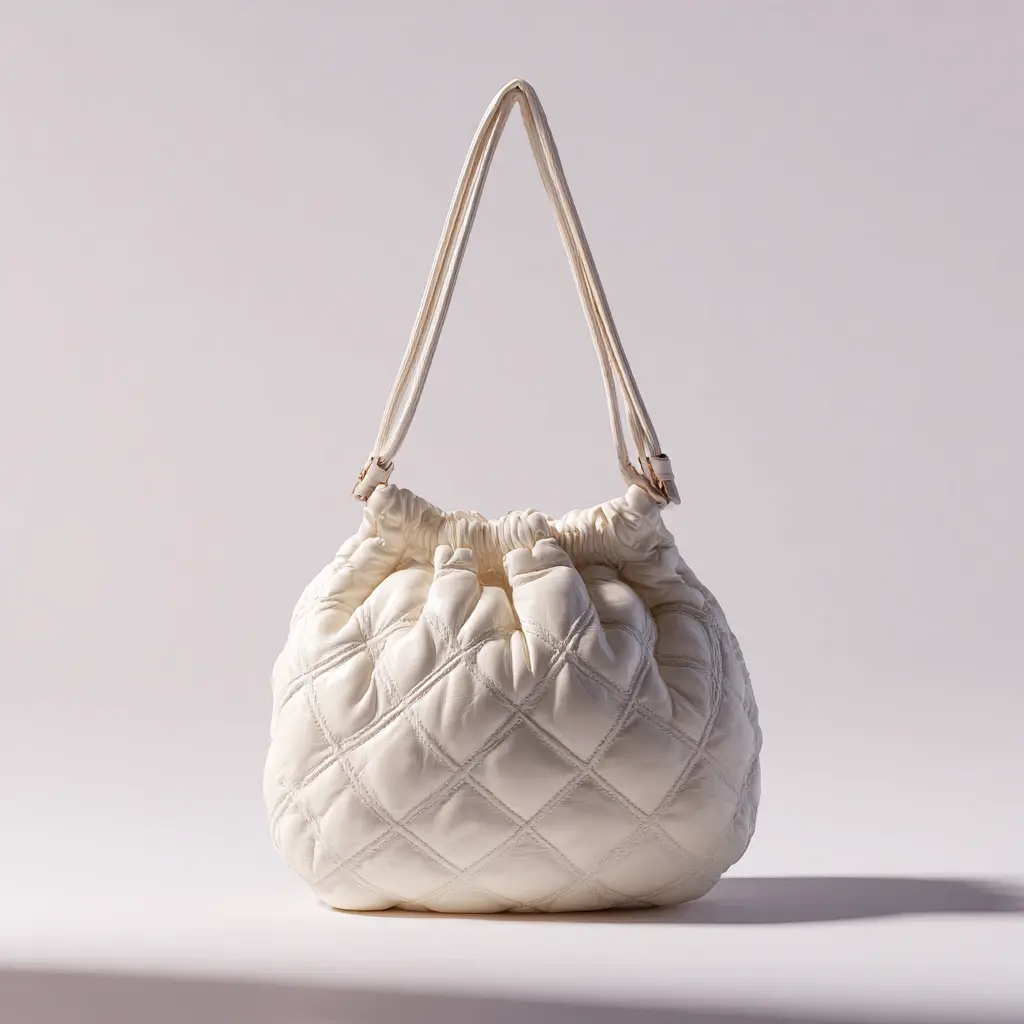
It is worth stating plainly what the comparison is not about, because the phrase licensed goods carries an assumption that the bag is better made. It is made the same way: the same silhouette, the same material at the same thickness, cut to the same pattern and inspected at AQL 2.5 under ISO 2859-1. The licensed bag is not made any better, it is better known, and the royalty is being paid for the name rather than for the object.
The Margin Arithmetic, Side by Side
Set the two side by side and the shape of the decision appears. Private label wins on contribution per unit and takes the longer view, because it builds an asset while it sells. Licensed wins on velocity when the name is strong, because it borrows demand that already exists. The question a brand has to answer honestly is which of those two it needs this year: a business with traffic and no recognition buys velocity, and a business with recognition being built buys contribution. Neither answer is wrong and they are not the same business.
There is a second-order effect that decides it in practice, and it is the one a spreadsheet will not show. A private label brand can hold or move a price, because it owns the name on the bag and has nobody to ask. A licensee is often held to a price band by the contract, and a price that cannot move has to be right at the moment the range is planned, months before the goods arrive. Flexibility on price is worth more in a bad season than a point of margin in a good one, and it belongs to the route that owns the brand.
What a Licence Buys That Private Label Does Not
It would be dishonest to leave this out, because a licence buys four things that a private label programme genuinely cannot, and most of them are the reason the route exists. A known name removes the hardest part of selling anything, which is being trusted by a stranger. It opens doors to retailers who will not list an unknown brand. It comes with artwork, style guides and sometimes retail support that would otherwise be built from nothing. And it shortens the education a customer needs before they consider the bag at all.
- Borrowed trust. A recognised name removes the first objection, which is the most expensive objection to overcome in a category this crowded.
- Retail access. Some buyers will list a known name and will not list an unknown one, whatever the bag is like.
- Supplied artwork. Style guides, character or mark libraries and packaging templates, which saves a development cost at the start.
- Marketing support. A licensor with a consumer audience reaches people a new brand cannot afford to reach on its own.
- A defined audience. Somebody already knows who buys this name, which removes a year of customer discovery.
Which Route Wins, and for Whom
On margin, private label wins and it is not close: 3.1x against about 2.2x on the same bag, with no guarantee to earn back and no approval calendar to wait through. On speed to a first sale, a strong licence wins, because demand that exists is faster than demand that is being built. The two routes are for different stages of a business rather than different kinds of business, and the order that works is to use a licence for velocity while it lasts and to build the own-brand line underneath it, since only one of the two is still there at the end of the term.
The practical route for most brands is a sequence rather than a choice. Launch a private label line at MOQ 500 pcs per style / colourway, in the six to eight weeks of development it takes, and use the private label handbags programme as the asset-building half of the business. Where a licence is available and the name is strong, run it alongside for the velocity and treat the royalty as the cost of borrowed demand rather than as an investment. Then price the own-brand line for a 3x retail margin, because that is the half that has to fund the cost of the first order on its own.
The Contract Terms Sitting Behind the Royalty
A royalty rate is the visible part of a licence and the least informative part of it. Four other terms decide what the arrangement actually costs, and all four are more negotiable than the rate usually is. Read them before comparing a licence against a private label unit price, because a low rate sitting on top of a heavy guarantee costs more than the reverse.
| Term | Typical range | What it decides |
|---|---|---|
| Royalty on wholesale | High single digits to low teens, per cent | The margin taken from every unit sold |
| Annual minimum guarantee | Often 60-100% of projected royalty | Whether payment falls due if nothing sells |
| Term and renewal | 2-3 years, renewal not automatic | How long before terms can be revisited |
| Approval rounds | 2-4 submissions per season | Calendar exposure before bulk can start |
Three Years of Cash, Both Routes, Side by Side
The comparison only becomes honest across three years, because the two cost structures are front-loaded in opposite directions. Private label spends on development and tooling in year one and almost nothing after; a licence spends little to start and a percentage of everything forever. At about 3,000 units a year and a wholesale price near USD 30, the two lines cross somewhere in year two.
| Line | Year 1 | Year 2 | Year 3 |
|---|---|---|---|
| Private label: development and tooling | USD 900-2,600 | USD 0 | USD 0-900 |
| Private label: royalty-equivalent cost | USD 0 | USD 0 | USD 0 |
| Licensed: royalty at 10% of wholesale | USD 9,000 | USD 9,000 | USD 9,000 |
| Licensed: approval, samples, submissions | USD 1,200-3,000 | USD 800-2,000 | USD 800-2,000 |
The End of the Term: Sell-Off, Stock and the Tail
What happens in the last 90 days of a licence is usually discovered in the last 30, and it is the part that decides whether the margin held. Three clauses matter: the sell-off period, whether royalty is still due on discounted goods, and what becomes of stock that does not sell. All three are cheap to negotiate at signature and impossible to negotiate afterwards.
- Sell-off period: 60-120 days after termination, which sets how fast the remaining stock has to move.
- Royalty on discounted goods: usually still due on full wholesale value, so a 40 per cent markdown comes straight out of contribution.
- Disposal of unsold stock: often requires the licensor's consent, and sometimes destruction with certification.
- Tooling: an embossing die or a mould is a physical asset, and the contract has to say who keeps it.
Compare the two routes on your own numbers
Send the silhouettes, the material and the quantity per colourway, and a private label coordinator will confirm MOQ 500 pcs per style / colourway, sampling in 6-10 working days, a 35-50 day bulk window and inspection at AQL 2.5 under ISO 2859-1. Get a quote.
Frequently Asked Questions
Which is more profitable, private label or licensed handbags?
Private label, on the same bag and at the same retail price. A royalty in the high single digits to low teens as a share of wholesale, plus a marketing contribution, sits between the landed cost and the retail price in the licensed route, which takes the effective multiple from about 3.1x down to roughly 2.2x. The licence can still win if the name sells enough more units to make up the difference, and that is the trade to measure.
What is a minimum guarantee in a bag licence?
The sum paid to the licensor for the year whether or not the goods sell, credited against the royalty earned on actual sales. It is paid in advance, it is not refundable, and a shortfall is a cash loss rather than a margin reduction. That makes a licence a fixed cost, while a private label commitment is inventory that can be sold, discounted or held.
How long does licensed product approval take?
Commonly 8-12 weeks from first submission to a signed approval, because it passes through several reviewers and each can return it. Private label closes the same development question in 6-10 working days of sampling, or 12-15 for a framed or hand-woven construction. The difference compounds across a range: three silhouettes can be developed privately in the time one licensed submission is approved.
Who owns the design at the end of a licence?
The licensor owns the name and the equity built around it. The licensee may own its development work, but the goodwill created by two years of selling belongs to the name on the bag. A private label brand owns its brand, artwork, logo tooling and packaging, and shares only the underlying pattern, which is why the same two years leave it with an asset.
Can I discount slow-selling licensed bags?
Often not. Most licence contracts restrict where the goods may be sold and at what price, and a discounted licensed bag damages the name on it. That makes slow-moving licensed stock the worst kind of inventory: it cannot be moved through the channels that would otherwise clear it, and the cash it occupies has already been committed through the minimum guarantee.
Do the bags cost the same to make in each route?
Broadly yes. The same silhouette in the same material at the same thickness, inspected at AQL 2.5 under ISO 2859-1, costs the same whether it carries your name or a licensed one. The entire difference sits above the unit price: royalty, minimum guarantee, approval costs and marketing contribution on one side, and one-off tooling on the other.
When does a licence make more sense than private label?
When the business has traffic but no recognition, and the name is strong enough to convert that traffic. A licence buys borrowed trust, retail access, supplied artwork and a defined audience, and each of those is genuinely worth having at the start. It makes less sense once a brand has its own recognition, because the royalty is then being paid for demand the brand has already built.
How long is a typical bag licence term?
Often around 24 months, with renewal negotiated against the sales data accumulated during the term. That negotiation is the structural weakness of the route, because the licensor holds the leverage that a brand name always holds, and the licensee's own success becomes the evidence for a higher guarantee.
Can I do both at the same time?
Yes, and it is the most common arrangement among businesses that hold a licence. Run the licensed line for velocity and the private label line underneath it as the asset, treating the royalty as the cost of borrowed demand. The two also share development work: the same silhouette in the same material can be produced with two branding setups.
What does a private label brand own that a licensee does not?
The brand name, the artwork, the logo tooling, the packaging and the customer list. It shares only the underlying bag pattern with other brands, which is the one limitation of the route and a much smaller one than not owning the name. After two years, that is the difference between an asset and an expense.
Which route is better for a first business?
Private label, usually. A first business needs to learn what its customers want, and the private label route lets it change a strap drop, a colour or a price without submitting a revision. The minimum guarantee in a licence is the wrong kind of commitment for a business that has not yet found out what sells.
People Also Ask
Is a licence the same as a collaboration?
No. A licence is a paid right to use a name for a term, with a royalty and usually a guarantee. A collaboration is a joint project between two brands, usually for one season and without a minimum guarantee. The two are negotiated very differently.
Why is the licensed markup lower on the same bag?
Because the royalty is calculated on wholesale and has to be carried inside the retail price. The bag costs the same to make, but the retail price that a market will accept is fixed, so the royalty comes out of the margin rather than being added to the ticket.
Can a licensed line use its own packaging?
Usually with approval, and the packaging is often the slowest part of the submission. Cartons, hangtags and dust bags all carry the licensed mark and each needs its own approval, which is worth knowing before the calendar is set.
What happens when a licence ends?
The rights revert to the licensor and the remaining stock is usually sell-off stock under the contract terms. What leaves with the licensee is the experience and any tooling it paid for, which is why the own-brand line is best built while the licence is still running.
Sources and further reading
Every figure on this page is either our own programme data or attributed below. Open the originals before you write them into a specification.
- FashionUnited — fashion industry news and dataFashionUnited Industry news and company data for the fashion sector.
- ITC Trade Map — import and export statisticsInternational Trade Centre Import and export statistics by HS code and destination market.
- REACH — chemical substances regulationEuropean Commission Annex XVII restricts the substances that may appear in finished leather and coatings.