Private Label Handbags vs White Label Bags: Know the Difference
What is the difference between private label and white label bags? White label sells the same finished bag to many brands with only the name changed; private label makes the run to your specification, at MOQ 500 pcs per style / colourway, with a sample in 6-10 working days, bulk in 35-50 days and inspection at AQL 2.5 under ISO 2859-1. The difference is not the logo, it is who decides the material, the colour, the hardware and the packaging — and therefore who carries the 500-piece minimum and the 35-50 day window. This page puts the two routes side by side across nine variables, shows where they genuinely overlap, and gives the test that tells you which one a quotation is actually offering.
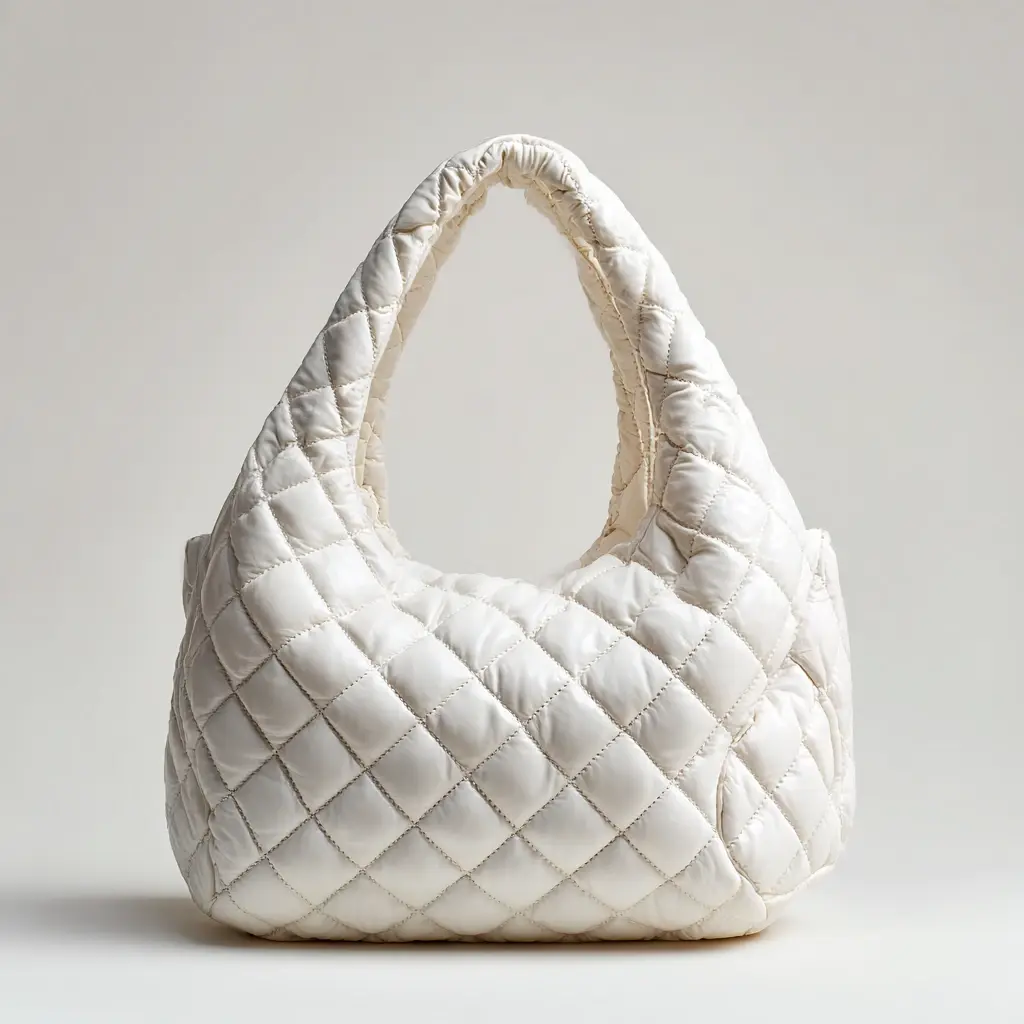
- Two Definitions That Decide the Price
- Comparison Matrix: Nine Variables, Two Routes
- Timeline Compared: Days to a Saleable Unit
- Cost Compared: What You Pay For in Each Route
- Control Compared: What You Can and Cannot Change
- Risk Compared: Where Each Route Can Fail
- Which Route Fits Which Buyer
- How to Tell Which Route a Quotation Is Offering
- Moving From White Label to Private Label
- The Cash Curve: What Each Route Does to Working Capital
- Margin Over a Season, Not Over a Unit
- Who Holds the Compliance File in Each Route
- The Asset Test: What You Own at the End
What is the difference between private label and white label bags? White label sells the same finished bag to many brands with only the name changed; private label makes the run to your specification, at MOQ 500 pcs per style / colourway, with a sample in 6-10 working days, bulk in 35-50 days and inspection at AQL 2.5 under ISO 2859-1. The difference is not the logo, it is who decides the material, the colour, the hardware and the packaging — and therefore who carries the 500-piece minimum and the 35-50 day window. This page puts the two routes side by side across nine variables, shows where they genuinely overlap, and gives the test that tells you which one a quotation is actually offering.
The two routes at a glance
Two Definitions That Decide the Price
The confusion between these two routes costs real money, because a buyer who signs for one and receives the other discovers the difference at the worst moment — when the goods arrive and cannot be listed as intended. Both routes put a brand name on a bag. Only one of them lets the brand decide what the bag is.
White label means a finished product, made in colours and quantities somebody else chose, sold to any number of brands who each apply their own name. The bag is identical underneath; the differentiation is the label and the marketing. Private label means a production run made against your specification: material bought for your order, colour matched to your reference, hardware plated to your finish, packaging printed to your artwork, inspected to a standard you named.
Comparison Matrix: Nine Variables, Two Routes
Nine variables separate the two routes in practice, and reading them in one table is the fastest way to see why the price difference is not a markup but a different cost structure. The rows that matter most are the ones buyers rarely ask about: dye lot, tooling ownership and inspection standard.
| Variable | White label | Private label | Why it matters |
|---|---|---|---|
| Design input | None — select what exists | Silhouette, material, colour, hardware, packaging | Determines whether the SKU is yours |
| Minimum | Set by the stock holder | 500 pcs per style / colourway | Your cash commitment |
| Sampling | Not required | 6-10 working days; 12-15 complex | Time before bulk can start |
| Bulk window | Already made | 35-50 days | Your launch calendar |
| Colour | Whatever is in stock | Matched to a Pantone reference at Delta E 2.0 | Brand consistency across drops |
| Hardware | Standard, unbranded | Plated to spec; branded pullers, plates and feet | 15-25% of unit cost |
| Inspection | Not applicable | AQL 2.5 under ISO 2859-1, written report | Whether quality is enforceable |
| Tooling | None | Dies, label setups, moulds — you own them | Asset and exclusivity |
| Compliance | Whatever the stock carries | REACH, Prop 65, CPSIA as applicable | Market access and liability |
Where the Two Routes Overlap
They overlap in one important place: both use an existing pattern. Neither route engineers a new silhouette, which is what separates both from full custom development. The practical consequence is that a brand can start on white label to test a market, then move to private label with evidence of what actually sells — and the pattern familiarity gained on the way shortens the sampling conversation.
Timeline Compared: Days to a Saleable Unit
Time is the variable buyers underestimate most, because a white label order feels instant and a private label programme does not. The gap is real but it is not 35-50 days; it is the whole sequence around the bulk run, and seeing it laid out makes the calendar plannable rather than surprising.
| Stage | White label | Private label | Note |
|---|---|---|---|
| Order to dispatch | 1-5 days | Not applicable | Stock is already packed |
| Brief to quotation | Not required | 1-3 days | Needs a target retail price |
| Material confirmation | Not required | 2-4 days | Swatch and Pantone reference |
| Sampling | Not required | 6-10 working days | 12-15 for complex work |
| Review and revision | Not required | 3-6 days | One numbered revision list |
| Bulk production | Not required | 35-50 days | The booked slot |
| Inspection and handover | Not required | 3-6 days | AQL 2.5 plus export handling |
| Transit | Same as any shipment | 18-38 days by sea | 5-8 days by air |
Read bottom to top: the private label route costs roughly 55-80 days before the goods reach a forwarder, and that is the number to put on a launch calendar. The offset is that the same calendar produces a SKU nobody else can list, whereas the five-day stock route produces one that every competitor can.
Cost Compared: What You Pay For in Each Route
White label looks cheaper per unit and usually is, for two reasons: the material was bought in a larger lot than yours, and no sampling or tooling was amortised into it. Private label costs more per unit and returns that money as control — over colour, hardware, packaging and, critically, over who else can list the same bag.
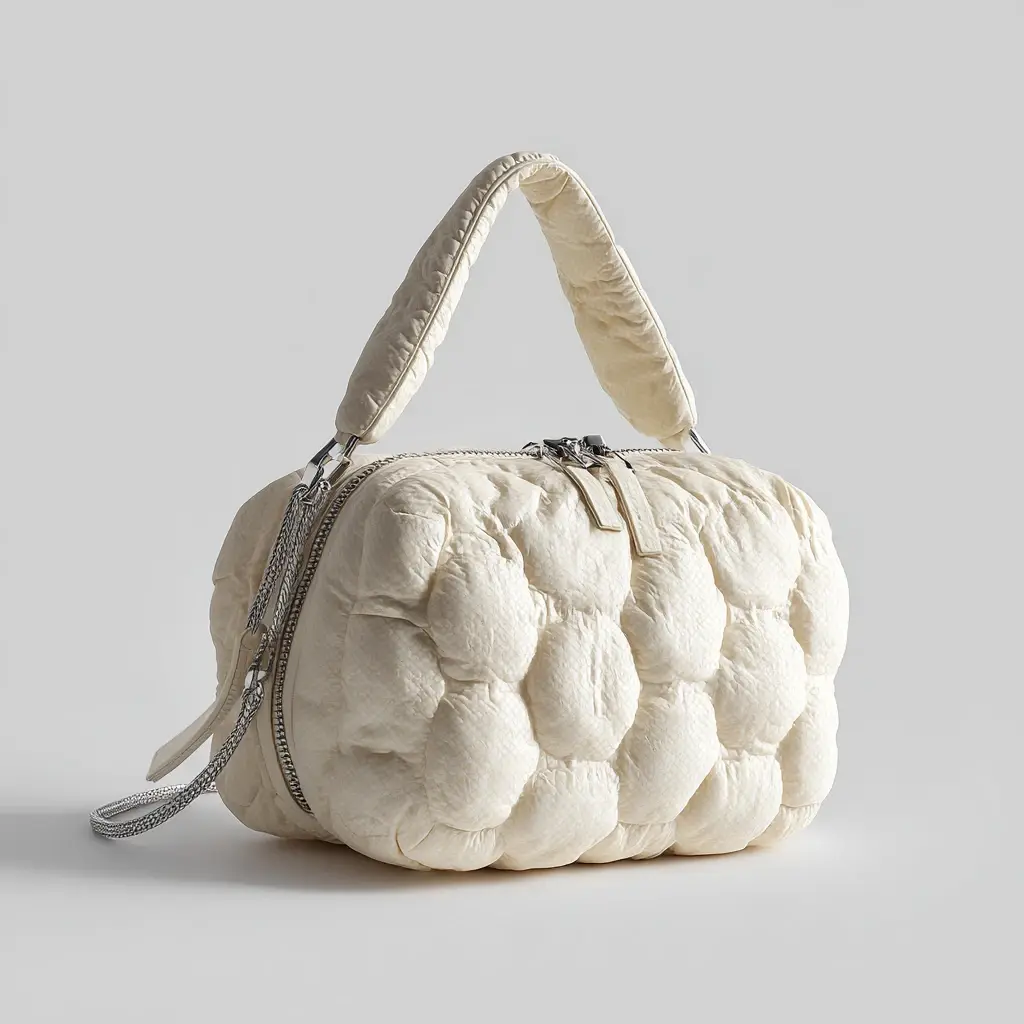
| Cost element | White label | Private label | Comment |
|---|---|---|---|
| Material | Bought in a large stock lot | 40-55% of unit cost, bought against your order | Yield and lot size drive the gap |
| Trimming and hardware | Standard, unbranded | 15-25%, plated to your specification | Branded pullers add tooling |
| Labour | Already absorbed | 15-25%, driven by operations | A structured satchel costs more than a soft hobo |
| Packaging | Generic or none | 3-8%, printed to your artwork | Artwork setup is a fixed charge |
| Tooling | None | One-off, amortised across the run | A few cents per bag at 3,000 pcs |
| Sampling | None | One sample in 6-10 working days | Fee often credited against the order |
Control Compared: What You Can and Cannot Change
Control is the substance of the decision, and it is worth listing precisely because buyers routinely overestimate what a white label route allows. The list below is what changes and what does not, in the order it becomes visible to a customer.
- Colour. White label offers what is in stock. Private label matches a Pantone TCX reference at Delta E 2.0 or better, which is what lets a second drop match the first.
- Material. White label offers one option. Private label selects full-grain at 1.2-1.6 mm, top-grain at 1.0-1.4 mm, PU at 0.6-1.0 mm or canvas at 10-16 oz.
- Hardware. White label ships standard zamak or steel. Private label specifies alloy, plating thickness in microns and 24 hours to first corrosion tested to ASTM B117.
- Branding. White label applies a sewn-in label. Private label applies embossing, woven labels, embroidery or cast hardware in three positions.
- Packaging. White label ships generic. Private label prints dust bags, hangtags, care cards and carton marks to your artwork and barcode symbology.
- Dimensions. White label is fixed. Private label adjusts body width, gusset depth and strap drop within the existing pattern.
Risk Compared: Where Each Route Can Fail
Each route has a characteristic failure, and knowing which one you are exposed to is more useful than knowing which is better. White label fails on differentiation; private label fails on planning.
- White label: somebody lists your bag. The same product is available to every brand in the channel, so competition runs on price and the margin disappears.
- White label: the colour changes. Stock is re-bought in whatever lots are available, so drop two does not match drop one.
- Private label: the calendar slips. 55-80 days from brief to handover, plus 18-38 days of transit; planning on 50 days produces an air-freight bill.
- Private label: the minimum binds. 500 pcs per colourway, so three colours is 1,500 pcs, not 500 split three ways.
- Private label: the specification was never written. Vague specifications cannot be enforced at inspection, which is why AQL 2.5 under ISO 2859-1 belongs in the purchase order.
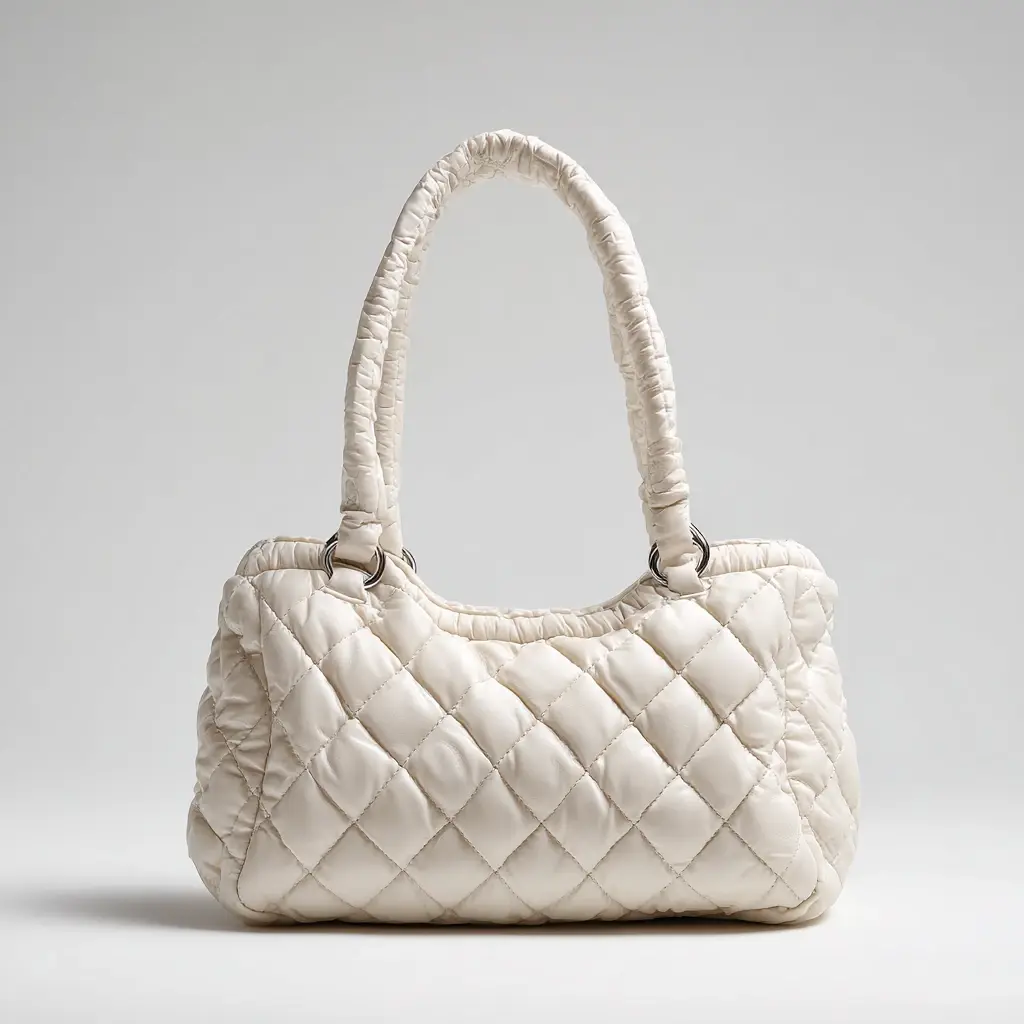
Which Route Fits Which Buyer
The honest answer is that the two routes suit different stages of the same brand, and the switch usually happens after the first season of sell-through data. Match the route to the question you are actually trying to answer.
Testing demand
White label. You need to know whether a silhouette sells at your price before committing 500 pieces and 35-50 days to it.
First own-brand line
Private label at 500 pcs per colourway. Three silhouettes in one colourway is 1,500 pieces and reads as a range.
Retail house brand
Private label across two or three colourways, sharing one material buy and one set of branding tooling.
Importer or distributor
Private label as a seasonal programme of 5,000 pcs and above, with reserved capacity and a price held for the season.
Corporate or licence programme
Private label, because you hold the artwork, own the tooling and need a defined quantity delivered to a date.
Marketplace arbitrage
White label, then move to private label once a SKU proves out — the pattern familiarity shortens the later sampling round.
How to Tell Which Route a Quotation Is Offering
One test settles it, and it takes a single question. Ask whether the material will be bought against your order and matched to your reference. If the answer is that the bag comes from existing stock in available colours, the route is white label regardless of what the document calls it.
- Ask about the dye lot. A run made for you has one; stock does not.
- Ask whether a sample precedes bulk. 6-10 working days of sampling only exists if the run is yours.
- Ask who owns the tooling. No tooling means no private label, because nothing was made specifically for the run.
- Ask for the inspection standard. AQL 2.5 under ISO 2859-1 is written into a private label purchase order, not a stock sale.
- Ask whether the specification is stored. Repeatability is the product; a stock seller has nothing to store.
Who Owns the Brand and Who Owns the Pattern?
Intellectual property deserves one line of its own. Your brand name, logo and artwork are yours and should be registered in your markets; the underlying pattern is not, and trade publications such as The Fashion Law cover how often that distinction is litigated in this sector. Register the mark, keep the tooling, and store the specification.
Moving From White Label to Private Label
What Carries Over From a Stock Test?
The transition is smoother than most brands expect, because the hard part — learning which silhouettes and price bands convert — has already been done. What carries over is the evidence; what changes is the calendar and the cash shape.
- Take the sell-through data first. Which silhouettes sold, at what price, and in which colour. That is the specification brief.
- Pick three silhouettes, one colourway. 1,500 pieces at 500 pcs per style, rather than three colours of one bag.
- Fix the retail price before the material. Material is 40-55% of unit cost, so the price band selects the material family.
- Book sampling and the slot together. 6-10 working days for the sample, then 35-50 days of production 35-50 days in total.
- Write AQL 2.5 into the purchase order and request the report, plus REACH, Proposition 65 and CPSIA documentation for your market.
Two references close the remaining gaps. The private label handbags page sets out the full programme, and the ecommerce programmes overview covers packaging and labelling for marketplace channels. Where the question is minimums rather than route, the MOQ comparison at 500 and 2,000 pieces gives the numbers.
The Cash Curve: What Each Route Does to Working Capital
Unit price is the wrong comparison, because the two routes consume cash on completely different schedules. A stock order is paid on dispatch and listed within days; a made-to-order programme asks for 30 per cent at booking and the balance against a bill of lading copy, roughly three months before the goods are listed. The gap between those two shapes is usually larger than the gap between the unit prices.
| Month | White label | Private label |
|---|---|---|
| At order | Full amount on dispatch | 30 per cent deposit |
| Month one | Goods listed and selling | Sampling and approval |
| Month two | Most units sold | Bulk in production |
| Month three | Reorder from stock | Balance paid, goods landed |
For a founder funding a first range from working capital, the third column is the binding constraint rather than the price. Consolidating into fewer variants and releasing in two waves is usually what makes a 1,500-piece programme survivable.
Margin Over a Season, Not Over a Unit
Contribution per unit is easy to calculate and misleading on its own. What matters is contribution per unit after carrying cost, markdown and stock-out, measured across 180 days. On a 500-piece order at a landed cost of 29.45, the difference between an 82 per cent and a 34 per cent sell-through rate is the whole season's profit, and it sits on the colourway split rather than on the purchase price.
- Carrying cost. About USD 0.54 per unit per month, so 58 unsold units held for four months costs roughly USD 125.
- Markdown. A 30 per cent cut on a 79 retail price removes about USD 24 of contribution per unit, which is most of it.
- Stock-out. A hero variant that sells out at day 60 and takes 71 days to replace loses two months of full-price sales.
- The fix. A 60/40 split plus a reorder trigger at ten weeks of cover addresses three of the four lines at once.
Who Holds the Compliance File in Each Route
Liability follows the document. Under REACH the obligation sits with the party placing goods on the European market, which for a brand importing into Rotterdam or Hamburg is the brand or its European entity rather than the overseas production side. Under Proposition 65 the duty sits with the business selling into California. Neither duty changes because the goods happened to come from stock.
- White label. The stock holder's test reports can be inherited, but only where they name the actual material reference and are dated within 12 months.
- Private label. Reports are commissioned against the brand's own material references, which costs more on the first order and nothing on the repeat.
- Either route. Keep the file per lot: drawing revision, test report numbers, inspection report and packing list, in one folder.
- The check. A report that names a style rather than a material reference is not evidence about the material.
The Asset Test: What You Own at the End
The cleanest way to choose between the routes is to ask what is left after the first season. A stock programme leaves sell-through data and nothing a competitor cannot buy again next week. A made-to-order programme leaves a numbered drawing, retained tooling, a recorded specification and material references, which are assets that reduce both the cost and the calendar of every subsequent drop. The private label handbags page sets out what is recorded and when.
- Tooling. Four assets, owned in writing, stored, and never run for another label without written consent.
- Registration. A design right where the market justifies it, filed during the sampling window rather than after a copy appears.
- Specification. Revision number, measurements with tolerances, stitch density and material references, recorded once and reused.
- Data. Which colourway and which price band converted, which then becomes the brief for the second season.
- The test. Apply the asset test before the first quotation rather than after the first delivery, because it is the question that decides which route to buy.
Choose the route with the numbers in front of you
Send your silhouettes, material direction and target retail price. A private label coordinator will confirm whether a private label run at MOQ 500 pcs per style / colourway is the right route, with sampling in 6-10 working days and bulk in 35-50 days. Get a quote.
Frequently Asked Questions
What is the difference between private label and white label bags?
White label sells an identical finished bag to many brands who each apply their own name, with no input into material, colour or hardware. Private label makes the run against your specification: material bought for your order, colour matched to a Pantone reference, hardware plated to your finish and packaging printed to your artwork, at MOQ 500 pcs per style / colourway.
Is white label cheaper than private label?
Per unit, usually yes. The stock material was bought in a larger lot than yours and no sampling or tooling was amortised into it. Private label costs more and returns the difference as control over colour, hardware and packaging, and as exclusivity: nobody else can list the same specification under a different name.
Can I put my own logo on a white label bag?
Yes, usually as a sewn-in label or a printed hangtag, and that is where white label branding stops. The bag itself — material, colour, hardware, dimensions — is whatever the stock holder bought. A logo on a shared product is not the same as a product made to your specification.
Which route should a first-time brand choose?
White label if the question is whether a silhouette sells at your price, because there is no minimum and no sampling. Private label once that is answered, starting with three silhouettes in one colourway at 1,500 pieces, which reads as a range and keeps the commitment to one dye lot per style.
How long does the private label route take compared with buying stock?
Stock ships immediately; private label takes 55-80 days from signed brief to goods handed to your forwarder, plus 18-28 days of transit to the US West Coast or 30-38 days to Northern Europe. Inside that, sampling is 6-10 working days, review 3-6 days and the bulk run 35-50 days.
Who owns the tooling on a private label run?
You should, and it should be stated in writing before the deposit is paid. An embossing die, a woven-label setup and a hardware mould are physical assets with real cost. Ask whether the charge is amortised into the unit price or billed separately, where the tooling is stored and whether it will run for another brand.
Can two brands end up with the same bag under private label?
They can share the underlying pattern, because private label uses patterns that already exist. They cannot share your specification: your material, colour, hardware finish, branding positions and packaging are yours. Two brands specifying the same tote pattern in different leathers and finishes produce products no shopper would connect.
What inspection standard applies to a private label run?
Pre-shipment inspection at AQL 2.5 under ISO 2859-1, which sets how many units are drawn from a lot of your size and how many defects of each class trigger a pass, a fail or a re-sort. Ask for the written report and an ISO 9001 quality system reference; third-party inspection by SGS is available.
Which compliance documents come with a private label run?
Material test reports against REACH, a Proposition 65 review of hardware and coated trim for California, CPSIA documentation where a bag is marketed to children, BSCI or Sedex audit references for the validated partner factory, and Leather Working Group tannery traceability where hides are sourced that way.
How do I tell which route a quotation is actually offering?
Ask whether the material is bought against your order and matched to your reference, and whether a sample precedes bulk. Stock in available colours with no sampling and no tooling is white label whatever the document calls it. A private label quotation names a dye lot, a 6-10 working days of sampling window and an inspection standard.
Can I move from white label to private label later?
Yes, and the transition is usually smooth because the sell-through data answers the hard question. Take the data on which silhouettes sold and at what price, pick three silhouettes in one colourway at 1,500 pieces, fix the retail price before the material, and book sampling and the production slot together.
People Also Ask
Is private label the same as custom development?
No. Both private label and white label use an existing pattern. Custom development engineers a new silhouette with new dies and often new hardware moulds, which carries tooling cost and a longer calendar than either route.
Does branding a stock bag protect my brand?
Only partly. Registering your name and logo protects the mark, but the product underneath is available to competitors, so differentiation runs on price. Trade coverage in publications such as The Fashion Law shows how often that distinction matters in practice.
Why is the private label minimum per colourway rather than per style?
Because each colourway is a separate dye lot or coating run with its own production minimum. Splitting 500 pieces into three colours means three dye-lot minimums and three trimming setups, which raises the unit price rather than lowering the commitment.
Can I test a market before committing to 500 pieces?
Yes — that is exactly what white label is for. Test with stock, learn which silhouettes and price bands convert, then return at 500 pcs per style / colourway with evidence rather than a guess.
Sources and further reading
Every figure on this page is either our own programme data or attributed below. Open the originals before you write them into a specification.
- FashionUnited — fashion industry news and dataFashionUnited Industry news and company data for the fashion sector.
- SATRA — technical services for leather, footwear and accessoriesSATRA Independent leather, hardware and accessories testing protocols.
- REACH — chemical substances regulationEuropean Commission Annex XVII restricts the substances that may appear in finished leather and coatings.