Handbag Swatch Approval: Leather Lining and Hardware Combo Guide
How should a handbag swatch set be approved? Compare the shell, lining and hardware as one combination rather than three separate decisions, then approve against physical cards at Delta E 2.0 or better under D65 at 1000 lux, with a metamerism check under TL84 and incandescent A before signing. The failure mode is approving three good parts that do not go together: a shell and a lining can each pass their own colour check and still clash, because they are viewed side by side in every photograph the customer takes. A complete set is eight cards, takes 3-5 days to assemble and 2-4 days to approve, and costs nothing compared with a dye lot discovered to be wrong at final inspection.
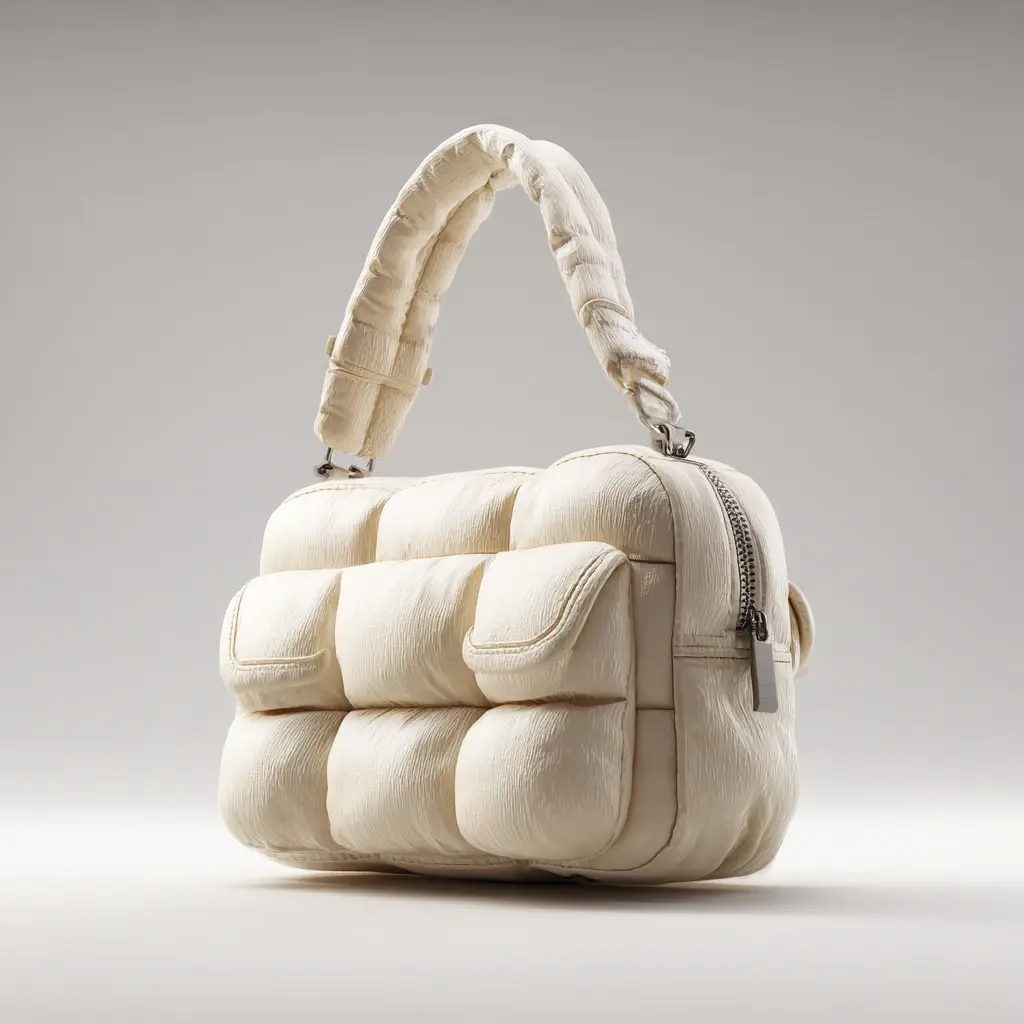
- Three Combos Compared Side by Side
- How the Combos Score on Colour and Light
- How the Combos Score on Wear
- How the Combos Score on Chemistry and Compliance
- How the Combos Score on Cost and Lead Time
- Which Combo Fits Which Launch Scenario
- How to Build and Ship a Swatch Card Set
- How to Run the Approval in One Pass
- When a Card Fails: Symptom, Cause and the Fix
- A Light Booth That Costs Less Than One Courier Round
- Holding the Reference Across Dye Lots
- The Specification Lines One Card Set Locks
How should a handbag swatch set be approved? Compare the shell, lining and hardware as one combination rather than three separate decisions, then approve against physical cards at Delta E 2.0 or better under D65 at 1000 lux, with a metamerism check under TL84 and incandescent A before signing. The failure mode is approving three good parts that do not go together: a shell and a lining can each pass their own colour check and still clash, because they are viewed side by side in every photograph the customer takes. A complete set is eight cards, takes 3-5 days to assemble and 2-4 days to approve, and costs nothing compared with a dye lot discovered to be wrong at final inspection.
What the swatch set has to settle
Three Combos Compared Side by Side
The three combinations below cover most private label programmes. They are compared item by item across the following five sections, and the point of the exercise is not to find a winner but to find the one whose weaknesses sit where the buyer can live with them.
| Element | Combo A: structured classic | Combo B: coated everyday | Combo C: recycled claim |
|---|---|---|---|
| Shell | Full-grain bovine, 1.4 mm | PU-coated split, 1.1 mm | Recycled PU over recycled polyester, 1.0 mm |
| Lining | Cotton twill, 210 gsm | 210D polyester | GRS-certified recycled polyester |
| Hardware | Solid brass, brushed | Zinc alloy, nickel-free plating | Zinc alloy, black electrophoretic coating |
| Stitch | Tex 40 bonded polyester, 8 spi | Tex 40 bonded polyester, 8 spi | Tex 40 recycled polyester, 8 spi |
| Typical retail band | Upper mid | Mid | Mid, with a sustainability claim |
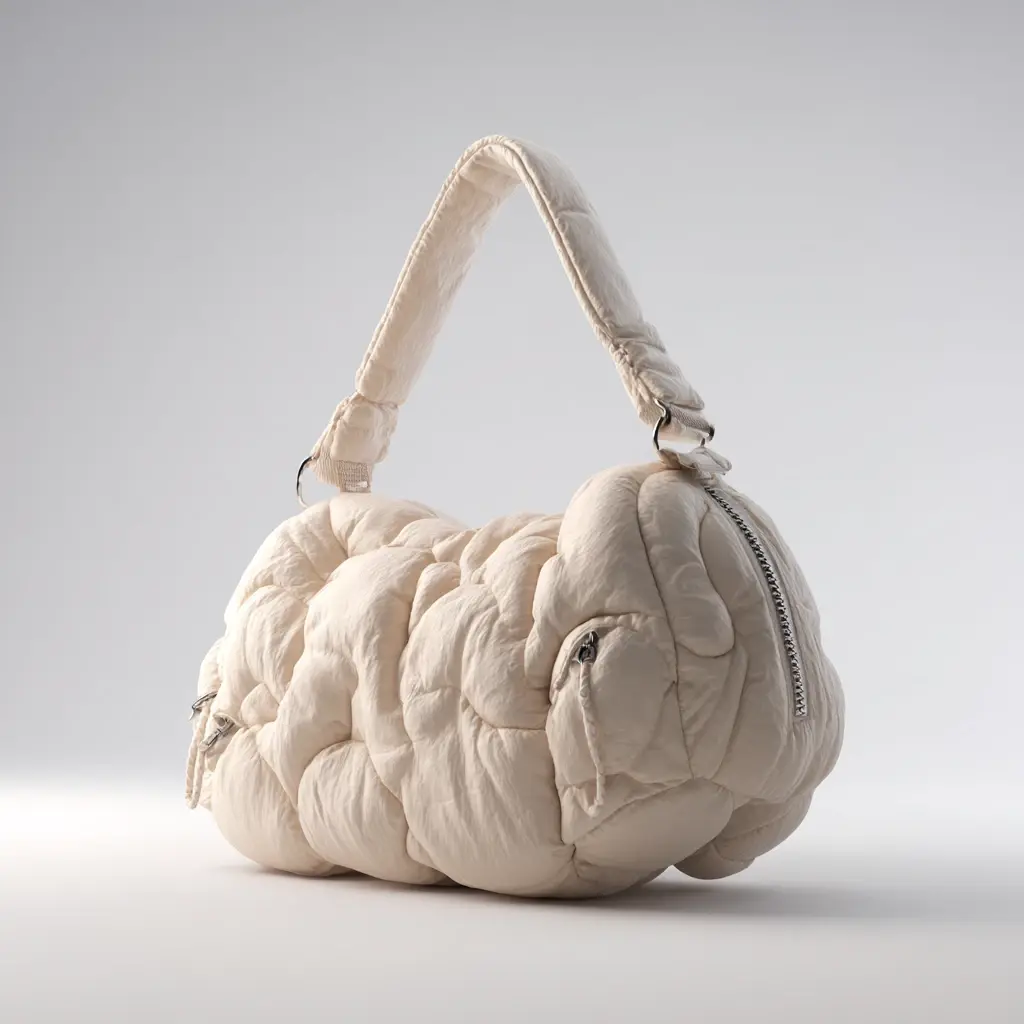
Two things are worth noticing immediately. The hardware choice is doing more work than its share of cost suggests, because it is the element that moves in a photograph and the element most likely to fail a chemical screen. And the lining is the element most buyers choose last, which is odd given that it is the surface the customer sees every time the bag is opened.
How the Combos Score on Colour and Light
Colour is approved against physical cards at Delta E 2.0 or better, measured under D65 at 1000 lux. The number is a distance in colour space, and 2.0 is roughly the threshold at which a trained eye stops noticing a difference between two cards placed side by side. Below that, the disagreement becomes a matter of taste rather than of fact.
| Test | Combo A | Combo B | Combo C |
|---|---|---|---|
| Delta E against reference, D65 | 1.2-1.8 | 0.8-1.5 | 1.0-1.6 |
| Metamerism shift, D65 to TL84 | Moderate | Low | Low to moderate |
| Batch-to-batch variation | Higher, natural substrate | Lower, controlled coating | Lowest, synthetic |
| Colour drift after 300 hours light exposure | Slight deepening | Minimal | Minimal |
| Crocking, grey scale dry and wet | 4-5 and 4 | 5 and 4-5 | 5 and 5 |
The second row is the one that surprises people. Two cards can match at Delta E 1.0 under D65 and separate visibly under the TL84 fluorescent tubes used in most retail fit-outs. That is metamerism, and it is why the approval should always be signed under at least three light sources: D65, TL84 and incandescent A. A combination that holds across all three will hold in a shop, a home and a photograph.
How the Combos Score on Wear
Wear testing answers how the combination behaves after it has been carried, which is a different question from how it behaves on a card. Three tests carry most of the signal, and all three are cheap to run on a swatch before a hide is bought.
- Abrasion to ISO 12947. Combo A reaches 20,000 rubs before a visible change; Combo B reaches 25,000; Combo C reaches 18,000. All three are acceptable for daily use, and the differences show at year two rather than at week two.
- Colour fastness to rubbing, ISO 105-X12. Dry and wet crocking on the grey scale: Combo A reads 4-5 dry and 4 wet, Combo B 5 and 4-5, Combo C 5 and 5. A wet rating below 4 on a light-coloured shell is a returns risk on a pale garment.
- Hardware corrosion to ASTM B117. All three should be specified at 24 hours to first corrosion. Solid brass and a good electrophoretic coating exceed this comfortably; a thin zinc-alloy plating typically sits right on the line, which is why the plating thickness should be stated in microns on the card.
One more check belongs here and is almost never run: the lining against the shell. A coated shell rubbed against a 210D lining under load produces a squeak and, over months, a polish line on the coating. Put the two cards together, rub them 50 times with moderate pressure, and listen. It is a ten-second test and it catches a category of complaint that no laboratory report will.
How the Combos Score on Chemistry and Compliance
This is where a combination passes or fails a retailer's screen, and it is the section that should be read before the aesthetic one, because a beautiful combination that fails cannot be rescued by anything done later.
| Requirement | Combo A | Combo B | Combo C |
|---|---|---|---|
| REACH Annex XVII, chromium VI | Test required per dye lot | Not applicable to coatings | Not applicable to coatings |
| REACH Annex XVII, azo dyes | Test required on dyed lining | Test required on dyed lining | Test required on dyed lining |
| Proposition 65, California | Hardware and coated trim review | Hardware and coated trim review | Hardware and coated trim review |
| Nickel release | Brass usually passes; test to confirm | Specify nickel-free plating | Coating blocks release; test to confirm |
| CPSIA, where marketed to children | Lead and phthalate testing | Phthalate testing on the coating | Phthalate testing on the coating |
| Chain of custody | Leather Working Group tannery | None applicable | Global Recycled Standard |
Two practical rules follow. First, specify nickel-free plating on any zinc-alloy part rather than testing for nickel release afterwards; the plating costs almost nothing extra and the test costs time. Second, where a hide is bought through an audited tannery, ask for the Leather Working Group reference at swatch stage rather than after the lot is booked, because traceability is a property of the purchase and not of the material.
How the Combos Score on Cost and Lead Time
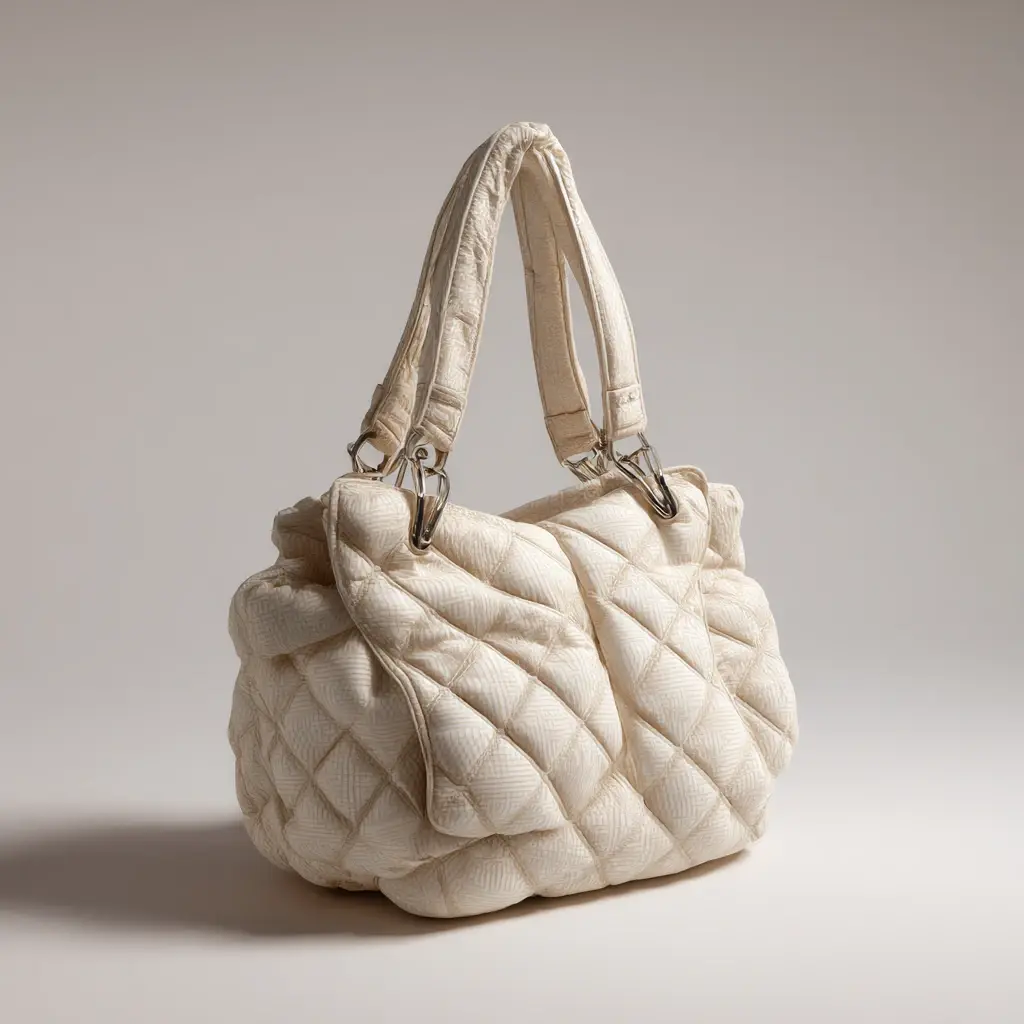
Cost is where the three separate most sharply, and the differences are larger than the unit-price column alone suggests, because lead time and yield move with the material.
- Combo A shell consumption
- About 1.4 sq ft per unit, 15-25 percent yield loss
- Combo B shell consumption
- About 1.3 sq ft per unit, 8-12 percent yield loss
- Combo C shell consumption
- About 1.3 sq ft per unit, 8-12 percent yield loss
- Hardware, Combo A
- Solid brass, highest component cost
- Hardware, Combos B and C
- Zinc alloy, 40-60 percent below brass
- Swatch card lead time
- 3-5 days to assemble
- Approval window
- 2-4 days under three light sources
- Bulk production
- 35-50 days after approval
The yield line is the one to read twice. A natural substrate with a 15-25 percent yield loss costs more per unit than its price per area suggests, and the loss is not controllable below a certain point because hides have defects in unpredictable places. A coated or synthetic roll at 8-12 percent is both cheaper and more predictable, which is why the mid-market runs on it.
Which Combo Fits Which Launch Scenario
Finally, the recommendation, given as scenarios rather than as a ranking. Each scenario has a dominant concern, and the combo that wins is the one whose weaknesses do not touch that concern.
- A heritage line sold at upper-mid retail, where ageing is part of the story. Combo A. Natural shell, cotton twill lining, solid brass. Accept higher yield loss and a longer material lead time in exchange for a surface that improves with use.
- A marketplace line competing on review score and price. Combo B. Coated shell, 210D lining, nickel-free zinc alloy. Predictable yield, the best abrasion result, and the lowest exposure to chemical screens.
- A line whose entire positioning is a recycled content claim. Combo C. GRS-certified shell and lining with a recycled thread. The claim must be documented at card stage, or it cannot be made at listing stage.
- A first line with no proven sell-through. Combo B, in one colourway, at 500 pcs. The point of a first line is to learn what sells, and the material decision can be upgraded on the repeat once the answer is known.
The last scenario is the most common and the most often got wrong. Buyers specify the material they eventually want rather than the material that lets them learn cheaply, and then discover that the learning was the expensive part.
How to Build and Ship a Swatch Card Set
Eight cards: three shell options, two lining options, three hardware finishes. Physical, never digital, and always cut from the actual lot or a representative piece of it rather than from a stock sample.
- Cut shell cards at 8 x 8 cm, or 5 x 5 cm where material is scarce. Large enough to judge grain, small enough to post.
- Cut lining cards at 5 x 5 cm and mount them adjacent to each shell candidate, so the pair is judged as a pair.
- Mount hardware on a separate card with the finish name, the substrate and the plating thickness in microns written underneath.
- Label each card with a code, a lot reference and a date, and record the same code in the tech pack.
- Send two identical sets: one for the buyer, one to be held as the reference standard for the bulk lot.
The fifth step is the one that makes the whole exercise enforceable. A reference set retained on one side means a bulk lot can be checked against a card rather than against a memory, and it is what allows an inspector to rule on a colour dispute in minutes.
How to Run the Approval in One Pass
Swatch approval should take one meeting and 2-4 days, not three weeks of photographs. The discipline is to decide the order of decisions in advance and never to reopen a decision once it is made.
- Decide the hardware first. It is the longest-lead item and the one most constrained by compliance; everything else can be matched to it.
- Decide the shell second, against the chosen hardware, under D65 at 1000 lux, holding to Delta E 2.0 or better.
- Decide the lining third, against the chosen shell, in daylight and then under TL84.
- Run the metamerism check last, viewing the confirmed trio under D65, TL84 and incandescent A before signing.
- Sign one document naming all three codes, and send it with the deposit.
The signed sheet is what converts a preference into a specification. From there the sequence is fixed: sampling at 6-10 working days, the bulk run at 35-50 days, and inspection at AQL 2.5 under ISO 2859-1, which sets how many units are drawn from a lot of your size and how many defects of each class trigger a pass, a fail or a re-sort. A sourcing partner working to ISO 9001 will attach REACH Annex XVII, Proposition 65 and CPSIA documentation with the report, and will hold the retained reference set against the lot. The handbag private label process reference shows where swatch approval sits, and the sample approval checklist covers what to check once the first physical sample arrives from the approved cards.
When a Card Fails: Symptom, Cause and the Fix
Most swatch sets come back with one card that cannot be approved, and the useful response is diagnostic rather than aesthetic. Five causes account for nearly all of them, and three of the five are fixed by changing the card rather than the material, which is worth knowing before a hide is rejected for a reason that has nothing to do with the hide. Run the diagnosis under the same three light sources used for approval, because a card that fails under TL84 and passes under D65 is a different problem from one that fails under both.
| Symptom | Cause | Fix and its cost in days |
|---|---|---|
| Delta E above 2.0 under D65 | Card cut from stock rather than from the lot | Re-cut from the actual lot, 2-3 days |
| Matches at D65, separates at TL84 | Metamerism, two different dye recipes | Re-formulate or note the shift and approve, 3-5 days |
| Wet crocking below grey scale 4 | Insufficient fixation on a dark shade | Darker shade or a fixing agent, re-test in 2 days |
| Plating measured under 8 microns | Thin deposit quoted as a flash finish | Raise to 8-12 microns and re-plate, 3-4 days |
| Lining squeaks against the shell | Coating friction under load | Change to 210D or add a slip finish, 0 days |
A Light Booth That Costs Less Than One Courier Round
Colour arguments are almost always lighting arguments, and the booth settles them for less than the cost of a single round trip. What is needed is not a laboratory: three sources, a neutral enclosure, a stated illuminance and a habit of using all three in the same order. The numbers are the point. D65 at 6,500 K and 1,000 lux on the viewing plane is the appraisal reference used across the trade; TL84 at 4,000 K is what most retail fit-outs actually emit; illuminant A at 2,856 K is the incandescent light in a customer's hallway.
- Enclosure. Munsell N7 grey, 60 cm wide, no coloured walls; a booth at 180-420 USD removes more disputes than any other single purchase in the programme.
- Illuminance. 1,000 lux at the viewing plane, measured rather than assumed; lamps lose output well before they fail and are replaced at about 2,000 hours.
- Geometry. View at 45 degrees with the cards flat and touching; a gap between two cards changes the reading by more than a Delta E of 1.0.
- Screen discipline. No approval on a laptop at native brightness; calibrating a display to 120 cd/m2 at 6,500 K takes twenty minutes with a USB probe.
- Order of viewing. D65, then TL84, then illuminant A, in that order every time, with the result recorded against the card code.
Holding the Reference Across Dye Lots
An approved card is only useful if it is still the reference when the second lot is cut, and cards age. Dyed leather deepens under light exposure, coating cards yellow slightly, and a card kept on a desk for a year is no longer the colour that was approved. The discipline is cheap: two identical sets, one kept in the dark, and a written rule about how far a bulk lot may drift from it. The same rule governs how dye-lot shading is handled at inspection.
| Question | Working rule | Why |
|---|---|---|
| How far may bulk drift | Delta E 1.5 or better against the retained card | 2.0 is an approval tolerance, not a bulk tolerance |
| How long is a card valid | 24 months, stored dark at about 20 C and 50-60 per cent RH | Visible light changes a dyed surface within 300 hours |
| How many lots per article | Re-select every 2-3 lots on a hide | A 500-piece run is 14-16 hides; the article changes sooner |
| Coating lots | 150-250 m per colour | One lot covers a 500-piece run plus a repeat |
| Re-approval time | 2-4 days under three light sources | Same order as the first approval |
| What is filed | Card code, lot reference and date, matched to the tech pack | An inspector can then rule on a dispute in minutes |
The Specification Lines One Card Set Locks
A card set is not a mood board; it is eight pieces of evidence, each of which closes one line of the specification and each of which should be named on the signed approval sheet. Where a line has no card behind it, the line is not approved. It is a preference written down, and it will be decided again, later, by whoever is standing at the bench.
| Card | Specification line it closes | Tolerance |
|---|---|---|
| Shell, 8 x 8 cm | Full grain 1.4 mm, or the chosen alternative | +/- 0.1 mm |
| Lining, 5 x 5 cm | 210D at 68 gsm, or cotton twill at 210 gsm | +/- 5 gsm |
| Hardware, mounted | Zinc alloy, nickel-free at 8-12 microns, or solid brass | +2 microns |
| Thread | Tex 40 bonded polyester or a recycled equivalent | 8 per inch, +/- 1 |
| Colour | Delta E 1.2-1.8 against the reference under D65 | 2.0 or better |
| Metamerism | Checked under D65, TL84 and illuminant A | No visible separation |
| Edge finish | One coat or three, painted or turned | Bleed no more than 1.5 mm past the stitch line |
| Plating tone sample | Gunmetal, brushed brass or black electrophoretic | Matched to the hardware card, not to a photograph |
Ask for a swatch set, approve in one pass
Send material direction, target retail price and destination market. A private label coordinator will ship an eight-card set in 3-5 days, then sampling at 6-10 working days, bulk at 35-50 days and inspection at AQL 2.5 under ISO 2859-1. Get a quote.
Frequently Asked Questions
What should a handbag swatch set contain?
Eight cards: three shell options, two lining options and three hardware finishes, each labelled with a code, a lot reference and a date. Cut cards at 8 x 8 cm for shell and 5 x 5 cm for lining, and send two identical sets so one can be retained as the reference standard for the bulk lot.
What colour tolerance should be used for swatch approval?
Delta E 2.0 or better, measured against an approved physical card under D65 at 1000 lux. Delta E 2.0 is roughly the point at which a trained eye stops noticing a difference between two cards placed side by side, below which disagreement becomes taste rather than fact.
Why check colour under more than one light source?
Because of metamerism. Two cards can match at Delta E 1.0 under D65 and separate visibly under TL84 fluorescent tubes, which is what most retail fit-outs use. Approve under three sources: D65, TL84 and incandescent A, and the combination will hold in a shop, a home and a photograph.
In what order should the three elements be approved?
Hardware first, because it is the longest-lead item and the most constrained by compliance. Shell second, against the chosen hardware under D65. Lining third, against the chosen shell. Then run the metamerism check on the confirmed trio before signing one document naming all three codes.
How long does swatch approval take?
Three to five days to assemble a set and two to four days to approve it, provided the decisions are ordered and each one is closed before the next begins. Sets that take three weeks are almost always being approved by photograph across time zones rather than in one viewing session.
Which wear tests matter most on a swatch?
Abrasion to ISO 12947, colour fastness to rubbing to ISO 105-X12 on the grey scale, and hardware corrosion to ASTM B117 at 24 hours to first corrosion. A full-grain shell reaches about 20,000 rubs, a coated shell about 25,000, and a wet crocking rating below 4 on a pale shell is a returns risk.
What is the lining-against-shell rub test?
A ten-second check nobody runs and everybody should. Put the shell and lining cards together and rub them 50 times with moderate pressure, then look for a polish line and listen for a squeak. A coated shell against a 210D lining under load can produce both over months of use.
Which compliance documents belong at swatch stage?
REACH Annex XVII testing for chromium VI and azo dyes on dyed materials, a Proposition 65 review of hardware and coated trim for California, nickel-release or an explicit nickel-free plating specification, CPSIA lead and phthalate testing where a bag is marketed to children, and Leather Working Group or Global Recycled Standard chain-of-custody references.
Should I test for nickel release or specify nickel-free plating?
Specify nickel-free plating. The plating costs almost nothing extra and removes the question, whereas testing costs time and produces a result that only applies to the lot tested. On zinc-alloy parts this is the single cheapest compliance decision available.
How much does the hardware choice affect cost?
Substantially: solid brass sits well above zinc alloy, which is typically 40-60 percent cheaper per piece, and hardware is 18-26 percent of unit cost overall. The plating thickness specified in microns also matters, because a thin plating sits close to the 24-hour corrosion threshold under ASTM B117.
What is a realistic yield difference between materials?
A natural hide substrate loses 15-25 percent to defects and nesting, where a coated or synthetic roll loses 8-12 percent. Since a 34 cm tote consumes about 1.4 sq ft of shell, that difference is a real unit-cost movement and is why the mid-market runs on coated materials.
How is the approved swatch enforced during bulk production?
Through the retained reference set. One identical card set is held on the production side and checked against the bulk lot, so a colour dispute is resolved by comparison rather than by memory. The lot is then measured at AQL 2.5 under ISO 2859-1 against both the cards and the approved sample.
People Also Ask
Can swatches be approved from a screen?
No. Screen calibration varies, and a colour approved on a display will not match the dye lot. Approve against physical cards under a defined light source, every time.
How many shell options should a set include?
Three. Two is too few to reveal a preference and five turns a two-day decision into a two-week one. Three candidates and one decision is the efficient shape.
Should the lining match the shell exactly?
Usually not. A lining one or two values lighter reads better in photographs and makes the interior easier to see. Match in hue, and vary in value deliberately.
What if the dye lot differs from the approved card?
It gets rejected or re-sorted at inspection. That is exactly why one card set is retained as the reference standard, so the comparison can be made in minutes rather than argued over days.
Sources and further reading
Every figure on this page is either our own programme data or attributed below. Open the originals before you write them into a specification.
- REACH — chemical substances regulationEuropean Commission Annex XVII restricts the substances that may appear in finished leather and coatings.
- SATRA — technical services for leather, footwear and accessoriesSATRA Independent leather, hardware and accessories testing protocols.
- Leather Working Group — environmental auditing for tanneriesLeather Working Group Environmental audit protocol for tanneries and leather traceability.