Handbag MOQ Tiers: What You Get at 300 500 and 1000 Pieces
What do you actually get at 300, 500 and 1,000 pieces? Five hundred pcs per style and colourway is the standard floor and the baseline price; 300 is a paid exception carrying an 18-28% surcharge, limited to stocked materials and existing hardware; and 1,000 reduces the unit price by 6-12%, amortises custom tooling properly and earns a dedicated slot on the line. The tier you buy is not a discount ladder, it is a set of permissions: below 500 you are buying access to someone else's material and tooling, at 500 you are buying the right to specify, and at 1,000 you are buying priority. Run the nine-item checklist below before choosing, because the tier is decided by what you intend to change rather than by how many units you can afford.
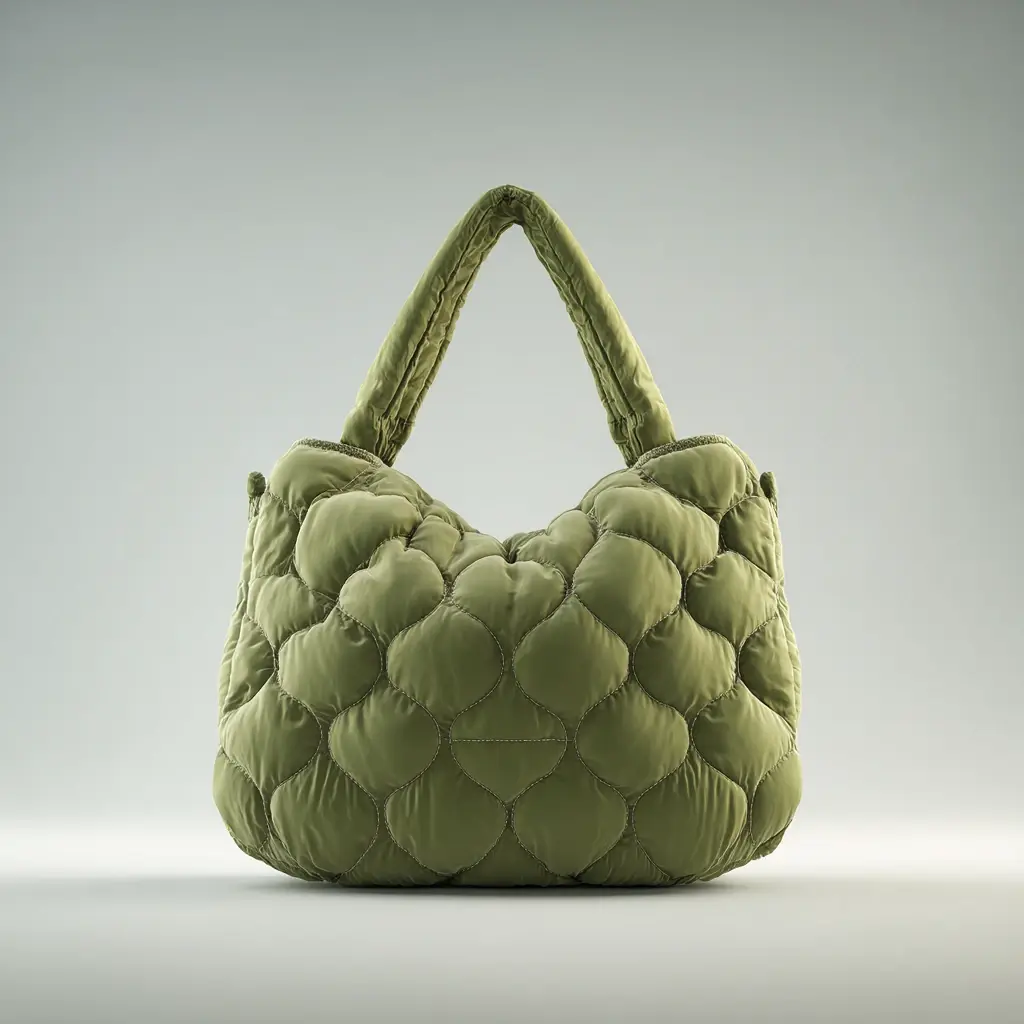
- Three Tiers and One Floor
- What You Actually Get at 300 Pieces
- What Changes at 500 Pieces
- What Opens Up at 1,000 Pieces
- The Checklist: Which Tier Are You Buying?
- What Each Tier Costs Per Unit
- Conditions Attached to Each Tier
- Moving Up a Tier Without Overbuying
- What to Write in the Enquiry
- What Each Tier Does to the Calendar
- What a Failed Lot Costs at Each Tier
- Freight and Duty Per Piece at Each Tier
What do you actually get at 300, 500 and 1,000 pieces? Five hundred pcs per style and colourway is the standard floor and the baseline price; 300 is a paid exception carrying an 18-28% surcharge, limited to stocked materials and existing hardware; and 1,000 reduces the unit price by 6-12%, amortises custom tooling properly and earns a dedicated slot on the line. The tier you buy is not a discount ladder, it is a set of permissions: below 500 you are buying access to someone else's material and tooling, at 500 you are buying the right to specify, and at 1,000 you are buying priority. Run the nine-item checklist below before choosing, because the tier is decided by what you intend to change rather than by how many units you can afford.
The three tiers at a glance
Three Tiers and One Floor
The tier language confuses buyers because it sounds like a volume discount, and it is not. A quantity tier is a set of permissions earned by clearing the fixed costs that sit under every run: the material lot, the trimming and hardware lots, the plating bath and the 4-6 hours of line changeover. Below the floor, those fixed costs are not cleared, so the run either has to borrow someone else's material and tooling or pay a surcharge. Above it, they are cleared with room to spare, so the unit price falls and additional permissions open up.
- 300 pcs: access. You build from what already exists: stocked materials, existing hardware, no new tooling.
- 500 pcs: specification. You choose the material, the colourway and the branding, and the tooling is opened for you.
- 1,000 pcs: priority. You get a dedicated slot, a better amortisation of tooling and a price that can be held across a season.
One clarification prevents most arguments: the minimum is 500 pcs per style and per colourway, not 500 in total. Two colourways of one style is 1,000 pieces, because each colourway is its own dye or coating lot with its own minimum. A brand that wants three silhouettes in two colours is discussing 3,000 pieces, and the tier it lands in is decided per style and colourway rather than across the whole order.
What You Actually Get at 300 Pieces
Three hundred pieces is not a tier, it is an exception, and it should be quoted as one. What it buys is a real production run at a real standard, built from materials that already exist and hardware that is already tooled. What it does not buy is choice. The material comes from what is stocked or from a shared lot; the hardware comes from an existing catalogue finish; the branding is usually limited to methods that need no new die, such as a woven label from a stock loom or a heat transfer. The unit price carries a surcharge of 18-28% against the 500-piece baseline, and in some programmes the run is simply billed at the 500-piece quantity.
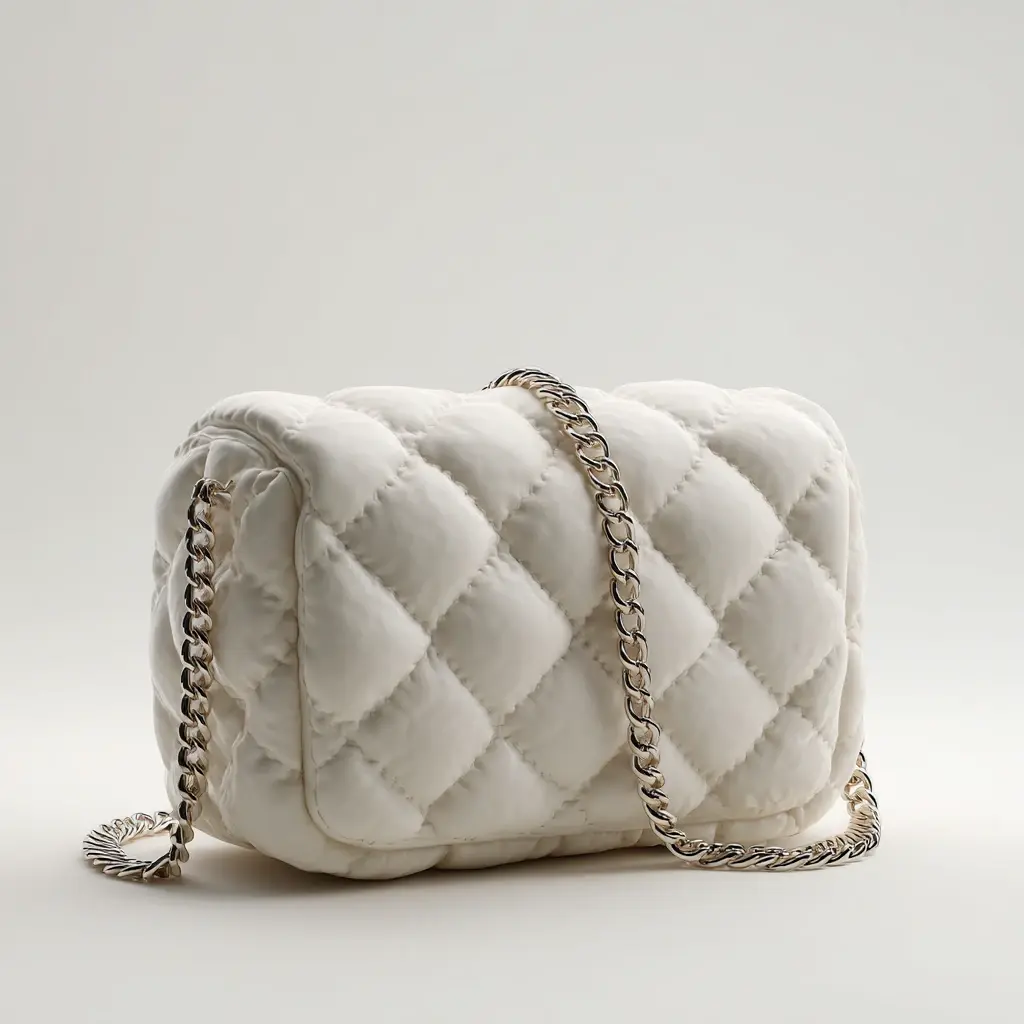
- Materials: stocked or shared lots only; a Pantone TCX match is not available at this quantity.
- Hardware: existing catalogue finishes; a custom mould or a colour-matched plating bath will not be amortised.
- Branding: methods that need no new tooling, or a die charged as a one-off line.
- Scheduling: fitted into gaps on a line rather than given a slot of its own.
- Price: 18-28% above the 500-piece baseline, or billed at the 500-piece quantity.
What Changes at 500 Pieces
Five hundred pcs per style and colourway is the baseline, and the change is qualitative rather than quantitative. At this quantity the dye or coating lot reaches its own minimum, so the colourway can be matched to a Pantone TCX reference with a Delta E of 2.0 against an approved physical swatch. The plating bath can be amortised, so a custom hardware finish becomes available, subject to the hardware lot minimum which is commonly 500-1,000 pieces per fitting. Tooling for an embossing die or a woven label can be opened and amortised into the unit price rather than charged as a separate line. And the run earns a slot with a start date and a finish date.
- Colour becomes yours: a Pantone TCX reference, a lab dip of 7-10 days and a Delta E tolerance of 2.0.
- Hardware becomes yours: a custom finish at 24 hours under ASTM B117, or 48 hours for a premium line.
- Tooling opens: an embossing die or a woven-label setup, amortised into the unit price rather than billed separately.
- The run earns a slot, with a start date and a finish date in writing.
- The specification is yours to write: stitch density, seam allowance, interlining and reinforcement.
What Opens Up at 1,000 Pieces
At 1,000 pieces the unit price falls 6-12% against the 500-piece baseline, and the permissions widen again. Tooling amortises properly: an embossing die spread over 1,000 units costs half what it costs over 500. The run can be given a dedicated slot rather than a shared one, which matters in the months when 60-70% of capacity is already committed. A second colourway of the same style becomes a separate 500-piece lot that shares the pattern setup, which is the cheapest way to add a colour. And a price can sometimes be held across a season rather than across an order, which is what turns a purchase into a programme.
| Item | 300 pcs | 500 pcs | 1,000 pcs |
|---|---|---|---|
| Unit price | +18-28% | Baseline | -6-12% |
| Colour | Stocked shades | Pantone TCX match | Pantone match plus a second lot |
| Hardware | Catalogue finish | Custom finish, 24 h salt spray | Custom finish, 48 h available |
| Tooling | Charged as a one-off | Amortised into the unit | Amortised over twice the units |
| Scheduling | Fitted into gaps | Own slot with dates | Dedicated slot, priority |
| Price hold | Per order | Per order | Sometimes per season |
| Best for | Market tests, repeats | First private label line | Proven styles, seasonal runs |
The Checklist: Which Tier Are You Buying?
Nine items decide the tier, and they are about intent rather than budget. Answer them in the order below and the tier follows. The first three are the ones most often answered wrongly: a brand that wants a custom finish has already disqualified itself from 300 pieces, whatever its budget.
- Do you need a specific colour? If yes, 300 is out; a Pantone TCX match needs its own dye lot.
- Do you need custom hardware? If yes, 300 is out; the bath will not amortise.
- Do you need new tooling? If yes, 300 is out, and at 500 ask whether it is amortised or billed separately.
- Is the silhouette proven? If not, buy less and test before specifying.
- Is this a first line or a repeat? A repeat with retained tooling can run at 500 with no sampling window.
- How many colourways? Each one is its own lot with its own 500 minimum.
- When must it land? A tight date argues for a dedicated slot, which argues for 1,000.
- Will you reorder within twelve months? If yes, 500 now with a reserved slot beats 300 twice.
- Is the target retail price fixed? If it is, the specification has to be engineered to a ceiling, which is easier at 500 than at 300.
What Each Tier Costs Per Unit
The price movement between tiers is arithmetic, and knowing the mechanism makes it negotiable in a way that asking for a discount never is. Four fixed costs sit under every run. The dye or coating lot has a minimum quantity regardless of how many bags are cut from it. The trimming and hardware lots arrive in set sizes. The plating bath costs the same for 300 or 3,000 pieces. And the line changeover of 4-6 hours is charged against the run whatever its size. Spread over 300 units those four dominate the unit price; spread over 1,000 they shrink to a modest share.
| Fixed cost | At 300 pcs | At 500 pcs | At 1,000 pcs |
|---|---|---|---|
| Dye or coating lot | Dominates | Normal share | Half the share |
| Hardware and trim lots | Dominates | Normal share | Half the share |
| Plating bath | Dominates | Amortised | Well amortised |
| Line changeover, 4-6 hours | High per unit | Baseline | Half the baseline |
| Tooling | Billed separately | Amortised | Amortised over double |
| Net effect on unit price | +18-28% | Baseline | -6-12% |
Conditions Attached to Each Tier
Every tier carries conditions that are easy to miss at quotation and expensive to discover later. At 300, the condition is substitution: if a stocked material runs out, the run either waits or changes, and the brand has little say. At 500, the condition is the tooling clause: whether the die is owned, stored and never run for another brand. At 1,000, the condition is the price-hold window and what happens to the balance of the quantity if it is not called off inside it. All three should be in the order rather than in the email.
- At 300: ask what happens if the stocked material is exhausted before the run is cut.
- At 500: ask who owns the tooling, where it is stored and whether it will run for another brand.
- At 1,000: ask how long the price is held and what happens to an uncalled balance.
- At every tier: confirm the inspection standard remains AQL 2.5 under ISO 2859-1 with a written report.
Moving Up a Tier Without Overbuying
Three legitimate routes reach 500 without buying 500 pieces you cannot sell. Share a material across styles: three silhouettes in one colourway from one dye lot is 1,500 pieces of material buying and three 500-piece runs, and the material lot is no longer the constraint. Run the tier as a repeat: a second order of the same style and colourway, placed within twelve months, uses retained tooling and needs no sampling window. Or reserve the second half: commit to 1,000, run 500 now and hold the rest at the same price, which is the structure that gets the 1,000-piece price without the 1,000-piece outlay.
- Share the material across silhouettes, so one dye lot serves three 500-piece runs.
- Run it as a repeat within twelve months, with tooling and the specification already on file.
- Reserve the second half at the 1,000-piece price and release it when sell-through justifies it.
- Do not simply ask for 500 at a 300 price; the fixed costs are still there and the quotation will say so.
What to Write in the Enquiry
The tier question is answered fastest when the enquiry contains four numbers. Quantities per style and per colourway, stated separately. Whether the colourway is a Pantone TCX match or a stocked shade. Whether the hardware is catalogue or custom, with the salt-spray target. And whether new tooling is needed. Add a target retail price per SKU so the specification can be engineered to a ceiling, and the answer will arrive as a price per tier rather than as a question about the tier.
- Quantities per style and per colourway, stated separately, because 500 is per style and per colourway.
- Colour method: a Pantone TCX reference, or a stocked shade if the quantity is below 500.
- Hardware: catalogue finish or custom, with 24 or 48 hours under ASTM B117.
- Tooling: new, existing, or none.
- Target retail price per SKU, so the specification can be engineered to it.
Two neighbours carry the adjacent arithmetic. The MOQ floor at 500 pieces per style and colourway explains the fixed costs behind the number, and the phased order guide shows how to reach a higher tier's price without the higher tier's outlay. Programmes coordinated through our validated partner factory Quanzhou Yingming Bags quote at 500 pcs per style and colourway as standard, with 7 production lines, about 200,000 pcs per month, inspection at AQL 2.5 under ISO 2859-1 and export experience since 2014.
What Each Tier Does to the Calendar
Quantity buys permissions and it also buys time, though not in the way most buyers expect. The production window is the same at every tier; what changes is the wait before it opens and the certainty of the date once it does. A 300-piece order is fitted into gaps on a line, so the start date moves with other people's schedules, while a 1,000-piece order carries a slot with a named start and finish.
| Stage | 300 pcs | 500 pcs | 1,000 pcs |
|---|---|---|---|
| Quotation from a complete brief | 3 working days | 3 working days | 3 working days, 5 for a capsule |
| Sampling | 6-10 working days | 6-10 working days | 6-10, or 12-15 complex |
| Wait for a production slot | 5-15 days, into gaps | Booked at deposit, held 10 days | Priority, named start date |
| Bulk production | 35-50 days | 35-50 days | 35-50 days |
| Enquiry to handover, typical | 47-70 days | 40-60 days | 40-58 days |
Add 18-38 days of sea transit from Xiamen by lane and the spread between the fastest and slowest tier is two to three weeks of calendar, nearly all of it before cutting starts. A buyer working to a fixed launch date should buy the slot rather than the discount, which usually means 500 pieces with a deposit rather than 300 with a question mark attached.
What a Failed Lot Costs at Each Tier
The tier decision changes the size of the loss as well as the size of the order. A lot that fails at AQL 2.5 has to be sorted, reworked or remade, and each of those is priced against the number of units involved. The table uses a USD 13.40 baseline with the 300-piece surcharge of 18-28 per cent and the 1,000-piece reduction of 6-12 per cent applied to it.
| Tier | Goods value | Sample size and reject number | Cheapest remedy |
|---|---|---|---|
| 300 pcs | USD 4,950 | 50 drawn, 4 defects fails | Sort on site, USD 120-180 for one worker-day |
| 500 pcs | USD 6,700 | 50 drawn, 4 defects fails | Sort plus a re-check at USD 180-220 |
| 1,000 pcs | USD 12,200 | 80 drawn, 6 defects fails | Sort and claim; rejection costs 35-50 days |
The asymmetry is the point. A failed lot at 300 pieces is a bad afternoon and about USD 180; the same proportion of defects at 1,000 pieces is USD 360-540 of sorting plus a re-inspection, and a rejection at either tier costs a full 35-50 day production cycle. Risk per unit falls as quantity rises, which is the opposite of how the tier argument is usually made.
Freight and Duty Per Piece at Each Tier
Tier comparisons usually stop at the unit price, and the unit price is where the tiers are closest. Freight and duty are where they diverge, because both contain fixed charges that do not shrink with the order. On a tote packing 20 units to a 60 x 40 x 40 cm carton of 0.096 cbm, the three tiers cube out as follows at USD 60-110 per cbm plus USD 55-75 of documentation.
| Tier | Cube | Ocean plus documentation | Freight per piece |
|---|---|---|---|
| 300 pcs | 1.44 cbm | USD 141-233 | USD 0.47-0.78 |
| 500 pcs | 2.40 cbm | USD 199-339 | USD 0.40-0.68 |
| 1,000 pcs | 4.80 cbm | USD 343-603 | USD 0.34-0.60 |
Duty moves in the same direction and by more: at 3 per cent of FOB on a leather outer surface under HS 4202.21 it adds USD 0.40 a piece at every tier, and on a man-made outer surface at 16-20 per cent it adds USD 2.14-2.68. Freight and duty together are therefore USD 0.87-1.18 a piece at 300 and USD 0.74-1.08 at 1,000, which narrows the gap between the tiers without ever closing it. The landed cost method sets the whole calculation out line by line.
Get your quantity quoted at three tiers
Send silhouettes, colourways and a target retail price. A private label coordinator will return 300, 500 and 1,000 side by side with what each tier permits. Get a quote.
Frequently Asked Questions
What is the minimum order quantity for private label handbags?
500 pcs per style and per colourway, which is the standard floor and the baseline price. Each colourway is its own dye or coating lot with its own minimum, so two colours of one style is 1,000 pieces rather than 500 split in half.
Can I order 300 handbags instead of 500?
Yes, as a paid exception rather than as a tier. Expect a surcharge of 18-28% per unit, or a run billed at the 500-piece quantity, and accept stocked materials, catalogue hardware and branding that needs no new tooling.
What do I get at 500 pieces that I do not get at 300?
Specification rights. The dye lot reaches its own minimum, so a Pantone TCX match becomes possible at Delta E 2.0; the plating bath amortises, so a custom hardware finish at 24 hours under ASTM B117 becomes available; and tooling can be amortised into the unit price rather than billed separately.
How much does the unit price fall at 1,000 pieces?
Typically 6-12% below the 500-piece baseline, and 10-18% at 2,000. The fall is arithmetic: the dye lot, the hardware lots, the plating bath and the 4-6 hour line changeover are all fixed, so spreading them over twice as many units halves their share of the price.
Does a custom hardware finish have its own minimum?
Yes, commonly 500-1,000 pieces per fitting, independent of the bag quantity. A plating bath costs the same for 300 or 3,000 pieces, which is why custom hardware is the first thing to disappear when a run drops below 500 and the first thing to become affordable above it.
Is the minimum 500 per style or across the whole order?
Per style and per colourway. Three silhouettes in two colours is 3,000 pieces, not 500. Where a brand cannot reach 500 per style and colourway, the usual answer is to share one material across several silhouettes rather than to ask for a lower minimum.
Who owns the tooling at 500 pieces?
You should, and it should be in writing before the deposit is paid. Ask whether the tooling charge is amortised into the unit price or billed as a separate line, where it is stored, how long it is retained, normally 12-24 months, and whether it will ever run for another brand.
How can I reach the 1,000 piece price without buying 1,000 pieces?
Three routes: share one dye lot across several silhouettes so the material constraint is met once; run the order as a repeat within twelve months using retained tooling; or commit to 1,000 and reserve the second half at the same price, releasing it when sell-through justifies it.
Does the inspection standard change by quantity tier?
No. Every tier is inspected at AQL 2.5 under ISO 2859-1 with a written report, and the sample size is taken from the lot size: 50 units from 281-500 pieces with accept 3 and reject 4, and 80 units from 501-1,200 with accept 5 and reject 6.
What should I send to get a price quoted by tier?
Quantities per style and per colourway stated separately, whether the colourway is a Pantone TCX match or a stocked shade, whether the hardware is catalogue or custom with its salt-spray target, whether new tooling is needed, and a target retail price per SKU to engineer against.
Is a smaller first order better if the style is unproven?
Often yes. Where no silhouette has proven itself, a market test is the correct move and a 300-piece exception is a reasonable price for the information. The mistake is treating that test as the first order of a programme rather than as research before one.
People Also Ask
Why is 500 the floor rather than a round 100?
Because four upstream minimums cost the same at 100 as at 500: the dye lot, the trimming and hardware lots, the plating bath and the line changeover. Below roughly 500 units those fixed costs dominate the unit price.
Do two colourways of one style count as one run?
No. Each colourway is its own dye or coating lot with its own 500 minimum, so two colours of one style is 1,000 pieces. The pattern setup is shared, which is why adding a colour on a repeat is cheaper than adding a silhouette.
Can I get 500 pieces across three styles?
Not at the standard price. That is three runs of about 167 pieces each, each below the floor, so each carries the low-quantity surcharge. Sharing one material across the three helps, but the setup minimum applies per style.
Does a larger order get a better slot?
At 1,000 pieces and above, usually yes: the run earns a dedicated slot with a start and finish date rather than being fitted into gaps. In months when 60-70% of capacity is already committed, that difference is worth more than the price reduction.
Sources and further reading
Every figure on this page is either our own programme data or attributed below. Open the originals before you write them into a specification.
- FashionUnited — fashion industry news and dataFashionUnited Industry news and company data for the fashion sector.
- SATRA — technical services for leather, footwear and accessoriesSATRA Independent leather, hardware and accessories testing protocols.
- REACH — chemical substances regulationEuropean Commission Annex XVII restricts the substances that may appear in finished leather and coatings.