How to Phase a Large Handbag Order to Manage Cash Flow
How do you phase a large handbag order without wrecking the unit price? Three ways, and they are not equivalent: one run of 3,000 pieces at the baseline price, three batches of 1,000 every six weeks at 4-9% more per piece, or a first run of 1,500 plus a reserved repeat at 0-2% more. Phasing buys cash-flow relief at a known price of 4-9% on the unit, because every additional setup adds 4-6 hours of changeover and every additional dye lot adds a colour-matching risk that a single run does not carry. The third option is the one most brands miss: it defers half the cash without splitting the production at all.
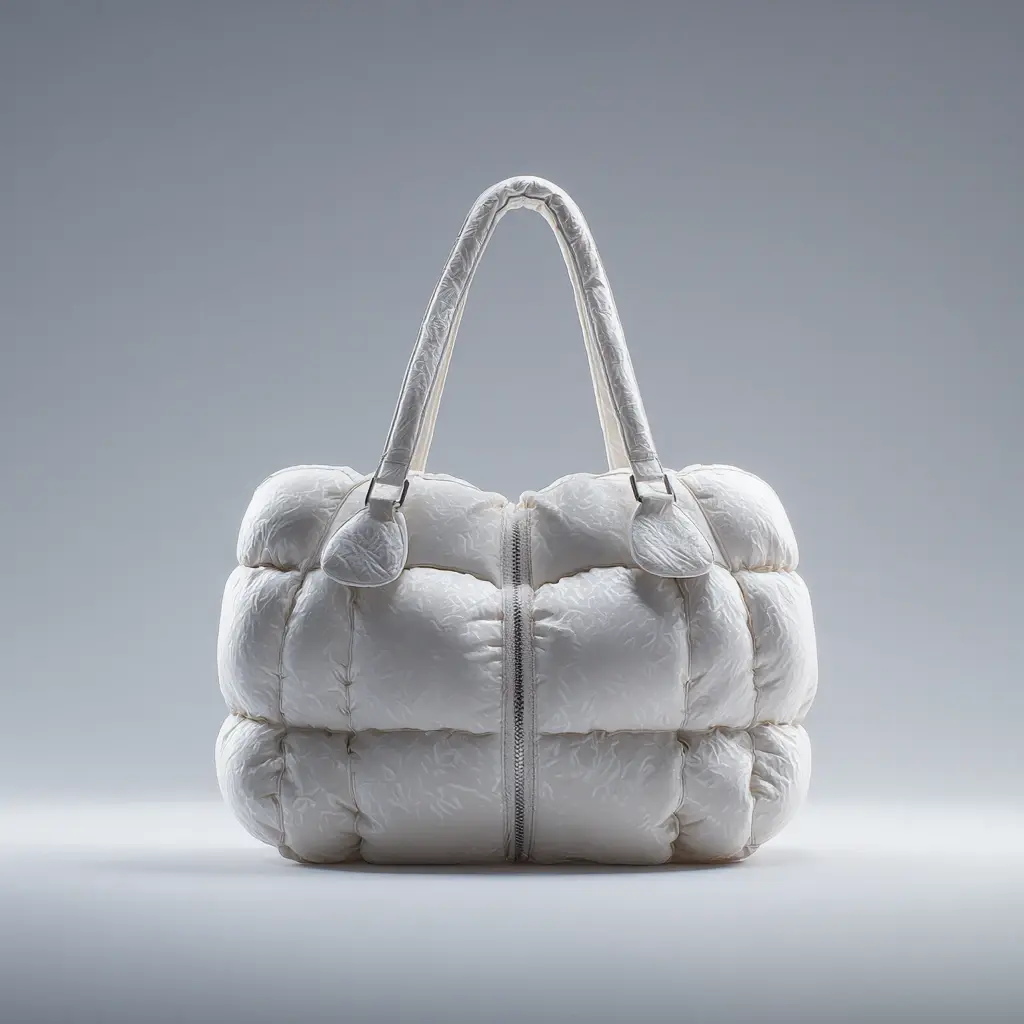
- Three Ways to Split One Order
- Option A: One Run, One Shipment
- Option B: Equal Batches Every Six Weeks
- Option C: First Run Plus a Reserved Repeat
- The Comparison Matrix
- What Phasing Does to the Unit Price
- What Phasing Does to the Calendar
- Where Phasing Breaks Down
- A Four-Line Decision Rule
- What the Deferral Is Worth in Cash Terms
- The Freight Penalty Nobody Prices
- Tying Each Batch to a Sell-Through Trigger
- What the Purchase Order Has to Say
How do you phase a large handbag order without wrecking the unit price? Three ways, and they are not equivalent: one run of 3,000 pieces at the baseline price, three batches of 1,000 every six weeks at 4-9% more per piece, or a first run of 1,500 plus a reserved repeat at 0-2% more. Phasing buys cash-flow relief at a known price of 4-9% on the unit, because every additional setup adds 4-6 hours of changeover and every additional dye lot adds a colour-matching risk that a single run does not carry. The third option is the one most brands miss: it defers half the cash without splitting the production at all.
The three options at a glance
Three Ways to Split One Order
Take a concrete case: a brand that has sold through a first line and now wants 3,000 pieces of one style in one colourway for a two-season horizon. The cash is not the problem in total; the problem is that it is all due inside eight weeks. Three structures exist, and they differ on four axes: when the money leaves, what the unit costs, how much storage is carried, and how consistent the colour is across the quantity. Everything else is detail.
- Option A puts all 3,000 on one line in one run and ships once.
- Option B splits into three equal batches, six weeks apart, with three setups and three dye lots.
- Option C runs 1,500 now and reserves a second 1,500 slot at the same price, deferred by an agreed number of weeks.
Option A: One Run, One Shipment
One run is the cheapest structure and the most demanding on cash. All 3,000 pieces share one setup of 4-6 hours, one dye lot, one first-piece check and one inspection lot under ISO 2859-1, so the unit price is the baseline against which the other two are measured. The cash shape is the difficulty: T/T 30% at deposit and 70% before shipment means roughly a third of the whole sum leaves in week one and the remaining two-thirds in week seven, with all of it arriving at once and all of it needing storage. At 20-30 pieces per carton, 3,000 units are 100-150 cartons, or roughly 5-8 pallets, which is a real monthly line in a warehouse budget.
- Best when the cash exists, the style is proven and the storage is already paid for.
- Colour consistency is the best of the three, because one dye lot covers everything.
- Capacity is simplest: one slot, one start date, one finish date.
- Risk is concentrated: one delayed vessel or one failed inspection affects the entire quantity.
Option B: Equal Batches Every Six Weeks
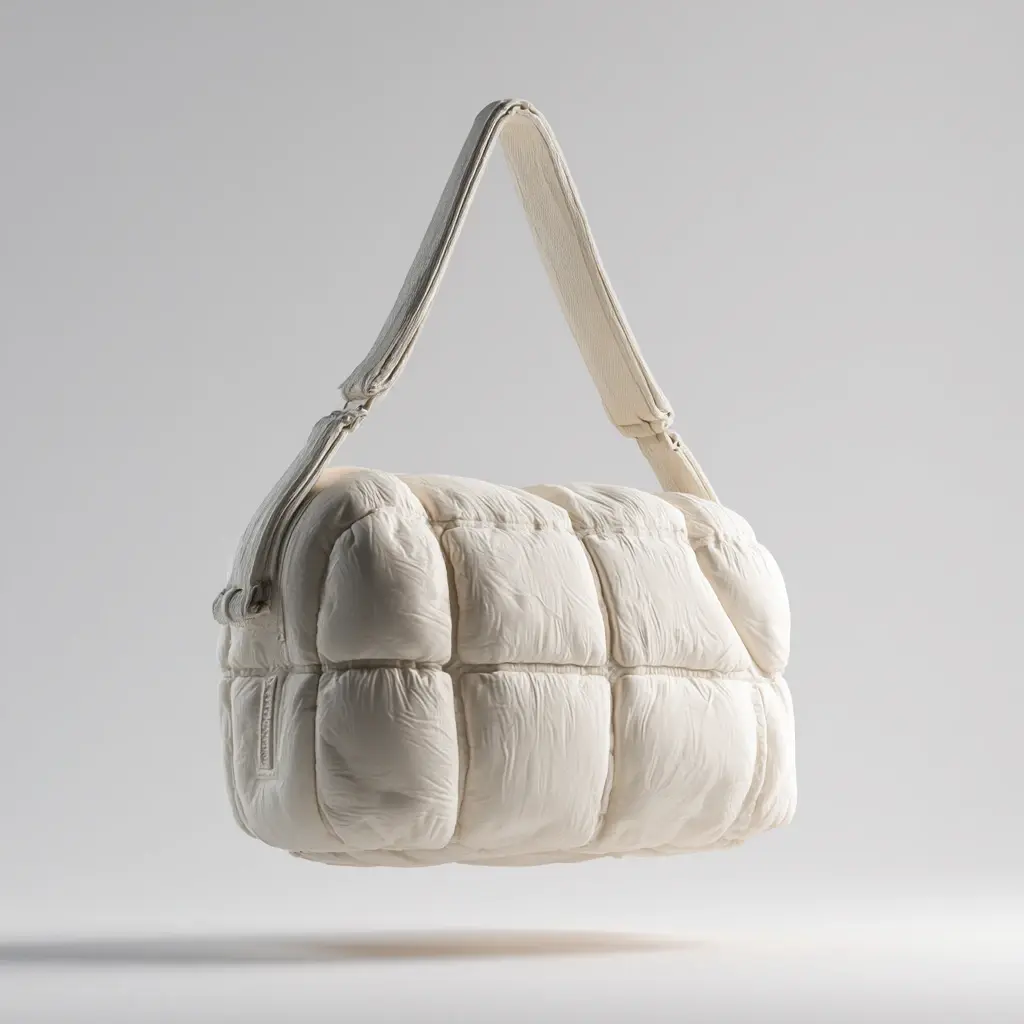
Three batches of 1,000, six weeks apart, is the structure brands reach for first, and it is the most expensive. Each batch carries its own 4-6 hour setup, its own cutting set and its own first-piece check, and each one is a separate dye lot, so the colour has to be matched three times against the approved swatch at a Delta E of 2.0 or better. The unit price rises 4-9%. What it buys is genuine: a third of the cash at a time, storage that never exceeds about two pallets, and the ability to stop after batch one or two if the style does not sell.
- Best when demand is uncertain and the option to stop has real value.
- The exit option is the real product. Batch two can be cancelled if sell-through disappoints.
- Each batch needs its own inspection at AQL 2.5, drawn from its own lot size under ISO 2859-1.
- Watch the calendar: three 35-50 day windows plus two six-week gaps can run past a season.
Option C: First Run Plus a Reserved Repeat
Option C is the one most brands never ask for. Run 1,500 now, and at the same time reserve a second slot of 1,500 for an agreed later date at the same unit price, with the tooling already paid for and the specification stored. The second run is a repeat: no 6-10 working days of sampling window, no new dye-lot search because the approved reference is on file, and no second tooling charge. The unit price rises 0-2% at most, because the only new cost is the second setup. The cash shape is close to Option B, and the risk profile is close to Option A.
- Agree the total quantity up front, so the price is quoted for 3,000 even though 1,500 runs first.
- Fix the second start date in writing, expressed as a week and a year, not as when we need it.
- Pay the deposit for run one only; the second deposit falls when the second run starts.
- Hold the dye-lot reference, so colour matching restarts from a standard rather than from a search.
- State the remedy if the second slot is not honoured, which is the clause that makes the reservation real.
The Comparison Matrix
Set side by side, the three structures differ far more on cash timing and colour risk than they do on headline price. Read the matrix by row: pick the row that matters most to your situation this season, and the column follows.
| Criterion | Option A: one run | Option B: three batches | Option C: reserved repeat |
|---|---|---|---|
| Unit price | Baseline | +4-9% | +0-2% |
| Cash at week one | 30% of 3,000 | 30% of 1,000 | 30% of 1,500 |
| Cash at peak | 70% in week seven | 70% of each batch | 70% of each run |
| Setups | 1 (4-6 hours) | 3 (4-6 hours each) | 2 (4-6 hours each) |
| Dye lots | 1 | 3 | 1 plus a matched reference |
| Colour consistency | Best | Needs Delta E 2.0 each time | Best, from the stored reference |
| Peak storage | 5-8 pallets | about 2 pallets | 2-4 pallets |
| Can you stop early | No | Yes, after any batch | Only by agreement |
| Calendar length | 35-50 days plus transit | up to 26 weeks | two windows, agreed |
| Best for | Proven styles with cash | Unproven demand | Proven demand, tight cash |
What Phasing Does to the Unit Price
The 4-9% is not a penalty, it is arithmetic. A line changeover of 4-6 hours is charged against the run whether the run is 500 or 3,000 pieces, so spreading it over 1,000 instead of 3,000 triples its share of the unit. A dye lot has its own minimum, so three lots cost more than one lot of the same total. Cutting is more efficient on a single large nest than on three small ones, and the yield on a hide improves by 3-5 percentage points when more panels are nested together. Add a second inspection under ISO 2859-1 and a second packing operation, and the range lands where it lands.
- Setup share: 4-6 hours spread over 1,000 pieces instead of 3,000.
- Dye lot minimums: three lots instead of one, each with its own minimum quantity.
- Cutting yield: 78-88% on a large nest, 3-5 points lower on three small ones.
- Inspection and packing: one lot at AQL 2.5 becomes three.
What Phasing Does to the Calendar
Phasing stretches the calendar in a way that surprises people. Option A is 35-50 days of production 35-50 days to the US West Coast or 30-38 to Northern Europe. Option B is three bulk windows with six-week gaps between them, which can run to 26 weeks from the first deposit to the last arrival, and which crosses the Chinese New Year shutdown if it starts late in the year. Option C is the shortest of the two-run structures: the first window is 35-50 days, and the second is 30-38 days because the sampling window of 6-10 working days is removed.
- Check every batch date against the February shutdown, which runs 15-21 days.
- Check the last batch against the autumn shipping peak, which adds 4-10 days to a booking.
- Remember that a repeat can skip sampling, removing 6-10 working days from the second window.
- Reserve the second slot while the first run is on the line, which is the cheapest capacity in the year.
Where Phasing Breaks Down
Phasing fails in three situations, and all three are predictable. It fails when the batches fall below the minimum: 500 pcs per style and colourway is the floor, so three batches of 300 will not be accepted at any price. It fails when the specification is still moving, because a revision issued during batch one has to be applied to batches two and three, and the three will not match. And it fails when the material is bought once for all three batches and then sits in storage, which converts a cash-flow saving into a material-obsolescence problem.
- Never phase below 500 pcs per style and colourway. Below that the fixed costs dominate and the price rises steeply.
- Freeze the specification before batch one and apply revisions only from batch four onwards.
- Call off material per batch rather than once for the whole quantity.
- Keep the inspection lots separate, so one report cannot hold up another shipment.
A Four-Line Decision Rule
The decision reduces to four lines, and it can be made in one meeting. If the style is proven and the cash exists, take Option A and negotiate on storage instead. If demand is genuinely uncertain, take Option B and accept the 4-9% as the price of an exit option. If demand is proven and the cash is tight, take Option C, which is the least-known and usually the best-value structure. And if the quantity is below 1,000 in total, do not phase at all: the minimum is 500 pcs per style and colourway, and at that level the arithmetic does not reward splitting.
Two neighbours carry the adjacent arithmetic. The MOQ floor at 500 pieces per style and colourway explains why batches below that number are quoted the way they are, and the seasonal drop schedule for 2026 shows where the February shutdown sits in a phased calendar. Programmes coordinated through our validated partner factory Quanzhou Yingming Bags run across 7 production lines at about 200,000 pcs per month with export experience since 2014, with T/T 30% at deposit and 70% before shipment under FOB Xiamen.
What the Deferral Is Worth in Cash Terms
Phasing is usually justified in words and then priced in percentages, which makes the two impossible to compare. Put them on the same sheet. On 3,000 pieces at a unit price of 21.40 USD the order value is 64,200 USD. Option A commits 30 per cent, or 19,260 USD, in week one and the remaining 44,940 USD in week seven. Option B commits 6,420 USD in week one and 14,980 USD ahead of each later batch. The gap between those two cash curves is what the premium has to beat.
- The premium is paid on the whole programme. A 6 per cent uplift on 3,000 pieces at 21.40 USD is about 3,850 USD, not the 1,280 USD the first batch suggests.
- The saving is only the carrying cost. Holding 1,500 fewer pieces for the four months a single run implies is worth roughly 2,600-3,200 USD at 2.0-2.5 per cent a month.
- Break-even sits near 3 per cent a month. Where capital is cheaper than that, phasing on cash grounds alone does not pay for itself.
- Option C inverts the result. At 0-2 per cent uplift the same deferral costs 0-1,280 USD, so that structure pays at almost any cost of capital.
The Freight Penalty Nobody Prices
Phasing also moves the freight line, and it moves it the wrong way. Three batches of 1,000 pieces almost always travel as less-than-container-load cargo, billed at 65-110 USD per cubic metre on weight or measure, while a single run of 3,000 normally reaches the volume where a container is charged as space rather than by the cube. Freight is the one line in the cost sheet that gets worse every time an order is split, and it is rarely in the comparison.
- One shipment of 3,000 pieces reaches full-container economics and lands near 0.85 USD per piece in freight.
- Three shipments of 1,000 stay in consolidated cargo and land nearer 1.35 USD per piece.
- Two shipments of 1,500 sit between the two, closer to 1.05 USD per piece.
- Every booking carries its own document set and terminal charges, typically 180-320 USD each beyond the freight itself.
Tying Each Batch to a Sell-Through Trigger
Option B is sold as an exit option, and most brands never define the condition that would make them use it. An exit option without a trigger is not an option, it is a hope. Fix the condition before batch one ships: a cancel or defer decision taken when a defined share of the first batch has sold, in a defined number of weeks, at full price. Written that way, the decision in week nine is arithmetic rather than a debate about optimism.
- Trigger on units, not dates. Sixty per cent of a lot sold is a signal; a date on the calendar is not one.
- Count full-price units only. A discounted sale does not prove demand and should not release the next batch.
- Start the clock at arrival, not at order. Sell-through begins when cartons are available to sell, not when the deposit left.
- Write the notice period into the purchase order, usually 14-21 days before the next slot is due to be filled.
What the Purchase Order Has to Say
A phased order is three orders wearing one coat, and the purchase order is where that has to be made explicit. Six lines convert a phased intent into something a planner can book and an inspector can check, and all six are quotable. Without them the second batch is re-quoted as a new order, which is how a brand that negotiated a price for 3,000 pieces ends up paying for 1,000 three times.
| Line | What it must state | Why it matters |
|---|---|---|
| Total quantity | 3,000 pcs, priced as one programme | Holds the volume tier even though 1,500 runs first |
| Run schedule | 1,500 now, 1,500 from week 22, named by week and year | A date described as later cannot be reserved |
| Price hold | Unit price held across both runs, in writing | Prevents the second run being re-quoted at spot rates |
| Material call-off | Per run, against the stored dye-lot reference | Stops material sitting in storage as dead stock |
| Inspection per run | AQL 2.5 under ISO 2859-1, separate lot and separate report | One failed lot cannot hold the other shipment |
| Remedy | What happens if a reserved slot is not honoured | This is the clause that makes the reservation real |
Ask for the same quantity quoted three ways
Send your total quantity, silhouettes and colourways. A private label coordinator will return Option A, Option B and Option C side by side, with the unit price, the cash shape and the calendar for each. Get a quote.
Frequently Asked Questions
What is the cheapest way to phase a large handbag order?
A reserved repeat. Run half the quantity now and reserve the second half at the same unit price for an agreed later date, which adds only 0-2% because the second run skips sampling, reuses the tooling and restarts colour matching from a stored dye-lot reference.
How much more does splitting an order into batches cost?
Typically 4-9% per piece on three batches of 1,000 versus one run of 3,000. The increase is a setup of 4-6 hours spread over fewer units, three dye lots instead of one, a lower cutting yield on smaller nests, and a separate inspection and packing operation for each batch.
Can I phase an order below 500 pieces per batch?
No. The minimum is 500 pcs per style and colourway, and a batch of 300 is quoted as a paid exception rather than as a tier. Below roughly 500 units the fixed costs dominate the unit price, so a smaller quantity comes back at a higher price per piece.
How does phasing affect the payment schedule?
Under T/T terms of 30% at deposit and 70% before shipment, phasing divides both payments. Option B means 30% of 1,000 in week one rather than 30% of 3,000, and the same 70% split at each shipment, which is the entire point of the structure.
What happens to colour consistency across batches?
Each batch is its own dye lot, so each has to be matched against the approved physical swatch at a Delta E of 2.0 or better under a defined light source. A single run avoids this entirely, and a reserved repeat comes closest, because the approved reference is already on file.
How long does a phased programme take in total?
Option A is 35-50 days of production 35-50 days of transit. Option B can run to 26 weeks from first deposit to last arrival once six-week gaps are included. Option C is shorter than two independent orders because the second run removes the 6-10 working days of sampling window.
Should I buy all the material up front for a phased order?
No. Call off material per batch. Buying once for the whole quantity converts a cash-flow saving into a storage and obsolescence problem, and it removes the flexibility to stop after the first batch, which is the main reason to phase at all.
When does phasing stop making sense?
When the total is below about 1,000 pieces, when the specification is still changing, or when the batches fall below the 500 pcs minimum. In each case the arithmetic works against splitting, and a single run with a negotiated storage arrangement is the better structure.
Can I cancel the later batches of a phased order?
Only if that right is written into the order. Option B usually permits cancellation with notice because each batch is a separate run; Option C is a commitment to two runs and is priced accordingly, so the cancellation right has to be agreed at the start rather than requested later.
Does phasing help with capacity reservations?
Yes. Each batch needs its own slot, and reserving the second slot while the first run is still on the line costs nothing and holds the price. It also protects against the 10-21 day slips that appear before the February shutdown.
What should the purchase order say about a phased order?
The total quantity and the price quoted against it, the quantity and start date of each run, whether the price is held across runs, what happens if a slot is not honoured, the inspection standard of AQL 2.5 under ISO 2859-1 per run, and any cancellation right with its notice period.
People Also Ask
Is phasing the same as splitting the shipment?
No. Phasing splits production into separate runs with separate setups and dye lots. Splitting the shipment sends one production run in two vessels, which affects freight and cash flow at the destination but not the unit price.
Which option gives the best cash-flow relief?
Option B, because only a third of the cash is committed at a time and the later batches can be cancelled. Option C is close behind and costs 4-7 percentage points less per piece, which usually makes it the better value.
Does a repeat order need a new deposit?
Yes, each run has its own T/T 30% deposit and its own 70% before shipment. What a repeat avoids is the tooling charge and the 6-10 working days of sampling window, not the payment structure.
How do I compare two phased quotations?
Ask each to quote the same total quantity in the same three structures, then compare the unit price, the cash at week one, the calendar to final arrival and the cancellation right. A quotation that only offers one structure is usually hiding the cost of the others.
Sources and further reading
Every figure on this page is either our own programme data or attributed below. Open the originals before you write them into a specification.
- China Briefing trade and manufacturing analysisChina Briefing Trade, tax and compliance analysis for sourcing from China.
- Incoterms rulesICC The rules that decide where cost, risk and insurance transfer.
- FashionUnited — fashion industry news and dataFashionUnited Industry news and company data for the fashion sector.