Do Wholesale Handbag Suppliers Offer Samples Before Bulk Orders
Do wholesale handbag suppliers offer samples before bulk orders? Yes, and the economics are predictable: sampling takes 6-10 working days from an approved brief and 12-15 working days on a complex construction, the sample fee typically sits between USD 45 and 120 for a stock-based style and is credited against a bulk order placed at MOQ 500 pcs per style / colourway. Add courier transit of 3-5 days and you have a decision window of roughly two to three weeks between brief and a physical bag in your hands, against a bulk run of 35-50 days that you are about to commit to. That ratio is the whole argument for sampling: about 1% of the order value and under a fifth of the production time buys the right to change your mind while changing it is cheap. Below is what the fee actually buys, the three variables that move it, and the checks that make an approval worth signing.
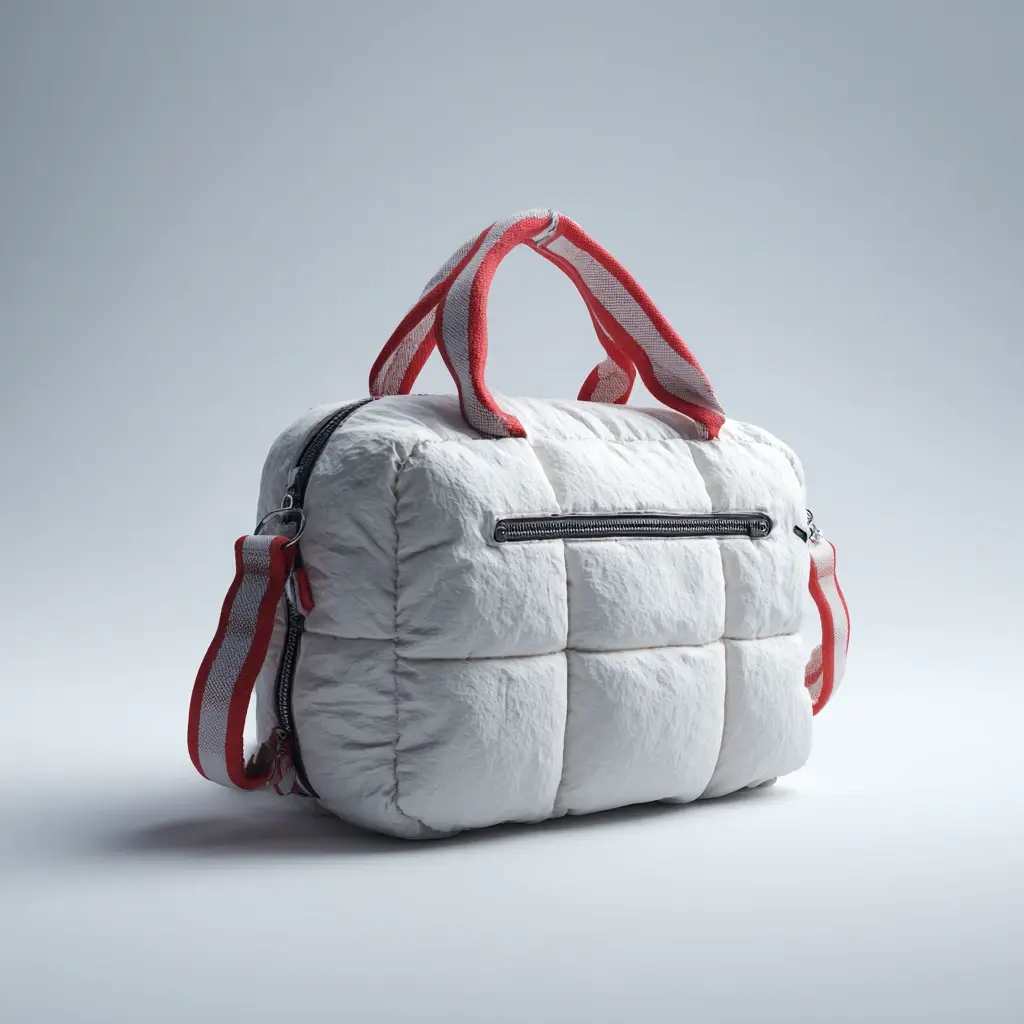
- What a Handbag Sample Costs, Line by Line
- What a Sample Costs in Time
- Sampling More Than One Colourway
- The Three Variables That Move Both Numbers
- Why the Sample Fee Exists at All
- What to Check Before You Approve
- When a Sample Is Free, and When to Be Careful
- How Sample Cost Relates to the Bulk Order
- From Approved Sample to Bulk Release
- A Forty-Minute Review the Day the Parcel Lands
- Revision Notes That Land in One Round
- Sampling a Second Style Without Doubling the Bill
Sampling at a glance
What a Handbag Sample Costs, Line by Line
A sample charge is not a markup; it is the recovery of a set-up that is genuinely more expensive per piece than bulk. One bag has to be patterned, cut singly rather than in a stack, assembled by the most experienced hands available, and finished without the benefit of a line that has been running the same operation for a week. On a stock-based private label style — an existing pattern with your material, colour and logo — the fee typically lands between USD 45 and 120. On a complex construction, or one needing sourced hardware, USD 120-200 is a normal range.
| Cost element | Typical range | Who bears it | Note |
|---|---|---|---|
| Pattern and grading set-up | USD 15-40 | Buyer | Waived where the pattern already exists |
| Single-piece cutting and sewing | USD 20-60 | Buyer | Higher on structured or framed bodies |
| Sourced hardware or trim | USD 10-70 | Buyer | Charged at purchase cost, not marked up |
| Logo tooling or plate | USD 30-150 | Buyer | One-off; reusable across later orders |
| Courier, 0.5-1.0 kg parcel | USD 35-60 | Buyer | 3-5 days door to door on an express service |
Reading the sample charge as a signal
The table is worth reading as a signal rather than as a bill. The line that tells you the most is the hardware one: if a style needs a moulded lock or a custom-plated pull, that component has to be bought or made before the sample can be assembled, and the cost — and the extra days — sit in front of everything else. The sample approval process explained covers each of these gates in the order they occur.
What a Sample Costs in Time
Time is the larger cost, and it is the one buyers under-budget. Sampling runs 6-10 working days from an approved brief for a standard construction and 12-15 working days when the build is complex. That clock starts when the brief is complete, not when the enquiry is sent, and a brief that arrives without dimensions, Pantone references or a logo file does not start the clock at all. Add express courier at 3-5 days, add your own evaluation time, and add a second round if the first needs changes: a realistic first sample cycle is two to three weeks, and a two-round cycle is four to six.
- Days 0-1: brief confirmed, dimensions, Pantone TCX references, logo vector file and packing spec received.
- Days 2-4: material and hardware sourced, pattern checked or graded, cutting released.
- Days 5-8: assembly, finishing, in-house measurement against the spec sheet.
- Days 9-10: photography, packing, despatch, and the tracking number sent to the buyer.
- Days 11-15: courier transit and buyer evaluation; revision brief issued if required.
Against that, bulk production runs 35-50 days from sample approval and deposit. The sampling window is therefore roughly a fifth of the production window, which is a useful way to think about the fee: you are buying the ability to compress uncertainty into the cheapest part of the calendar. Buyers who skip sampling to save two weeks routinely lose four times that in a bulk run that has to be reworked, and the lead time comparison between sampling and bulk shows how the two windows interact in a launch plan. The full route from enquiry to delivery is set out in the wholesale handbag programme guide.
Courier deserves its own line in the plan. An express parcel of 0.5-1.0 kg travels in 3-5 days door to door, but a sample with any declared commercial value can attract duty and clearance handling at the destination, and clearance occasionally adds two or three days that nobody budgeted. Ask for the parcel to be declared at a nominal sample value with the paperwork marked as such, and ask for the tracking number the day it leaves rather than the day it arrives, so any hold can be chased while it is still cheap to chase.
Sampling More Than One Colourway
The MOQ is written per colourway for a reason: each colour is a separate dye lot, a separate material booking and a separate run on the line, so a second colourway is not a variation of the first order but a second one. That makes colourway sampling disproportionately valuable. A first order placed in three colours without sampling all three is three bets placed on one piece of evidence, and colour is exactly the attribute that behaves differently between a lab dip and a production lot.
The efficient approach is to sample the fullest specification once, then order swatch cards for the alternative colourways rather than complete bags. A swatch card carrying the actual body fabric, the lining and the thread in the alternative colour costs a fraction of a sample and answers most of the question, because silhouette, construction and hardware are identical across colourways of the same style. Reserve a second full sample for cases where the colour change comes with a material change, such as moving from a coated fabric to a leather at a different substance.
The Three Variables That Move Both Numbers
Complexity is the first. A flat-pattern tote with stock hardware samples at the fast end of the range because nothing has to be sourced; a structured satchel with a framed lining, a moulded handle and a custom lock sits at the slow end because three separate supply chains have to converge. The practical test is to count the components that cannot be taken from a stock bin — if the answer is more than two, plan for the 12-15 day window and for a sample fee at the upper end.
Material is the second. A fabric or leather that is already on the shelf samples in days; one that must be dyed to a Pantone TCX reference adds a lab-dip cycle, and a colour match is approved against a tolerance rather than against an exact match. Plan on ΔE 1.5 as the working tolerance between the approved swatch and the production lot. The third variable is revision rounds, which is the one you control: a brief with complete dimensions, material references and logo placement usually approves in one round, and a brief with any of those missing usually takes two.
Why the Sample Fee Exists at All
Because a sample is a real production event with a real cost, and because it occupies the same skilled hands and the same bench space that a bulk order would use. A production line running at about 200,000 pcs per month across seven lines does not have a spare bench waiting for speculative work; a sample takes a slot that could have been cutting something else, and the fee is how that slot is allocated to the request that is most likely to become an order. and because a fee changes buyer behaviour in a way that benefits both sides. A buyer who has paid for a sample reads the spec sheet before sending it. A programme that charges for samples gets fewer speculative requests and can put genuine capacity behind the ones that arrive. The counter-argument — that the fee should simply be absorbed as a cost of sale — holds only at scale, and it is precisely the small first order where absorbing it hurts most.
Should the sample fee be credited against the bulk order?
On a private label run, yes, and it should be stated in writing before the sample is made. The normal arrangement is that the sample charge is deducted from the bulk invoice once the order is placed at or above the MOQ of 500 pcs per style / colourway. Ask two follow-up questions: how many revision rounds the arrangement covers, and whether the credit applies per style or once per order. A house that credits the fee on the first style and charges for subsequent ones is not being unreasonable, but you want to know before the second sample is cut rather than after.
What to Check Before You Approve
The six checks at sign-off
Approve against the spec sheet, in writing, with the sample number — never against a general impression. Six checks cover most of the risk on a first order: dimensions measured on the sewn sample against the written figures, colour against the Pantone reference within the agreed ΔE tolerance, stitch density and seam finish, hardware plating and function through at least 200 open-close cycles on a zip, strap and handle pull strength, and the position and method of your logo. Photograph the sample on a neutral background and keep it, because it becomes the physical reference that a bulk inspection is judged against.
Two checks are habitually skipped and cause disproportionate trouble. The first is the lining: it is the part a customer sees when they open the bag and the part most often substituted in bulk, so note its denier and colour in writing. The second is weight and hand-feel, which no drawing captures; a tote that weighs 480 g and one that weighs 620 g are different products to a customer even if every dimension matches. If the destination market carries substance restrictions, ask for a REACH declaration against Annex XVII and a Prop 65 assessment for California at sample stage rather than at shipment.
When a Sample Is Free, and When to Be Careful
- Free and normal: a stock catalogue sample sent from existing inventory, with the buyer paying courier only.
- Free and conditional: a private label sample waived because the projected order is well above the MOQ.
- Free and worth questioning: a sample waived with no order commitment asked for and no spec requested.
- Charged and normal: any style needing sourced hardware, custom tooling or a dyed-to-match material.
- Charged and worth questioning: a fee for a plain stock pattern with no change of any kind.
Free is not automatically better. A sample that arrives without anyone asking for your dimensions, Pantone references or logo file has not been made against your specification, and approving it approves nothing. What you want is not a free bag but a documented one, and the sample room checks that predict bulk quality are the same whether the sample was charged for or not. On leather, ask for the tannery reference and check it against the Leather Working Group audit protocol rather than accepting a logo on a card.
How Sample Cost Relates to the Bulk Order
Run the sample fee as a percentage of the order and it is usually trivial. A USD 90 sample against 500 pieces at an FOB Xiamen unit price in the teens is well under 1.5% of the order value, and the courier is a rounding error against ocean freight on the same shipment. What is not trivial is the decision quality it buys: a buyer who has held the bag knows whether the handle drop is right, whether the lining colour works, and whether the hardware feels cheap, and none of those judgements can be made from a photograph or a drawing.
There is also a signalling effect worth understanding. A buyer who samples properly, approves in writing and then places the order at the MOQ is a buyer whose second order will be handled faster: the pattern exists, the material is booked, the hardware supplier is known, and the line has run the operation before. The second bulk run on a reordered style is routinely smoother than the first for exactly this reason, which is why the sample fee is better understood as an entry cost to a repeatable programme than as a charge on a single transaction.
The relationship also runs the other way. Sampling is where the bulk price is actually fixed, because material choice, hardware specification and construction method are all settled at approval. A buyer who treats sampling as a formality and bulk as the negotiation is doing it backwards; by the time bulk starts, the cost structure is set, and the only remaining lever is quantity. That is why the MOQ and pricing discussion belongs before sampling rather than after.
From Approved Sample to Bulk Release
Approval triggers three things: the deposit request, the material booking, and the production slot. Bulk then runs 35-50 days, and inspection is set at AQL 2.5 under ISO 2859-1 with critical defects held at zero. Keep the approved sample as the reference, keep the written approval with its sample number, and issue a new sample number for any change made after approval, however small. An undocumented change is the most common cause of a bulk run that looks wrong through no fault of the line that made it.
Send the silhouette, material direction, Pantone references and logo file together, and a private label coordinator will confirm the sampling window, the sample fee and its credit terms against a 500-piece order before a single piece is cut. Get a quote.
A Forty-Minute Review the Day the Parcel Lands
Samples drift into a second round because they are left on a desk for three days and then reviewed from memory. A fixed sequence, run the day the parcel arrives and written down before anybody forms a view, turns a vague impression into a decision that the next round can be measured against.
- Minutes 0-5, unbox and record. Photograph the bag as received, note the weight in grams and the courier condition, and file the tracking number with the sample number.
- Minutes 5-15, measure. Body width, height and gusset at plus or minus 2 mm, handle drop at plus or minus 5 mm, strap at plus or minus 10 mm. Write the figures next to the specification rather than underneath it.
- Minutes 15-25, colour and hand. Compare against the approved swatch under D65 and in daylight, and note any Delta E you can see rather than any you can measure.
- Minutes 25-35, function. Two hundred open and close cycles on the zip, a 25 kg pull held for one minute at each strap anchor, and the hardware finish under a loupe.
- Minutes 35-40, write the verdict. Approve, or issue one numbered list. A verdict that is not written within forty minutes is usually a verdict taken a week later and remembered wrongly.
Revision Notes That Land in One Round
A revision round costs 6-10 working days plus 3-5 days of courier, so the quality of the notes is worth more than the speed of the sample. The failure mode is always the same: a paragraph describing a fault, which the bench has to interpret, followed by a second round that fixes the interpretation rather than the bag.
- Number every item and refer to the annotated photograph, not to a description. Item 3, photograph 3a, is unambiguous in any language.
- Separate must-fix from nice-to-have, so the round can be closed on the must-fix list alone and a second round is not triggered by an opinion.
- Give a target, not a direction. Handle drop 240 mm rather than handle drop a bit longer; 8 stitches per inch rather than tighter stitching.
- Send the list once. Consolidated notes sent on day three beat three emails sent across a week, each of which restarts the review.
Sampling a Second Style Without Doubling the Bill
A first line is usually two styles rather than one, and paying two full sample fees for two shapes in the same material is avoidable. Three economies are available, and together they usually cut the second sample to a fraction of the first.
- Share the material buy. Two styles in one leather family can be sampled from the same hide or roll, so the material line is charged once and the cutting is charged per piece.
- Share the branding setup. An embossing die at USD 80-260 and a woven-label setup at USD 60-140 are one-off per mark, not per style, so the second style carries no branding tooling.
- Swatch the second style instead of sampling it. Where the second style shares silhouette and construction with the first, a swatch card in the alternative material answers most of the question at a few dollars rather than USD 45-120.
- Skip sampling entirely on a repeat. Where the drawing is unchanged and the retained reference exists, the run goes straight to bulk and 6-10 working days come out of the calendar.
Start with a sample, not with a guess
MOQ 500 pcs per style / colourway, sampling in 6-10 working days at USD 45-120 credited against the bulk order, then 35-50 days of production inspected at AQL 2.5. Send the brief and the sample comes back documented. Get a quote.
Frequently Asked Questions
Do wholesale handbag suppliers provide samples before a bulk order?
Yes. On a private label run the standard arrangement is a paid sample made to your brief in 6-10 working days, or 12-15 for a complex construction, with the fee credited against a bulk order placed at the MOQ. A stock catalogue sample from existing inventory is often free, with the buyer paying only the courier.
How much does a handbag sample usually cost?
Between USD 45 and 120 for a style built on an existing pattern with your material, colour and logo, rising to USD 120-200 when hardware must be sourced or tooling is needed. Express courier on a 0.5-1.0 kg parcel adds USD 35-60 and is normally the buyer's cost.
Is the sample fee refunded when I place the bulk order?
Usually yes, deducted from the bulk invoice once the order reaches MOQ 500 pcs per style / colourway. Confirm two things in writing before the sample is cut: how many revision rounds the credit arrangement covers, and whether it applies once per order or once per style.
How long does sampling take before bulk production starts?
Six to ten working days from an approved brief for a standard construction, and twelve to fifteen for a complex one. Add 3-5 days of express courier and your own evaluation time, so a realistic first cycle is two to three weeks and a two-round cycle is four to six.
Why is there a charge for a sample at all?
Because a single bag has to be patterned, cut singly rather than in a stack and assembled by experienced hands, which is genuinely more expensive per piece than bulk. The fee also improves the brief: buyers who pay for a sample send complete dimensions, colour references and logo files.
Can I get a free sample of a wholesale handbag?
Yes for a stock catalogue style sent from existing inventory, where you pay only the courier, and sometimes for a private label sample when the projected order is well above the MOQ. Be cautious of a free sample made with no spec requested, because it has been built against nothing you can hold anyone to.
What should I check on the sample before approving it?
Dimensions measured on the sewn sample, colour against the Pantone reference within about ΔE 1.5, stitch density and seam finish, hardware function through at least 200 zip cycles, strap and handle pull strength, and logo position and method. Note the lining by denier and colour, and record the weight.
How many sample rounds are normal?
One for a complete brief and two for a first order, which is not a failure. Three rounds usually signals that the brief lacked numbers rather than that the build is difficult, so the fastest way to reduce rounds is to send dimensions, Pantone references and the logo file together.
Does the sample set the bulk price?
Effectively yes. Material choice, hardware specification and construction method are all settled at sample approval, and after that the only remaining lever is quantity. Treat sampling as the negotiation and bulk as execution, rather than the other way round.
What happens to the approved sample once bulk starts?
It becomes the physical reference that the bulk run and the inspection are judged against, so keep it, keep the written approval with its sample number, and issue a new sample number for any change made afterwards. An undocumented change is the usual cause of a bulk run that looks wrong.
Should I ask for compliance documents at sample stage?
Yes. Request a REACH declaration against Annex XVII for the EU and a Prop 65 assessment for California while the sample is being made, and ask for the tannery reference on leather, checkable against the Leather Working Group audit protocol. Chasing these after production delays shipment.
Can sampling be skipped to save time on a first order?
It can, and it usually costs more than it saves. Sampling is roughly a fifth of the 35-50 day bulk window, so skipping two weeks of sampling risks a four-week rework on a run that has already been cut, sewn and packed to a specification nobody approved.
People Also Ask
Is one sample enough to judge a whole production run?
One sample tells you whether the specification is right, not whether the run will be consistent. Combine it with an inspection at AQL 2.5 under ISO 2859-1 on the finished lot, and keep the approved sample as the reference the inspector measures against.
What delays a handbag sample most often?
An incomplete brief. A sample clock starts only when dimensions, Pantone references, the logo vector file and the packing spec are all received, and a brief missing any one of those restarts the conversation rather than the clock.
Should I order two samples of the same style?
For a first order, yes, when the style is complex. Two pieces expose consistency problems a single piece hides, and the second can stay with you as the reference while the first travels for photography and buyer review.
Does a custom logo require tooling before sampling?
A debossed or embossed logo needs a plate, and a metal logo needs a mould or a die, both charged as one-off tooling at USD 30-150 and reusable on later orders. Heat transfer and woven labels need no tooling, which makes them cheaper on a first run.
Sources and further reading
Every figure on this page is either our own programme data or attributed below. Open the originals before you write them into a specification.
- SATRA — technical services for leather, footwear and accessoriesSATRA Independent leather, hardware and accessories testing protocols.
- REACH — chemical substances regulationEuropean Commission Annex XVII restricts the substances that may appear in finished leather and coatings.
- Leather Working Group — environmental auditing for tanneriesLeather Working Group Environmental audit protocol for tanneries and leather traceability.