The Private Label Handbag Sample Approval Process Explained
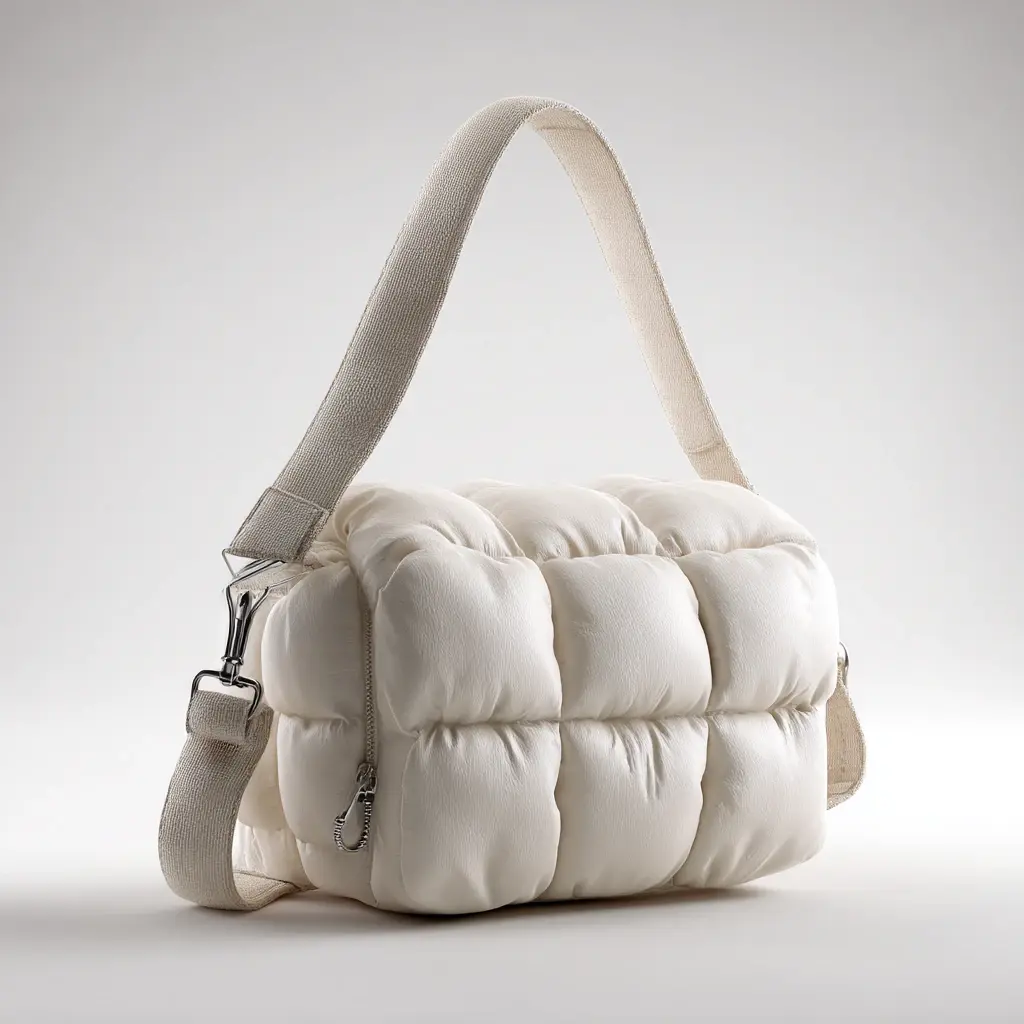
How does the private label handbag sample approval process actually work? It works as four sequential gates — a written specification, a first physical sample in 6-10 working days, a measured review against tolerances, and a signed counter sample that becomes the reference for the 35-50 day bulk run. Sample approval on a private label handbag programme is the point where a written specification becomes a physical reference unit, and nothing should be cut in bulk until that unit is signed. Most programmes that go wrong do not go wrong in production; they go wrong because the approval route was never chosen, so no one knew whether a photograph, a single round or a counter sample was being signed off. This page lays the four routes side by side, names the four sample types, gives the tolerances worth measuring, and prices what a late change costs.
- What Sample Approval Actually Decides
- Four Approval Routes Compared
- The Four Sample Types and What Each One Proves
- What to Measure on a Physical Sample
- Where Approval Slips the Schedule
- Revisions: What Changing After Approval Costs
- Documentation to Sign Off Before Bulk
- Who Approves What Inside Your Team
- Turning an Approved Sample Into a Purchase Order
- A Sample Approval Checklist You Can Copy
- The Review Kit: Six Tools and What Each Settles
- Defect Classes With the Counts That Apply
- When the Sample Fails: Triage and the Days Each Remedy Costs
How does the private label handbag sample approval process actually work? It works as four sequential gates — a written specification, a first physical sample in 6-10 working days, a measured review against tolerances, and a signed counter sample that becomes the reference for the 35-50 day bulk run. Sample approval on a private label handbag programme is the point where a written specification becomes a physical reference unit, and nothing should be cut in bulk until that unit is signed. Most programmes that go wrong do not go wrong in production; they go wrong because the approval route was never chosen, so nobody knew whether a photograph, a single round or a counter sample was being signed off. This page lays the four routes side by side, names the four sample types, gives the tolerances worth measuring, and prices what a late change costs.
Sample approval parameters
What Sample Approval Actually Decides
A sample is not a preview of the product; it is the contract for the product. Once a physical unit is signed, every carton in the bulk run is judged against it, and inspection at AQL 2.5 under ISO 2859-1 uses it as the reference. That is why approval deserves more time than sampling: 6-10 working days to make the bag, then 3-6 days that decide whether the next 35-50 days produce stock or a write-off.
Three things are decided in that window, and only one is aesthetic. First, dimensional: do body, gusset and strap drop match the specification inside tolerance. Second, material: is the hide, coating or canvas the one approved. Third, assembly: stitch density, edge finish, hardware action, closure alignment. Buyers who approve from a photograph discover the last two at inspection, when the only remedy is a re-sort.
The commercial parameters sit behind all of it. At MOQ 500 pcs per style / colourway, an approval error is multiplied by 500 rather than by one; at 35-50 days of bulk production, correcting it means the season moves. Approval is therefore the cheapest control point in the whole route, and the one most often compressed.
Four Approval Routes Compared
There is no single correct route; there is a correct route for the risk you are carrying. A repeat order of an unchanged specification needs almost nothing. A first order in a new material needs a counter sample cut from bulk material. Choose before sampling starts, because the route determines how many days you book.
| Route | How it works | Days | Risk left open |
|---|---|---|---|
| Photograph approval | Images and a video call; no unit in your hands | 1-2 | Highest — temper, drape and drop cannot be judged on a screen |
| Single physical round | One sample sent, measured, approved or rejected | 6-10 plus review | Medium — bulk implied by a prototype |
| Two-round with revision | First sample, written revision list, second signed | 12-20 plus review | Low — corrections are carried |
| Counter sample plus pilot | Counter sample from bulk material, then a pilot run | Adds 6-10 working days | Lowest — proves the line |
The route should get heavier as the order gets more novel. A repeat of a pattern already run three times in the same leather needs a single round. A first order in a new material or with new hardware needs two rounds, and a first order with a moulded closure is worth a pilot.
The Four Sample Types and What Each One Proves
Four words get used loosely in this trade — proto, salesman, counter and pre-production — and the confusion is expensive, because each proves something different. Ask which one you are being shown before you approve it.
- Proto sample. Built to test the pattern and assembly, often in a substitute material. It proves the shape works.
- Salesman sample. Built to show and photograph in the intended material. Proves appearance, not repeatability.
- Counter sample. Cut and sewn from the actual bulk material with the intended hardware. The unit to sign.
- Pre-production sample. First units off the line, to catch drift before 500 pieces inherit it.
What Is the Difference Between a Proto Sample and a Counter Sample?
A proto sample answers can this be made; a counter sample answers will the run look like this. The proto may use a substitute leather because the ordered hide has not landed, and may be sewn by a senior hand rather than on the line. The counter sample is built from the material that will be cut for your order. Approving a proto is the most common cause of bulk does not match the sample.
What to Measure on a Physical Sample
Measurement turns an opinion into an approval. Six checks take twenty minutes with a tape, a gauge and a light box, and catch the defects that later become returns. Write the tolerances into the specification before the sample arrives, so the review is a comparison rather than an argument.
| Check | Tolerance | Tool | Why it fails in bulk |
|---|---|---|---|
| Body width and height | ±3 mm | Tape or rule | Pattern drift or an unstated gusset change |
| Strap drop | ±5 mm | Tape, loaded | Webbing stretch under load; adjuster slip |
| Colour | ΔE ≤ 1.5 under D65 | Light box, grey scale | Dye-lot shift between sample and bulk |
| Stitch density | 7-9 per inch | Stitch gauge | A faster setting on the bulk line |
| Hardware action | Smooth, no binding | Hand, 10 cycles | Slider or magnet downgraded |
| Edge finish | No cracking at 180° | Hand and eye | Edge paint thinned or under-cured |
How Much Tolerance Should You Allow on a Handbag Sample?
Allow ±3 mm on body dimensions, ±5 mm on strap drop and a colour difference of ΔE 1.5 or less under D65 lighting. Tighter and you pay for precision nobody notices; looser and a 500-piece run drifts visibly across cartons. Stitch density is specified as a band, 7-9 per inch, because a single number invites a dispute about one stitch.
Two tests are worth requesting with the sample rather than with the bulk. A salt-spray result on plated hardware, tested to ASTM B117 with a stated hours-to-first-corrosion target, and a crocking result on any dark lining. Both are cheap, both are fast, and both catch the complaints that are most expensive to settle after the goods have shipped.
Where Approval Slips the Schedule
Every delay in this phase has the same shape: a decision that was deferred becomes a second sampling round, and a second round costs the same 6-10 working days as the first. Five deferrals account for most of them.
- No target retail price in the brief. Material is chosen twice: once by guess, once by correction.
- Colour approved on screen. Screens render temper and depth differently; the correction arrives late.
- Strap drop never measured. The most common revision item, and the one shoppers notice first.
- Hardware decided after the sample. Tooling is ordered early, so a late choice queues the run.
- Revision sent as a marked photograph. Circles produce assumptions; a numbered list produces a corrected bag.
The fix for all five is the same discipline: put numbers in the brief, measure the sample against those numbers, and return corrections as a numbered list with units. A revision list that reads strap drop 58 cm, not 63 cm cannot be misread, and it is the difference between one round and two.
Revisions: What Changing After Approval Costs
Changes are not free after signing; they are priced by how far into the run they land. The table is the practical guide to which changes are still cheap and which have become a re-cut.
| Change | Before bulk | After cutting | After packing |
|---|---|---|---|
| Branding position | Free if the die is unmade | Re-cut panels | Relabel or scrap |
| Hardware grade | Tooling reorder, days lost | Run waits or parts scrapped | Not recoverable |
| Material colour | New dye lot, new lead time | Re-cut the run | Not recoverable |
| Stitch density | A line setting | A line setting | Cosmetic |
| Packaging artwork | Print plates | Print plates | Overstick or rebag |
Read down the columns and the ordering rule is obvious: decide anything involving a die, a mould or a dye lot before bulk, and anything printed as late as you like. Branding position and hardware are early decisions; packaging artwork is a late one. The crossbody best sellers list shows how those early decisions are written into a brief for a small bag.
Documentation to Sign Off Before Bulk
A signed sample without documents is a sample, not a standard. Four documents travel with it, and each one is used later at inspection or at customs rather than at approval.
- The specification sheet — dimensions, tolerances, stitch density, interlining weight, hardware grades.
- The approved material swatch — attached, with the tannery or mill named where leather or canvas is used.
- The branding drawing — mark size, position and plating in microns, plus an ASTM B117 target.
- The compliance pack — REACH and Annex XVII reports, a Proposition 65 review, CPSIA, LWG references.
Which Quality Documents Travel With the Signed Sample?
Ask for the quality system reference alongside them. ISO 9001 certification of the facility running the order is a process claim rather than a product claim, and it is worth having on file; ISO 2859-1 is the sampling standard that governs how many units the inspector pulls at the end. Neither replaces inspection, but both make a dispute short rather than long.
Who Approves What Inside Your Team
Approval stalls inside the buyer's organisation more often than it stalls at the bench. Naming the approver for each dimension before the sample ships removes the pause where a bag sits in an office for a week waiting for someone to say yes.
- Dimensions and fit — whoever owns the specification, against the tolerance table.
- Colour and material — whoever owns the brand palette, judged in a light box rather than on a laptop.
- Branding position and size — whoever owns the brand guidelines, against the drawing.
- Compliance and labelling — whoever signs regulatory documents, before packing rather than after.
- Packaging and barcode — whoever owns channel requirements; a wrong symbology is a warehouse problem.
Give each of them a deadline in days. A review window of 3-6 days is realistic and worth stating in the purchase order, because a bulk slot is reserved against a date, and a sample sitting unapproved for two weeks can cost the slot as surely as a rejected one.
Turning an Approved Sample Into a Purchase Order
The purchase order is where the approved sample becomes enforceable. It should reference the sample by date and version, restate the tolerances and name the inspection standard, because good quality is not enforceable and AQL 2.5 under ISO 2859-1 is.
- Reference the signed sample: date, version and the photograph set.
- Restate quantity per style and per colourway at MOQ 500 pcs.
- Restate tolerances: ±3 mm body, ±5 mm strap drop, ΔE ≤ 1.5, 7-9 per inch.
- Name the inspection standard and whether third-party inspection is booked.
- State the trade term — FOB Xiamen — and tie payment to a document, not a date.
- Confirm tooling ownership in writing, and where dies and moulds are stored.
Tie payment to a document, not a calendar entry. A balance released against the inspection report protects you if the schedule slips; a balance released on a date does not. Then the launch calendar can be built on the real slot rather than the hoped-for one.
A Sample Approval Checklist You Can Copy
What follows is the checklist in the order it is used, from brief to signed unit. It fits on one page and is the fastest way to keep a programme inside a single sampling round.
- Send the brief with dimensions, strap drop, material, hardware grade and a target retail price.
- Confirm which sample type you will receive — proto, salesman or counter.
- Book the review window of 3-6 days with a named approver per dimension.
- Measure against the tolerance table under D65 light, loaded strap and all.
- Request the salt-spray result to ASTM B117 and the lining crocking result.
- Return corrections as a numbered list with units, not a marked photograph.
- Sign the counter sample; attach specification, swatch, drawing and compliance pack.
Programmes that follow this list spend their time once and buy their stock once. The alternative is familiar to anyone who has run a season: three sampling rounds, a bulk window starting late, and a launch date met by air freight. Where goods are destined for video-led selling, the social commerce specification notes add the packaging and weight checks that channel requires.
The Review Kit: Six Tools and What Each Settles
Approval is a measurement exercise, and a measurement exercise needs instruments. Six tools turn a twenty-minute review into a decision that will hold at inspection, and the whole kit costs less than one sampling round. The two that are most often missing are the light box and the test weight: without the first, colour is judged on a laptop and the argument starts three weeks later; without the second, a strap drop is measured unloaded while the customer measures it loaded.
| Tool | Specification | What it settles | Cost |
|---|---|---|---|
| Steel rule or tape | 1 mm graduations, 600 mm | Body +/- 3 mm, strap drop +/- 5 mm | Under 15 USD |
| Digital caliper | 0.01 mm | Thickness, hardware post length, prong stack | 25-60 USD |
| Light box | D65 at 1,000 lux, plus TL84 and illuminant A | Delta E 1.5 or better against the retained card | 180-420 USD |
| Grey scale | ISO 105-A02 for colour transfer | Crocking grade 4 dry and wet | 30-70 USD |
| Stitch gauge | Counts per inch | 7-9 per inch on three seams | Under 20 USD |
| Test weight | 5 kg, applied for 60 seconds | Loaded strap drop, base stud pull-through | 20-40 USD |
Defect Classes With the Counts That Apply
Everything found on a sample belongs to one of three classes, and the class decides whether it is a discussion or a rejection. A critical defect makes the bag unsafe or non-compliant, and no number of them is acceptable. A major is one a customer would return the bag for. A minor is one a customer would notice and keep. Naming the class in the specification is what stops an inspection becoming a negotiation, because the accept and reject counts are then fixed before anybody looks, and the standard behind them is set out in AQL 2.5 against 4.0.
| Class | Examples | Accept / reject at 50 drawn |
|---|---|---|
| Critical | Exposed sharp metal, a broken needle fragment, nickel release above the limit | 0 accepted; any one fails the lot |
| Major | Strap drop outside +/- 5 mm, colour above Delta E 1.5, stitch below 7 per inch, zip fails 10 cycles | 3 / 4 at AQL 2.5 |
| Minor | Thread end beyond 3 mm, edge paint bleed past 1.5 mm, label skew beyond 2 mm | 5 / 6 at AQL 4.0 |
When the Sample Fails: Triage and the Days Each Remedy Costs
A failed sample is not one problem, it is four, and the remedies cost between nothing and a full re-quote. Sorting the failure into the right class before responding is what keeps a bad first sample from costing a season. The test is short: is the failure in the document, in the material, in the assembly or in the geometry? The first is a correction, the second reopens a lot, the third is a line setting, and the fourth is a new development and should be priced as one.
| Failure | Remedy | Days | Cost |
|---|---|---|---|
| Dimension outside tolerance | Corrected inside the same round | 0-1 | 0.00 |
| Wrong material or colour | Re-cut from the correct lot | 6-10 | A new lot at 150-250 m |
| Assembly fault, stitch or edge | A line setting, checked on the first 20 units | 0-1 | 0.00 |
| Hardware of the wrong grade | Re-order and re-plate | 4-8 | 0.15-0.40 a unit |
| Geometry wrong for the market | Re-development, priced as new | 12-15 | Re-quoted from the drawing |
Approve a sample you can enforce
Send the specification and the target retail price. A private label coordinator will return a sampling plan of 6-10 working days, a tolerance sheet and a bulk window of 35-50 days at MOQ 500 pcs per style / colourway. Get a quote.
Frequently Asked Questions
What is the private label handbag sample approval process?
It is four gates in sequence: a written specification with tolerances, a first physical sample in 6-10 working days, a measured review over 3-6 days, and a signed counter sample that becomes the reference for bulk. The signed unit is what the pre-shipment inspection at AQL 2.5 under ISO 2859-1 is judged against, so approval is the cheapest control point in the whole programme.
How long does a handbag sample take?
A first sample takes 6-10 working days from an approved specification, and 12-15 working days where the construction involves a moulded frame, hand-woven panels or bonded reinforcement. The clock starts when specification and material are signed off, not when the first email arrives. A revision round then adds the same 6-10 working days again, which is why the brief should be complete before the clock starts.
What is the difference between a proto sample and a counter sample?
A proto sample proves that the pattern can be made and is often sewn in a substitute material by a senior hand. A counter sample is cut and sewn from the actual bulk material on the intended line with the intended hardware, so it proves what the run will look like. Approving a proto and expecting bulk to match it is the most common cause of the bulk does not look like the sample complaint.
How much dimensional tolerance should I allow?
Allow plus or minus 3 mm on body dimensions, plus or minus 5 mm on strap drop, and a colour difference of ΔE 1.5 or less assessed under D65 lighting. Specify stitch density as a band of 7-9 per inch rather than a single figure, because a single number invites an argument about one stitch. Write all three into the specification before the sample arrives, so the review is a comparison.
Should I pay for a second sample round?
Yes, when the first round surfaced a dimensional or material correction and the order is a first run. A second round costs the same 6-10 working days and is usually chargeable, but it is cheaper than a re-cut of 500 pcs or a season of returns. Where the specification is unchanged from a previous order, one round is normally enough; where the material or hardware is new, two rounds is the safe route.
Who owns the tooling used to make my sample?
You should, and it should be in writing before a deposit is paid. An embossing die, a woven-label setup and a hardware mould are physical assets that cost money to make. Ask whether the cost is amortised into the unit price or billed separately, where the tooling is stored, and whether it will be run for another brand. That question separates a genuine production partner from a broker.
Can I approve a sample from photographs and video?
It is possible but it is the highest-risk route. Temper, drape, hand-feel, strap drop under load and the true depth of a colour cannot be judged on a screen, and every one of them is a revision item. If travel is not practical, ask for a physical sample by courier and a video walk-through of the line, and measure the unit yourself in a light box before signing.
What should a revision list look like?
A numbered list written against measurements, not a marked photograph. Strap drop 58 cm, not 63 cm cannot be misread; a circle on an image produces an assumption and then a second round. Group items by discipline — dimensions, material, hardware, branding, packaging — and state each one as a target rather than a criticism, so the correction is unambiguous.
Which tests should I request with the sample?
Two, at minimum: a salt-spray result on plated hardware tested to ASTM B117 with a stated hours-to-first-corrosion target, and a crocking result on any dark lining. Add material test reports against REACH and Annex XVII for the EU and a Proposition 65 review for California. All of these are cheap and fast before bulk, and expensive to settle after the goods have shipped.
What happens if I change the design after approval?
It depends how far the run has progressed. Before bulk, a branding position change may be free if the die is unmade, while a hardware change means a tooling reorder and days lost. After cutting starts, a material or branding change means a re-cut. After packing, most changes are not recoverable at all. Decide anything involving a die, a mould or a dye lot early.
How do I turn an approved sample into an order?
Reference the sample by date and version in the purchase order, restate the quantity per style and per colourway at MOQ 500 pcs, restate the tolerances, name the inspection standard, state the trade term and tie the balance payment to the inspection report rather than to a date. That set of clauses is what makes an approval enforceable rather than merely remembered.
People Also Ask
Is a salesman sample enough to approve bulk?
No. A salesman sample proves appearance in the intended material, not that the line can repeat it. The unit worth signing is a counter sample cut from bulk material on the intended line with the intended hardware.
Why does a revision round cost the same as the first sample?
Because the same sequence has to run again: pattern check, cutting, assembly, branding and finishing. Six to ten working days is the bench time for one pass, whether it is the first or the third.
Can I skip sampling on a repeat order?
Usually you can shorten it rather than skip it. An unchanged specification in the same material needs a single round; a new colourway in an established pattern still needs a counter sample, because a new dye lot is a new variable.
What is AQL 2.5 in plain terms?
It is the defect threshold for your lot under ISO 2859-1. It sets how many units are pulled from a lot of a given size and how many defects of each class trigger a pass, a fail or a re-sort.
Sources and further reading
Every figure on this page is either our own programme data or attributed below. Open the originals before you write them into a specification.
- SATRA — technical services for leather, footwear and accessoriesSATRA Independent leather, hardware and accessories testing protocols.
- FashionUnited — fashion industry news and dataFashionUnited Industry news and company data for the fashion sector.
- Leather Working Group — environmental auditing for tanneriesLeather Working Group Environmental audit protocol for tanneries and leather traceability.