Custom Handbag Straps: Length Hardware and Comfort Specs
How should a custom handbag strap be specified? Work the decision tree in order: carry mode, strap body material, width derived from load, then length and drop in millimetres, then hardware, then attachment, then comfort features, then what gets tested. Width is the decision most often made for the wrong reason: it is a load calculation, not a style choice — a 20 mm webbing strap under 3 kg puts roughly 12 kPa on a shoulder while a 25 mm strap under the same load puts roughly 10 kPa, and that 20 percent difference is what separates comfortable from returned. Sizing by load rather than by look takes three minutes and resolves most comfort complaints before a single metre of webbing is cut, and it costs nothing because the material difference is negligible.
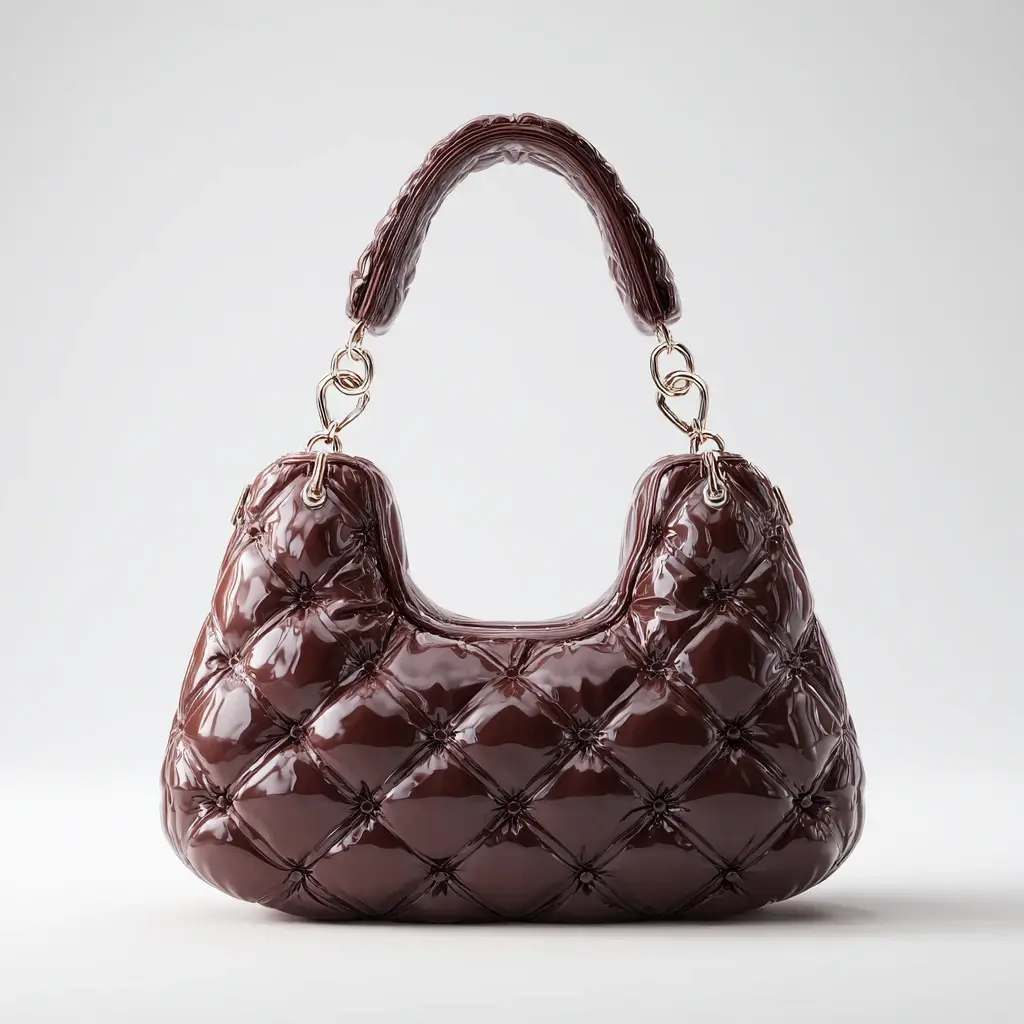
- Decision Tree: Eight Steps Before You Draw a Strap
- Step One: Carry Mode Decides Everything Else
- Step Two: Choosing the Strap Body — Webbing, Leather or Chain
- Step Three: Width Is a Load Calculation, Not a Style Choice
- Step Four: Length, Drop and Adjustment Range in Millimetres
- Step Five: Hardware — Hooks, Rings, Adjusters and Value
- Step Six: How the Strap Attaches, and Why It Fails First
- Step Seven: Comfort Features Worth Their Cost
- Step Eight: What to Test and Record
- What Each Strap Build Adds to the Unit
- How Strap Length Changes Under Load and Wear
How should a custom handbag strap be specified? Work the decision tree in order: carry mode, strap body material, width derived from load, then length and drop in millimetres, then hardware, then attachment, then comfort features, then what gets tested. Width is the decision most often made for the wrong reason: it is a load calculation, not a style choice — a 20 mm webbing strap under 3 kg puts roughly 12 kPa on a shoulder while a 25 mm strap under the same load puts roughly 10 kPa, and that 20 percent difference is what separates comfortable from returned. Sizing by load rather than by look takes three minutes and resolves most comfort complaints before a single metre of webbing is cut, and it costs nothing because the material difference is negligible.
The strap decision tree at a glance
Decision Tree: Eight Steps Before You Draw a Strap
Straps are specified badly because they are specified late. A bag is drawn, materials are chosen, and then somebody is asked what the strap should be — at which point it becomes a trimming decision rather than a structural one. Working in the order below costs no extra time and changes most of the answers, because three of the eight steps constrain the bag rather than the strap. The sequence is deliberately strict: each step produces the input the next step needs, which is why jumping ahead produces a strap that looks right and fails under load.
- Carry mode. Handheld, shoulder, crossbody or convertible. This fixes length and adjustment before anything else.
- Strap body. Webbing, leather, chain-plus-leather, or a hybrid. Each carries a different load-to-weight relationship.
- Width. Derived from expected contents weight, not from the drawing.
- Length and drop. In millimetres, with an adjustment range where the mode is convertible.
- Hardware. Hooks, rings, adjusters and their plating, each specified by size and micron thickness.
- Attachment. Where and how it enters the body, with an engagement length and reinforcement.
- Comfort. Pads, taper, edge finish and underside texture.
- Test standard. What gets pulled, cycled and recorded before bulk begins.
Note that steps one to three can be answered before the bag exists. Doing so means the tech pack arrives complete rather than arriving with three open questions that will each cost a week of sampling to resolve later. The tech pack requirements show where these answers sit on the drawing.
Step One: Carry Mode Decides Everything Else
Carry mode is the first question because it determines length, hardware and reinforcement simultaneously, and because changing it later is not a trim change but a re-pattern. A bag carried under the arm needs no adjuster and no swivel; a convertible piece needs both, plus a longer strap and a stronger attachment, since crossbody carry loads the strap at a different angle and often with the bag bouncing against the hip.
| Carry mode | Typical strap length | Hardware implied |
|---|---|---|
| Top handle only | Fixed 30-45 cm loop, 12-18 mm wide | Two rings, no adjuster |
| Under arm | Drop 22-24 cm, fixed | Swivel hooks or sewn ends |
| Standard shoulder | Drop 25-27 cm, fixed or adjustable | Swivel hooks, optional adjuster |
| Crossbody | 110-130 cm total travel | Adjuster plus swivel hooks both ends |
| Convertible | Adjustable 55-130 cm | Adjuster, two hooks, stronger attachment |
Convertible deserves a specific warning: it is the most requested option and the most frequently regretted. An adjuster adds three components, introduces a high-wear point where the slider sits, and means the strap's effective length changes every time it is moved — which in turn means the drop tolerance has to be looser. Where a bag is genuinely used both ways, fine. Where it is specified because every other product page offers it, consider fixing the length and saving both cost and complaints.
Step Two: Choosing the Strap Body — Webbing, Leather or Chain
The strap body is a material decision with a weight consequence, and weight is what eventually loads the attachment. Webbing is light, strong and inexpensive; it is also the least interesting unless it is specified well, which means choosing weave quality rather than accepting whatever is cheap. Leather reads premium and feels better against skin, but it stretches under sustained load and must be built as two plies rather than one thickness. Chain reads as jewellery and behaves as ballast.
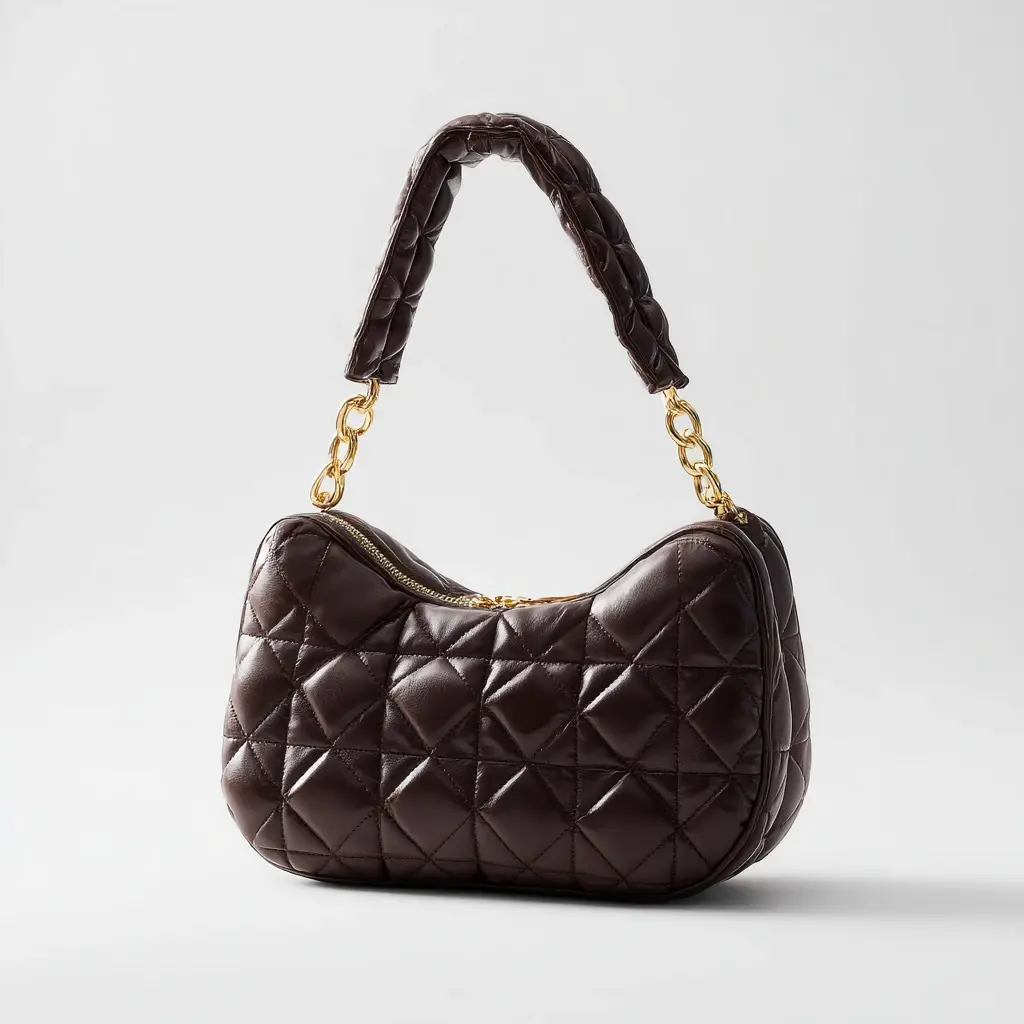
- Polyester webbing at 1.2-2.0 mm. Strongest per gram, best against UV and rot, takes dye consistently. Nylon is softer and slightly stronger but absorbs water and yellows faster.
- Two-ply leather at 2.0-2.4 mm finished. Skived and folded rather than one thickness; it holds shape and resists the permanent stretch that single-ply straps develop.
- Chain plus leather insert. The leather carries the load and protects clothing while the chain carries the appearance. Specify the insert width at 20-25 mm minimum.
- Chain alone. Only appropriate below roughly 1 kg of contents; above that it digs and it transmits every load spike directly to the attachment.
Weight arithmetic worth doing early: a 25 mm leather strap at 120 cm runs heavier than most customers expect, and the strap often accounts for 12-18 percent of total bag weight on a large shoulder piece. Where a product is aimed at travel or everyday commuting, that weight is felt before the design is admired.
Step Three: Width Is a Load Calculation, Not a Style Choice
Contact area determines comfort, and contact area is width times contact length. Three kilograms of contents produces roughly 29 N of downward force; spread across 120 mm of shoulder contact, a 20 mm strap works out near 12 kPa while a 25 mm strap sits near 10 kPa and a 38 mm strap near 6.5 kPa. Those are approximate figures, but the ordering is the point and the practical thresholds below follow from it.
- Under 1 kg contents
- 12-18 mm is adequate — handles, compact crossbody pieces
- 1-3 kg contents
- 20 mm minimum; 25 mm is the safer choice for anything worn over an hour
- 3-5 kg contents
- 25-38 mm, ideally with a 6 mm pad at 25-30 kg per cubic metre density
- Above 5 kg or utility duty
- 38 mm plus webbing core inside a leather sleeve
- Tolerance on width
- Plus or minus 1 mm; anything looser shows at the hardware fit
Width tolerance matters more than people expect, because hardware is made to nominal width. A strap cut at 26.5 mm will not sit flat in a 25 mm adjuster and will rock under load, eventually deforming the slider. Agree the nominal and the tolerance together, and check that the hardware supplier's internal dimensions are quoted rather than their external ones.
Step Four: Length, Drop and Adjustment Range in Millimetres
Every strap argument we have ever mediated started from measurements taken from different places. Fix the datum once and the rest follows. Drop is measured from the top edge of the bag to the inside peak of the strap with the bag standing empty; total length is measured end to end including hardware; adjustment range is stated as minimum and maximum rather than as a single figure.
| Specification | Typical figure | Tolerance |
|---|---|---|
| Handle loop, handheld | 30-45 cm, 12-18 mm wide | Plus or minus 5 mm |
| Shoulder drop, standard | 25-27 cm | Plus or minus 5 mm |
| Shoulder drop, over a coat | 28-30 cm | Plus or minus 5 mm |
| Crossbody total travel | 110-130 cm | Plus or minus 10 mm |
| Adjuster travel on convertible | 200 mm of usable adjustment | Minimum, not typical |
Where the strap is adjustable, state the two ends rather than the middle. 'Adjustable to 130 cm' leaves open whether the short end is 55 cm or 75 cm, which determines whether the bag can actually be worn high on the chest or only at the hip. Then record it on the pre-production sample, because usable adjustment is one of the things simple drawings routinely get wrong. There is more on how this propagates through the calendar in the real timeline guide.
Step Five: Hardware — Hooks, Rings, Adjusters and Value
Hardware is where perceived value is cheapest to buy and easiest to waste, because the visible component is small relative to what its failure costs. Specify four things for every piece: alloy, plating thickness in microns, internal dimension matched to strap width, and the corrosion target. Then ask about the pivot — a hook whose gate sticks or rotates stiffly will be complained about even when nothing actually breaks.
- Swivel snap hooks. The default: size to the strap width, typically 20 or 25 mm internal, with a spring gate tested to a few thousand cycles.
- D-rings and O-rings. Specified by internal width and wire thickness, typically 3-4 mm wire on a 25 mm ring.
- Adjusters or sliders. Internal dimension must match strap width exactly; a rocking slider deforms within weeks.
- Lobster clasps. Prettier than snaps, slower to operate, and more prone to gate wobble; fine where appearance dominates.
- Plating. Zinc alloy base with plating thickness stated in microns and 24 hours to first corrosion tested to ASTM B117.
Two compliance points sit here as well. Nickel release and lead content are reviewed against REACH Annex XVII and Proposition 65 respectively, and plated components are the single most common place a first-order compliance file falls short. Ask for declarations at sampling rather than at shipment, because a substitute after the fact means re-inspecting rather than merely re-papering. More hardware detail is set out in the zinc alloy hardware guide.
Step Six: How the Strap Attaches, and Why It Fails First
Across every strap type and carry mode, the junction between strap and body is where field failures concentrate, for a reason that is purely mechanical: the whole load of the bag and its contents passes through a few square centimetres of stitch line, repeatedly, in one direction. Almost every such failure traces back to one of three omissions rather than to poor workmanship.
- Engagement too short. Ten millimetres is common and inadequate; take 30-40 mm into the seam with a second row across the live end.
- No reinforcement behind the strap. A hidden 20 mm webbing backing strip taken to the base of the attachment changes the failure load dramatically.
- Stitch geometry wrong. A single bar parallel to the load line; use a boxed X instead, which distributes across two axes.
- For sewn-in straps, no taper. Where webbing enters a seam without a transition, the stress concentrates exactly at the stitch line.
- Hook set into single-layer facing. Always specify a backing plate or a second layer behind any hardware-loaded position.
Specify the test rather than the sentiment: seam strength to ISO 13935-2 at a minimum of 180 N, plus 1,000 carry cycles at 5 kg with the strap attached to the actual body rather than to a fixture. The second part matters more than the first, because a strap and a body loaded together reveal interaction failures that neither shows alone. Our validated partner factory Quanzhou Yingming Bags records these results with the specification, which is what allows the reorder to skip straight to bulk.
Step Seven: Comfort Features Worth Their Cost
Comfort upgrades are cheap relative to everything else on this page, which makes them the best value in the whole specification. Ranked by return per unit of cost, three are worth doing routinely and two are situational.
- Widen from 20 to 25 mm. Usually under 1 percent of unit cost, and it removes the largest share of comfort complaints outright.
- A 6 mm foam pad at 25-30 kg per cubic metre. Worth it above 3 kg contents or on any strap worn over an hour; below that it is decoration.
- Textured or suede underside. Prevents the strap creeping off a shoulder in slippery linings; costs pennies and solves the problem silently.
- Edge paint on leather straps, three coats with inter-coat sanding. Situational, but it is what photographs and what a customer notices first.
- Rolled leather shoulder insert behind chain. Essential wherever chain is used above roughly 1 kg contents.
One counter-intuitive point: padding placed in the wrong position makes things worse. The pad must sit where the strap crosses the trapezius, roughly midway along the drop, not centred on the strap's overall length. A pad that sits too low simply adds bulk without reducing contact pressure where it matters.
Step Eight: What to Test and Record
The final step converts every decision above into something checkable at 500 units. Six clauses cover the great majority of strap disputes, and none of them are expensive to run — three of them simply require that somebody records a number rather than forms an impression.
| Item | Standard or method | Pass level |
|---|---|---|
| Seam strength at the root | ISO 13935-2 | Minimum 180 N |
| Loaded carry cycling | In-house method | 5 kg for 1,000 cycles, no stitch failure |
| Plating corrosion | ASTM B117 salt spray | 24 hours to first corrosion |
| Colour transfer from strap | ISO 105-X12 rubbing | Grade 4 dry, 3-4 wet |
| Restricted substances | REACH Annex XVII, Prop 65 | Declaration on file at sampling |
| Lot acceptance | ISO 2859-1 | AQL 2.5 with written report |
Then write the strap into the inspection sheet by name. Hardware fit, strap alignment at both ends, twist in the webbing and symmetry of the drop are all defects a buyer notices immediately and an inspector will not count unless instructed to. Sampling runs 6-10 working days, bulk 35-50 days on FOB Xiamen terms, and every one of the clauses above costs far less to include up front than to argue about at 500 pieces. Send widths, loads and lengths with the first enquiry through the handbag strap specification team.
What Each Strap Build Adds to the Unit
A strap is quoted as part of a bag and bought as a set of components, and the spread between the cheapest and the dearest build is wider than most buyers expect. Six lines make up the strap cost, and the material choice is only half of it; hardware and padding are the other half.
| Line | Cost per strap | On 500 pcs | Note |
|---|---|---|---|
| 20 mm polyester webbing | USD 0.22-0.42 | USD 110-210 | Cheapest and strongest per gram |
| 25 mm polyester webbing | USD 0.34-0.60 | USD 170-300 | Removes most comfort complaints for under 1 per cent |
| Two-ply leather, 2.0-2.4 mm | USD 1.60-3.20 | USD 800-1,600 | Skived and folded rather than one thickness |
| Chain with a leather insert | USD 0.90-2.40 | USD 450-1,200 | Insert width has to be stated in millimetres |
| 6 mm foam pad, 25-30 kg per m3 | USD 0.12-0.30 | USD 60-150 | Worth it above 3 kg of contents |
| Hooks, rings and adjuster | USD 0.35-1.10 | USD 175-550 | Plating thickness stated in microns |
Read as a strap line, webbing lands at USD 0.91-2.20 a unit against USD 2.07-4.60 for leather, so the material choice is worth USD 580-1,200 on 500 pieces. The decision is usually made on appearance and should be made on the retail band: below USD 89 a well-finished 25 mm webbing strap with cast hooks reads better than a thin leather one.
How Strap Length Changes Under Load and Wear
A strap measured flat on a bench is not the strap a customer wears. Every strap material moves once it is loaded, and the movement is large enough to matter against a drop tolerance of plus or minus 5 mm. Specifying the length at rest is how a bag that measured correctly at goods-in ends up sitting 20 mm lower by week six.
| Material | Change under a 5 kg load | Change over 1,000 cycles | How to spec it |
|---|---|---|---|
| Polyester webbing, 25 mm | 1.5-3 per cent, or 18-36 mm on 120 cm | 2-5 mm ofsettling | State the drop under a 2 kg load, not at rest |
| Two-ply leather | 2-4 mm immediately | 4-8 mm of creep in the first month, then stable | Pre-stress the strap before the drop is measured |
| Webbing through a smooth slider | Not applicable | 10-15 mm of slip over 1,000 cycles | Toothed adjuster; slip falls to 2-4 mm |
| Chain with a leather insert | No extension | 1-2 mm as the insert compresses | Specify the insert, not the chain gauge |
Write the test rather than the sentiment: measure the drop at rest, again under a 2 kg load and a third time after 1,000 carry cycles at 5 kg, and accept no more than 15 mm of total change. Three measurements on six units take twenty minutes and they settle every strap-length argument that would otherwise be had in week six.
Send load, length and width — get a strap spec back
Reply with the carry mode, expected contents weight and the drop you want. A private label coordinator will return a strap specification sized by load, with hardware specified in microns and the test clauses above written in, sampling at 6-10 working days and bulk at 35-50 days. Get a quote.
Frequently Asked Questions
How wide should a custom handbag strap be?
Size by load rather than by look. Below 1 kg of contents, 12-18 mm is adequate; between 1 and 3 kg, 20 mm is the minimum and 25 mm the safer choice; between 3 and 5 kg, use 25-38 mm ideally with a 6 mm pad. Width tolerance should be plus or minus 1 mm so the strap sits correctly in its hardware.
What is the standard shoulder strap drop?
Twenty-five to twenty-seven centimetres for everyday shoulder carry, rising to 28-30 cm where the bag goes over a winter coat, and 22-24 cm for a deliberate under-arm carry. Measure from the top edge of the bag to the inside peak of the strap with the bag standing empty, with a tolerance of plus or minus 5 mm.
How long should a crossbody strap be?
A total strap travel of 110-130 cm, stated with the two ends rather than only the maximum. Knowing whether the short end is 55 cm or 75 cm is what determines whether the bag can actually be worn high on the chest, which is why a single figure is not enough.
Why does my strap keep sliding off my shoulder?
Usually because too narrow a strap is carrying too much load, or because the underside is too slippery for what is being worn underneath. Widening from 20 mm to 25 mm, adding a textured or suede underside, or adding a 6 mm foam pad above 3 kg contents resolves nearly all cases.
What causes straps to tear away from the bag body?
Three omissions, in order: engagement too short into the seam, no reinforcement behind the attachment, and a single stitch line running parallel to the load. Take 30-40 mm of engagement, add a hidden 20 mm webbing backing strip, and use a boxed X rather than a parallel bar.
Should I use webbing or leather for a strap?
Webbing for strength per gram, UV and rot resistance, and consistent dyeing; leather where appearance and hand feel dominate, specified as two plies at 2.0-2.4 mm finished rather than as one thickness, because single-ply straps develop permanent stretch under sustained load.
What should be specified for strap hardware?
Four things per component: the alloy, plating thickness in microns, the internal dimension matched to strap width, and the corrosion target, typically 24 hours to first corrosion under ASTM B117. Also request REACH and Proposition 65 declarations at sampling rather than after approval.
Is an adjustable strap worth specifying?
Only where the bag genuinely gets carried two ways. An adjuster adds three components, creates a high-wear point at the slider, and loosens the effective drop tolerance. Where consistency matters more than versatility, fixing the length saves cost and removes a complaint category.
How much weight does a strap add to a bag?
On a large shoulder piece the strap often accounts for 12-18 percent of total bag weight, and chain assemblies can take that higher. That weight is felt before the design is admired, so it is worth calculating early for travel or everyday commuting products.
Which tests should strap specifications include?
ISO 13935-2 at a minimum of 180 N for seam strength, 1,000 carry cycles at 5 kg with the strap attached to the real body rather than to a fixture, ASTM B117 for plating at 24 hours to first corrosion, ISO 105-X12 for colour transfer, and lot acceptance at AQL 2.5 under ISO 2859-1.
Does a wider strap always mean a better strap?
No, because width has to sit against the silhouette and the hardware. A 38 mm strap on a compact crossbody looks wrong and dominates the design. The correct order is to size width to load first, then check the result against the silhouette and adjust materials rather than shrinking below the load requirement.
People Also Ask
How much load can a 25 mm strap take?
Webbing at 25 mm typically carries far more than any handbag contents would demand, so the practical limit is almost never the strap itself. Failures occur at the attachment and at the hardware interface, which is why those two deserve more of the specification than the webbing does.
Where should a shoulder pad sit?
Where the strap crosses the trapezius, roughly midway along the drop. A pad centred on total strap length sits too low, adds bulk, and does not reduce contact pressure where it actually hurts.
Is chain-only carry a bad idea?
Not inherently, but above roughly 1 kg of contents it digs in and transmits every load spike straight to the attachment. Above that weight, use a 20-25 mm leather insert behind the chain so the leather takes the load and the chain takes the credit.
Should straps be specified before the bag is designed?
Steps one to three can and should be. Carry mode, strap body and width constrain the bag rather than merely decorating it, so answering them early means the tech pack arrives complete instead of carrying open questions into sampling.
Sources and further reading
Every figure on this page is either our own programme data or attributed below. Open the originals before you write them into a specification.
- REACH — chemical substances regulationEuropean Commission Annex XVII restricts the substances that may appear in finished leather and coatings.
- SATRA — technical services for leather, footwear and accessoriesSATRA Independent leather, hardware and accessories testing protocols.
- ASTM International — technical standardsASTM International Test methods for strap pull, seam strength and hardware corrosion are published here.