Common Handbag Sampling Mistakes That Add Weeks to Launch
Which sampling mistakes add weeks to a handbag launch, and how much does each one cost? Six, priced in days: approving colour on a screen instead of a physical swatch adds 3-5 days, a dimension without a tolerance adds 4-7, requesting hardware that nobody stocks adds 10-21, changing the specification between rounds adds 3-6, skipping the pre-production unit adds 4-7, and approving with no signed reference adds whatever the later dispute costs. Sampling is not where delay is created; it is where delay becomes visible, because 6-10 working days is the narrowest window in the whole calendar and every undecided detail is paid for inside it. In the case below, a Toronto direct-to-consumer label lost 31 days to four of the six mistakes, and none of the four was a sewing problem.
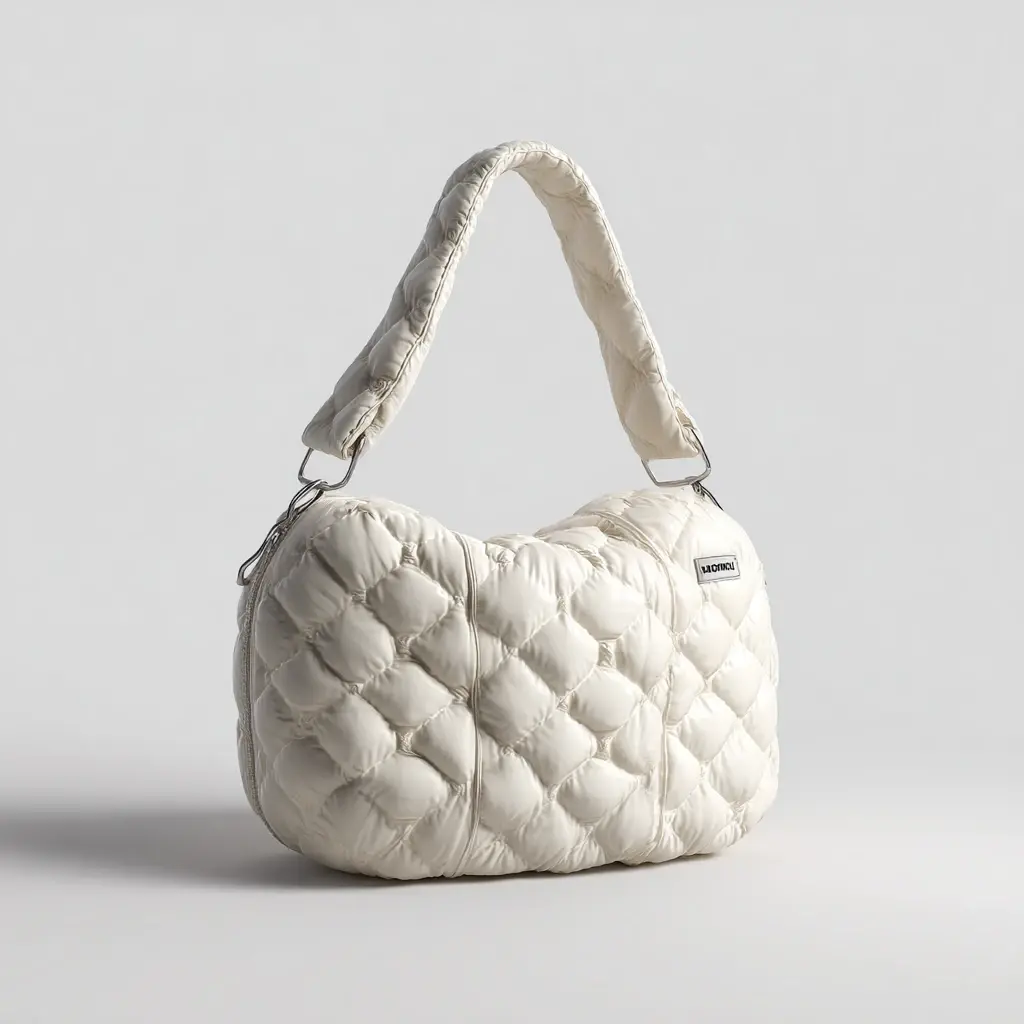
- Thirty-One Days Lost in Toronto
- Mistake One: Approving Colour on a Screen
- Mistake Two: A Dimension Without a Tolerance
- Mistake Three: Requesting Hardware Nobody Stocks
- Mistake Four: Changing the Spec Between Rounds
- Mistake Five: Skipping the Pre-Production Unit
- Mistake Six: Approving Without a Signed Reference
- What Each Mistake Costs, in Days
- The Pre-Brief Checklist That Removes Five of the Six
- How Round One Gets Written So Round Two Is the Last
- Couriers, Customs and the Sample That Arrives Late
Which sampling mistakes add weeks to a handbag launch, and how much does each one cost? Six, priced in days: approving colour on a screen instead of a physical swatch adds 3-5 days, a dimension without a tolerance adds 4-7, requesting hardware that nobody stocks adds 10-21, changing the specification between rounds adds 3-6, skipping the pre-production unit adds 4-7, and approving with no signed reference adds whatever the later dispute costs. Sampling is not where delay is created; it is where delay becomes visible, because 6-10 working days is the narrowest window in the whole calendar and every undecided detail is paid for inside it. In the case below, a Toronto direct-to-consumer label lost 31 days to four of the six mistakes, and none of the four was a sewing problem.
What the six mistakes are priced against
Thirty-One Days Lost in Toronto
A Toronto direct-to-consumer label came in with a structured tote, 1,200 pieces across two colourways, and a spring campaign date. The brief looked complete: photographs, a dimension drawing, a Pantone number and a target retail price. The quotation came back with sampling at 6-10 working days and bulk at 35-50 days, which should have put goods in their warehouse comfortably before the campaign. Sixty-two days passed between the first email and the bulk deposit, and only thirty-one of those days were supposed to exist beyond the quoted window.
The post-mortem took ten minutes. The tan colourway had been approved from photographs on a laptop, so round two arrived a full shade warm and used 5 days of the window; the body had been specified as roughly 36 cm wide with no tolerance, which produced an argument rather than a decision and cost 6 days; the antique brass turn-lock they wanted was not a stocked finish, and finding either a substitute or a run cost 17 days; and in the middle of round two they narrowed the webbing strap from 25 mm to 20 mm, which touched the buckle, the keeper, two pattern notches and the reinforcement box, adding one complete round and another 6 days. Thirty-one days, four mistakes, no sewing defect anywhere in them.
What follows is the same list in general form, ordered by how many days each mistake tends to take. The point of pricing them is not blame: five of the six are decisions made before any pattern exists, so five of the six can be removed before the first email is sent. The tech pack sections that carry tolerances cover the paperwork side of the same problem, and the nine approval checks cover what happens at the far end of the window.
Mistake One: Approving Colour on a Screen
A screen emits light and a hide reflects it, so no amount of calibration makes them comparable. Leather is dyed in lots, finished with a pigment layer and then judged by a human under whatever light the room happens to have; two viewers can disagree on the same swatch under different lighting and both be right. The industry answer is boring and cheap: a physical swatch card, signed and dated, kept by both sides, plus a numerical target of Delta E 2.0 or better measured under a defined light source. Colour fastness is a separate question again, and one that belongs to ISO 105-B02 against the blue wool reference rather than to a screenshot.
- Approve a card, not a picture. One lab dip or hide swatch per material, signed, with the date and the light source noted on the back.
- Write the tolerance as a number. Delta E 2.0 against the approved card is measurable at receipt; close enough is not.
- Name the light. Retail floor lighting, daylight and warehouse fluorescent render the same tan differently; pick one and say which.
- Separate look from fastness. A colour can match perfectly and still fail rub and light testing, so ask for ISO 11640 rub fastness and ISO 105-B02 light fastness where the bag will sit in sunlight.
The cost of getting this right is two to four days waiting for a physical card. The cost of getting it wrong is a full sample round, because there is no way to revise colour without cutting and closing another unit. Where a launch date matters, request two cards from the same lot and keep one unopened; it becomes the reference at final inspection.
Mistake Two: A Dimension Without a Tolerance
Dimensions written as approximations are a negotiation that has been deferred into the sampling window. A body described as about 36 cm could legitimately arrive at 35.2 cm or 36.8 cm, and both might be within what the words allow while being visibly different bags on a shelf. The fix costs nothing: state each critical measurement in millimetres with a plus-or-minus figure, and say which measurement is taken where. Patterns are cut from those numbers, so they are also read by whoever grades the pattern and whoever balances the line.
| Measurement | Typical value | Tolerance to state | What it disturbs |
|---|---|---|---|
| Body width | 340-360 mm | plus or minus 3 mm | Pattern outline and panel yield |
| Body height | 260-300 mm | plus or minus 3 mm | Front panel proportion |
| Base gusset | 90-120 mm | plus or minus 2 mm | Capacity and how the bag sits |
| Strap drop | 230-260 mm | plus or minus 5 mm | Whether it wears on the shoulder |
| Strap width | 20-25 mm webbing or flat leather | plus or minus 1 mm | Buckle, keeper and slider hardware |
| Opening length | Metal or coil zip in mm | plus or minus 2 mm | Zip sourcing and tape cutting |
Three further numbers belong in the same block and are routinely omitted: the corner radius of the base, the stitch line distance from a panel edge (6 mm is a common working figure, 8 mm at stress points), and the stitch density itself, usually written as 7-9 stitches per inch with Tex 40 thread and a 10 mm seam allowance. Those three are what an inspector counts first when a shipment is measured against AQL 2.5 under ISO 2859-1, and they are far cheaper to agree during sampling than to argue about afterwards.
Mistake Three: Requesting Hardware Nobody Stocks
Hardware is the longest-lead item on most briefs and the one most often specified by photograph. A turn-lock, a twist closure or a custom zip puller in a particular finish is only available when somebody already has the tooling and the plating line booked. When it is not, two things happen at once: sourcing takes 10-21 days because electroplating and assembly are queued operations, and the finish arrives with its own minimum lot - commonly 1,000 to 3,000 pieces per finish - which may be several times the number of bags in the first order.
- Ask for stock finishes first. Light gold, nickel, gunmetal and antique brass in standard sizes are available without tooling.
- State plating in microns and hours. A tested finish is quoted in microns plus 24 hours to first corrosion under ASTM B117 salt spray; shiny is not a specification.
- Check the chemistry before the look. REACH Annex XVII restricts nickel release and limits lead in articles; Proposition 65 applies to California shipments; CPSIA applies where the item is marketed to children.
- Ask what the closure minimum is. Hardware lots rarely line up neatly with a 500 pcs per style order, and knowing early lets the number be planned rather than discovered.
Where a custom shape is non-negotiable, price it as tooling rather than as hardware: a mould, a set-up charge and a longer calendar, booked before the first sample rather than after it. Our validated partner factory Quanzhou Yingming Bags quotes closure lead times separately from sampling for exactly this reason, because mixing the two hides the only number that can move the launch date.
Mistake Four: Changing the Spec Between Rounds
Every change requested inside the sampling window is a round, and a round is 3-6 days, because the change has to travel back through pattern, cutting and assembly rather than being edited like a drawing. Strap width is the classic offender: narrowing a webbing strap changes the slider, the buckle, the loop keeper, the reinforcement stitch box and two pattern notches, none of which look like much individually. Toronto paid for two such changes and lost one round to each.
- Freeze geometry before the pattern is cut. Dimensions, strap drop and pocket layout are decided before totalling, not after the first unit arrives.
- Put changes in a numbered list. A revision note with item numbers, annotated photographs and one decision owner removes the ambiguity that produces a third round.
- Separate must-change from nice-to-have. Anything in the second column waits for the repeat order, where it costs nothing.
- Price the change before approving it. Ask what it does to both the calendar and the unit price; most aesthetic changes lose their appeal when they are quoted in days.
Mistake Five: Skipping the Pre-Production Unit
A prototype proves the design can be built; it does not prove the run will repeat it. The pre-production unit is cut from the production marker, sewn on the bulk line rather than the sample bench, and assembled from the materials that will actually be used, including the bulk lining, interlining and dyed hardware. Any difference between prototype and bulk shows up in that unit, which is why skipping it to save 4-7 days moves the same discovery to after several thousand pieces are cut.
Request it even when the calendar is tight, and request it with the golden unit: the photographed, signed reference that travels to final inspection. Shipments are measured against AQL 2.5 under ISO 2859-1, which sets how many units are drawn from a lot of your size and how many defects of each class trigger a pass, a fail or a re-sort; the standard is only enforceable when there is an agreed reference to compare against. The SGS-validated partner facility can issue third-party reports where the buyer prefers an independent reading.
Mistake Six: Approving Without a Signed Reference
The last mistake is bookkeeping, and it is the one that converts a small problem into a dispute. An approval given verbally, or by a message reading looks good, leaves nothing to measure a later shipment against. A signed reference is one page: dated, with photographs of the unit from five angles, a note of the light source used for colour, a list of any accepted deviations, and the physical card or flecked swatch attached to it.
- Photograph the approved unit from front, back, base, interior and one detail of the branding.
- Attach the colour card, dated and initialled by whoever signed the approval.
- Write down every accepted deviation, however small - including ones you intend to live with.
- Keep one physical unit on your side and one on ours, both labelled with the same reference number.
- Reference it in the purchase order so that the inspection standard and the inspection reference are the same document.
What Each Mistake Costs, in Days
The table below is a working rather than theoretical figure list, assembled from how each mistake propagates through a 6-10 working days of sampling window and a 35-50 day bulk window. Two mistakes on one brief is common; two mistakes costs about a fortnight, which is usually a campaign date.
| Mistake | Days added | What it triggers | Fix before briefing |
|---|---|---|---|
| Colour approved on a screen | 3-5 plus one full round | A recut and reclose in another dye lot | Request signed physical cards from one lot |
| Dimension with no tolerance | 4-7 | A measurement argument at approval | State every dimension in mm plus or minus |
| Unstocked or custom hardware | 10-21 | Plating queue and hardware lot minimum | Confirm stock finish before quoting |
| Specification changed mid-round | 3-6 per change | New pattern, new cutting, new assembly | Freeze geometry before the first cut |
| Pre-production unit skipped | 4-7 saved, weeks risked | Bulk made from an unproven marker | Book the PP unit with the order |
| Approval with no signed reference | Unlimited | An unresolvable inspection dispute | One signed page with photographs |
The Pre-Brief Checklist That Removes Five of the Six
Twelve items, each with a reason. Ten minutes spent here is worth more than any negotiation later, because the sampling window rewards preparation rather than persistence. Five of the six mistakes above are decided at this stage, before a single panel is cut.
- Every critical dimension in millimetres with a tolerance, because the alternative is a later argument about what roughly meant.
- A physical colour requirement named as a card, not a Pantone number alone, since a number without a substrate is a request for interpretation.
- Fabric or hide weight stated numerically, such as 190-210 gsm for a coated canvas or 1.4-1.6 mm for full-grain bovine.
- Stitch specification: 7-9 stitches per inch, Tex 40 thread, 10 mm seam allowance, 6 mm stitch-to-edge on visible seams.
- A hardware schedule with finish in microns and 24 hours to ASTM B117 salt spray, so that the plating can be tested rather than admired.
- Branding position measured from a datum edge in millimetres, with the tooling method stated: emboss die, woven label, embroidery or hardware.
- Closure and zip sizes by type, such as a number 5 metal zip at 420 mm tape length, since non-standard lengths carry their own minimums.
- Lining and interlining specified by weight and denier, commonly 210D polyester lining with 0.8-1.2 mm foam or 180 gsm interlining.
- Packaging requirements: dust bag, hangtag copy, barcode symbology, carton marks and any marketplace prep rule.
- Compliance list for the destination: REACH Annex XVII, Proposition 65 for California, CPSIA where relevant, plus BSCI or Sedex / SMETA audit evidence where a retailer demands it.
- A target retail price per SKU, so the specification can be engineered downwards rather than quoted upwards.
- An honest launch date, because the slot that gets booked should be the slot that is needed, and T/T deposits are paid against real slots.
How Round One Gets Written So Round Two Is the Last
The single most effective habit is to review a sample in one pass and sort every observation into one of three columns: must change, acceptable with a note, approved as is. Three columns force decisions. An unstructured photographs and thoughts email tends to produce a second round addressing half of the comments and quietly dropping the other half, which then reappears at final inspection. Put one person in charge of the decision, give that person 48 hours, and send the list numbered.
- Number every observation and attach one annotated photograph per item; nobody argues with a photograph and a number.
- Say what is right as well as what is wrong, because unpraised details get changed inadvertently in round two.
- Confirm which observations are free to fix and which cost a round, then drop the expensive ones into the repeat order.
- Approve in writing the same week, since the calendar clock and the calendar queue are not the same thing - a delayed approval can also cost the booking.
A first-line programme run this way typically reaches approval in two rounds of 6-10 working days each, which is the shape how many rounds a silhouette like this really needs describes in detail. Everything upstream of the sampling window - enquiry, quotation, material confirmation and booking - is laid out in the process reference, and units ship FOB Xiamen with CIF or DDP available where a buyer prefers one invoice to a forwarder.
Couriers, Customs and the Sample That Arrives Late
The sample that exists but has not arrived is the most common invisible delay in a sampling round. An express courier from Xiamen to Europe runs 3-5 working days and 45-90 dollars for a 2 kg parcel. A sample declared at 10 dollars of value still needs a commercial invoice, a description that matches the goods and often a material declaration, and a parcel held for a documentation query loses 4-8 days, usually on the one unit everybody is waiting to see.
- Declaration. A 10 dollar sample value is normal; a declared nil value invites the query that costs a week.
- Weight. 2 kg a parcel, so four units shipped together cost less than four separate movements and arrive together.
- Duties. Values below the destination de minimis still need the invoice, even where no duty is payable.
- Tracking. Send the number the day it ships and confirm delivery before booking the review call with the sample room.
Send the brief with the twelve items already filled in
Reply with dimensions in millimetres, a colour requirement, a hardware finish in microns and an honest launch date. A private label coordinator will return a quote with sampling at 6-10 working days, bulk at 35-50 days, inspection at AQL 2.5 under ISO 2859-1 and terms at FOB Xiamen. Get a quote.
Frequently Asked Questions
What are the most common sampling mistakes that delay a handbag launch?
Six, in descending order of expense: requesting or approving hardware that is not a stock finish, approving colour on a screen rather than a physical card, stating dimensions without tolerances, changing the specification between rounds, skipping the pre-production unit, and approving without a dated written reference. The first four are all brief-stage decisions, which means they can be removed before any pattern is cut.
How many days does a screen-based colour approval really cost?
Between three and five days plus one complete sample round in practice, because colour cannot be adjusted without recutting and reclosing a unit in another dye lot. The avoidance cost is two to four days waiting for a signed physical swatch card from the same lot, plus a stated Delta E 2.0 tolerance and a named light source for judging it.
Why does custom hardware add 10-21 days to sampling?
Because plating and metal assembly are queued operations with their own lead times, and because a custom shape needs tooling before it can be made at all. There is usually a hardware lot minimum of around 1,000 to 3,000 pieces per finish as well, which may be several times the size of a first order at 500 pcs per style.
What tolerance should be written on handbag dimensions?
Plus or minus 3 mm on body width and height, plus or minus 2 mm on a base gusset, plus or minus 5 mm on strap drop, plus or minus 1 mm on strap width and plus or minus 2 mm on an opening length. Without a tolerance, two parties can both be acting reasonably and still produce bags that look different on a shelf.
Is skipping the pre-production sample ever justified to save time?
Rarely. It removes four to seven days from the calendar and moves the same discovery into the bulk run, where the cost is thousands of pieces rather than one unit. Where a launch date truly cannot move, the better saving is elsewhere: confirm stock hardware early and approve the colour card immediately, neither of which carries that risk.
What should a signed sample approval contain?
Five things: photographs of the approved unit from front, back, base, interior and one branding detail; the colour card dated and initialled; the light source used for judging it; a written list of every accepted deviation; and the same reference number on both units retained. Referencing that page in the purchase order ties the inspection to it.
How do I keep changes from multiplying sample rounds?
Freeze geometry before the pattern is cut, then review round one in a single pass sorted into must change, acceptable with a note, and approved as is. Numbering the observations and attaching one photograph each removes most ambiguity, and pricing each change in days before approving it tends to shorten the list considerably.
Which stitch numbers belong in a handbag brief?
Tex 40 thread at 7-9 stitches per inch with a 10 mm seam allowance, a stitch line 6 mm from a visible edge and 8 mm at a stress point such as a strap attachment. Those figures are what an inspector counts first, and they are also what determines how long the closing operation takes on the line, so they affect the price as well as the appearance.
What compliance documents should be requested during sampling?
Material test evidence against REACH Annex XVII restrictions including chromium VI, azo colourants, nickel release and phthalates; a Proposition 65 review of hardware and coated trim for California; CPSIA documentation where an item is marketed to children; and BSCI or Sedex / SMETA audit references for the partner facility where a retail buyer requires them.
How long should handbag sampling actually take?
Six to ten working days for conventional construction from a complete brief, and twelve to fifteen days for framed, woven or stacked designs. The clock starts when the brief is complete rather than when it arrives, which is why most of the delays described above occur before the window formally opens and are therefore invisible in the quoted number.
What can I do if a sample arrives but the launch campaign date is already fixed?
Prioritise decisions that do not require another cut: approve colour from the physical card rather than the unit, accept reasonable deviations in writing, and hold only those changes that affect fit or function. Then ask what a second round costs against the date before requesting it, because sometimes shipping late and getting the unit right costs less than launching something you will discount immediately.
People Also Ask
Do these six mistakes apply to every handbag category?
They apply to structured categories most acutely, because structured construction has less natural give and therefore less tolerance for an unspecified dimension. Soft constructions such as a hobo or a bucket forgive more, though hardware lead time and colour approval affect them identically.
Which mistake costs the most money rather than the most days?
Skipping the pre-production unit, because its cost is counted in bulk pieces rather than calendar days. A four to seven day saving can place several thousand units at risk if an unproven marker or a substitute lining is discovered only once the run has started.
Can I fix a mistake after the sample of record is approved?
Yes, usually as a bulk deviation rather than a new round: a written instruction noting what differs from the signed reference, accepted by both sides before cutting begins. This is why the signed reference matters so much - it makes every later change visible rather than debatable.
Who owns the tooling if hardware is the reason the launch slipped?
You do, if it was agreed in writing before the deposit moved. Tooling you paid for should be identified, stored and never run for another brand, which is also what makes the repeat order cheaper and faster than the first one.
Sources and further reading
Every figure on this page is either our own programme data or attributed below. Open the originals before you write them into a specification.
- REACH — chemical substances regulationEuropean Commission Annex XVII restricts the substances that may appear in finished leather and coatings.
- SATRA — technical services for leather, footwear and accessoriesSATRA Independent leather, hardware and accessories testing protocols.
- Proposition 65 list of chemicalsOEHHA The official list that decides whether a California warning is required.