Best Handbag Sample Approval Habits That Prevent QC Failures
Sample approval is the cheapest QC activity in a handbag programme and the one most often done by email with a photograph. Seven habits prevent most downstream failures: approve against a written specification rather than an image, seal a golden sample and keep a working duplicate, approve materials separately from the bag, number the revision list, approve the branding position from a dimensioned drawing, sign a pre-production unit rather than a sales sample, and record what was approved where. A sample approved against a photograph is a sample approved against nothing, because the photograph cannot be measured, sealed or referred to in an inspection report eleven months later. Sampling runs 6-10 working days, and 12-15 working days for framed, woven or stacked constructions, so a third sample round costs more calendar than the entire inspection process.
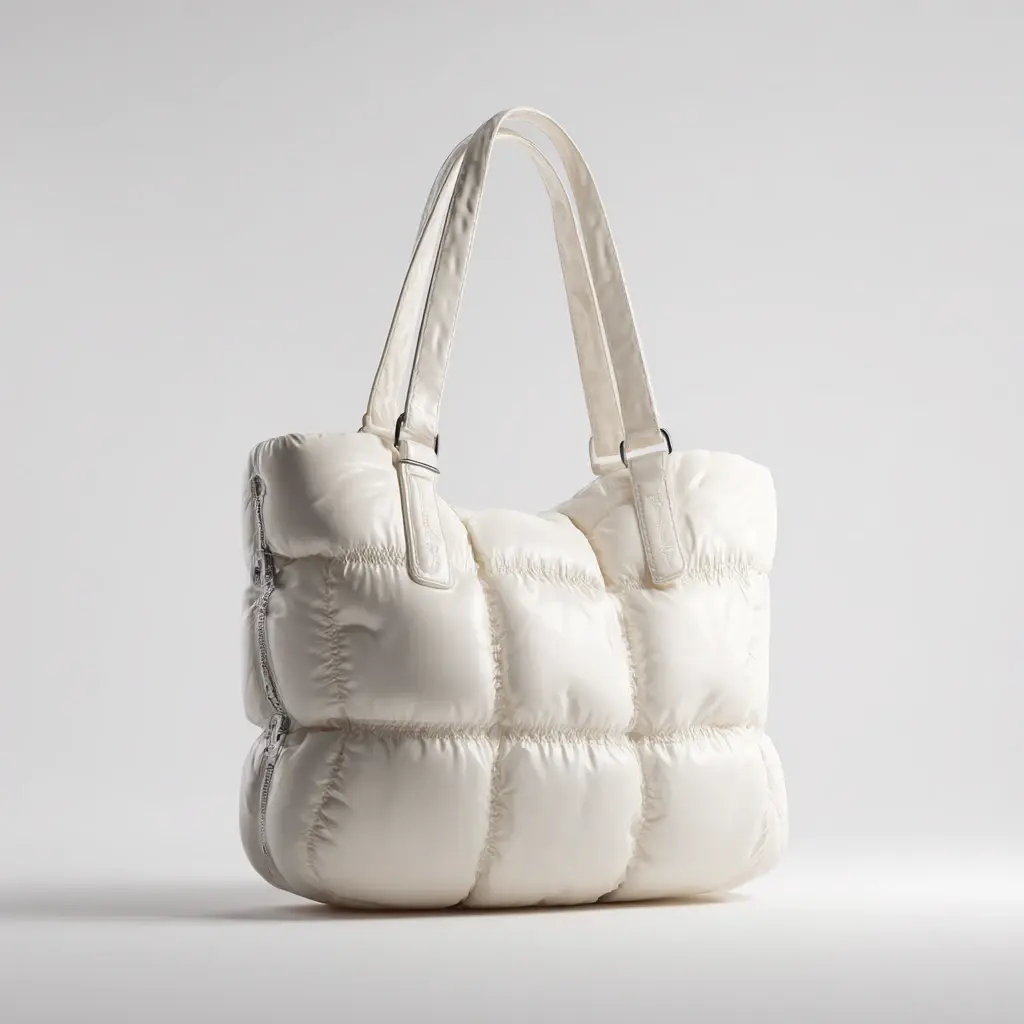
- A Second Sample Round That Cost Eleven Days
- Habit One: Approve Against a Written Specification
- Habit Two: Seal and Duplicate the Approved Sample
- Habit Three: Approve Materials Separately From the Bag
- Habit Four: Number the Revision List
- Habit Five: Approve the Branding Position From a Drawing
- Habit Six: Sign a Pre-Production Unit, Not a Sales Sample
- Habit Seven: Record What Was Approved Where
- What Good Approval Does to the Bulk Run
- Who Signs, and How Long They Have to Do It
- The Measurement Kit an Approval Actually Needs
- What a Written Approval Saves, Priced Per Defect
Sample approval is the cheapest QC activity in a handbag programme and the one most often done by email with a photograph. Seven habits prevent most downstream failures: approve against a written specification rather than an image, seal a golden sample and keep a working duplicate, approve materials separately from the bag, number the revision list, approve the branding position from a dimensioned drawing, sign a pre-production unit rather than a sales sample, and record what was approved where. A sample approved against a photograph is a sample approved against nothing, because the photograph cannot be measured, sealed or referred to in an inspection report eleven months later. Sampling runs 6-10 working days, and 12-15 working days for framed, woven or stacked constructions, so a third sample round costs more calendar than the entire inspection process.
What the seven habits settle
A Second Sample Round That Cost Eleven Days
A Scandinavian accessories label sent a reference photograph of a structured shoulder bag with a note reading make it like this, in this colour. The first sample arrived in 8 working days and was, by any reasonable standard, close: right silhouette, right hardware, roughly the right tan. The buyer replied with three adjectives — cleaner lines, softer leather, neater edge — and asked for a second sample.
The second sample arrived 9 working days later and was worse, because the three adjectives had been interpreted as three different changes by three different people. Cleaner lines became a 4 mm reduction in the gusset, softer leather became a 0.2 mm thinner split that then puckered at the seam, and neater edge became a different edge paint that shaded slightly against the body. Eleven working days had been spent moving away from the first sample, and the launch date had not moved.
What would have prevented it costs about an hour. A one-page specification with body width, height, gusset depth and strap drop in millimetres, leather split at 1.2-1.4 mm, an edge-paint reference matched at Delta E 2.0 or better, and a numbered revision list with one owner would have turned each adjective into a number before the second round started. Three rules follow: never send an adjective where a millimetre will do, never let more than one person own the revision list, and never approve a sample you have not measured.
Habit One: Approve Against a Written Specification
Approval is a statement that a unit conforms to a specification, and it is only meaningful where the specification exists in writing. A photograph, a mood board and a reference sample from another brand are all useful inputs, but none of them can be inspected against, because none of them states a tolerance.
- Dimensions in millimetres. Body width, height, gusset depth and strap drop, each with a tolerance: plus or minus 3 mm on soft construction, 5 mm on structured or framed bodies.
- Material specification. Leather split at 1.2-1.4 mm within 0.1 mm, or a coated fabric at a stated denier and finish, with the tannery or mill named where traceability matters.
- Construction. Tex 40 thread at 7-9 stitches per inch, a 10 mm seam allowance, back-tacking at stress points, and a size 18 needle for 1.2-1.4 mm leather.
- Colour. A Pantone TCX reference at Delta E 2.0 or better under a D65 source, judged against a physical swatch rather than a screen.
- Hardware. Zinc alloy with plating thickness in microns, 24 hours of salt spray to ASTM B117, and a named finish reference.
The specification does not have to be long to be effective. One page, five sections, and every line a number. Where a buyer cannot state a tolerance, the honest alternative is to ask the production side to propose one and then accept it, rather than leaving it open and discovering the default at inspection.
Habit Two: Seal and Duplicate the Approved Sample
The approved sample is the artefact every later decision refers to, and it needs to survive the programme. Two units solve the whole problem: one sealed, signed and stored away from the light and from the floor, and one working duplicate that travels to the bench and gets handled.
- Sign and date the sealed unit on a tag, and photograph it before it goes into storage.
- Store it away from light and handling, because leather and coated fabric fade and pick up marks, and a handled reference silently becomes a looser standard.
- Issue the duplicate to the line, so operators and inspectors compare against a working unit rather than unsealing the reference.
- Re-issue the pair on every re-order, since the same artefact is what makes a repeat match the original rather than drift.
Where a programme runs several colourways, seal one per colourway. A single sealed unit in one colour cannot settle a shade question on the other three, and the most common repeat-order problem is a colourway that drifts because the reference was never captured in that shade.
Habit Three: Approve Materials Separately From the Bag
Approving a bag implicitly approves the material it was made from, which is fine for the sample and unreliable for the run, because the sample was made from one piece of one lot. Approve the material explicitly and separately, before bulk, against a physical swatch retained on both sides.
| Element | Approved against | Threshold |
|---|---|---|
| Body material | Physical swatch, retained by both sides | Delta E 2.0 or better under D65 |
| Lining | Physical swatch and denier | Stated denier, colour matched |
| Hardware finish | First-article part from the real plating lot | 24 h salt spray ASTM B117, no base metal |
| Zipper and slider | Numbered chain and slider type | 1,000 cycles for travel goods, 500 for handbags |
| Thread and needle | Tex 40, size 18 needle | 7-9 stitches per inch |
| Edge paint or finish | Physical reference on the same material | Matched to the body, no cracking on fold |
Two of those rows cause more repeat-order trouble than all the others: the hardware finish and the edge paint. Both are applied in thin layers where a small formulation change is visible immediately, and neither is reliably captured by a photograph of a finished bag. Approve them as parts, retain them as parts, and the repeat matches.
Habit Four: Number the Revision List
Every sample round produces a list of changes, and the list is where sample rounds go wrong. A numbered list with one owner and one dated revision in force prevents the two classic failures: two people requesting contradictory changes, and a change from round one silently reappearing in round three.
- Number every item
- Each change gets a number, a description and a target value
- One owner
- One person at the buyer approves or rejects items
- One revision in force
- Only the latest dated revision is valid; earlier ones are archived
- Annotate on the sample
- Mark the change location on the physical unit and photograph it
- Confirm in writing
- The list is sent before the next round starts, not with it
- Close items explicitly
- Each item is closed as done or withdrawn, never left open
The annotation rule does the most work. A written item reading reduce gusset is ambiguous; the same item with a mark on the sample and a photograph is unambiguous, and it also gives the inspector something to check against at final inspection.
Habit Five: Approve the Branding Position From a Drawing
Branding is the element a customer looks at first and the one most often approved from a photograph of one unit. Because a mark sits at a position defined by two distances from two datum edges, it needs a dimensioned drawing rather than an image, and the drawing needs a tolerance.
- Two datum edges, two distances. Position stated in millimetres from a seam edge and from a top or base edge, not centred on the panel.
- A tolerance of 2 mm on registration, which is achievable on leather and detectable at the bench.
- Method and depth specified. Emboss depth, foil type, stitch count on an embroidered mark, or patch size and stitch line.
- Approved on the actual material. A mark embossed on a lining swatch behaves differently from the same die on 1.4 mm body leather.
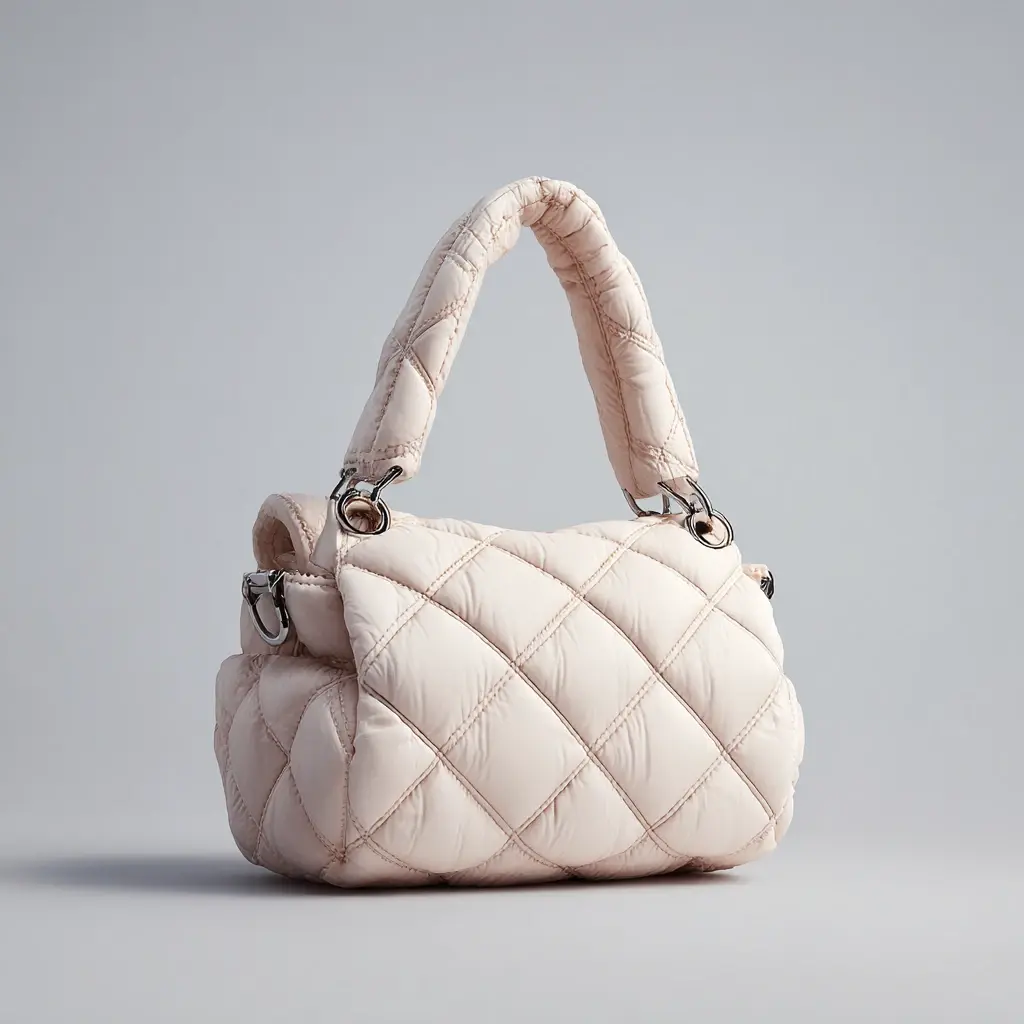
Also approve the tooling sample, not just the mark. An embossing die is a physical asset with a one-off cost, and the sample produced from it is the moment to confirm that the die is correct before it runs 500 units. Ownership of that die belongs in the purchase order, alongside the hardware mould and any woven-label setup.
Habit Six: Sign a Pre-Production Unit, Not a Sales Sample
A sales sample is made to show; a pre-production sample is made on the line, with the production jigs, the production material and the operators who will run the order. They are not interchangeable, and approving the wrong one is the reason a bulk run can differ from an approved sample that everybody agrees looked right.
| Attribute | Sales sample | Pre-production sample |
|---|---|---|
| Made by | Sample room, senior operators | The production line that will run the order |
| Material | Best available piece from the lot | The delivered production lot |
| Jigs | Often hand-set | Production jigs and settings |
| Predicts | What the design looks like | What the bulk run will be |
| Approve for | Design direction and costing | Specification conformance before bulk release |
The practical sequence is two approvals at two different moments: the sales sample approves the design and the costing, and the pre-production sample, measured against the specification, releases the bulk run. Skipping the second is what produces the familiar complaint that the bulk does not match the sample, when in truth the bulk does not match a sample that was never representative of the line.
Habit Seven: Record What Was Approved Where
Approval is only useful if it can be retrieved. One folder per style, containing the specification with its revision date, the photographs of the sealed sample, the material swatch references, the numbered revision list with items closed, and the branding drawing, is what makes the second order faster and the next inspection shorter.
- Specification with revision date, archived by version so a superseded revision is never accidentally used.
- Photographs of the sealed unit, taken before it went into storage and from a fixed set of angles.
- Material and hardware references, retained physically where possible, photographed where not.
- The revision list with every item closed, which is what prevents a withdrawn change from reappearing.
- Two retained production units per lot, held 90 days, which connect the approval to what actually shipped.
That folder is also what allows a repeat to skip sampling. Where the specification is unchanged, the tooling is retained and the material reference exists, the second order can run straight to bulk at 35-50 days, removing 6-10 working days from the calendar. It is the same discipline described in how QC changes between sampling and bulk.
What Good Approval Does to the Bulk Run
Good approval shows up as a quieter bulk run. Fewer inline findings, because the jigs were set against a measured reference. Fewer measurement disputes at final inspection, because the tolerance was written down. Fewer shade arguments, because the reference was a physical unit rather than a photograph. And a faster repeat, because the specification, the tooling and the material references were all retained.
The measurable version of that claim is the defect rate. A programme that approves against a written specification, seals a golden sample and signs a pre-production unit typically runs at 1.5-2.5 percent defects against 6-8 percent where approval was done by email and photograph, and almost all of the difference sits in the major class. On a 2,000-piece order that is 40 units against 140, which is the margin on the season.
Programmes coordinated through our validated partner factory Quanzhou Yingming Bags, with export experience since 2014, work to that sequence: sampling at 6-10 working days, 12-15 for complex constructions, a signed pre-production unit before bulk release, bulk at 35-50 days and inspection at AQL 2.5 under ISO 2859-1. The wider standard sits in the handbag quality control reference.
Who Signs, and How Long They Have to Do It
An approval with no named owner and no deadline is not an approval, it is a pause. The cheap fix is a one-line rule attached to the revision list: one person signs, they have 48 hours from receipt of the photographs and measurements, and silence is recorded as a rejection with reasons to follow. More calendar is lost to unowned approvals than to any single production event.
- One signatory per programme, named in writing, with a named alternate who can sign during absences.
- A 48-hour window running from receipt of photographs and measurements, not from the courier's delivery scan.
- A dated decision line in the revision list: approved, approved with items, or rejected, each carrying a date.
- The cost of drift: three days of unowned approval pushes a bulk slot back by about a week in peak season.
The Measurement Kit an Approval Actually Needs
Approval against a written specification fails without the instruments to check it, and the whole kit costs about USD 120. Five tools cover every line on a handbag specification, and each one has an accuracy worth stating, because a gauge that cannot resolve the tolerance cannot enforce it.
| Tool | What it checks | Accuracy needed |
|---|---|---|
| Digital calliper, 150 mm | Leather substance, hardware thickness | 0.01 mm against a 0.1 mm tolerance |
| Steel rule, 600 mm | Width, height, gusset, strap drop | 1 mm against a 3 mm tolerance |
| Stitch counter | Stitches per inch | Resolves 7-9 stitches per inch |
| Light box, D65 | Colour against the approved swatch | Delta E 2.0 or better |
| Luggage scale, 40 kg | Static strap load to 15 kg | 0.1 kg |
What a Written Approval Saves, Priced Per Defect
The seven habits are worth something only if the saving can be named. Price the same four defects at the two moments they can be caught: at sample approval, where the remedy is a line in a revision list, and after bulk, where it is a re-sort, a rework, a credit or a write-off. That ratio is the whole argument for approving properly, and it holds across every silhouette. The pre-shipment inspection gate is where the second column gets priced.
| Defect | Fix at approval | Fix after bulk |
|---|---|---|
| Strap root not specified | One line in the revision list, USD 0 | Re-sort 500 pcs, USD 600-1,400 |
| Colour off the swatch | Approve a replacement swatch, USD 0-40 | Credit or rework, USD 4-9 per unit |
| Branding position not dimensioned | Add two datum distances, USD 0 | Write-off on the affected units |
| Hardware finish not named | State alloy and microns, USD 0 | Replace parts, USD 1.50-4.00 per unit |
Approve the sample once, properly
Send your silhouette, material direction and branding position, and a private label coordinator will return a one-page specification with tolerances, a numbered revision list and a pre-production unit to sign before bulk is released. Get a quote.
Frequently Asked Questions
What is the most common mistake in handbag sample approval?
Approving against a photograph rather than a written specification. A photograph cannot be measured, sealed or referenced in an inspection report months later, so the approval settles nothing and every tolerance gets argued at final inspection instead.
How long does handbag sampling take?
Six to ten working days for a standard construction and 12-15 working days for framed, woven or stacked designs. A third sample round therefore adds 11-15 working days to the calendar, which is why the revision list matters more than the sampling speed.
What is a golden sample and how many should be kept?
One approved unit, signed and dated, photographed and stored away from light and handling, against which every inspection and re-order is measured. Keep one sealed and one working duplicate per colourway, so the line has something to compare against without unsealing the reference.
Should materials be approved separately from the finished sample?
Yes. The sample was made from one piece of one lot, so approving the bag does not reliably approve the material for the run. Approve the body material, lining, hardware finish, zipper and edge paint separately against physical references retained by both sides.
How should branding position be approved?
From a dimensioned drawing: two distances in millimetres from two datum edges, with a registration tolerance of 2 mm, plus the method and depth specified. Approve the tooling sample as well, because a die error is cheap to fix before it runs 500 units and expensive after.
What is the difference between a sales sample and a pre-production sample?
A sales sample is made in the sample room by senior operators and shows what the design looks like. A pre-production sample is made on the line that will run the order, with production jigs and the delivered material, and it shows what the bulk will be. Approve the first for design, the second for conformance.
How should sample revisions be managed?
Number every item, give the list one owner, keep one dated revision in force, annotate the change location on the physical sample with a photograph, send the list before the next round starts, and close each item explicitly as done or withdrawn.
What tolerances should be written into a handbag specification?
Plus or minus 3 mm on body dimensions for soft construction and 5 mm for structured or framed bodies, plus or minus 5 mm on a 22-30 cm strap drop, 7-9 stitches per inch with a 10 mm seam allowance, Delta E 2.0 or better for colour, and 2 mm for branding registration.
How does good sample approval change the defect rate?
A programme that approves against a written specification, seals a golden sample and signs a pre-production unit typically runs at 1.5-2.5 percent defects against 6-8 percent where approval was done by email and photograph, with almost all the difference in the major class.
Can good approval shorten the second order?
Yes. Where the specification is unchanged, the tooling is retained and the material references exist, the repeat can skip sampling entirely and run straight to bulk at 35-50 days, removing 6-10 working days from the calendar.
What should be recorded at approval?
One folder per style containing the specification with its revision date, photographs of the sealed unit, material and hardware references, the numbered revision list with items closed, the branding drawing, and two retained production units per lot held for 90 days.
People Also Ask
Is approving by photograph ever acceptable?
Only as a supplement. A photograph is useful for recording what the sealed unit looked like on the day it was signed, but the approval itself must refer to a specification and a physical artefact that can be measured later.
Who should own the revision list?
One person on the buyer's side. Where two people request changes independently, contradictory items reach the sample room together, and the next round moves away from the brief rather than toward it.
How many sample rounds are normal?
Two for a new silhouette: one for design direction and one for conformance. A third usually indicates that the first was approved without a specification rather than that the design is unusually difficult.
Should the approved sample be shipped to the customer?
No. The sealed unit stays in storage. Ship a duplicate if a physical reference is needed at the buyer's end, because a reference that travels gets handled, and a handled reference becomes a looser standard.
Sources and further reading
Every figure on this page is either our own programme data or attributed below. Open the originals before you write them into a specification.
- SATRA — technical services for leather, footwear and accessoriesSATRA Independent leather, hardware and accessories testing protocols.
- Leather Working Group — environmental auditing for tanneriesLeather Working Group Environmental audit protocol for tanneries and leather traceability.
- FashionUnited — fashion industry news and dataFashionUnited Industry news and company data for the fashion sector.