Best Ways to Reduce Handbag Defect Rates Before Bulk Run
Defect rates on a handbag run are mostly decided before the line starts. A programme that completes twelve checks before bulk — a sealed golden sample, tolerances in millimetres, leather split to 1.2-1.4 mm within 0.1 mm, Tex 40 thread at 7-9 stitches per inch, a 10 mm seam allowance with back-tacking, a pilot run of 30-50 pieces, first-article approval on hardware, adhesive open time recorded, cut-panel tolerance at 1.5 mm, two retained units, a written defect classification and a booked inline visit — typically runs at 1.5-2.5 percent defects against 6-8 percent where those checks are skipped. The cheapest defect is the one that never reaches the line, and every item on this list costs hours before bulk rather than weeks after it.

- Why Defect Rates Are Set Before the Line Starts
- Checklist A: The Specification
- Checklist B: Materials and Components
- Checklist C: The Sample and the Golden Reference
- Checklist D: The Line and the Pilot Run
- What Each Check Costs and What It Saves
- How to Measure Whether It Worked
- The Four Checks Nobody Does
- Six Field Failures and the Pre-Bulk Check That Catches Each
- What Sorting Afterwards Costs, Line by Line
Defect rates on a handbag run are mostly decided before the line starts. A programme that completes twelve checks before bulk — a sealed golden sample, tolerances in millimetres, leather split to 1.2-1.4 mm within 0.1 mm, Tex 40 thread at 7-9 stitches per inch, a 10 mm seam allowance with back-tacking, a pilot run of 30-50 pieces, first-article approval on hardware, adhesive open time recorded, cut-panel tolerance at 1.5 mm, two retained units, a written defect classification and a booked inline visit — typically runs at 1.5-2.5 percent defects against 6-8 percent where those checks are skipped. The cheapest defect is the one that never reaches the line, and every item on this list costs hours before bulk rather than weeks after it.
What the twelve checks buy
Why Defect Rates Are Set Before the Line Starts
A bulk run of 35-50 days produces between 500 and several thousand units, and by the time the first hundred exist, most of the variables that will decide the defect rate have already been fixed: the pattern, the material lot, the needle and thread, the jigs and the operator assignments. Inspection after the run measures the consequence of those choices; it does not change them. That is why the highest-return QC spend on any private label handbag programme is the day of preparation before bulk is released, and why a 30-50 piece pilot run is worth more than a second final inspection.
The economics are stark. An hour spent agreeing a tolerance costs one hour. The same tolerance left implicit generates a measurement dispute at final inspection that costs 2-4 days of re-sorting, a second inspection fee and, in a season-critical programme, the launch window. Multiplied across a run, the difference between a controlled and an uncontrolled programme is the difference between 1.5-2.5 percent defects and 6-8 percent, which on a 2,000-piece order is 80 units against 140.
Checklist A: The Specification
Four items, all of which must exist in writing before the deposit is paid. A specification that exists only as an approved sample leaves every tolerance to be argued at the inspection table, which is the most expensive possible place to have that conversation.
- Dimensions in millimetres, with a tolerance. Body width, height, gusset depth and strap drop, each with plus or minus 3 mm on soft construction and 5 mm on structured or framed bodies. Without a number, both sides will later claim the sample was the standard and mean different things by it.
- Stitch specification. Tex 40 bonded polyester or nylon thread, 7-9 stitches per inch, a 10 mm seam allowance, and back-tacking at every strap attachment and stress point. A size 18 needle for 1.2-1.4 mm leather; a larger needle leaves holes that a seam can tear through.
- Colour threshold. Matched to a Pantone TCX reference at Delta E 2.0 or better against the approved swatch, under a named D65 light source. State also whether shading between panels of one bag is acceptable and at what Delta E it stops being acceptable.
- Defect classification with examples. Critical, major and minor, each with two or three handbag examples attached, agreed before inspection rather than during it.

These four items also do something less obvious: they make the second order cheaper. A stored specification with tolerances is what allows a repeat to skip sampling entirely, removing 6-10 working days from the calendar, and it is the reason programmes that document their first run see materially lower defect rates on the second.
Checklist B: Materials and Components
Material and component checks are the ones most often compressed, because the materials arrive late and the line is waiting. That compression is where the 6-8 percent defect rate comes from. Four items are worth holding the line for.
- Split thickness verified on the delivered lot. For a handbag body leather, 1.2-1.4 mm measured at five points across the hide, within plus or minus 0.1 mm of the specified figure. Thin panels at the strap attachment are the single most common origin of a field failure.
- Dye lot confirmed against the approved swatch before cutting. One lot, one reference, measured at Delta E 2.0 or better under D65. Where a run needs more than one lot, the lots should be separated in packing so shading never appears inside a single carton.
- Hardware first article approved from the real plating lot. Zinc alloy parts checked for finish, seating and 24 hours of neutral salt spray to ASTM B117, plus coating thickness recorded in microns.
- Adhesive open time and press settings recorded. Contact adhesives have a working window, typically 10-15 minutes depending on the product and the ambient conditions, and a press setting in bar. Write both down; a bond that looks fine at the bench often lifts in a hot container.
| Check | Threshold | Failure prevented |
|---|---|---|
| Split thickness | 1.2-1.4 mm, plus or minus 0.1 mm | Seam tear-out at strap attachment |
| Dye lot match | Delta E 2.0 or better to approved swatch | Panel shading within one bag |
| Hardware first article | 24 h salt spray ASTM B117, no base metal | Plating spotting in transit or in store |
| Adhesive open time | 10-15 min window recorded at the bench | Edge lift after container heat |
| Cut panel tolerance | Plus or minus 1.5 mm to pattern | Panel mismatch and puckering at assembly |
| Thread and needle | Tex 40, size 18 needle, 7-9 SPI | Broken stitches and needle-hole tearing |
Each of these checks costs minutes on the day and prevents a class of defect that can only be fixed by re-sorting later. Where a material fails, the correct response is to hold the line rather than to run and sort: at MOQ 500 pcs per style / colourway, re-sorting a full lot typically costs more than the delay.
Checklist C: The Sample and the Golden Reference
Three items close the gap between what was approved and what is measured. The golden sample is the most valuable object in the whole programme and the one most often lost, because it ships with the first order or sits on somebody's desk getting handled.
- Seal a golden sample. One approved unit, signed and dated on a tag, photographed, and stored away from the floor. Every inspection and every re-order measures against this artefact, not against a photograph and not against memory.
- Keep a second, working reference on the line. The sealed unit stays in storage; a duplicate travels to the bench so operators can compare without unsealing the reference.
- Retain two production units per lot for 90 days. Pulled from the run, unwashed and unaltered. These are what settle a claim, and they are what let a repeat order be matched against the previous lot rather than against a drawing.
The distinction between the sealed golden sample and the working reference matters more than it sounds. A reference that is handled daily fades, creases and picks up marks, and after six months it silently becomes a looser standard than the one that was approved. Two units, one sealed, is the whole solution.
Checklist D: The Line and the Pilot Run
One item dominates this group: a pilot run of 30-50 pieces made on the real line with the real material, inspected before the rest of the run is released. The pilot is where jigs are tested, where an operator unfamiliar with a new pattern meets it for the first time, and where a component that fits on paper turns out not to fit in practice.
- Run 30-50 pieces first. Enough to expose a systematic problem, small enough that discarding or reworking the pilot is survivable.
- Inspect the pilot at the bench, not at final. Measure every dimension, cycle the zippers, pull the strap attachments and check the branding registration against the drawing.
- Correct the jigs before release. A jig that sets a handle 4 mm short will set 2,000 handles 4 mm short; fixing it takes minutes at pilot stage.
- Book the inline visit inline with the pilot. The first inline check should happen when the pilot output is assessed, and a second at roughly 60 percent of the run.
- Record the settings. Machine tension, press settings, needle size and operator assignments, so the second order starts from a configuration rather than from a search.
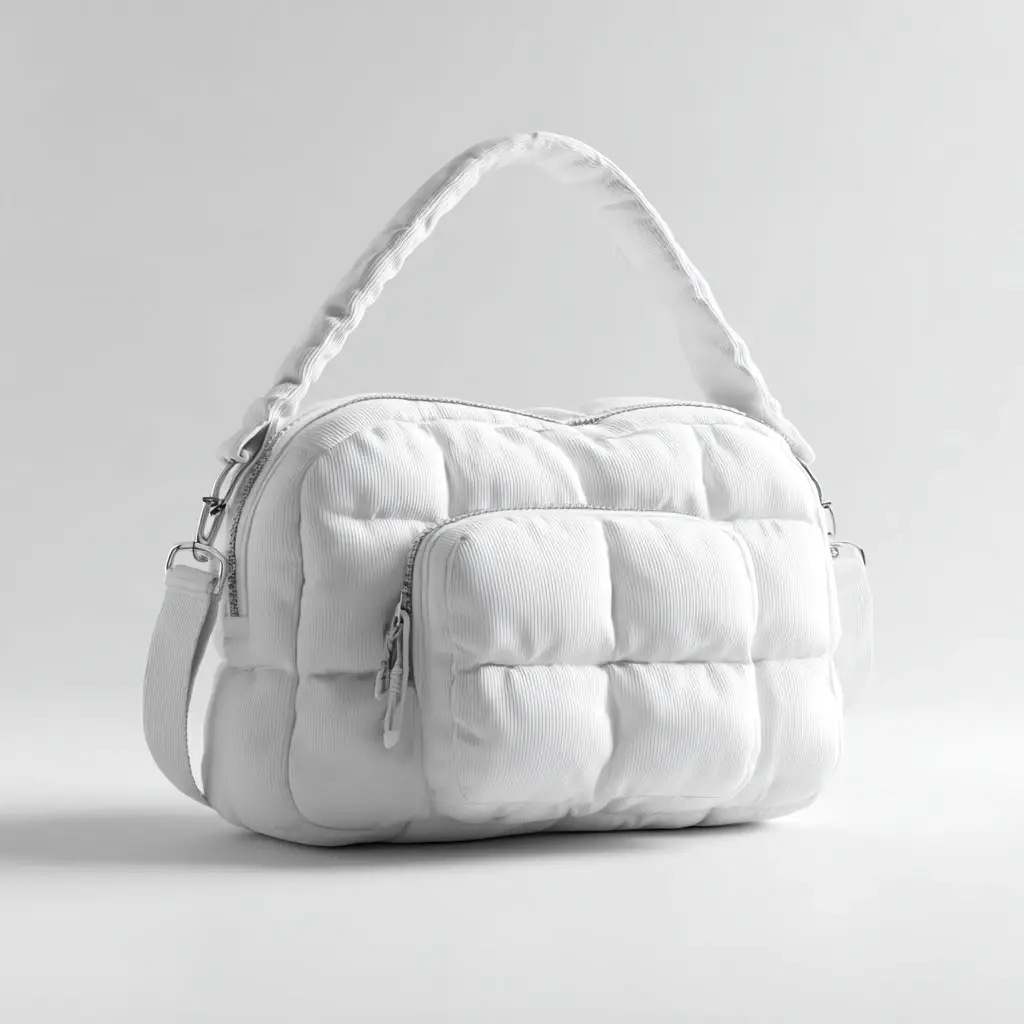
Programmes coordinated through our validated partner factory Quanzhou Yingming Bags, with export experience since 2014, treat the pilot as a gate: bulk is not released until the pilot has been measured. That is one reason a run scheduled on 7 production lines can absorb a correction without moving the 35-50 day window.
What Each Check Costs and What It Saves
The twelve checks are not equal in return, and a programme short on time should do them in the order below rather than skipping the bottom of the list. The ordering is by return per hour spent, which is not the same as by ease.
| Rank | Check | Cost | What it prevents |
|---|---|---|---|
| 1 | Pilot run of 30-50 pieces | 1-2 days | Every systematic defect in the run |
| 2 | Sealed golden sample | 1 hour | Disagreement at every later inspection |
| 3 | Tolerances in millimetres | 2 hours | Measurement disputes and re-sorts |
| 4 | Dye lot confirmed before cutting | 1 hour | Panel shading across the lot |
| 5 | Hardware first article | Half a day | Plating failure after transit |
| 6 | Defect classification agreed | 1 hour | Arguments at the inspection table |
| 7 | Split thickness verified | 1 hour | Strap attachment tear-out |
| 8 | Adhesive open time recorded | 30 minutes | Edge lift in a hot container |
| 9 | Inline visit booked | 1 man-day | Drift through the second half of the run |
| 10 | Cut panel tolerance checked | 1 hour | Panel mismatch and puckering |
| 11 | Two retained units per lot | 15 minutes | An unwinnable claim |
| 12 | Machine settings recorded | 30 minutes | A slower second order |
Notice that the top three cost under two days in total and prevent almost everything that a final inspection can find. That is the practical argument for doing the list in order and for treating the pilot run as non-negotiable even when the calendar is tight.
How to Measure Whether It Worked
Defect rate as a percentage is the wrong measure, because it lumps together a run with three minor issues and a run with three critical ones. Track defects per unit, calculated as total defects of all classes divided by units inspected, and track it by class. A healthy controlled programme sits around 0.35 defects per unit; an uncontrolled one sits above 1.0, and the gap is almost entirely in the major class.
- Track by class, not in total. Critical should be zero always; major is where the improvement shows; minor is noise unless it climbs.
- Compare lot to lot on the same specification. A change in the specification resets the series, so note the revision date on every record.
- Record the top three defect types per lot. The same three recurring across two lots is a specification problem, not a workmanship problem.
- Feed the result back into the checklist. A defect class that recurs goes onto the pre-bulk list as a new item with a threshold attached.
Where the number does not improve after two runs, the cause is almost always upstream of the line: a material that cannot hold the tolerance, a pattern that fights the machine, or a component specified by drawing but never piloted. All three are visible in the way QC changes between sampling and bulk, which is the stage where those problems are cheapest to fix.
The Four Checks Nobody Does
Four items sit at the bottom of every real-world list and cause a disproportionate share of the defects that survive to final inspection. They are cheap, unglamorous and almost always skipped, which is exactly why they are worth doing.
- Retained units. Two per lot, held 90 days. Skipped because it feels like waste; missed when a claim arrives eleven months later with no reference to test.
- Machine settings recorded. Tension, press and needle size written down at pilot stage. Skipped because the operator knows them; missed when that operator is on another line at the repeat.
- Adhesive open time. Written at the bench under the day's conditions. Skipped because the bond looks fine; missed when edges lift after three weeks in a hot container.
- Component lot numbers on the packing list. Skipped because nobody asks; missed when a hardware failure can only be traced to a lot used for three days mid-run.
Doing those four converts a quality process into a quality record, and the record is what makes the third and fourth orders cheaper than the first. It is also what makes an AQL 2.5 result meaningful over time rather than a single pass or fail on a single day.
Six Field Failures and the Pre-Bulk Check That Catches Each
The twelve checks are aimed at what an inspector can see. Failures that arrive twelve weeks into use have a different set of causes, and nearly all of them are visible at pilot stage if somebody looks. Reading the two lists together is what turns a quality check into a durability specification, and it is the reason most claims can be traced back to one line that was skipped.
| Field failure | Measurable symptom | Pre-bulk check |
|---|---|---|
| Strap tear-out at the body | Joint opening below a 200 N pull | 25 mm boxed stitch with a reinforcement patch, Tex 40 at 7-9 stitches per inch |
| Slider splitting or creeping | Adjuster slips under a 3 kg static load | Slider travel and webbing end finish tested across the pilot batch |
| Edge paint cracking at a fold | Visible craze after about 5,000 flexes | Two coats at 1.2 mm total, then flex one pilot unit before release |
| Plating spotting in store | Bloom before 24 hours to ASTM B117 | 24-hour neutral salt spray on the delivered hardware lot |
| Lining seam slippage | Opening beyond 4 mm under a 60 N load | Seam allowance to 10 mm with a 210D lining at 60-70 gsm |
| Closure losing hold | Pull force falling below 8 N after cycling | Fifty open-close cycles on three pilot units, then re-measure |
What Sorting Afterwards Costs, Line by Line
The case for pre-bulk work is usually made in percentages and lands better in money. Below is what a lot actually costs once the decision has been made to sort rather than re-make: 500 units, inspected at AQL 2.5 under ISO 2859-1, failed on majors. None of these lines improves the bag; every one of them buys back the position a 30-50 piece pilot would have reached for nothing.
- Second inspection visit. USD 220-380 a man-day, and re-sorting 500 units normally takes a day and a half to two.
- Unpacking and repacking. USD 0.20-0.40 a unit once cartons are opened, units re-bagged and cartons resealed, so USD 100-200 across the lot.
- Rework labour. USD 0.35-0.60 a unit to correct a fixable defect, which is USD 175-300 where half the lot needs it.
- Schedule recovery. Air freight at USD 4-6 a kilogram on the affected quantity, typically 180-320 kg once packed.
- Markdown on what stays broken. 30-50% off retail on the units left over, which routinely dwarfs every line above it.
Run the twelve checks before your bulk slot
Send your silhouette, material direction and launch date, and a private label coordinator will walk the twelve-item pre-bulk checklist with you: sealed golden sample, 30-50 piece pilot, tolerances in millimetres, inline visit booked and inspection at AQL 2.5 under ISO 2859-1. Get a quote.
Frequently Asked Questions
What is a normal defect rate for a handbag production run?
A controlled programme with a pilot run and a written specification typically lands at 1.5-2.5 percent defects at final inspection, or about 0.35 defects per unit. Where those preparations are skipped, 6-8 percent is common, and the difference sits almost entirely in the major defect class.
Why does a pilot run reduce defects so much?
Because 30-50 pieces made on the real line with the real material expose jig settings, pattern problems and operator unfamiliarity while the correction still costs minutes. A jig that sets a handle 4 mm short will set 2,000 handles the same way if it is only discovered at final inspection.
What stitch specification should be written for a leather handbag?
Tex 40 bonded thread at 7-9 stitches per inch with a 10 mm seam allowance, back-tacked at every strap attachment and stress point, sewn with a size 18 needle for 1.2-1.4 mm leather. A larger needle leaves holes that weaken the seam at exactly the point where load is applied.
How thick should handbag leather be split?
For most handbag bodies, 1.2-1.4 mm measured at five points across the delivered lot, within plus or minus 0.1 mm of the specified figure. Thin panels at a strap attachment are the single most common origin of a seam failure in the field.
What is a golden sample and why seal it?
One approved unit, signed and dated, photographed and stored away from the floor, against which every inspection and every re-order is measured. It is sealed because a reference handled daily fades and creases and silently becomes a looser standard than the one that was approved.
How should colour be specified to avoid shading problems?
Match to a Pantone TCX reference at Delta E 2.0 or better against the approved swatch under a named D65 light source, and state whether shading between panels of one bag is acceptable. Where a run needs more than one dye lot, keep the lots separate in packing.
How many units should be retained from each lot?
Two, pulled from the run, unwashed and unaltered, held for 90 days. They are the physical evidence that settles a claim about classification, and they let a repeat order be matched against the previous lot rather than against a drawing.
What is the best way to measure whether defect prevention worked?
Track defects per unit by class rather than a single percentage: total defects divided by units inspected, split by critical, major and minor. A controlled programme sits near 0.35 and an uncontrolled one above 1.0, and critical should be zero in every lot.
Does pre-bulk preparation shorten the calendar?
It lengthens the preparation by one to two days for the pilot and shortens the run far more, because a re-sort at final inspection adds 2-4 days plus a second inspection fee. Sampling is 6-10 working days and bulk 35-50 days, so a pilot is a small addition to a long window.
Which check is most often skipped?
Retained units, machine settings, adhesive open time and component lot numbers on the packing list. All four are cheap and unglamorous, and all four are the reason a claim becomes arguable or a repeat order becomes slower than the first.
Can defect prevention replace inspection?
No. Preparation decides what the run should be; inspection at AQL 2.5 under ISO 2859-1 decides whether it was. Preparation lowers the defect rate, but only a random sample from the finished lot can tell you what is actually in the cartons.
People Also Ask
Is a pilot run worth it for a 500-piece order?
Yes, and arguably more so than for a large order. At 500 pcs the final sample is only 50 units with an accept number of 3, so a small systematic defect can dominate the result, and a pilot of 30-50 pieces is a meaningful share of the run.
How long does the pilot add to the schedule?
One to two days inside the 35-50 day bulk window, usually by making the pilot on the first line day and releasing the remainder on the second. Measured against a 2-4 day re-sort at final inspection, it is time well spent.
What if the material arrives late and the line is waiting?
Do the two checks that take an hour — dye lot against the approved swatch and split thickness — and release the rest. Compressing these is where a 6-8 percent defect rate comes from, so an hour of delay is cheaper than a re-sort.
Should the second order repeat the whole checklist?
A shortened version: confirm the specification is unchanged, re-verify the material lot, and re-approve the hardware first article if the plating lot changed. Where nothing changed, sampling can often be skipped entirely, removing 6-10 working days.
Sources and further reading
Every figure on this page is either our own programme data or attributed below. Open the originals before you write them into a specification.
- SATRA — technical services for leather, footwear and accessoriesSATRA Independent leather, hardware and accessories testing protocols.
- Leather Working Group — environmental auditing for tanneriesLeather Working Group Environmental audit protocol for tanneries and leather traceability.
- International Maritime OrganizationIMO Maritime rules governing container packing and dangerous-goods declaration.