When to Use Third Party Inspection for Handbag Orders
Use third party handbag inspection when the lot is large enough that one bad carton costs more than the visit, when the same defect has returned twice, or when someone outside your team needs a number that is not yours. Below about 1,200 pieces the arithmetic is marginal. Above it, one or two man-days at USD 260-310 catch the failures that would otherwise open on a customer doorstep. The decision is six questions long, not twenty, and each question carries a figure, so a sourcing lead can settle it in a single sitting.

- Question One: Who Counts the Defects Right Now?
- Question Two: What Value Sits in This Carton?
- Question Three: Can This Defect Be Found Again Later?
- Question Four: Does Anyone Need a Number That Is Not Yours?
- Question Five: Can Anything Still Be Fixed Tomorrow?
- Question Six: What Will You Do With a Fail?
- Turning Six Answers Into One Trigger Rule
- Booking the Visit Without Losing a Week
- What the Report Must Contain to Be Usable
- Where an Independent Visit Will Not Help
- What the Visit Costs Beyond the Man-Day
Use third party handbag inspection when the lot is large enough that one bad carton costs more than the visit, when the same defect has returned twice, or when someone outside your team needs a number that is not yours. Below about 1,200 pieces the arithmetic is marginal. Above it, one or two man-days at USD 260-310 catch the failures that would otherwise open on a customer doorstep. The decision is six questions long, not twenty, and each question carries a figure, so a sourcing lead can settle it in a single sitting.
Six answers at a glance
Question One: Who Counts the Defects Right Now?
Before comparing quotations, find out who is counting. Every handbag order already carries some form of final check, because units are pulled, counted and boxed before a container is loaded. The useful question is whose number that count produces. Where the line that built the units also decides whether they pass, two things follow: small systemic faults get classified as acceptable, and the same classification repeats next lot because nobody argues with a report marked pass. Independent counting assumes no bad faith. It simply removes the pressure to resolve every judgement call favourably.
Anyone who has been told that a 3 mm size drift is within tolerance knows the pattern. The tolerance itself is rarely disputed; the argument is whether this particular unit sits inside it. An independent observer ends the argument with a measurement instead of an opinion, which is the entire commercial reason that independent bag QC clauses keep appearing in purchase orders written by brands that sell through third party retailers.
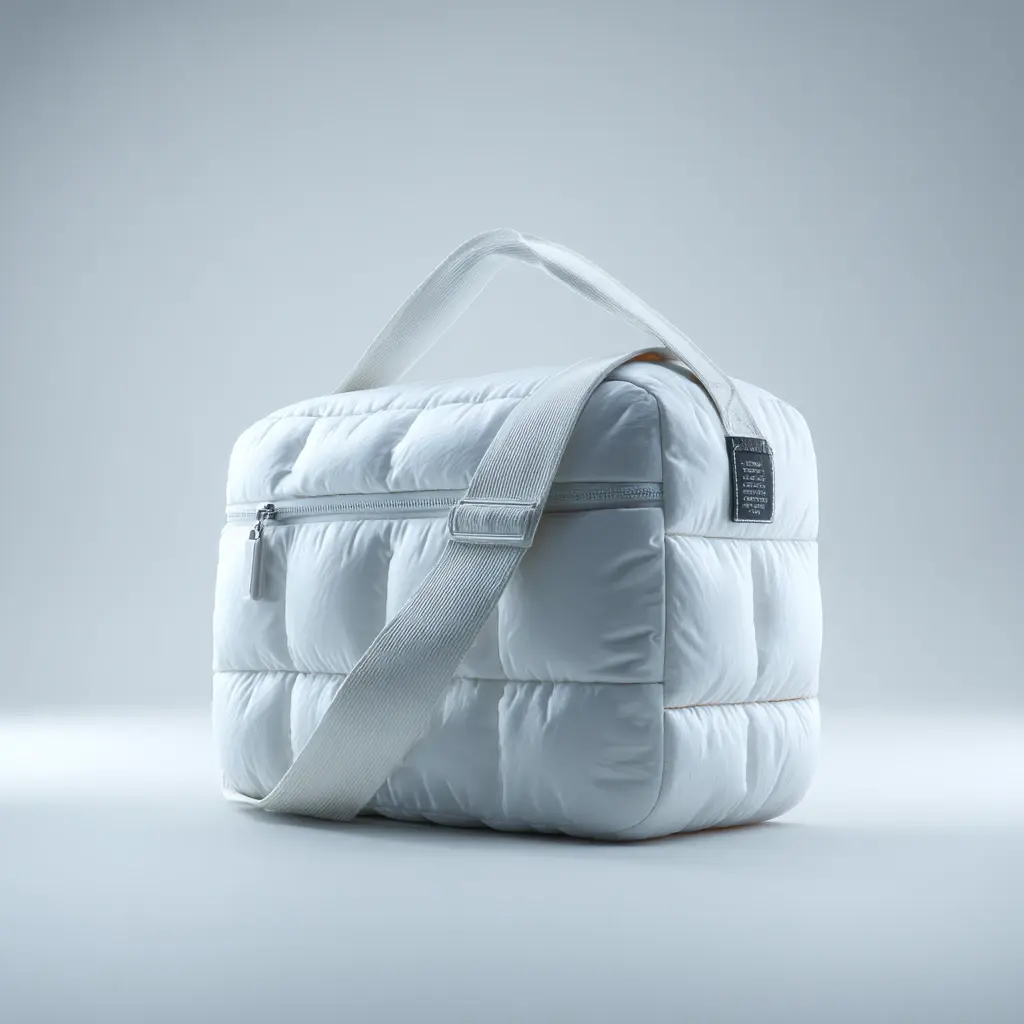
Ownership of the count matters for a second reason: repeatability. An in-house team is measured on output and on-time loading. A visit booked by you is measured on one thing only, whether the units meet the written criteria in the purchase order. Where those two roles are merged into one person, the criterion that suffers is always the one nobody bothered to write down, usually colour consistency between batches or the feel of a zipper pull.
- In-house final check. Fast, usually free, and aligned with production targets rather than your tolerance table.
- Your own visit. Highest trust and highest cost; rarely economical below about 4,000 pieces unless you already travel to the region.
- Independent product inspection. Priced by the man-day, sampled to ISO 2859-1, and documented in a report any counterpart can read.
- Laboratory testing. The only route for restricted substances under REACH Annex XVII, nickel release or chromium VI figures on leather.
- Social compliance audits. Sedex and BSCI cover working conditions, never your zipper; they answer a different question entirely.
Note that the last two rows are not substitutes for a product inspection. A Restricted substances screen tells you whether material buys legal; it says nothing about fourteen units in carton six having mismatched handles. Confusing these three categories is the most expensive misunderstanding in the whole decision, because brands buy one of them and believe they bought all three.
Question Two: What Value Sits in This Carton?
Defects are priced in units while inspection is priced in days, and putting both on one line settles the second question. Take a typical private label programme: MOQ is 500 pcs per style / colourway, goods are booked FOB Xiamen, and mid-market leather or PU constructions usually land in a USD 20-40 unit band on the water. A 1,200-piece mixed lot therefore carries between USD 24,000 and USD 48,000 of value, and a later section of this site's cost guide breaks that unit arithmetic down further.
| Lot size | Man-days typical | Cost at USD 285 per day | Share of goods value |
|---|---|---|---|
| 500 pcs (one style) | 1 | USD 285 | about 2.0% |
| 1,200 pcs | 2 | USD 570 | about 1.7% |
| 3,200 pcs | 3 | USD 855 | about 0.9% |
| 8,000 pcs | 4 | USD 1,140 | about 0.5% |
Two adjustments make the table less tidy and more useful. Complexity costs days: a structured satchel with a framed opening takes far longer per unit than a flat tote, so deduct roughly 20-25 pieces per hour from what one person can cover. Novelty costs days too, because a first programme with a new partner always needs an extra half day on site while everyone establishes what the specification actually means in practice rather than on paper.
Question Three: Can This Defect Be Found Again Later?
Some failures are visible on the table at that moment and others only appear in a customer's hands six weeks later. An inspection visit buys visibility into the first group; laboratory work is needed for the second; a time-related group needs patience and a good returns record. The practical test is whether the risk worrying you is countable on site at all.
- Countable on site. Skipped stitches, uneven edge paint, misaligned logos, strap length beyond tolerance, zipper teeth that catch, hardware finish variation between units in one carton.
- Countable only with instruments. Colour difference beyond a tolerated delta E, restricted substances named in REACH Annex XVII, nickel release from metal components, formaldheyde content in lining textiles.
- Countable only later. Edge paint that craze-cracks below 5 degrees, plating that dulls after weeks of shelf life, adhesives that release inside a hot container crossing the equator.
The boundary matters because no amount of counting protects you from chemistry. If your customers sell into the EU, the written specification should already name the restricted substances involved, require a Leather Working Group rating from the tannery supplying the hide, and set a laboratory schedule that follows risk rather than the calendar. Choosing inspection when you needed analysis is like weighing the carton to check whether the metal is compliant.
One more category hides inside this question: the defect that keeps reappearing because it was never corrected at source. When the same broken bar-tack shows up in three consecutive lots, a second visit is buying information you already own. At that point the money belongs in corrective action, in tooling, or in a change of construction, and continuing to pay for counts is simply funding evidence for an argument you already won.
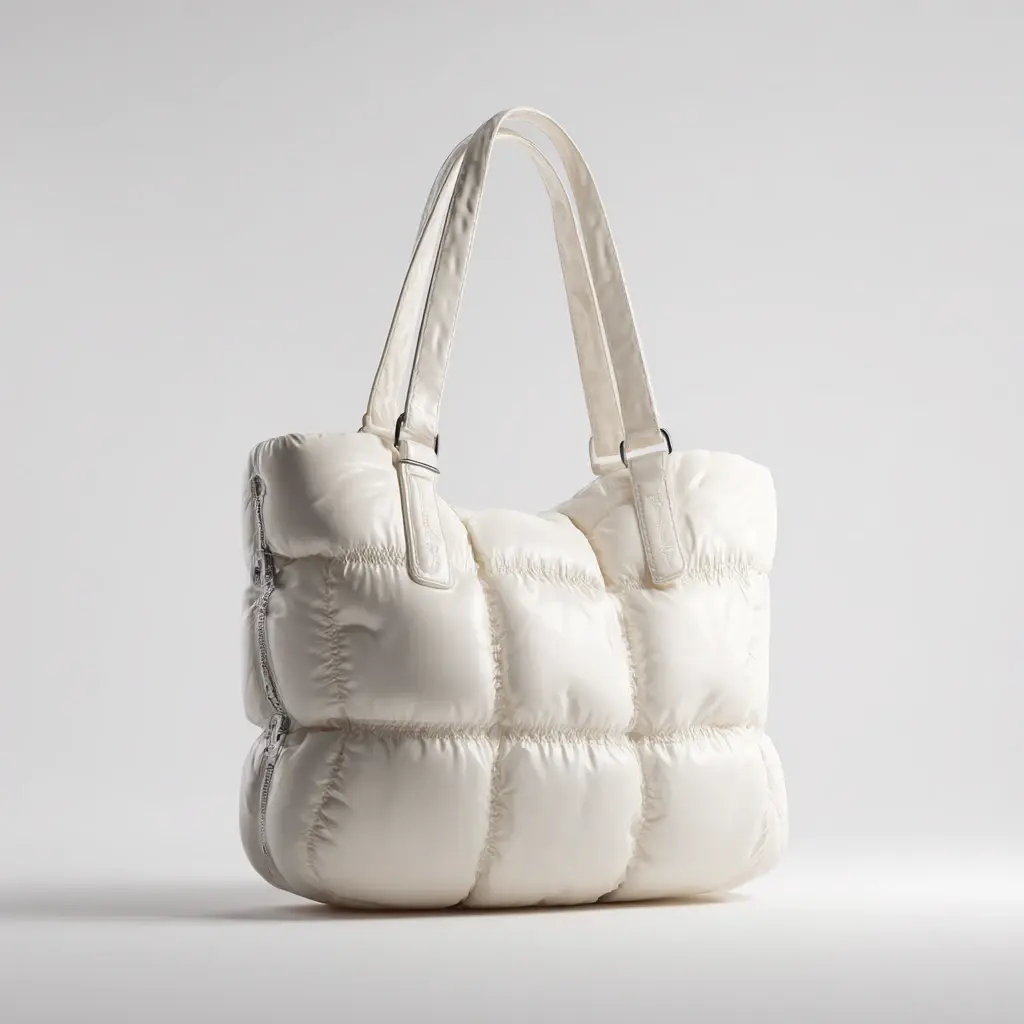
Question Four: Does Anyone Need a Number That Is Not Yours?
Independence is frequently demanded rather than chosen. Retail buyers, marketplace programmes and insurers accept a written result drawn against a recognised sampling standard far more readily than an internal assurance, and ISO 2859-1 supplies that shared vocabulary. It fixes how many units are pulled and how many defects force a reject from the lot size alone, which removes any suggestion that the sample was selected to produce a convenient answer.
Writing the clause into the purchase order is the step most people forget. Name AQL 2.5 (ISO 2859-1), name general inspection level II, and state that defects are graded critical, major and minor exactly as your own tolerance table defines them. Those three lines are what make an inspection defensible later; without them a report arrives built on somebody else's table, and the argument restarts. A ready to use clause template sits in the handbag quality control reference on this site.
Question Five: Can Anything Still Be Fixed Tomorrow?
Timing decides whether an inspection carries any value beyond paperwork. Bulk production runs 35-50 days, and the final fortnight is where everything converges: packing, labelling, carton marking and container booking. A visit arranged after the truck leaves produces a claim; a visit arranged while units are still on the floor produces rework. Everything below follows from that single distinction.
- Book at 60-80% packed. Enough sealed cartons exist to sample honestly, and enough remain open to let rework happen that week.
- Allow three working days of notice. Two is sometimes possible in a quiet month; five is safer through September and October when every bookable team is committed.
- Hold the result against your payment milestone. If the balance falls due on loading, make the written result the release condition rather than the receipt.
- Present the golden sample. A sealed reference unit plus photographs sent with the booking removes the value judgement from every defect call made that day.
A word on rework economics, because this is where delay really costs. Pulling apart finished units runs two to four times the cost of sewing them correctly first, and a return visit after a failed lot adds USD 180-220 plus two or three days of calendar time. Negotiating fifty dollars off the day rate while losing four days of the schedule is a poor trade in either direction.
Question Six: What Will You Do With a Fail?
A defect count is only useful when the response to it was agreed before the count arrived. Four outcomes exist, and each changes what should have been written into the purchase order before production started. Programmes that never write this down turn every failed lot into a negotiation conducted by email at eleven at night, usually with the container already reserved.
| Outcome | When it fits | What it costs |
|---|---|---|
| Accept with a note | Defects are minor and below the reject number, buyer informed | No direct cost, usually a small discount |
| Sort on site | A known population of units carries the same fault | USD 60-90 per worker-day plus time |
| Rework and re-check | Failure sits in one operation and rework is feasible | Rework labour plus USD 180-220 re-inspection |
| Reject the lot | Critical defects present, or criticals above the limit | A full production cycle, 35-50 days |
Financing these paths belongs in the same clause: who pays for sorting labour, who pays freight on replacements, and whether the rework window pushes the agreed delivery date. Sorting out the money afterwards is slow, because by then both sides are arguing about a shipment neither wants. Where the sums are larger than the order itself, the budget question is worth reading about in detail, including how inspection cost is structured in China.
Turning Six Answers Into One Trigger Rule
Six answers collapse into a short rule a coordinator can apply without telephoning anyone. Book independent product inspection when at least two of the six conditions below are true. One condition alone rarely justifies the spend; two nearly always do, because the second usually describes a risk that compounds rather than one that merely costs money once.
- The lot exceeds 1,200 pieces. Below that threshold the visit generally costs more than the expected loss, unless unit prices sit well above the mid-market band.
- The previous lot failed or generated complaints. The second instance of a fault is almost never random.
- This is the first programme with this partner. Nobody has yet established a shared definition of acceptable.
- A retailer or marketplace wants evidence. They accept a standardised result, not a promise written on headed paper.
- Nobody from your side can reach the site. Staying blind costs more than one man-day in most seasons.
- The construction contains a known weak operation. Framed openings, glued folds and plated metal all belong here.
Everything outside those rows can usually ride on in-house checking plus a strong pre-production unit, provided that unit was signed, dated and sealed before the run started. Inspection is a control applied to a process, not a substitute for writing that process down, and the pattern of how checking shifts from one-off pieces to daily output is mapped in a separate piece on how QC changes between sampling and bulk production.
Booking the Visit Without Losing a Week
Slow booking, not slow counting, is what drains calendar time. Send five items when booking and the written report usually lands within 24 hours of the visit ending: the purchase order containing the AQL clause, the dimensioned specification with tolerances in millimetres, photographs of the sealed reference unit, the packing list with carton count, and your own defect-grading table. Missing any one of these turns a one-day job into a two-day job with a follow-up email in the middle.
- Name the standard and the level in writing: AQL 2.5 (ISO 2859-1), general inspection level II.
- State how many cartons should be opened; the square root of the carton count plus two is a common starting point.
- Ask for ten photographs minimum: full view, each defect with scale, carton interior, label and bar code, shipping mark.
- Require the numbers rather than a verdict: lot size, sample size, code letter and defect counts split by grade.
- Set the turnaround expectation in the booking email so nobody has to chase it on the Friday afternoon.
What the Report Must Contain to Be Usable
A report that cannot be acted on by somebody who was not in the room has almost no value. Usable means three tests pass: the reader can reproduce the count, see the defect, and locate the units it came from. Everything beyond those three is administration, however impressive the document looks in the sales deck.
- Reproduce it. Lot size, carton count, cartons opened, units pulled, plus the sample size code letter taken from ISO 2859-1.
- See it. Photographs with a ruler for scale, one per complaint category, plus a full-view shot of the unit concerned.
- Locate it. Carton numbers, style and colourway, production batch identification, and how many units those cartons held.
Ask for the raw counts too, not merely the conclusion. A passed lot at AQL 2.5 can still hold five defects in eighty units, and that figure is what tells you whether the process is marginal or comfortable. Keeping it lot by lot produces a trend line, and a trend line is the evidence that justifies a tooling change or a pattern revision six months later, long after the photographs have lost their urgency.
Where an Independent Visit Will Not Help
Three situations sit outside what counting can fix. First, where the risk is chemical and needs an accredited laboratory rather than a tape measure. Second, where the fault is systemic and already documented across several lots, so the money belongs in corrective action at source. Third, where the order is small enough that nobody loses meaningful money if a handful of units fail, which covers many 500-piece first runs in every category from totes to backpacks.
None of this replaces the ongoing relationship with the people making your bags. Counted units catch the mistakes of one lot; a shared specification and a stable production schedule prevent the mistakes of the next ten. If a visit produced findings you cannot interpret, the next useful step is learning how to read a QC report and act on what it says before the conversation with the production side goes cold.
What the Visit Costs Beyond the Man-Day
The man-day rate is the visible price of a product inspection and rarely the whole bill. What sits around it is sorting labour when a lot fails, a re-inspection when it is reworked, and a laboratory screen when the question is chemical rather than countable. Budgeting the four together is what makes the visit affordable rather than surprising.
| Line | Cost | Note |
|---|---|---|
| Product inspection, Fujian | USD 260-310 per man-day | Two man-days on a 1,200-piece lot |
| Re-inspection after a fail | USD 180-220 | Plus sorting at USD 60-90 per worker-day |
| Chromium VI to ISO 17075 | USD 45-90 per material | Leather only; required for the EU |
| Nickel release to EN 1811 | USD 60-120 per finish | Plated metal parts |
| Azo dyes and restricted substances | USD 80-150 per colour | Dyed fabric and leather |
| REACH screen package | USD 250-450 | The bundle most EU retail buyers ask for |
| Laboratory turnaround | 5-8 working days | Book before packing closes, not after |
Against goods value, two man-days plus a REACH screen on a 1,200-piece lot at USD 28 a unit is USD 820-1,020, or 2.4-3.0 per cent of USD 33,600. That is the number to compare against the expected loss rather than against nothing: on a first programme with a new specification, the visit is cheap at any lot size, and on a fifth repeat of a documented style it is usually not needed at all.
Send your style list, quantities and target ship date to a handbag programme specialist at QUANZHOU JUNYUAN BAGS and receive a costed inspection plan for the coming lot within two working days, or start the conversation at Get a Quote.
Frequently Asked Questions
Is third party inspection worth it for a 500-piece handbag order?
Usually not on cost alone, because one man-day represents roughly two percent of goods value at that size. It becomes worthwhile when the order is the first run with a new partner, when the construction has failed somewhere before, or when a buyer has asked for independent evidence before accepting delivery into their network.
How many pieces get pulled from a 1,200-piece lot?
Under ISO 2859-1 at general inspection level II, a lot of 501 to 1,200 pieces carries sample size code letter J, meaning 80 units are examined. At AQL 2.5 the lot passes with five defects or fewer and fails at six. Nobody chooses a sample that flatters the outcome, which is precisely why the standard exists.
How much notice does an inspector need in Fujian?
Three working days is the realistic figure for Xiamen and Quanzhou. Two days is sometimes possible outside peak months and five is safer during September and October, when every bookable team is already committed. Late booking costs more than early booking because the fallback is checking after loading, which generates claims instead of rework.
What does a re-inspection cost after a failed lot?
Expect USD 180 to 220 for a return visit plus two to three calendar days for rework to finish. Some agencies quote a reduced day rate for re-checking the same lot and others charge a full man-day. Agreeing this figure before the first visit avoids an unwelcome invoice arriving alongside photographs of your own defects.
Can inspection replace laboratory testing for EU compliance?
No. A visual and functional inspection finds construction and appearance faults only. Restricted substances listed under REACH Annex XVII, nickel release from metal parts and chromium VI figures in leather require samples sent to an accredited laboratory. Leather Working Group ratings describe a tannery, not this particular shipment of finished units.
Should I still inspect if the workshop making my bags has its own check?
Yes, at least until that relationship has delivered three clean lots without a single complaint, because their counting serves output targets as well as your tolerance table. After that, move to unannounced spot visits rather than checking every lot, and keep the photographic record so both sides have something to refer to later.
What happens if an inspector and my contact disagree about a defect?
The written tolerance table decides, which is exactly why it belongs inside the purchase order rather than in an email thread. Ask for the unit to be photographed beside the sealed reference sample and for a measurement rather than an opinion. Where no criterion was ever written down, treat the disagreement as a specification gap and close it now.
Do I need Sedex or BSCI audits as well as product inspection?
They measure entirely different things. Sedex and BSCI cover labour and social compliance, and many retailers require them separately from anything product related. A product inspection counts defects in one lot of physical units. A social audit certificate held by the maker tells you nothing about whether every strap is correctly bar-tacked.
Can an inspection be booked after the container is loaded?
It can, but it then documents a claim instead of preventing one, because units sealed inside a stuffed container cannot be reworked without unpacking at the destination port. Where loading has already happened, request a loading supervision report instead, with photographs of carton condition, count and sealing, which supports an insurance claim later.
How should I choose between inspection companies?
Ask three things: whether pricing runs by the man-day or by the piece, whether the person assigned has handled structured bags rather than only textiles, and whether the report includes raw counts with the sample code letter. Price differences between agencies are usually under fifteen percent, while report quality varies far more widely than that.
If a lot passes, does that mean every unit is acceptable?
No. AQL 2.5 at general level II permits a small number of defects inside the sample and never examines every unit in the shipment. The result states that the lot met an agreed risk level, not that each piece is flawless. Tracking per-lot counts shows whether a pass was comfortable or only barely scraped through.
People Also Ask
Is third party bag inspection required by marketplaces?
Not required as a rule, but marketplace programmes increasingly ask for evidence once defect complaints accumulate. A documented inspection built on ISO 2859-1 sampling settles that conversation quickly and costs roughly one man-day per lot.
What is the difference between a social audit and a product inspection?
An audit examines management systems and working conditions; a product inspection counts physical defects in one lot. Both take about a day of effort, and neither replaces the other regardless of what a certificate or a report may imply.
Can I ask for more units to be checked than the standard requires?
Yes. Moving to general inspection level III raises the sample size and catches more faults, though it also rejects some lots a buyer would have accepted. The extra cost usually runs in proportion to the extra units pulled and examined.
Who pays when a lot fails and has to be sorted?
Whoever the purchase order names. Sorting typically runs 60 to 90 dollars per worker-day on site, and the same clause should also cover freight on replacement units and any shift in the agreed delivery date.
Sources and further reading
Every figure on this page is either our own programme data or attributed below. Open the originals before you write them into a specification.
- REACH — chemical substances regulationEuropean Commission Annex XVII restricts the substances that may appear in finished leather and coatings.
- Leather Working Group — environmental auditing for tanneriesLeather Working Group Environmental audit protocol for tanneries and leather traceability.
- China Briefing trade and manufacturing analysisChina Briefing Trade, tax and compliance analysis for sourcing from China.